

8 minutes and 46 seconds. That is the time it took for a man to lose his life beneath the knee of a police officer, and for the entire world to hold its breath. From that fatal span of time emerged a universal cry ; and today, an extraordinary cinematic work. 8’46, the powerful short film by Radja Delacroix, transforms the tragedy of George Floyd’s murder into a cinematic experience that is at once silent and devastating, combining editorial rigor, critical depth, and narrative power.
From the Murder of George Floyd to a Global Mobilization
On May 25, 2020, in Minneapolis, George Floyd, a 46-year-old African American man, was killed during a brutal arrest. Pinned to the ground, handcuffed, he suffocated beneath the knee of officer Derek Chauvin for long minutes. Floyd repeated more than twenty times, “I can’t breathe,” called out for his mother, and predicted that the police officers were going to kill him.
This filmed agony, initially reported to last 8 minutes and 46 seconds, shocked the conscience of the world. Within days, that number (8’46) became a universal symbol of police violence and systemic racism. Everywhere, furious crowds took to the streets : thousands demonstrated across the United States and around the world demanding justice and equality. Knees on the ground, Black Lives Matter signs, and 8-minute-46-second moments of silence were observed from Paris to Pretoria, from New York to Nairobi, honoring the memory of Floyd and all victims of police brutality.
It was in this context of global outrage and awakened consciousness that the urgent need emerged to represent contemporary Black memory on screen. How could images translate the pain, rage, and hope of an Afro-descendant community refusing to let yet another tragedy be reduced to a mere news item? Radja Delacroix’s short film 8’46 arises precisely from this urgency : its ambition is to forever engrave this pivotal moment into collective memory, and to make art converse with the burning reality of its time.
A Work Born from Injustice and Carrying a Powerful Political Message
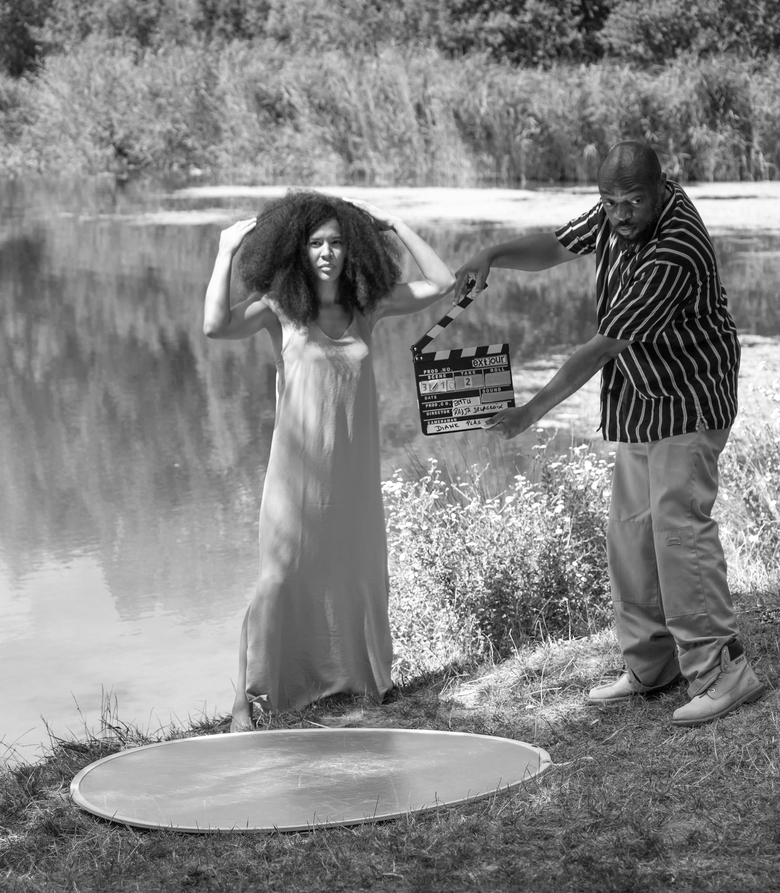
Radja Delacroix1, a young Franco-Congolese filmmaker driven by a profound sense of social justice, conceived 8’46 as an act of committed art. “Born from a deep feeling of injustice and anger, 8’46 is a work written in emotional urgency,” he explains, summarizing the feverish genesis of the project. Shaken, like so many others, by the unbearable footage of George Floyd’s death, Delacroix refused indifference and transformed his anger into creation. His intention was not to make a factual documentary or yet another report, but rather to offer a fiction حاملing truth, capable of reaching hearts and minds differently.
From the outset, the filmmaker made strong aesthetic choices in service of his political vision. He embraced allegory and visual poetry to achieve a critical depth beyond literal reenactment. “The title refers to a duration that became a symbol ; not to recount the facts, but to question what they leave within us,” explains Radja Delacroix. In other words, 8’46 does not seek to reproduce George Floyd’s arrest exactly as it happened, nor to explicitly name executioners and victims. Rather, it aims to explore the inner impact of this tragedy on our imaginations, on Afro-descendant collective memory, and on universal consciousness.
The director thus claims a broad political scope : his short film is an artistic cry of revolt, a silent plea against racism and police violence, and a tribute to all Black lives unjustly cut short. Delacroix wants his film to embody a duty of remembrance and a vehicle for dialogue, particularly within African and Afro-descendant communities, but also among the wider public.
A Bold Narrative Device for Wordless Emotion
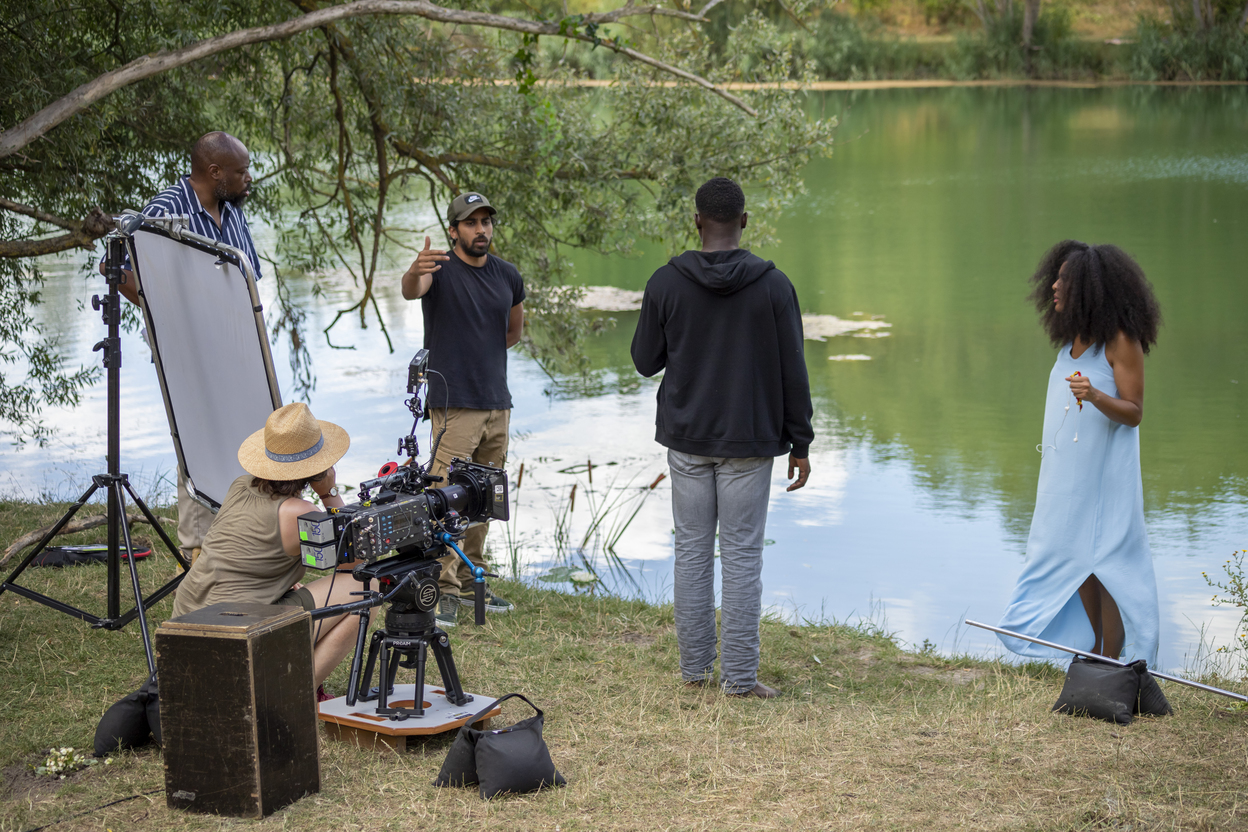
How can the unspeakable be translated through cinematic language? 8’46 rises to this challenge through an unconventional narrative device built on silence, stillness, and duration. The film, whose running time mirrors the length of George Floyd’s ordeal, plunges the viewer into a sensory and introspective experience. Here, there is no explicit dialogue : silence reigns supreme.
A silence heavy with meaning, a silence screaming absence and injustice. By daring to dispense with words, Radja Delacroix echoes Floyd’s final moments (those long minutes during which his voice faded away) and compels the audience to listen to the mute cry of suffering. The result is striking : deprived of verbal landmarks, the viewer physically feels the crushing weight of passing time ; endless, almost unbearable.
Stillness is the other major axis of the film’s direction. Where agitation might seem natural to portray violence, Delacroix instead chooses restraint and fixity. In 8’46, a tormented young man (played by actor Achille Moleka) stands upon the calm waters of a dreamlike lake, as though frozen outside of time. His nearly motionless body reflects the helplessness of George Floyd’s body pinned to the ground, while also symbolizing the state of shock into which this tragedy plunged us.
Facing him, a mysterious figure appears ; an allegorical presence that could represent death, conscience, or memory itself. Their silent confrontation, without a single word exchanged, creates dramatic tension of rare intensity. Every glance, every minimal gesture takes on immense significance.
Duration here becomes a character in its own right. By stretching time, by refusing frenetic editing, the film forces the audience to almost live these minutes in real time. Eight minutes and forty-six seconds may seem brief on paper, but on screen (in the context of a life slipping away) they become an eternity. Delacroix exploits this temporal paradox to construct emotion without words : slowness, combined with silence, allows empathy to emerge and deepen within the viewer. One finds oneself holding their breath, feeling the anguish of every passing second. This bold narrative device transforms 8’46 into an almost physical sensory experience that leaves no one untouched.
Afro-Descendant Memory, Police Violence, and the Symbolism of Time in 8’46
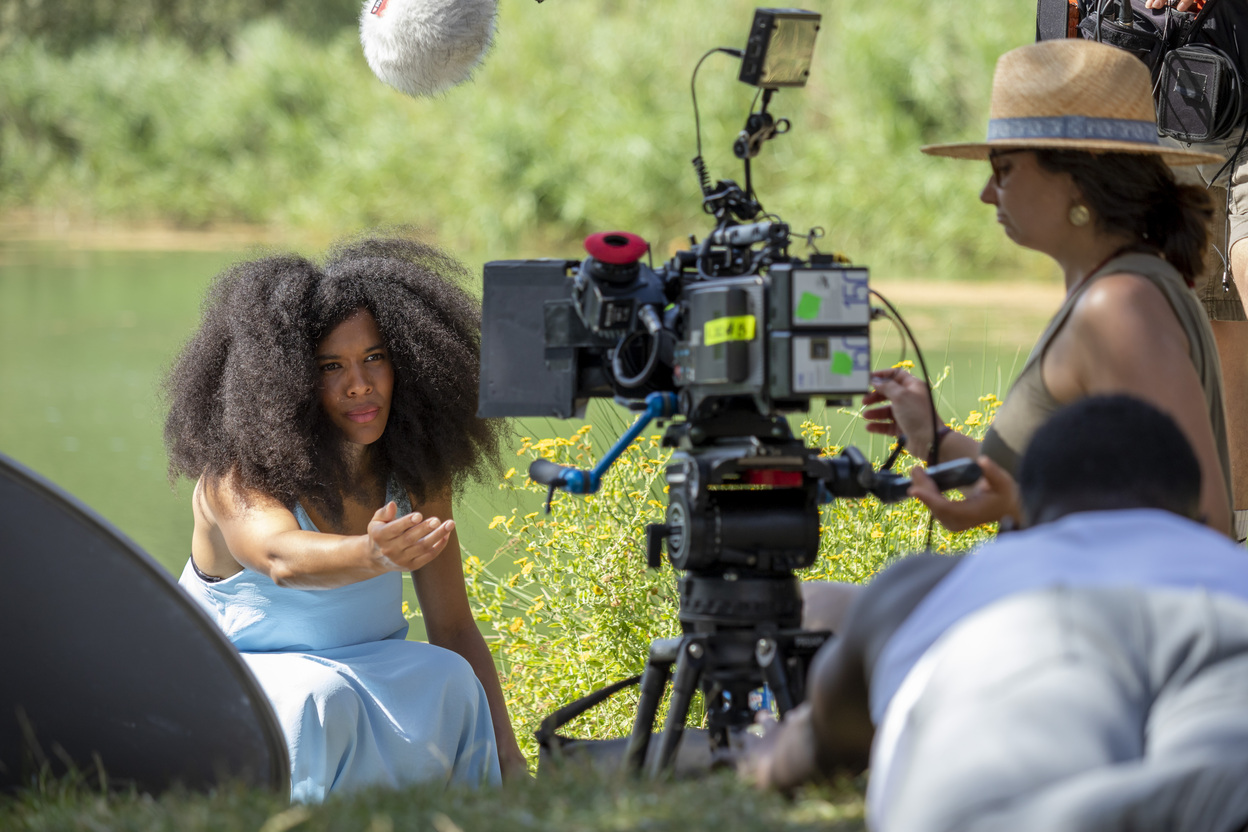
8’46 is part of a long history of Afro-descendant memory marked by violence and resilience. Every second of this film echoes the centuries of oppression endured by Black people, from the transatlantic slave trade to contemporary tragedies. The choice of title, as mentioned earlier, is far from insignificant : 8 minutes and 46 seconds was the time it took to take George Floyd’s life, but it has also become the symbol of all brutalized Black lives.
The short film treats time as a central symbolic element. The time of agony, the time of memory, the time of justice endlessly delayed. For Afro-descendants, time often seems trapped in a tragic loop where violence endlessly repeats itself. 8’46 materializes that loop : the stillness of the character upon the lake evokes both the paralysis of the victim and that of a society struggling to change.
Visually, Radja Delacroix opted for a symbolic and sensory approach in order to address a “fact that became global” (Floyd’s murder) without explicitly showing its physical brutality. This aesthetic choice (not showing in order to make us feel more deeply) allows the film to achieve universal resonance. Dreamlike and metaphorical, the mist-covered lake scene, suspended outside of time, represents the border between life and death, between remembrance and oblivion.
The tormented young man alone embodies the pain of an entire people, while the enigmatic figure facing him could be George Floyd’s spirit, an ancestor guiding his anger, or the personification of divine justice. This multiplicity of meanings gives the short film a spiritual depth that resonates particularly strongly within African and African American diasporas, for whom ancestral memory and the pursuit of justice are intimately connected.
The symbolism of time in 8’46 also invites us to reflect upon the urgency of acting in the present. Every second matters when it comes to saving a life ; George Floyd is tragic proof of that. And every year matters when fighting systemic racism. By turning his film into a silent clock measuring the seconds of the unacceptable, Radja Delacroix confronts us with a question : how much longer will the Black community have to hold its breath in the face of oppression? 8’46 does not claim to provide a definitive answer, but it asks the question with devastating poetic force, engraving an unavoidable truth into our minds ; the time of impunity is running out, while memory is eternal.
A Short Film That Leaves a Mark
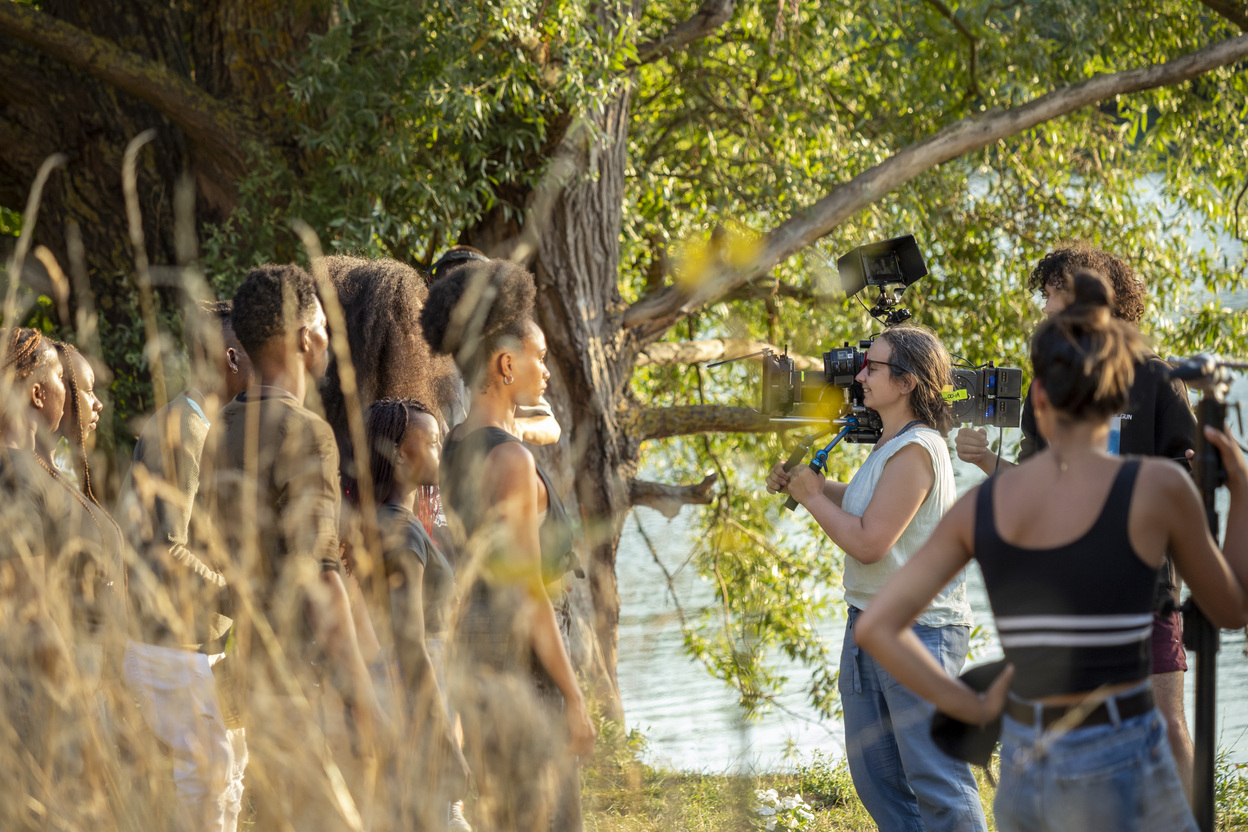
From its earliest screenings, 8’46 generated enthusiastic critical reactions. Presented and awarded at several international festivals, Radja Delacroix’s film impressed juries with its formal boldness and emotional intensity. From independent film festivals in Europe and Africa to events dedicated to human rights, 8’46 was selected for its ability to tackle such a burning subject through an approach that was both original and impactful.
The short film notably received an honorable mention at the Athens festival in Greece, praised for “its universal power and humanistic reach.” Other awards and official selections followed, increasing the visibility of this singular work. Professional critics highlighted the film’s successful balance between aesthetics and message : far from being a simple political manifesto, 8’46 is first and foremost cinema ; cinema of meaning and sensation ; which only amplifies its impact.
Beyond festival circles, 8’46 has begun carving out a place among wider audiences. Discussion screenings have been organized in schools and universities, particularly by teachers eager to address racism and police violence with their students. In high school auditoriums, the striking silence of the film gave way, once the screening ended, to passionate discussions among young people about racism, justice, and the need for change.
Likewise, during community screenings organized by associations (for example in Afro-Caribbean cultural centers), the short film provoked deep emotion and revived memories of other, less publicized victims. Everywhere it is shown, 8’46 questions, educates, and mobilizes. In France, the United States, Senegal, or Brazil, its universal language (that of the body and silence) transcends linguistic barriers to touch diaspora audiences and beyond at the deepest level.
This positive reception suggests a bright future for 8’46. It is not impossible that the power of this short film could open the door to wider distribution, whether through streaming platforms, partnerships with NGOs, or official educational programs. Critics and audiences alike seem to agree : 8’46 is more than a film ; it is a moment of contemplation and awakening, destined to remain as an artistic testimony of the George Floyd era.
The Artistic and Educational Importance of 8’46 for African and Afro-Descendant Diasporas
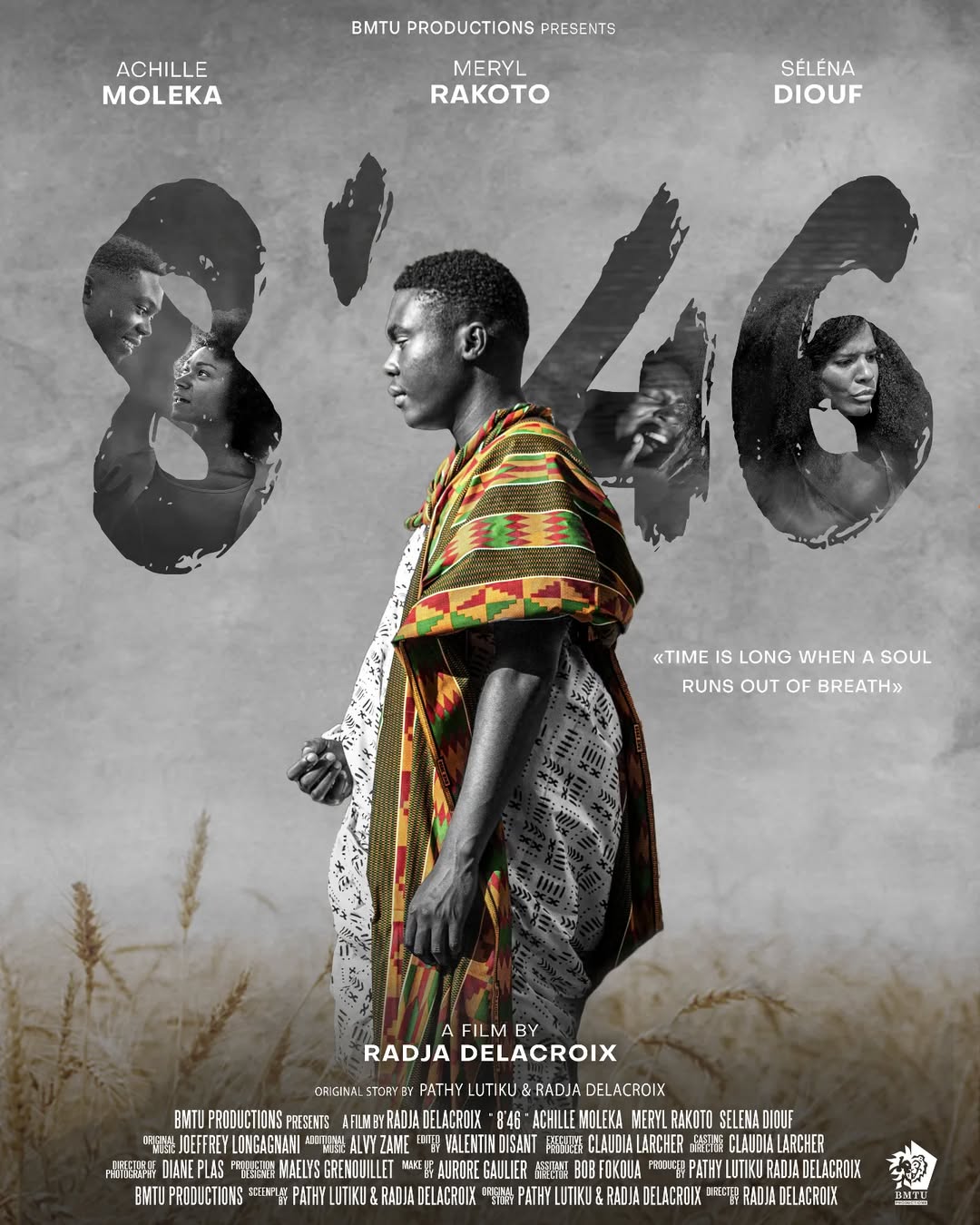
More than a cinematic work, 8’46 is a call ; a call to memory, justice, and solidarity. It is now crucial to make that call resonate as widely as possible. Within African and Afro-descendant diasporas, this short film finds particular resonance : it tells a story that, although born from an event in the United States, belongs to all those who, directly or indirectly, have lived through the legacy of colonialism, slavery, and racial discrimination. For these communities, sharing 8’46 means reclaiming their narrative, inscribing clearly upon the screen that their suffering and struggles matter, that they deserve to be heard and remembered.
But the importance of 8’46 obviously extends far beyond diasporic circles alone. This film deserves to be seen by as many people as possible because it carries a universal message of human dignity and refusal of injustice. To share it is to participate in a process of popular education : offering younger generations a key to understanding the world around them and the mechanisms of systemic racism ; encouraging debate, empathy, and reflection. One could easily imagine 8’46 integrated into educational programs on contemporary history or civic education, given how much social and historical complexity it condenses into just a few minutes of film.
Artistically, 8’46 also deserves the highest praise. Its narrative power and bold stylistic choices make it a rare object within the landscape of French and international short cinema. Supporting its distribution means supporting independent and committed creation ; it means proving that a different cinema (a Black cinema, a cinema of memory and struggle) has every right to exist and every audience waiting for it. In a media universe often saturated with fleeting images, 8’46 stands out as a work that leaves a lasting imprint on the mind.
Thus, whether through screenings at diaspora cultural events, activist film festivals, or even online campaigns, every opportunity to show 8’46 matters. Each of those 8 minutes and 46 seconds projected onto a screen is a seed of consciousness planted within the viewer’s soul. Radja Delacroix has given us a cathartic and necessary film ; it is now up to us to keep it alive and pass it on. 8’46 is a silence that must make noise ; a silence that, hopefully, will help awaken consciences and change the course of time.

