

In 2012, Django Unchained by Quentin Tarantino established itself as an explosive western set against the backdrop of slavery. Many see Calvin Candie as the embodiment of evil. Yet the true nerve center of the system stands in the shadows. Stephen, portrayed by Samuel L. Jackson, is neither a master nor a tragic hero: he is the silent architect of an order he protects with chilling loyalty. Beneath the servant’s livery and trembling voice, the film crafts a character far more complex (and unsettling) than he first appears.
Why Stephen Is More Dangerous Than Calvin Candie
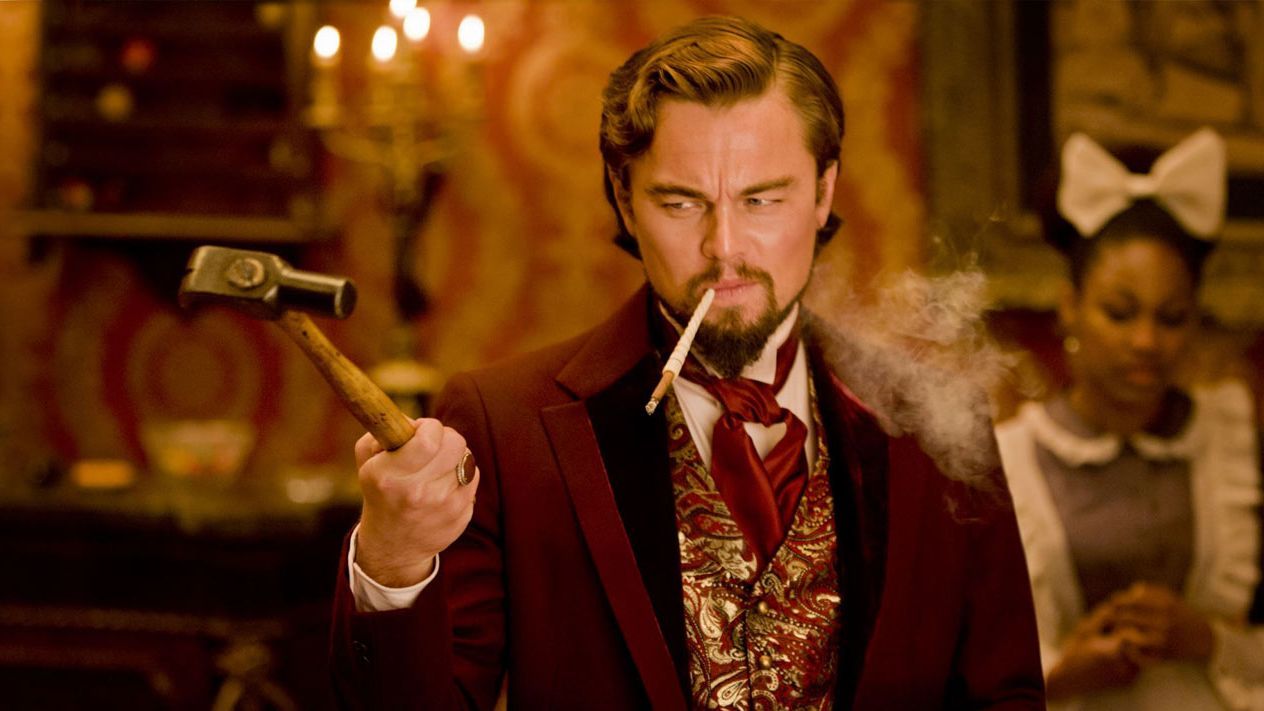
In cinema, evil is often identified through obvious signs. A predatory smile. A perfectly tailored suit. A wealthy man speaking calmly while blood is spilled. In Django Unchained (2012), everything seems designed to make Calvin Candie the “main villain”: a plantation owner, a sadistic aesthete, the heir to a system built on violence. But Tarantino plays with our instincts. He places the center of power somewhere else.
The true antagonist, the character who understands everything before everyone else, who anticipates, calculates, and locks the slave system back into place whenever it threatens to crack, does not wear velvet. He wears a servant’s uniform.
Stephen.
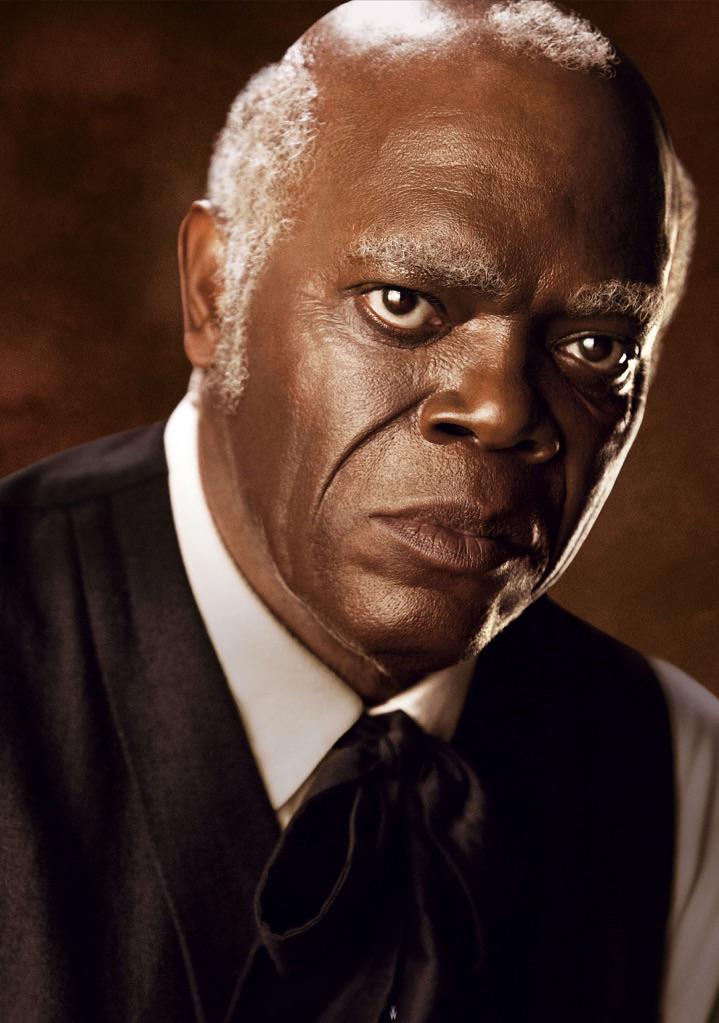
Played by Samuel L. Jackson, Stephen is not merely a “hateful character.” He is a narrative function, a historical mechanism, and a political question: how does a system of oppression protect itself not only through brute force, but through internalization, hierarchy, reward, and fear?
Tarantino does not hide it: Stephen is a guardian of order. And that is precisely what makes him more disturbing than Candie.
The film is set in 1858. It also embraces a degree of stylization that is not always historically “accurate” (weapons, accessories, pacing, western conventions). Tarantino sometimes prefers the truth of genre over documentary precision. Observers have pointed out several anachronisms, particularly the presence of dynamite, which only became widespread well after 1858 (Alfred Nobel patented dynamite in 1867). French critics likewise noted that Django is also a spaghetti-western reinterpretation of slaveholding America, not a historical reconstruction.
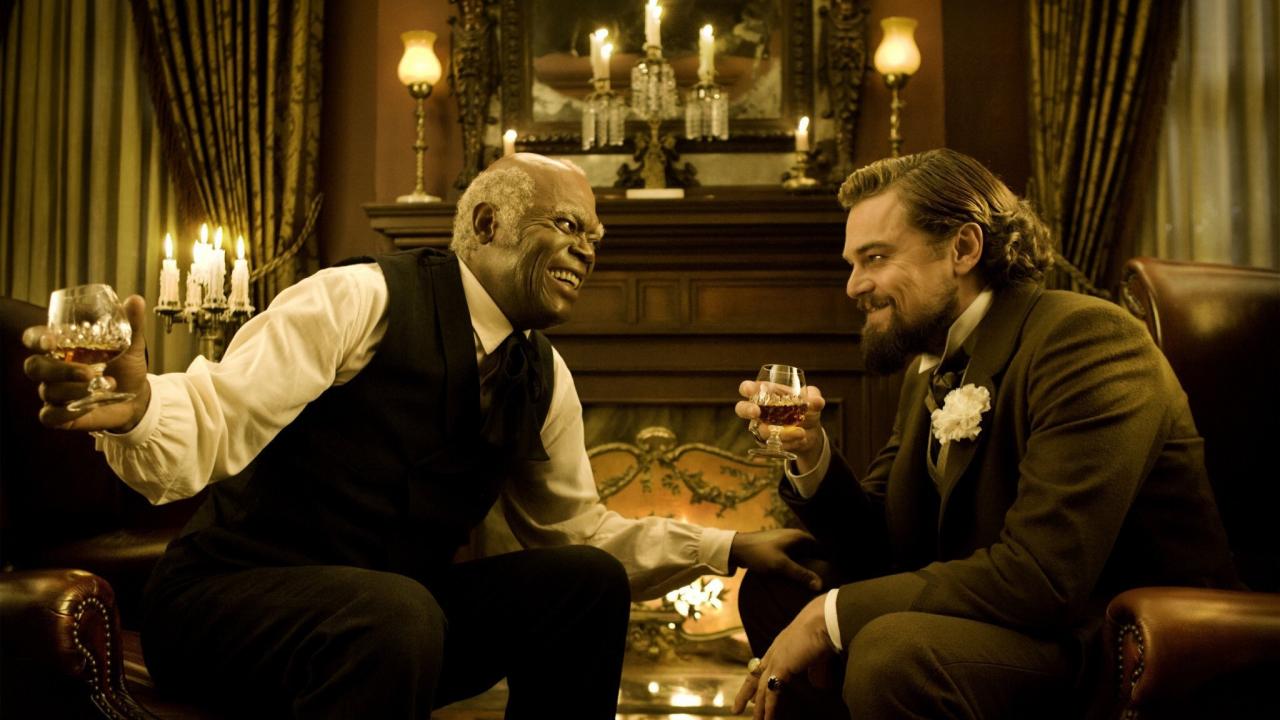
But this is exactly where Stephen becomes fascinating: in a film that embraces excess, he embodies a form of moral realism.
Stephen first appears like a familiar caricature, almost a museum figure: an elderly house servant, hunched posture, whining voice, exaggerated servility. Even an attentive viewer may instinctively think: “he’s pretending, he’ll survive, maybe he’ll help.” Tarantino plants that doubt only to turn it against us.
Because Stephen is not a “frail old man.” He is Candyland’s radar system.
The turning point is Django’s arrival: a Black man on horseback, dressed like an equal, treated like a business partner. The scene shocks Stephen not because he fears a stranger, but because it violates a visual and social code. In the slaveholding world, a Black man riding a horse is not just an image: it is a symbolic threat. A rupture in the staging of power.
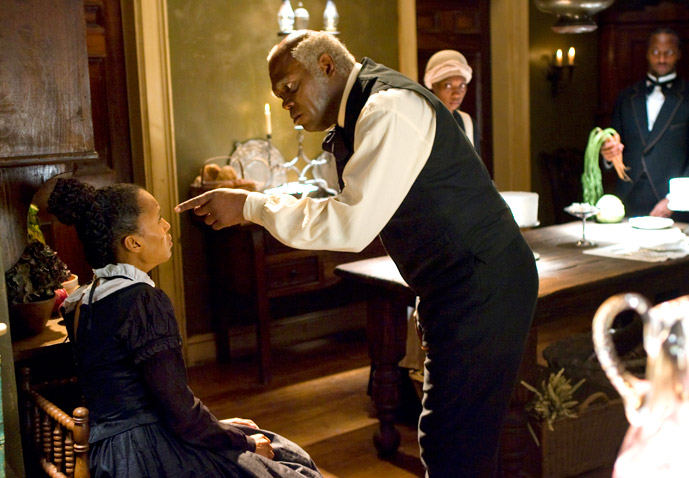
From that moment on, Stephen does what Candie cannot: he reads the signs. While the master plays the grand gentleman, Stephen studies micro-reactions, tests consistency, detects emotion. The dinner sequence becomes an investigation scene. And when he realizes that the “Mandingo fighter” story is a smokescreen, he does not make a public spectacle of it: he isolates, tests, provokes, confirms. It is a cold, efficient, political intelligence.
This reading aligns with a historical framework often used to discuss the character: the opposition between the “house slave” and the “field slave” popularized by Malcolm X in Message to the Grass Roots (speech delivered on November 10, 1963, in Detroit). Malcolm X explained how some enslaved people living closest to the master could come to identify with the “we” of power, while others working in the fields experienced slavery as permanent warfare. Commentators have explicitly connected Stephen to this “house” figure pushed to its extreme.
Still, precision matters: this parallel does not explain everything, and above all it should not become a lazy label. What Tarantino films is less a “type” than a mechanism. Stephen is a cog who understood that he could gain power by becoming indispensable to the system. He is not the master’s illusion: he is the technician of domination.
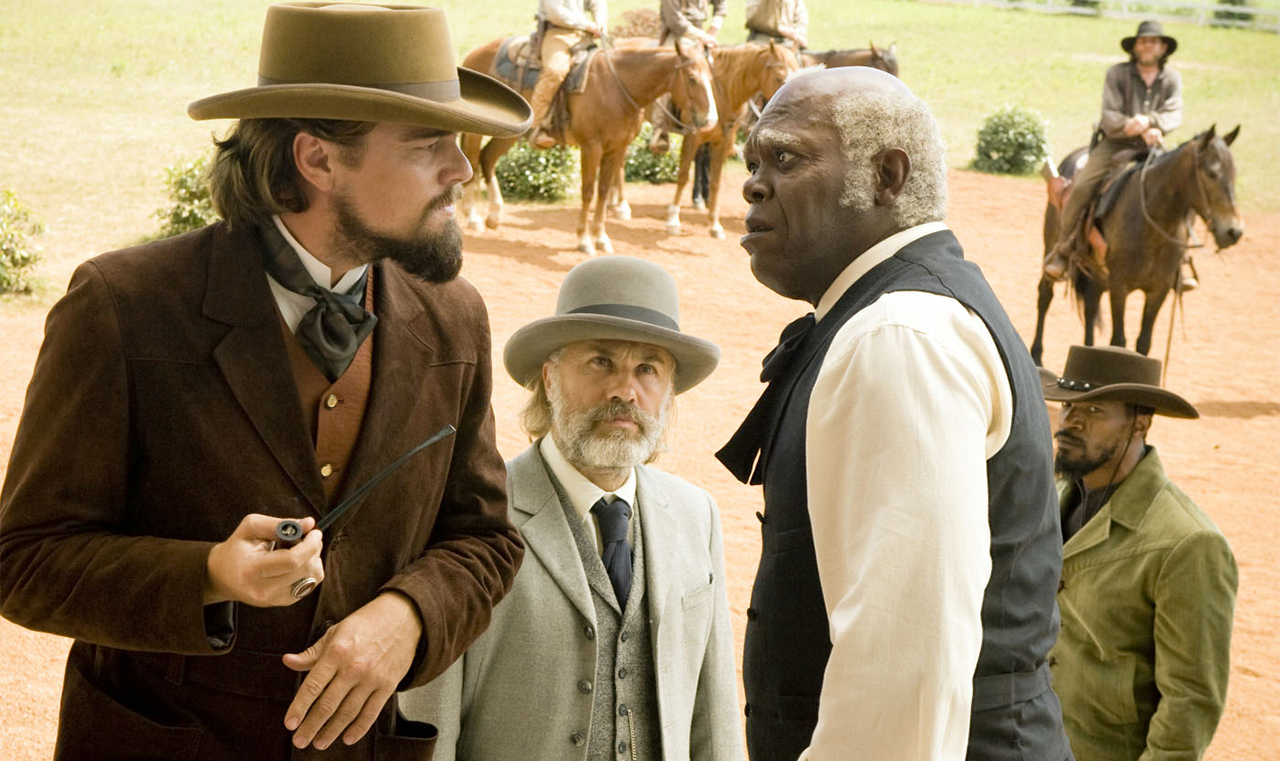
And that is where the film becomes deeply uncomfortable.
When Stephen pulls Candie aside and takes control of the situation, Tarantino is not portraying a servant who “dares to speak.” He is showing an internal hierarchy: Candie owns the plantation, Stephen masters the ecosystem. Several screenplay analyses have noted this implicit inversion: Stephen appears as the one who knows, structures, and “corrects” the plantation owner’s mistakes. Even in mainstream summaries, it is Stephen who detects the lie and warns Candie.
In this logic, Stephen’s cruelty is not simply “personal” cruelty. It serves a function: protecting order, preventing precedent, stopping a Django from becoming contagious. Because Django, within the film’s symbolic economy, represents the forbidden possibility: a Black man who does not ask permission, who plays with the codes, twists them, and succeeds.
Stephen hates that possibility.
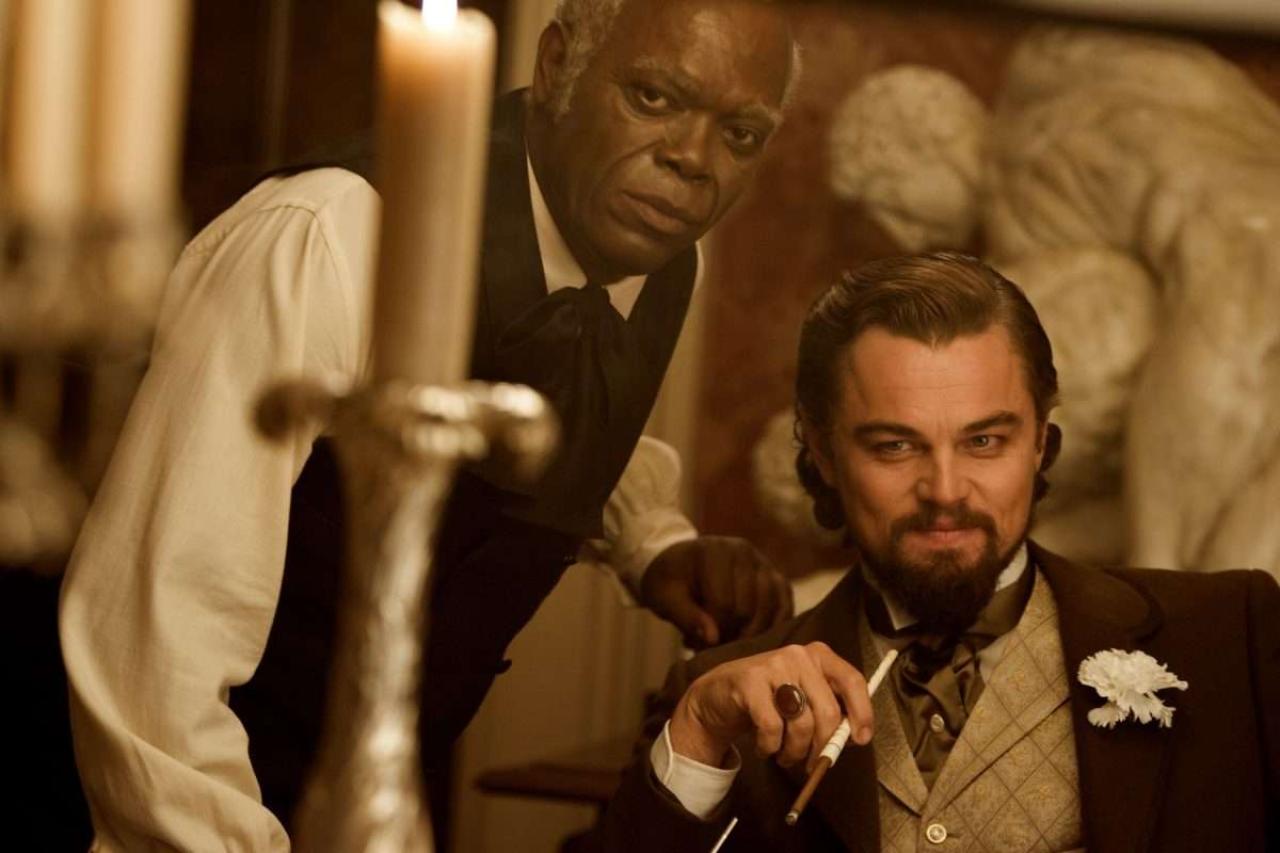
The film makes this explicit through a staging detail many viewers noticed: in the final sequence, Stephen abandons his cane and stands upright, as if the disability itself had been part of the performance; a way of appearing harmless. Tarantino is not merely saying “he is evil.” He is saying: he is an actor. He learned to survive by performing the role the system wanted to see… while secretly directing the system’s violence behind the scenes.
This is where the analysis becomes truly pop culture: Stephen is one of the rare Tarantino characters whose monstrosity is not spectacular. It is bureaucratic. He is not a flamboyant killer, but an administrator of hell. He does not simply enjoy violence: he organizes it, rationalizes it, makes it “necessary.”
And that is why he is more disturbing than Candie.
Candie is an obvious product of slavery: an heir, a sadist, an amateur ideologue. Stephen, however, represents another truth: domination also survives because it creates intermediaries, gatekeepers, people who, in order to survive or gain small margins of power, eventually defend the cage as though it were a home.
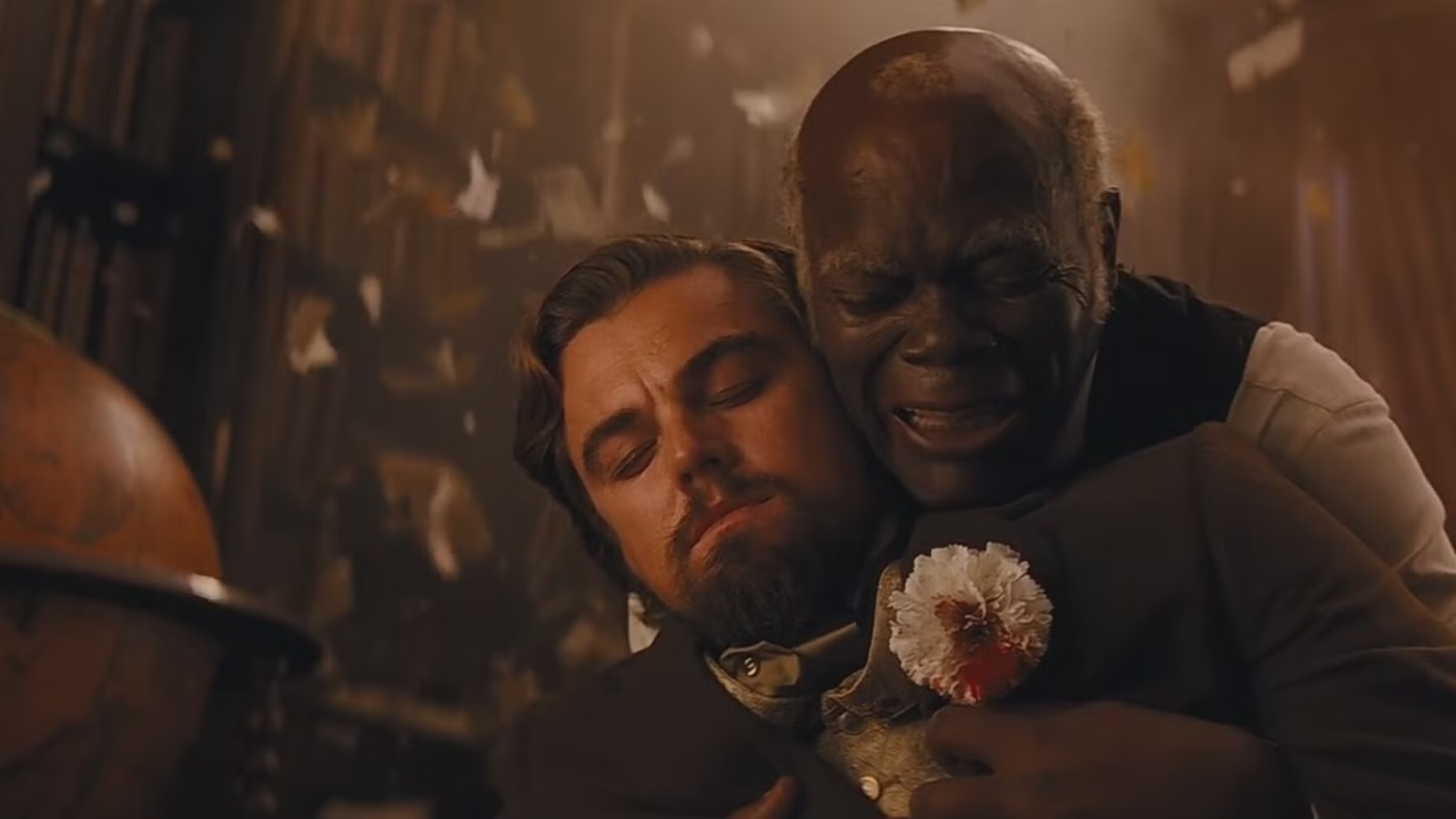
This point is delicate because it can slide toward a dangerous moral conclusion (“they are complicit in their own oppression”). The film does not force any simplistic interpretation. But it does compel one question: when a system endures, it is not only because it crushes people. It is also because it recruits, rewards, fragments, and manufactures loyalty.
That is precisely what Django Unchained stages beneath its excess, deliberate anachronisms, and operatic violence. Tarantino is not writing a history textbook. But he films one thing with rare lucidity: oppression is never simply a relationship between two people. It is an architecture.
And Stephen, within that architecture, is not “the servant.” He is the moral overseer. The lock. The man who prevents history from changing.
Notes and References
- Malcolm X, “Message to the Grass Roots” (November 10, 1963)
- Django Unchained (2012), context and synopsis (set in 1858, role of Stephen)

