

Adapted from the cult novel by Ahmadou Kourouma, the film Allah Is Not Obliged, directed by Zaven Najjar, is arriving in theaters. Inspired by the wars that devastated West Africa in the 1990s, the story follows Birahima, a child plunged into the brutal world of armed conflict. Here are five reasons to discover this important film, which brings one of the most significant novels in contemporary African literature to the screen.
5 reasons to go see Allah Is Not Obliged, the adaptation of Ahmadou Kourouma’s cult novel
The theatrical release of Allah Is Not Obliged marks a special moment for French-language cinema and African literature alike. Adapted from the landmark novel by Ahmadou Kourouma, the film directed by Zaven Najjar brings to the screen a work that has stood for more than twenty years as one of the most powerful texts in contemporary African literature.
Published in 2000, the novel received both the Prix Renaudot and the Prix Goncourt des Lycéens, proof of the impact it had on several generations of readers. It tells the story of Birahima, an Ivorian child who becomes trapped in the civil wars that ravaged West Africa during the 1990s, particularly in Liberia and Sierra Leone.
The film adaptation now offers a new way to experience this story, transforming Birahima’s voice and the world imagined by Kourouma into a striking visual work. Here are five reasons to see this film in theaters this week.
1. Because it is the adaptation of a major work of African literature
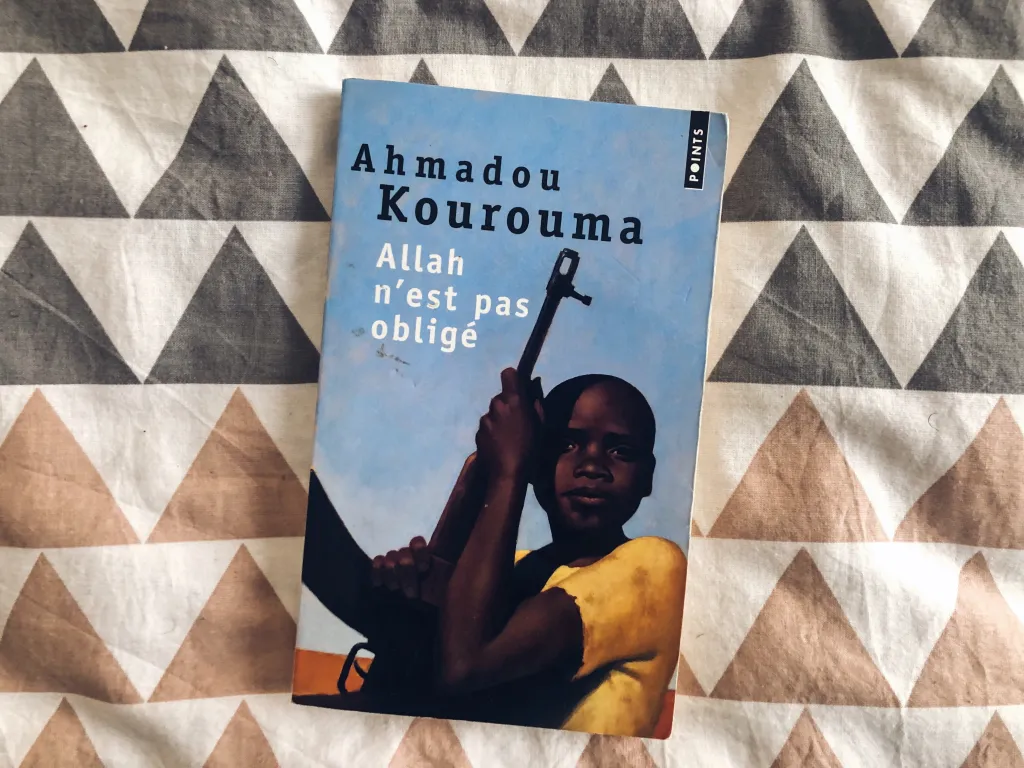
Before becoming a film, Allah Is Not Obliged was first and foremost a classic of French-speaking African literature. When the novel was published in 2000, Ahmadou Kourouma was already a celebrated writer known for works that questioned the political and social realities of postcolonial Africa. But this book marked a particularly important moment in his body of work.
With Birahima as narrator, Kourouma gives voice to a child observing the adult world with brutal lucidity. The novel blends dark humor, irony, and tragedy to tell a deeply unforgettable story.
The book was quickly acclaimed by critics and won several prestigious awards. The Prix Renaudot, awarded the same year the novel was published, confirmed the work’s importance within the French-speaking literary world. The Prix Goncourt des Lycéens, meanwhile, showed that the book also resonated strongly with younger readers.
By adapting the novel for cinema, the film allows a new generation to discover this work. Many viewers who have never read the book will now be able to discover Birahima’s world and the power of Kourouma’s writing.
2. Because the story tells an important historical reality

One of the greatest strengths of Allah Is Not Obliged is that it is grounded in a very real historical reality: the civil wars that devastated West Africa during the 1990s.
The novel moves through several countries scarred by these conflicts: Liberia, Sierra Leone, Guinea, and Côte d’Ivoire. Through Birahima’s journey, the reader — and now the viewer — discovers a world where states have collapsed and armed factions battle each other for power.
In this context, children sometimes become the war’s first victims. Many are forcibly recruited into armed groups and become what are known as child soldiers.
Kourouma’s novel approaches this subject with remarkable lucidity. It shows how these children are manipulated, drugged, and drawn into a cycle of violence whose causes they do not always understand.
But the author does not simply describe violence. He also seeks to reveal the political and economic mechanisms fueling these wars: power struggles, resource exploitation, and foreign intervention.
The film adaptation now makes this story accessible to a broader audience while also shedding light on a recent chapter of African history that remains poorly understood.
3. Because the film adopts a rare perspective: that of a child

What makes Allah Is Not Obliged particularly powerful is its narrative point of view. The entire story is told by Birahima himself.
Birahima is a child, yet he speaks with a bluntness and brutality that sharply contrast with his young age. He explains the world in his own words, often using dictionaries to understand adult vocabulary.
This device gives the story a unique tone. Birahima can shift from a funny remark to an extremely violent description within a few lines. His perspective reveals the absurdity of the situations he faces.
On screen, this point of view offers a different way of portraying war. Rather than focusing solely on battles or military strategies, the film shows how a child experiences war.
This perspective profoundly changes the way viewers understand the events. It reminds us that behind conflicts and political stakes are human lives, often very young ones.
4. Because animation opens up new visual possibilities

The adaptation of Allah Is Not Obliged was not made as a traditional live-action film, but as an animated feature. This artistic choice is especially compelling.
Animation makes it possible to portray extremely harsh situations while maintaining a certain visual distance. It also offers an aesthetic freedom capable of conveying the narrator’s emotions, memories, and perceptions.
In Birahima’s case, this approach notably allows the audience to see how a child perceives the world around him. Landscapes, characters, and scenes of war can be represented in a stylized, sometimes almost dreamlike way.
This kind of staging allows the film to address a serious subject without falling into brutal realism. It also reminds viewers that animation is not only for children, but can also be a powerful tool for telling complex and historical stories.
Many recent animated films have in fact demonstrated that this medium can tackle highly serious subjects, sometimes even more effectively than traditional cinema.
5. Because supporting this film is also a cultural act

Finally, going to see Allah Is Not Obliged in theaters is also a way of supporting a certain kind of cinema.
Adaptations of major works of African literature remain relatively rare in the film industry. Producing and distributing this kind of film is often a gamble for distributors and theater operators.
The turnout during the first weeks is therefore crucial. If audiences show up, it proves there is interest in films that tell African, historical, and literary stories.
Conversely, if these films fail to find an audience, they risk becoming even rarer.
Going to see Allah Is Not Obliged this week therefore also means participating in a broader cultural movement: one that seeks to give African narratives a more important place in international cinema.
A film that extends the power of the novel
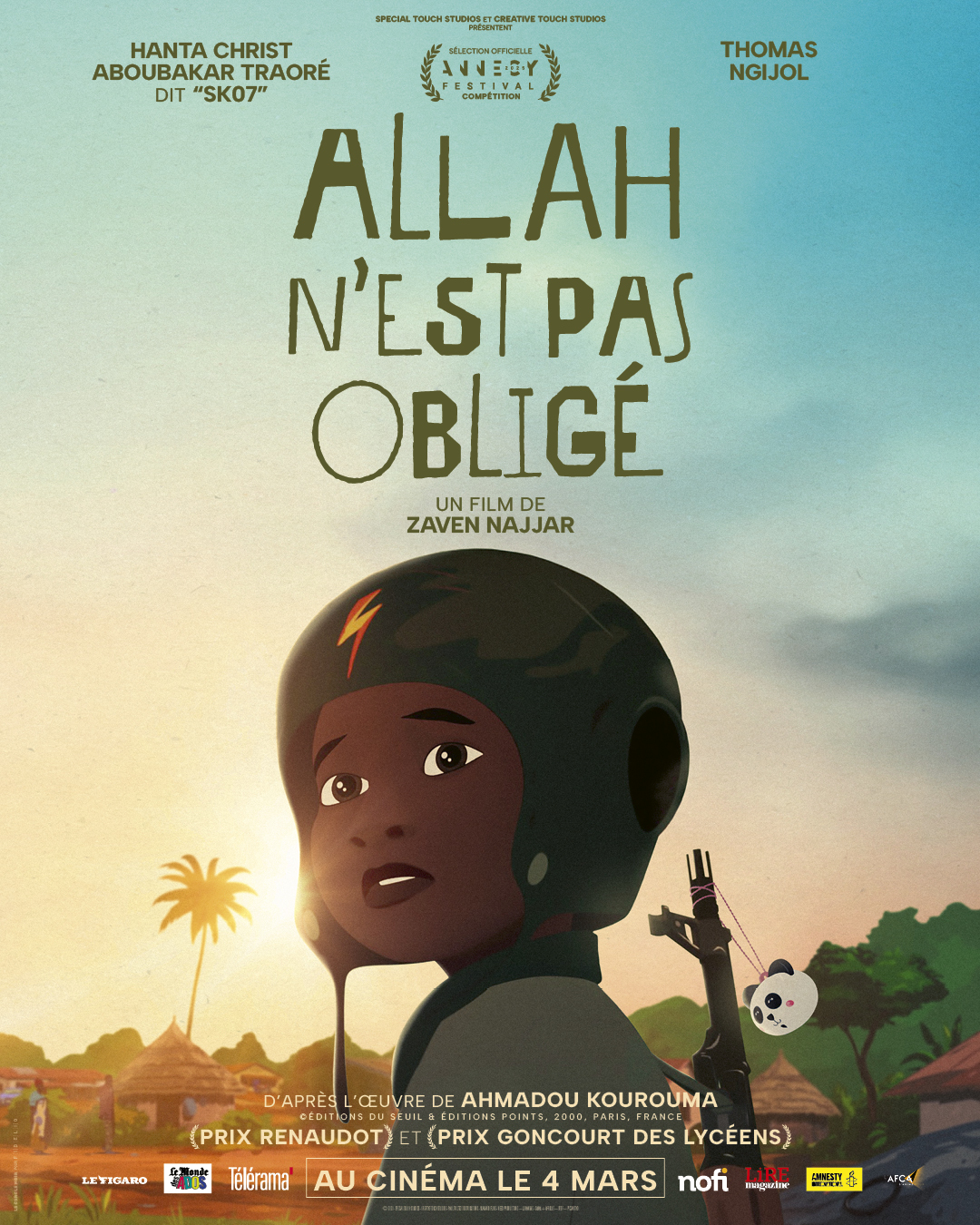
More than twenty years after its publication, Ahmadou Kourouma’s novel continues to be read, studied, and discussed around the world. Its adaptation to cinema now offers audiences the opportunity to rediscover this story in a new format.
Birahima’s journey reminds us that literature can be a powerful way of telling history and understanding the political realities of the contemporary world.
With this adaptation, cinema in turn continues this work of memory and transmission.
And for those who have not yet discovered Kourouma’s work, the film may well become an ideal gateway into one of the most important novels in modern African literature.

