

A charismatic antagonist in The Princess and the Frog, Dr. Facilier has established himself as one of Disney’s most memorable villains of the 21st century. Between vocal performance, Art Deco aesthetics, and the imagined world of Louisiana “voodoo,” the character embodies both the narrative power of the great musical villain and the cultural ambiguities of a Hollywood representation.
Who is Dr. Facilier in The Princess and the Frog?
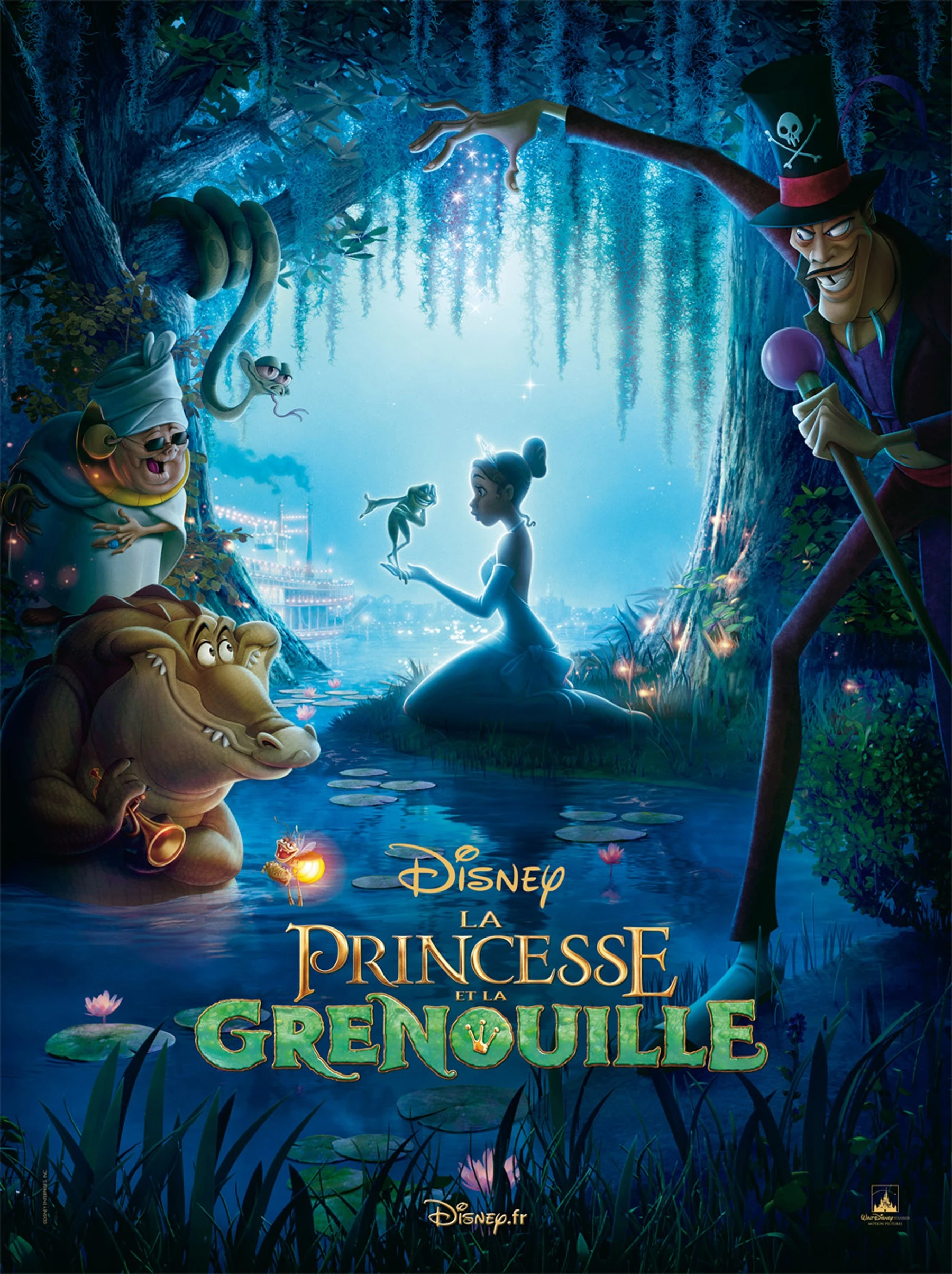
Released in 2009, The Princess and the Frog marked Disney’s openly declared return to traditional two-dimensional animation after a decade dominated by 3D. Directed by Ron Clements and John Musker, the film follows in the lineage of the great animated musicals of the 1990s while setting its story in a stylized 1920s New Orleans.
Within this framework, Dr. Facilier (nicknamed “The Shadow Man”) fulfills a classic role: that of the spectacular villain with a central musical number. But he does more than simply occupy the position inherited from Ursula or Scar. He embodies a distinctly 21st-century figure: a charismatic manipulator, less a tyrant than a social illusionist, promising success through shortcuts and deception.
The decision to anchor the story in Louisiana’s cultural universe is far from neutral. It draws upon the imagery of jazz, bayous, carnival, and a version of “voodoo” fantasized by American cinema since the early 20th century. Facilier was designed to embody this nocturnal and mysterious atmosphere, which 2D animation allows to be stylized with remarkable visual freedom.
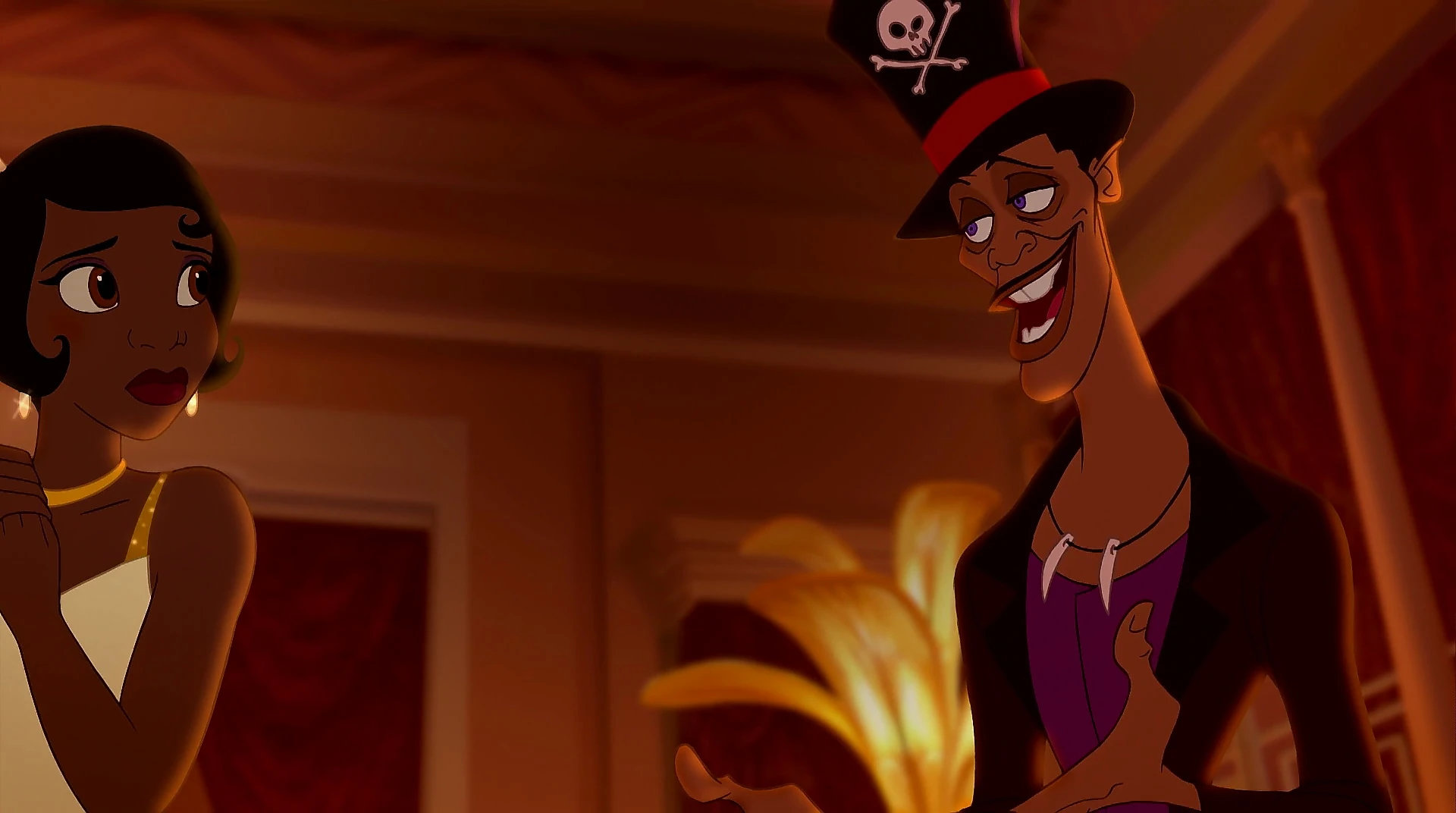
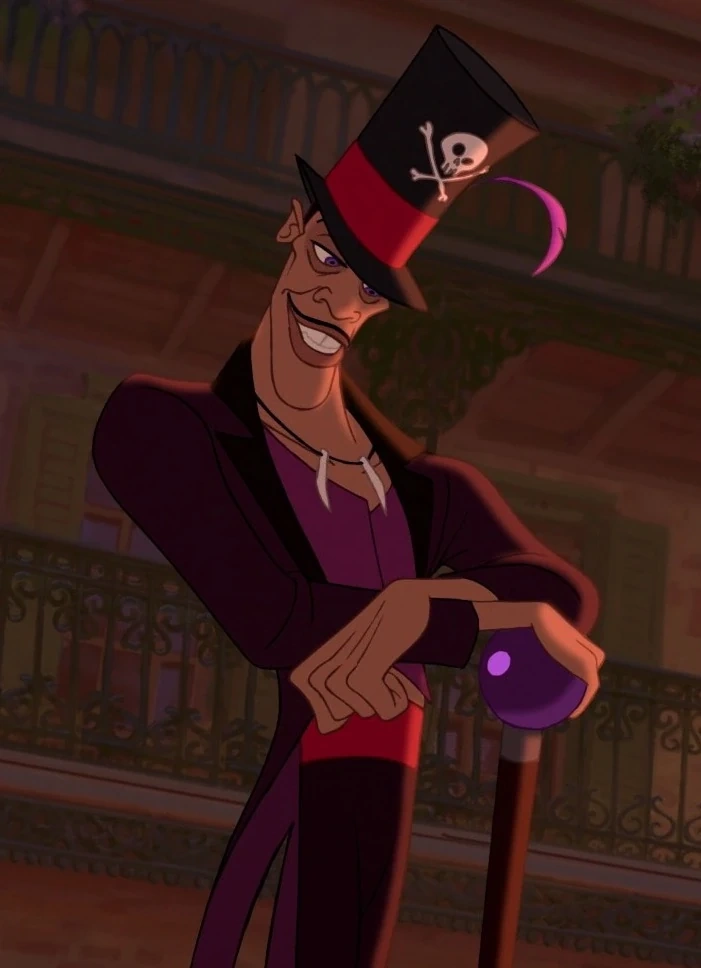
From his very first appearance, Dr. Facilier is constructed as a performance. A slender silhouette, dark suit, top hat, and a color palette dominated by purple and acid green: his design evokes Art Deco aesthetics and traveling carnival posters. He is not an archaic sorcerer; he is a showman.
His body language reinforces this theatrical dimension. He bows, presents, improvises, and occupies space like a master of ceremonies. This performative quality is amplified by Keith David’s voice, whose smooth and deep tone gives the character a seductive authority. The vocal performance does not aim for cartoonish excess but persuasion. Facilier does not scream; he convinces.
One of his most striking visual traits remains his shadow, endowed with a degree of autonomy. The shadow acts as a double, a malicious extension highlighting the character’s hidden intentions. In Disney animation history, the motif of the double is not new, but here it becomes a dramaturgical tool: the shadow expresses what Facilier conceals. It materializes the occult side of the bargain.

Narratively, Facilier is not a direct conqueror. He acts through intermediaries. His power is built upon the “deal”: promising each person what they desire most in exchange for a deferred debt. Prince Naveen, broke and carefree, accepts a pact meant to restore his wealth and status. Lawrence, his frustrated valet, becomes an accomplice out of social resentment.
The dramatic mechanism revolves around the talisman, an object concentrating power and determining the success of the plan. Facilier is not omnipotent; he depends on “friends on the other side,” invisible entities to whom he owes a debt. This dependence introduces an additional layer of tension: the manipulator himself is bound by obligation.
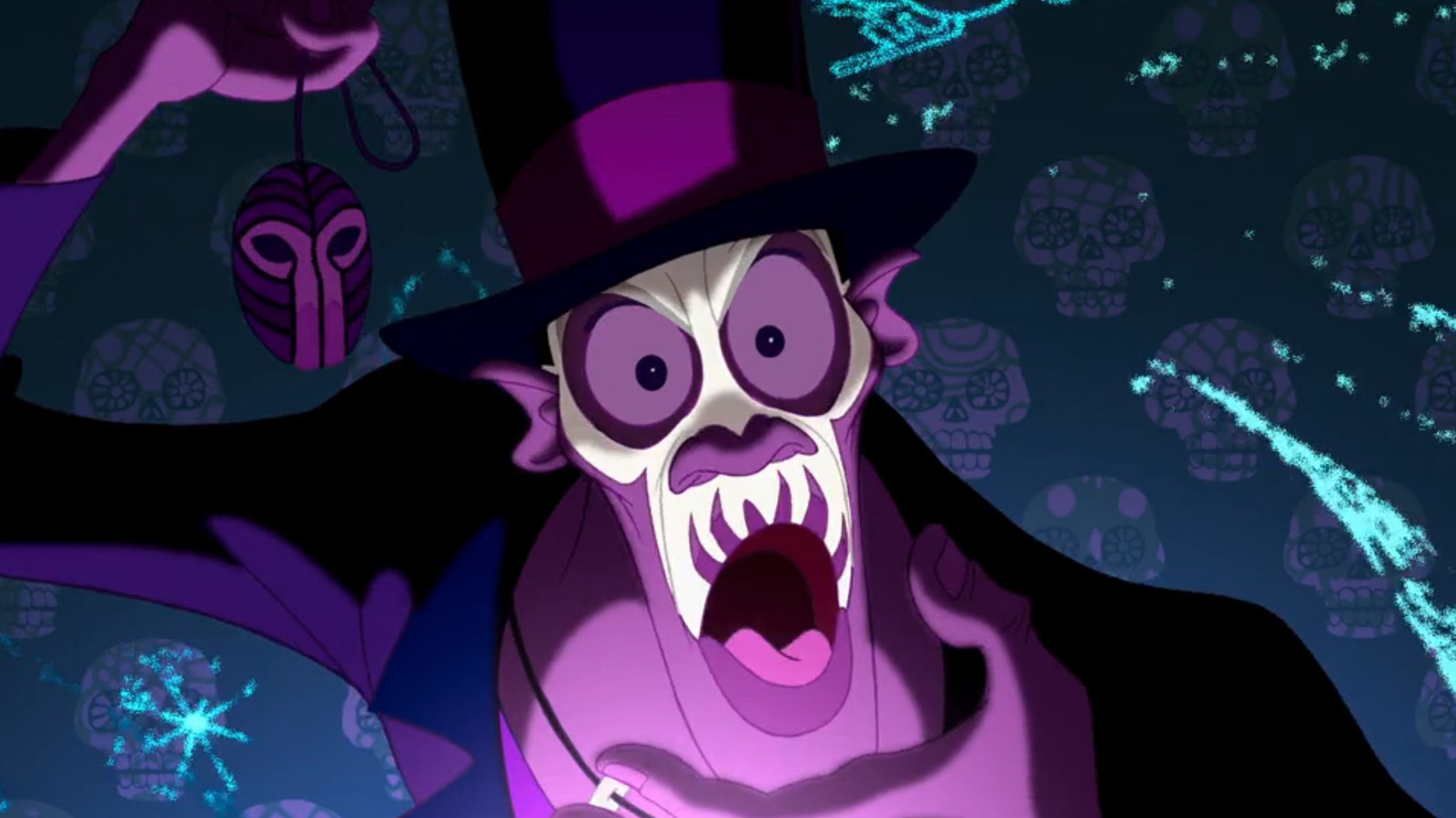
The song “Friends on the Other Side” crystallizes this entire structure. More than a classic musical number, it functions as a scene of persuasion. Facilier does not sing to assert his power; he half-speaks, half-sings, explaining, suggesting, constructing a desirable future. The viewer witnesses a staging of manipulation. The visual illusion (animated tarot cards, silhouettes, saturated colors) heightens the dizzying sensation.
The film uses the term “voodoo” to describe Facilier’s practices. However, it is important to distinguish the Vodou religion, historically linked to Haiti and the African diaspora, from Afro-Louisianan practices (often referred to as hoodoo or conjure), and from the Hollywood imagination that merges these traditions under an occult aesthetic.
The voodoo doll, dark spirits, and demonic masks belong more to cinematic tradition than to rigorous ethnographic representation. The film offers a fantastical stylization rather than a documentary portrait. It belongs to a long line of American productions associating “voodoo” with black magic and demonic pacts.
This stylization raises a cultural question: how can an Afro-diasporic imaginary be integrated into mainstream storytelling without reducing it to cliché? The Princess and the Frog opts for openly embraced fantasy. Facilier is not an identifiable religious priest; he is a fictional figure drawing upon available symbols.
The film’s central dynamic rests upon the contrast between Tiana and Facilier. Tiana embodies the ethic of hard work inherited from her father: advancement through effort, discipline, and patience. Facilier embodies advancement through shortcuts, bargains, and illusion.
This opposition goes beyond simplistic morality. It interrogates social desire itself. In a context where economic success is highly valued, shortcuts become tempting. Facilier promises an immediate future; Tiana builds toward a delayed project. The dramatic conflict culminates when the villain attempts to use Tiana’s own dream against her, offering her an instant version of her ambition.
The difference lies in the hierarchy of values. Where Facilier instrumentalizes desire, Tiana learns to distinguish between dreams and attachment. The film associates illusion with self-loss and patience with lasting construction.
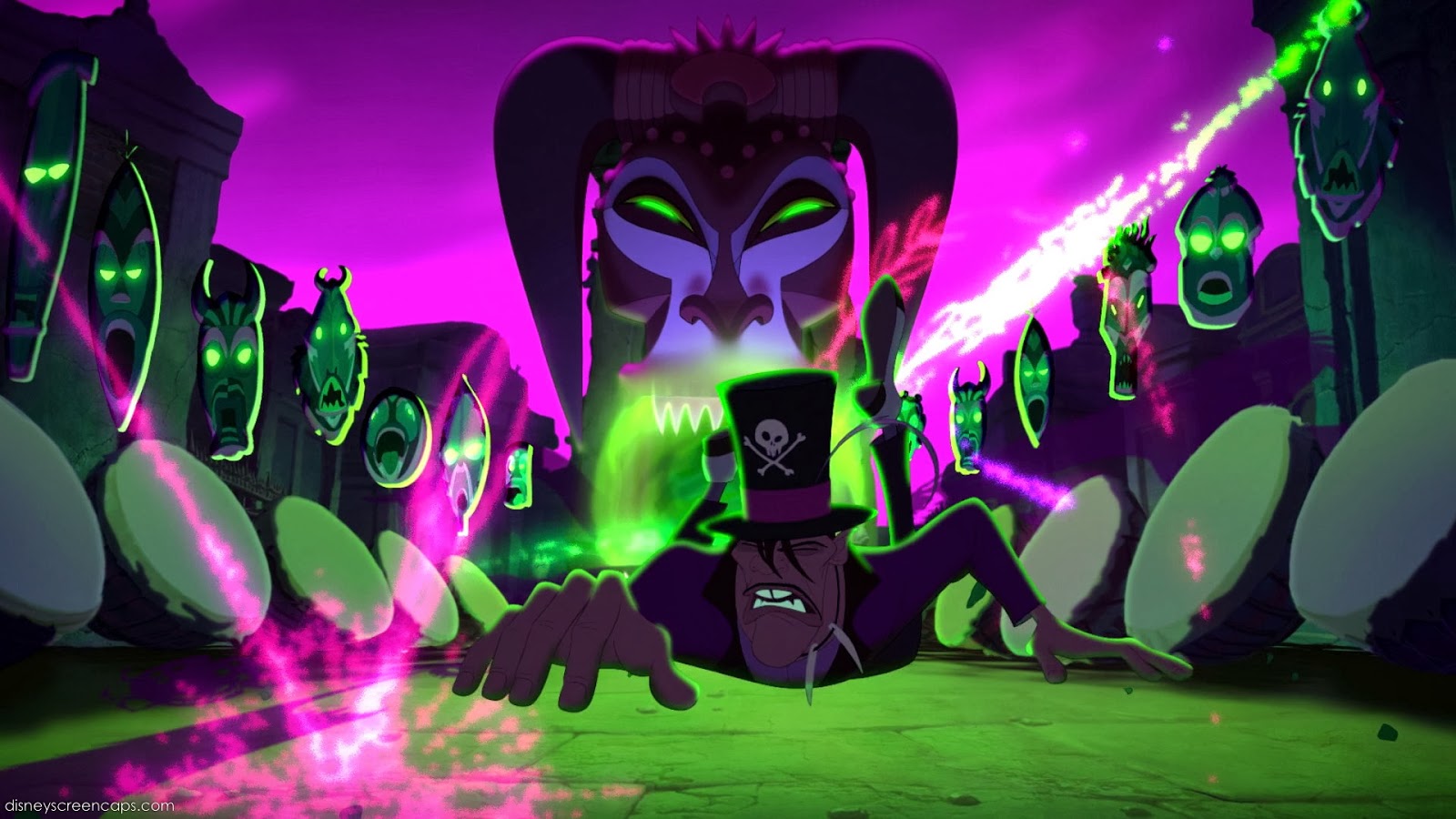
Facilier’s death (dragged away by the spirits from whom he borrowed his power) concludes the logic of the bargain. The manipulator is ultimately overtaken by the debt he incurred. This spectacular ending reconnects with a Disney tradition in which the villain falls victim to his own excess.
In popular memory, Facilier remains a striking antagonist. His charisma, musical number, and singular aesthetic secure his place among Disney’s great villains. He also represents a turning point: the moment when Disney reaffirmed the strength of the theatrical villain in an era dominated by more ambiguous antagonists.
Dr. Facilier thus embodies a tension inherent to contemporary animated cinema: fascination with specific cultural universes, spectacular stylization, and the necessity of a clearly identifiable antagonist. He is both the product of a tradition (the great musical villain) and the figure of a narrative modernity in which power operates through persuasion rather than brute force.
The question is not whether Dr. Facilier is merely a cliché or a masterpiece of psychological complexity. He is above all a powerful narrative device, condensing spectacle, manipulation, and cultural imagination into a coherent visual form. His significance lies in this synthesis: a villain both seductive and doomed, charismatic yet dependent, master of ceremonies and prisoner of his own debt.
In that sense, he confirms the vitality of the traditional musical villain and reminds us that, in Disney animation, the antagonist often remains the most memorable driving force of the narrative.
Notes and references
- Clements, Ron, and John Musker, dirs. The Princess and the Frog. Walt Disney Animation Studios, 2009.
- Lester, Neal A. “Disney’s The Princess and the Frog: The Pride, the Pressure, and the Politics of Being a First.” The Journal of American Culture 33, no. 4 (2010): 294–308.
- Miller, Monica L. Slaves to Fashion: Black Dandyism and the Styling of Black Diasporic Identity. Durham: Duke University Press, 2009.
- Musker, John, and Ron Clements. The Art of The Princess and the Frog. San Francisco: Chronicle Books, 2009.
- Taylor, Patrick. The Narrative of Liberation: Perspectives on Afro-Caribbean Religions and Culture. Kingston: University of the West Indies Press, 2004.
- Thompson, Krista, and Claire Tancons, eds. En Mas’: Carnival and Performance Art of the Caribbean. New York: Duke University Press, 2015.

