

At the heart of the African diaspora in the Caribbean, the Abakuá society represents one of the most fascinating legacies of African traditions transplanted into the New World. Born in Cuba during the 19th century, this initiatory brotherhood traces its roots to the secret societies of the Cross River region, between Nigeria and Cameroon.
The history of the modern Atlantic world cannot be understood without considering the forced circulation of African peoples, cultures, and institutions toward the Americas between the 16th and 19th centuries. Among the most remarkable legacies of this diaspora is the Abakuá initiatory society, a fraternal organization born in Cuba during the 19th century but deeply rooted in the traditions of the Cross River basin, a region located between present-day southeastern Nigeria and western Cameroon. Today, Abakuá remains one of the most striking examples of African cultural continuity within Afro-American societies. Its existence demonstrates that the Atlantic slave trade did not merely displace populations, but also symbolic, religious, and political systems that were reinterpreted and reconstructed within the colonial contexts of the Americas.
Abakuá: the Afro-Cuban secret brotherhood inherited from Africa
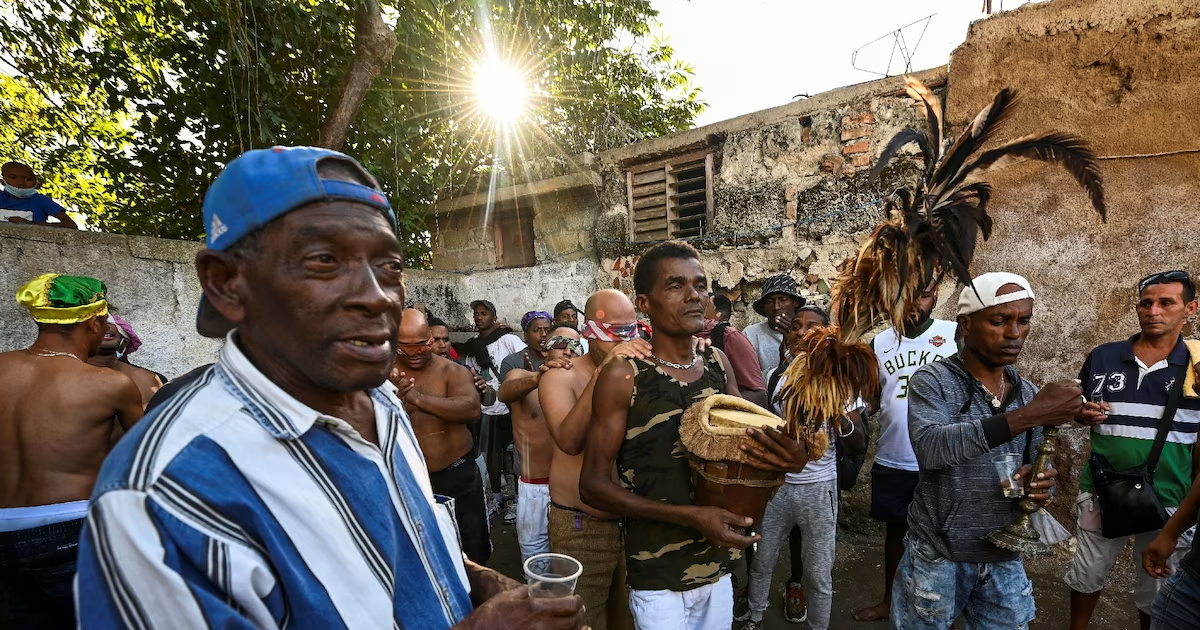
To understand the origins of Abakuá, one must return to the African societies that gave birth to it. In the Cross River region, traditional societies relied heavily on initiatory structures that organized social, political, and religious life. The Efik, Ejagham, and Efut peoples shared a system in which certain brotherhoods held essential functions of social regulation. Among these institutions, the Ekpe society occupied a central position. It functioned simultaneously as a moral authority, a customary court, and an instrument for controlling commercial exchanges. Membership in Ekpe involved a complex initiatory process granting access to symbolic knowledge and to a network of influence within the community.
The symbolism of the leopard, an emblematic animal of power and sovereignty, occupied a fundamental place in the imagination of the Ekpe society. Initiated members recognized one another through an elaborate system of signs, chants, and rituals whose meaning was strictly reserved for initiates. This organization contributed to the political balance of the Cross River city-states. It mediated conflicts, punished infractions, and supervised economic relations, especially in the ports already integrated into Atlantic trade networks.


The expansion of the slave trade beginning in the 17th century profoundly disrupted these societies. The ports of the Cross River region, particularly Calabar, became major centers of the slave trade supplying plantations throughout the Americas. Thousands of men and women from the peoples of this region were deported to the Spanish and Portuguese colonies. Cuba, whose sugar economy expanded considerably during the 19th century, received a significant portion of these populations.
The captives transported to the plantations were not merely forced laborers. They also carried religious, linguistic, and institutional traditions that would deeply shape colonial societies in the Americas. In the port cities of Cuba, particularly Havana and Matanzas, Africans and their descendants organized community associations known as cabildos de nación. These organizations enabled members of the same African origin to preserve certain cultural and religious practices despite the constraints of the slave system.


It was within this context that the initiatory traditions of the Cross River region were progressively reconstructed. Around 1836, in the town of Regla near Havana, a group of Afro-Cubans founded a brotherhood inspired by the structures of the Ekpe society. This organization took the name Abakuá. Although adapted to the Cuban colonial context, it preserved many symbolic and ritual elements inherited from its African origins.
Abakuá was structured as a male initiatory brotherhood. Access to the fraternity depended on a series of complex ceremonies marked by solemn oaths and the transmission of symbolic knowledge. Members pledged themselves to strict principles of loyalty and solidarity. The brotherhood was divided into different branches known as potencias, each possessing its own ritual traditions while remaining connected to a shared symbolic corpus.
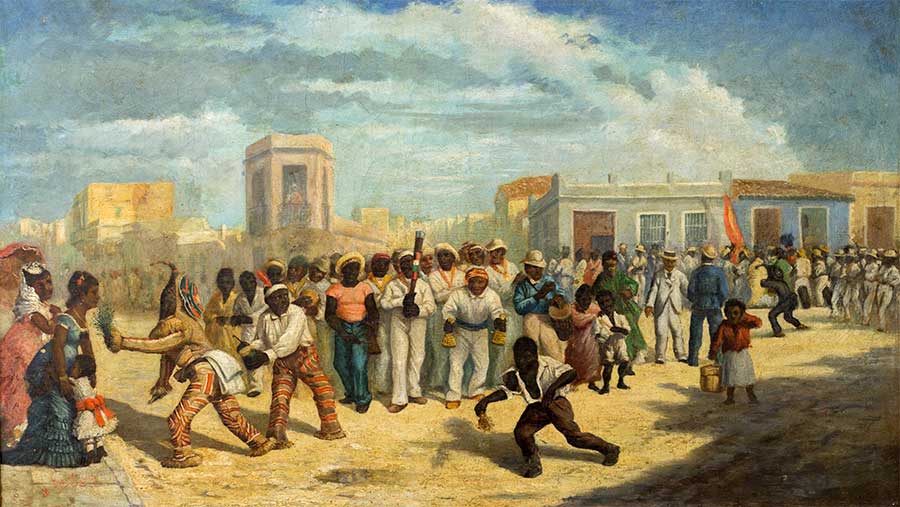
At the heart of Abakuá cosmology lies a foundational narrative centered around a female figure named Sikán. According to tradition, this woman discovered the sacred secret of the brotherhood after hearing the mystical voice of a sacred fish. The revelation of this secret allegedly led to her condemnation. This mythical narrative symbolically marks the separation between the profane world and the initiatory space of the brotherhood. It also underscores the strictly male character of the organization.
Abakuá ceremonies are characterized by a strong performative dimension. Sacred drums occupy a central place within the rituals. They serve to transmit symbolic messages and invoke the spiritual forces associated with the brotherhood. Ritual chants are performed in a particular language called bríkamo. This ritual language combines African and Creole linguistic elements whose meaning remains largely incomprehensible to non-initiates.
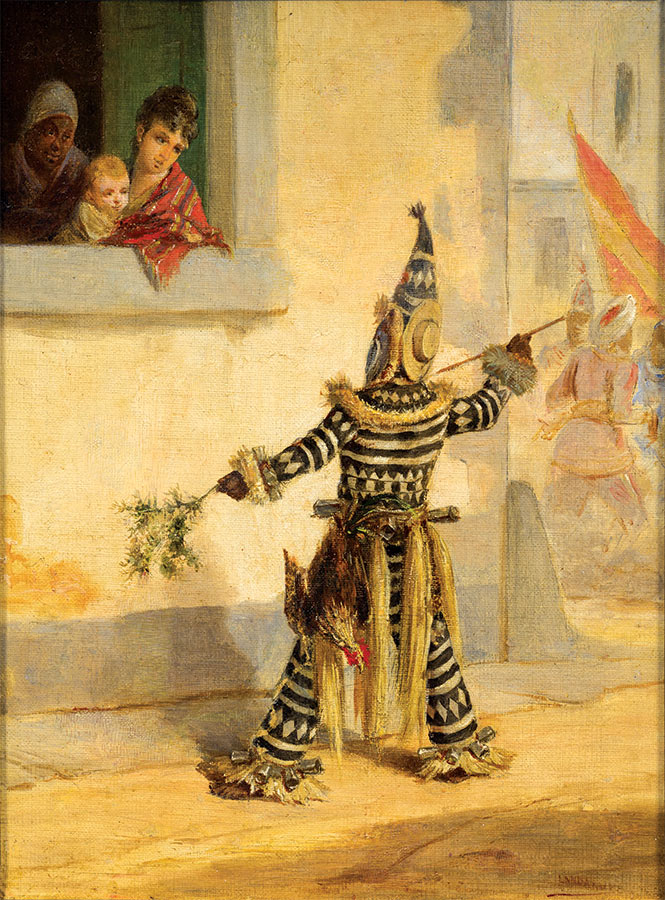
One of the most spectacular aspects of Abakuá ceremonies is the appearance of the masked figure known as Íreme. This character embodies a protective spirit of the brotherhood. Its colorful costume and choreographed movements follow a precise symbolic code. The Íreme acts as a mediator between the visible world and the spiritual universe that structures the imagination of the brotherhood.
Within 19th-century Cuban society, Abakuá developed primarily in working-class neighborhoods linked to port activities. Dockworkers, craftsmen, and harbor laborers made up a large proportion of its members. This social implantation contributed to the brotherhood’s ambivalent reputation. On one hand, it was perceived as an organization of solidarity and mutual protection. On the other, it aroused the suspicion of Spanish colonial authorities, who viewed these secret societies as a potential threat to the established order.
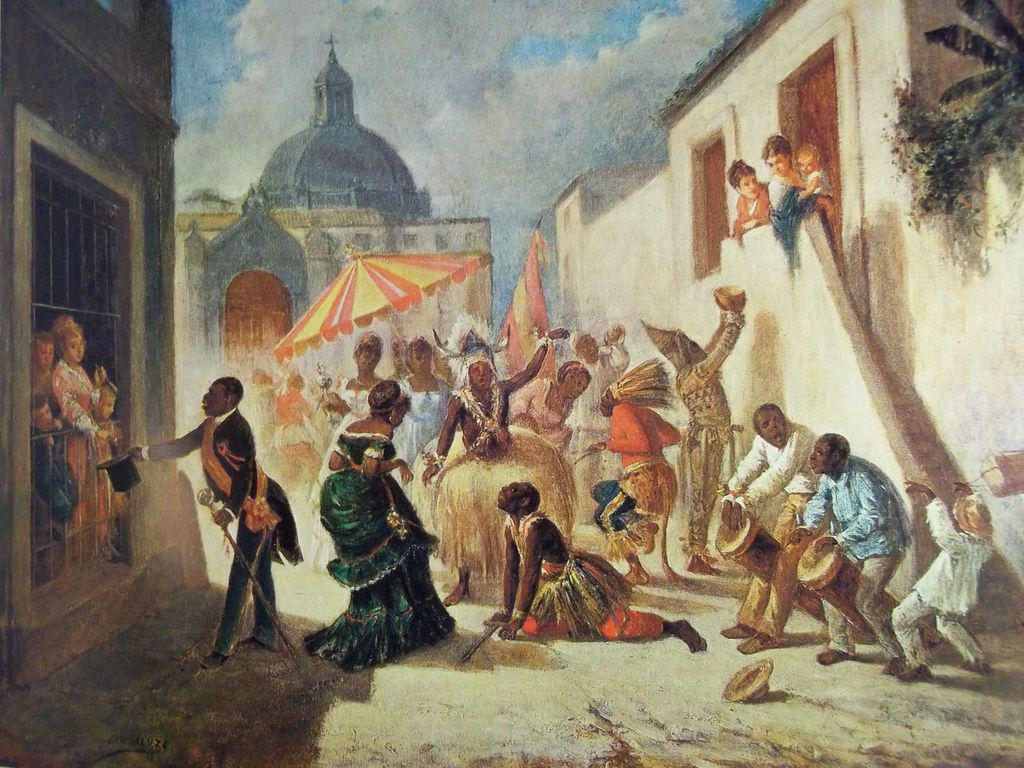
The authorities attempted on several occasions to repress the activities of the Abakuá. However, the initiatory structure and secretive character of the organization allowed it to survive. Over time, the brotherhood became a lasting component of the Afro-Cuban cultural landscape.
The influence of Abakuá extends far beyond initiatory rituals. It progressively spread into several domains of Cuban culture. Music constitutes one of the principal vectors of this influence. The rhythms and chants associated with Abakuá ceremonies nourished certain forms of rumba and Afro-Cuban music. Musicians and composers incorporated these motifs into their creations, helping to spread this heritage beyond the circle of initiates.
The cultural impact of the brotherhood is also evident in popular language. Certain terms derived from Abakuá ritual vocabulary entered Cuban slang. This linguistic diffusion testifies to the gradual integration of the brotherhood into the social imagination of the island.
The existence of Abakuá reminds us that societies born from the African diaspora were not constituted solely through rupture. Despite the extreme violence of slavery and the dispersal of African populations across the Atlantic, certain traditions were preserved and reinterpreted within new historical contexts.
The Abakuá brotherhood thus represents an exceptional form of cultural continuity. It illustrates the ability of Afro-descendant communities to reconstruct symbolic institutions despite the conditions imposed by the colonial system. Through its rites, chants, and myths, it maintains a living connection with the Cross River African societies from which it originated.
Even today, in certain neighborhoods of Havana and Matanzas, Abakuá ceremonies continue to be celebrated. They testify to the persistence of an African memory within Caribbean societies. This survival reminds us that the history of the Black Atlantic cannot be reduced solely to a history of oppression. It is also the story of a remarkable capacity for cultural resistance and symbolic transmission.
Notes and references
- Fernando Ortiz. Los negros brujos. Havana: Editorial de Ciencias Sociales, 1906.
- Fernando Ortiz. La africanía de la música folklórica de Cuba. Havana: Editorial Universitaria, 1950.
- Ivor L. Miller. Voice of the Leopard: African Secret Societies and Cuba. Jackson: University Press of Mississippi, 2009.
- Donald Simmons. The Efik People. London: Routledge, 1968.
- Robert Farris Thompson. Flash of the Spirit: African and Afro-American Art and Philosophy. New York: Random House, 1983.
- David H. Brown. Santería Enthroned: Art, Ritual, and Innovation in an Afro-Cuban Religion. Chicago: University of Chicago Press, 2003.
- Paul Gilroy. The Black Atlantic: Modernity and Double Consciousness. Cambridge: Harvard University Press, 1993.
- Stephan Palmié. The Cooking of History: How Not to Study Afro-Cuban Religion. Chicago: University of Chicago Press, 2013.

