

Published in 2000, Allah Is Not Obliged by Ahmadou Kourouma is one of the most significant African novels of the late 20th century. Twenty-six years after its release, the work has been adapted for the screen by Zaven Najjar and is now showing in theaters. An opportunity to revisit a major book that profoundly shaped Francophone literature by recounting, through the raw voice of a child, the wars that devastated West Africa.
Allah Is Not Obliged: Ahmadou Kourouma’s Novel About the Hell of Child Soldiers Arrives in Cinemas
When Allah Is Not Obliged was published in August 2000 by Éditions du Seuil, the novel immediately established itself as a literary event. That same year, the book won the Prix Renaudot as well as the Prix Goncourt des Lycéens, two of the French literary world’s most prestigious awards.
But beyond the accolades, it was above all the power of the subject matter and the uniqueness of the writing that struck readers. Ahmadou Kourouma tackled a subject rarely explored in Francophone literature at the time: the phenomenon of child soldiers in the civil wars of West Africa.
The author, already renowned for novels such as The Suns of Independence and Waiting for the Wild Beasts to Vote, continued here his critical examination of the political violence that shaped the contemporary history of the African continent. The title of the book itself sets the tone. It refers to a recurring phrase from the narrator:
“Allah is not obliged to be fair in all His things here below.”
A phrase at once ironic and tragic, summing up the absurdity of a world where children are dragged into war.

The novel is narrated by Birahima, a twelve-year-old Ivorian boy from Togobala. After the death of his mother, disabled and impoverished, the child sets out in search of his aunt living in Liberia.
For this dangerous journey, he is accompanied by Yacouba, an ambiguous figure whom Birahima describes as “the lame bandit, banknote multiplier, and Muslim fetish priest.” Very quickly, their journey draws them into the heart of the wars ravaging the region.
In Liberia and later Sierra Leone, Birahima is recruited into various armed factions. He becomes a child soldier, plunged into a universe of extreme violence where drugs, executions, looting, and massacres intertwine.
Through this wandering journey, the novel crosses several West African countries: Guinea, Sierra Leone, Liberia, and Côte d’Ivoire. The voyage becomes a brutal portrait of the civil wars that scarred the region during the 1990s.
But what makes the narrative particularly striking is that everything is told from the child’s own perspective. Birahima observes the world with a mixture of naïveté, humor, and brutality. His gaze reveals the total absurdity of a war in which adults have lost all moral sense.
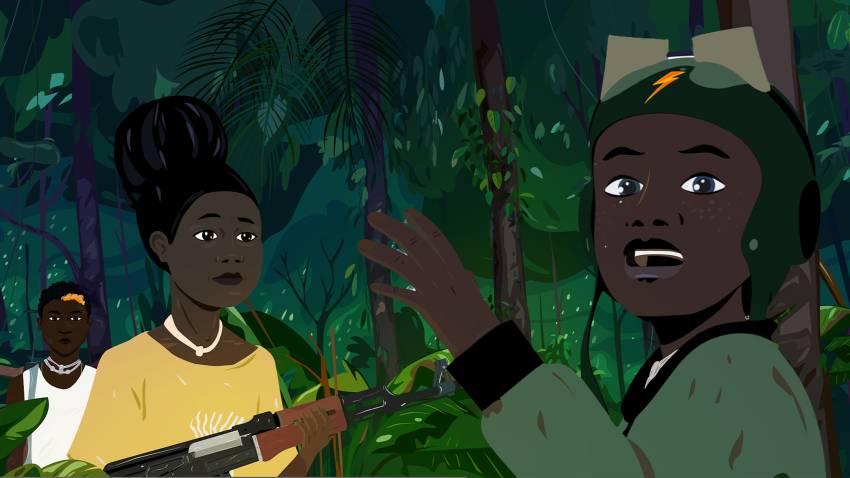
One of the novel’s most remarkable aspects lies in its style. Ahmadou Kourouma chose to tell the story in the first person, using a deliberately hybrid language.
Birahima speaks in an oral French infused with Malinké words and African expressions. To explain certain terms, he claims to rely on several dictionaries, notably Le Petit Robert, Le Larousse, and even a pidgin dictionary.
This technique gives the text a tone that is both pedagogical and ironic. The child attempts to explain to the reader the complicated words of “French from France” while simultaneously describing extremely violent realities.
This narrative strategy produces a striking effect. Faced with the horror of events, Birahima multiplies digressions, definitions, and commentaries. Critics have often described this technique as a “poetics of explanation”, a stream of words seeking to make the incomprehensible understandable.
The result is a novel that is at once funny, tragic, and profoundly disturbing. While Allah Is Not Obliged is an adventure novel, it is also a deeply political text.
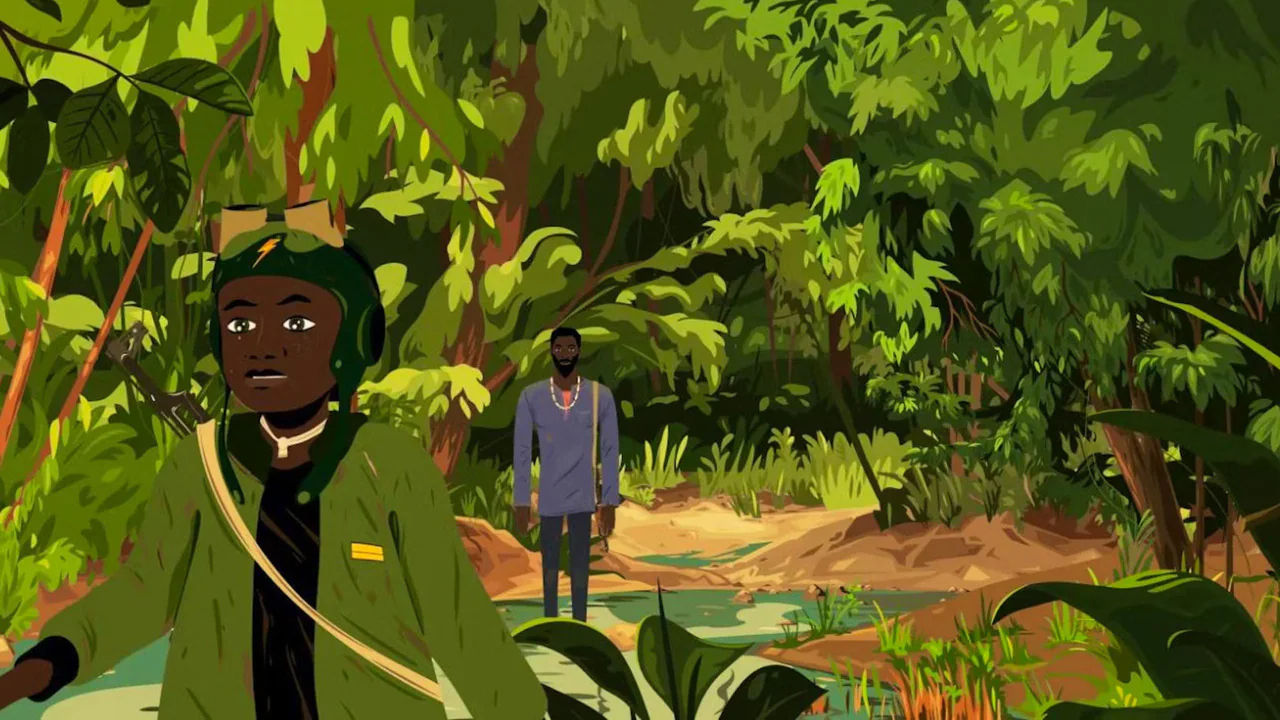
Ahmadou Kourouma himself explained that the writing of the book stemmed from encounters with children affected by conflicts in East Africa. They had asked him to write about what they had lived through.
The author then chose to recount the civil wars in Liberia and Sierra Leone, two particularly deadly conflicts of the 1990s.
In the novel, Birahima gradually understands that so-called “tribal” wars actually conceal struggles for power and economic interests. Warlords divide territories, resources, and populations among themselves, while civilians — especially children — pay the price.
Yet Kourouma rejects any simplistic or miserabilist vision of Africa. For him, recounting such violence does not mean reducing the continent to its tragedies. On the contrary, it is a way of denouncing those who fuel the conflicts, whether African or foreign.
The novel’s success was immediate. In 2000, Allah Is Not Obliged won the Prix Renaudot after being shortlisted for the Prix Goncourt. It also received the Prix Goncourt des Lycéens, proof of the book’s impact on young readers.
The work also received the Amerigo-Vespucci Prize, awarded during the International Geography Festival in Saint-Dié-des-Vosges. Over the years, the novel became a reference point in the study of contemporary African literature. It is widely taught in universities and studied for its style, political dimension, and portrayal of childhood in times of war.
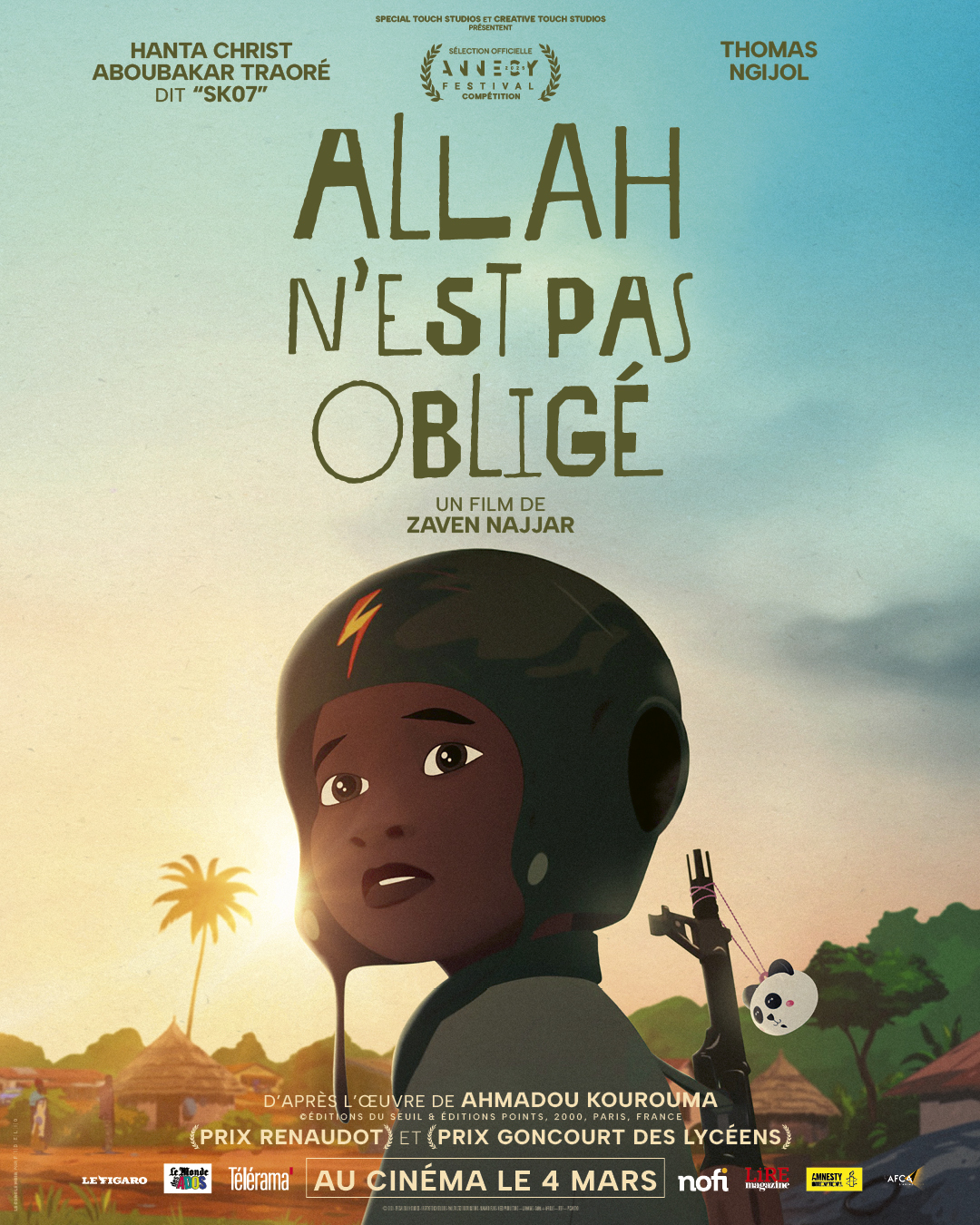
Birahima’s story also continues in another Kourouma novel, When One Refuses, One Says No, published posthumously in 2004. Twenty-six years after the book’s publication, Birahima’s story is finally arriving on the big screen.
Animation director Zaven Najjar offers a cinematic adaptation that translates the universe of the novel into an animated feature film.
The choice of animation is far from insignificant. It allows the violence of the story to be represented while maintaining visual and poetic distance. This kind of staging is particularly suited to a narrative told from a child’s point of view.
The release of the film also represents an important cultural event. Cinematic adaptations of major works of African literature remain relatively rare.
Bringing a novel such as Allah Is Not Obliged to the screen therefore contributes to introducing a major work to a new generation of viewers.
The release of the film above all reminds audiences of the importance of the novel itself. More than twenty years after its publication, Allah Is Not Obliged remains one of the most powerful literary testimonies on contemporary African wars.
By giving voice to a child, Ahmadou Kourouma succeeds in exposing the absurdity and cruelty of a world in which adults have lost all moral bearings.
Today, the film adaptation offers a new gateway into this work. It invites viewers to rediscover a text that remains, through its power and lucidity, one of the great novels of modern African literature.
Notes and references
- Ahmadou Kourouma, Allah Is Not Obliged, Paris, Éditions du Seuil, Cadre Rouge collection, 2000, 232 p., ISBN 978-2-020-42787-6.
- “In the Shadow of Tribal Wars,” interview with Ahmadou Kourouma, L’Humanité, September 14, 2000.
- Christiane Ndiaye, “Discursive Memory in Allah Is Not Obliged or the Poetics of Explanation in Birahima’s ‘Blablabla’,” Études françaises, vol. 42, no. 3, 2006, pp. 77–96.
- Pierre Lepape, “Africa’s Child Soldiers,” Le Monde, September 22, 2000.
- Marie-France Briselance and Jean-Claude Morin, The Character, from “Great” History to Fiction, Paris, Nouveau Monde Éditions, 2013.
- Boniface Mongo-Mboussa, “When One Refuses, One Says No by Ahmadou Kourouma,” Africultures, December 23, 2004.
- Bibliothèque nationale de France (BnF), bibliographic notice for Allah Is Not Obliged, BnF catalogue.
- “First Film Adaptation of the Novel Allah Is Not Obliged,” Cineuropa, January 15, 2021.
- Official presentation of the film Allah Is Not Obliged, directed by Zaven Najjar, selected at the Annecy International Animation Film Festival.
- Educational report on child soldiers in West African conflicts, international organizations and academic works on the civil wars in Liberia and Sierra Leone.

