

With Allah Is Not Obliged, director Zaven Najjar adapts Ahmadou Kourouma’s landmark novel about child soldiers in West Africa into an animated feature film. Presented at the Annecy Festival ahead of its national release, the film transforms a brutal and satirical literary narrative into a visual work that is at once political, memorial and cinematic. The adaptation raises a central question: how can the violence of West African civil wars be represented without betraying it or turning it into spectacle? IN THEATERS MARCH 4, 2026.
Allah Is Not Obliged: From Cult Novel to the Big Screen
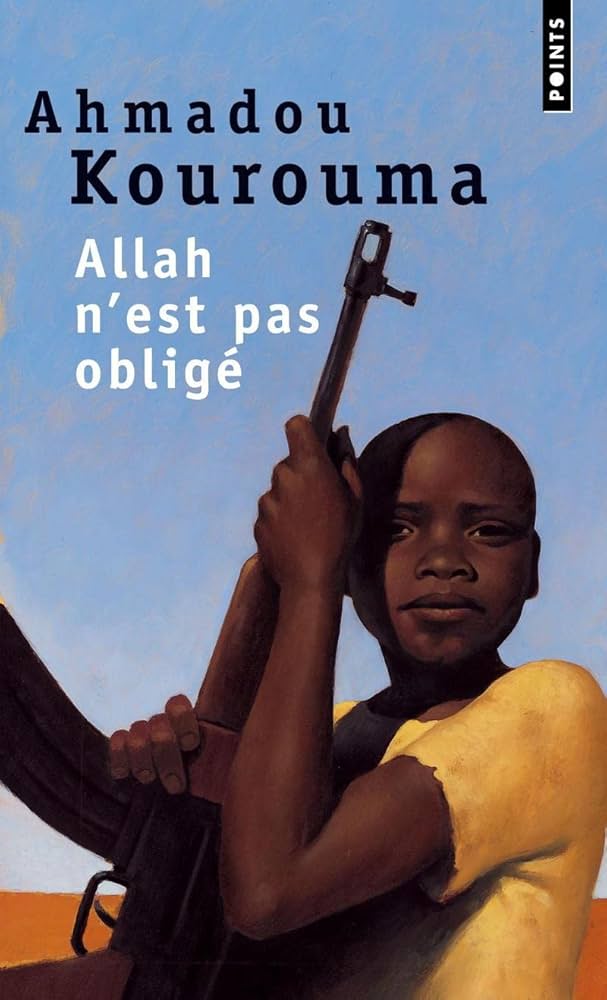
Published in 2000, Allah Is Not Obliged by Ahmadou Kourouma established itself as one of the major texts of contemporary African literature. Through the voice of Birahima, a child-soldier narrator, the Ivorian author crafted a tragic satire of the civil wars in Liberia and Sierra Leone, blending orality, dark humor and political denunciation.
Zaven Najjar’s film, produced in 2025, is part of a rare cinematic ambition: adapting a dense, polyphonic and linguistically inventive text into a 77-minute animated feature. The challenge is all the more delicate because the literary work relies heavily on style itself — a mix of French, Malinké and slang — which constitutes Kourouma’s signature.
The adaptation therefore does not merely transpose a plot: it must translate a voice.
The film follows Birahima, around twelve years old, an Ivorian street child who, after the death of his mother, sets out to join his aunt in Liberia. Accompanied by Yacouba, an ambiguous figure blending fraud and mysticism, he crosses several war zones in West Africa: Liberia, Sierra Leone, Guinea and Côte d’Ivoire.
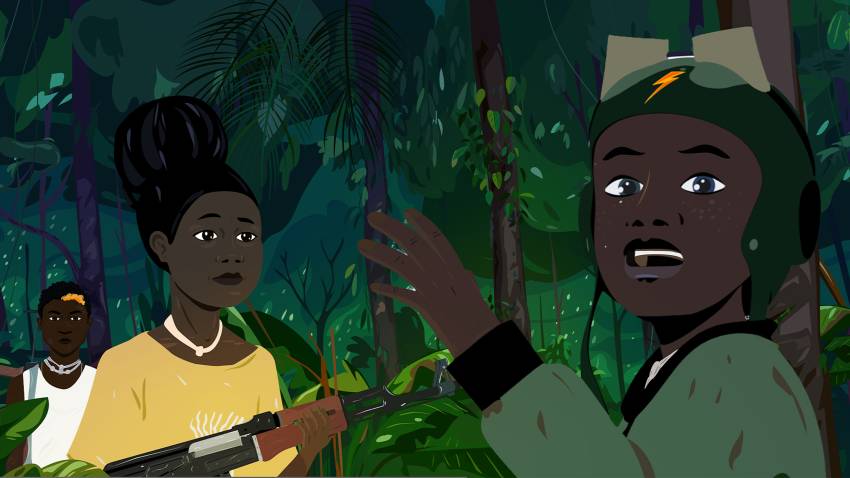
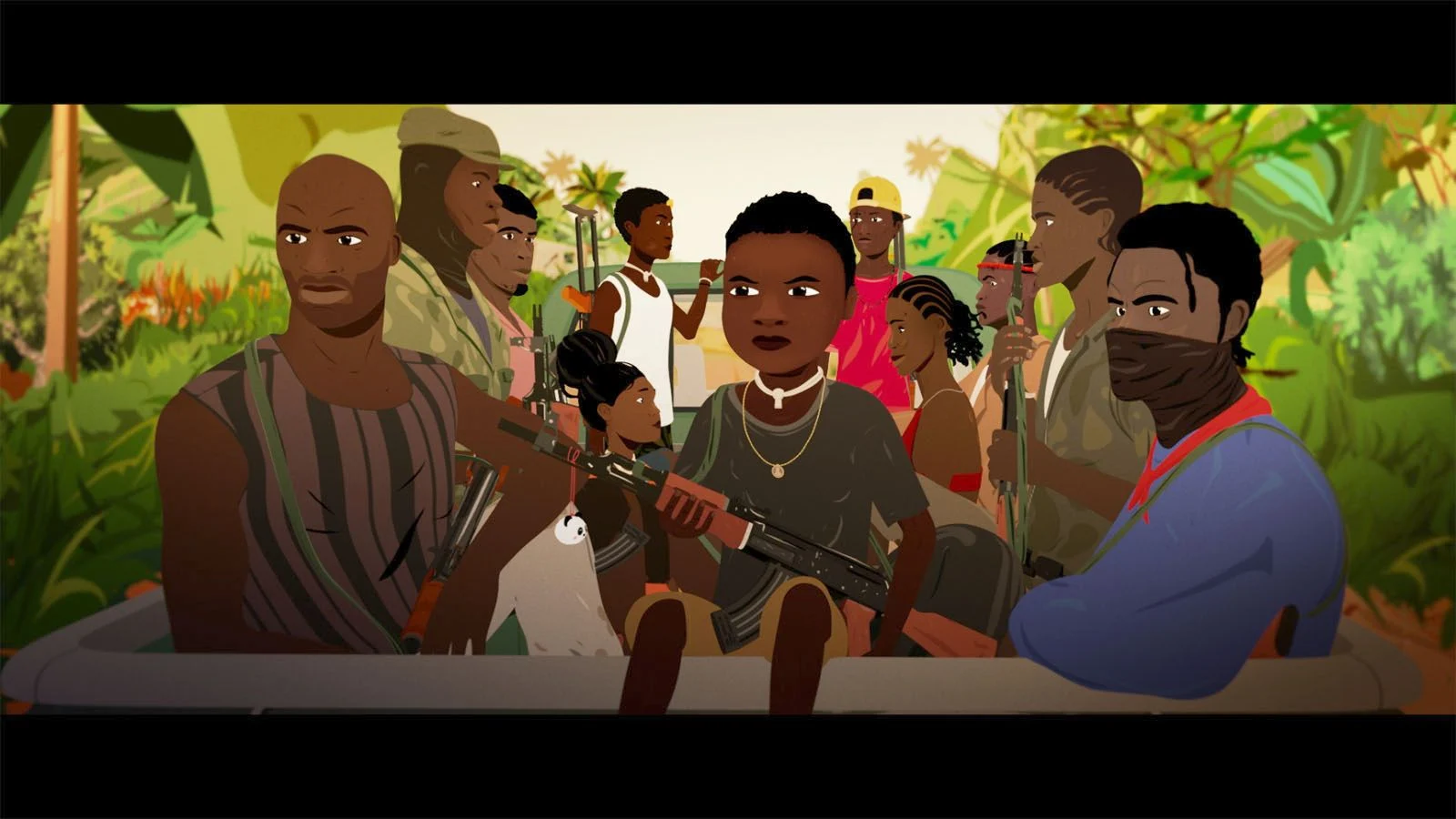
Very quickly, Birahima is recruited into various armed factions and becomes a child soldier. Drugs, violence, executions, war rituals and political manipulation shape his daily life. The narrative adopts the child’s point of view, alternating between apparent naivety and brutal lucidity.
This narrative choice — already central in the novel — is preserved in the film, but adapted visually: Birahima’s subjectivity becomes a graphic prism. Animation makes it possible to convey hallucinations, moral distortion and the absurdity of conflict without resorting to blunt realism.
The story is rooted in the civil wars that devastated Liberia (1989–1996, then 1999–2003) and Sierra Leone (1991–2002). These conflicts, marked by fragmented armed factions, the collapse of the state and the massive use of child soldiers, remain among the most traumatic episodes in recent West African history.
Kourouma’s novel, and now the film, denounce the instrumentalization of children in conflicts often tied to power struggles, the exploitation of mineral resources and the legacy of artificial colonial borders.
The cinematic adaptation does not turn these events into a didactic geopolitical fresco. Instead, it adopts a subjective angle: political chaos is perceived at a child’s level. This perspective reinforces the universal dimension of the story while preserving its African grounding.
The choice of animation may seem surprising for such a brutal subject. Yet the medium offers several aesthetic and ethical advantages.
On the one hand, it avoids the spectacularization of violated bodies. Where a live-action film might risk inscribing violence within a sensationalist register, animation allows for stylization that creates critical distance.
On the other hand, it restores the child’s imagination. Colors, visual distortions and dreamlike transitions translate Birahima’s inner world. Trauma becomes a mental landscape.
Throughout the history of cinema, animation has often been associated with childhood. Here, it is mobilized to represent the end of childhood. This contrast constitutes one of the film’s political strengths.
The very title, Allah Is Not Obliged, is an ironic and provocative formula. It suggests that God is not responsible for human violence. This critical dimension of religious discourse, already present in Kourouma’s work, remains central in the adaptation.
The character of Yacouba, a “Muslim fetish priest,” embodies the ambiguity between belief, manipulation and survival. Religion appears less as a refuge than as an instrument of power.
The film also denounces the logic of militias and warlords, whose authority rests on fear and mystification. Child soldiers become both victims and executioners.
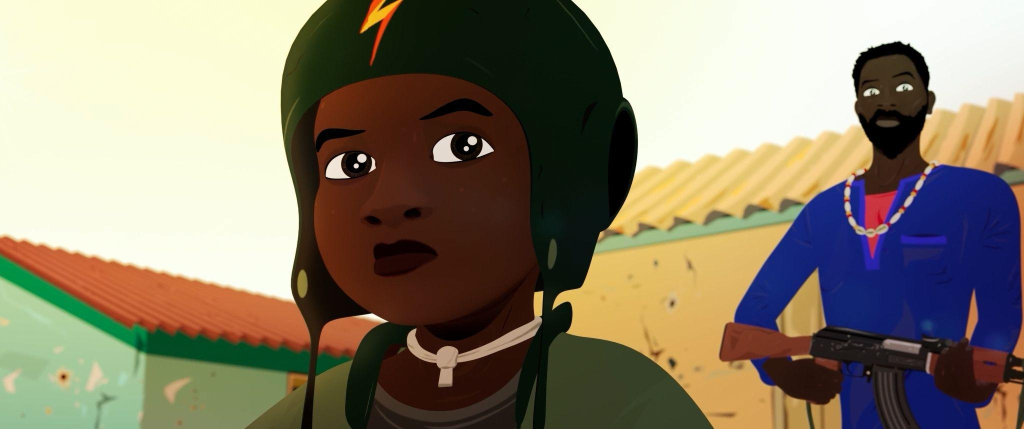
The work offers no explicit political solution. Instead, it adopts a critical posture, revealing the absurdity of conflict and the moral collapse of the adult world.
The film is a co-production between France, Canada, Belgium and Luxembourg. Presented at the Annecy International Animation Film Festival in 2025 before its national release in 2026, it forms part of a transnational network of cultural circulation.
This international dimension raises an important question: how is a work centered on African conflicts received within European and North American circuits?
The adaptation helps bring a chapter of West African history to a broader audience. It contributes to the recognition of African literary heritage within global cinema.
Beyond its artistic dimension, Allah Is Not Obliged is part of a work of remembrance. The civil wars in Liberia and Sierra Leone produced thousands of child soldiers whose trajectories often remain invisible in international narratives.
The film does not claim to represent every experience. It tells a singular story, but one of immense symbolic power.
In this sense, it contributes to intergenerational transmission. Animation becomes a pedagogical vehicle: it makes a complex subject accessible without diminishing its gravity.
An Adaptation at the Crossroads of Cinema and History
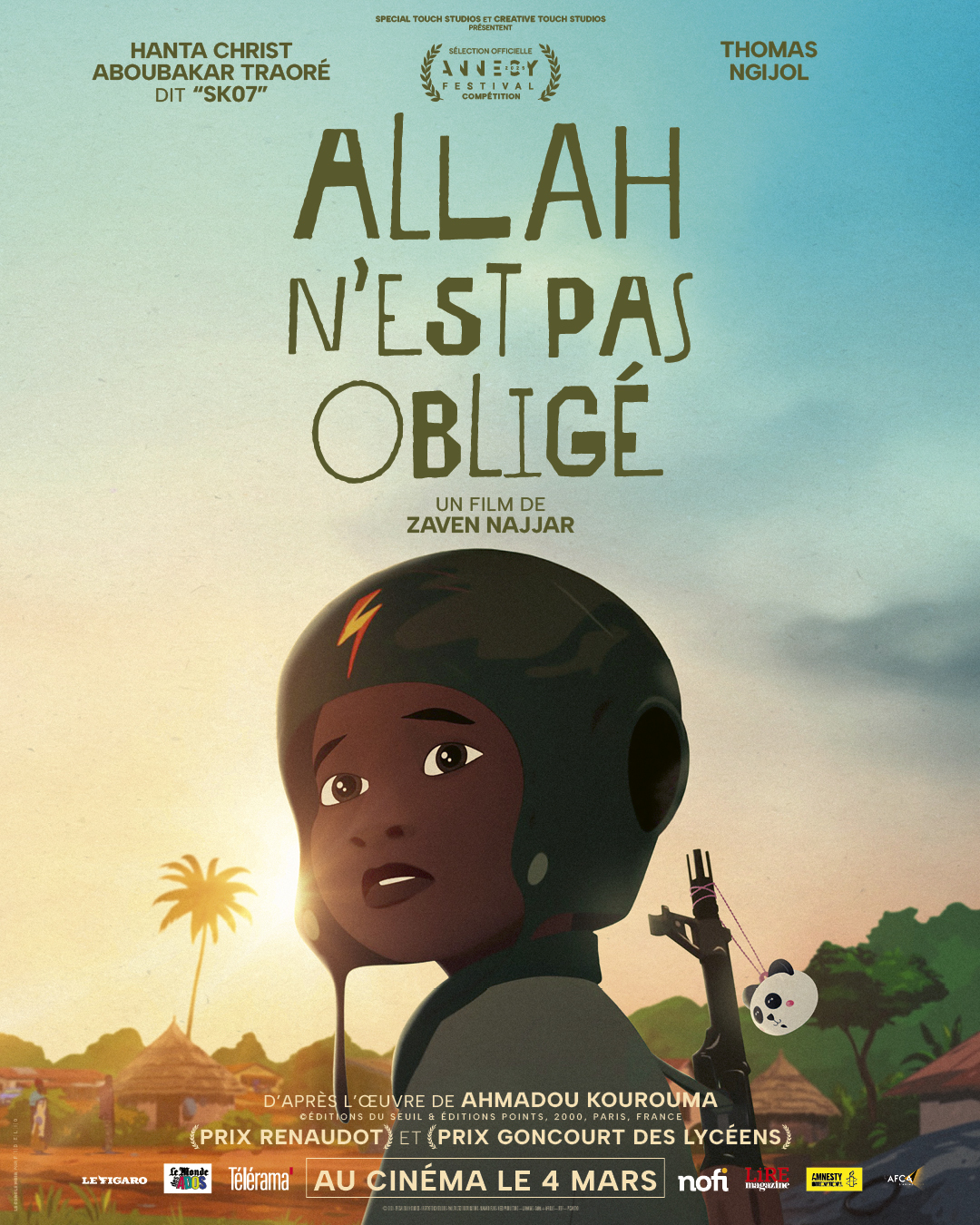
Allah Is Not Obliged (2025) does more than adapt a famous novel. It transforms a literary text into a visual work capable of carrying political memory.
By choosing animation to represent child soldiers, Zaven Najjar makes a powerful aesthetic and ethical gesture: showing without exploiting, denouncing without simplifying.
The film thus stands at the crossroads of cinema, history and politics. It reminds us that West African wars are not merely regional episodes, but events inscribed within the global dynamics of the postcolonial world.
More than an adaptation, Allah Is Not Obliged becomes a heritage work: a bridge between African literature, the memory of conflict and contemporary cinema.
Notes and References
- Ahmadou Kourouma, Allah Is Not Obliged, Paris, Éditions du Seuil, 2000.
- Zaven Najjar (dir.), Allah Is Not Obliged, animated feature film, France/Canada/Belgium/Luxembourg, 2025.
- Official technical sheet for the film Allah Is Not Obliged, Annecy International Animation Film Festival, 2025.
- Abidjan.net / cultural dossiers and interviews surrounding the cinematic adaptation of Kourouma’s work (Francophone cultural press consultations, 2024–2026).
- Ahmadou Kourouma, Waiting for the Wild Beasts to Vote, Paris, Seuil, 1998 (literary and political context of the author).
- Alain Ricard, History of Sub-Saharan African Literatures, Paris, Ellipses, 2006.
- Kenneth Harrow, African Cinema: Postcolonial and Feminist Readings, Trenton, Africa World Press, 1999.
- Manthia Diawara, African Film: New Forms of Aesthetics and Politics, Munich, Prestel, 2010.

