

Zion, the hard-hitting debut feature by Nelson Foix, thrusts Guadeloupe into the heart of auteur cinema. A gripping social thriller and mystical ode to the Caribbean, this 100% Creole film explores fatherhood, disillusioned youth, colonial injustice, and the search for a possible future in a world in crisis. A committed and poetic masterpiece, suspended between rage and tenderness, marking the emergence of a major new voice in overseas cinema.
Blending action cinema with auteur filmmaking, Zion is a thriller that plunges us into the burning streets of Pointe-à-Pitre, Guadeloupe. The first feature film by Guadeloupean director Nelson Foix, shot almost entirely in Creole with a 100% Caribbean local cast, Zion paints the portrait of a generation searching for direction on an island in crisis. Between the weight of social realities (water shortages, police violence, endemic unemployment) and an intimate quest for redemption through fatherhood, the film weaves a universal story deeply rooted in an authentic Caribbean setting.
Nelson Foix deploys a singular style here, combining urban naturalism with poetic flights through a Guadeloupe far removed from postcard imagery, populated by powerful symbols — the impassive iguana, the dreamlike carnival — that transcend realism. A striking debut feature, both a genre film and an auteur work, shining a spotlight on Caribbean creativity across the Francophone and Pan-African worlds.
A 100% Caribbean film celebrating the real Guadeloupe
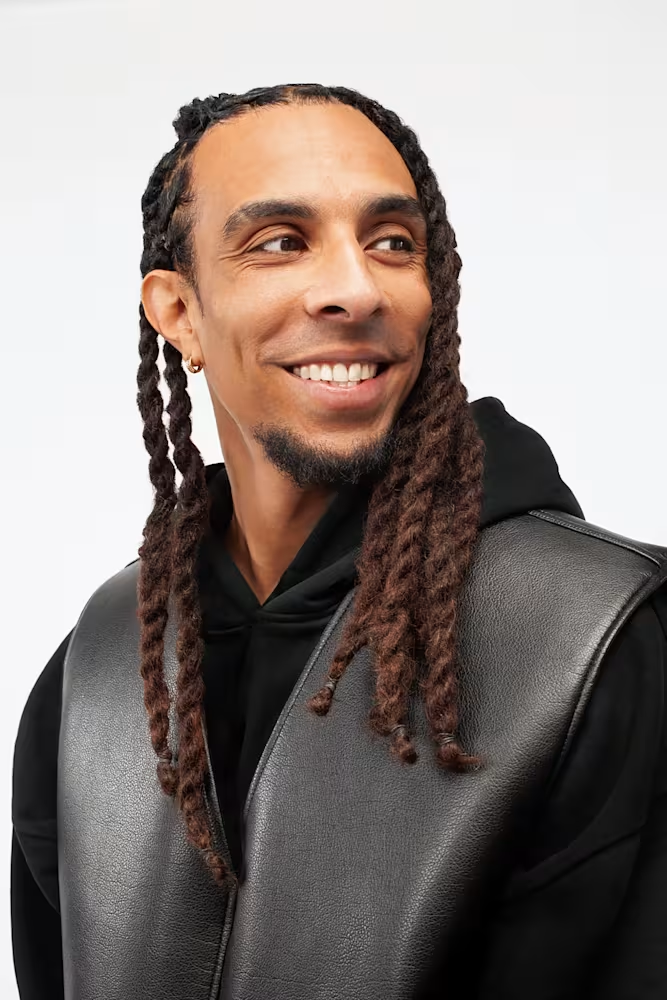
From its very first minutes, Zion immerses viewers in the reality of Guadeloupe, far from beachside clichés. The film opens in humid nighttime air, lulled by the familiar chirping of crickets, a deeply evocative sound for Caribbean audiences. Creole crackles naturally throughout the screen, as most of the dialogue is spoken in local Creole. “I can’t tell Guadeloupe’s story without speaking Creole,” Nelson Foix insists, having stood firm on that choice despite the initial reluctance of financiers. For the filmmaker, shooting a street robbery in Pointe-à-Pitre in French would have made no sense:
“A guy from the streets pulling a robbery in French simply doesn’t exist. […] It was the logical and authentic choice.”
This linguistic realism infuses the film with a unique evocative power, allowing the musicality of Guadeloupean Creole to resonate in all its vitality.
Moreover, the film was shot entirely on location in Guadeloupe, in the very neighborhoods where Foix grew up. The cast consists exclusively of non-professional Caribbean actors recruited through open street casting. Sloan Descombes, who plays Chris, was discovered almost by accident during auditions: he had accompanied his girlfriend and revealed himself simply by reading a line, immediately impressing the director with his natural presence.
Likewise, Zebrist, who portrays gang leader Odell (aka “Ti Dog”), had just come out of prison and saw Zion as a chance for reinvention: “He has a face that tells the story of the streets, but one filled with humanity,” Foix explains. This choice of raw freshness brings striking authenticity to the performances. The illusion is all the stronger because these faces have never been seen elsewhere: Pointe-à-Pitre plays itself, unfiltered.
Nelson Foix wanted a “100% Guadeloupean” film — the phrase used by local media to celebrate it — and he can proudly say he achieved it. “We managed to secure funding even though I was unknown, with an exclusively Caribbean cast, no stars, and a film shot mostly in Creole,” he emphasizes. It is something of a revolution in French cinema for such a project to exist, proving that local authenticity can go hand in hand with international ambition.
Foix injects into Zion a genuine love for Guadeloupe, visible through countless details on screen: a shot of the statue of gwo-ka master Marcel Lollia, known as “Vélo” (an icon of Guadeloupean music), in the streets of Pointe-à-Pitre, the sound of a local radio station broadcasting island news in the background, or fragments of vivid Creole conversations.
“I love the projects, I love Pointe-à-Pitre, and that’s why I shot Ti Moun Aw and Zion practically 200 meters from my home,” the director confides. The film thus becomes a love letter to a very real Guadeloupe, the one he sees from his doorstep: “I used to see an old housing block stained by humidity… and beyond it, a gigantic cruise ship. That contrast deeply marked me,” Foix recalls.
Zion captures this contrast between the lives of Guadeloupeans and the island’s tourist imagery: in the background of one of Chris’s moments of distress, a cruise ship can be seen in the distance, carrying vacationers toward an indifferent “elsewhere”. By filming “a Guadeloupe very different from the paradise image so often promoted,” Nelson Foix offers a sincere insider’s perspective, far removed from postcard exoticism.
“Zion is a Caribbean story told by a Caribbean person. We need to tell our own stories and stop letting others tell them for us.”

