

The transatlantic slave trade occupies a central place in the memory of slavery. It shaped the Americas, the Caribbean, the Overseas Territories, modern racism, and contemporary debates on reparations. The eastern, trans-Saharan, Mediterranean, Nilotic, Red Sea, and Indian Ocean slave trades remain far less visible in the public sphere, despite millions of African victims over more than a millennium. This imbalance is tied to archives, colonial legacies, states, available imagery, political memories, but also to a deeper difficulty: confronting the full range of responsibilities, including those of African slaveholding societies.
The eastern slave trades remain in the shadow of the Atlantic slave trade
On March 25, 2026, the United Nations General Assembly adopted a historic resolution describing the transatlantic trafficking of enslaved Africans and the racial slavery associated with it as the “gravest crime against humanity”. The text, introduced by Ghana with the support of the African Union and CARICOM, was adopted with 123 votes in favor, 52 abstentions, and 3 votes against: the United States, Israel, and Argentina.
This recognition revived an old, sensitive, and often poorly framed question: why do we talk so much about the transatlantic slave trade and far less about the eastern, trans-Saharan, Mediterranean, or so-called “Arab-Muslim” slave trades?
The question deserves a serious answer. It often attracts two traps: minimizing European responsibility on one side, and discomfort in naming the eastern slave trades and African systems of slavery on the other. History demands another path: naming every system, every actor, and every victim with precision.
The transatlantic slave trade shaped the modern colonial economy, the Americas, the Overseas Territories, racial hierarchies, and contemporary racism. The eastern slave trades displaced millions of Africans toward the Maghreb, the Middle East, the Red Sea, the Indian Ocean, the Arabian Peninsula, and other regions over a much longer period. African societies themselves also experienced ancient forms of slavery, servile dependency, capture, and sale.
Speaking less about the eastern slave trades therefore stems from several factors: more fragmented archives, descendants who are less visible as a politically organized group, present-day states less inclined to recognize historical responsibilities, the memorial power of European colonization, the lack of popular narratives, and the difficulty of confronting the full spectrum of African, European, and Arab-Muslim responsibilities.
The real question is not about ranking suffering. The real question is understanding why certain forms of enslavement became public memory while others remain confined to the margins of our collective imagination.
Before answering the question (why do we speak less about the eastern slave trades?) we must begin with the words themselves. Because vocabulary already shapes memory.
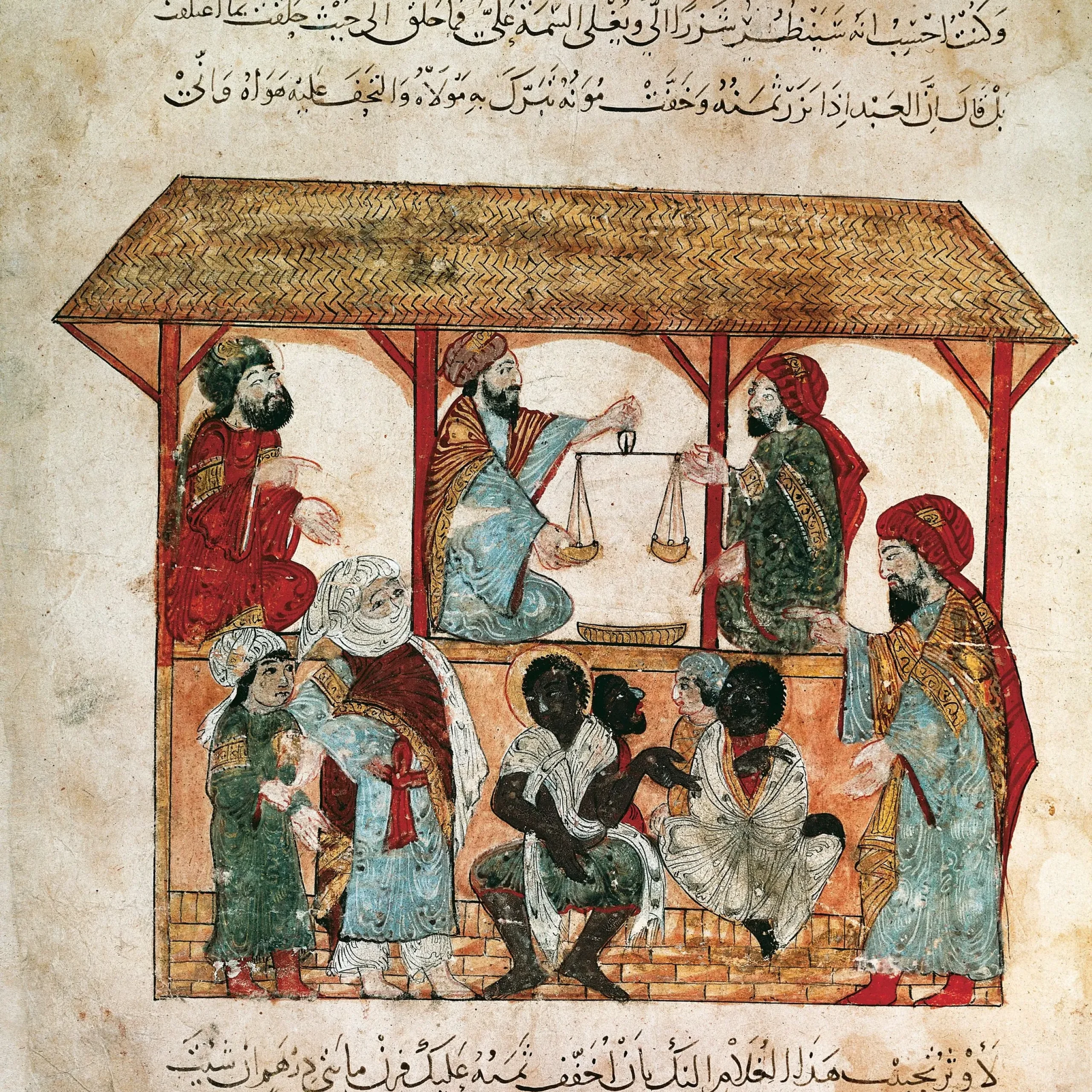
People often speak of the “eastern slave trade” as though it were a single system, comparable as a whole to the transatlantic slave trade. The term is convenient, but it flattens very different realities. It generally refers to the slave routes that carried African captives toward the Maghreb, Egypt, the Middle East, the Arabian Peninsula, the Red Sea, the Persian Gulf, the Indian Ocean, or certain Mediterranean regions.
The plural form is more accurate: the eastern slave trades. This plural makes it possible to distinguish several worlds: the trans-Saharan trade, the Nilotic routes, the Red Sea markets, Indian Ocean circulations, Mediterranean networks, and captures linked to wars, raids, caravans, urban markets, palaces, armies, and aristocratic households.
The expression “Arab-Muslim slave trade” requires even greater caution. It highlights Arab and Muslim actors, who undeniably played major roles in several slave-trading networks. Merchants, powers, cities, and Islamized empires were heavily involved in the capture, purchase, transport, and exploitation of African captives. The expansion of Islam from the 7th century onward helped structure major slave-trading routes, notably because Muslim powers often sought captives on the margins of the Islamized world, in regions considered external to or insufficiently integrated into the Muslim religious and political sphere.
But the expression “Arab-Muslim” becomes misleading when it reduces this entire history to a single responsibility. The eastern slave trades mobilized Arab, Berber, Turkish, Persian, Swahili, European, and African actors, as well as Muslims, Christians, and local powers. African chiefdoms, kingdoms, empires, merchants, soldiers, corsairs, and intermediaries also participated in these networks. This precision avoids two mistakes.
The first is presenting Arabs or Muslims as the sole parties responsible for the eastern slave trades. Such a reading transforms a complex history into a civilizational accusation. It erases African powers, local networks, regional conflicts, intermediaries, and the economic logics that enabled these trades.
The second is avoiding the subject out of fear of fueling hostility toward Arabs, Muslims, or Africans. This caution becomes problematic when it leads to the silencing of millions of African victims.
History demands a clear line: the eastern slave trades existed, they displaced millions of captives, they involved Muslim, African, Mediterranean, and Indian Ocean worlds, they produced specific forms of violence, and they must be studied without simplification.
One essential point must also be remembered: slavery existed before Islam and before modern Europe. Forms of slavery existed in Antiquity, in the Mediterranean world, the Near East, Africa, Asia, and many human societies. Islamic expansion organized, amplified, and structured major slave-trading networks from the 7th century onward. Modern Europe later built, from the 15th century onward, a racialized, colonial, plantation-based transatlantic machine. African societies themselves also experienced ancient forms of slavery, servile dependency, capture, sale, and social domination.
This reality forces us to abandon overly comfortable narratives. Africans were massively victimized by slave trades. Some African powers also participated in the capture, sale, and exploitation of other Africans. Europeans organized a racialized colonial economy on a massive scale across the Atlantic. Arab-Muslim worlds structured long slave routes toward the north, east, and the Indian Ocean.
The historical question is understanding how different societies produced, justified, and transmitted systems of enslavement.
This is also why people speak less about the eastern slave trades: their contours are harder to grasp. The Atlantic slave trade evokes a clear image in popular memory: European ships, slave ports, the crossing of the Atlantic, plantations, colonies, the Black Code, abolition, and descendants in the Americas and Overseas Territories.
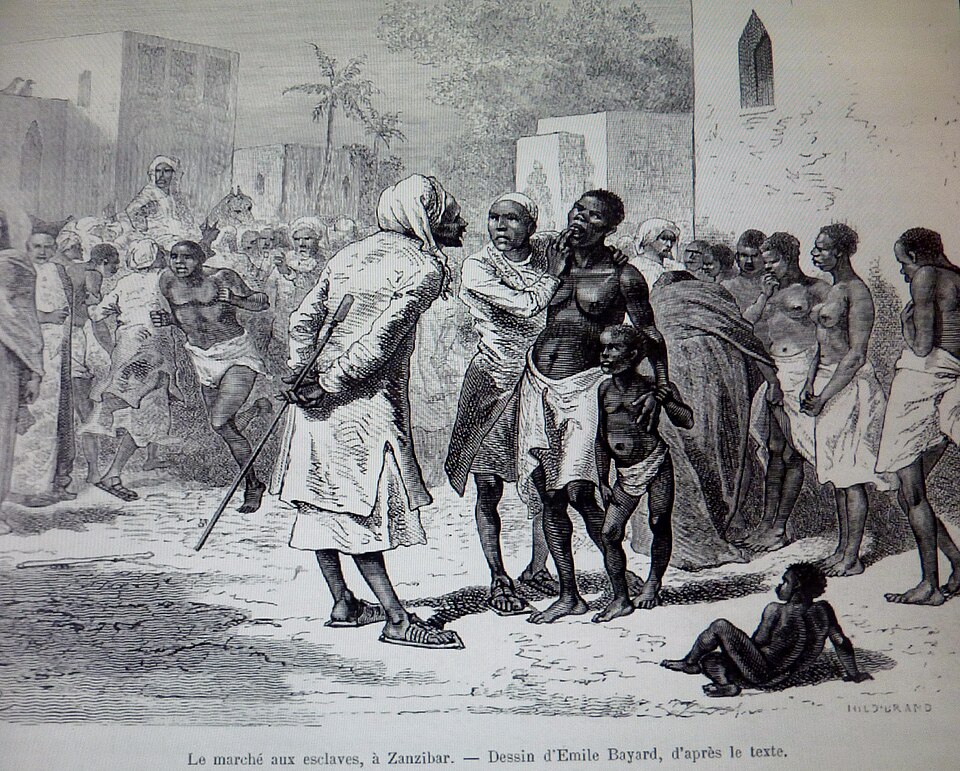
The eastern slave trades evoke much more scattered images: a Saharan caravan, an urban household in Cairo, a market in Zanzibar, an Ottoman harem, a palace, an army of slave soldiers, a Christian captive in Algiers, a Muslim condemned to the galleys, an African woman forced into concubinage, a eunuch castrated to serve a court, a child displaced across the Indian Ocean.
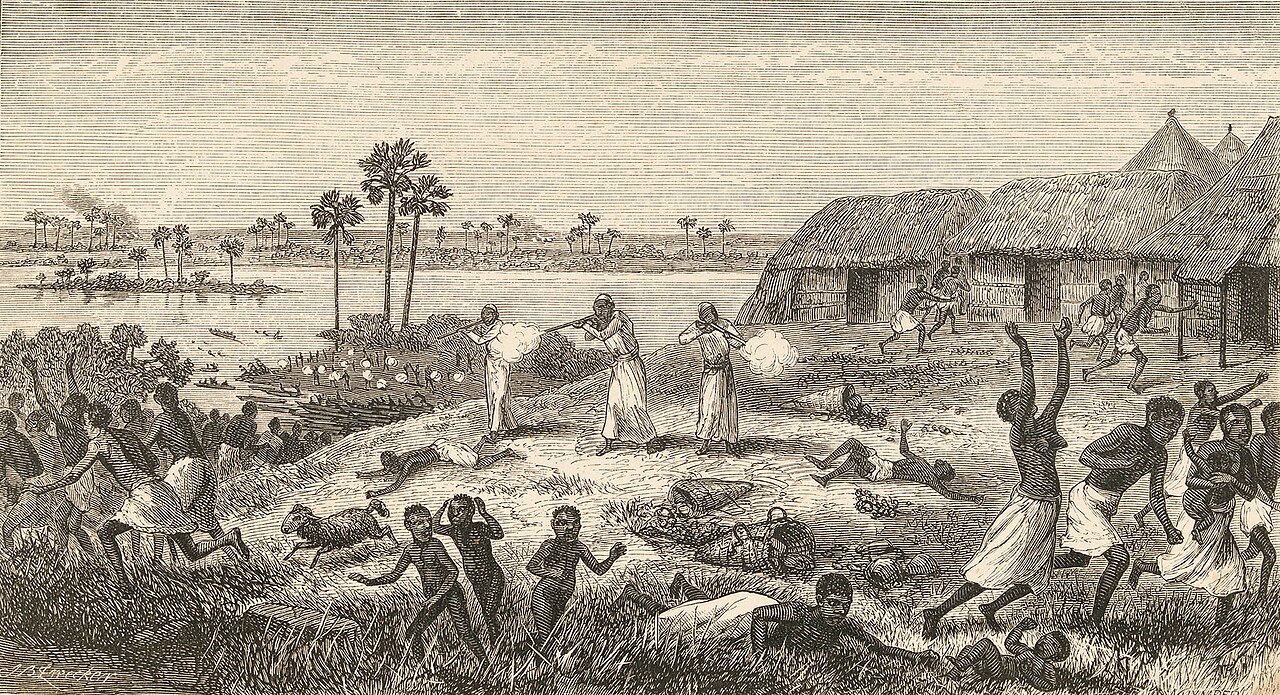
The transatlantic slave trade now occupies a central place in the memory of slavery for one simple reason: it massively, visibly, and durably shaped the modern world. It produced entire societies, colonial economies, racial hierarchies, resistance movements, abolitionist struggles, demands for reparations, and collective memories that remain active today.
It is also easier to narrate because it left behind abundant traces. European powers organized this trade using the tools of the modern state, maritime commerce, and colonial accounting. They produced ship registries, notarized deeds, plantation inventories, insurance contracts, commercial correspondence, laws, account books, port archives, court cases, maps, and manifests of human cargo.
This documentary mass gives the Atlantic slave trade a particular historical visibility. Researchers can track ships, identify ports, count crossings, compare destinations, reconstruct merchant networks, document plantations, study slave-trading families, read sale advertisements, recover names, and sometimes even retrace individual trajectories. The Slave Voyages database compiles data on more than 36,000 documented transatlantic slave voyages between 1514 and 1866. This archive makes the crime visible, measurable, teachable, and politically mobilizable.
The second reason is political. In France, the Atlantic slave trade is directly tied to national history. It implicates slave ports, trading companies, colonies, plantation owners, shipowners, fortunes, institutions, laws, banks, insurance companies, families, street names, museums, monuments, and urban silences.
Nantes, Bordeaux, La Rochelle, Le Havre, Marseille, and Lorient are not abstractions. They are places where the history of slavery and the slave trade is inscribed in archives, buildings, economic circuits, and local memories. The French Caribbean, French Guiana, Réunion, Mayotte, and other territories also carry this legacy through their populations, cultures, political struggles, commemorations, and demands for justice.
The Taubira Law of May 21, 2001 is part of this reality. It recognizes the transatlantic slave trade, the Indian Ocean slave trade, and slavery committed from the 15th century onward against African, Amerindian, Malagasy, and Indian populations as crimes against humanity. It also integrated this history into school curricula and research. This recognition responds to a specifically French historical responsibility.
The third reason concerns descendants. The Atlantic slave trade produced powerful diasporic societies in the Americas, the Caribbean, and the Overseas Territories. Millions of descendants of enslaved people now live in states where colonial slavery structured land ownership, labor, skin color, citizenship, poverty, segregation, inequality, and racial representations.
These descendants carried memory struggles. They demanded laws, museums, national remembrance days, reparations, school programs, academic research, accessible archives, rehabilitated names, and statues either removed or contextualized. The memory of the Atlantic slave trade imposed itself because it is carried by identifiable, organized, and politically active populations.
The eastern slave trades often left behind more fragmented memory traces. Some captives were absorbed into households, lineages, armies, courts, harems, client networks, or societies where their origins were erased. Eunuchs left no descendants. Women reduced to concubinage sometimes gave birth to children integrated into families with no public memory of their servile ancestry. Domestic servants rarely left archives in their own names. Servile statuses were often denied, concealed, or absorbed into local social hierarchies.
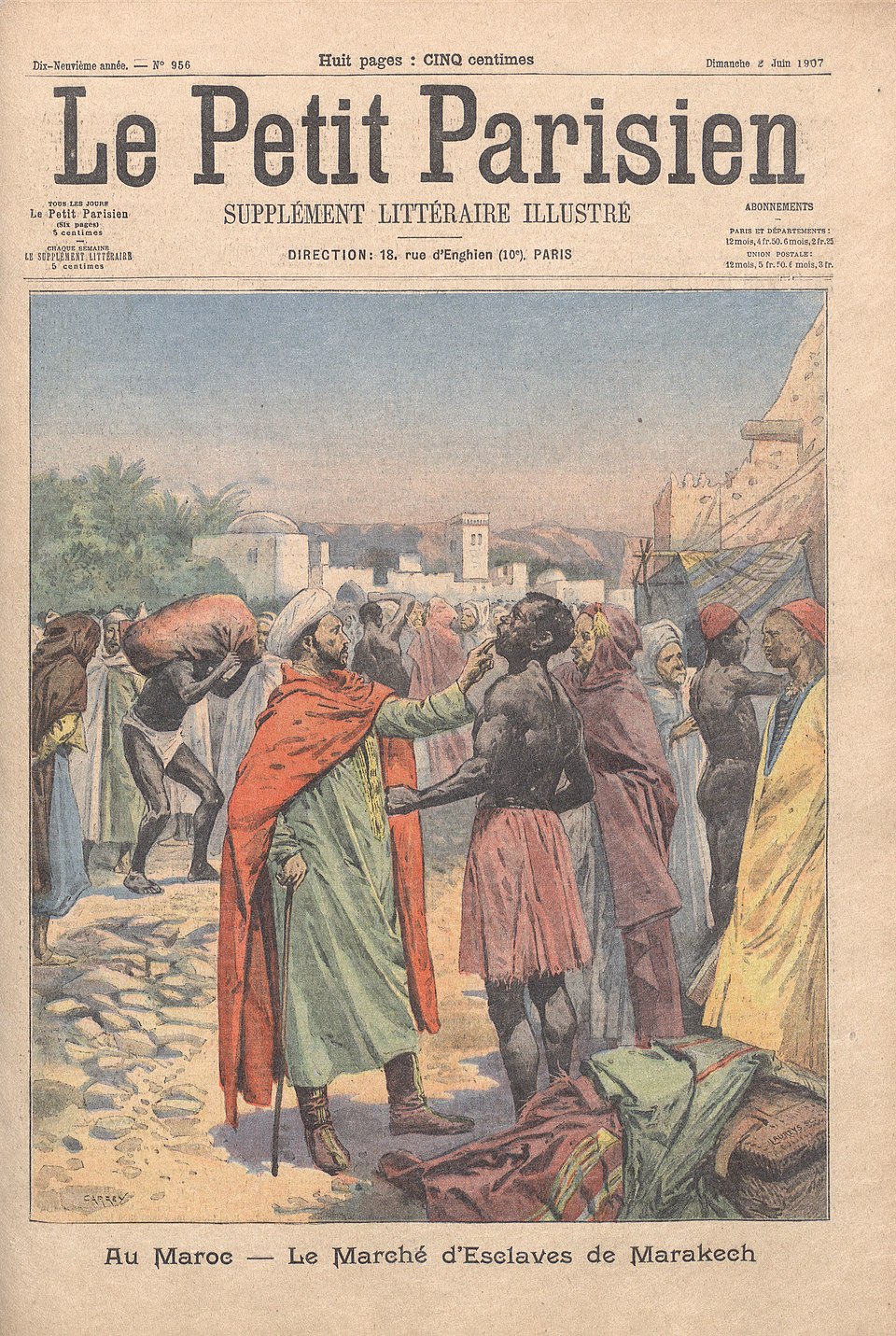
A public memory is built through descendants capable of saying: we come from this history, it still concerns us, it structures our present. Where lineages were erased, scattered, or shamefully concealed, memory becomes more difficult to organize.
The fourth reason is racial. The transatlantic slave trade produced a lasting association between Blackness, African origin, and servile status. In the European colonies of the Americas, being Black became a social, legal, and economic marker. Skin color was transformed into a sign of condition. African origin became a justification for domination.
This construction nourished modern racism. It survived abolition. It continued through segregation, colonialism, migration policies, cultural representations, police violence, social inequality, and stereotypes about Black bodies. The Atlantic slave trade therefore occupies a central place because its effects still run through contemporary societies.
The eastern slave trades also produced color hierarchies and anti-Black stereotypes. But the articulation between status, religion, origin, gender, color, and social function varied depending on the region. In some contexts, the enslaved person could be a Black African, a Caucasian, a Slav, a Turk, a Christian, a captured Muslim, a pagan, a domestic servant, a soldier, a concubine, a eunuch, an agricultural laborer, or a prisoner of war. This diversity makes memory harder to reduce to a single image.
The fifth reason is cultural. The Atlantic slave trade established itself in the global imagination through powerful imagery: the slave ship, the crossing, the hold, the market, the plantation, the whip, cotton fields, sugar cane, marronage, revolt, abolition, the Civil War, and the civil rights movement. These images fed novels, films, series, museums, songs, political speeches, and commemorations.
The eastern slave trades have far fewer shared images in popular culture. Who can spontaneously name a major film about trans-Saharan caravans carrying African captives? A television series about Black eunuchs in eastern courts? A popular novel about African slaves in the Indian Ocean world? A widely known museum dedicated to slave markets in the Muslim world?
This representational deficit contributes to the silence. Societies also remember through the images they repeat. What remains outside the image feels more distant.
The sixth reason is ideological. The eastern slave trades are often invoked in polemics whose real objective is to relativize European responsibility. The phrase regularly returns: “Why do we talk about Europeans and not Arabs?” It can open a legitimate historical question. But too often, it is used to evade the Atlantic slave trade, minimize colonial slavery, pit African victims against one another, or transform history into a weapon against Muslims and Arabs.
This instrumentalization has produced a perverse effect. Some anti-racist or progressive circles avoid the topic out of fear of feeding reactionary discourse. This defensive silence then leaves the field open to those who use the eastern slave trades as a tool in cultural warfare. We must escape this trap.
Speaking more about the eastern slave trades should expand the memory of slavery. Speaking about the Atlantic slave trade must continue illuminating the racial foundations of the modern world. A serious memory names everything, contextualizes everything, and ranks structures without ranking pain.
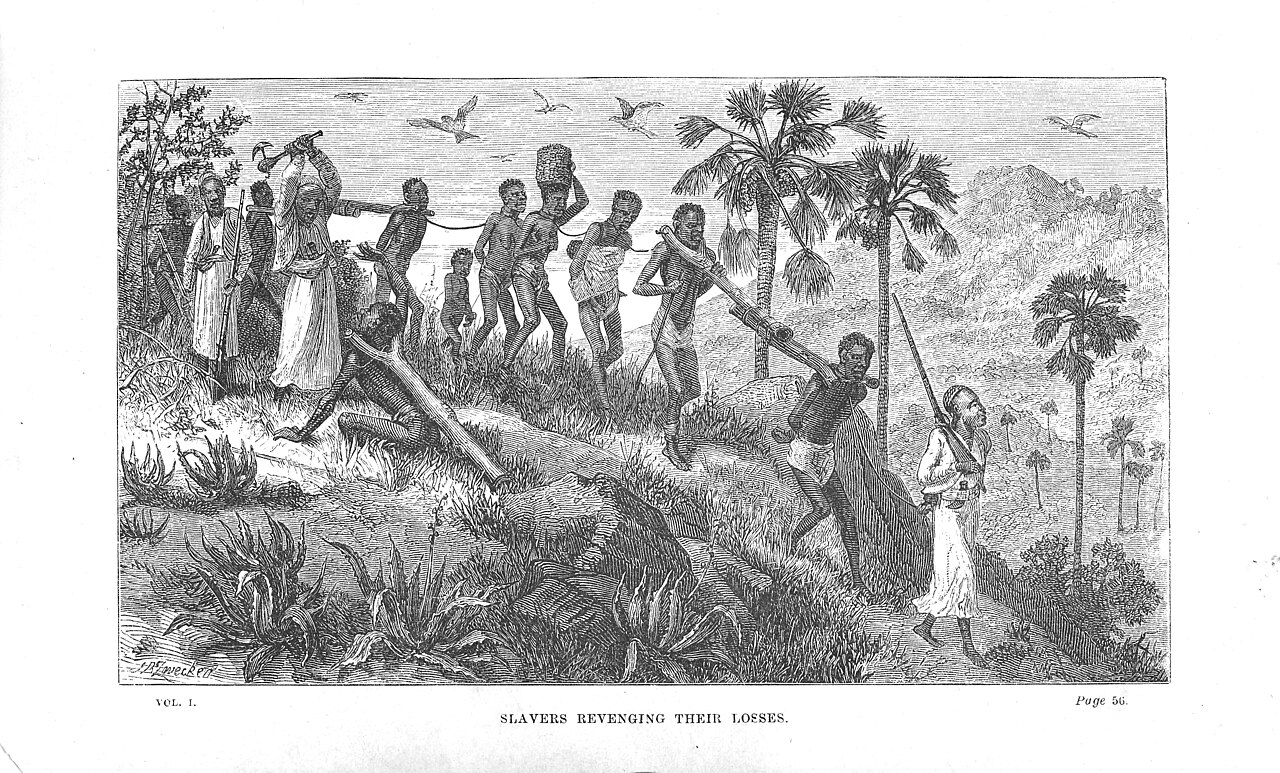
Speaking about the eastern slave trades also forces open another, even more uncomfortable file: internal African systems of slavery and the participation of African powers in the slave trades. This point is unsettling because it complicates the moral narrative. It reminds us that Africans were massively victimized by slave systems, and that certain kingdoms, empires, chiefdoms, aristocratic lineages, and African merchant networks also captured, sold, owned, or exploited other Africans. This historical reality requires precision and context.
Long before European expansion along the Atlantic coast, many African societies already practiced forms of slavery, servitude, dependency, war captivity, forced domestic labor, debt bondage, or hereditary domination. These forms varied depending on region, era, and political system. A captive integrated into a noble household, an agricultural slave, a concubine, a dependent soldier, a domestic servant, a court worker, or a person born into a servile lineage did not necessarily live the same condition. Yet all belonged to systems in which freedom, the body, labor, and lineage could be confiscated.
In the Sahelian regions of West Africa, this history reached a particular scale during the 19th century. In certain areas of the Western Sudan (a historical space covering, among other territories, parts of present-day Mali), enslaved people represented a considerable share of the population. Research on slavery in the savannah during the era of the jihads indicates that by the end of the 19th century, 30 to 50% of the total population of the Western Sudan may have been in servile conditions, with even higher proportions in certain major commercial centers.
This figure requires strict framing. It describes neither all of Africa, nor all of present-day Mali, nor every African society. It refers to specific Sahelian spaces, at a specific historical moment, within contexts of war, commerce, aristocratic domination, Islamic states, agricultural economies, and regional networks. Nevertheless, it reminds us of the scale of internal slavery in certain West African societies on the eve of colonial conquest.
Present-day Mali does not correspond to the historical Mali Empire nor to the 19th-century Western Sudan. At that time, the region was crossed by empires, kingdoms, chiefdoms, merchant cities, Islamic powers, warrior aristocracies, and local societies. In these worlds, possessing dependents or captives could mean securing labor, increasing prestige, sustaining a household, cultivating land, strengthening an army, or maintaining social domination.
In the transatlantic slave trade, Europeans created the massive colonial demand, organized maritime transport, financed expeditions, insured ships, administered plantations, legally codified racial slavery, and drew immense profits from this economy. On African coasts, captives were very often purchased from African intermediaries, merchants, or powers. Wars, raids, captures, debts, political rivalries, and local commercial circuits fed the Atlantic markets.
This African participation sheds light on the concrete functioning of the slave trade: a predatory economy linking African, European, and colonial actors within a system structured by American and European demand. That demand intensified capture violence, wars, raids, sales, and forced displacement.
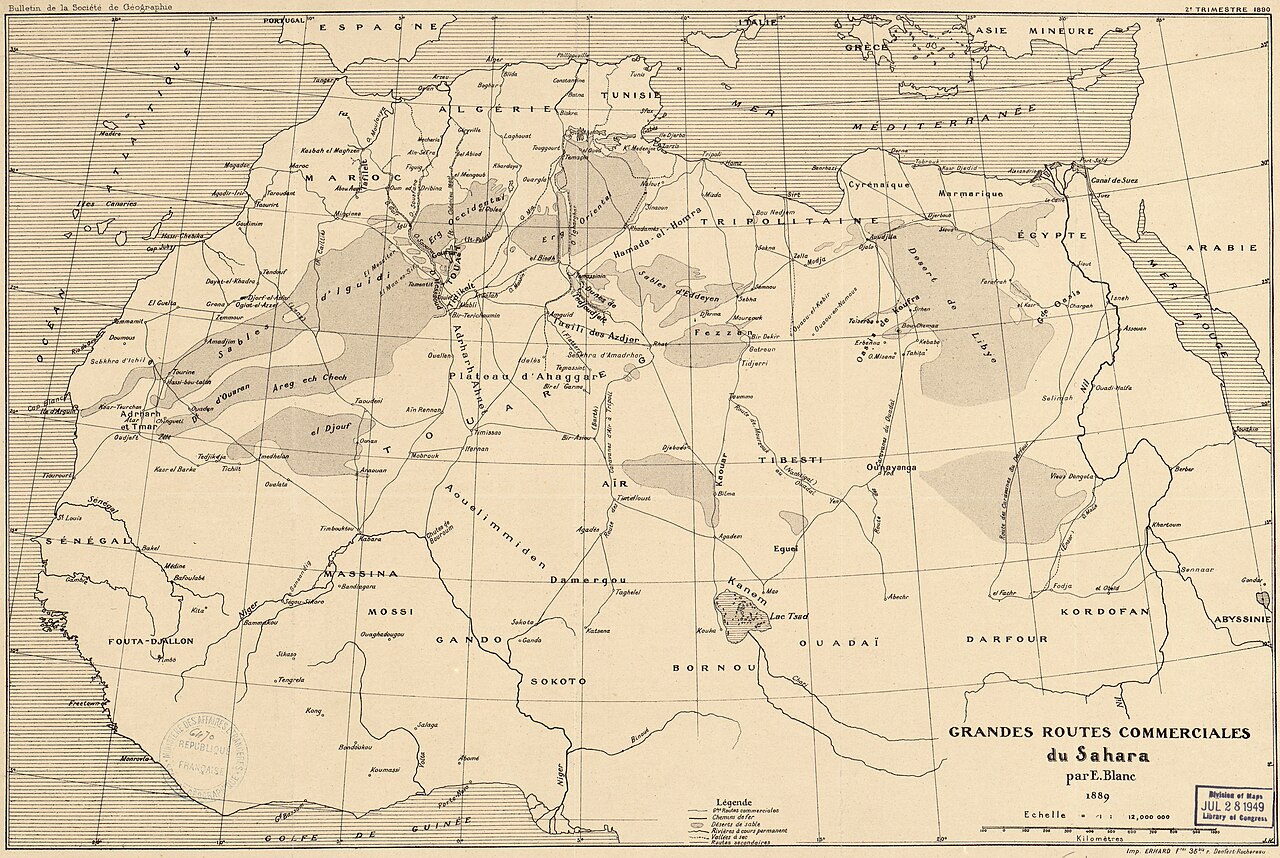
The same principle applies to the eastern slave trades. The trans-Saharan, Mediterranean, Nilotic, Red Sea, and Indian Ocean networks mobilized merchants, states, chiefdoms, caravans, Islamized powers, African intermediaries, and buyers located in the Maghreb, the Middle East, Arabia, Persia, the Ottoman Empire, and Indian Ocean worlds. African captives reached the markets through complex human and commercial chains: wars, captures, sales, transport, redistribution, and forced integration.
This point also explains why the eastern slave trades are discussed less. Their study forces us to move beyond a binary narrative. The Atlantic trade is easier to narrate publicly: European powers, ships, plantations, colonies, descendants, and successor states. The eastern slave trades and internal African slaveries require a more delicate mapping: Muslim powers, African networks, Sahelian societies, local aristocracies, domestic markets, military uses, domestic servitude, concubinage, castration, servile lineages, and still-present legacies.
This complexity makes the subject more difficult to carry politically. Anti-colonial memories often emphasized Africa as a victim of Europe. This narrative answered a historical necessity: fighting colonial justifications, restoring the visibility of European violence, denouncing modern racism, and recalling the profits extracted from African bodies. But it becomes incomplete when it prevents examination of African internal hierarchies, servile castes, slave-owning nobles, dominant families, and descendants of captives who still face discrimination.
Black history grows stronger when it accepts its complexity. It can say that Europe organized a racialized transatlantic machine of major historical scale. It can say that Arab-Muslim worlds structured vast slave-trading networks toward the north, east, and Indian Ocean. It can say that African powers captured, sold, and exploited other Africans. It can say that Africans resisted, fled, ransomed relatives, organized revolts, created maroon communities, negotiated survival, and transmitted memories despite erasure.
No people is always innocent in history. No society can be reduced to its crimes. The challenge is to examine structures, victims, profiteers, resistance, and legacies with the same rigor.
This rigor becomes all the more necessary because slavery by descent also belongs to the present. In Mali, people from historically servile groups continue to face discrimination, violence, exclusion, humiliation, and forms of social dependency. In 2023, UN experts called on Mali to explicitly criminalize slavery by descent, recalling the persistence of the practice in several regions; according to these experts, some organizations estimate that at least 800,000 people are considered born into slavery, including around 200,000 living under the direct control of “masters.”
This is one of the great blind spots of public debate. We speak less about the eastern slave trades because they force us to confront multiple responsibilities. We speak less about them because they do not always allow for the designation of a single culprit. We speak less about them because they compel us to question African societies, Muslim powers, colonial legacies, and contemporary silences all at once.
For NOFI, this point is central. A mature Black memory is built upon historical truth, the dignity of victims, and the capacity to confront every responsibility. Africans endured immense crimes. Some Africans also committed crimes against other Africans. This truth nourishes lucidity. And lucidity is a condition of transmission.
The UN resolution of March 25, 2026 sparked criticism because it uses a very strong formula: “gravest crime against humanity”. Some states argued that this expression risked creating a hierarchy among crimes against humanity. The United States, Israel, and Argentina voted against it, while 52 states abstained.
Supporters of the text instead see it as recognition of the specific nature of the transatlantic slave trade: its duration, scale, racial character, still-visible effects on contemporary inequalities, its role in constructing modern racism, and the demands for reparative justice. The International Service for Human Rights emphasizes that this recognition seeks to highlight the unique dimension of the transatlantic slave trade and its legacies without turning history into a competition of victimhood.
The debate reveals a broader discomfort. As soon as the transatlantic slave trade is recognized in its gravity, some ask why eastern, intra-African, or Mediterranean slave trades remain outside the framework. The question is legitimate. It becomes problematic when it serves to diminish European responsibility.
History requires a more accurate formulation: the transatlantic slave trade occupies a particular place in modern history because of its colonial organization, racialization, and direct legacies. The eastern slave trades also possess major historical gravity, a long duration, millions of victims, and specific forms of violence. Both statements can coexist.
The UN resolution reflects a public memory structured by Atlantic descendants, Caribbean states, African mobilizations, reparations debates, restitution of cultural property, and struggles against systemic racism. The eastern slave trades require a parallel effort: research, education, museums, documentaries, translations, narratives, investigations, and recognition of the victims.
The strongest political formula is simple: recognize the particular gravity of the transatlantic slave trade while building a complete memory of the other African slave trades.
We speak less about the eastern slave trades for six main reasons.
The first reason is documentary. Atlantic archives are abundant, accounting-based, and serial. Eastern archives are more scattered, multilingual, fragmentary, and often harder to access. The slave ship leaves a registry. The plantation leaves accounting records. Insurance leaves a contract. The notary leaves a deed. The Saharan caravan, the urban household, forced concubinage, the court eunuch, the servant absorbed into a family, or the child displaced across the Indian Ocean often leave far fewer nominative traces.
The second reason is political. Present-day European states directly inherit ports, laws, colonial empires, and fortunes tied to the Atlantic. States emerging from the Maghreb, the Middle East, the Sahel, or the Indian Ocean world less often recognize themselves as direct heirs to former slaveholding powers. Empires disappeared, dynasties changed, and modern states frequently constructed different national narratives.
The third reason is memorial. The Atlantic slave trade produced vast descendant societies in the Americas and the Overseas Territories. These populations carried struggles for recognition, reparations, and transmission. Victims of the eastern slave trades often left behind more fragmented filiations. Castration, concubinage, domestic servitude, forced integration, conversion, disappearance of status, and social shame blurred memory.
The fourth reason is cultural. Cinema, literature, television series, and museums more frequently represented the slave ship, the plantation, the colonial whip, and cotton or sugar cane fields. Harems, Black eunuchs, Saharan caravans, Indian Ocean markets, domestic captives, slave soldiers, and African servile lineages remain largely absent from popular culture.
The fifth reason is ideological. The subject is often instrumentalized by discourses seeking to divert attention from European responsibility. This instrumentalization poisons the debate and sometimes pushes anti-racist circles to avoid the subject altogether. Silence then leaves room for the most dishonest uses.
The sixth reason is African. Speaking about the eastern slave trades also means speaking about African slaveholding societies, local elites, nobles, chiefdoms, intermediaries, raids, sales, and contemporary survivals. This mirror is difficult. It nevertheless must be faced.
Expanding Black memory without ranking pain
We speak less about the eastern slave trades because their archives are more fragmented, their political legacies less structured, their descendants less visible as a group, their narratives less present in popular culture, and their responsibilities harder to distribute. We also speak less about them because they force us to confront an uncomfortable history: Africans were massively victimized by slavery, and some African societies were also slaveholding societies. This truth makes Black memory more mature.
The history of African slavery begins before Europeans, passes through Muslim worlds, intensifies within Atlantic systems, and is inscribed in African kingdoms, empires, ports, markets, caravans, plantations, households, armies, harems, and lineages. It concerns the Atlantic, the Sahara, the Mediterranean, the Red Sea, the Indian Ocean, the Americas, Europe, North Africa, the Middle East, and African societies themselves.
Black memory must carry this history in its full scale. It must name European crimes, the eastern slave trades, African responsibilities, contemporary survivals, and the resistance of the victims. Memorial competition impoverishes history. Complete memory enlarges it.
For NOFI, the subject requires a clear line: document every slave trade, contextualize every system, and reject every instrumentalization. Speaking less about the eastern slave trades is a symptom. Speaking about them better has become a necessity.
Notes and references
- United Nations General Assembly, resolution of March 25, 2026 describing the transatlantic trafficking of enslaved Africans and the racial slavery associated with it as the “gravest crime against humanity”.
- Law No. 2001-434 of May 21, 2001, known as the Taubira Law, recognizing the transatlantic slave trade, the Indian Ocean slave trade, and slavery as crimes against humanity.
- Slave Voyages, database documenting more than 36,000 transatlantic slave voyages between 1514 and 1866.
- National Endowment for the Humanities, The Transatlantic Slave Trade Database, estimating that 12.5 million Africans were forcibly embarked and 10.7 million survived the crossing between 1526 and 1866.
- Slavery in the Savanna during the Era of the Jihads, Cambridge chapter on Sahelian slavery in the 19th century, indicating that 30 to 50% of the population of the Western Sudan may have been in servile conditions by the end of the 19th century.
- Martin A. Klein, Slavery and Colonial Rule in French West Africa, Cambridge University Press, 1998; bibliographic overview on servile societies in Senegal, Guinea, and Mali between 1876 and 1922.

