

A symbol of resistance against slavery, Zumbi led his people courageously against colonial oppression, leaving a lasting mark on Brazilian history through his fight for freedom and justice.
Leader of the Black state of Palmares in 17th-century Brazil, Zumbi is now recognized as the most famous resistance fighter against slavery in Brazilian history. Born in 1655, Zumbi became an enduring symbol of the struggle against colonial oppression. Charismatic and determined, he led his people in fierce resistance against the Portuguese colonists, defending the territory of Palmares with courage and perseverance. His legacy lives on, celebrated every year as a reminder of his fight for freedom and justice.
Historical Context and the Foundation of Palmares
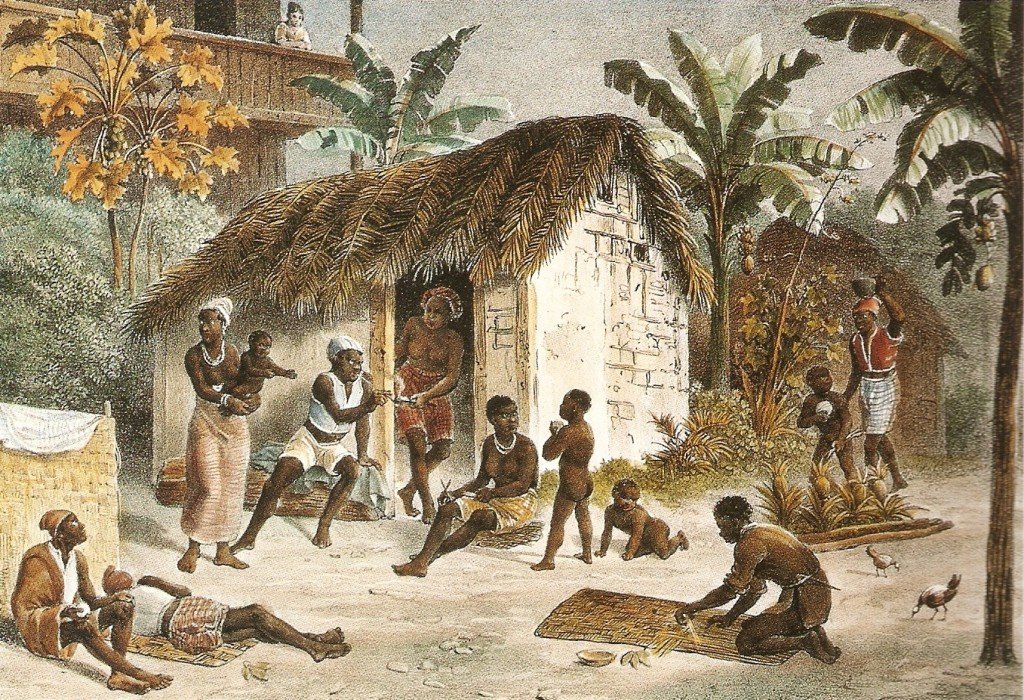
At the beginning of the 17th century, Brazil, then a Portuguese colony, was one of the main centers of the slave trade. Africans, torn from their homeland, endured extremely harsh living conditions on sugar plantations and other agricultural estates. It was in this context that the state of Palmares emerged, a confederation of quilombos (maroon communities) located in northeastern Brazil. Palmares was founded by escaped enslaved people and quickly became a symbol of resistance and freedom.
Palmares was a confederation of several quilombos, each led by a local chief but united under Zumbi’s authority. The quilombos served as refuges for escaped enslaved people and centers of resistance against colonial oppression.

The economy of Palmares was based on agriculture and livestock farming. Its inhabitants cultivated corn, cassava, beans, and other food crops, allowing for a degree of self-sufficiency.
Palmares was protected by natural and man-made fortifications, making colonial attacks difficult and costly.
The Rise of Zumbi
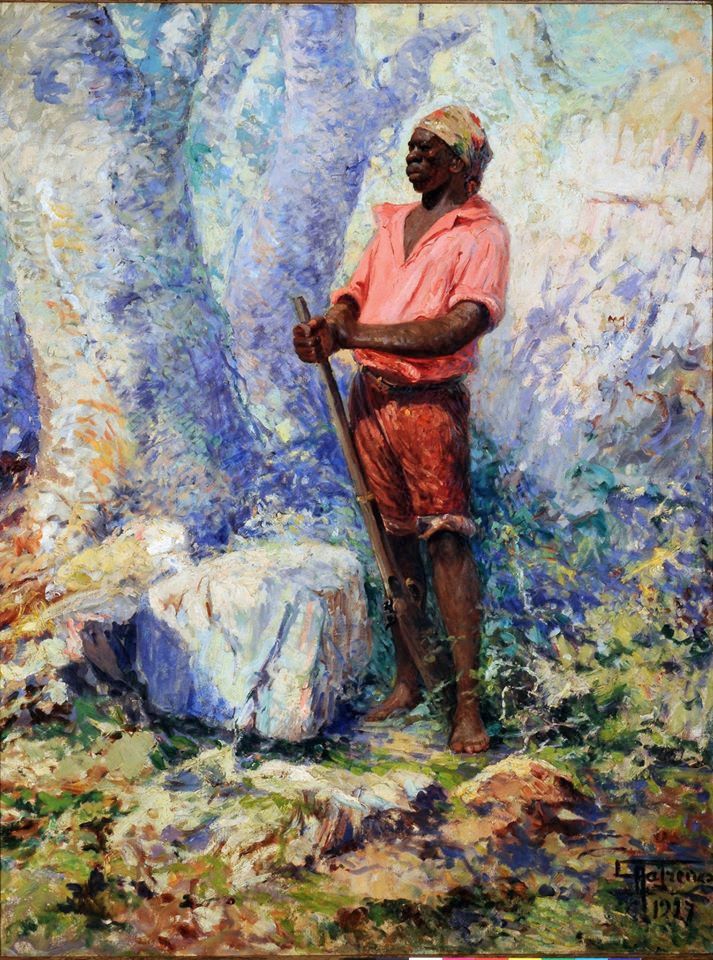
Zumbi, born in 1655, was captured during a Portuguese raid and raised by a Portuguese priest in Porto Calvo. Baptized under the name Francisco, he learned Portuguese and Latin. At the age of fifteen, he escaped and returned to Palmares. There, he quickly distinguished himself through his military skills and became one of the leading figures of the resistance.
In 1677, during an attack by Portuguese colonists, the ruler of Palmares, Ganga Zumba, was wounded and decided to surrender. This decision was rejected by part of the population of Palmares, led by Zumbi. He refused submission and poisoned Ganga Zumba in 1680 in order to seize control and continue the struggle for independence.
Battles and Resistance
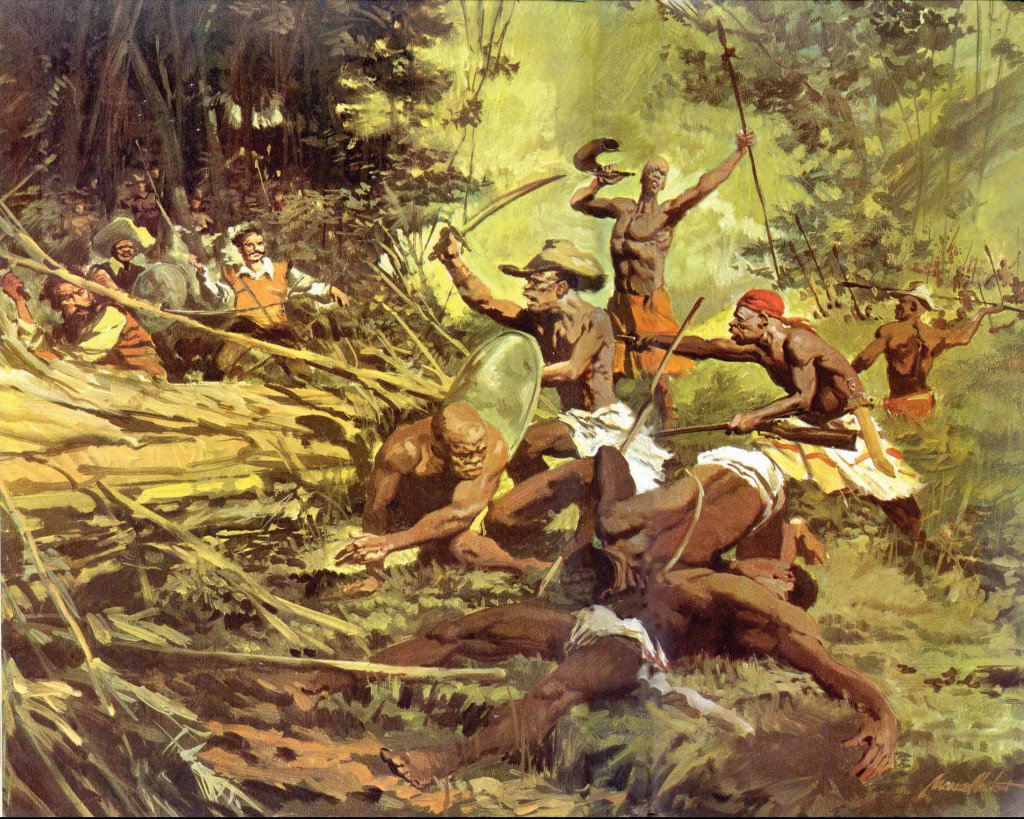
Under Zumbi’s leadership, Palmares continued to resist colonial assaults. Zumbi strengthened the defenses and developed guerrilla warfare strategies. In 1693, despite a failed attempt, the Portuguese launched another expedition the following year. Palmares was besieged, and although its inhabitants fought bravely, they were ultimately defeated. According to some sources, Zumbi continued fighting until his capture and execution in 1695.
- 1675-1676: Zumbi was wounded during a Portuguese attack but continued fighting with unwavering determination.
- 1680: After the poisoning of Ganga Zumba, Zumbi took control of Palmares and organized fierce resistance against colonial attacks.
- 1694: A Portuguese expedition besieged Palmares. Despite the inhabitants’ fierce defense, they were ultimately defeated.
- 1695: Zumbi was captured and executed. His head was displayed in Recife to disprove the myth of his immortality.
Living Conditions in Palmares
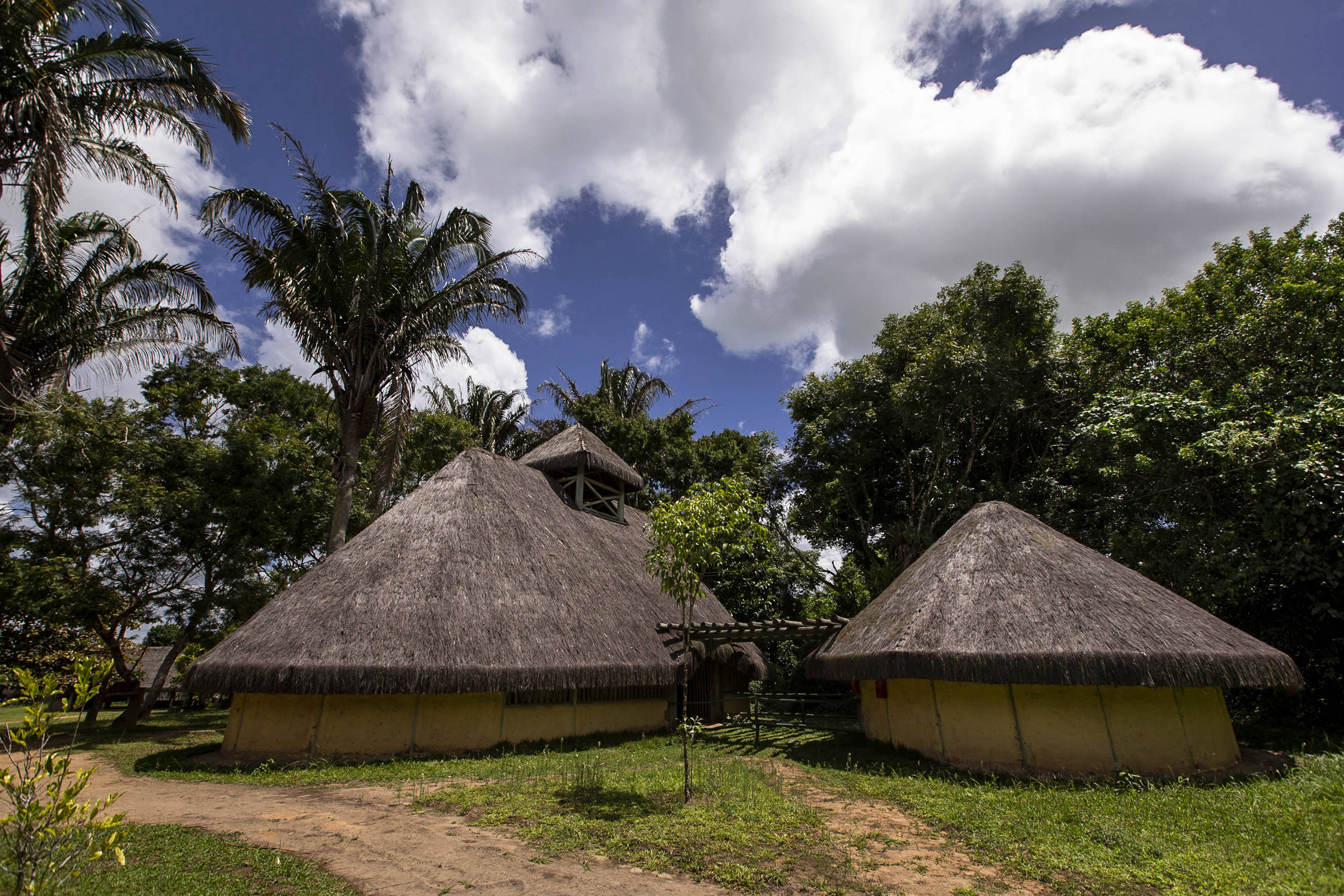
Palmares offered escaped enslaved people a refuge where they could live according to their own traditions and laws. Palmares society was organized in an egalitarian way, and land was collectively cultivated. Its inhabitants were therefore able to meet their needs while preparing defenses against colonial attacks.
The Legacy of Zumbi
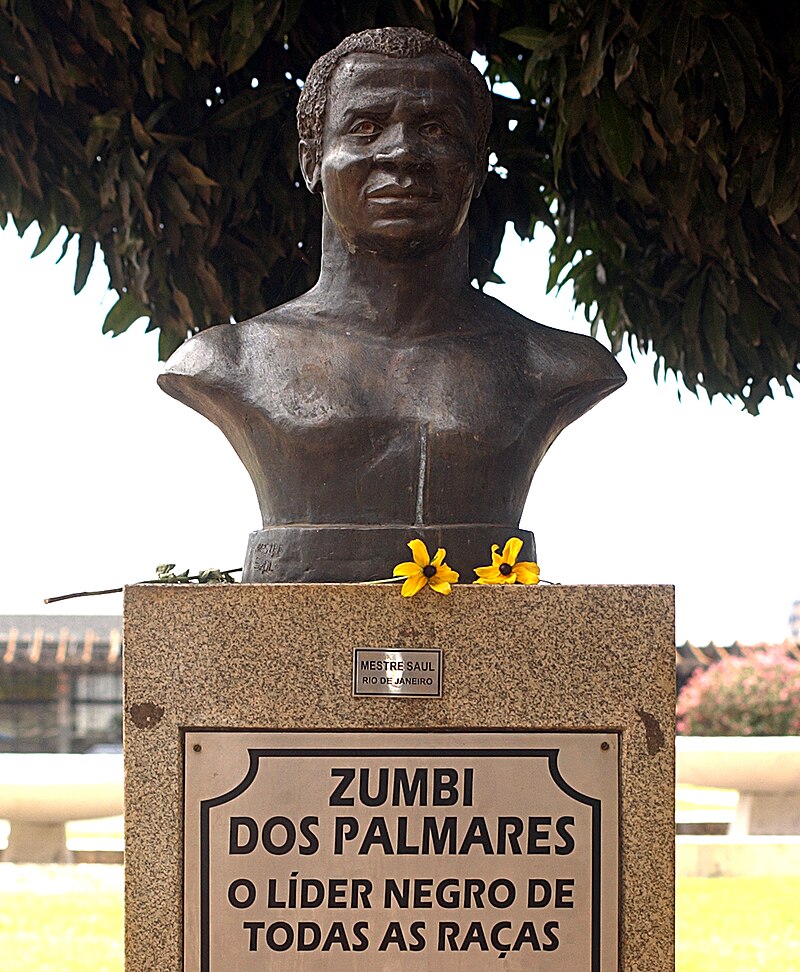
Zumbi is now celebrated as a national hero in Brazil. His head was displayed in Recife to disprove the myth of his immortality, but this only reinforced his status as a symbol of resistance. He is commemorated every year on November 20, the day of his death, known as “Black Consciousness Day.” This day is dedicated to recognizing and celebrating the heritage and contributions of Afro-Brazilians to Brazilian society.
Zumbi inspired numerous civil rights and anti-racism movements in Brazil. Statues and monuments honoring him have been erected in several Brazilian cities, reminding people of his role in the struggle against oppression and for freedom.
Zumbi’s Cultural Impact
Zumbi is not only a symbol of Afro-Brazilian resistance but also an iconic figure in the global struggle against slavery and oppression. His life and fight are taught in Brazilian schools, and he is the subject of numerous literary, musical, and artistic works.
Conclusion
Zumbi dos Palmares is a timeless hero whose legacy transcends borders and eras. His fierce resistance against slavery and his dedication to freedom made him a powerful symbol in the struggle for human rights. By commemorating Zumbi, we honor not only his fight but also the fight of all those who struggled and continue to struggle against injustice and oppression. His story is a powerful reminder of the strength and resilience of the human spirit in the face of adversity.

