

How Fourteen Powers Redrew a Continent and Prepared a Century of Fractures
Between November 1884 and February 1885, the Berlin Conference brought together fourteen European powers to define the rules governing the conquest of Africa. Not a single sovereign from the continent was invited. Behind the diplomatic formulas, the international agreement validated military occupation, the forced opening of rivers, and the establishment of a colonial order designed to serve Europe’s economic and strategic interests. Often reduced to a mere “partition,” this moment was in reality one of the major turning points in modern African history, whose borders, crises, and political legacies still bear its mark today.
The Berlin Conference, a Partition That Wasn’t One
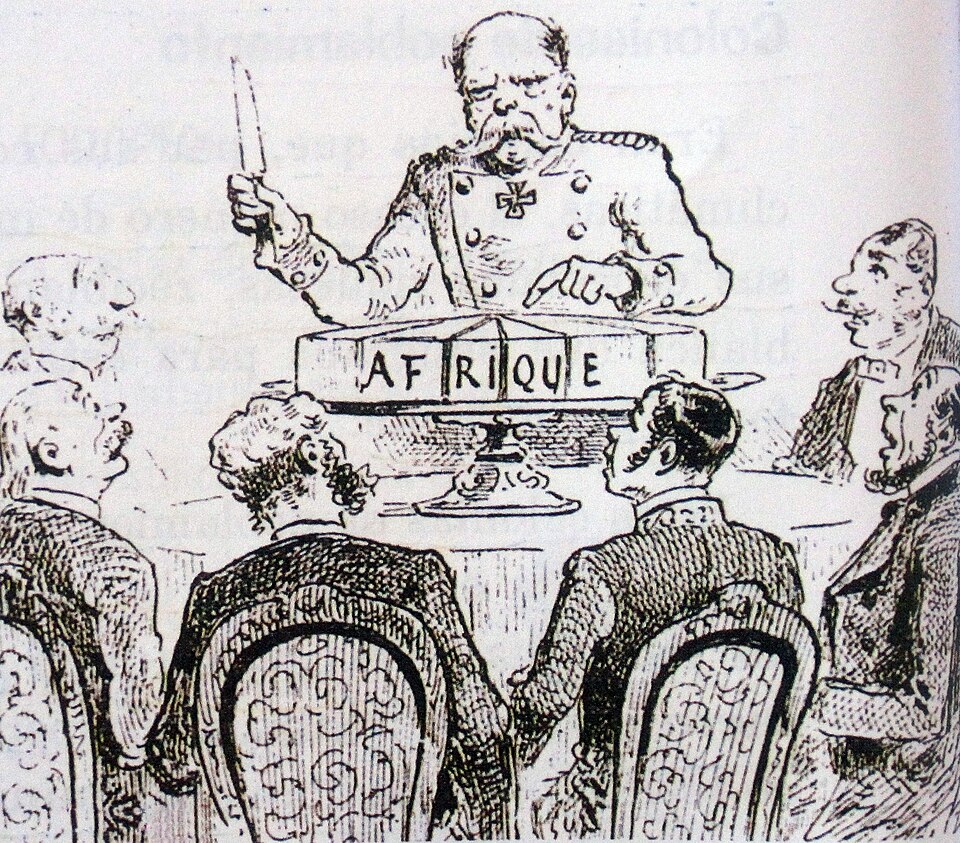
When the Berlin Conference opened in November 1884, Europe was experiencing an unusually tense period. Industrial nations, propelled by unprecedented economic acceleration, sought to secure supplies of raw materials, open new commercial markets, and strengthen their geopolitical power. Africa, until then only lightly touched by coastal trading posts and a handful of exploratory expeditions, suddenly became a central issue—not so much for what it represented in itself, but for what it could offer within the competitive game of empires.
The invitation from Berlin was first and foremost a diplomatic necessity. For several years, European powers had been observing one another, confronting each other by proxy, and exploring African coasts in a climate where commercial expansion blended with strategic rivalries. The United Kingdom worried about French advances along the Congo River, France feared the rise of a newly unified Germany already aggressive in East Africa, while Portugal attempted to gain recognition for its longstanding ambition of linking Angola to Mozambique.
The European balance appeared fragile. Any colonial conquest risked turning into open conflict on the continent itself. Chancellor Otto von Bismarck, who had never truly been a committed supporter of colonization, understood that these competing ambitions had to be managed in order to avoid a large-scale war. Berlin thus became the stage for a diplomatic rearrangement in which every actor pursued its own interests, while the participation of any African representative was never even considered.
This imposed silence on African sovereignties remains one of the conference’s most striking features. Around the table sat fourteen delegations from Europe and the United States. They discussed rivers whose banks none of the diplomats had ever walked, kingdoms they knew only through explorers’ accounts, and borders they were about to draw behind closed doors without considering cultures, languages, or indigenous political structures. Africa was present as an object, never as a subject. This deliberate absence casts a harsh light on what was truly unfolding: not a multilateral agreement for peaceful coexistence, but the methodical construction of a global colonial order.
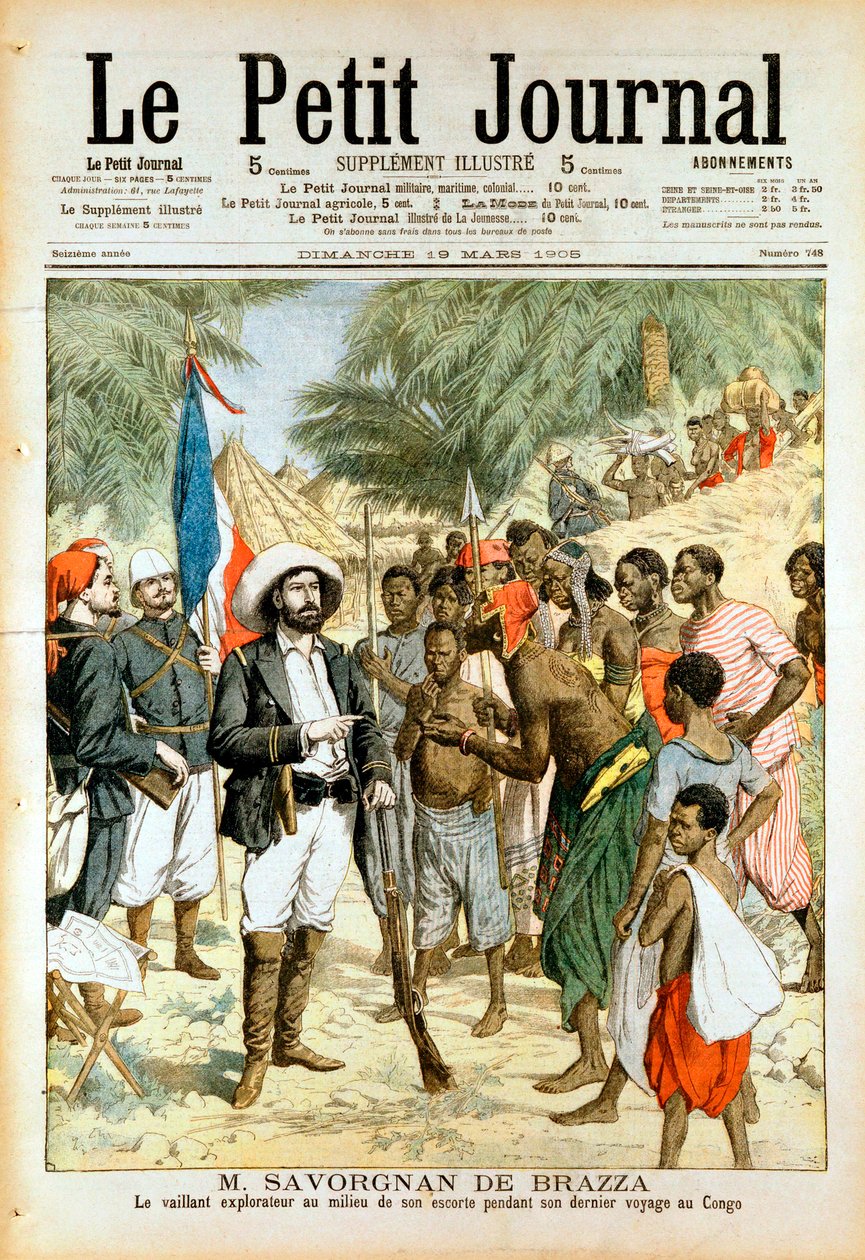
At the time, the frenetic activity of King Leopold II contributed significantly to the instability. Eager to obtain an African territory he could administer directly, he mobilized humanitarian-front organizations (the International African Association, followed by the International Association of the Congo) to legitimize his personal ambitions. Henry Morton Stanley, returning from lengthy explorations along the Congo River, signed treaties in rapid succession whose legal value remained questionable, yet which served as the basis for territorial claims. On the other side of the river, Pierre Savorgnan de Brazza expanded French interests. The Congo region quickly became a field of competition where the great powers risked direct confrontation. Berlin was convened to avoid that scenario.
When the proceedings began, Bismarck assumed the role of cautious mediator. He organized the sessions, set the pace of discussions, and established a series of rules supposedly intended to prevent future conflicts. The primary issue concerned navigation on the Congo and Niger rivers, considered strategic arteries granting access to the continent’s interior. The British sought to guarantee freedom of navigation in order to prevent France or Belgium from taking exclusive control. The French, meanwhile, wanted to secure the zones of influence gained through Brazza’s expeditions. The Portuguese, relying on historical claims, sought recognition of their colonial borders. Each power advanced its position in an atmosphere blending classical diplomacy with imperial ambitions.
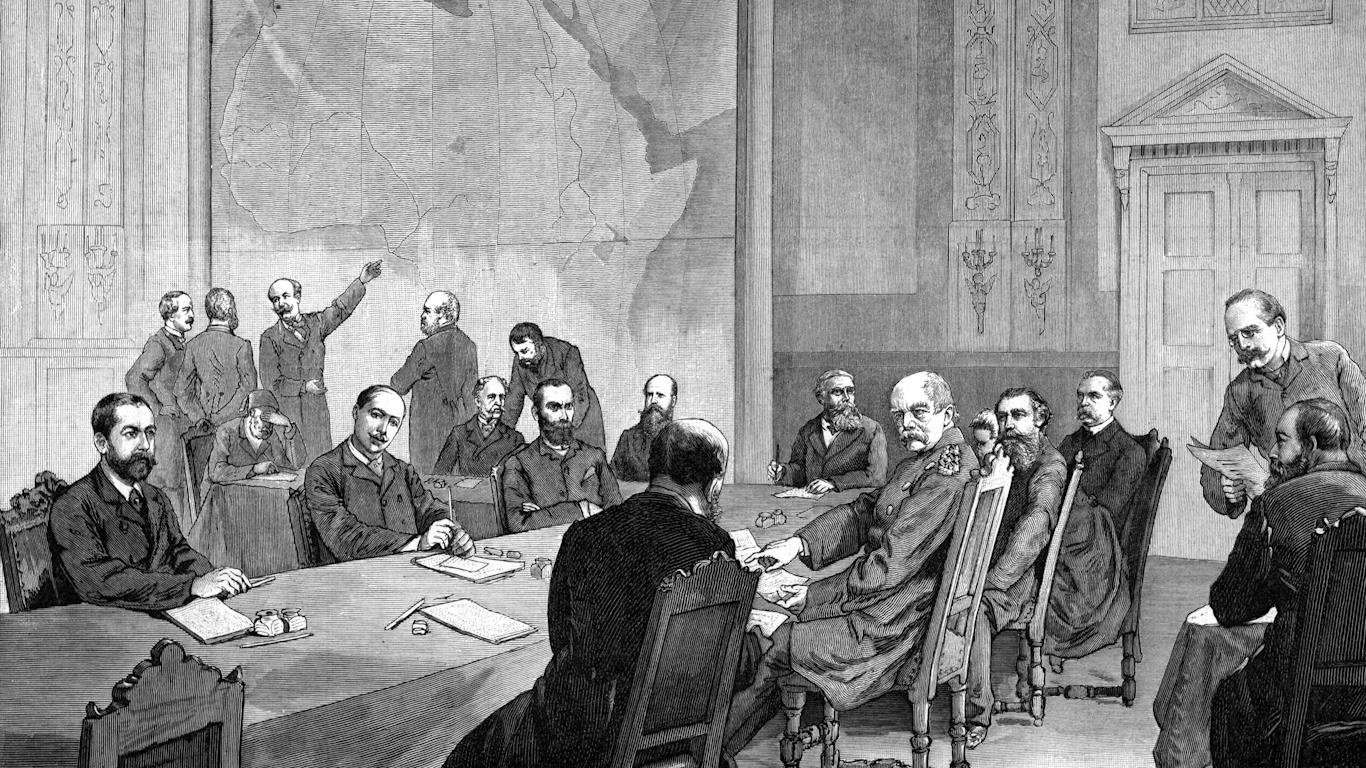
Out of these debates emerged one of the most decisive elements of the General Act: the principle of effective occupation. Until then, in the European imagination, the mere discovery of a territory or the signing of a treaty had been enough to claim ownership. From now on, a state could only declare itself master of a territory if it established a real administration there, composed of posts, garrisons, and stable structures. In other words, occupation became the condition for possession. Introduced in the name of “legal clarity,” this rule carried within it the acceleration of imperialism.
As soon as the conference ended, the powers rushed to materialize their presence, triggering a brutal scramble across the entire continent. Africa, which until then had only experienced peripheral influence, became within a few years a space saturated with military posts, religious missions, concessionary companies, and administrative claims.
Another provision of the General Act drew particular attention: the internationalization of the Congo Basin. Officially, this clause was intended to guarantee free trade and the neutrality of the region. In reality, it enabled Leopold II to obtain recognition of the International Association of the Congo as a sovereign power. Thus was born the Congo Free State, a vast territory ruled not by a country but by a monarch, administered through practices that would become infamous. The Congo then represented an extreme example of the logic Berlin had just legitimized: the total economic exploitation of a territory for the benefit of outside interests.
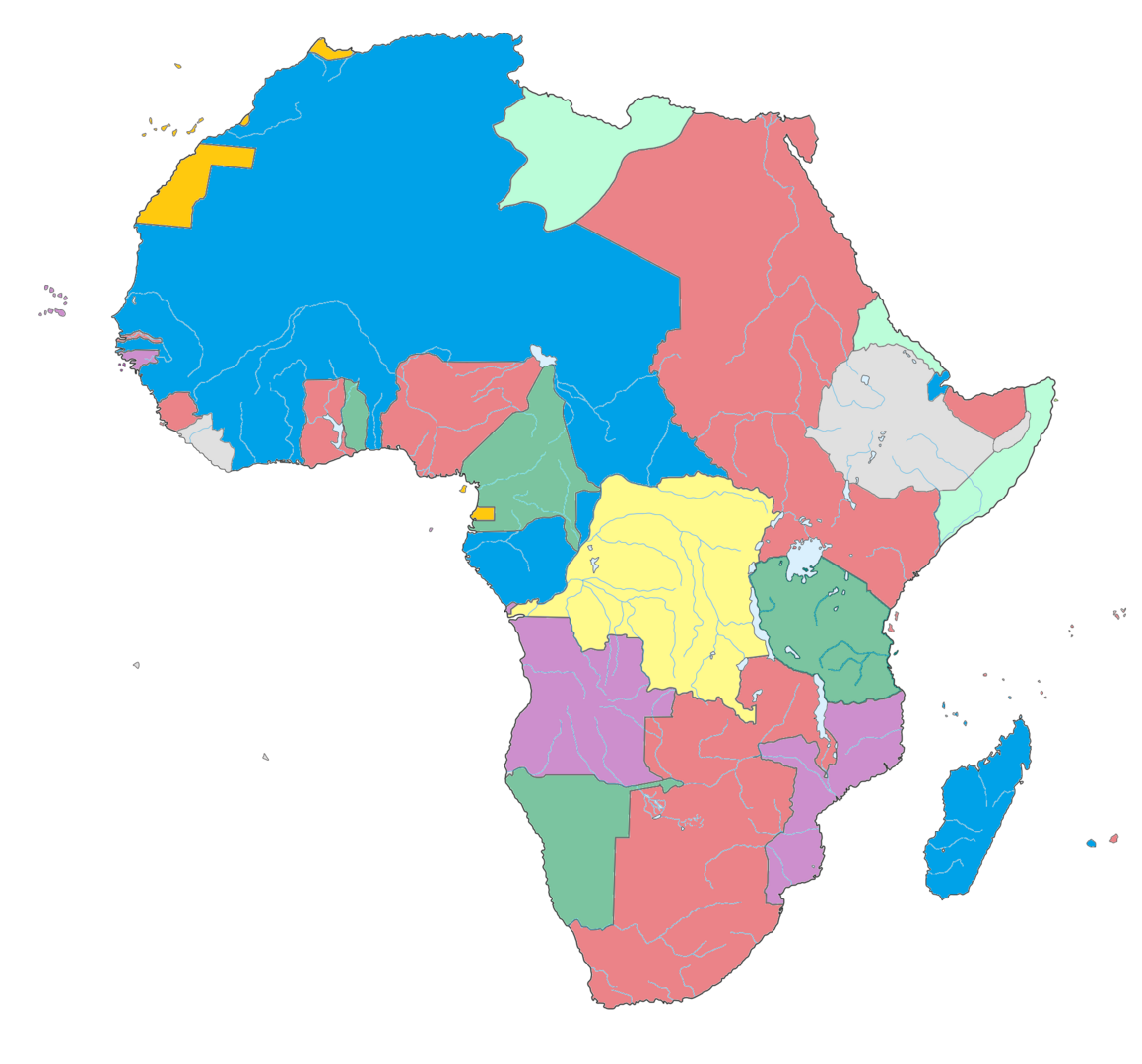
In the decades that followed, the situation evolved with astonishing speed. In 1870, Europeans controlled only a fraction of the continent. By 1902, more than ninety percent of Africa was under European domination. The great powers expanded their borders through expeditions, local conflicts, and diplomatic arbitration. Numerous African states—Sahelian kingdoms, caliphates, Swahili chiefdoms, and southern or central African empires—were conquered, annexed, or dismantled within a very short period. The borders drawn at the time would later become those inherited by African states at independence.
These straight lines, drawn without any understanding of the peoples concerned, remain one of Berlin’s most enduring legacies. They ignored ancient political structures, languages, and local trade routes. Some populations were fragmented, while others were grouped together despite never having shared a common political space. Contemporary Africa’s geography, with its multiethnic states and border tensions, still bears the visible marks of the decisions made in Berlin.
Economically, the Berlin Conference inaugurated a colonial model centered on extraction. Each power established an administrative system designed to organize the extraction of resources destined for the metropoles. Private companies played a crucial role, endowed in some regions with powers almost equivalent to those of states. In both French and British colonies, head taxes, forced labor, and the transformation of agrarian systems disrupted local economies. African societies, unwillingly integrated into a global market governed by Europe’s industrial needs, found themselves redirected toward export-oriented production that rarely benefited them.
The question of resistance was equally central. Far from being a passive continent, Africa witnessed a series of violent or organized reactions against colonial expansion. Zulu resistance, uprisings in East Africa, Sahelian revolts, the wars of Ethiopia, and insurrections in Central Africa all marked the period. The European response was often brutal, as in Namibia during the wars against the Herero and Nama peoples, or in French campaigns across West Africa. These local conflicts, which may appear marginal on the imperial scale, were in fact one of the direct consequences of the principles adopted in 1885: occupying a territory inevitably meant confronting its inhabitants.
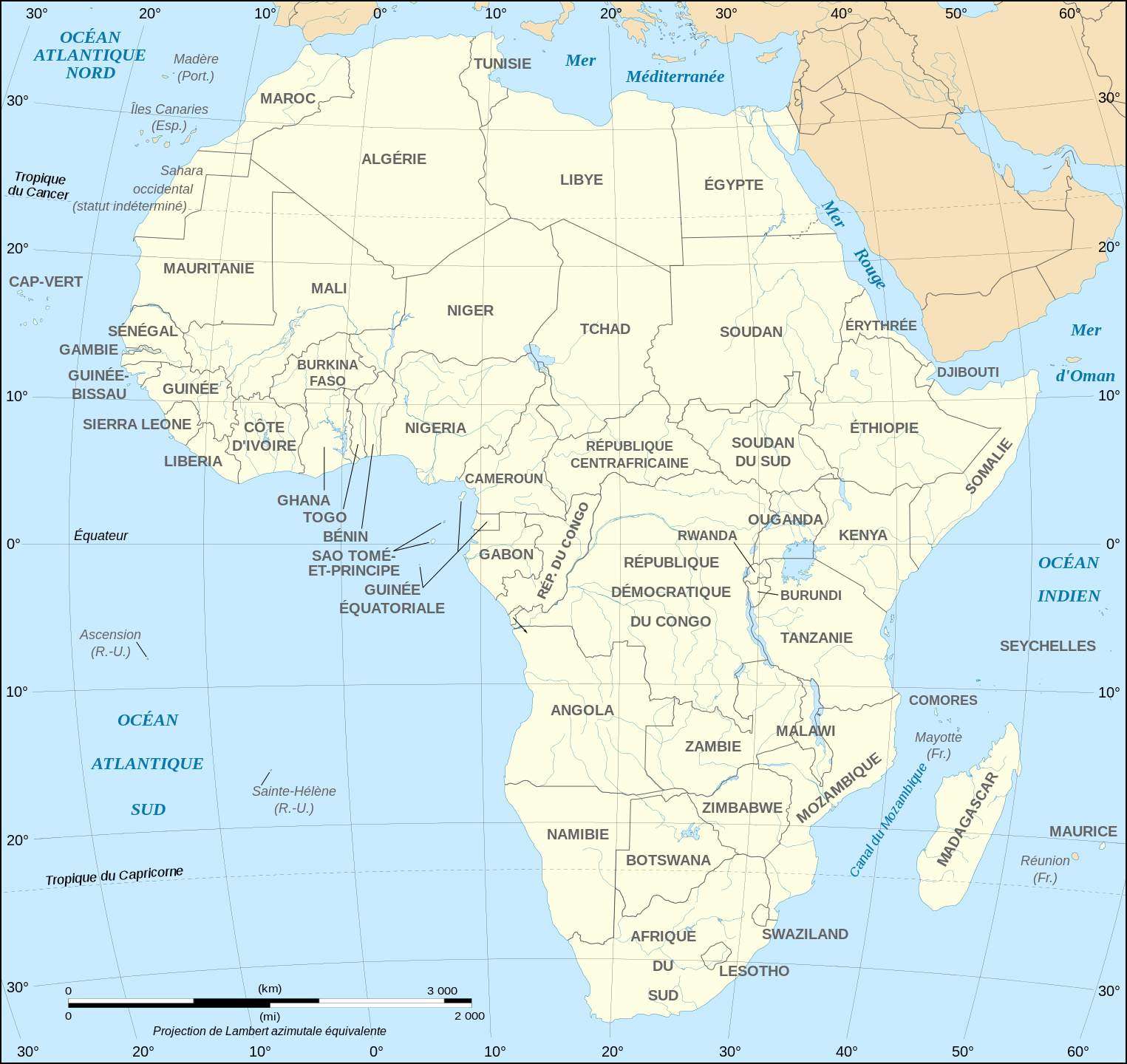
Berlin’s legacy extends far beyond borders or administrative structures. It left a lasting imprint on memories, national identities, and the continent’s historical narratives. The conference crystallized the moment when Africa was forcibly integrated into a global geopolitical logic defined elsewhere. It shaped colonial discourse, intellectual resistance, political revolutions, and the anti-colonial movements of the twentieth century. It also sheds light on contemporary fractures: border conflicts, ethnic tensions, states weakened by extractive economies, and imbalances inherited from systems imposed from abroad.
To understand the Berlin Conference is to understand far more than a diplomatic moment. It means grasping a decisive turning point of the nineteenth century, when Europe, driven by its internal rivalries and economic needs, redrew an entire continent according to its own interests. Africa then entered an era in which its political, economic, and social trajectories were profoundly transformed. This shift, carried out over a few months in the diplomatic salons of Berlin, continues to project its effects into the most contemporary realities. In this sense, Berlin is not simply a date in history textbooks; it is a founding event, a matrix, an essential prism through which to understand the Africa of yesterday and today.

