

On February 23, 1802, in a narrow gorge of the Artibonite, Toussaint Louverture’s troops confronted Rochambeau’s French army. A French victory? A Haitian defeat? In reality, Ravine-à-Couleuvres illustrates the ambiguity of colonial warfare: an inconclusive yet decisive battle, where the determination of the insurgents already foreshadowed the failure of Napoleon’s expedition.
The Echo of Blood-Stained Gorges
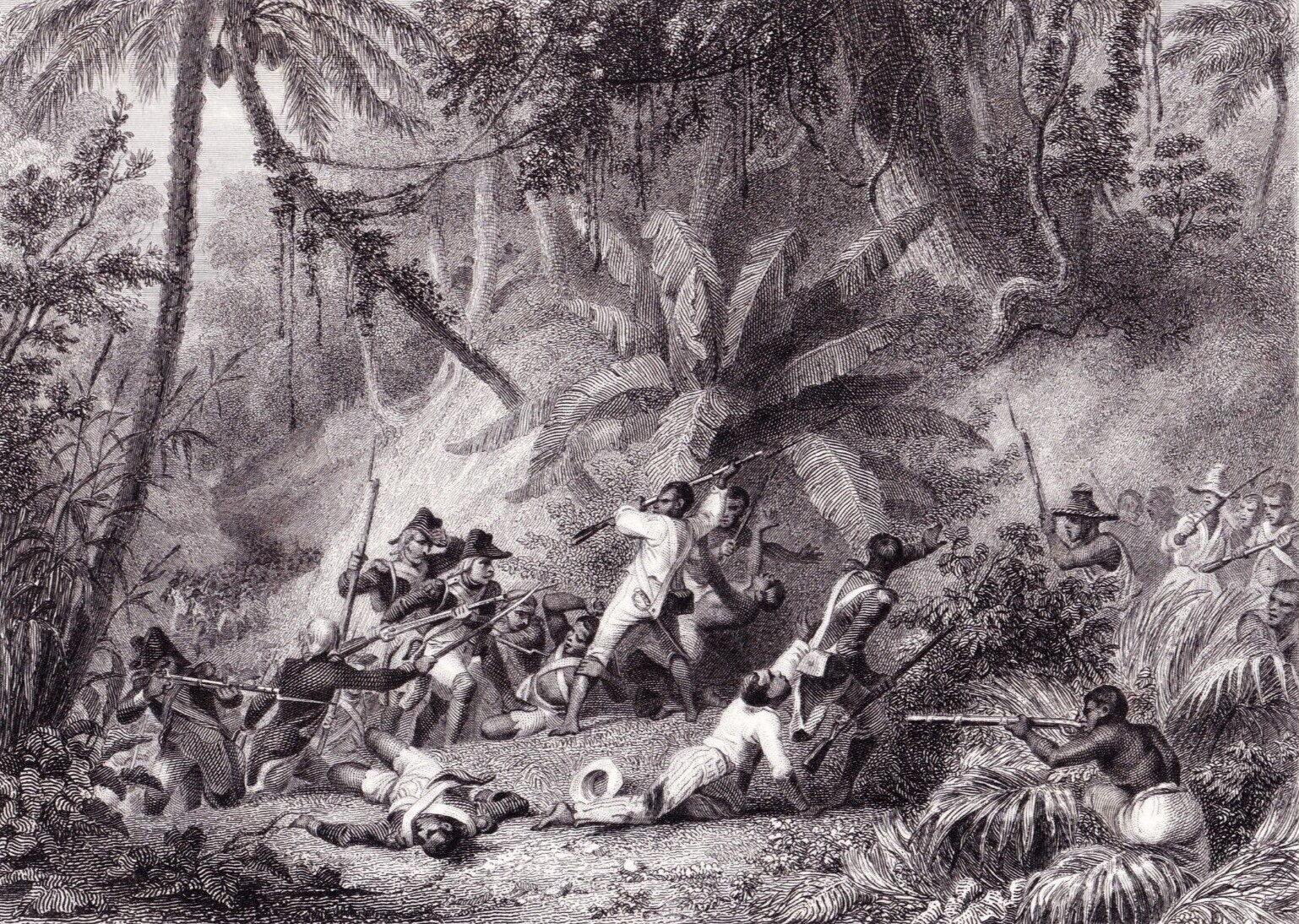
February 1802. Napoleon Bonaparte, then First Consul, had decided to put an end to the “anomaly” of Saint-Domingue: a wealthy colony now under the authority of a former enslaved man who had become commander-in-chief, Toussaint Louverture. To restore colonial order and reaffirm French sovereignty, he dispatched his brother-in-law, General Charles Leclerc, accompanied by veterans of the Revolutionary Army, including the formidable Donatien de Rochambeau.
It was in this context that one of the fiercest and most enigmatic battles of the colonial war erupted on February 23, 1802: Ravine-à-Couleuvres. A narrow gorge wedged between wooded mountains, bristling with abatis, saturated with smoke and the echoes of shouting men. There, French grenadiers clashed with Louverture’s soldiers and armed cultivators. The collision was brutal, almost primitive: “a hand-to-hand fight,” Leclerc would later write in his report.
Yet beyond the official accounts, a question remains: was it a French victory, a heroic Haitian resistance, or a strategic defeat for Toussaint? The figures diverge, memories contradict one another, and historians oscillate between glorification and skepticism.
It is this ambiguity, this inconclusive yet decisive battle, that we will explore. For Ravine-à-Couleuvres, far more than a simple military episode, illustrates both the limits of the French imperial machine and the resilience of an army born from slavery.
To understand this foundational scene in Haitian memory, we must revisit its context, its protagonists, its unfolding, and its interpretations.
An Island in Flames
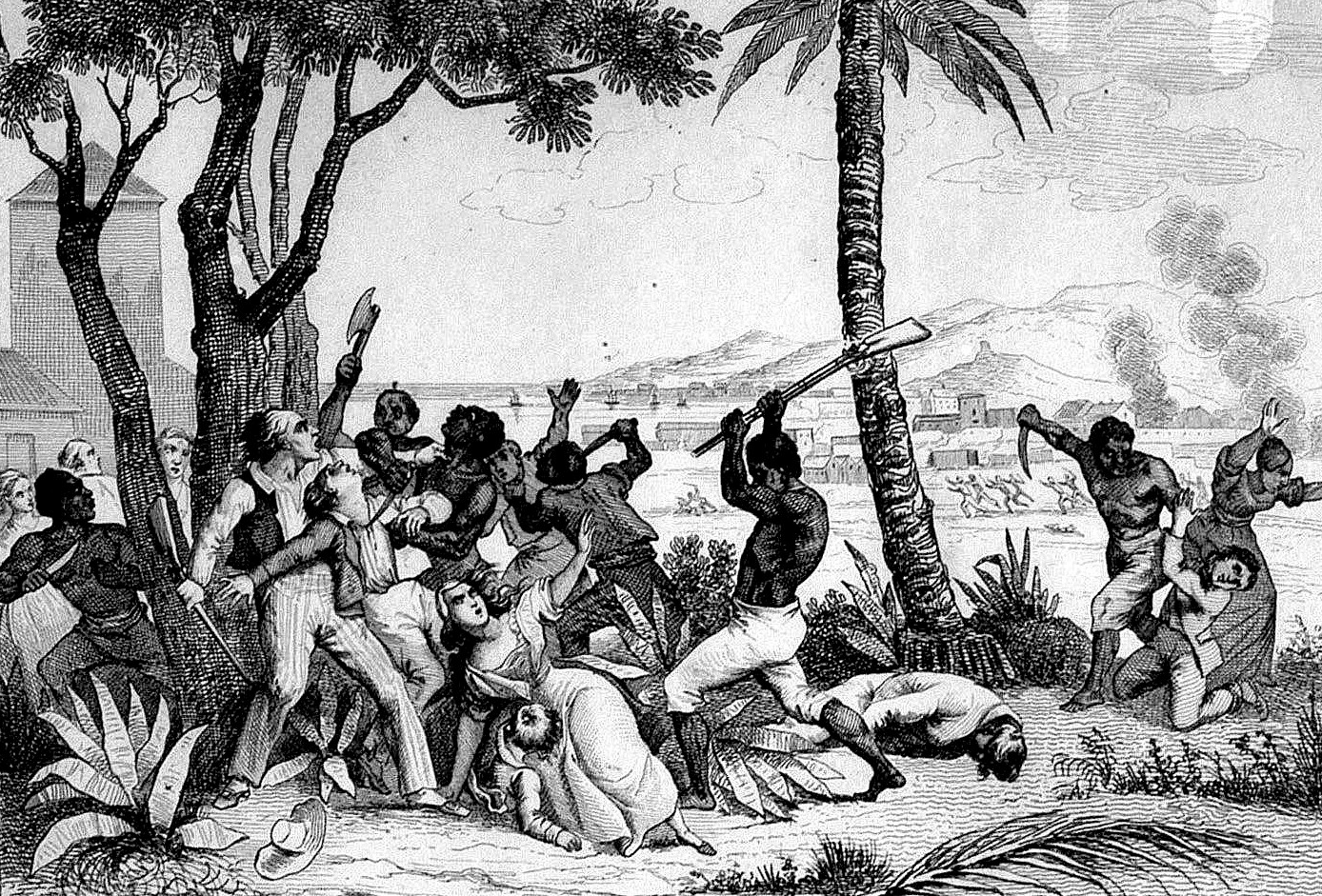
At the turn of the nineteenth century, Saint-Domingue was no longer the obedient “Pearl of the Antilles” that enriched France. Since the uprising of 1791, the colony had become a permanent battlefield where formerly enslaved people, led by Toussaint Louverture, had not only defeated the colonists but had also resisted the Spanish and the British. In 1801, Louverture went even further: he promulgated a constitution proclaiming him Governor for Life of the colony.
In Paris, such a challenge was unacceptable. Napoleon Bonaparte decided to strike hard. An army of more than 30,000 men was dispatched under the command of his brother-in-law, Charles Leclerc. The mission was clear: regain control, disarm Louverture, and, behind the scenes, prepare the restoration of slavery.
Among the generals who landed, one name stood out: Donatien de Rochambeau, a ruthless veteran of the French Revolution. It was he who, a few weeks later, would find himself facing Louverture in the narrow gorge of Ravine-à-Couleuvres.
The Artibonite Valley was one of Saint-Domingue’s strategic locks. Fertile and densely populated, it linked the coastal plains to the mountains where insurgent troops found refuge. To control the Artibonite meant opening the road to Gonaïves and cutting Black forces off from their bases.
Louverture knew the terrain better than anyone. He stationed his troops there—a mixture of seasoned soldiers and armed cultivators whom he used as scouts and auxiliary forces. For him, the Artibonite had to become a natural barrier, a trapped landscape where the French army would wear itself down in the gorges, forests, and ravines.
For his part, Rochambeau, at the head of his division, advanced toward Saint-Michel-de-l’Attalaye and then toward Estère. His strategy was offensive: crush Haitian resistance quickly before guerrilla warfare could take shape. But he was about to discover that this island “in flames” was a far more formidable adversary than any regular army.

