

On October 7, 1792, on the heights of Morne Pelé, a little-known former slave named Toussaint faced the French troops of Cap-Français for the first time. It was not a great battle, barely a skirmish. Yet, in the smoke of that forgotten clash, a destiny was born. There, amid the chaos of a burning Saint-Domingue, emerged the man who would transform a slave revolt into a political revolution: Toussaint Louverture. Between memory and oblivion, this tiny episode tells how, before Vertières and before independence, Haitian freedom first took shape in the calm gaze of a strategist; that of a Black man who, on an October morning, decided to think of freedom as a science.
An Uncertain Dawn Over Saint-Domingue
History always begins with a morning when everything still seems possible.
Day breaks over the hills of northern Saint-Domingue. Mist clings to the slopes like a hesitant breath. In the distance, palm trees sway beneath the rising light; the drums, however, have not slept. They echo through the valleys, beating the pulse of a world in the process of inventing itself. On this October 7, 1792, the sun does more than illuminate an island: it illuminates a turning point.
Saint-Domingue was then the poisoned jewel of the French Empire; the richest colony in the world, yet also the most violent. Sugar, coffee, indigo: the language of prosperity concealed the reality of bondage. On the plantations, more than half a million enslaved men and women bent beneath heat and lash. For over a year, the rumor of Bois-Caïman had continued to circulate among the slave quarters: it was said that on a stormy night, enslaved people united by blood to overthrow their masters. The fire had been lit, and no one knew where it would stop.
The frightened white colonists demanded order from France; the civil commissioners sent by Paris spoke of the Rights of Man, yet hesitated to grant them to those they still called “Negroes.” Royalists schemed, republicans tore each other apart, and the free people of color (soldiers, landowners, educated mulattoes) tried to carve out a path between two revolutions: that of the Whites and that of the Blacks.
Amid this chaos, in a makeshift camp at the foot of Morne Pelé, a man surveyed the landscape with the gravity of those who know that nothing will ever be the same again. He did not yet bear an illustrious name. He was simply called Toussaint, a former coachman, trusted servant, respected healer, and discreet lieutenant among the insurgents of Biassou and Jean-François. That morning, he was preparing to face a regular army for the first time: that of Chevalier d’Assas, sent from Cap-Français to crush the nascent rebellion.
No one yet knew that within the smoke of this skirmish a calling would be born.
For sometimes history unfolds in a whisper, on a narrow path, in the breathing of a single man. And on that day, on the northern heights, Toussaint was still only one name among many. Yet already the mountain carried within it the foreboding of a destiny.
That day, no one yet knew that this small engagement would reveal the man who, a few years later, would make Bonaparte tremble.
Saint-Domingue in Flames, or the Colonial World at the Crossroads of Revolutions
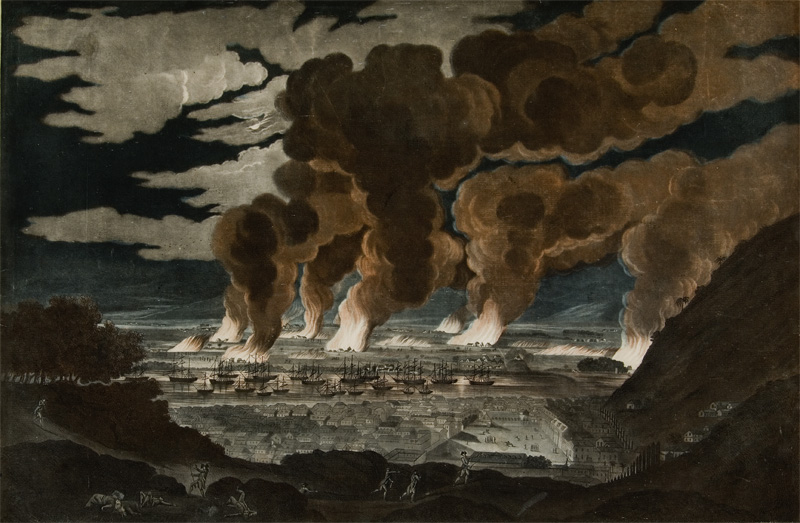
Revolutions do not create men: they reveal those whom society had condemned to silence.
The year 1792 opened with a paradox. While revolutionary France proclaimed liberty and equality of rights in Europe, its colonies remained founded upon slavery; that “original stain” which the Declaration of 1789 had failed to erase. Along the shores of Cap-Français, ships still loaded the sugar and coffee that enriched the ports of Nantes and Bordeaux. Yet behind the white facades of the plantations, fear had settled in: the fear of a world losing its balance, of an order beginning to crack.
In the north of the island, the soil was red with history and blood. There stretched the largest sugar plantations, and the most brutal as well. It was there that the first flames of rebellion erupted after the Bois-Caïman ceremony, on an August evening in 1791, when enslaved people decided that freedom was not something to be begged for; it was something to be seized. Since then, Saint-Domingue had ceased to be a colony and had become a battlefield.
Within this chaos, camps formed and dissolved. First came the insurgents: maroons, rebellious captives, soldiers of fortune armed with machetes and an unshakable faith. They were not united, but they were driven by the same force: revenge. Their rage was the rage of centuries of humiliation; their weapon, an intimate knowledge of the land.
Facing them stood the republicans of Cap-Français, soldiers of revolutionary France attempting to maintain colonial order in the name of universal liberty. It was an unbearable contradiction: men fighting in the name of the Rights of Man while continuing to defend a system built upon servitude.
Finally, there were the royalists, supporters of a return to the Ancien Régime, often allied with the Spanish and white colonists hostile to any idea of emancipation. To them, the Black revolt was not a cry for justice but a threat to be exterminated.
At the center of this shifting chessboard, several figures emerged. Jean-François, a charismatic leader, wielded the Bible as skillfully as the sword. Biassou, his companion-in-arms, embodied military rigor and the discipline of former African soldiers forcibly enlisted into colonial service. And then there was Toussaint, the silent intellectual, the man in the shadows, a careful strategist and healer of both men and horses.
Between them, alliances were forged out of necessity rather than trust. Every victory came at the cost of betrayal; every truce prepared the next confrontation.
Saint-Domingue thus became the mirror of a world in transformation. The ideals imported from Europe collided with colonial reality, and the universalism of the Enlightenment revealed its blind spots.
Here, in the heat of the North, the Revolution split in two: one, white and philosophical, proclaimed liberty; the other, Black and bloody, conquered it.
And within that double light, a man stepped forward, still almost invisible. Toussaint had not become a revolutionary through ideology, but through lucidity. He understood before others that in a world on fire, survival required thinking of freedom as a strategy, not as a dream.

