

Born in 1949 in a still-colonial Upper Volta, Thomas Sankara embodied the African dream of independence and dignity. A philosopher-soldier turned head of state, he transformed his country into Burkina Faso, the “land of upright people,” where he sought to prove that a poor nation could live free. In four remarkable years, he launched a moral and social revolution unlike any other on the continent before being betrayed and assassinated. Nearly forty years later, his name remains a banner: that of an Africa that refuses submission and still believes in the power of integrity.
The Red Star of Faso
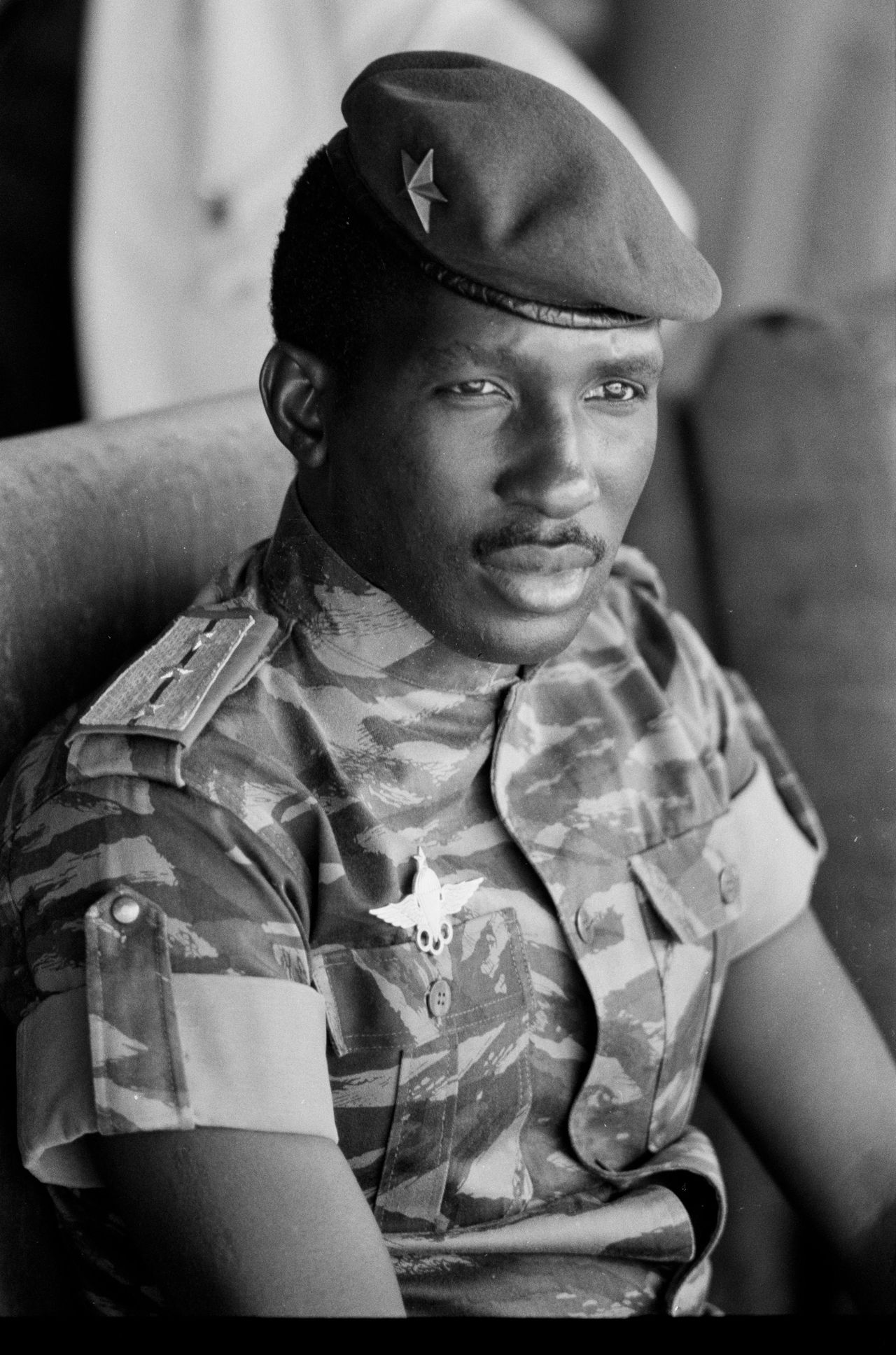
Ouagadougou, 1984. Under a blazing sun, Revolution Square teems with people. Thousands of Burkinabè—women and men, farmers and soldiers—crowd around a makeshift platform. A young captain steps up to the microphone, a red beret tilted over his temple, wearing an undecorated khaki uniform and carrying a guitar over his shoulder. He smiles, strums a few chords, then declares in a calm but resolute voice:
“Fatherland or death, we shall overcome.”
The man speaking is Thomas Isidore Noël Sankara. He is only thirty-four years old, yet his name is already known from Lagos to Havana. In just four years in power, he would transform the face of his country and give the world a new image of African revolution.
Nothing, however, seemed to predestine the son of a Mossi gendarme, born in Yako in 1949, to become a hero of global stature. Raised with discipline and trained in the military, he developed a simple and absolute conviction: integrity is the first of freedoms. In a postcolonial Africa plagued by corruption, dependency, and resignation, he would come to embody dignity.
Thomas Sankara was revolution with a human face, the African dream clothed in integrity. He wanted a poor but free state, a people’s army, women equal to men, protected nature, and a population standing tall. Yet the history of upright men is often brief. In four years of power, Sankara shook the powerful—and for that, he was betrayed.
How did a Burkinabè officer become a global symbol of Black pride and African sovereignty? How did the child of a colonial empire reinvent politics by grounding it in morality? And why was this hero erased from official memory before being resurrected by African youth?
This is the story of a man who stood upright and sought to teach a people to do the same.

