
Breaking the Myth of “Tribal Wars”
African military history suffers from a double erasure: that orchestrated by colonial chroniclers, and the more insidious one perpetuated by Eurocentric historiography. Precolonial Africa is often reduced to a theater of tribal violence, devoid of any strategic rationality or institutional logic. This infantilizing vision, recycled since the 19th century, conceals a far richer, more complex, and structured reality. Far from being limited to mere disorganized skirmishes, African wars were, for many societies, the direct extension of a political project, a religious imperative, or a drive for economic expansion.
In truth, speaking of “tribes” is already, in itself, a conceptual mistake. The political structures of precolonial Africa were often centralized chiefdoms, federative kingdoms, or vast empires with mobilization, management, and command systems comparable to Eurasian medieval models. What is misleadingly called “tribal war” was very often a diplomatic, religious, or fiscal enterprise underpinned by strategic interests and governed by precise rules of engagement.
That said, it is necessary to recognize that the African theater presented major eco-geographical constraints that deeply shaped its military configurations. The infamous tsetse fly, vector of trypanosomiasis, decimated horses and livestock, drastically limiting cavalry in Central and Equatorial Africa. Similarly, the absence of deep natural ports along many coasts, or the inaccessibility of certain rivers blocked by cataracts and rapids, slowed technological exchanges, delayed the transport of heavy equipment, and compartmentalized military fronts. Geography, therefore, was never neutral in the evolution of African warfare tactics.
Yet, despite these challenges, African peoples developed original tactical responses adapted to their environments: massive fortifications at Buhen or in the Kingdom of Kongo, armored cavalry units in the Sahel, poison-wielding archers of the Nile, or disciplined infantry of coastal kingdoms. Each agro-climatic zone corresponded to a specific military model, a conflict rationality embedded in local realities.
Before the colonial era, Africa was not a continent in strategic lethargy. It was a dynamic patchwork of warrior civilizations, each shaping its doctrines and tools according to its own constraints. This diversity, long obscured by the colonial lens, now deserves a rigorous reassessment. This is not about celebrating war for war’s sake, but about restoring to African peoples what was denied them: a military thought, strategic praxis, and indigenous mastery of warfare.
I. AFRICAN MILITARY ANTIQUITY: PHARAONIC, KUSHITE, AND PUNIC PERIODS
I.A. Pharaonic Egypt: the genesis of an indigenous military art
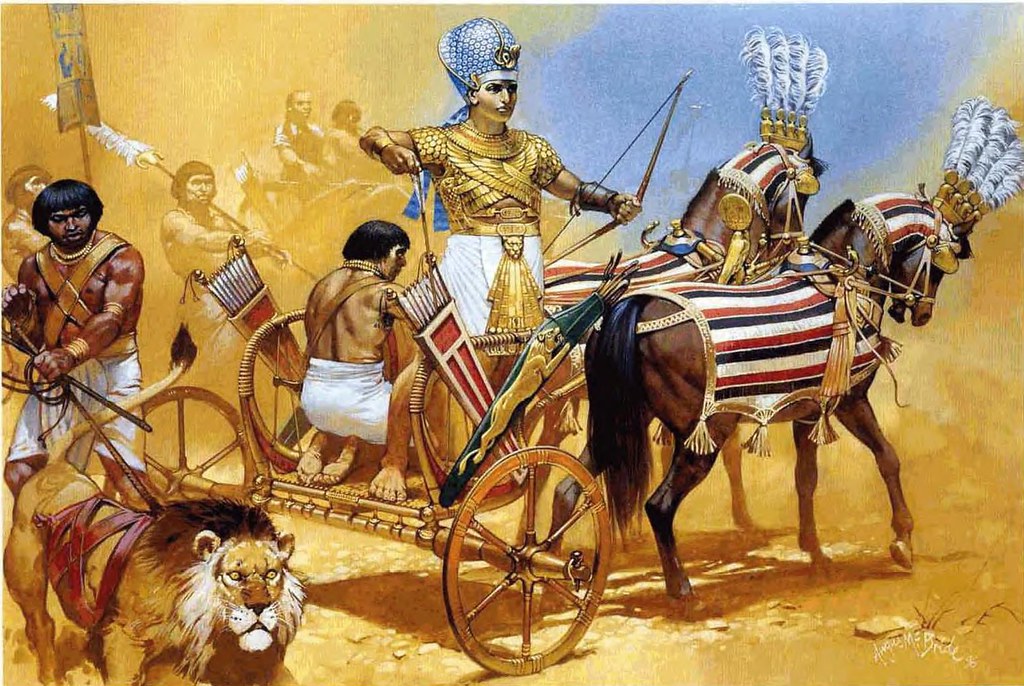
The stereotypical image of ancient Egypt as exclusively focused on religion, hieroglyphs, and pyramids often obscures another reality: that of a fearsomely organized military state, forged in the convulsions of conquest and refined over centuries of warfare. Pharaonic civilization, one of the oldest in human history, could never have built its empire without sophisticated military thought, rigorous strategic doctrine, and evolving tactical expertise.
1. Structured armies from the old kingdom
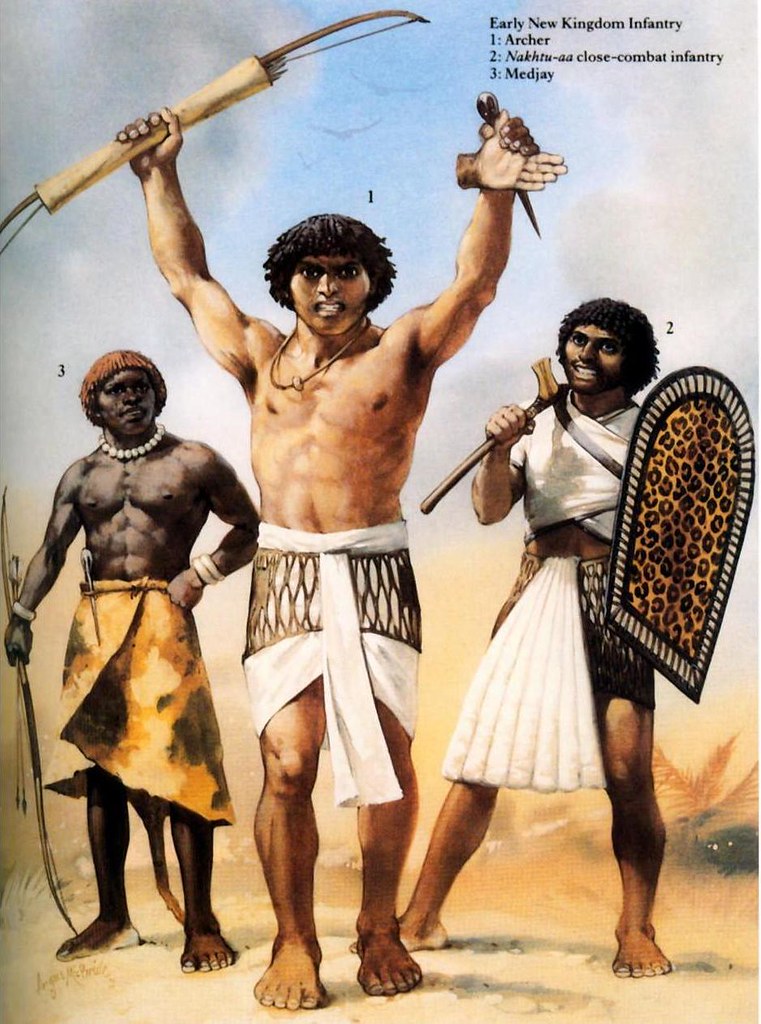
From the Old Kingdom (circa 2700–2200 BCE), Egyptian armies reveal an embryonic but coherent organization: light infantry armed with clubs, copper axes, spears, and simple bows. War was not yet a permanent institution, but it fit within the framework of territorial unification and later expansion toward the Nubian margins. The military apparatus relied on regional levies, supervised by military scribes and regiment chiefs.
Although tactics remained rudimentary (mass maneuvers, frontal assaults), the existence of coordinated campaigns and the construction of fortresses such as those in Upper Nubia (Buhen) show that Egypt already mastered logistics, engineering, and power projection.
2. The Hyksos shock and the military bronze age
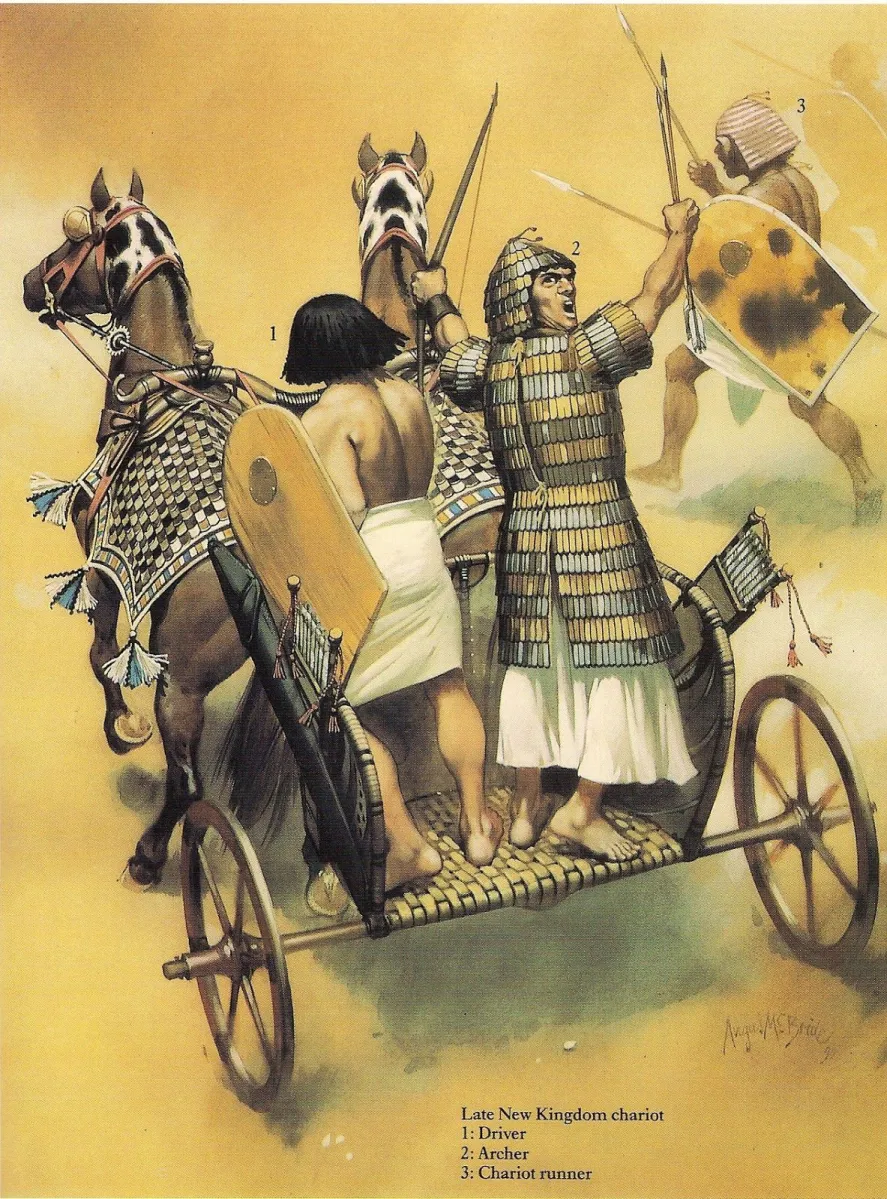
The decisive shock came in the 17th century BCE with the arrival of the Hyksos, Semitic peoples from the Levant, who introduced two major innovations: the war chariot and the composite bow. This confrontation was pivotal as a technological turning point. Far from collapsing, Egypt adapted, absorbed these technologies, and refined them. The resulting New Kingdom (circa 1550–1070 BCE) became the golden age of Egyptian militarization.
Under the reigns of Ahmose I, Thutmose III, and Ramses II, the Egyptian army became a permanent institution. Professional corps were established; arsenals produced standardized weapons; schools trained military scribes. Archers, spearmen, chariots, and auxiliary units (Libyans, Syrians, Nubians) were integrated into coherent formations, overseen by a complex hierarchy. New Kingdom armies deployed columns of several thousand men, organized into divisions capable of coordinated maneuvers as at Megiddo or Kadesh.
3. Nubia: Egypt’s military reservoir
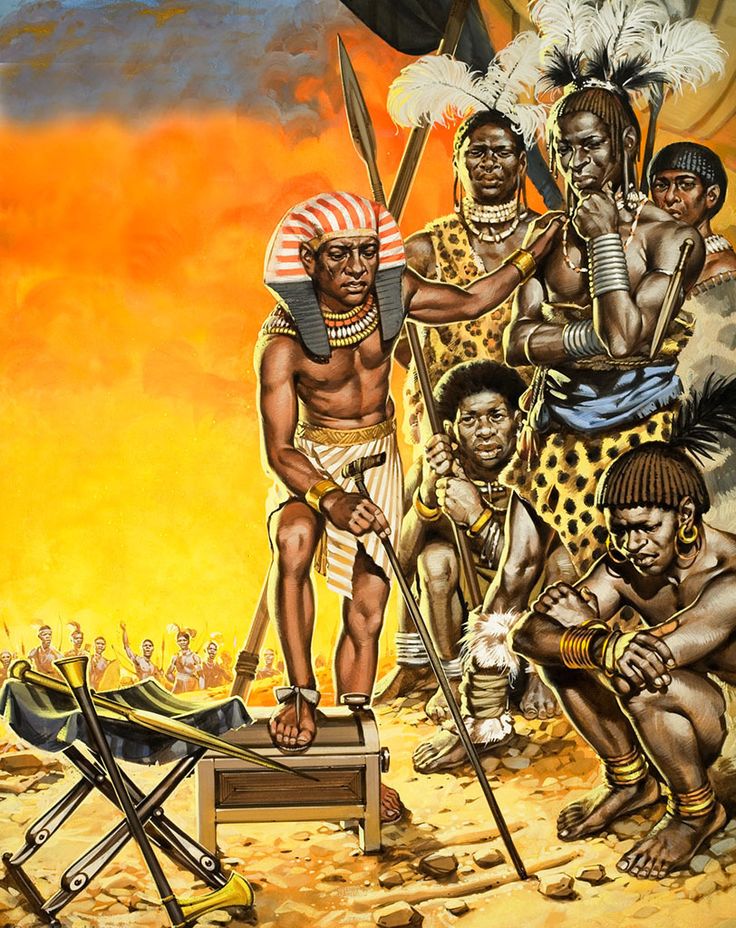
A frequently overlooked but crucial element is the role of Nubian soldiers. Archers from Ta-Seti (“Land of the Bow”) played a central role in Egyptian military power. Renowned for their accuracy and endurance, they were extensively integrated into expeditionary forces, particularly in campaigns in Asia or against Libyans.
Recruitment was not merely importing cannon fodder: it was a military symbiosis between two peoples closely linked since antiquity. Commanders like Weni the Elder report raising thousands of soldiers from Nubian tribes. Far from passive auxiliaries, these archers also contributed to the military rise of the 25th Kushite dynasty when Egypt itself was conquered by its former southern vassals.
In this ancient period, the Egyptian army, far from being a fixed or exclusively ritual entity, acted as a military laboratory. It combined foreign innovations and indigenous traditions, developed complex doctrines, and relied on African strategic alliances. Far from simplifications, Pharaonic Africa provides a striking demonstration of its capacity to conceive and conduct war according to its own logic.
I.B. Nubia and the kingdom of Kush: the bow as extension of the soul
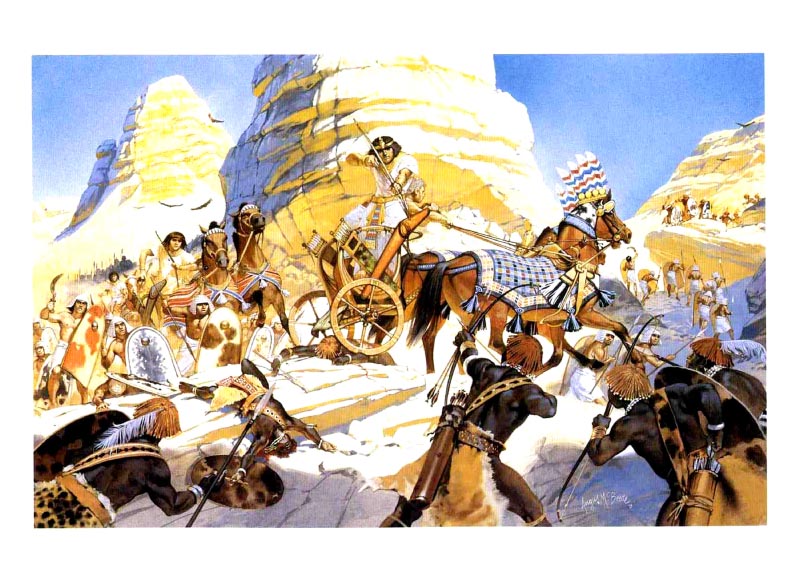
South of the First Cataract of the Nile, in lands often neglected by classical Egyptologists, lay a civilization and military power that official history has too often relegated to the margins: Nubia. More precisely, the Kingdom of Kush (powerful, structured, offensive) represents one of the most formidable models of indigenous military sovereignty in ancient Africa. Where Egypt drew on millennia-old archives, Kush relied on an elemental force: the longbow, drawn with the feet, a direct extension of the warrior will of an entire people.
1. Ta-Seti: Archers of origins
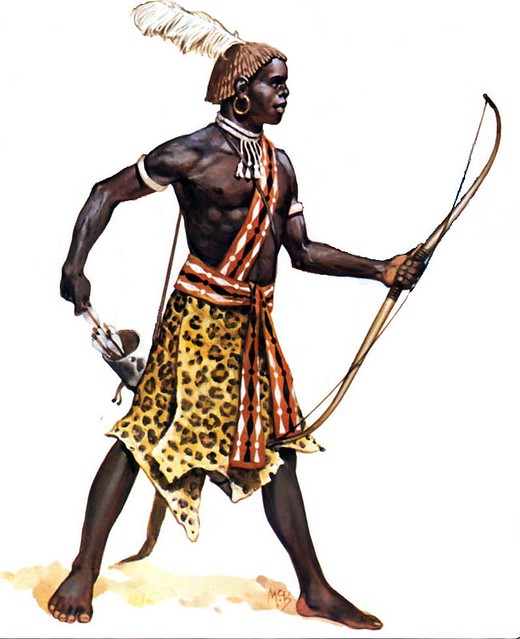
From the earliest Pharaonic texts, Nubia is designated Ta-Seti, the “Land of the Bow.” This is not a poetic nickname, but a tactical recognition: Nubian archers formed one of the most feared military corps of antiquity. Their bows, nearly two meters long, made from palm wood and sometimes reinforced with bone or leather, often required the use of feet to draw. Their shooting was not only powerful but precise, repeatable, and disciplined.
These archers were not mere requisitioned hunters. Trained from childhood, often integrated into warrior brotherhoods, their arrows—short, sometimes without fletching—were frequently coated with plant or animal poisons, attested by Greeks and Persians as devastating. Their effectiveness was such that medieval Arab authors later called the Nubians “eye-poppers,” as their projectiles struck enemies with clinical precision.
2. The kushite era: imperial militarization and strategic reversal
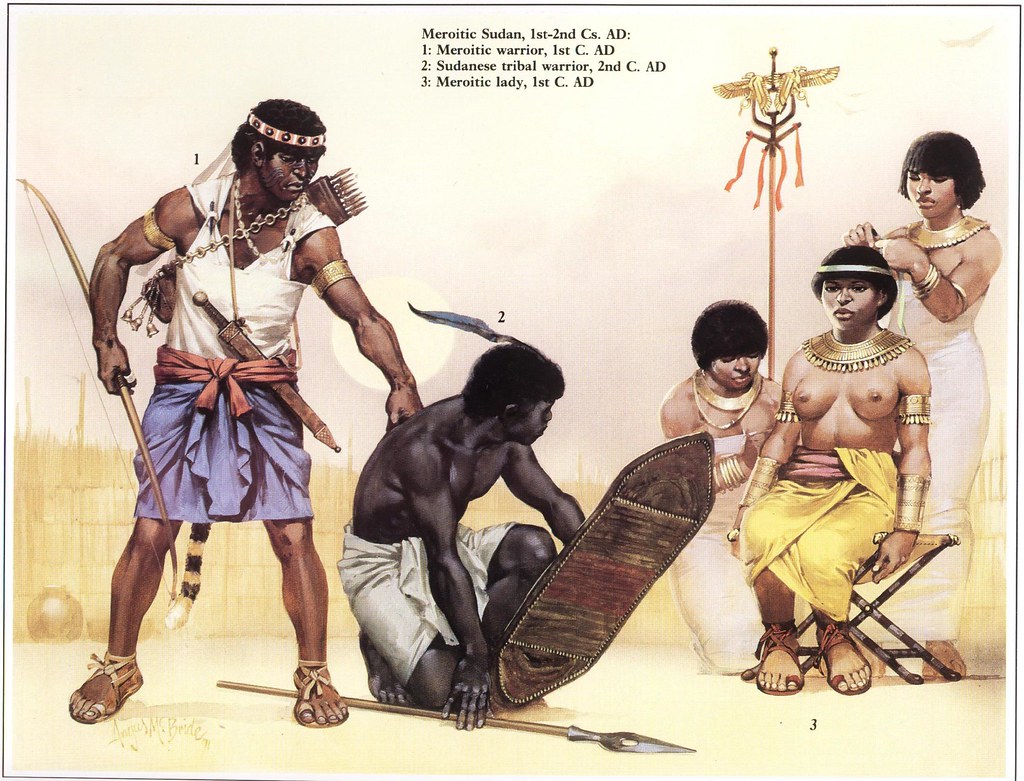
In the 8th century BCE, a major geopolitical shift occurred: the 25th Kushite dynasty. Originating in Napata, then Meroë, this “black” dynasty conquered and ruled all of Pharaonic Egypt. The Kushite army, far from a disorderly coalition of archers, became a structured, centralized force with unprecedented strategic projection capacity.
Troops included several corps: archers, infantry with clubs or broad-bladed spears, as well as cavalry and, according to some sources, chariot units. The Kushites adopted some Egyptian technologies (notably war chariots) but integrated them into their own logic. Far from simply copying the enemy, they Africanized the tools, as shown by tribute scenes presenting chariots to Egyptian pharaohs: these machines were now manufactured in Nubia itself.
Inscriptions by Weni the Elder and reports from governors like Sobeknakht attest that the Kushite army could muster tens of thousands of men and launch deep raids into Middle and Lower Egypt. During an invasion described by British Egyptologists, Kushite forces nearly eradicated the pharaonic power, withdrawing only for tactical choice, not defeat.
3. Martial symbolism: spiritualization of the weapon
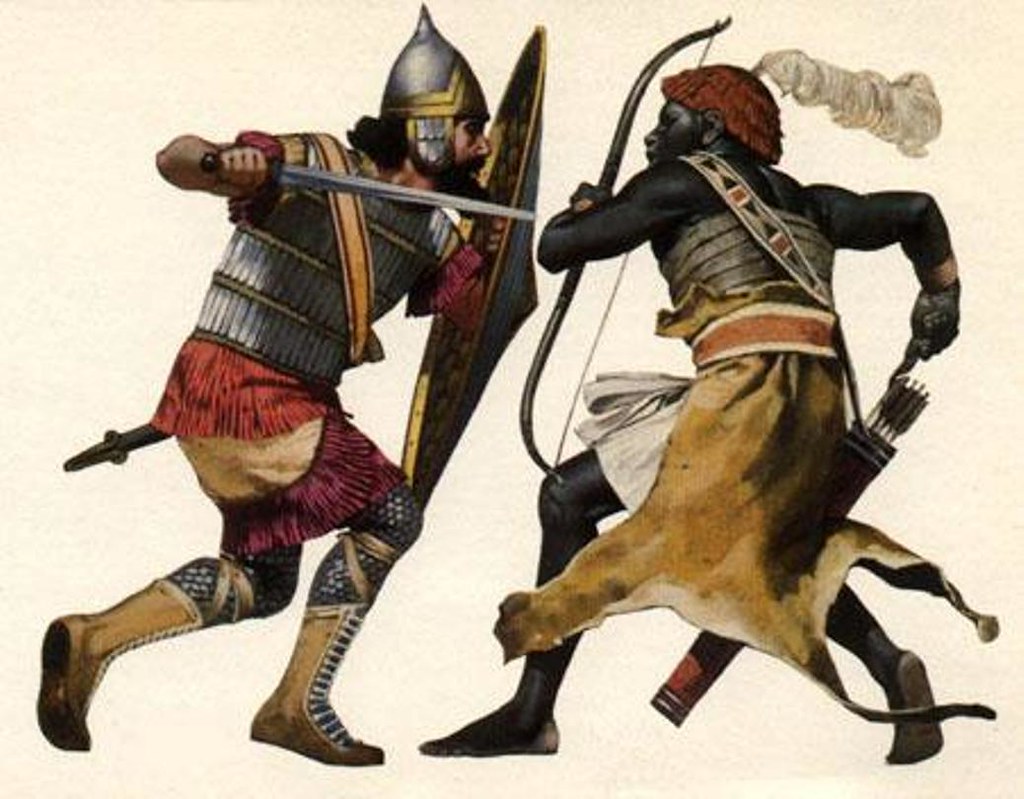
In Nubia, the weapon is never neutral. The bow and arrow are invested with sacred significance. They are painted in tombs, offered to gods, carried in funerary rites. Meroitic kings buried arrows beneath temples or used them as political metaphors:
“As long as my bow holds, my enemies will bend.”
Warrior queens, like the famous Candace Amanirenas, combined political authority and military command. The episode where she sent a volley of golden arrows to Emperor Augustus, indicating they could be “gifts of peace or weapons of war, his choice,” illustrates this simultaneously refined and cutting political-military consciousness. Military objects became instruments of diplomacy, memory, and symbolic domination.
Nubia, far from a mere Egyptian periphery, constituted a military power in its own right. It demonstrates that before Rome, Byzantium, or the Caliphates, Africa possessed sovereign models capable of reversing history. Through martial rigor, technological mastery, and symbolic depth, the Kushite army set an autonomous African strategic paradigm. For the unbiased reader, the southern Nile offers one of the finest examples of indigenous militarism in the world.
I.C. Carthage: a multi-ethnic african power
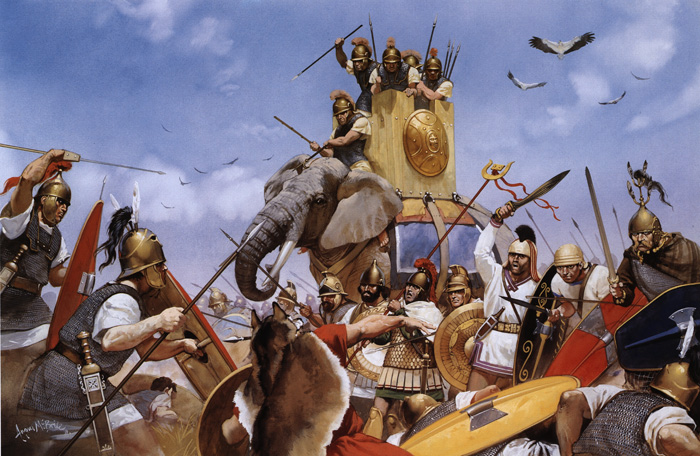
Western historiography often reduces Carthage to a Phoenician colony on the shores of the Maghreb, as if its geopolitical, military, and identity reality were a mere Levantine appendage. This is a major misunderstanding. Carthage was above all a North African power. Its territorial roots, human resources, and armies were drawn from the Libyan matrix. It was a city-state forged on African soil, by Africanized elites, with troops mainly recruited from the Saharan hinterlands and Berber populations. This framework—not cheap Orientalism—must guide analysis of its military system.
1. A composite but coherent army
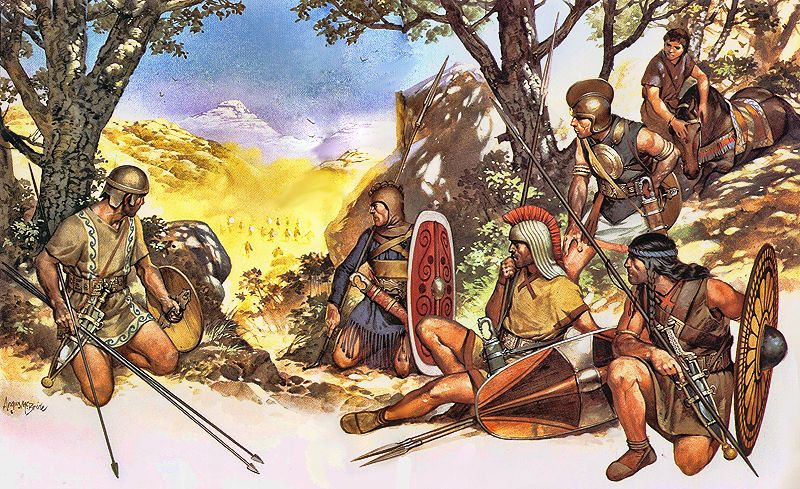
Carthage’s military genius did not lie in ethnic uniformity—far from it. Its army was a mosaic of contingents: heavily armed Libyan infantry, extraordinarily swift Numidian cavalry, Iberian, Balearic, Gallic, or Italian mercenaries, specialized units like Cretan archers, and, of course, the famed North African war elephants. Each group retained its tactics, equipment, and style, but Carthage molded them into a coherent striking force through organization, discipline, and command.
This heterogeneity was not a handicap. It reflected a pragmatic conception of the battlefield, where complementarity prevailed over doctrinal purity. To some extent, it prefigured mixed colonial armies of later centuries, except that strategic initiative and centrality remained African.
2. Xanthippus: reform and african lesson
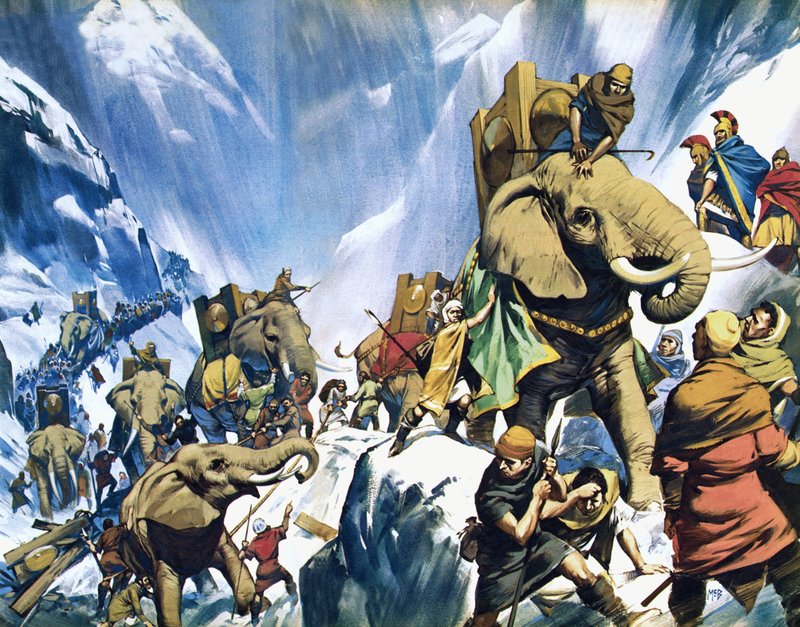
During the First Punic War (264–241 BCE), Carthage, threatened on its own soil by Regulus’ Roman offensive, called upon a Spartan strategist, Xanthippus. Often presented as the Greek savior of a disorganized North African army, he actually revealed the underutilized tactical potential of an already resource-rich army.
His reform was simple but decisive: structure the lines, refocus on Libyan infantry, fully exploit Numidian cavalry, and employ elephants frontally as cohort-breakers. At the Battle of Tunis (255 BCE), this combination decimated the Roman army: cavalry enveloped the flanks, elephants sowed panic, and infantry completed the rout. Only 2,000 Roman soldiers survived, making this battle one of Rome’s greatest disasters in Africa.
But this victory was more than tactical. It demonstrated that a well-led African army could challenge and defeat one of history’s most disciplined military machines. It was not so-called Roman “civilizational superiority” that overcame Carthage, but a conjunction of logistical, diplomatic, and economic factors over the long term.
3. Zama: the defeat of a strategic system
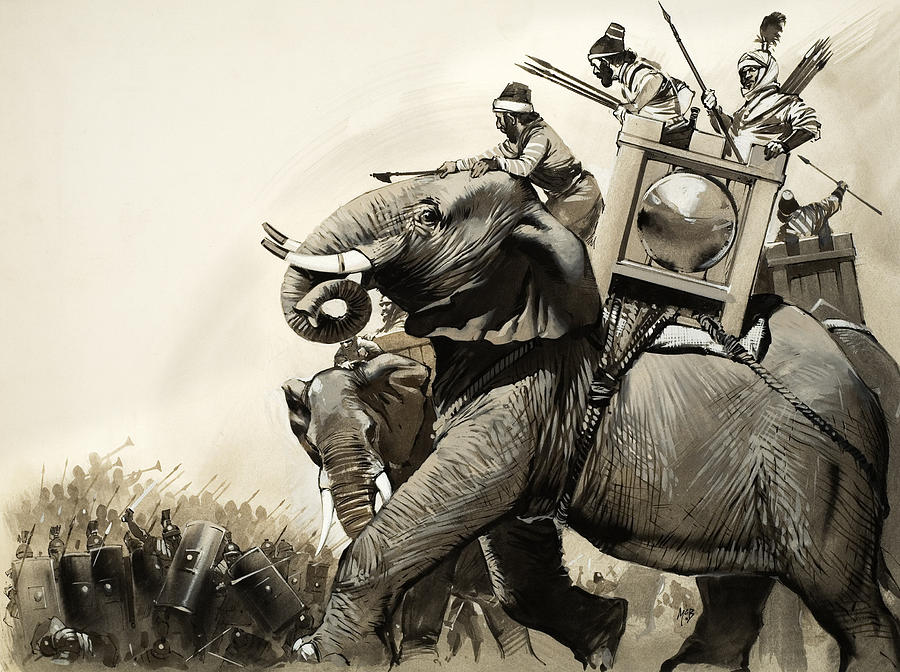
The Battle of Zama (202 BCE) marks the end of Carthaginian military independence. Facing Scipio Africanus, Hannibal deployed a reduced, heterogeneous army, deprived of two pillars: veteran elephants and Numidian cavalry, which had defected to Masinissa. The core consisted of veterans from the Italian campaign, but their coordination with new African or Iberian contingents was insufficient.
Hannibal’s plan (launch elephants, wear down Roman front lines with mercenaries, then deploy veterans) failed. Elephants were disoriented by Roman maneuvers; Carthaginian lines struggled to support one another; and Roman and Numidian cavalry, returning to the field, crushed the rear guard. Zama, therefore, was not the defeat of African fighters, but of a military system fractured by political disunity and strategic isolation.
With Carthage, ancient Africa produced a multinational, organized, technologically innovative military power capable of challenging Rome on its own ground. Its defeat was less one of arms than of alliances. Yet its military legacy—particularly doctrines of elephant deployment, Numidian light cavalry, and tactical use of ethnic diversity—would long influence Rome itself. Carthage was not marginal; it was a beating heart of African military art. Its memory remains a bulwark against historical amnesia.
II. THE SAHEL AND THE SAVANNAH: CAVALRY EMPIRES AND MOBILITY STRATEGY
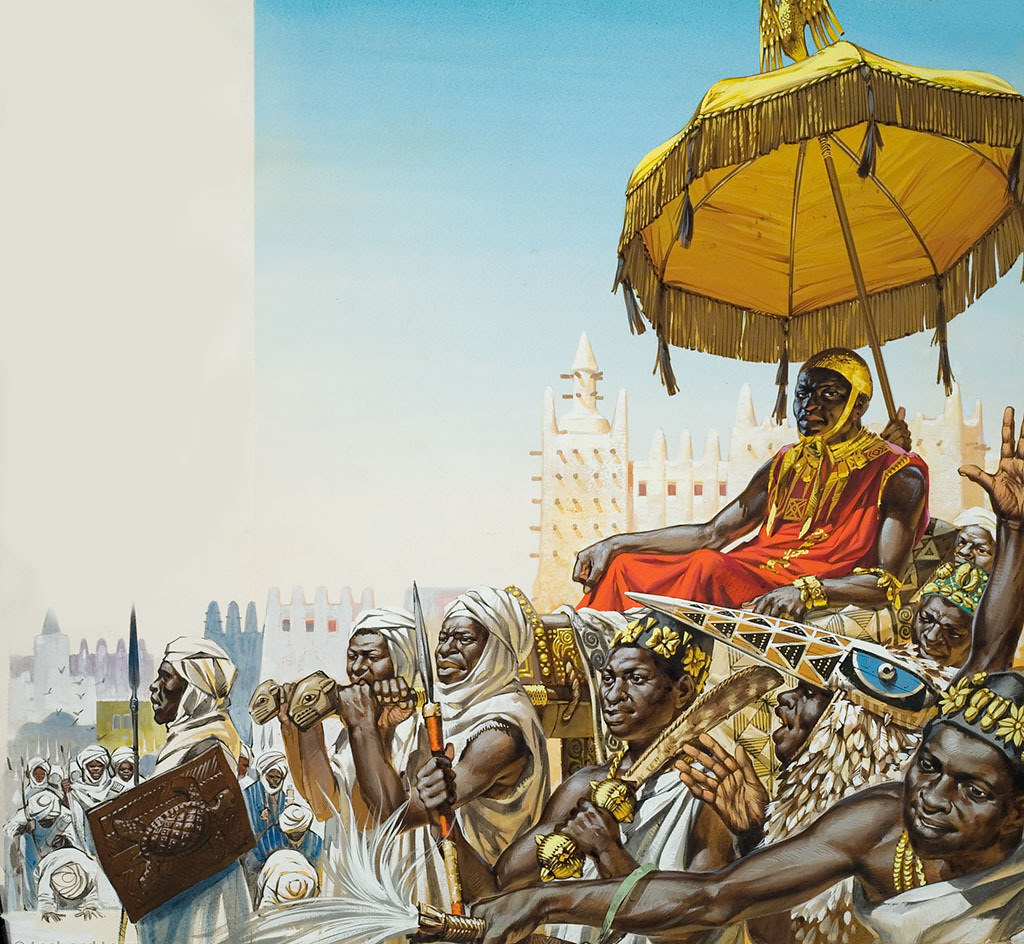
II.A. Introduction of the Horse: Transforming the Sahel in the 14th Century
In African military history, few innovations had as decisive an impact as the mass introduction of horses into the Sahelian savannahs. By the 14th century, this shift gave rise to a new strategic grammar in the Sahel, roughly spanning from Senegal to Lake Chad. War ceased to be the exclusive domain of foot levies or archer formations. The cavalryman became king, embodying speed, terror, and prestige. Yet this military revolution, like any profound change, occurred within constraints imposed by ecology, logistics, and inter-African geopolitics.
1. Gradual change under natural constraints
The horse is not indigenous to West African savannahs. Its adaptation was arduous. The major obstacle was the tsetse fly (Glossina), transmitting trypanosomiasis, a fatal disease for equids and humans alike. Horses could not survive in humid or forested areas but could thrive in the dry plains of the Sahel, provided constant care, secure shelter, and controlled feeding.
This health reality imposed exorbitant costs. From the purchase (often imported from the Maghreb or Eastern Sudan), transport, upkeep (fodder, attendants, farriers), to military training, the Sahelian cavalryman became a high-ranking warrior. He became, in effect, the military instrument of elites, nobles, war chiefs, and sovereigns, giving cavalry a strong aristocratic dimension.
2. A new strategic grammar: cavalry empires
From the 14th century, several Sahelian polities placed cavalry at the center of expansion strategies:
- The Mali Empire (1235–1600) developed an army 90% infantry, but elite units were mounted. Generals, called farai, led cavalry charges supported by foot archers. Some campaigns were coordinated with riverine flotillas of war canoes, reflecting complex tactical planning.
- The Songhai Empire (15th–16th century), successor to Mali, made cavalry the backbone of its military system. At the Battle of Tondibi (1591), Songhai forces relied on a classic arrangement: infantry center, cavalry wings. This model faltered against Moroccan arquebusiers, revealing cavalry’s limits against gunfire.
- The Oyo Kingdom (Nigeria) deployed powerful cavalry in northern zones. However, attempts to expand southward into forests stalled. Forests are the ultimate anti-cavalry terrain. Oyo horses remained confined to the savannah, supported by agile infantry for southern incursions.
- The Bornu Empire, on Chad’s edge, represents one of the most enduring models of an Islamized mounted army. Heavy cavalry, sometimes armored with reinforced leather and cotton, excelled in the vast Kanem plains. Use of long lances, throwing javelins, curved swords, and religious talismans sewn into tunics shows a fusion of martial technique and mystical authority.
3. The horse as an instrument of social hegemony
Owning a horse meant holding a strategic and symbolic monopoly. Sahelian aristocratic lineages built legitimacy around mounted warfare. Elite families in Mali and Songhai raised their sons in equestrian arts. The horse became a mark of distinction, a ritualized privilege: in some ceremonies, young nobles received their first mount as Europeans would a sword.
Logistical costs were so high that extensive internal slave networks maintained horses. In Oyo, dozens of slaves were tasked with watering, feeding, and guarding stables. The horse thus became an institution mobilizing an entire economy: that of elite military service.
The horse’s introduction to the Sahel was not an imported fashion but a tailored military revolution. Despite ecological constraints, Sahelian societies integrated the animal into coherent strategies suited to their environment and power vision. The 14th-century African cavalryman rivaled his Turkish or Andalusian counterpart: he thought, struck, and ruled. His rise marked the classical age of mobile warfare in West Africa

