

African blood in Western royalty has been present in several European countries since the 16th century. This is the case of Charlotte of Mecklenburg-Strelitz, the first Queen of England of African descent.
Charlotte of Mecklenburg-Strelitz: Black blood in the British royal family
Queen Charlotte, born Duchess Sophia Charlotte of Mecklenburg-Strelitz on May 19, 1744, died on November 17, 1818. She was the queen consort of George III of the United Kingdom (1738–1820), with whom she had 15 children including the future kings George IV and William IV, as well as Edward, father of the future Queen Victoria. She was therefore the grandmother of Queen Victoria, and the great-great-great-great-grandmother of the current Queen of the United Kingdom, Elizabeth II.
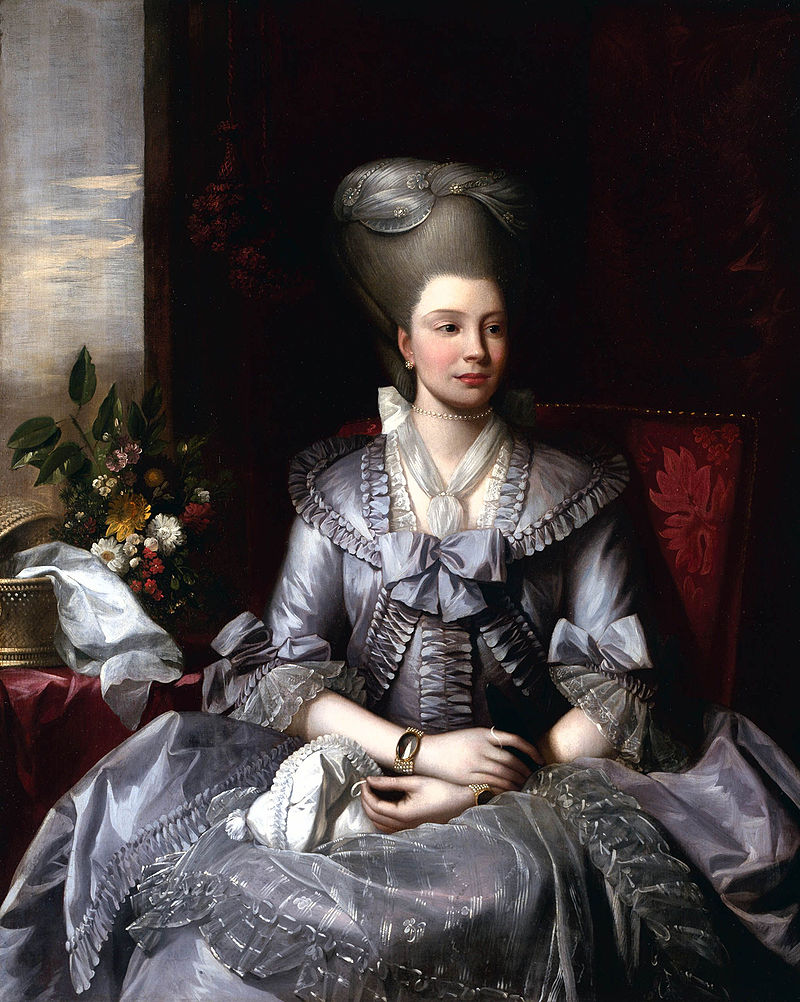
As queen consort, Charlotte was known for her involvement in the arts and botany. She founded the famous Kew Botanical Gardens in 1759 and also became a close friend of Johann Christian Bach and Wolfgang Amadeus Mozart, who both performed at the court of George III and Charlotte.
Charlotte also had a great influence on the fashion of her time. She was known for her elegant style and popularized the wearing of Greek-style hairstyles, often adorned with feathers and jewelry. She also encouraged the fashion of light dresses and introduced exotic fabrics such as silk muslin into English fashion.
Troubled origins
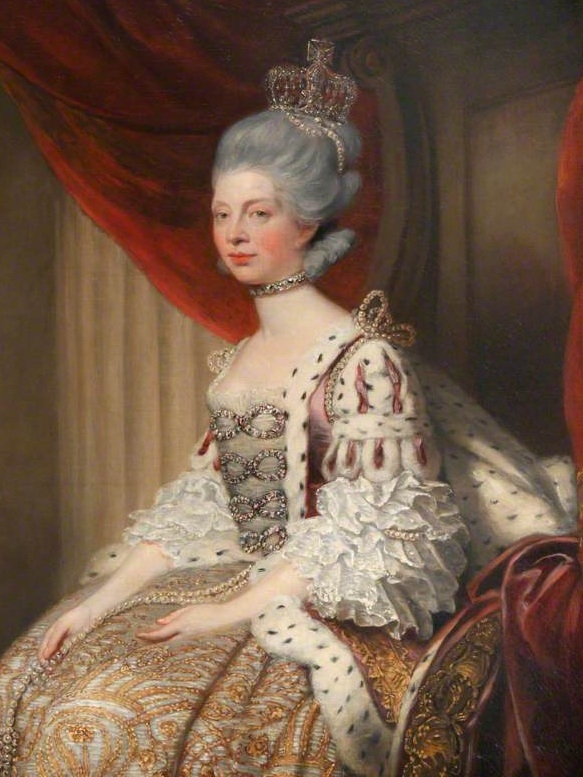
As her contemporaries said, Charlotte of Mecklenburg-Strelitz had Negroid features, as she descended directly from Margarita de Castro y Sousa, a Black branch of the Portuguese royal house. Historians have also suggested that Charlotte’s father may have been an African aristocrat, although there is no definitive evidence to support this theory.
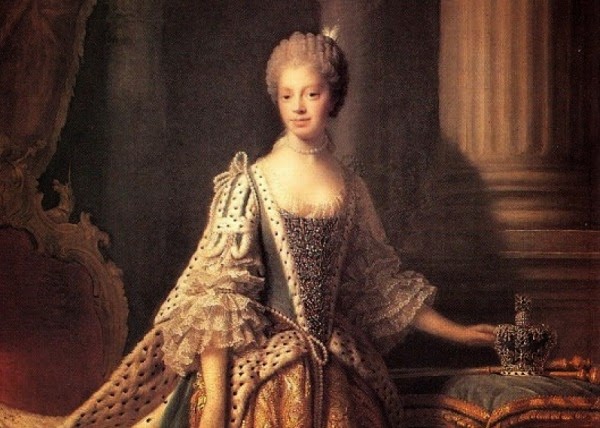
The Queen’s Negroid features certainly had a political significance, since artists of that time were often called upon to conceal, or even erase undesirable characteristics in a face. Sir Allan Ramsay was the artist responsible for most of the Queen’s portraits, and his representations of her Majesty were the most African of all her portraits.
A political portrait
Ramsay was an anti-slavery intellectual of his time. He also married the niece of Lord Mansfield, the English judge whose 1772 decision was the first in a long series that eventually put an end to slavery in the British Empire. It should also be noted that at the time Sir Ramsay was commissioned to paint his first portrait of the Queen, he was already, through marriage, the uncle of Dido Elizabeth Lindsay, Lord Mansfield’s Black great-niece.
Charlotte’s Negroid features were widely documented by her contemporaries and were represented in many paintings of the time. However, the political significance of these characteristics remains a subject of debate. Some historians have suggested that the depiction of Charlotte with Negroid features may have been used to promote the abolition of slavery, while others have argued that it simply reflected the artistic trends of the time.
Thus, taking a quick look at social awareness and political activism at this level of English society, it would be surprising if the Queen’s Negroid physiognomy had no importance for the abolitionist movement.
In any case, Charlotte of Mecklenburg-Strelitz left an indelible mark on British history as an influential member of the royal family. Her lineage extends across several generations, including Queen Victoria, who became one of the most famous and beloved monarchs in British history.
Summary
Charlotte of Mecklenburg-Strelitz: Black blood in the British royal family
Troubled origins
A political portrait


