

Juan Garrido was a Black conquistador who, in the first half of the 16th century, took part in the conquest of present-day Puerto Rico, Cuba, and Mexico. He is also known as the first man to have cultivated wheat on the American continent.
Juan Garrido, the most famous of the Black conquistadors
The modern history of America in three colors
In popular accounts of the modern history of the American continent, clearly defined roles are often assigned to Whites, Native Americans, and Blacks. The former are said to be the conquerors of the continent, its colonizers, the perpetrators of genocide against Native Americans, and the enslavers of Blacks. Native Americans, for their part, are portrayed as the indigenous peoples who were victims of conquest, colonization, and genocide.
Finally, Blacks are presented as the victims of the transatlantic slave trade and slavery. This view is, of course, based on truth. However, it is incomplete. For example, it is known that some Native Americans owned Black slaves. The limits of this threefold division are also illustrated by the fact that the first Blacks to arrive in the Americas with Europeans were auxiliaries, not slaves. Some of them were even armed. The most famous of these Black conquistadors was named Juan Garrido.
The origins of Juan Garrido
Juan Garrido was most likely born in the last quarter of the 15th century. He was very probably from West Africa, although his exact place of birth is unknown. However, we know from a text written or dictated by Juan Garrido in the 1540s that he voluntarily converted to Christianity in Lisbon. He then lived in Seville, Spain, for seven years. This conversion and the course of his life suggest that he was not—or was no longer—enslaved at some point during his time in Europe.
Juan Garrido, the conquistador
Upon arriving in the Americas, Juan Garrido first settled on the island of Hispaniola. As in Seville, he stayed there for seven years. He then took part in the conquests of present-day Puerto Rico and Cuba before traveling to what is now Mexico. Under the command of the conquistador Hernán Cortés, he participated in the siege of Tenochtitlan (present-day Mexico City). This conflict led to the سقوط of the Aztec Empire at the hands of the Spaniards in 1521. During this war against the Aztecs, Garrido is known to have, along with other Spaniards, gathered the bodies of Spanish soldiers killed in battle and built a small chapel in their honor. Historians have identified this chapel as what would later become the Church of San Hipólito in Mexico City.
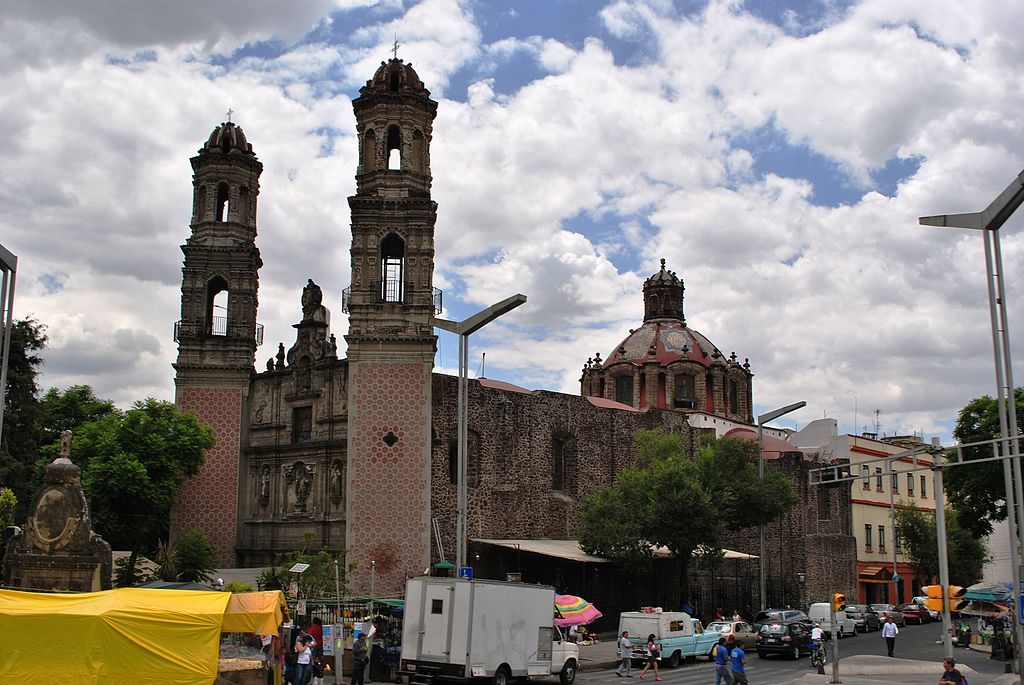
A historical source also tells us that Juan Garrido took part in expeditions to other regions of present-day Mexico, particularly in Michoacán and along the coast of Zacatula (in the present-day Mexican state of Guerrero). However, these expeditions do not appear to have required the use of force.
Life after the conquests
Juan Garrido is known for being the first cultivator of wheat on the American continent. Using three grains taken from a sack of rice, Garrido planted—at Cortés’s request—the seeds that would give rise to wheat cultivation in the region in the centuries that followed. Later, he turned to gold mining, likely employing both Black and Native American slaves for this purpose. This venture, however, was a failure, as was another expedition under Cortés’s command in California in the 1530s. Returning to Mexico City, he died there in poverty between 1547 and 1550. He also married and had three children, witnesses to the extraordinary destiny of a man whose life challenges our assumptions about rigid racial divisions in history.
References
Peter Gerhard / A Black Conquistador in Mexico
Matthew Restall / Black Conquistadors: Armed Africans in Early Spanish America


