

The Medici are known as a powerful family of rulers who governed Florence between the 15th and 17th centuries. They notably enabled the emergence of artists such as Michelangelo or Leonardo da Vinci as part of what is called the Italian Renaissance. The general public is less often aware, however, that an important member of this dynasty, Alessandro, who led Florence between 1530 and 1537, was a mixed-race man born of a Black woman. Alessandro and his mother Simonetta show in many ways that, in their time, Black people enjoyed a much better reputation than one might imagine today.
Alessandro de’ Medici, Black and first Duke of Florence
Life
In 1510 or 1511, a woman named Simonetta, a servant in the household of the ruler of Florence Lorenzo de’ Medici, gave birth to a son, Alessandro, in the city of Urbino. All specialists agree that Simonetta was a Black woman, with the exception of one. The denial of the latter, Ugo Romagnoli, without verifiable evidence, may be understood in the context in which he wrote: that of Fascist Italy. Simonetta was likely part of a slave trade from Africa to Italy that had begun in the 1340s. Specialists hesitate regarding the identity of his father. It would be either Lorenzo II de’ Medici, ruler of Florence, or Giulio de’ Medici, the future pope under the name Clement VII, although the first possibility is more likely. In this sense, Alessandro is either the great-grandson of Lorenzo the Magnificent or the grandson of his brother Giuliano, and belongs to the main branch of the family. Alessandro was born from relations between “master” and “servant” that were far from rare in Italy at the time. He was nicknamed “the Moor,” a common nickname in Italy referring to his dark complexion, and “the mule,” perhaps in reference to his status as an illegitimate child. Lorenzo nevertheless raised Alessandro as his son and freed Simonetta, who returned to live in the Roman countryside with her husband called Lostensor, whose uncommon name among Italians of the time may have been typical of Black people in Italy then. Although they probably did not see each other, Simonetta and Alessandro maintained correspondence until 1529. In it, the mother notably asked her son to provide for her needs. After Urbino, Alessandro grew up as a page at the court of Emperor Charles V before his uncle (or father), Pope Clement VII, decided to make him head of the Florentine government in 1529, at the age of 18.
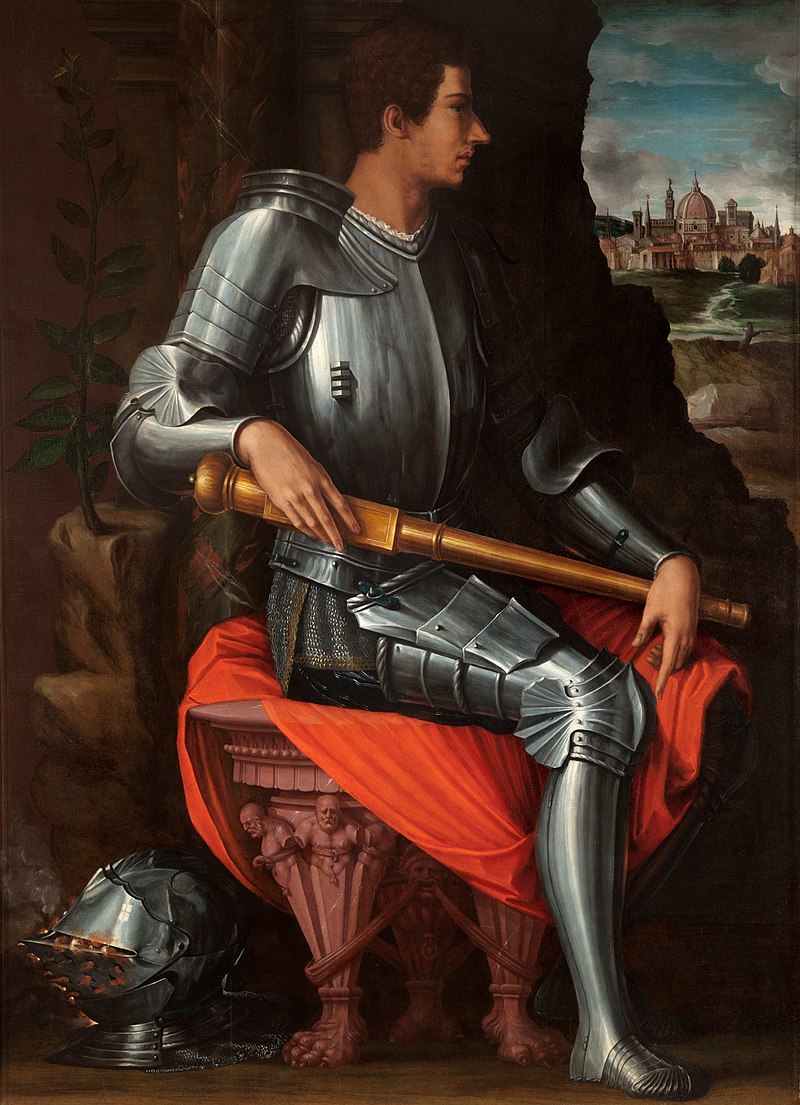
This decision was made in agreement with Charles V, before whom the troops of Florence had just surrendered. He was also engaged to Margherita, the latter’s daughter. This union was planned with an alliance in mind. Four years later, he became the first Duke of Florence. Under the guidance of Pope Clement VII and his advisors, the young Alessandro politically reorganized Florence. In doing so, he incurred the wrath of many locals, who increasingly joined the ranks of a community of exiles. At the death of Clement in 1534, Alessandro found himself considerably weakened: he had lost papal support in the face of his increasingly numerous enemies. Faced with them, he became increasingly repressive. He seems to have thwarted a first attempt at uprising by the exiles led by his cousin and cardinal Ippolito de’ Medici by poisoning him, although his involvement in the affair is not certain. He married Margherita that same year in 1536.
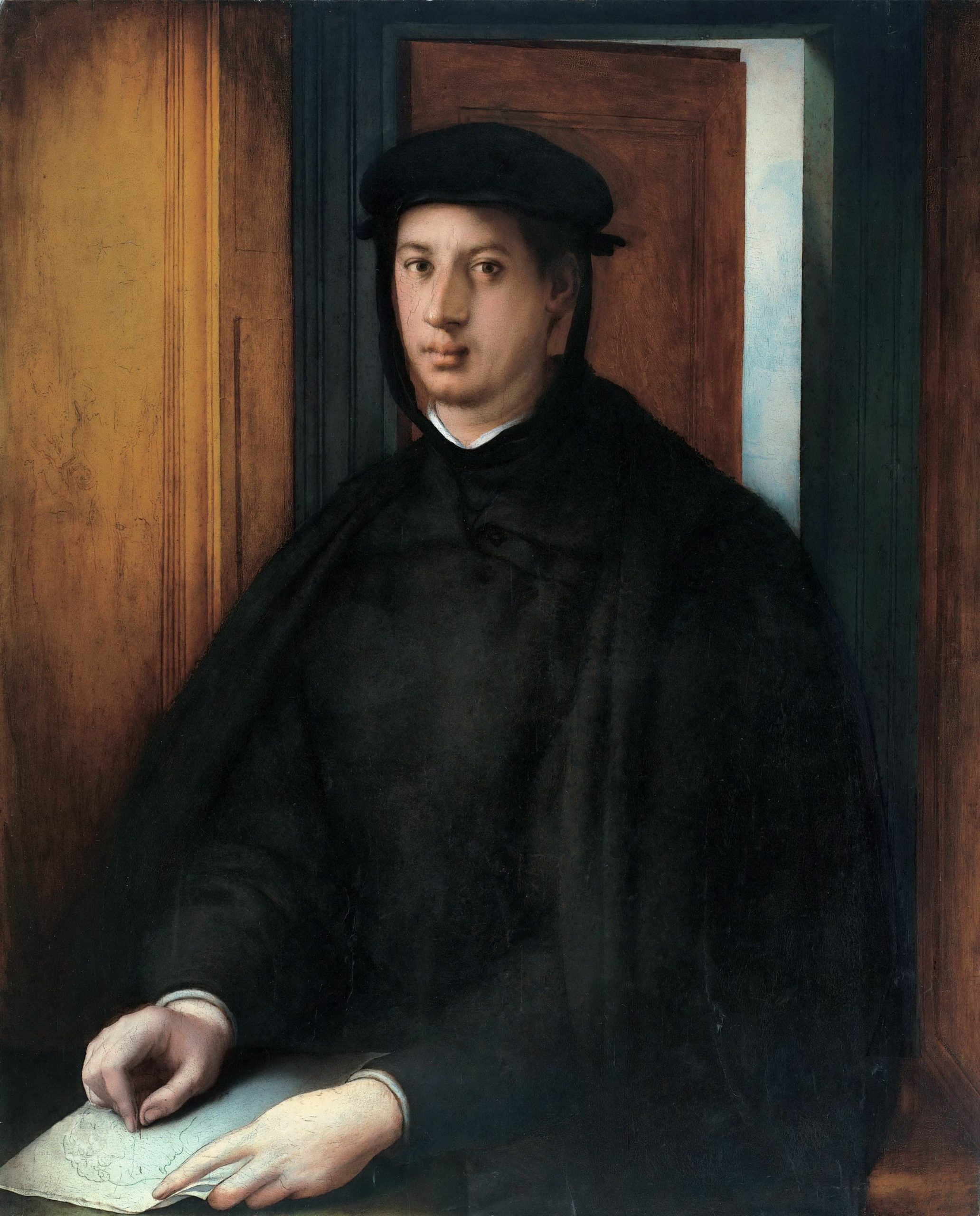
Beyond his marriage, Alessandro is said to have had numerous conquests among women of good families in the city. The following year, however, he was assassinated by another of his cousins, Lorenzino “Lorenzaccio” de’ Medici. The latter helped create the black legend of Alessandro, portraying him as an incompetent despot. It may rather have been an attempt to legitimize his act and to pass into posterity as a tyrant-slayer in love with freedom. He succeeded, notably gaining posthumous fame in Musset’s play named after him. Through this murder, he in any case put an end to the main branch of the Medici, that of the founder Cosimo the Elder and Lorenzo de’ Medici. Lorenzaccio also attempted to justify his action by claiming that his cousin had poisoned his own mother to conceal his inglorious origins. This is probably slander or a reference to the peasant origins of his mother. Indeed, when his rivals sought to insult him during his visit to Rome in 1535 to answer their accusations of tyranny before the pope, they mentioned Colle Vecchio, his mother’s rural commune, and not his skin color.
Moreover, the use of images of Black men and women on cameo rings in 16th-century Florence seems to indicate that references to Alessandro’s ignoble birth were due to his mother’s peasant origins rather than his color. It must nevertheless be acknowledged that dark-skinned slaves were sold for less than lighter-skinned slaves; this did not prevent wealthy Italians from seeking to acquire them for reasons of prestige, a taste for exoticism, or sexual interest rather than for a real need for labor.
In conclusion, the story of Alessandro de’ Medici, that of the first man of African descent to gain power over a major modern political formation in Europe, is highly significant. It shows that Black skin, which today prevents some Black people from accessing positions of importance, did not prevent others of this same color from rising 500 years ago to the head of a prestigious state, the one that had produced the geniuses of the Italian Renaissance.
Bibliography
John Brackett (2005), Race and rulership: Alessandro de’ Medici, first Medici duke of Florence, 1529–1537, in T.F. Earle & K. J. P. Lowe (eds.), Black Africans in Renaissance Europe, New York: Cambridge University Press, pp. 303–325
John Brackett (2008), Le duc Alexandre de Médicis et sa mère, Simonetta, 1510–1537, in Dieudonné Gnammankou and Yao Modzinou (eds.), Les Africains et leurs descendants en Europe avant le XXe siècle, Toulouse: M.A.T. Editions, pp. 133–148
Sergio Tognetti (2005), The trade in black African slaves in fifteenth-century Florence, in T.F. Earle & K. J. P. Lowe (eds.), Black Africans in Renaissance Europe, New York: Cambridge University Press, pp. 213–224


