

Known for his resistance against Portuguese colonialism, Vita Nkanga is an emblematic figure in the struggle for Kongo’s sovereignty and unity, marked by the Battle of Mbuila in 1665 and his martyrdom.
The Origins of Vita Nkanga
Kongo dia Ntotela (kintotila kya Kongo), known as the “Kingdom of Kongo,” is one of the most renowned ancient African states. Its rulers are called the ntotila (or ntotela) and also hold the title Mwene Kongo (Lord of Kongo). While Affonso I Nzinga Mvemba is remembered for his conversion to Catholicism and his kingdom modernization policies, Antonio I Vita Nkanga is remembered in collective memory as a martyr for the Kongo cause against Portuguese colonialism.
Probably born around 1636 in Mbanza-Kongo (the capital of Mbanza Kongo), Vita Nkanga was the son of Garcia (Galasiya) II Nkanga a Lukeni, king of Kongo from 1641 to 1661. He belonged to the Ki-Nlaza royal house, a new Kongo dynasty inaugurated by his uncle Alvare VI and then his father Garcia II Nkanga a Lukeni.
He grew up as a royal prince. In 1655, Vita Nkanga, also known as Dom Antonio, obtained his first political role as Mwene Mpangu (Governor of the province of Mpangu). He distinguished himself by fighting the “Jagas,” African mercenaries who raided the countryside for loot and captured people to sell as slaves to the Portuguese based in Luanda.
Over the years, he grew closer to his father and was preferred over his elder brother Affonso, deemed too close to the Capuchin Catholic missionaries, by both his father and the rest of the Lumbu (the royal council responsible for appointing and consecrating the ntotila).
Vita Nkanga, a resolute and cunning king against portuguese covetousness
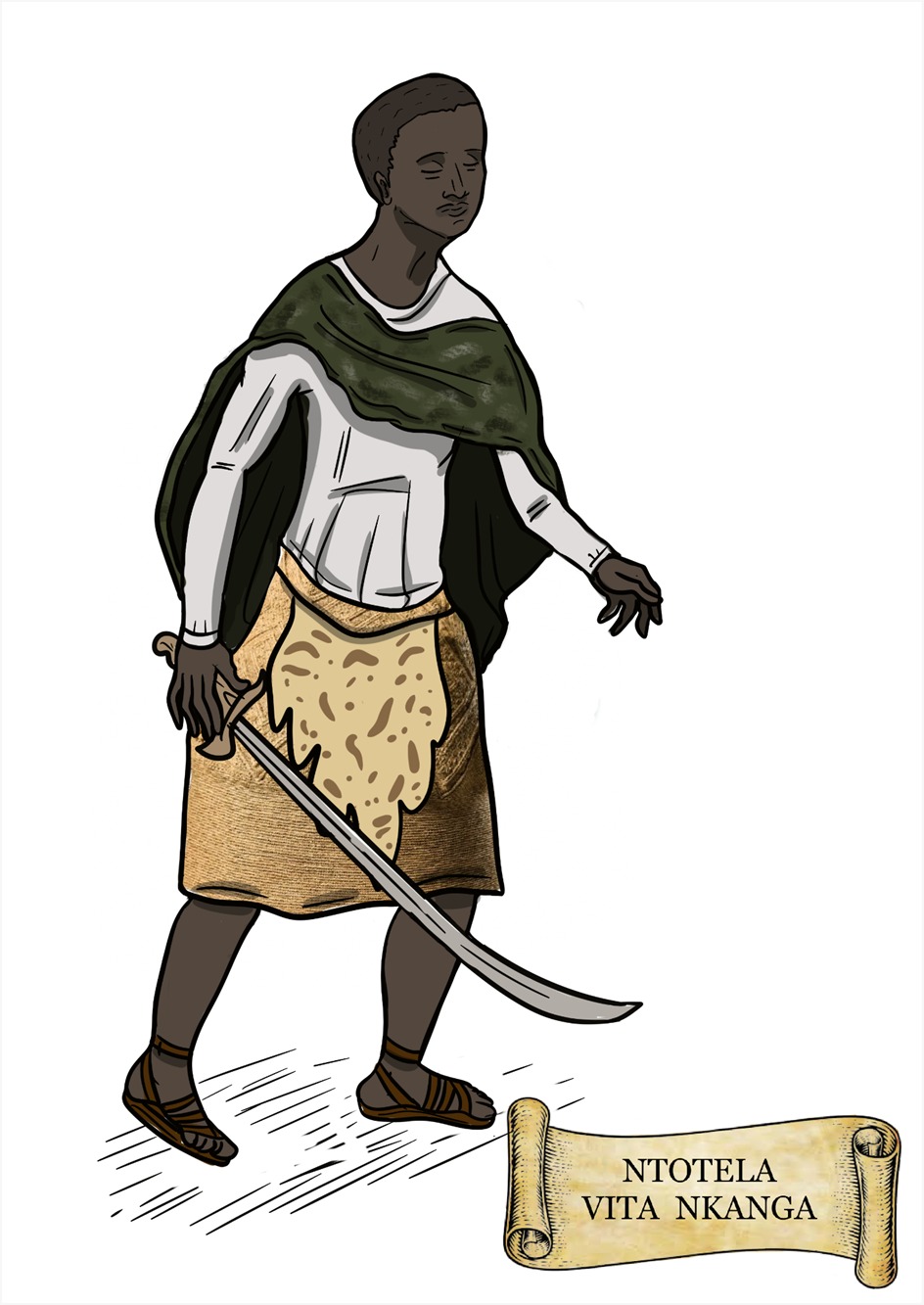
In 1661, Garcia II Nkanga a Lukeni died, likely poisoned. According to his will and that of the Lumbu, Vita Nkanga was enthroned as ntotila under the name Antonio I. As a member of the Ki-Nlaza house, he was also nicknamed “Mani Nlaza” (Mwene Nlaza).
As a sovereign, Vita Nkanga was marked by his distrust of the Catholic Church and his uncompromising stance against betrayal. He killed his brother, suspecting him of having poisoned their father, as well as his first wife and her lover.
Supported by Kongo Catholic priests and nganga (traditional Kongo priests), Vita Nkanga asserted Kongo’s full sovereignty against the Portuguese colony of Luanda, criticizing the peace treaties signed between Kongo and the Portuguese colony of Luanda.
These treaties followed Garcia II Nkanga a Lukeni’s support of the United Provinces (present-day Netherlands) attacking the Portuguese in Luanda between 1641 and 1648. Luanda demanded territorial concessions as compensation and access to Kongo’s copper mines, which Garcia II Nkanga a Lukeni always refused.
Vita Nkanga continued this fight, seeking to preserve Kongo’s territorial integrity and sovereignty over its mines.
The governor of Luanda, André Vidal de Negreiros, sought both to control Kongo’s mines and wage war against Kongo to obtain slaves. Owning plantations in Brazil, the wars in Angola and Kongo benefited him personally.
Confronted with these claims, Vita Nkanga proudly declared in 1664: “These mines do not exist, and even if they did, they are owed to no one.”
At the same time, he tried to convince the Vatican to act as an arbitrator to dissuade the governor of Luanda from attacking Kongo.
This diplomatic effort allowed him to buy time as Vita Nkanga sought to reunify Kongo, which was divided by internal conflicts. In 1663, the death of his father’s ally and rival, Ana Njinga Mbandi, queen of Ndongo and Matamba, reshuffled the political landscape. Some of her territories returned to Kongo, but the Portuguese colony of Luanda also sought to seize them.
André Vidal de Negreiros then tried to bribe local elites, ensuring they would become his vassals. Isabel Ne Mbuila and Affonso Ne Wandu sought his protection to maintain their positions, as Vita Nkanga wanted to depose them. Isabel Ne Mbuila even promised to show the governor of Luanda the location of Kongo’s mines. A casus belli was found.
The battle of Mbuila, october 29, 1665
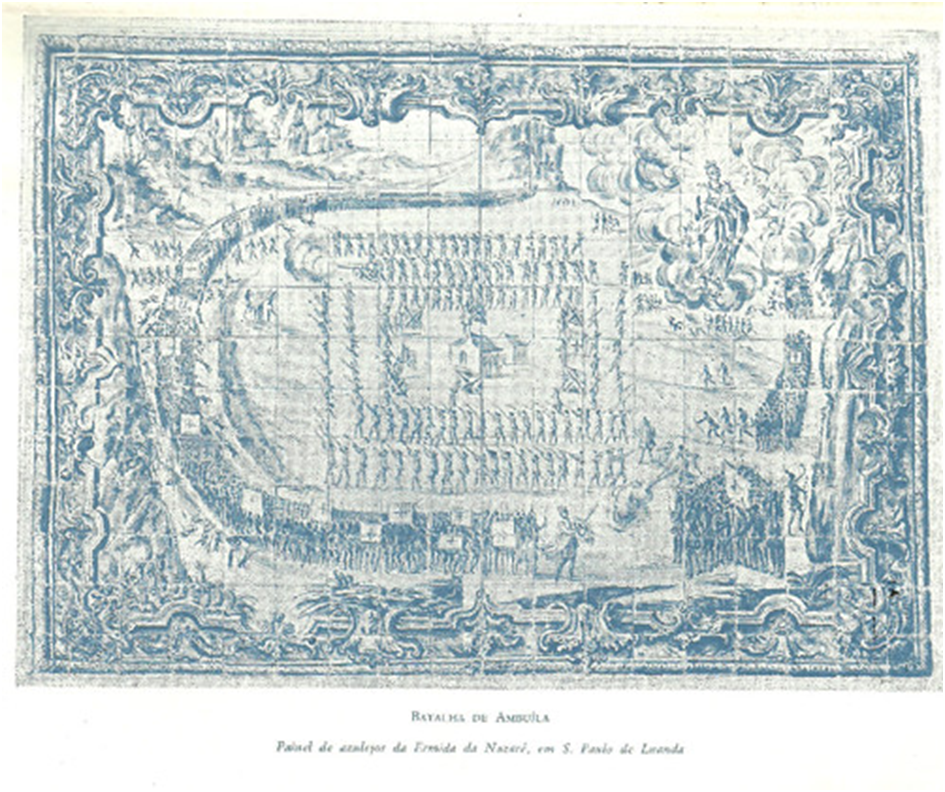
Faced with this threat, Vita Nkanga gathered his forces. He allied with the Mâ Loango, even though Loango had been independent for over 100 years, and sought to contact Spain to exploit the rivalry between Portugal and Spain, sending an embassy for this purpose.
He summoned all the mwene (provincial governors) and issued a general mobilization call on July 13, 1665: “to go defend our lands, properties, children and women, our own lives and liberties, which the Portuguese nation seeks to seize to dominate us.”
Following this call, Vita Nkanga prepared an offensive not only against Isabel Ne Mbuila and Affonso Ne Wandu, but also against the Portuguese colony of Angola and Luanda. This was the first time a Kongo king, an African sovereign, organized an offensive against the Portuguese. Ana Njinga Mbandi had only waged defensive territorial wars against the Portuguese and her cousin Felipe Ngola Hari.
The Kongo army, led personally by Vita Nkanga and accompanied by several mwene, consisted of tens of thousands of warriors. It marched to Ulanga in the district of Mbuila (present-day Angola, Uige province). Luanda dispatched Captain Luis Lopes de Sequeira with a contingent of Portuguese musketeers and African mercenary “Jagas” to meet the Kongo royal army (kilombo kia Kongo).
Although the Luanda army had artillery and a height advantage, Vita Nkanga’s forces were superior in numbers. Leading his army with vigor and fury, after the death of two of his lieutenants, Vita Nkanga personally launched the assault, aiming to kill Luis Lopes de Sequeira. Both sides used similar weaponry: muskets, bows, swords, and axes.
Vita Nkanga was described as “equal to a great captain, the bravest man of all ages, who marched foremost with a machete (sword).”
However, Portuguese heavy artillery targeted him relentlessly, isolating him and his men. Stunned by cannon fire, Vita Nkanga died, surrounded by his chaplain, Abbé Lubeladio, who was decapitated by a “Jaga” mercenary. His death disorganized the army and sealed Kongo’s defeat.
Following this battle, in which much of Kongo’s nobility was killed, several candidates claimed the throne. A civil war ensued among the Kongo royal houses, dividing the kingdom and depopulating Mbanza-Kongo. In this crisis, Antonio I embodied the defense of Kongo’s sovereignty and the struggle for its unity. A hero of the kingdom and the Kongo people, his spirit later inspired, forty years later, Ndona Beatriz Nsimba Kimpa Vita to preach Kongo’s reunification and the removal of Catholic missionaries.
Conclusion
Although his reign was brief, it was eventful and emblematic of the Kongo kingdom’s (Kongo dya Ntotila/Kongo dya Ntotela) struggle against colonialism. A martyr of the Battle of Mbuila, one of Central Africa’s greatest battles before colonization, Vita Nkanga is one of the Kongo kings whose memory is still celebrated today. His head is buried in Luanda at the Church of Our Lady of Nazareth.
For further reading: Bruce MATESO, The Kingdom of Kongo under Vita Nkanga: The Foundations of the Ki-Nlaza Royal House, Paris, Paari, 2023.
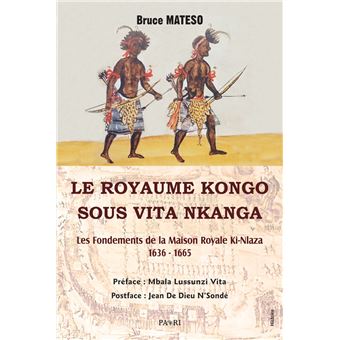
Table of Contents
- The Origins of Vita Nkanga
- Vita Nkanga, a Resolute and Cunning King Against Portuguese Covetousness
- The Battle of Mbuila, October 29, 1665
- Conclusion


