

On the beach of Raisins Clairs, in Guadeloupe, human bones regularly appear on the surface of the sand. Behind these discoveries lies a reality that is at once archaeological, historical and climatic: coastal erosion is bringing to light former slave cemeteries. As the sea advances, the physical traces of colonial slavery reappear, reminding us that the history of the Antilles remains inscribed in the landscape.
When erosion reveals history: the bones of enslaved people reappearing in Guadeloupe
The scene may surprise visitors who discover the beach of Raisins Clairs, in Saint-François, on the eastern coast of Guadeloupe. The place is renowned for its clear waters, pale sand and rows of coconut trees that attract tourists and residents of the island.
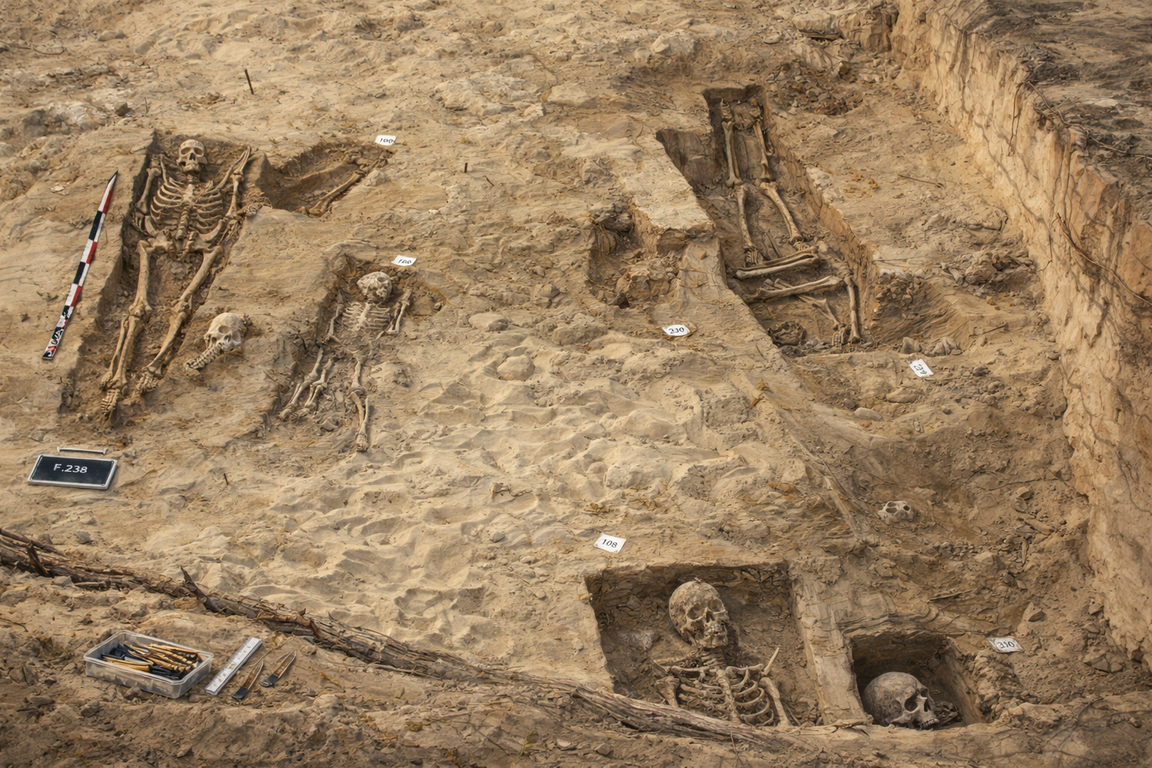
But for several decades, this idyllic beach has also been associated with macabre discoveries. At regular intervals, human bones appear in the sand. Skulls, fragments of tibias or vertebrae sometimes emerge after storms or episodes of heavy swell. These remains are not linked to a recent incident: they belong to an old cemetery dating from the colonial period.
The first documented discoveries date back to the 1990s. In 1992, a human skull was found with an iron ring around the neck, an object that immediately evokes the restraint devices used in the slave system.
These findings led to more systematic archaeological investigations. Excavations carried out at the beginning of the 2010s revealed the scale of the funerary site: between 500 and 1,000 burials may be present beneath the beach and in the surrounding areas. Part of these graves has already been carried away by the sea.
To understand the existence of these burials, one must return to the colonial history of Guadeloupe. During the seventeenth and eighteenth centuries, the island became one of the major territories of the sugar economy in the French Antilles. This prosperity rested on the forced labor of tens of thousands of Africans reduced to slavery.
On the plantations, enslaved people lived under extremely harsh conditions. Mortality was high, notably because of disease, intense labor and the structural violence of the slave system.
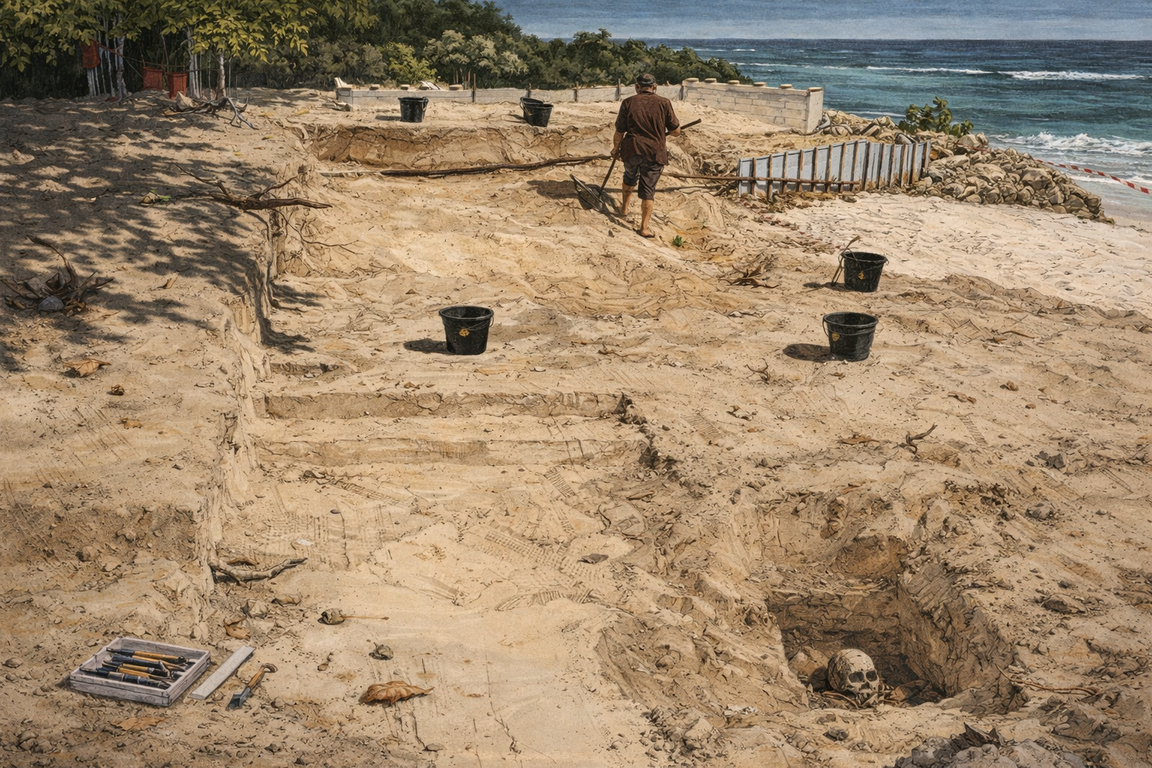
Enslaved people who died were generally buried in cemeteries separate from those of the colonists. These burial sites were often located near plantations or in peripheral areas, sometimes close to the coastline.
Unlike European cemeteries, these places were not always marked by durable gravestones. Burials could be indicated by simple elements (wooden crosses, stones or small mounds of earth) that disappear over time.
With the transformation of the landscape and the development of coastal tourism, many of these former cemeteries were forgotten.
If these bones are appearing today on the surface, it is largely because of coastal erosion. The Caribbean coastline is particularly vulnerable to climatic transformations. Rising sea levels, the intensification of storms and the degradation of coral reefs all contribute to accelerating the retreat of beaches.
In Guadeloupe, some areas have lost several dozen meters of coastline in just a few decades. When the sand disappears, the archaeological layers buried beneath the beach become exposed. Graves located at shallow depth can then gradually be uncovered.
This phenomenon is not isolated. On several Caribbean islands, archaeologists observe similar processes in which erosion reveals remains from the colonial era. Climate change thus acts as an unexpected revealer of history.
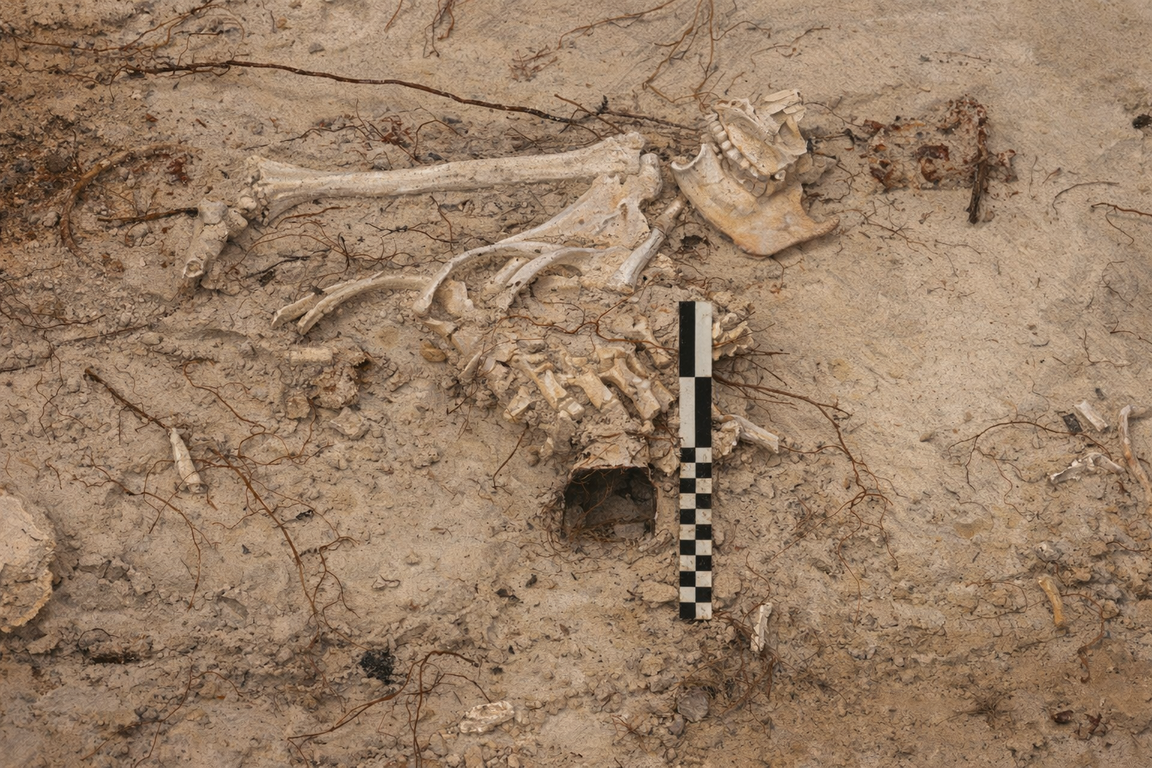
Archaeologists consider these sites particularly valuable. Slave burials are relatively rare in the archaeological record because they have often been destroyed or displaced over the centuries. When a cemetery is identified, it offers a unique opportunity to better understand the lives of enslaved populations.
The study of human remains can provide numerous pieces of information: the age of individuals, the diseases they suffered from, traces of trauma or even their nutritional conditions.
Biological archaeology also makes it possible to study the geographical origins of populations through isotopic or genetic analysis. In some cases, this research can even make it possible to retrace the individual paths of men, women and children deported from Africa.
But erosion directly threatens these remains. Each storm can carry away part of the site, scattering bones and erasing irreplaceable scientific information.
The situation at Raisins Clairs beach also raises a broader question: that of the relationship between tourism and historical memory.
Today, this site is one of the most frequented places in Saint-François. Restaurants, hotels and tourist infrastructure have been built nearby.
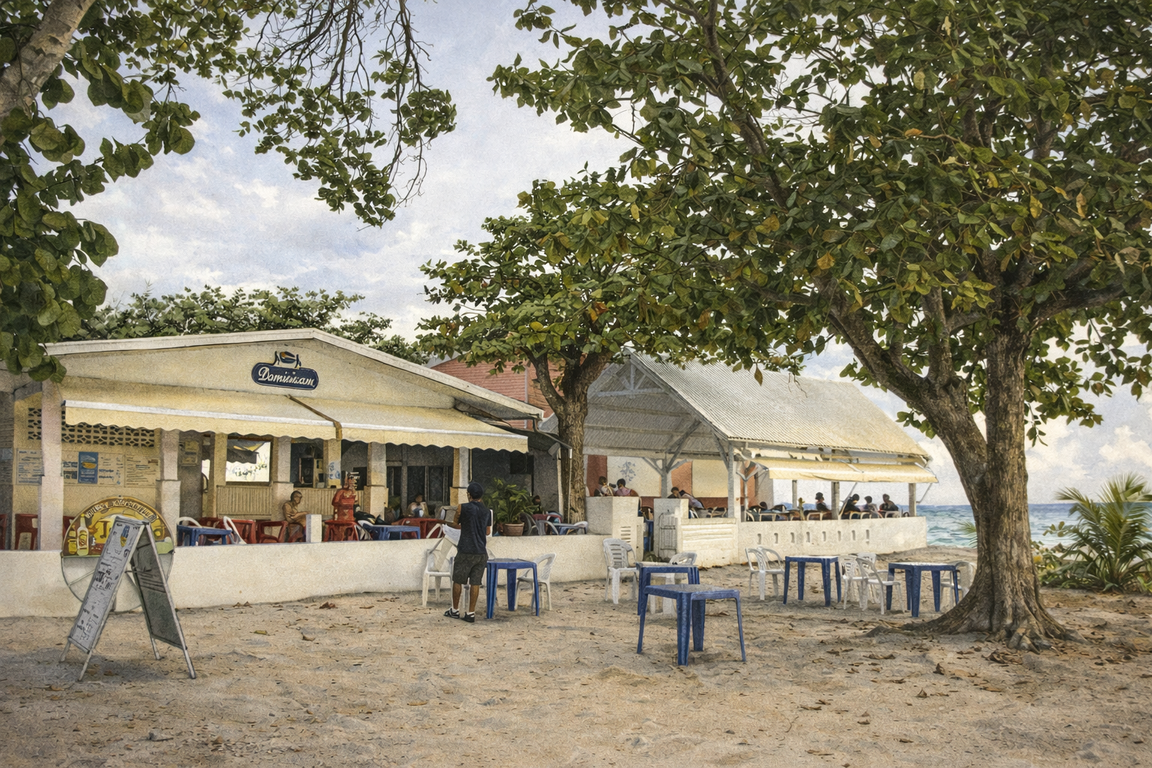
For many visitors, the beach remains above all a place of relaxation. But for residents and researchers, it is also a place of memory. The bones emerging from the sand remind us that these idyllic landscapes were shaped by colonial history and by the exploitation of populations reduced to slavery.
This memorial dimension is becoming increasingly visible in public debates. Associations, historians and local elected officials are calling for official recognition of the site and better protection of the remains.
Several avenues are now being considered to preserve the site. Among them is the construction of facilities intended to stabilize the coastline and limit erosion. Projects for seawalls or protective structures could slow the retreat of the beach.
But these technical solutions are not enough to address all the issues. Some local actors are also proposing the creation of a memorial space dedicated to the history of the site. The idea would be to install explanatory panels, or even a garden of memory allowing homage to be paid to the people buried on this beach.
Such an initiative would be part of a broader movement recognizing the legacies of slavery in Caribbean societies.
The discoveries at Raisins Clairs beach illustrate a paradoxical phenomenon. Climate change, often perceived only as an environmental crisis, also acts as a historical revealer. By transforming landscapes, it brings to light traces buried for centuries.
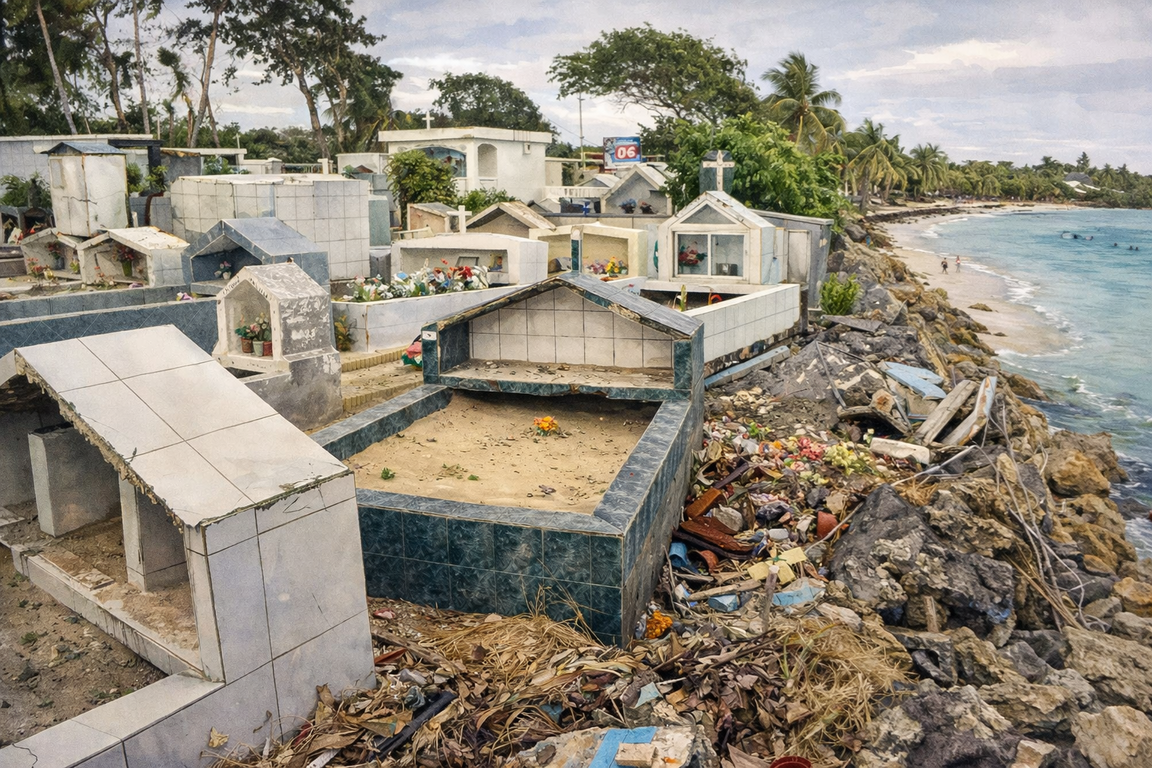
In the Caribbean, these traces are often linked to the history of slavery and colonialism. Each bone discovered in the sand recalls the existence of a human life, an individual whose name has not always been preserved in the archives.
Thus, coastal erosion does not only reveal a geographical transformation. It reminds us that the history of the Antilles remains deeply inscribed in the ground; and sometimes, in the sand of the beaches.
Notes and references
- Frédéric Régent, La France et ses esclaves : de la colonisation aux abolitions (1620–1848). Paris: Grasset, 2007.
- Marcel Dorigny (ed.), Les traites négrières coloniales : histoire d’un crime. Paris: Gallimard, 2018.
- Catherine Benoit, Bodies, Gods and Politics in Guadeloupe. Oxford: Berg Publishers, 2001.
- Institut national de recherches archéologiques préventives (INRAP).
- Bureau de recherches géologiques et minières (BRGM).
- UNESCO, Slave Route Programme.
- Katherine McKittrick, Demonic Grounds: Black Women and the Cartographies of Struggle. Minneapolis: University of Minnesota Press, 2006.
- Robert Haines & Richard Steckel, A Population History of North America. Cambridge University Press, 2000.
- Scientific reports on sea-level rise in the Caribbean: Intergovernmental Panel on Climate Change, Sixth Assessment Report, 2021–2023.
Summary
- When erosion reveals history: the bones of enslaved people reappearing in Guadeloupe
- Notes and references


