

At the end of the 19th century, as European powers competed for Africa, a Congolese chief rose up against French colonial expansion. A respected healer, leader of the Sundi people, and a formidable strategist, Mabiala Ma Nganga led a fierce resistance against caravans and colonial infrastructure. A look back at the little-known story of one of the earliest resistors in Central Africa.
At dawn on October 20, 1896, in an isolated cave on the Mbiedi plain, at the heart of Sundi territory, French soldiers surround a man whom the colonial administration has been hunting for years. This local leader, regarded by the population as a healer and protector, has become a major enemy for the French authorities. His name: Mabiala Ma Nganga.
For several years, this man had been defying French colonial expansion in the Congo. Attacks on caravans, sabotage of colonial infrastructure, control of trade routes: his actions deeply disrupted the establishment of colonial power in Central Africa. The repression that would fall upon him and his allies would leave a lasting mark on the history of the Congo.
Even today, Mabiala Ma Nganga remains an emblematic figure of African resistance against colonial domination.
Mabiala Ma Nganga: the story of the Congolese chief who defied French colonization
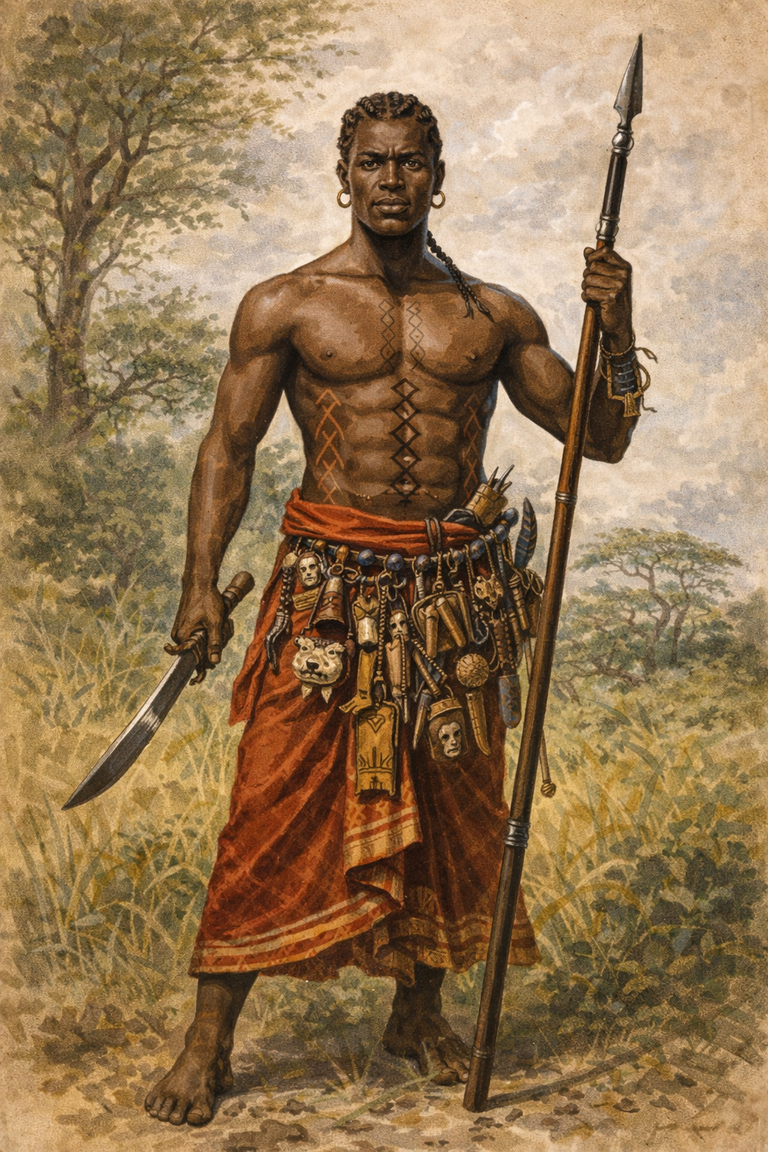
Mabiala Ma Nganga was born around 1850 in the Sundi country, a region belonging to the cultural sphere of the Kongo people, located in what is now the Republic of the Congo. An influential local chief, he exercised authority over several villages and groups within the Bassoundi territory.
But his power did not rely solely on his political status. Mabiala Ma Nganga was also known as a healer and traditional therapist, which considerably strengthened his prestige and influence in the region. In precolonial African societies, the figure of the healer was not limited to medicine: it also embodied a spiritual and symbolic authority capable of uniting communities.
This dual authority (political and spiritual) made him a respected figure. It also helped nurture the legend of his invulnerability in the face of colonial forces.
Within his territory, Mabiala Ma Nganga controlled several commercial routes and exerted influence over local chiefs, notably in the villages of Balimonéké, Lilemboa, Makabandilou, and Kimpanzou. This strategic position allowed him to monitor commercial exchanges and collect transit taxes on goods.
To understand Mabiala Ma Nganga’s revolt, it is necessary to place his struggle within the broader context of the colonial conquest of Africa at the end of the 19th century.
This period corresponds to what historians often call the “Scramble for Africa,” during which European powers competed for control of the continent. In this imperial rivalry, France sought to establish a vast colonial axis linking the Atlantic Ocean to the Red Sea. The British pursued a similar strategic project: connecting Cairo to Cape Town through a continuous empire. In this competition, the Congo Basin occupied a major strategic position.
Trade routes therefore became essential infrastructures for the colonial administration. One of them connected the port city of Loango to the interior of the Congo, allowing the transport of European goods and the extraction of local resources.
But these routes relied on a brutal system: African populations were often requisitioned as porters to carry cargo over hundreds of kilometers. It was precisely this system that Mabiala Ma Nganga would fight.
Within his territory, Mabiala Ma Nganga categorically refused to allow inhabitants to be turned into porters serving European caravans. For him, it was not merely an economic issue. It was also a question of sovereignty.
The Sundi chief controlled the local trade routes and intended to preserve the autonomy of his people in the face of the new European arrivals. According to several historical testimonies, he even imposed transit taxes on European traders crossing his territory. This position was unacceptable for the French colonial administration. As tensions rose, confrontation became inevitable.
One of the most striking episodes of this resistance occurred in 1892. That year, Mabiala Ma Nganga attacked a convoy led by a French colonial agent named Mourier Laval. The attack resulted in Laval’s death and the capture of the goods transported by the caravan.
This event turned Mabiala Ma Nganga into a public enemy for the colonial administration. But far from ending the resistance, the episode instead marked the beginning of a true guerrilla war. During the following years, Mabiala’s supporters multiplied ambushes against commercial caravans. Roads became dangerous for colonists and their trading partners.
Porters sometimes abandoned their cargo out of fear of attacks. For several months, nearly 6,000 packages destined for Haut-Oubangui remained blocked, paralyzing part of the colonial trade in the region.
Mabiala Ma Nganga did not limit himself to attacking convoys. In 1896, his men also targeted colonial infrastructure. They notably sabotaged the telegraph line linking Loango to Brazzaville, making communication between colonial posts more difficult.
This strategy was part of a logic of economic and logistical warfare. By disrupting communications and trade routes, Mabiala sought to prevent the colonial administration from consolidating its control over the region. This resistance strengthened his reputation in neighboring villages. In popular imagination, some began to believe that the Sundi chief benefited from mystical protections through his fetishes. His legend grew.
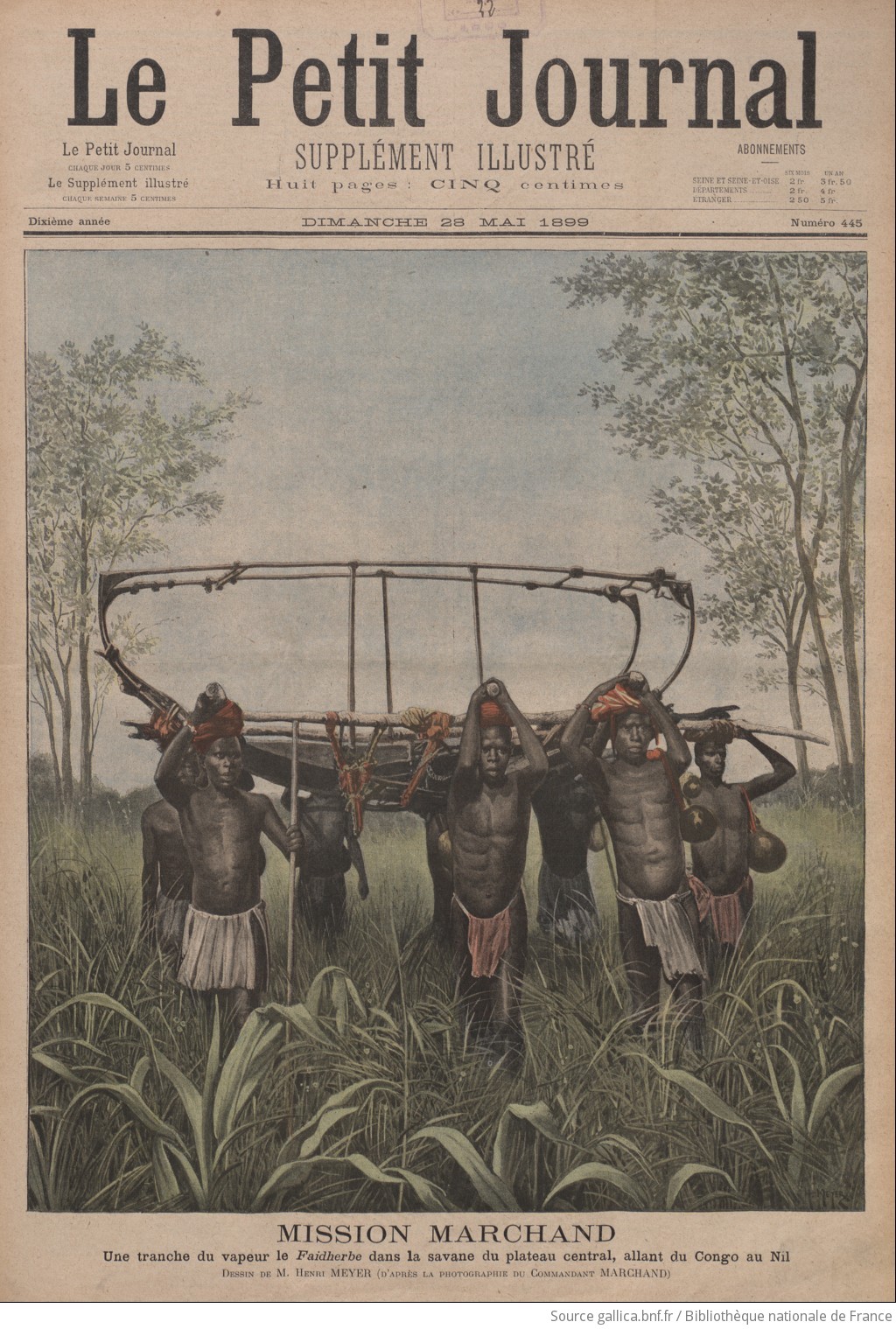
Faced with this persistent resistance, the French administration decided to launch a major military operation. In July 1896, Commander Jean-Baptiste Marchand arrived in Loango with the objective of restoring colonial authority. His mission was clear: neutralize the rebellion led by Mabiala Ma Nganga.
To do so, Marchand declared a state of siege in the region and mobilized a force composed of African tirailleurs and forcibly recruited porters. Among his officers were Albert Baratier and Charles Mangin.


The French strategy relied on brutal repression. Villages suspected of helping the resistance were burned. Local chiefs were arrested or executed. The families of resistance fighters were sometimes taken hostage in order to force their surrender.
As the colonial army advanced, Mabiala Ma Nganga’s allies fell one after another. His nephew and potential successor, Mabiala N’Kinké, was killed in September 1896 during negotiations aimed at freeing his family captured by colonial forces. Other local chiefs eventually surrendered. The resistance gradually collapsed. But Mabiala Ma Nganga still refused to capitulate.
On October 20, 1896, colonial troops finally located the Sundi chief’s hiding place. Mabiala Ma Nganga had taken refuge in a cave on the Mbiedi plain, accompanied by his family and a few loyal followers. Captain Baratier led the assault with about twenty tirailleurs. The soldiers surrounded the cave and demanded that the rebel chief surrender. He refused. After a night-long siege, the soldiers used explosives to destroy the cavity.
Mabiala Ma Nganga died in the explosion on October 23, 1896, alongside his family and his supporters.
After his death, colonial authorities decided to send a clear message to the local population. Mabiala Ma Nganga’s head was severed and displayed along the caravan road. The objective was simple: to show that any resistance to colonial order would be crushed.
This type of macabre staging was not exceptional in colonial history. It formed part of a strategy of terror intended to break any attempt at revolt.
Despite the repression, the figure of Mabiala Ma Nganga did not disappear. On the contrary, his story gradually turned into legend. In the Congolese collective memory, he became a symbol of courage and resistance against colonial oppression. His name is evoked in popular narratives and in Congolese music.
The singer Jacques Loubelo notably paid tribute to him in a song that became famous in the Congo, recalling the memory of resistance fighters killed during the colonial conquest. Through these songs and stories, the memory of Mabiala Ma Nganga continues to circulate.
The story of Mabiala Ma Nganga reminds us of a reality often forgotten: the colonial conquest of Africa never occurred without resistance. Everywhere on the continent, local chiefs, kings, warriors, and communities attempted to defend their autonomy against European powers.
Some names are now well known (such as Samory Touré or Behanzin), but many other figures remain largely unknown. Mabiala Ma Nganga is one of those resistors whose story deserves to be rediscovered.
Behind the great maps of the colonial empire lie local struggles, popular resistance, and tragic destinies. And within those struggles, the name Mabiala Ma Nganga remains that of a man who refused to yield. A healer who became a war leader. A local chief who became a symbol. A resistor whose story continues to cross time.
Notes and references
Afrik. “Mabiala Ma Nganga: forgotten hero of the Congolese resistance,” Afrik.com, October 25, 2024.
Nancy Oko. “Mabiala Ma Nganga, controversial figure and precursor of resistance against the colonial occupation of the Congo,” Sacer Infos, August 10, 2021.
Didier Gondola. “They killed Mabiala Ma Nganga,” in Matswa vivant: anticolonialism and citizenship in French Equatorial Africa, Éditions de la Sorbonne, 2021, pp. 191–201.
Jean-Pierre Bat. “Mabiala Ma Nganga (Nsundi country, 1892–1896),” Libération, September 6, 2020.
Yvon Mougani. “Mabiala Ma Nganga: national hero and precursor of resistance against colonial occupation in the Congo,” Congo-Liberty, July 13, 2012.
Gabriel Galland. A Handful of Heroes: The Marchand Mission Across Africa, Limoges, Éditions E. Ardant et Cie, 1900.
Colonel Albert Baratier. Towards the Nile: Memories of the Marchand Mission, Paris, Fayard, 1920.
Moïse Landeroin. Congo-Nile Mission (Marchand Missions), travel notebooks, Paris, L’Harmattan, 1996.
Historical archives on the Congo-Nile mission and colonial repression in French Equatorial Africa (1896).
Alfred Moulin. Africa Through the Ages, Paris, Éditions Giard et Brières, 1904.
Through the story of Mabiala Ma Nganga, we understand how much the African continent is filled with heroic figures, powerful narratives, and memories too often forgotten in history books. Resistors like him remind us that the history of Africa is also the story of peoples who fought for their dignity, freedom, and sovereignty. But how can these stories be passed on to new generations? How can children discover these heroes, civilizations, and cultures that shaped Africa and its diaspora? diaspora ?

This is precisely the objective of Griokids, an audio application designed for younger audiences that tells the history of Africa through captivating stories, tales, and biographies adapted for children. It offers a playful and immersive way to keep this memory alive and to allow new generations to grow up knowing the heroes and stories that have marked the continent.


