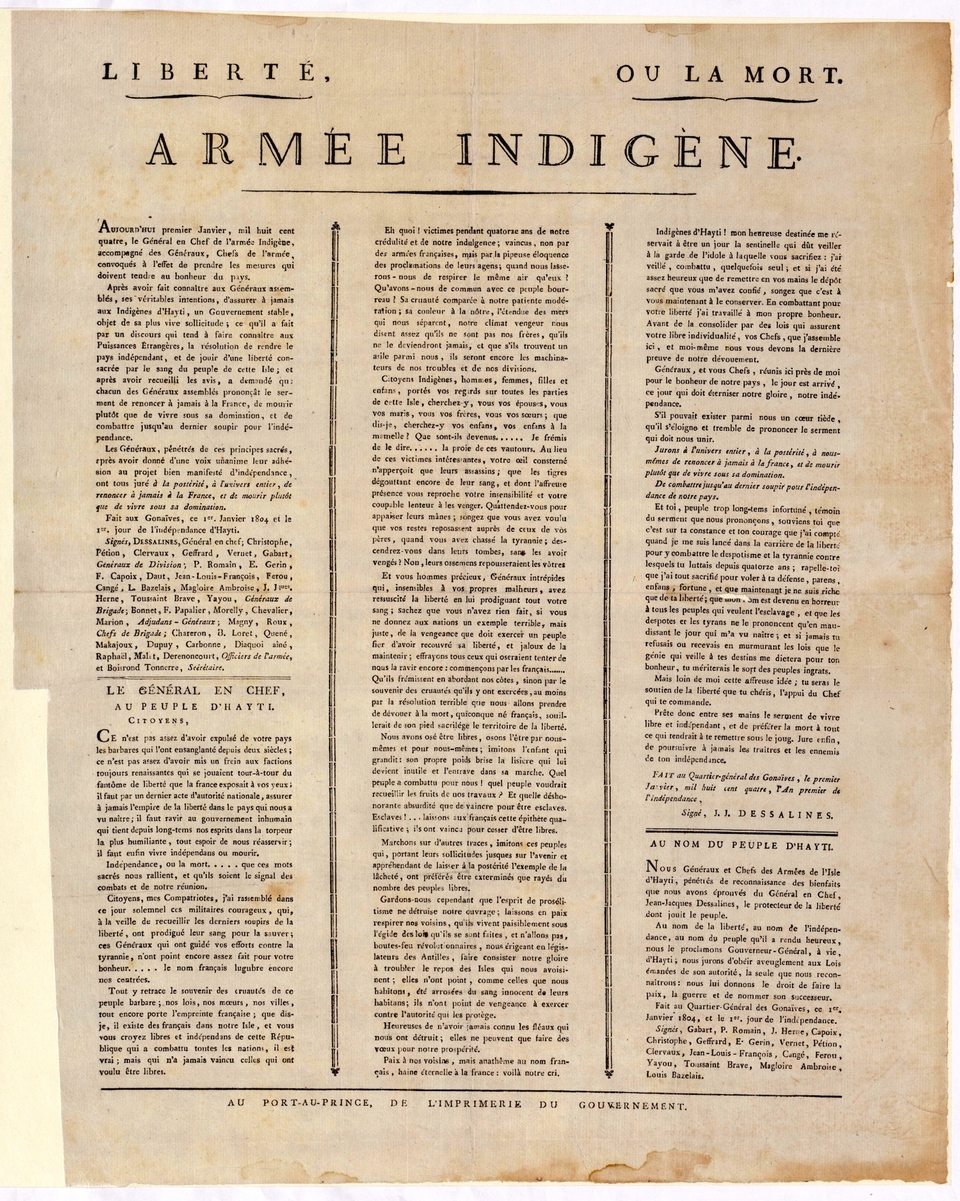
The Act of Independence of the Republic of Haiti, written by Louis Boisrond Tonnerre and proclaimed by Jean-Jacques Dessalines, is a powerful manifesto that established Haiti as the first free black republic in the world.
The proclamation of Haiti’s independence by Jean-Jacques Dessalines
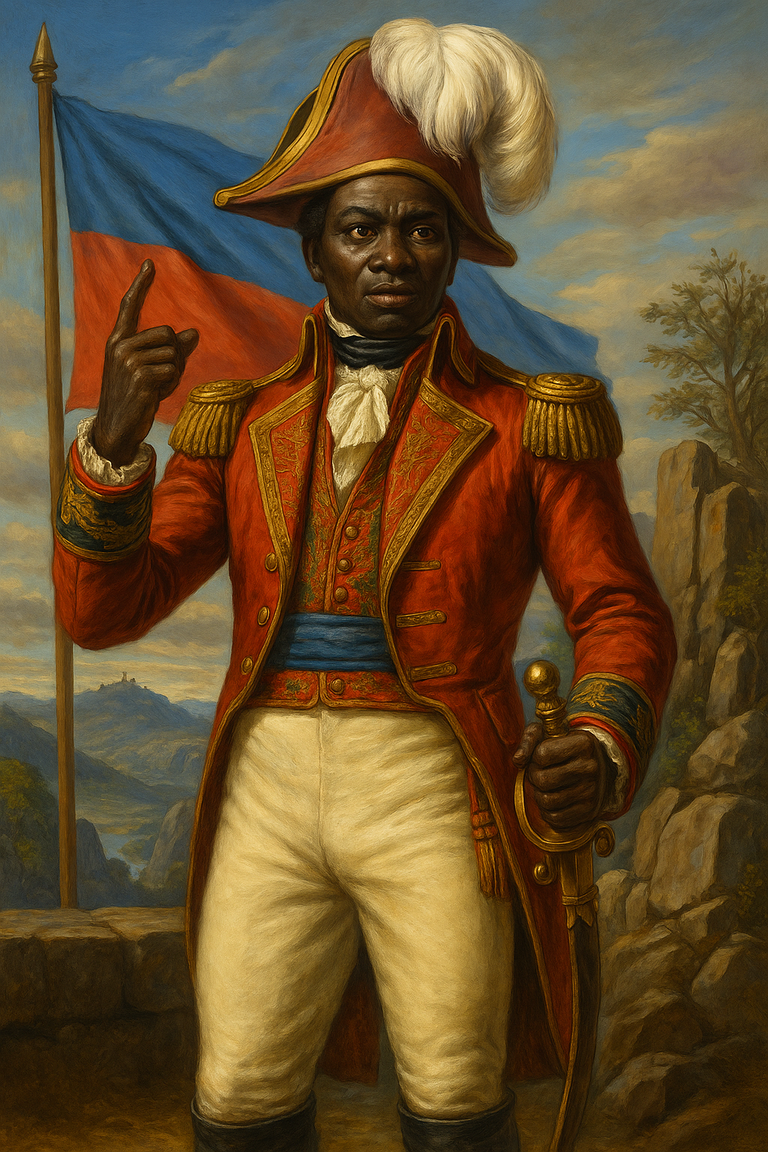
Jean-Jacques Dessalines and the proclamation of the independence of the Republic of Haiti
Following the decision of Napoléon Bonaparte to restore slavery in the French possessions. The emperor of the French entrusted his brother-in-law, Charles Victoire Emmanuel Leclerc, with leading the Saint-Domingue expedition, composed of 35,000 soldiers, in order to restore French authority in its richest colony, then in full revolution. This expedition quickly turned into a fiasco. The expeditionary corps proved incapable of suppressing the “Black Revolution” underway.
Toussaint Louverture was indeed captured, but the French troops, commanded by Rochambeau, were crushed at Vertières on November 18, 1803, by his successor Jean-Jacques Dessalines. France capitulated and evacuated the island within a few days.
Dessalines and the leaders of the indigenous army were then able to proclaim, on January 1, 1804, the independence of the island, now designated under the name of Haiti. Here is the transcription of said declaration:
Liberty or death.
Indigenous army.
Today, the first of January eighteen hundred and four, the commander-in-chief of the indigenous army, accompanied by the generals, leaders of the army, convened for the purpose of taking measures that must tend toward the happiness of the country.
After having made known to the assembled generals his true intentions of forever ensuring to the natives of Hayti a stable government, the object of his deepest concern: which he did through a speech aimed at making known to foreign powers the resolution to render the country independent, and to enjoy a liberty consecrated by the blood of the people of this island; and, after having gathered opinions, requested that each of the assembled generals take the oath to forever renounce France, to die rather than live under its domination, and to fight until the last breath for independence.
The generals, imbued with these sacred principles, after having unanimously given their adhesion to the clearly expressed project of independence, all swore to posterity, to the entire universe, to forever renounce France, and to die rather than live under its domination.
Done at Gonaïves, this first of January 1804 and the first day of the independence of Hayti.
Dessalines,
commander-in-chief;
Christophe, Pétion, Clerveaux, Geffrard, Vernet, Gabart,
major generals;
P. Romain, E. Gérin, F. Capois, Daut, Jean-Louis François, Férou, Cangé,
L. Bazelais, Magloire Ambroise, J. J. Herne, Toussaint Brave, Yayou,
brigadier generals;
Bonnet, F. Papalier, Morelly, Chevalier, Marion,
adjutant generals;
Magny, Roux
brigade chiefs;
Chareron, B. Loret, Quené, Macajoux, Dupuy, Carbonne, Diaquoi aîné, Raphaël, Malet, Derenoncourt,
army officers;
And Boisrond Tonnerre,
secretary.
Proclamation
The commander-in-chief,
To the people of Hayti.
“Citizens,
It is not enough to have expelled from your country the barbarians who have bloodied it for two centuries; it is not enough to have curbed the ever-reborn factions that, in turn, toyed with the phantom of liberty that France held before your eyes; it is necessary, by a final act of national authority, to forever ensure the empire of liberty in the country that saw us born; it is necessary to strip from the inhuman government, which has long held our minds in the most humiliating torpor, all hope of re-enslaving us; it is necessary, finally, to live independent or die.
Independence or death… Let these sacred words unite us, and let them be the signal of combat and of our union.
Citizens, my compatriots, I have gathered on this solemn day these courageous soldiers, who, on the eve of collecting the last breaths of liberty, have lavished their blood to save it; these generals who guided your efforts against tyranny have not yet done enough for your happiness… The French name still darkens our lands.
Everything here recalls the memory of the cruelties of that barbarous people; our laws, our customs, our cities, everything still bears the French imprint; what am I saying, there are still Frenchmen in our island, and you believe yourselves free and independent of that republic which fought all nations, it is true, but which never defeated those who wished to be free.
What! victims for fourteen years of our credulity and indulgence; defeated not by French armies, but by the pitiful eloquence of the proclamations of their agents; when shall we tire of breathing the same air as them? What do we have in common with this executioner people? Their cruelty compared to our patient moderation; their color to ours; the expanse of seas that separate us, our avenging climate, tell us enough that they are not our brothers, that they will never become so, and that if they find refuge among us, they will once again be the plotters of our troubles and divisions.
Indigenous citizens, men, women, girls and children, cast your eyes over every part of this island; search there for your wives, you your husbands, you your brothers, you your sisters; what am I saying, search there for your children, your nursing children! What has become of them… I shudder to say it… the prey of these vultures. Instead of these touching victims, your horrified eye perceives only their assassins; only tigers still dripping with their blood, whose dreadful presence reproaches your insensitivity and your slowness to avenge them.
What are you waiting for to appease their spirits? Remember that you wished your remains to rest beside those of your fathers when you drove out tyranny; will you descend into their tombs without having avenged them? No, their bones would reject yours.
And you, precious men, intrepid generals, who, insensitive to your own misfortunes, resurrected liberty by lavishing all your blood for it; know that you have done nothing if you do not give to nations a terrible but just example of the vengeance that a people proud of having regained its liberty, and jealous of maintaining it, must exercise; let us frighten all those who would dare attempt to take it from us again: let us begin with the French… Let them tremble upon approaching our shores, if not from the memory of the cruelties they exercised there, at least from the terrible resolution we are about to take to devote to death whoever, born French, would defile with his sacrilegious foot the territory of liberty.
We have dared to be free, let us dare to be so by ourselves and for ourselves; let us imitate the child who grows: his own weight breaks the leading-strings that have become useless and hinder his steps. What people fought for us? What people would wish to reap the fruits of our labor? And what dishonorable absurdity to conquer in order to be slaves. Slaves!… Let us leave that qualifying epithet to the French; they conquered in order to cease being free.
Let us follow other paths; let us imitate those peoples who, extending their concern even to the future, and fearing to leave to posterity the example of cowardice, preferred to be exterminated rather than erased from the number of free peoples.
Let us beware, however, lest the spirit of proselytism destroy our work; let us allow our neighbors to breathe in peace, let them live peacefully under the empire of the laws they have made for themselves, and let us not, as revolutionary firebrands, erecting ourselves as legislators of the Antilles, make our glory consist in disturbing the rest of the neighboring islands; they have not, like those we inhabit, been watered with the innocent blood of their inhabitants; they have no vengeance to exercise against the authority that protects them.
Happy not to have known the scourges that destroyed us, they can only make wishes for our prosperity.
Peace to our neighbors! but anathema to the French name! eternal hatred to France! that is our cry.
Indigenous people of Haiti! my happy destiny reserved me to one day be the sentinel who must watch over the idol to which you sacrifice: I have watched, fought, sometimes alone; and, if I have been fortunate enough to place back into your hands the sacred trust you entrusted to me, remember that it is now up to you to preserve it. In fighting for your liberty, I worked for my own happiness. Before consolidating it through laws that ensure your free individuality, your leaders, whom I gather here, and myself, owe you the final proof of our devotion.
Generals, and you chiefs, gathered here near me for the happiness of our country, the day has arrived, that day which must eternalize our glory, our independence.
If there could exist among you a lukewarm heart, let it withdraw and tremble to pronounce the oath that must unite us.
Let us swear to the entire universe, to posterity, to ourselves, to forever renounce France, and to die rather than live under its domination.
To fight until the last breath for the independence of our country!
And you, people too long unfortunate, witness of the oath we pronounce, remember that it is upon your constancy and your courage that I relied when I launched myself into the career of liberty to combat despotism and tyranny against which you had been struggling for fourteen years.
Remember that I sacrificed everything to hasten to your defense, parents, children, fortune, and that now I am rich only in your liberty; that my name has become hateful to all peoples who want slavery, and that despots and tyrants pronounce it only by cursing the day that saw me born; and if ever you refused or received with murmuring the laws that the genius watching over your destinies will dictate to me for your happiness, you would deserve the fate of ungrateful peoples.
But far from me this dreadful idea. You will be the support of the liberty you cherish, the support of the leader who commands you.
Therefore, place in his hands the oath to live free and independent, and to prefer death to anything that would tend to place you back under the yoke. Swear finally to forever pursue traitors and enemies of your independence.
Done at the headquarters of Gonaïves, the first of January eighteen hundred and four, the first year of independence.”
Signed: J. J. Dessalines
In the name of the people of Hayti.
We, generals and chiefs of the armies of the island of Hayti, filled with gratitude for the benefits we have experienced from the commander-in-chief Jean-Jacques Dessalines, the protector of the liberty enjoyed by the people.
In the name of Liberty, in the name of Independence, in the name of the People whom he has made happy, we proclaim him Governor-General for life of Hayti. We swear to obey blindly the laws emanating from his authority, the only one we shall recognize. We grant him the right to make peace, war, and to appoint his successor.
Done at the headquarters of Gonaïves, this first day of January eighteen hundred and four and the first day of Independence.
Signed: Gabart, Paul Romain, P.-J. Herne, Capois, Christophe, Geffrard, E. Gérin, Vernet, Pétion, Clerveaux, Jean-Louis François, Cangé, Férou, Yayou, Toussaint Brave, Magloire Ambroise, Louis Bazelais.