

In 1915, after the lynching of President Vilbrun Guillaume Sam, U.S. Marines landed in Port-au-Prince and placed Philippe Sudre Dartiguenave at the head of Haiti. Spectacular modernizations, but sovereignty confiscated: his seven-year term (1915–1922) embodies the paradox of a Republic born from Dessalines, forced a century later to live under foreign oversight.
Port-au-Prince, 28 July 1915
The sun beats down on corrugated rooftops, the air thick with electric tension. On the horizon, in the harbor, the massive silhouettes of American ships loom. On the dock, Rear Admiral Caperton gives the order: 330 Marines go ashore, bayonets fixed, in the name of “protection of American and foreign interests.” Their boots echo on cobblestones still stained with blood.
The city is shaken by unprecedented violence. Just days earlier, President Vilbrun Guillaume Sam, cornered, had executed 167 political prisoners in Port-au-Prince’s jails. In retaliation, the crowd dragged him from the French legation refuge, lynched him on the spot, and paraded his body through the streets. The National Palace still resonates with the echoes of this collective fury.
Close-up on the symbolic ruins of Haitian power: an empty presidential chair, walls cracked by popular rage. Cut to the docks: crates of sugar and coffee wait to be loaded, now overseen by foreign soldiers. Voice-over: behind this bloody theater lies the economy; sugar concessions, transatlantic banks, debts accumulated over decades. Haiti, the first Black republic born in 1804, finds itself a century later under the umbrella of a foreign power.
The scene seems unreal: the homeland of Dessalines, which had defied empires, accepts tutelage “legalized” by treaty, in the name of stability and public finances. But could it have been otherwise? Who could have resisted the combination of unpaid debts, factional struggles, and the imperial ambitions of Woodrow Wilson’s United States?
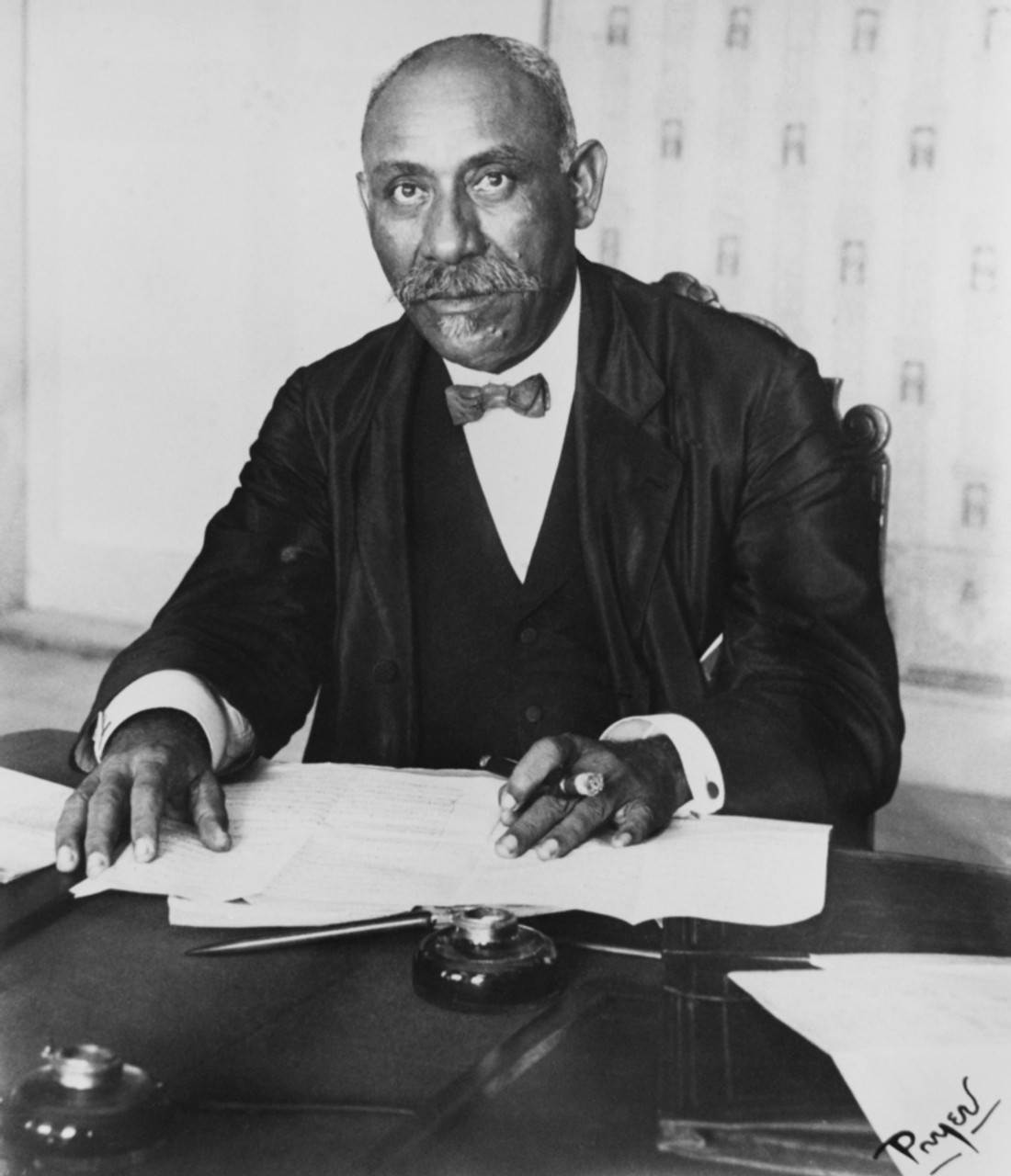
One man, above all, would embody this shift: Philippe Sudre Dartiguenave. Lawyer, senator, man of compromise, he was chosen by Washington as a “safe” figure to preside over a Haiti now framed by the Marines. His mandate, from 1915 to 1922, would be the paradoxical story of a modernized but subjugated country, of a state strengthened yet deprived of its sovereignty.
How could a state born from the most radical independence, a century later, accept foreign occupation in an institutionalized form? And what role did President Dartiguenave play, between collaboration, pragmatism, and historical impasse?
Before the presidency: a man of the southern Peninsula
Philippe Sudre Dartiguenave was born on 6 April 1862 in Anse-à-Veau, on the Southern Peninsula. This territory, relatively distant from the political upheavals of Port-au-Prince, had since the 19th century produced a respected elite of notables, rooted in local networks but aspiring to play a national role.
Educated at the prestigious Collège Petit Séminaire Saint-Martial, run by the Spiritans, he embodied the classical model of the Haitian elite: French-language education, mastery of law, and rapid entry into public service. Becoming a lawyer, he climbed the political ranks: deputy, then senator in 1910, eventually presiding over the Senate. Without formal party affiliation, he positioned himself in the conservative sphere: defending order, maintaining ties with landowning notables, and seeking institutional compromise.
But behind this smooth career lies a key factor in understanding his election in 1915: Dartiguenave belonged to a specific social group known in Haitian sociology as the mulatto elite. His skin color, French education, and symbolic capital placed him in an urban world oriented toward Europe, sometimes at odds with the predominantly Black, Creole-speaking rural masses.
In the style of Bernard Lugan’s analysis of colonial societies, it is important to recall Haiti’s inherited class structure:
- An educated, minority elite, often light-skinned, occupying positions of power and representation;
- A peasant majority, heirs of a subsistence economy, proud of their autonomy but wary of the “politicians of Port-au-Prince”;
- A sociological and symbolic divide running through the country’s history, explaining recurrent revolts.
In this structure, Dartiguenave is a classic notable, chosen not for popularity but for reliability in the eyes of both foreign powers and local elites. His profile reassures: cultured Catholic, jurist, man of compromise rather than confrontation. In 1915, this was precisely the type of figure the Americans sought to place at the top of a state in crisis.
The shift of 1915: revolution, banks, and marines
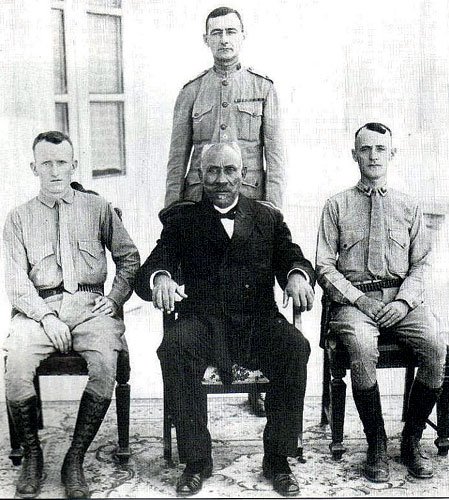
The summer of 1915 marked one of the most brutal ruptures in Haitian history. In Port-au-Prince, President Vilbrun Guillaume Sam, cornered by factional struggles, ordered the summary execution of 167 political prisoners, many of them notable opposition figures. The next day, the capital erupted: the crowd took to the streets, dragged the head of state from the French legation refuge, and lynched him publicly. This scene, of unprecedented violence, heralded the total collapse of the political system.
But this internal crisis coincided with a major risk for Washington: the likely rise to power of Rosalvo Bobo, leader supported by the cacos, peasant armed bands from the North, fiercely opposed to foreign interference. For the United States, the idea of seeing this nationalist tribune occupy the National Palace was unacceptable. On 28 July, 330 Marines landed under Rear Admiral Caperton. Officially, they were protecting foreign nationals and economic interests; in reality, it was a strategic takeover.
At the heart of this intervention was a financial equation. Since 1910–1911, the National Bank of Haiti had already been partially controlled by New York’s National City Bank. The foreign debt, inherited from the 19th century, weighed heavily on the state. Sugar concessions, particularly the Haitian American Sugar Company (HASCO), symbolized the growing grip of North American capital. Behind the scenes, major banking houses such as Kuhn, Loeb & Co. had interests in controlling a strategic space in the Caribbean, close to the Panama Canal.
Thus, behind the dramatic image of Marines on Port-au-Prince streets, another battle was being fought: finance and raw materials. Haiti, the first Black republic born from colonial rupture, found itself a century later caught in the mechanisms of a global political economy, where sugar, coffee, and government bonds determined the fate of governments.
In this explosive context—internal political collapse and foreign covetousness—Philippe Sudre Dartiguenave’s seven-year term began. His election, barely two weeks after the landing, cannot be understood without this backdrop: a president chosen as much by national circumstances as by the requirements of an imperial power.
A conditional President (1915–1922)
Just two weeks after the Marines landed, the National Assembly convened under constraint. Candidates deemed hostile to the Americans were excluded, Rosalvo Bobo at the head. Only one figure remained, considered “reliable” by Washington: Philippe Sudre Dartiguenave, Senate president. On 11–12 August 1915, he was unanimously elected for a seven-year term. The election, conducted under the watch of American bayonets, was theatrical: a legally designated president, but under tutelage.
A few months later, in November 1915, dependence was formalized by the American-Haitian Convention. Scheduled for ten years, it placed the management of finances, customs, and the army under direct U.S. supervision. This was a historic shift: for the first time since 1804, an international treaty explicitly reduced Haiti’s sovereignty.
The system was quickly implemented. The former national army was dissolved and replaced by the Gendarmerie of Haiti, a single security corps commanded by American officers. Its missions extended beyond simple policing: maintaining order, supervising the population, collecting taxes, monitoring roads. This new coercive apparatus became the backbone of the occupation regime.
In addition, mandatory labor was imposed: three days of work per year required from every citizen for road maintenance. In practice, the abuses were enormous: hundreds of peasants were taken from their homes, tied up, and forced to work on public projects. This measure, inherited from colonial logic, reignited rural resentment.
Even civil administration was involved. In several departments, American officers directly managed local affairs, relegating Haitian officials to subordinate roles. Tutelage thus became total: finances, police, justice, infrastructure.
Dartiguenave, caught in this vise, governed under constant conditions. His power, legal in appearance, was constantly bounded by Washington’s demands. His seven-year term inaugurated an era of paradoxes: spectacular modernizations on one hand, but at the cost of confiscated sovereignty and humiliated peasantry.
Governing between modernization and subjection
Dartiguenave’s term was marked by a glaring paradox: Haiti had never seen such infrastructure projects, yet never had the political and social cost been so high.
Under the guidance of American engineers and with forced support from the gendarmerie, the country was covered with infrastructure. 1,700 kilometers of roads and 189 bridges finally connected isolated regions; water supply networks emerged; hospitals and primary schools were built; commercial ports modernized; lighthouses installed for safe navigation. In Port-au-Prince, an automatic telephone system—technological marvel at the time—symbolized the country’s entry into modernity.
Agriculturally, authorities revived export sectors: sisal for ropes, cotton, sugarcane. The idea was clear: align Haiti with international economic circuits, ensure state solvency, and honor foreign creditors.
But behind this picture of efficiency lay a downside: these technical and material advances relied on coercion. Mandatory labor, workforce requisitions, and foreign interference in budget management reduced modernization to imposed modernity, often experienced as a new form of domination.
Beyond the flattering figures, everyday life for Haitians was marked by Marine violence and humiliation. Testimonies reported abuses, drunkenness, gratuitous brutality, sometimes covered by military impunity. In 1920, journalist Herbert J. Seligman, sent by the NAACP, compiled a damning report on the racism and abuses committed by American troops.
Facing these scandals, General Lejeune, commander of the expeditionary corps, tried to restore the Marines’ image, even banning alcohol in their ranks. But tensions remained. In the countryside, forced labor and brutality fueled peasant resentment. In cities, educated elites protested attacks on national dignity and daily humiliations.
Thus emerged the contradictory face of this Pax Americana: institutional stability and modernized infrastructure on one side; violence, racism, and loss of sovereignty on the other. A relative peace, but a peace under constraint, inevitably sowing the seeds of future revolts.
The peasant war: the cacos vs. the occupation
Barely had the American occupation begun when the first spark ignited in the northern mountains. On 17 November 1915, Marines assaulted Fort Rivière, a stronghold of the rebel cacos. The battle, violent and unequal, ended in massacre: peasant resistance was broken, its leaders dispersed. But rather than extinguishing the flame, this American victory only covered with ashes a smoldering ember.
Three years later, the flame rekindled with new vigor. Charlemagne Péralte, a former Haitian officer humiliated by the dissolution of the national army, became the symbol of national insurrection. From 1918 to 1919, he united thousands of cacos in the Central Plateau, organized ambushes, and even dared to attack Port-au-Prince. His strategy, combining guerrilla tactics with political proclamation, made him a figure of the modern liberator. In November 1919, however, he was betrayed, killed, and nailed to a door by the Marines, his body displayed as a warning. Far from intimidating, this image made him a martyr.
In 1920, the struggle continued under Benoît Batraville, his successor. His troops harassed garrisons, multiplied raids, and prolonged the peasant war. American repression was relentless: villages burned, mass arrests, summary executions. In total, over 2,000 deaths were recorded among insurgents and civilians suspected of supporting them.
This peasant war was not a peripheral episode: it revealed the sociological divide of the occupation. On one side, the urban elite accepted or tolerated tutelage for the sake of stability and modernization. On the other, the rural masses, attached to their autonomy and the memory of 1804, saw in forced labor and the gendarmerie a return to colonial chains.
Mapping the centers of rebellion (Central Plateau, Artibonite, North) highlights areas where the Haitian state, under American supervision, struggled to assert authority. In these mountains, the memory of maroons and independence battles remained alive, reinforcing the belief that occupation was a betrayal of Dessalines’ spirit.
The 1918 constitution: the dessalines break
In 1917, the Haitian National Assembly, the last bastion of institutional autonomy, resisted American demands. Parliamentarians refused to ratify a new constitution, written—ironically—by a young official of the U.S. Navy Department: Franklin Delano Roosevelt, future U.S. president.
The American response was immediate. Commander Smedley Butler, leading the Haitian Gendarmerie, forcibly dissolved the Assembly. Elected officials were expelled manu militari. The scene epitomized the era: national sovereignty existed only on paper.
A year later, in 1918, a referendum was held to adopt the Washington-drafted constitutional text. The results were spectacularly uniform: 98,225 “yes” votes against only 768 “no” votes. Behind this façade plebiscite lay a reality: low participation, absence of free campaigning, population monitored by the gendarmerie.
The most explosive measure of this charter was opening land ownership to foreigners. Since 1804, this principle had been sacred. Dessalines had enshrined it as the ultimate guarantee of sovereignty: Haiti’s land could belong only to Haitians. By breaking this taboo, the 1918 Constitution struck at the heart of national imagination.
The consequences were twofold:
- Land: Large foreign companies, in sugar and mining, could now directly acquire land, undermining small farmers.
- Symbolic: For the peasantry, this was an open betrayal of the revolutionary heritage. Occupation was no longer only military: it reached the land, the very matrix of freedom.
This reform, imposed under Dartiguenave, sealed the image of an instrumentalized president, incapable of defending Dessalines’ vision. To his contemporaries, and even more to later generations, it remains one of the most indelible marks of American tutelage.
Assessment of a seven-year term: stability vs. democracy?
When Philippe Sudre Dartiguenave’s term ended in 1922, Haiti presented the face of a paradoxical state. On one hand, the country no longer experienced the constant regime changes that, since Dessalines’ assassination, had punctuated its political history. Foreign observers praised a “peace and institutional stability,” achieved through the gendarmerie apparatus and constitutional lock. Administration was more professional, some sectors modernized, corruption better monitored than before.
But this stability was fragile and costly. It relied on the suppression of a long peasant guerrilla, the humiliation of the dissolved Assembly, and the subjugation of institutions. The Senate, once the upper chamber of sovereignty, had disappeared; replaced by a docile Council of State, chosen to ratify Washington’s decisions. The 1918 Constitution opened land to foreigners, breaking a pillar of independence.
Financially, dependence was total. American bank interests absorbed a considerable share of public revenue. Customs, the economic heart of the Haitian state, were under direct control of American officials. Budgetary balance, hailed as a technical success, came at the cost of sovereignty lost, scandalizing national opinion.
At the end of his term, Dartiguenave left a country modernized in certain aspects but deeply fractured. In cities, a minority elite benefited from new infrastructure. In the countryside, forced labor, repression, and land loss fueled lasting resentment.
Contemporary judgment was severe: his seven-year term was seen as a “failure and disappointment,” not because he accomplished nothing, but because he embodied the contradiction of a Black Republic founded on autonomy, reduced a century later to living under foreign tutelage.
Exit and legacy
In 1922, Philippe Sudre Dartiguenave’s term ended. The Assembly, remodeled under American supervision, elected Louis Borno, another figure deemed “compatible” with Washington’s interests. Dartiguenave retired to his hometown of Anse-à-Veau, far from the capital’s turmoil. Four years later, in 1926, he died nearly forgotten, leaving some memoirs in which he attempted to justify the impossible balance he had to embody: that of a Haitian president in a country under foreign occupation.
What remains of his tenure?
- Infrastructure: roads, bridges, schools, lighthouses still shaping Haiti’s material landscape.
- Police apparatus: the Haitian Gendarmerie, backbone of the state, but designed and overseen by Americans.
- New Constitution: the 1918 Constitution, breaking Dessalines’ land taboo and institutionalizing foreign capital in Haitian soil.
- Deepened sociological fracture: between urban elites integrated into the system and peasantry humiliated by forced labor and repression.
- Eroded sovereignty: 1804 independence, once absolute, reinterpreted within a framework of structural dependence.
Dartiguenave’s legacy remains ambivalent. To some, he was a pragmatist, accepting the unacceptable to avoid total chaos. To others, he embodies the submission of Haitian elites, unable to defend the land and dignity of 1804.
His seven-year term thus reflects Haiti’s contradictions: between modernization and subjugation, between revolutionary heritage and global geopolitical constraints. Through him reads the central question of 20th-century Haiti: how to remain loyal to Dessalines when the survival of the state seems to require foreign tutelage?
Notes and references
- Philippe Sudre Dartiguenave, biographical notes, compiled sources (including Wikipedia and digitized archives) – documentary base used.
- Heinl, Robert Debs & Heinl, Nancy Gordon. Written in Blood: The Story of the Haitian People 1492–1971. Houghton Mifflin, 1978.
- Blancpain, François. Haiti, from 1804 to 1915: Thirty Years of Sovereignty Crises. Karthala, 2001.
- Balch, Emily Greene. Occupied Haiti. New York, The Writers Publishing Company, 1927.
- Seligman, Herbert J. “The American Occupation of Haiti.” The Nation, 1920.
Table of Contents
Before Becoming President: A Man from the Southern Peninsula
The Turning Point of 1915: Revolution, Banks, and the Marines
A President Under Conditions (1915–1922)
Governing Between Modernization and Subjugation
The Peasant War: The Cacos Against the Occupation
The 1918 Constitution: The Dessalines Break
Assessment of a Seven-Year Term: Stability vs. Democracy?
Exit from the Stage and Legacy


