

Mohandas K. Gandhi’s South African years reveal a far lesser-known facet of his trajectory: a racially hierarchical worldview and openly derogatory remarks toward Black Africans. Drawing on authenticated quotations from his writings, petitions, and correspondence between 1893 and 1914, Nofi revisits a darker side of his legacy—one often erased from popular memory.
Authenticated statements fuelling the debate over his relationship with Black Africans
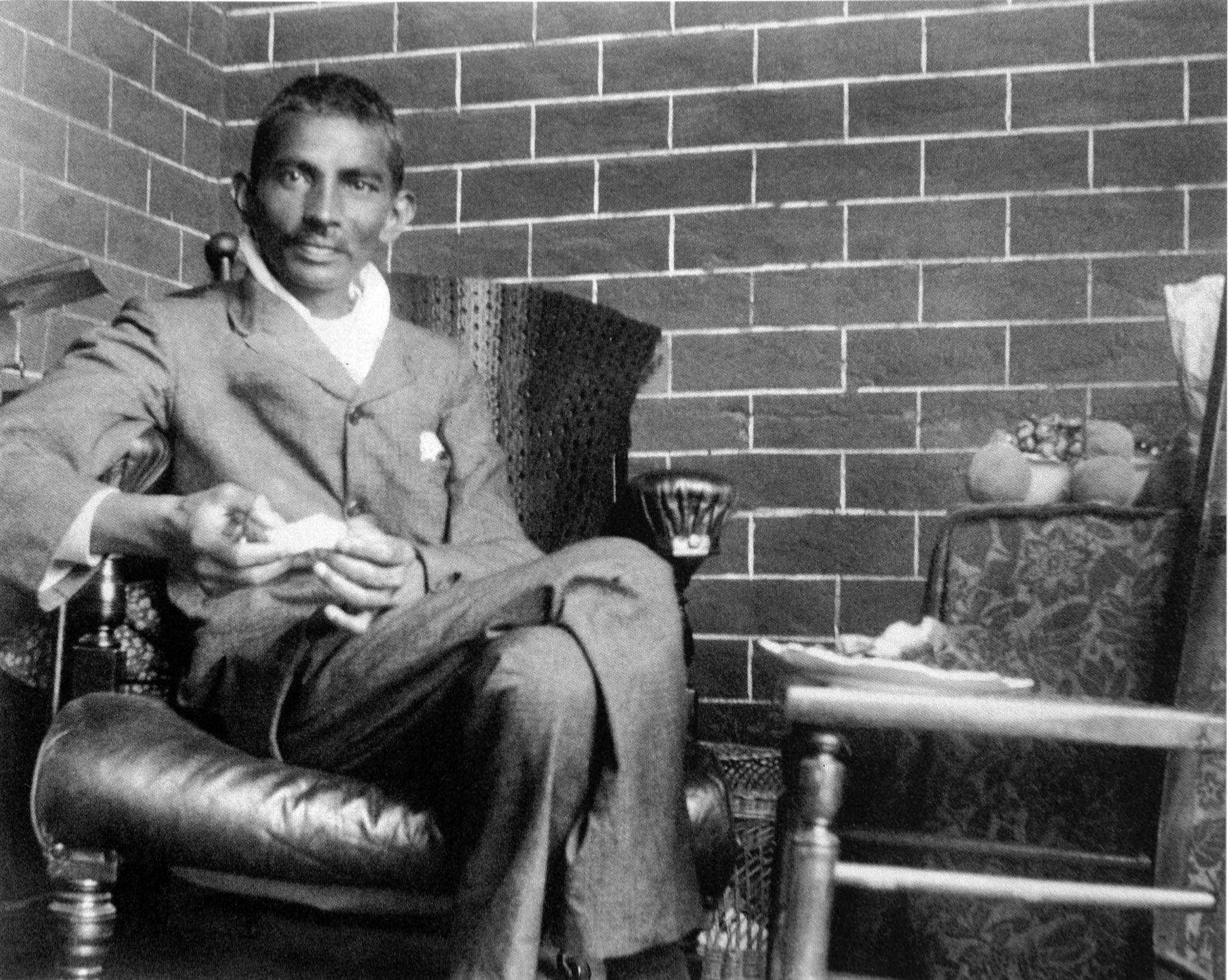
The figure of Mohandas Karamchand Gandhi occupies a central place in global political history. A symbol of nonviolent resistance against the British Empire, he nonetheless remains a figure whose South African years (1893–1914) reveal a distinctly hierarchical racial outlook. A direct study of his writings—correspondence, petitions, and articles published in Indian Opinion—shows that during this period he operated within a logic of distinction between Indians and Africans.
Here are the authenticated quotations that continue to fuel controversy surrounding his relationship with Black communities in southern Africa.
“The Indian is being dragged down to the position of a raw Kaffir.” Source: Collected Works of Mahatma Gandhi, cited by the Washington Post (2015).
Here, Gandhi laments that Indians are being placed in the same administrative category as Africans. The term “raw Kaffir” (a racially charged slur) reflects an implicit racial hierarchy.
“It is one thing to register Kaffirs, but it is another to compel Indians to carry passes like them.” Source: Collected Works, cited by the Washington Post (2015).
Gandhi criticises the passbook system imposed on Indians while simultaneously asserting that Africans could legitimately be subjected to such treatment. The distinction between the two groups is openly claimed.
“We believe as much in the purity of races as we think they do. We believe also that the white race in South Africa should be the predominating race.” Source: Gandhi, Indian Opinion, cited and analysed by Al Jazeera (2021).
A position often overlooked: Gandhi at that time acknowledged and endorsed the supposed “pre-eminence” of whites within the South African colonial order.
“Kaffirs are as a rule uncivilised; the convicts even more so. They are troublesome, very dirty, and live almost like animals.” Source: Collected Works, cited by the Washington Post (2015).
This statement, one of the most explicit, was written while Gandhi was imprisoned in 1908. In it, he describes African prisoners using some of the most conventional colonial stereotypes.
“I feel most strongly about the mixing of the Kaffirs with the Indians.” Source: Collected Works, cited by the Washington Post (2015).
In the context of demands for separate residential areas, Gandhi clearly expressed opposition to cohabitation, viewing such proximity as an “obstacle” to Indian dignity.
“The white man’s civilisation is suited for the white man.” Source: Gandhi, cited in Al Jazeera’s analysis (2021).
This idea reflects his perception of a fundamental difference between civilisations, fully aligned with the moral hierarchies inherited from colonial ideology.
“The Indian belongs to an ancient civilisation. The Kaffir has none.” Source: quotation reported and analysed by Al Jazeera (2021).
Gandhi contrasts a supposedly “civilised” India with Africans portrayed as “uncivilised.” This framework reproduces the evolutionary schemas of the nineteenth century.
A context that does not erase the racial dimension
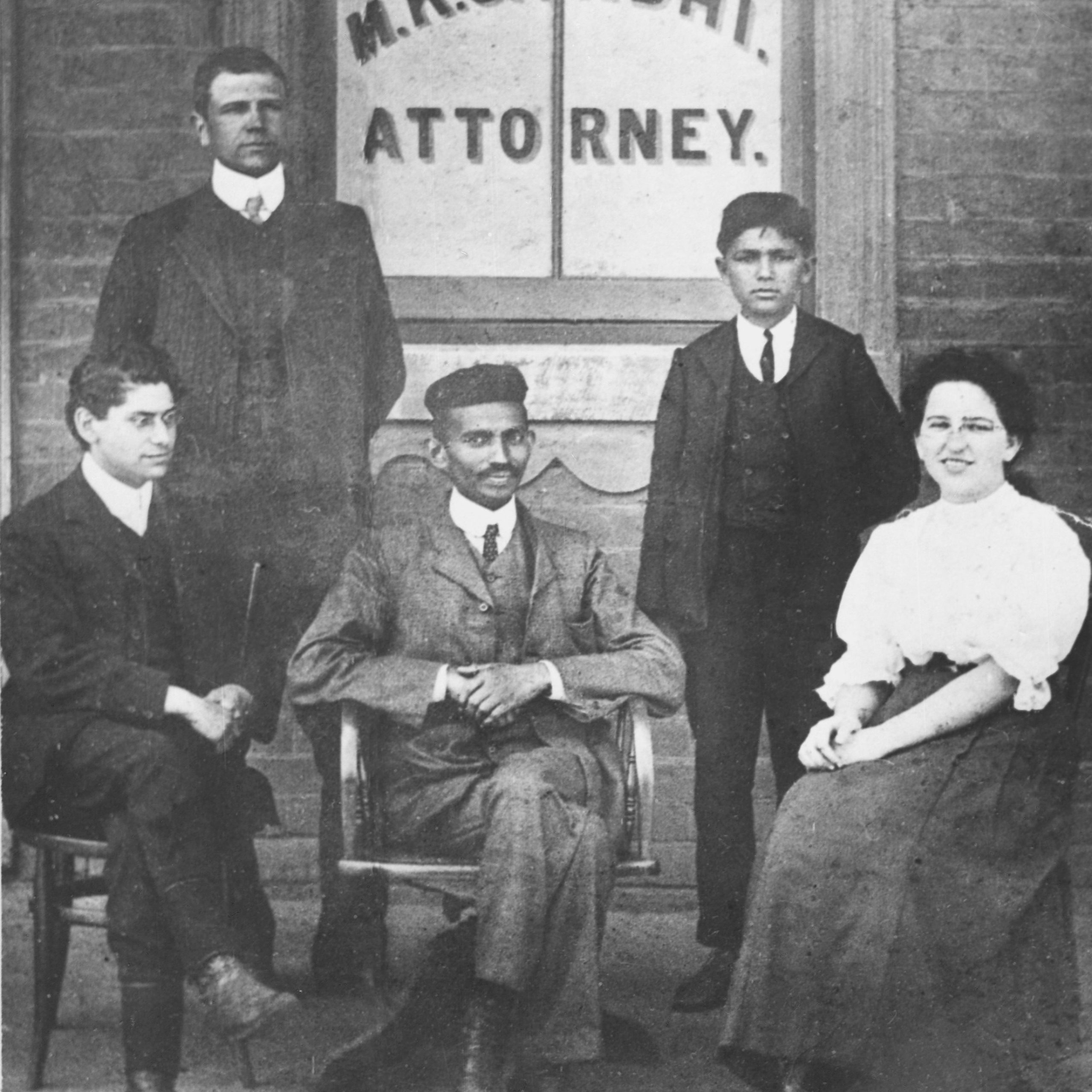
Gandhi’s defenders often invoke contextual factors:
- his intellectual youth;
- the influence of the colonial environment;
- the gradual evolution of his thought after 1915.
However, the written record leaves little room for doubt: between 1893 and 1914, Gandhi viewed Indians as an intermediate group between Europeans and Africans, claiming a form of cultural superiority.
Reducing Gandhi to a racist figure alone would ignore his major role in the history of anti-colonialism. Presenting him as a saint outside of historical context would be equally misleading. His South African writings reveal a man shaped by the racial tensions of his time, but also one who adopted many of their underlying assumptions.
To study these quotations, document them, and confront them with contemporary mythology is to remind ourselves that historical figures—even the most celebrated ones—must be approached in all their complexity, without erasure or anachronism.
Notes and references
- The Washington Post – Rama Lakshmi, “What did Mahatma Gandhi think of black people?”, September 3, 2015.
- Al Jazeera – Tamoghna Halder, “Coming to terms with Gandhi’s complicated legacy”, April 7, 2021.
- Collected Works of Mahatma Gandhi (CWMG)
- Indian Opinion (newspaper founded by Gandhi in 1903)

