

In 1931, in segregated Alabama, nine Black teenagers were accused of rape without solid evidence and convicted after rushed trials. The Scottsboro Boys case quickly transcended the courtroom to expose a system in which justice was deeply shaped by racial power dynamics. Between social fear, public pressure, and historic Supreme Court rulings, the case became a major symbol of structural inequality in the United States and a turning point in the struggle for civil rights.
Scottsboro Boys: when justice is decided before the trial
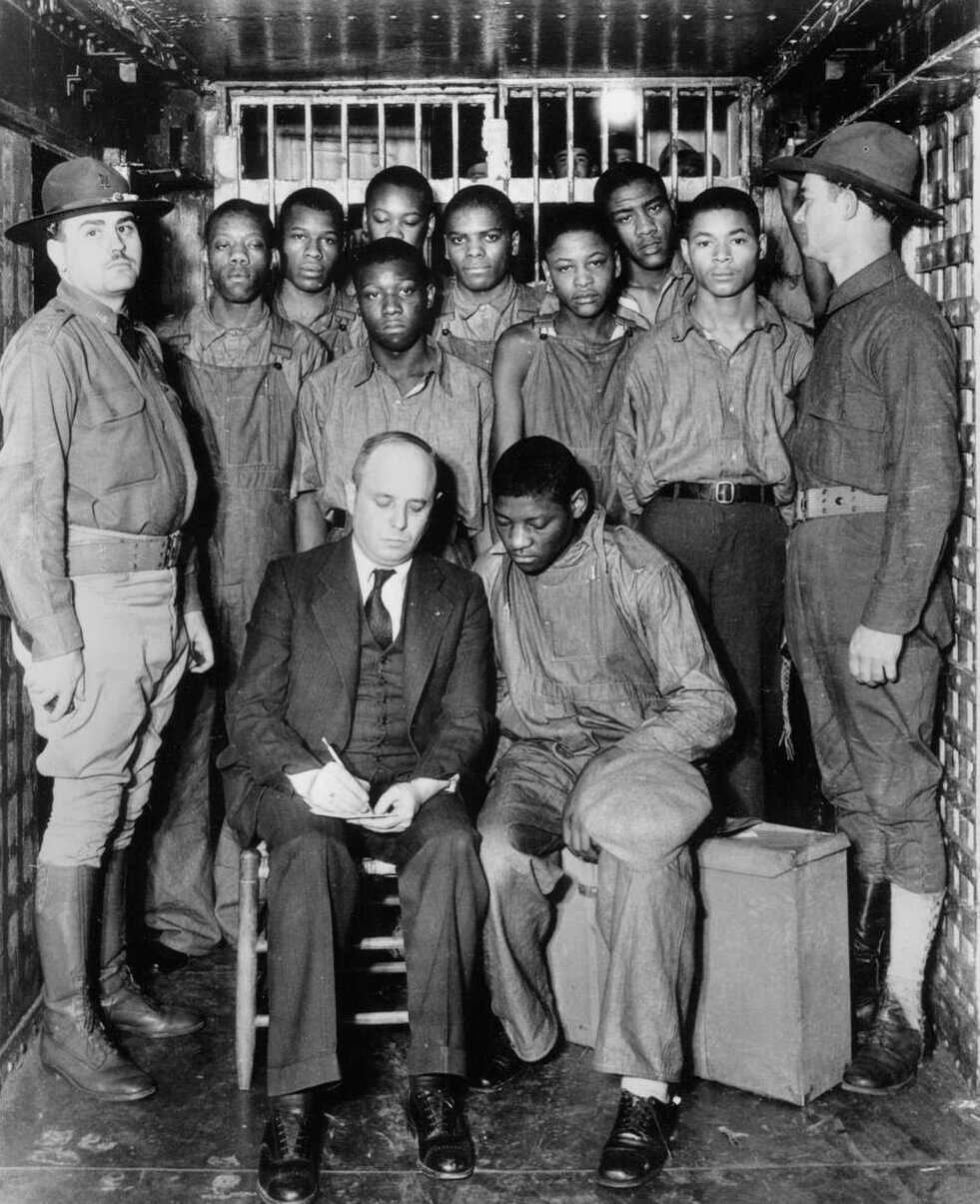
On March 25, 1931, nine Black teenagers boarded a freight train in Alabama. They were young, poor, and like thousands of others at the time, traveling across the South in search of work. A few hours later, they stepped off the train in handcuffs, accused of a crime that, in segregated America, left almost no room for doubt—or for a defense: the rape of two white women. From that moment on, everything was already decided.
Because in the American South of the 1930s, being Black and accused of raping a white woman did not mean being tried. It meant being condemned. The Scottsboro Boys case was not a miscarriage of justice in the conventional sense. It was not the product of a malfunction. On the contrary, it was the normal operation of a system in which justice was not designed to establish the truth, but to preserve a racial order. To understand Scottsboro, then, is not simply to recount a case. It is to analyze a mechanism.
At the beginning of the twentieth century, the Southern states operated under a set of laws and practices known as Jim Crow. These measures organized racial separation in every aspect of daily life: schools, transportation, housing, public spaces. But their deepest impact lay elsewhere: in the way they structured access to power, and therefore to justice.
African Americans were massively excluded from voting rights. Yet voter rolls served as the basis for selecting jurors. This political exclusion therefore produced judicial exclusion. In many Southern counties, juries were entirely white, not by accident, but by design.
This reality had direct consequences. Being judged by a jury that shared neither your condition, nor your experience, nor even recognized your full status as a citizen, transformed the trial into an unbalanced procedure from the outset. Justice ceased to be arbitration. It became an instrument.
In this context, certain accusations took on a particular significance. Interracial rape, in particular, occupied a central place in the Southern imagination. Between 1877 and 1950, more than 4,000 African Americans were lynched in the United States, often on the basis of unproven sexual accusations. The crime was not merely legal. It was symbolic. It justified violence, legitimized fear, and reinforced the racial hierarchy. It was within this world that the Scottsboro case emerged.
The story began with an ordinary conflict. On board a freight train, a fight broke out between white and Black youths. The white youths were forced off the train and, humiliated, alerted the authorities. When police intercepted the train, they arrested the Black teenagers.
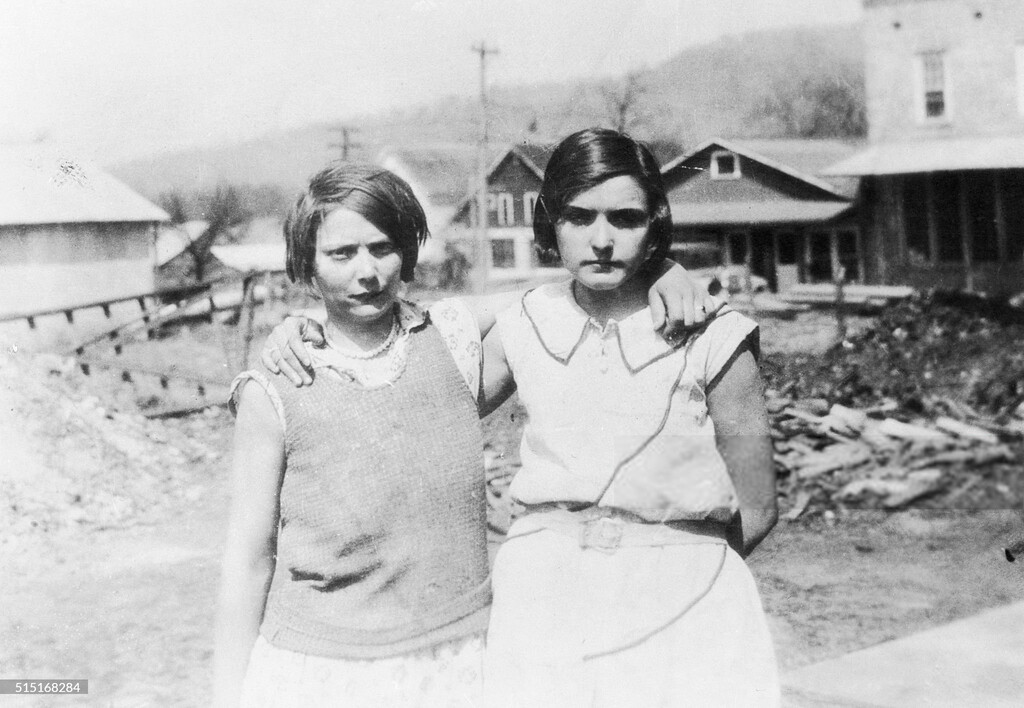
Up to that point, nothing extraordinary had happened. But the situation changed dramatically when authorities discovered that two white women were also aboard the train: Victoria Price and Ruby Bates. Very quickly, they accused the young men of rape.
This accusation immediately transformed the nature of the case. It gave it an explosive charge. In the segregated South, it functioned as evidence in itself. Yet the physical evidence was nonexistent. Medical examinations did not confirm that a rape had occurred. The testimonies were vague and contradictory. Some indications even suggested that the accusers were attempting to shield themselves from prosecution related to their own circumstances. But these inconsistencies mattered little. What mattered was the coherence of the narrative. And that narrative was already in place: nine Black youths, two white women, one crime.
When the trials opened, the atmosphere was electric. Crowds gathered around the courthouse. Rumors of lynching spread. Authorities mobilized the National Guard to prevent the accused from being executed before a verdict was even delivered. This detail is essential. It reveals that official justice did not replace mob violence. It channeled it.
The trials were swift. Sometimes completed in a single day. The accused, aged between 13 and 19, had no time to prepare a defense. Lawyers were appointed at the last minute, with neither experience nor resources. In some cases, they met their clients only minutes before the hearing. The juries were entirely white. Once again, this was not an anomaly. It was the rule.
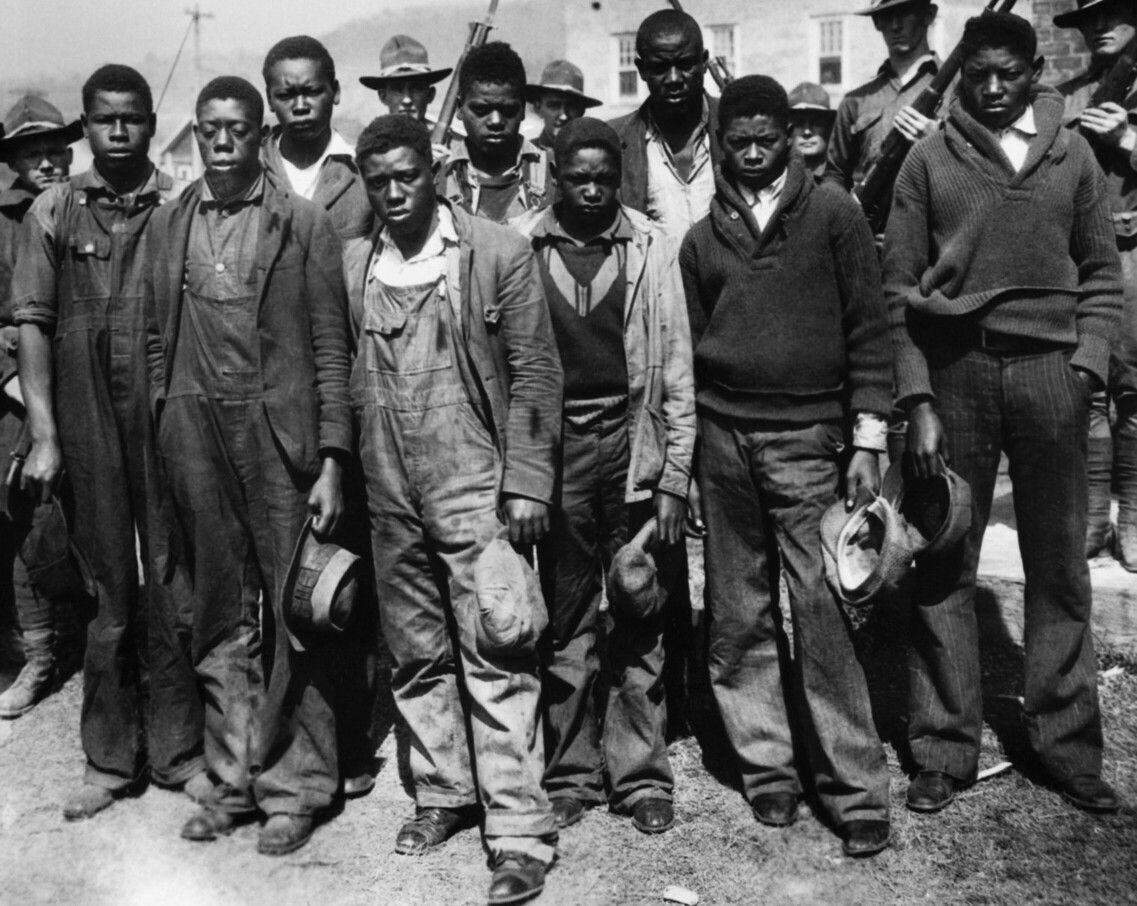
Under these conditions, the verdict came as no surprise. Eight of the nine teenagers were sentenced to death. The youngest, aged 13, escaped the death penalty but was still found guilty. Justice had spoken. But can one speak of justice when the outcome is determined before the trial even begins?
The case could have ended there. It could have joined the long list of racially motivated convictions in the South. But something changed. Organizations mobilized. The International Labor Defense, linked to the Communist Party, took up the defense of the accused. The NAACP, more cautious, also became involved. The case became national, then international.
In 1932, the Supreme Court intervened. In the ruling Powell v. Alabama, it recognized that the defendants had not been granted an effective right to counsel. The decision marked a turning point. For the first time, the nation’s highest court affirmed that the absence of competent legal representation could invalidate a trial.
But the battle did not end there. In 1935, in Norris v. Alabama, the Court condemned the systematic exclusion of Black people from juries. Once again, the precedent was major. These rulings did not end injustice. But they acknowledged its mechanisms. They introduced a crack into the system.
In 1933, Ruby Bates recanted her accusations. She stated that the rapes had never occurred. Her testimony shook the case. It introduced serious doubt. But that doubt was not enough. The convictions remained. The trials continued. The system absorbed the contradiction. It neutralized it.
This moment is central. It demonstrates that factual truth is not enough to overturn a narrative when that narrative is supported by a social structure. The problem was not merely judicial. It was political.
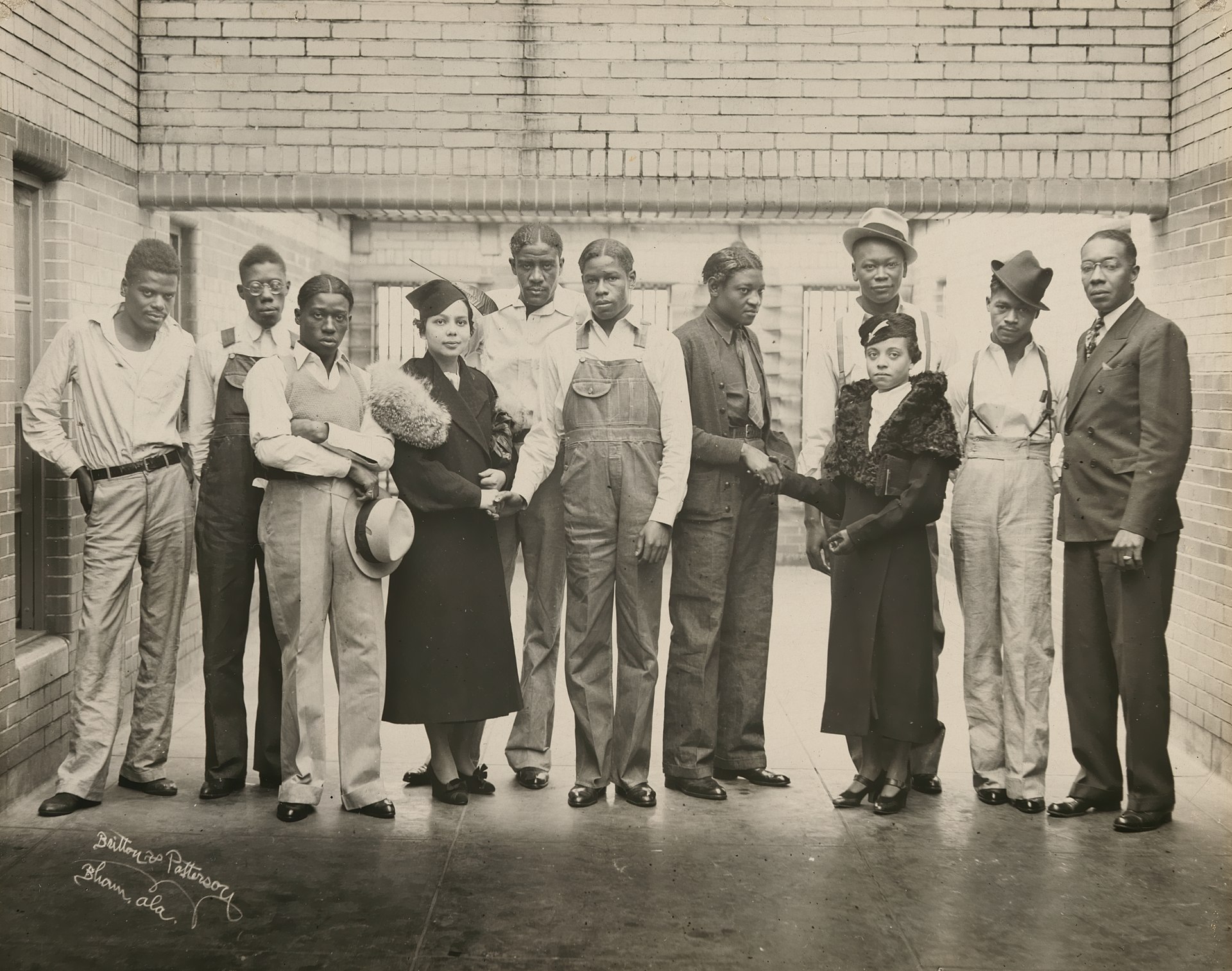
The Scottsboro case quickly extended beyond American borders. It was reported in Europe, in the Soviet Union, and within intellectual circles. It became a symbol. And that symbol was twofold. It embodied both the violence of American racism and the capacity to mobilize against that violence. It exposed the contradictions of a nation that presented itself as a model of freedom while maintaining a system of segregation.
In the context of the Great Depression and rising international tensions, Scottsboro became an ideological issue. It was used, instrumentalized, debated. But beyond the rhetoric, one reality remained: nine shattered lives.
The case stretched over several years. Some of the accused were released, while others received long prison sentences. None emerged unscathed. Official pardons, granted decades later (as late as 2013), finally acknowledged the injustice. But that recognition came too late. It arrived after lives had already been destroyed.
Legally, the impact was real. The right to effective counsel, the prohibition of racial exclusion from juries: these principles were strengthened through this case. But the deepest legacy lies elsewhere. Scottsboro revealed that justice can function as a tool of domination. It showed that inequality before the law is not always the result of an accident, but of an organized system.
The Scottsboro Boys case should not be read as a mistake corrected through legal progress. It should be understood as a demonstration. It showed that justice, under certain conditions, does not seek the truth. It confirms an order. And perhaps that is the most disturbing lesson of all. Because if justice can function this way, then the question is no longer simply whether it is fair. It is to understand whom it serves.
Notes and references
- Scottsboro Boys trials. Scottsboro Boys Trials, Alabama, 1931–1937.
- Powell v. Alabama. Supreme Court ruling establishing the right to effective legal counsel in capital cases.
- Norris v. Alabama. Supreme Court ruling condemning racial exclusion from juries.
- James Goodman. Stories of Scottsboro. Pantheon Books, 1994.
- Dan T. Carter. Scottsboro: A Tragedy of the American South. Louisiana State University Press, 1969.
- Douglas Linder. The Scottsboro Boys Trials: A Chronology and Analysis. University of Missouri-Kansas City School of Law.
- The New York Times. Coverage of the Scottsboro Boys trials, 1931–1937.
Sommaire

