

Beneath the guise of comedy, Hollywood long built its laughter on racial caricature. Between 1931 and 1944, eleven Warner Bros. cartoons—the Censored Eleven—embodied the hidden face of the American dream: an entertainment empire founded on the mockery of Black people. Even today, these banned films reveal everything about segregated America and its visual legacy.
The theater is plunged into darkness. On the screen, a reel trembles. A rabbit talks, a trumpet swings, a hunter stumbles. The audience laughs, then suddenly, the laughter catches in their throats: a caricatured face appears, with red lips, ink-black skin, and a grotesque accent. Laughter turns into discomfort. Yet these images entertained generations of Americans. They belong to the Looney Tunes, Warner Bros.’ iconic series born in the 1930s; and among them are eleven films that the United States ultimately chose to erase: the Censored Eleven.
Banned from screens in 1968 because of their racism, these eleven shorts became witnesses to an era when humor served to codify domination. Long hidden away in studio vaults, they have resurfaced today and are studied as anthropological documents. They are not merely cartoons: they are fossils of an imperial imagination.

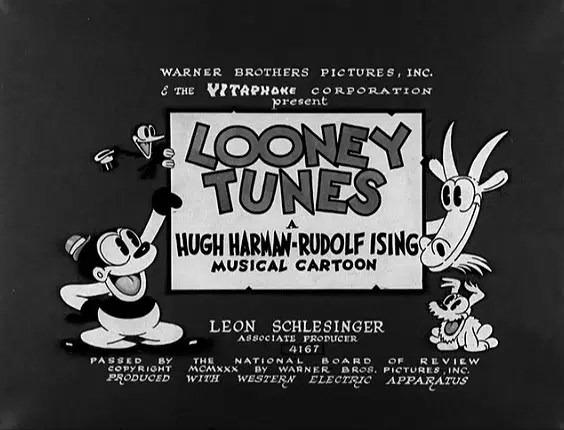
To understand the Censored Eleven, one must return to America in the 1930s. The Great Depression is raging. The country is fractured, and segregation still reigns across the Southern states. While Roosevelt launches the New Deal, the white majority seeks an outlet: laughter becomes a remedy for crisis. Hollywood, in the midst of its expansion, answers that demand.
Warner Bros., Disney, MGM: all the major studios draw inspiration from the minstrel shows, those variety performances in which white entertainers painted themselves as Black people (blackface) to sing, dance, and mock formerly enslaved populations. Modern America feeds on these old codes. The screen becomes the luminous mirror of a racial hierarchy two centuries old.
Laughter is not neutral: it defuses guilt. By laughing at Black people, the white spectator symbolically cleanses themselves of the crimes of their history. Cinema and animation merely dress the old plantation in a veneer of modernity. Red lips, bulging eyes, exaggerated dialects: all of it forms an aesthetic of domination. And when the Hays Code, adopted in 1934, bans vulgarity, blasphemy, and nudity, it says nothing about racism. Kisses between Black and white people are censored, but racial mockery is not.
Hollywood in the 1930s was not a laboratory of equality: it was a factory of hierarchical images. Cartoons became the most effective instrument of this pedagogy of contempt because they were aimed first and foremost at children; those who, tomorrow, would laugh without understanding why.
The “Censored Eleven”: Eleven Films America Wanted to Forget
In 1968, United Artists (then the owner of Warner’s catalog) withdrew eleven films from circulation. Officially, they were deemed “too racist to be broadcast on television.” In reality, it was an act of belated modesty: the United States, immersed in the struggle for civil rights, could no longer publicly defend such images. Yet by banning them, the country also erased evidence of systemic racism.
These eleven cartoons, produced between 1931 and 1944, are all built on the same model: a white America at the center of laughter, and Black people reduced to archetypes—the child, the savage, the musician, the servant.
Together, they form a symbolic cartography of humiliation.
1. “Hittin’ the Trail for Hallelujah Land” (1931)
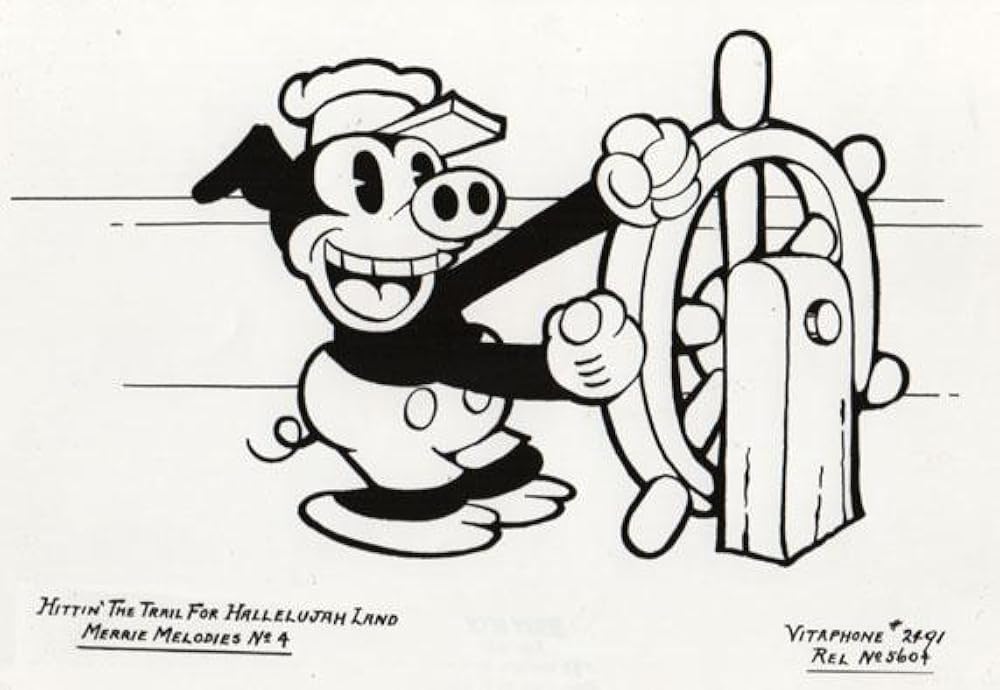
The first film in the Merrie Melodies series directed by Rudolf Ising, Hittin’ the Trail for Hallelujah Land inaugurated in 1931 what might be called the “racial grammar” of American animation. It is the oldest of the Censored Eleven, and perhaps the most revealing in its simplicity.
The plot seems harmless: an old steamboat travels up the Mississippi carrying passengers who sing religious hymns. The tone is cheerful, musical, almost spiritual. But from the very first images, the intention becomes clear. The Black characters are grotesque caricatures: red lips, oversized eyes, drawling voices. The captain, an elderly Black man inspired by the “Uncle Tom” stereotype, pilots his vessel clumsily while his passengers, oscillating between prayer and foolishness, stumble through a series of gags. One falls overboard, another clings to a crocodile, all to the delight of a laughing white audience.
The film claims to be a lighthearted satire of African American religious fervor. In reality, it offers a contemptuous portrait of it. Faith here becomes comedy; dignity dissolves into ridicule. Hittin’ the Trail for Hallelujah Land introduces an idea that would return in almost every racial cartoon of the 1930s: the Black person as a figure of excess, irrational emotion, and superstition. Religion is not presented as spirituality, but as naivety.

