

Born from a simple blog, Wa Africa has established itself as a unique travel agency: no clichés, no mass tourism, but a sensitive immersion into the real Africa, the one of living traditions and creative modernities. Behind every itinerary lies a conviction: to travel differently is to tell a different story.
Wa Africa: When Tourism Becomes a Cultural and Human Manifesto
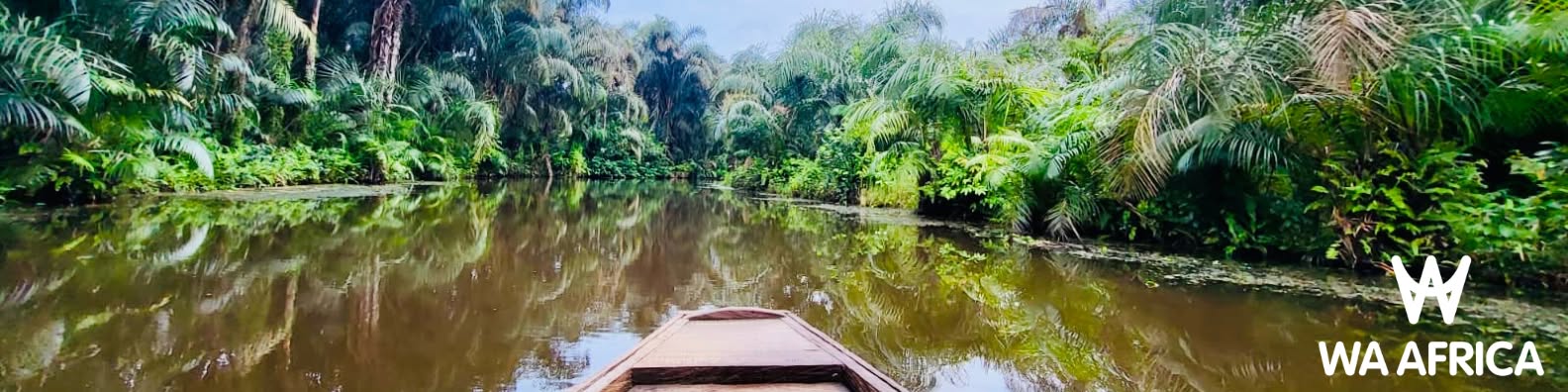
In the endless stream of travel offers, Wa Africa looks nothing like the glossy catalogues of major tour operators. Born from a blog run by two enthusiasts (Salviane and Nicolas), the initiative evolved into a singular travel agency: not a machine designed to “sell dreams,” but an invitation to discover Africa in its most tangible, vibrant, and contrasting forms.
Far from tourist clichés, Wa Africa offers intimate itineraries built alongside local guides, creating an immersion that combines the authenticity of everyday life with the richness of local cultures. Here, there are no large air-conditioned buses racing from one attraction to another. Trips unfold in small groups, at the pace of encounters: a morning in a craft workshop, a shared dinner with local hosts, a traditional ceremony where centuries-old memories are passed down.
“We are not trying to save Africa, nor put it on display,” explain the founders.
“We want to share it as it is: modern, vibrant, inventive, but also deeply rooted in its traditions.”

It is this fruitful tension—a voodoo dance preceding a high-tech start-up, an ancestral legend followed by a trendy café—that defines the very essence of Wa Africa.
Their signature tours, from Benin to Cape Verde via Côte d’Ivoire, explore powerful themes: heritage tourism, such as the Slave Route in Ouidah; living spirituality through voodoo practices; and nature, from primary forests to little-known national parks. Always guided by the same principle: every journey must directly benefit local communities. Guides, artisans, accommodation providers, associations—everyone plays a part.
The approach is clear: to make travel a human and sustainable experience. No single-use plastics, no “humanitarianism in disguise.” Every booking becomes a concrete act of support for the territories visited. It is a deliberate choice that resonates in a world where mass tourism often damages what it claims to showcase.
The Wa Africa experience does not end with the return flight home. Before departure, a digital platform allows travelers to co-create their itinerary with local teams through a participatory approach. After the trip, travelers’ stories and reviews feed a growing community, creating a virtuous cycle of sharing and transmission.

Reading the testimonials, one conclusion becomes obvious: this is not merely a trip, but an encounter. “I had dinner with a local family, an exceptional moment,” writes Nathalie. “I still carry with me the landscapes of Cape Verde and the warmth of the guides,” adds Caroline. The stories share a common thread: sincere emotion and the feeling of having experienced something real, far from postcard imagery.
Wa Africa is more than an agency; it is a quiet manifesto. The manifesto of a continent that is not meant to be flown over, but walked through, listened to, and looked in the eye. At a time when Africa remains too often trapped within narratives imposed from the outside, Salviane and Nicolas offer a precious counterpoint: giving a voice to those who live it and inviting travelers to immerse themselves in it with curiosity and respect.
Traveling differently also means telling a different story. And this is where Wa Africa makes its strongest impact: by reminding us that tourism can be a tool for empowerment, a cultural and political act as much as a pleasure. An Africa shared without filters, far from stereotypes; an Africa that does not ask to be saved, but to be lived.
Follow Wa Africa
- Official Website: waafrica.travel
- Instagram: @waafrica.travel
- Facebook: Wa Africa
- LinkedIn: Wa Africa
Table of Contents

