

The Abid al-Bukhari were an army of Black soldiers formed by Sultan Moulay Ismaïl. Possessing extraordinary power during his reign, they would continue to play a dominant role afterward, installing and deposing sultans, and even ruling de facto in their place.
Origins of the Abid al-Bukhari
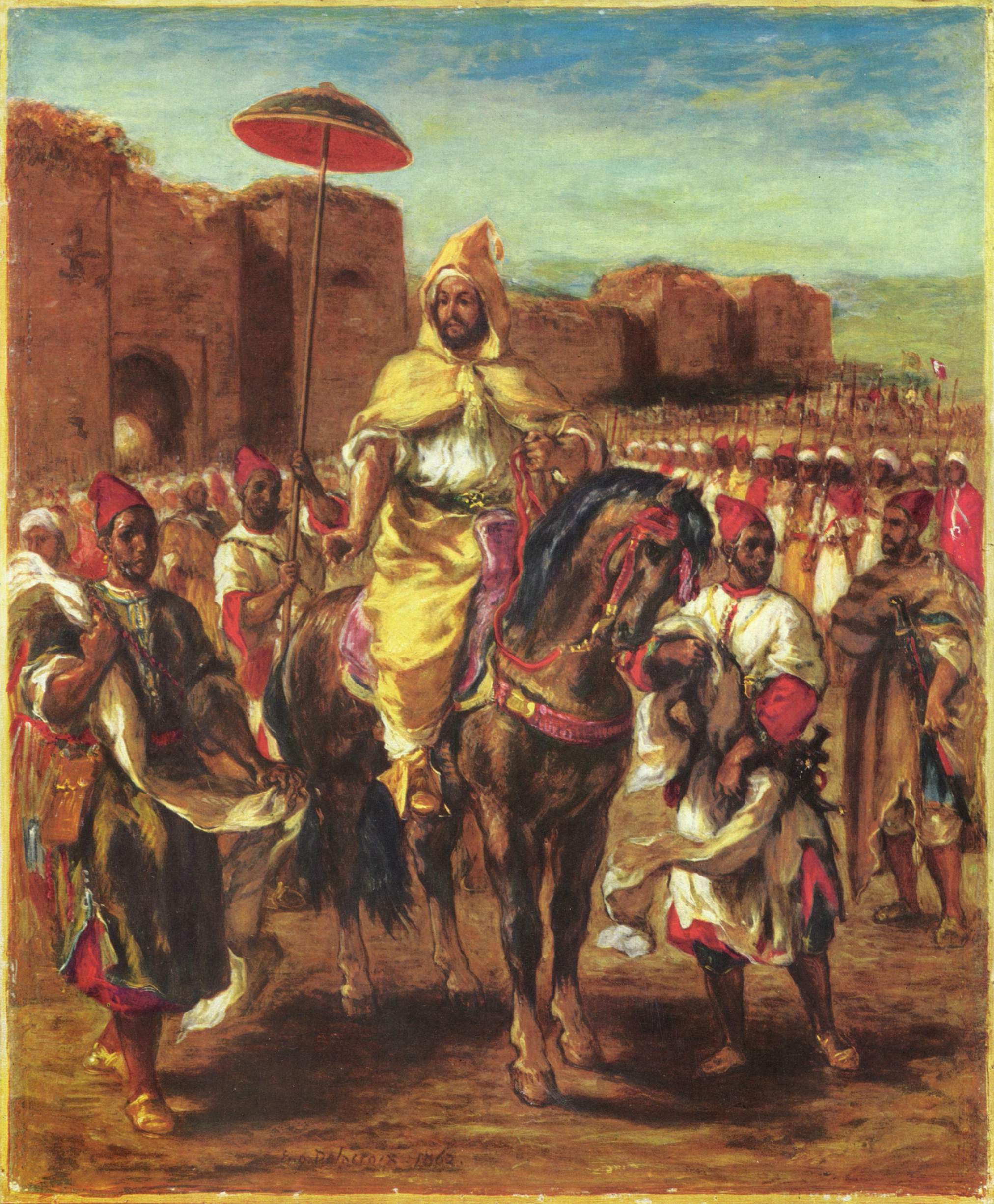
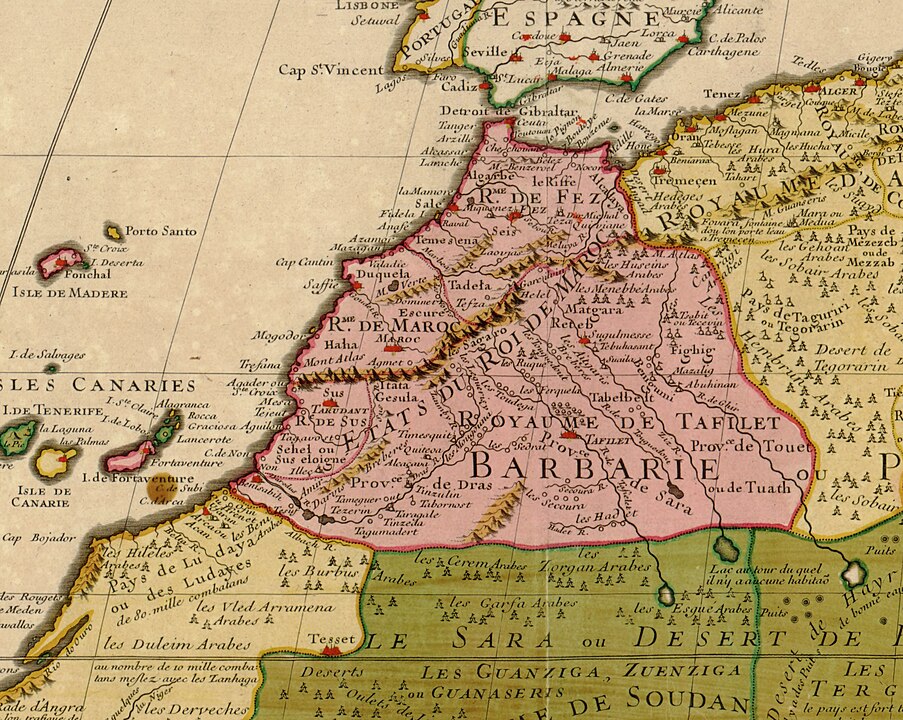
From the very beginning of his reign, the Moroccan sultan Moulay Ismaïl Ibn Sharif judged his country to be under threat from European Christian powers and rebellious Berber tribes. To consolidate his authority, he created a professional army by recruiting Black African slaves. At that time, in the Muslim world, slaves had to be non-Muslims, often coming from animist regions of Africa. Thus, the term “Abid”, meaning “slave,” became synonymous with “Black” in Arabic by the 9th century.
Moulay Ismaïl gathered all the Black slaves in the country, going so far as to violate Islamic law by forcibly enlisting free or freed Blacks, including women and children. At the same time, he disarmed and deprived other populations of horses to prevent looting.
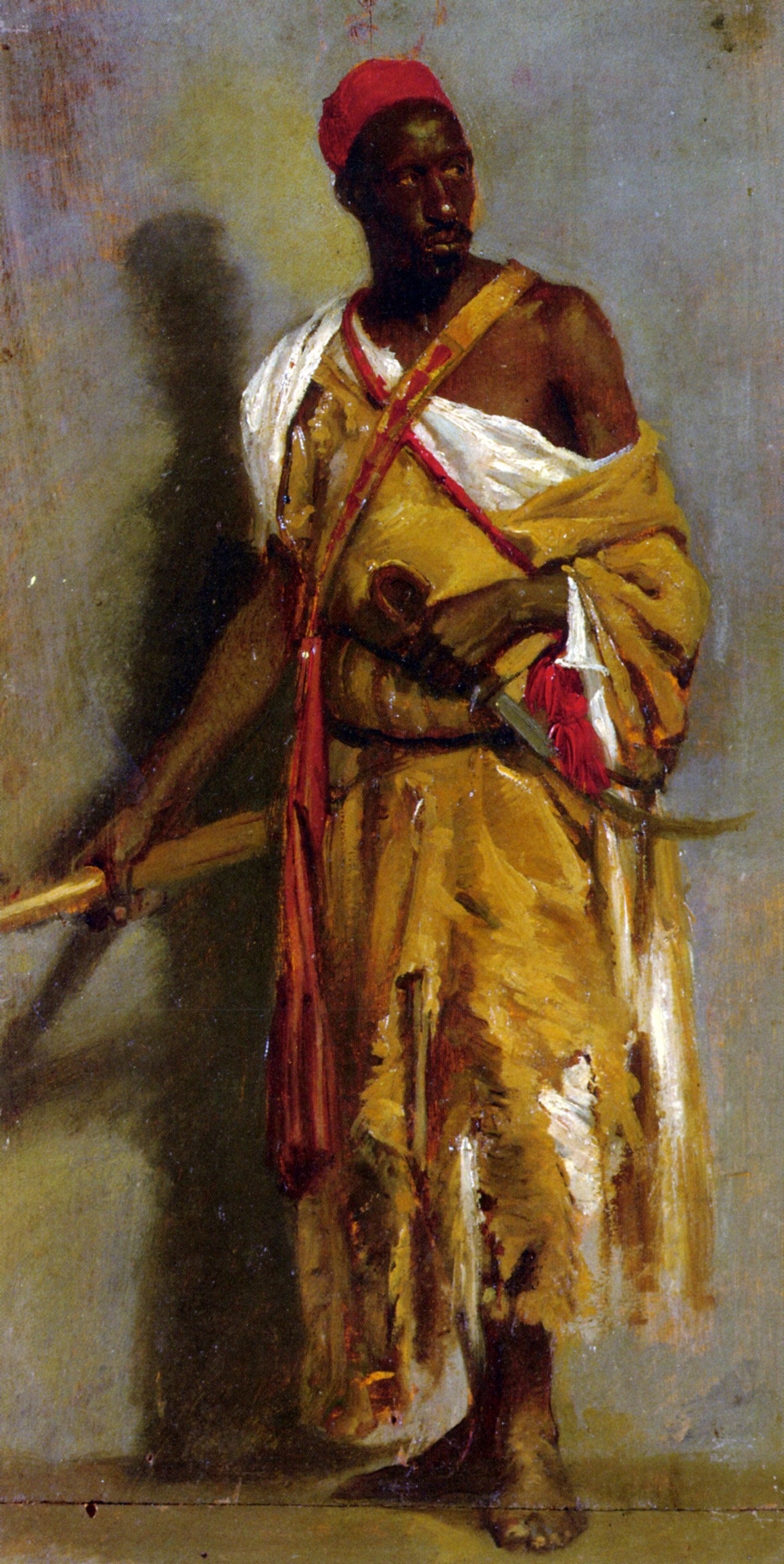
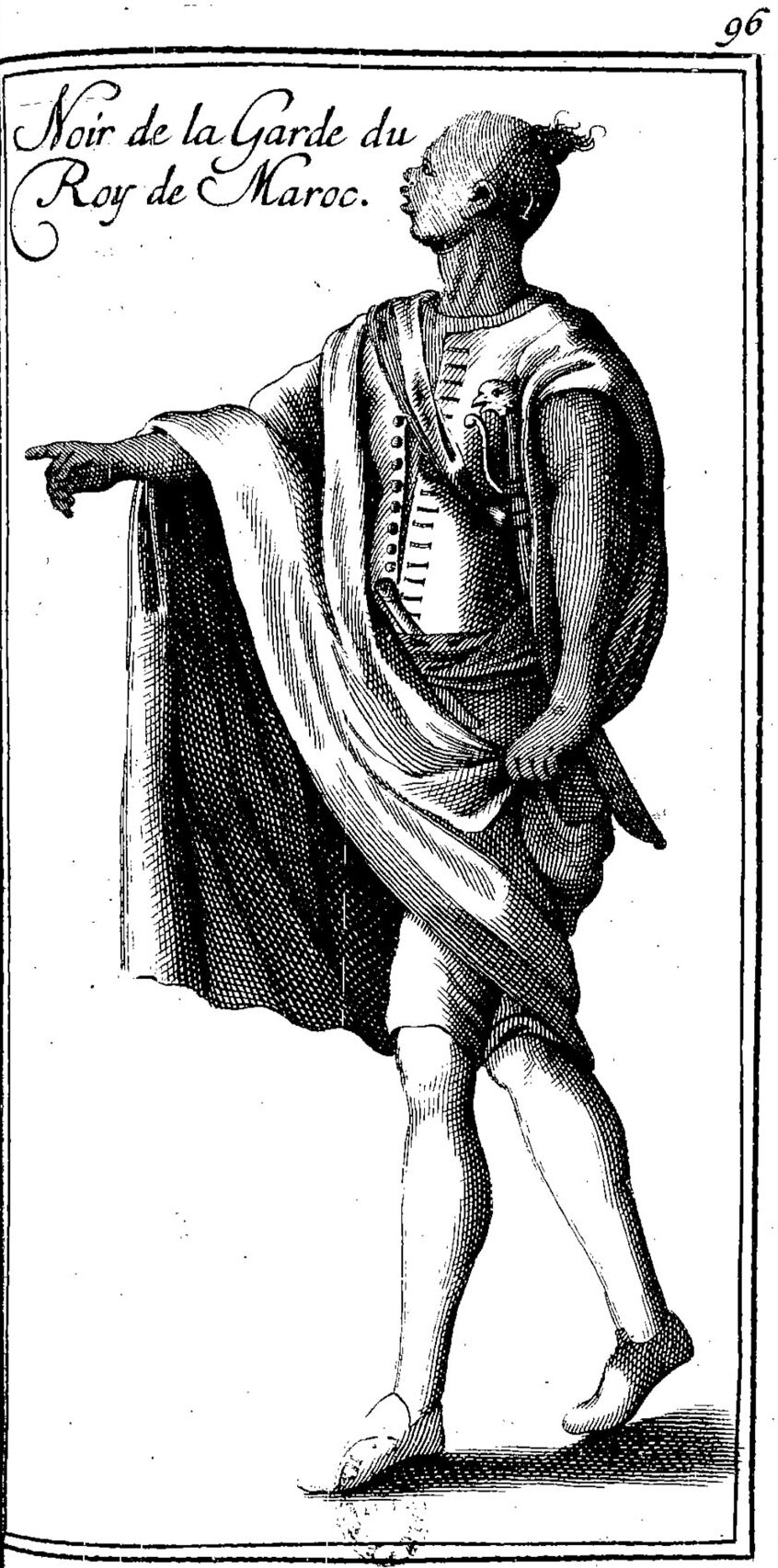
These slave-soldiers were called “Abid al-Bukhari” (عبيد البخاري, “The Slaves of al-Bukhari”) in honor of the 9th-century jurist Muhammad al-Bukhari, to whom they swore devotion. At its peak, this guard numbered between 50,000 and 100,000 men, forming a formidable military force loyal to the sultan.
Training and devotion of the Abid al-Bukhari under Moulay Ismaïl
Under Moulay Ismaïl’s rule, Black men and women in Morocco were gathered into military camps where they were conditioned to serve in the army. Women were trained in domestic tasks before serving in the palace and marrying men who had also been trained in weaponry and craftsmanship. Some even married converted Europeans, whose children joined the Abid al-Bukhari. Once married, they were sent to protect the kingdom’s borders from Berber and Turco-Algerian threats.
Despite resistance, Moulay Ismaïl’s project succeeded. Although recruited as the king’s slaves, the Abid al-Bukhari became the most powerful class in the country, serving their master with devotion comparable to that of Japanese samurai. The term “wisfan” referred to those with the traditional status of slaves, but the Abid al-Bukhari were a class apart.
They were raised to obey the sultan with fanatical devotion, as described by the European traveler John Windus:
“They are taught to worship and obey the successor of their prophet […] they execute the King’s orders with zeal and fury.”
It has been suggested that Moulay Ismaïl, influenced by his mother and wife, both Black, granted so much power to Blacks out of racial solidarity. They often surpassed Arab dignitaries, holding positions as prime ministers or governors.dignitaires arabes, occupant des postes de premiers ministres ou gouverneurs.
The historian Ahmad ibn Khalid al-Nasiri described their high social rank:
“Their power and wealth, the grandeur of their houses and palaces […] had reached a level that no one had attained before them.”
The writer Germain Moüette added:
“These Blacks are so magnificent […] that all Moors tremble before them and respect them as lords.”
The French consul in Morocco and Syria, Jean-Baptiste Estelle, confirmed the authority of Blacks under Moulay Ismaïl:
“This prince made his authority and that of his Blacks so great that the Whites […] became their slaves.”
However, he warned that upon the king’s death, Moroccan Whites would seek to revolt against the Blacks.
The Abid al-Bukhari and the Kingdom’s instability after Moulay Ismaïl

After Moulay Ismaïl’s death, the Abid al-Bukhari became kingmakers, installing and deposing sultans at will, causing great instability. They placed Moulay Abou al-Abbas Ahmed ben Ismaïl, nicknamed Moulay Ahmed al-Dahabi, on the throne before deposing him for arrears and replacing him with his brother Moulay Abdelmalek ben Ismaïl. Discovering that the latter planned to eliminate them, they reinstated al-Dahabi, creating an almost racial tension between the Black and White armies.
A contemporary wrote:
“The people are very irritated against Moulay Ahmad adh-Dhahabi for allying with the Negroes who ruled during Moulay Ismaïl’s reign. This raises fears of a harsh reign, while Abd al-Malik promises to punish the tyrannies of the Negroes and actually massacres as many as he finds. The troops of the mulatto Moulay Ahmad adh-Dhahabi rise to 25,000 Negroes, all Whites support his brother, and their number cannot be estimated.”
Ahmed al-Dahabi triumphed but died shortly after, leaving the Abid al-Bukhari to choose Moulay Abdallah ben Ismaïl as sultan. Abdallah turned against them, killing almost all their leaders and about 10,000 soldiers. The Abid retaliated, attempting to depose him for various claimants before rallying to him again after several defeats.
This instability persisted until the reign of Sidi Mohammed ben Abdallah, who weakened their influence. In the 19th century, their numbers declined, but they continued to hold important positions and remained part of the royal guard. The descendants of the Abid al-Bukhari, settling among various ethnic groups, left a legacy of biological and cultural mixing, marking a turbulent yet glorious period in Morocco’s history.
Bibliography:
- Roger Botte and Alessandro Stella (eds.), “Black Ram” against “White Ram”: The Army of the ‘Abîd al-Bukhârî of Sultan Mawlây Ismâ’îl (1672-1727), in Colors of Slavery on Both Shores of the Mediterranean (Middle Ages – 20th Century).
- Chouki El Hamel, Black Morocco.


