

On October 8, 1820, in a church in Milot, King Henri I of Haiti shot himself in the heart. Behind the myth of a fallen sovereign, a foundational chapter of global postcolonial history closes. Haiti, the first Black republic born from a slave revolution, had its king. And that king, Henri Christophe, attempted to uphold an impossible kingdom.
A date, a gesture, a legend (October 8, 1820)
There are moments when politics becomes drama, and when power, in order not to be overthrown, chooses to fall on its own. On October 8, 1820, in the morning coolness of a church built on his own orders, Henri Christophe, self-proclaimed king of northern Haiti, ended his life with a precise, silent, almost ceremonial gesture. A bullet, it is said, made of silver. A projectile that killed not only a man, but an idea.
For weeks already, his power had been sustained only by fear and the memory of a crumbling grandeur. Paralyzed by a stroke since August, the sovereign could no longer walk and barely spoke. His soldiers deserted, the countryside rose up, cities fell. In Cap-Haïtien, jewel of his kingdom, the crowd no longer cried “Long live the king” but “Down with Christophe.”
The Sans-Souci Palace in Milot, which he had envisioned as a tropical Versailles, had become an empty stage with tragic echoes. Henri was no longer the builder monarch or the absolute ruler; he had become a specter, an awkward silhouette carried by two servants. What remained of him was only the function of a king without a kingdom. Yet the legend did not leave him: it is said he loaded his pistol with a silver bullet, the ultimate ritual of a power that claimed to be thaumaturgic, sacred, invincible. By striking his own heart, he sealed a political vision of the world—that of a post-slavery order that, to exist, had to invent a Black king.
This gesture, on that October 8, was neither an escape nor a weakness. It was an act of sovereignty on the edge of the abyss. The choice of the church (his church) was no coincidence: where one prays for eternal life, he chose death as his final political word. Betrayed and weakened, the king made himself a martyr of his own utopia. History stops, not on a battlefield, but in the dimness of a sanctuary.
To begin here is to refuse narrative linearity. October 8, 1820 is not the end; it is the knot: all the contradictions of his reign (splendor and violence, Black nobility and agrarian militarism, institutional modernity and military despotism) converge in this moment. A Black king who kills himself in Haiti, less than twenty years after the abolition of slavery, is a world dying with him—the world he dreamed of building against the colonial order, against the white Republic, against History.
From slave to king: the meteoric rise of Henri Christophe
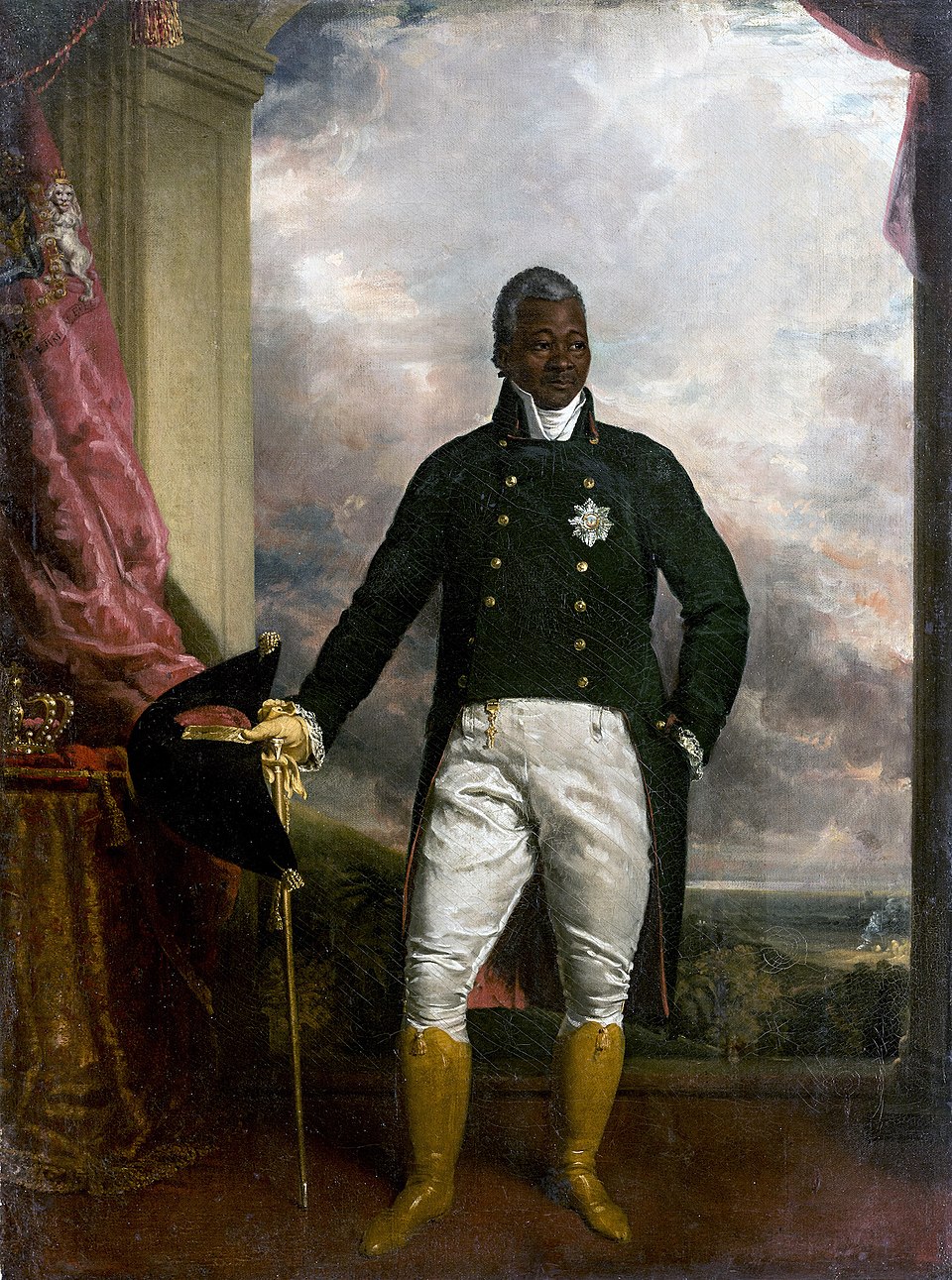
Richard Evans, Portrait of Henri Christophe, King of Haiti, collection of the Haitian National Pantheon Museum (1816).
Before becoming king, Henri Christophe was a drummer. This detail, long neglected by historians, is essential: he gave rhythm before giving orders. He was born (perhaps) in Grenada or on the island of Saint Christopher around 1767. Archives hesitate, biographers speculate, but all agree on one point: he was a slave, then freed. He worked as a mason, sailor, waiter, even ran a hotel in Cap-Français; he quickly understood that to impose himself, he had to make himself indispensable.
But Christophe’s story soon merged with the upheaval of revolution. In 1791, as the colonial order began to crumble, he entered the turmoil. He joined the troops of Toussaint Louverture, becoming his lieutenant, then those of Dessalines, alongside whom he fought with a rigor bordering at times on ferocity. He rose quickly through military talent, persistence—and ambition. In 1804, Haiti proclaimed its independence, and Christophe was already a commander-in-chief. When Dessalines crowned himself emperor as Jacques I, Christophe was sent to extend war to Saint-Domingue, tasked with executions and reprisals. Freedom was built in blood, and Christophe accepted the cost.
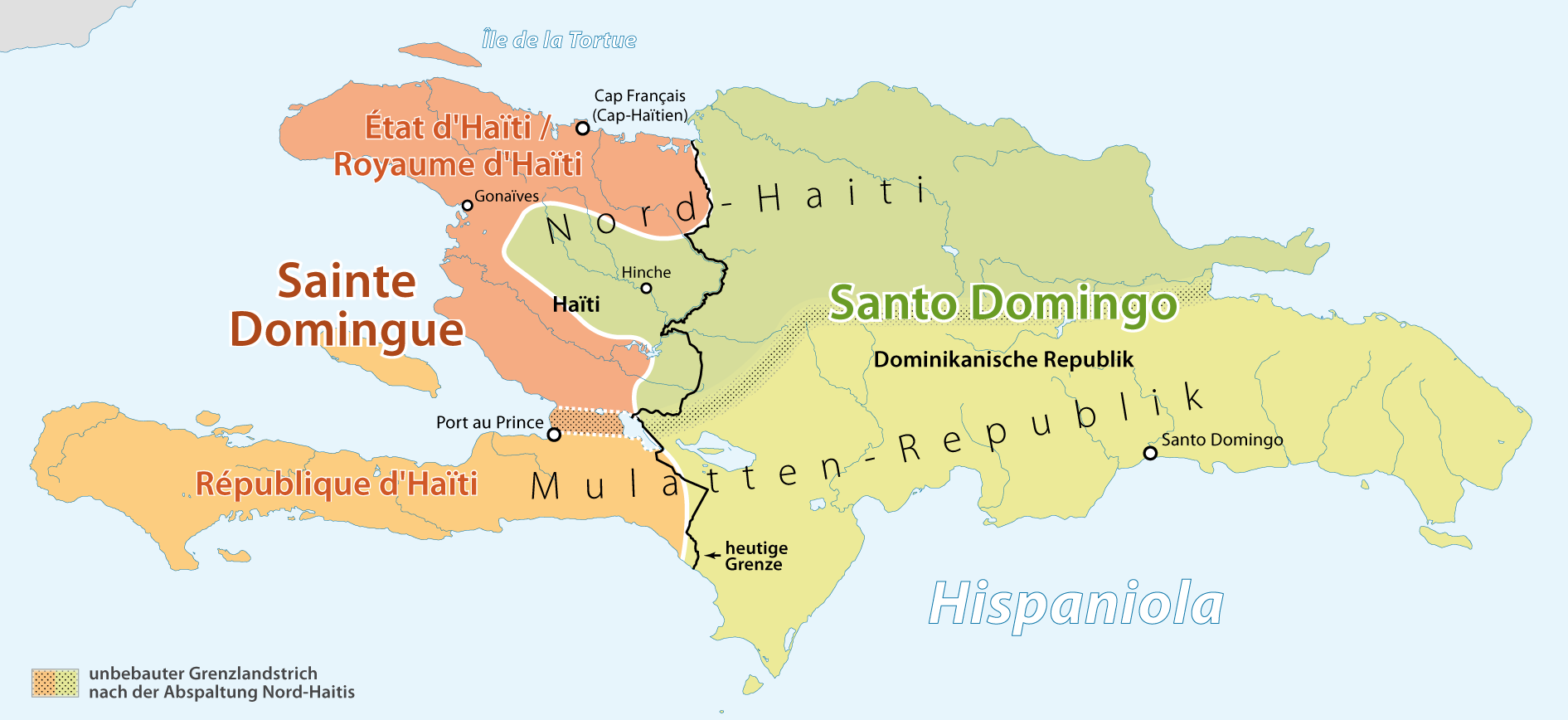
But the imperial dream collapsed in an ambush: Dessalines was assassinated in 1806 at Pont-Rouge. The power vacuum revealed the fractures of a free but divided people. Two figures emerged: Christophe in the North, an authoritarian military man defending order, and Pétion in the South, advocate of a more liberal republic, deeply suspicious of monarchical ambition. Two Haitis: one crowned, the other republican.
It was in this chaos that Christophe reinvented a monarchical legitimacy. Already president of the North, he took the decisive step on March 28, 1811: he proclaimed himself king of Haiti under the name Henri I, and was crowned in grand ceremony on June 2 in the cathedral of Cap-Haïtien, echoing Napoleonic splendor. He did not merely take the crown—he created it: coat of arms, orders of chivalry, nobility. Four princes, eight dukes, counts and Black barons. The Ancien Régime, reinvented in reverse.


And yet, this is not mere mimicry. Henri I believes in power as political performance. Splendor, titles, etiquette: all of this is a response to the humiliation of slavery. He wants former slaves to have castles, heraldic mottos, golden insignia; no longer chains.
This rise to the throne, from a drummer turned king, is therefore not merely an exceptional destiny. It calls into question an entire era: one in which the heirs of a brutal system seek to create a world where Black sovereignty would finally have the right to exist.
An unnatural kingdom? the monarchical experiment in a black republic

At first glance, it seems almost absurd. A Black monarchy, born from the ashes of a slave revolution, in a world shaped by abolition, the Enlightenment, the Republic. And yet, Henri Christophe did it. He did not settle for military power: he sought to make it monarchical, sacred, hereditary. He wanted to write History in stone.


Power, in his case, is erected—literally. The Sans-Souci Palace, built in Milot, stands like a tropical Versailles, surrounded by chapels, barracks, academies, and printing houses. Nearby, the Citadelle La Ferrière, perched atop a summit like a challenge to the world’s cannons, armed with 200 guns aimed toward the sea, facing the ghosts of colonial France. This is no architectural whim: it is a device of sovereignty. Space constructs power. The king rules from above, distant yet visible.


But for this monarchy to endure, it had to invent its own codes. In 1812, Henri promulgated the “Code Henry”; a body of laws both authoritarian and educational. Within it, he codified administration, imposed moral order, and above all agrarian obedience. Agricultural labor, organized along military lines, became the backbone of the kingdom. The system was called agrarian caporalism: a rigid supervision of cultivators, a resurgence of forced labor disguised as civic duty. To feed the state, plantations were needed. To make them produce, labor. To control that labor, sanctions.
Social order, meanwhile, was legitimized through the creation of a hereditary Black nobility. By decree of April 5, 1811, the king distributed titles and lands: dukes, barons, counts, knights… Entails were established, modeled on the British system, but the imagination remained Napoleonic. No marquises or viscounts here: this was a nobility without ancient lineage, fashioned for a new state, where one was noble by merit… or by loyalty. Power became spectacle, hierarchy, costume.
Yet while Henri I looked toward Napoleon, he also listened to London. In search of recognition, he sent Jean-Gabriel Peltier, a counter-revolutionary journalist, to negotiate with King George III. He would never obtain formal recognition, but the British, pragmatic, agreed to trade. That was enough to reinforce the myth of a Black monarchy aligned with Europe—even if it remained painfully alone in the Caribbean.

This kingdom, in reality, rests on a simple yet dizzying political idea: to restore order, ensure prosperity, and bring the Black people into dignity through education and grandeur. But the cost is high. Individual freedom (so dearly won by the rebels of 1791) is restrained, regulated, at times denied. Emancipation becomes discipline. Royal authority, armed with a Code, a nobility, and an architecture of stone, slowly crushes the revolutionary impulse.
Perhaps it was necessary, he believed, for History to take a Black king seriously.
The other Haiti: an internal cold war with the Republic of the South
Two Haitis, one island. And yet, between these two worlds, a wall higher than a border: an ideological war. On one side, Henri I, king of the North, builder of a vertical, disciplined state founded on order, hierarchy, and monarchical grandeur. On the other, Alexandre Pétion, president of the South, figure of a Creole republicanism, allied with urban elites, promoter of an elusive yet appealing democracy. Between them, no decisive battles, but a cold war before its time.
The divide is not merely a clash of individuals: it touches the very definition of the post-slavery order. For Pétion and his successor Jean-Pierre Boyer, the Republic offers the alibi of political participation, however limited. For Christophe, only monarchy can guarantee stability; for disorderly freedom, he knows, is merely another name for chaos.


The boycott is total. No official trade, no embassies. Each camp refuses to recognize the other. And yet, the guns almost never fire; and therein lies the subtlety of the conflict. Southern spies infiltrate northern cities, republican pamphlets circulate through the markets, southern orators deliver fiery sermons against monarchical tyranny. The border is not crossed with sabers, but with ideas.
Christophe, in return, denounces the “false democracy” of the South, where President Pétion has proclaimed himself president for life without consulting anyone. He accuses his enemies of disguising their despotism in republican attire, while he, from the heights of his palaces, presents himself as the guarantor of a sovereign and unapologetic order. But over the years, his stance hardens, his isolation deepens. The monarchy surrounds itself with walls; power becomes paranoid.
The Republic of the South, for its part, plays the long game with patience and cunning. Boyer, Pétion’s successor in 1818, sends his agents to stir unrest in the northern countryside, provoking mutinies, peasant strikes, and desertions. He infiltrates more than he fights. And little by little, the North begins to crack: republican propaganda, relayed through fields and barracks, erodes the loyalty of officers. The war is psychological—and the king is losing it.
For ideas travel faster than troops: the idea that another form of power is possible, that a Black king is not necessarily the only horizon of freedom. Christophe’s monarchical dream thus collides with the insidious reality of a population that has not forgotten what it fought for in 1791: not order, but freedom.
Autumn 1820: revolution and disintegration
By the end of the summer of 1820, the king’s body breaks as his kingdom does. In August, Henri I is struck by a stroke that leaves him half paralyzed. The man of iron, who once commanded his generals with a thundering voice, can no longer raise his hand or walk without assistance. In the courtyards of the Sans-Souci Palace, rumors spread faster than orders: the king is ill, the king is finished. The sovereign’s body becomes the symptom of a faltering power, as if the flesh itself now betrayed the exhaustion of a regime built on tension, fear, and devotion.
As the king declines, the country stirs. Harvests are poor, taxes increase, agrarian discipline oppresses those who believed themselves free. In the countryside, anger rises; in the garrisons, officers whisper. The nobles of the kingdom, once so eager to adorn themselves with titles, refuse to obey. Soldiers desert, administrators divert taxes, villages rally to the South. The king’s power, once centralized, unravels from below. This is no longer an insurrection: it is a disintegration.
In September, revolt erupts in Cap-Haïtien, the wealthiest city of the kingdom. It is no longer rumor—it is revolution. Troops refuse to attack, officials flee, bells ring for the insurgents. In Milot, the king remains confined in his palace, motionless, a powerless spectator of a world he had sought to order to excess. What he sees collapsing is not only his throne, but the very idea of a Black monarchical order; that mental architecture meant to prove to Europe that former slaves could be more disciplined than it.
On October 7, everything collapses. Abandoned by his inner circle, deprived of his guard, Henri I summons his priests. In the church he had built, he attends morning mass. It is said he still wears his uniform, that his hands barely tremble. Then, in silence, he takes a pistol and shoots himself in the heart with a silver bullet. A final act of sovereignty—or perhaps the tragic signature of a man who refused to be undone by others.
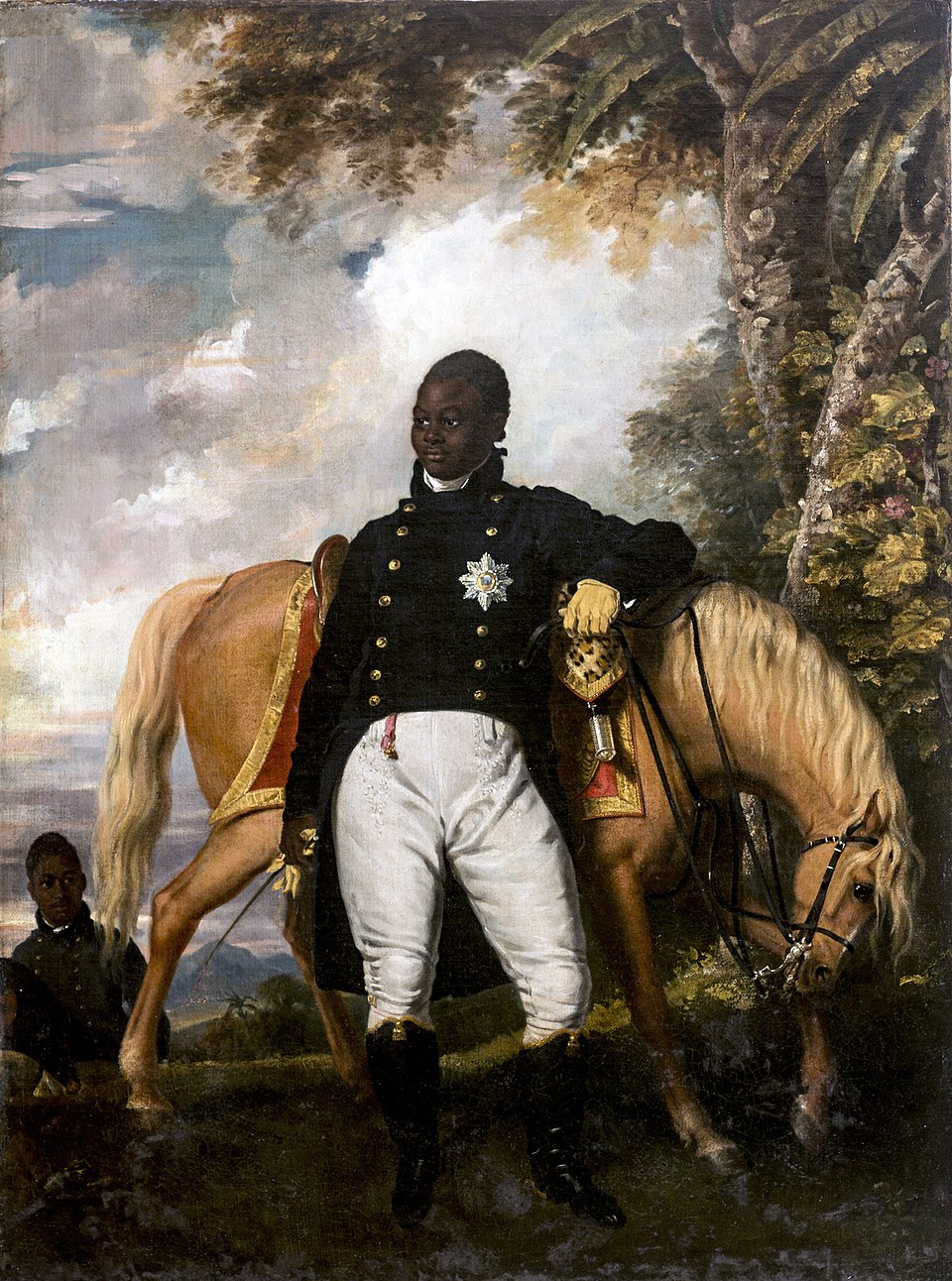
The following day, the insurgents seize the Sans-Souci Palace. Ten days later, the young Victor-Henry, proclaimed king under the name Henri II, is hanged. On October 20, Jean-Pierre Boyer marches on Milot: the monarchy fades, the Republic reunifies. But History preserves the trace of a suspended moment; that in which, in a Black kingdom born of a slave revolution, the king killed himself rather than become a subject again.
Was it a tragic capitulation or an ultimate act of sovereignty? The ambiguity remains. In taking his own life, Henri Christophe completes his work: he remains king to the very end, master of his own fate, refusing to be dethroned by anyone. Yet within this gesture lies the failure of a dream too lofty to stand: that of order without freedom, of grandeur without consent.
Dynastic and political epilogue
Ten days. That is all it takes for History to erase a dynasty. On October 18, 1820, the young Victor-Henry, son of Henri Christophe, is arrested and hanged by the insurgents. He is only sixteen. It is said he still wore the royal insignia, that he believed—naively—that he could restore his father’s glory. His death brings an end to the Haitian monarchy; a royalty born without lineage, and dead without an heir.
Queen Marie-Louise Coidavid, for her part, goes into exile with her daughters. She is seen discreetly leaving the port of Cap, under escort, bound for Italy. Far from Milot, far from the now-devastated Sans-Souci Palace, she spends her final years in dignified silence. With her vanishes the only attempt at a Black dynasty in the New World. The monarchical dream, fragile and flamboyant, dissolves into the dust of revolts and the bitterness of the defeated.
On October 20, the man from the South, Jean-Pierre Boyer, enters Milot. It is not a triumphant victory, but an administrative procession. He proclaims the reunification of Haiti, erasing the northern kingdom with a stroke of the pen. For the first time since 1806, the island regains political unity. Yet it is a surface unity, for beneath the republican veneer, power remains authoritarian. Boyer, heir to Pétion, president for life, rules by decree; he centralizes, controls, surveils. The Republic triumphs, certainly—but it is a republic without a people.
Thus closes the cycle that began with independence: a revolution born of slavery that, twenty years later, confronts its own paradox. In abolishing the master, Haiti did not abolish the figure of the master. Authority changed its face, not its nature. The idealism of the South met the rigidity of the North, and from both remains only a weary state, seeking in order the proof of its survival.
The kingdom of Henri I, in disappearing, nonetheless leaves a lasting imprint. In the stone of the Citadelle La Ferrière, in the ruins of the Sans-Souci Palace, in the memory of a people, one question endures: what does it mean to rule after having been enslaved? Christophe answered with splendor, Boyer with law. Neither found peace.
The final lesson of King Christophe
October 8, 1820 is not merely a date of death. It is a mirror held up to all revolutions that believed they could end in order. On that day, in Milot, not only a kingdom collapses, but an attempt to invent a new political form, torn from the old world yet still imprisoned by its shapes. Henri Christophe had made himself king to demonstrate that former slaves could govern themselves, build, legislate, educate—and stand up to Europe. But in erecting a throne, he rebuilt the very symbol he sought to destroy.
The tragedy of Haiti, at the beginning of the 19th century, is that of a free people still searching for the gestures of freedom. Christophe embodied this paradox with almost superhuman intensity: the desire to found a new world with the materials of the old. The Black king, crowned in Napoleonic fashion, dictating feudal laws over a land of freed people, remains the founding paradox of a country that sought to rule without submitting, to emancipate itself without descending into disorder.
Thus, October 8 does not merely mark an end: it leaves open a haunting question that runs through all postcolonial history. How does one govern after slavery, without falling back into violence or into imitation of former masters? How does one build authority that is neither a return of the whip nor an abdication of power? Christophe made himself king to resolve this impasse, to prove that a Black order could exist in the face of the white world. History, cruel and majestic, swallowed him. But in his downfall, it granted him an exceptional place: that of the man who sought to make sovereignty an act of memory.
Even today, his ruins still stand (the Citadelle La Ferrière, the Sans-Souci Palace) as monuments of stone and silence. Where the king took his life, Haiti continues to speak: it reminds us that freedom, without justice or equality, is nothing more than a word suspended in the warm winds of the tropics.
Notes and references
Kingdom of Haiti – Reference overview article, Wikipedia, based on primary Haitian sources of the 19th century, including the Armorials of the Kingdom of Haiti (1811–1820).
Henri Christophe – Detailed biography, Wikipedia, updated 2024, with references to works by contemporary Haitian historians and authors.
Baron de Vastey, Essay on the Causes of the Revolution and Civil Wars of Haiti, Royal Printing House, Sans-Souci, 1819
Gaspard Théodore de Mollien, Haiti or Saint-Domingue, Paris, L’Harmattan (reprint), 2006 [ed. 1818], European witness of the kingdom’s institutions.
Gauvin Alexander Bailey, The Palace of Sans-Souci in Milot, Haiti (ca. 1806–1813): The Untold Story of the Potsdam of the Rainforest, Munich/Berlin, Deutscher Kunstverlag, 2017.
Gaspar de Arredondo y Pichardo, Account of my departure from the island of Santo Domingo on April 28, 1805, Dominican manuscript, testimony on Christophe’s campaigns under Dessalines.
Jean Fouchard, The Marrons of Liberty, Port-au-Prince, State University of Haiti Press, 1972.
C.L.R. James, The Black Jacobins: Toussaint L’Ouverture and the San Domingo Revolution, Vintage, 1989.
Aimé Césaire, The Tragedy of King Christophe, Paris, Présence Africaine, 1963.
Alejo Carpentier, The Kingdom of This World, Gallimard, 1954.
Derek Walcott, Henri Christophe: A Chronicle in Seven Scenes, 1949.
Michel-Rolph Trouillot, Silencing the Past: Power and the Production of History, Beacon Press, 1995.
Table of contents
A date, a gesture, a legend (October 8, 1820)
From slave to king: the meteoric rise of Henri Christophe
An unnatural kingdom? The monarchical experiment in a Black republic
The other Haiti: an internal cold war with the Republic of the South
Autumn 1820: revolution and disintegration
Dynastic and political epilogue
The final lesson of King Christophe
Notes and references


