

This article explores the concept of African neo-imperiality, moving beyond micro-nationalism to envision a stronger African union. Dive into a profound analysis of Africa’s imperial history and its potential for revival, highlighting the importance of pan-Africanism and continental solidarity in building a prosperous future for Africa.
Micro-nationalism is a model incapable of definitively liberating Africa, which can only inevitably lead to imagining an Empire (Federation/Confederation/Bloc) that would therefore transcend the notion of Nation and nationalism in its Western vision, but also that of Franco-Atlantic imperialism.
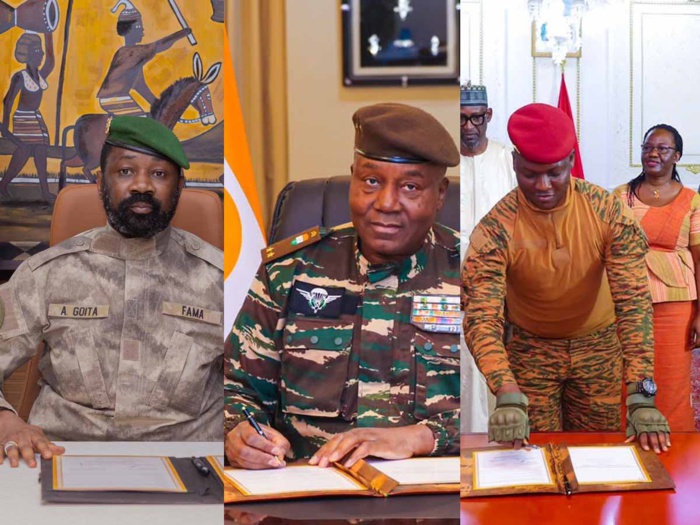
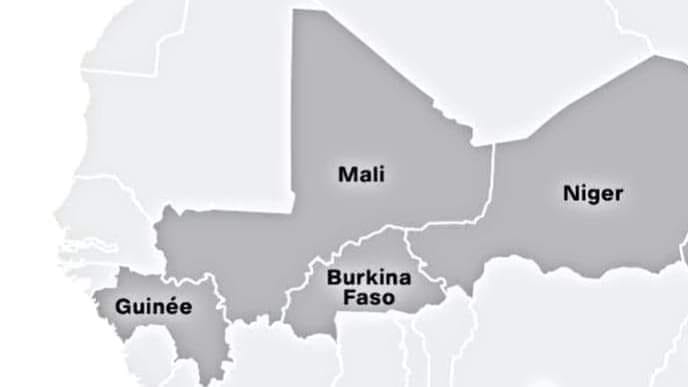
Recently, as we have seen in African geopolitical news, the Ministers of Foreign Affairs of Mali, Niger, and Burkina Faso recommended the creation of a confederation with the ambition of eventually achieving a federation. This is part of the scenario of the Alliance of Sahel States (AES), which has set itself the objective of combating terrorism, then achieving economic union, and ultimately reaching higher goals. All of this is part of the concept of Empire that I have had the opportunity to present in various articles such as “Afropolarism” (written with Amadu Kunta Akil Bumbesia), “New Eschatological Imperial Manden,” “Africa-nation: a great homeland from Cape Verde to Cairo, from Antananarivo to Algiers,” among many others.
Vetero-african imperiality
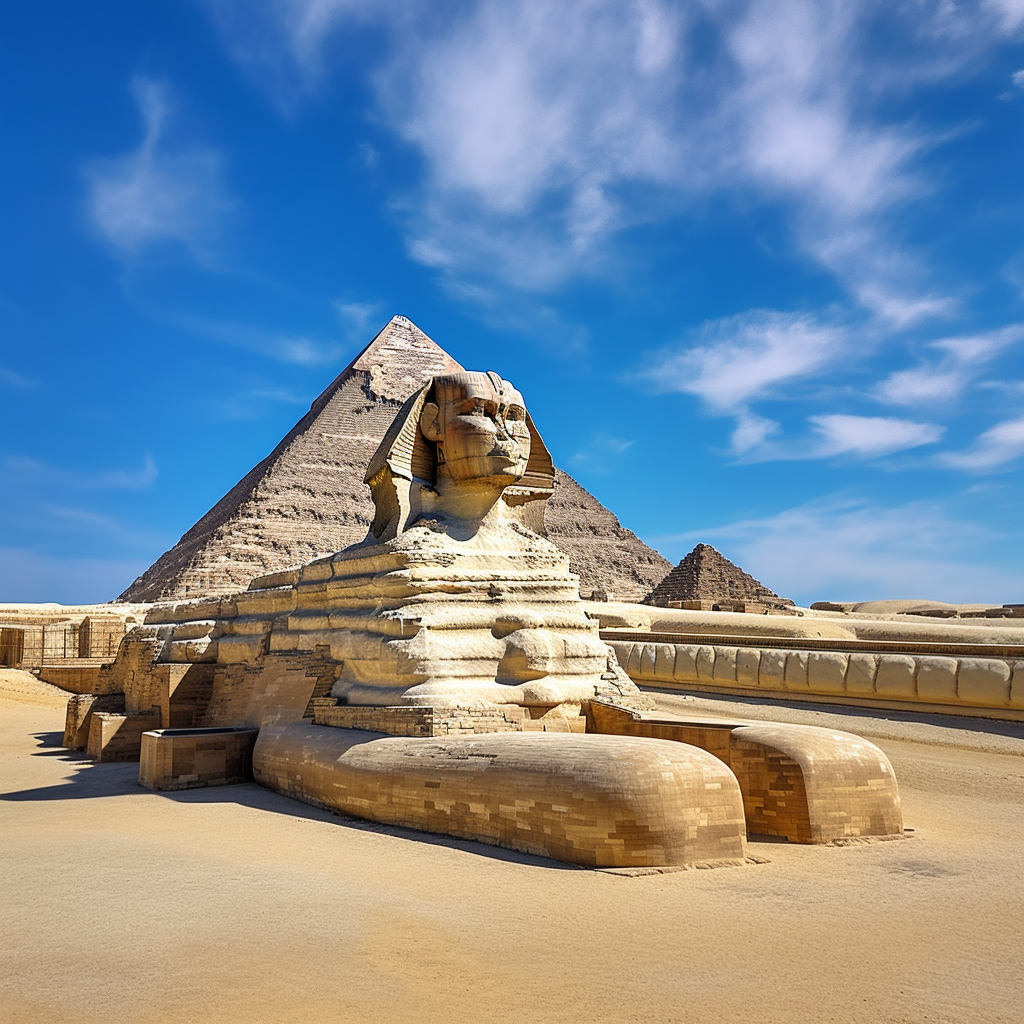
Africa, before the advent of vetero-colonialism (the old colonialism of the 20th century) and neo-colonialism (the colonial phase that began in the 1960s), was based on Imperiality. The Empire was the best governmental structure; it was both redemptive and unifying. In this sense, Empires such as:
Ethiopia – KMT: One of the oldest Empires in history, Ethiopia was originally an extension reaching present-day Egypt (called at the time KMT/Kemet, meaning the “Land of the Blacks” in mdw ntr/medou neter, the sacred language, the oldest language in Africa; pharaonic Black KMT is at the foundation of all knowledge praised today by the West, from philosophy to science, including mathematics, writing, astronomy, etc.). Ethiopia was much larger than it is today. It is known for the famous Battle of Adwa, which defeated the Italian vetero-colonizers and became for this reason a symbol of Pan-Africanism, highly praised by Marcus Garvey. This is why the tricolor of many African flags bears the pan-African colors of Greater Ethiopia.
Wagadu Empire: Wagadu is what is improperly called “Ghana” in Western and Arab historiography, in reference to the sovereign of the kingdom. It was located between Senegal and Niger.
Manden Empire: Born in 1235, following the Battle of Kirina, which saw the confrontation between Emperor Soundiata Keïta and the absolutist Solomana Kanté of the Sosso kingdom (present-day Guinea). Guinea, Mali, Senegal, The Gambia, Niger, Mauritania, Guinea-Bissau, and part of Côte d’Ivoire were part of Manden. This Empire was politically founded on the Kouroukan Fouga Charter, the oldest universal charter of human rights, drafted on Manden soil.
Kongo Dia Ntotila: Kongo Dia Ntotila (also called the Kongo Empire) was another major civilizational space that united the present-day Congos and Angola. It was a powerful Empire, deeply rooted in metaphysics and which gave importance to ancestral spirituality before the advent of Christianity, which disrupted local realities. Degenerating into chaos in the mid-1600s, a young woman named Kimpa Vita attempted to restore the Empire’s greatness by placing religious belief and Afrocentricity at its center. She had many followers, and precisely because she began to disrupt the advance of vetero-colonizers, she was burned alive at only 22 years old, becoming a martyr and prophetess. Her Spirit was reincarnated in Simon Kimbangu (according to local beliefs), prophet of the Black Race in 1900.
Zulu Empire: Southern Africa also experienced its imperial phase. The most significant was that of the era of the rise of the warrior Shaka, who set himself the objective of unifying the “people of the Sky” (Zulu), but also all of Southern Africa.
Wassoulou Empire: Born from the ashes of the Manden Empire under the leadership of the warrior-emperor Samory Touré (great-grandfather of the first president of Guinea, Ahmed Sékou Touré), this Empire united Guinea, Mali, Côte d’Ivoire, and Burkina Faso. The Fama (Emperor) Samory, known for the famous Battle of Woyowoyanko in which he defeated the French vetero-colonizers, was loved by the population, and the griots (singers and keepers of history and culture) of the time composed this hymn in his honor:
“If you cannot organize, lead, and defend the Land of your Fathers, call upon the bravest men; If you cannot speak the truth, everywhere and at all times, call upon the bravest men; If you cannot be impartial, give the throne to the just; If you fail to challenge the enemy, give your war saber to the women who will show you the path of honor; If you cannot courageously express your thoughts, leave the word to the griots. O Fama! The people trust you, they trust you because you embody their virtues.”
African neo-imperiality (federations/civilizational empires in a multipolar world)
If you know there is a hole in front of you, it is useless to run fast without the right protection to avoid falling. You must step back, seek the elements that will allow you to jump further across the hole. Africa must go back, look at precolonial organizational systems, move from vetero-imperiality (ancient empires) to neo-imperiality (confederations or federations of civilizations) in the face of micro-nationalism (nation-states built by the West) and Western imperialism (the supreme phase of capitalism and symbol of colonialism).
This neo-imperiality will therefore embrace the vision of continentalism in its various forms that characterize different continents:
Africa (Pan-Africanism: Marcus Garvey, Malcolm X, Kwame Nkrumah, Sékou Touré, Thomas Sankara, Khalid Muhammad, Winnie Mandela, Gaddafi, Assimi Goïta, Mamady Doumbouya, Ibrahim Traoré, Abdourahamane Tchiani);
Europe/Eurasia (Pan-Europeanism/Eurasianism: Carlo Terracciano, Alexander Dugin, Darya Dugina, Lorenzo Maria Pacini);
South America (Ibero-America: Raphael Machado / Crisolismo: Israel Lira);
North Korea (Juche);
China (on the path to multipolarity, but ideology to be defined);
Arab-Islamic world (possible multipolar pole);
India (on the path to multipolarity, but ideology to be defined).
“Black Heartland” against the neo-colonialist and globalist sea
Thus, when we speak of neo-imperiality and a continentalist African Empire, it is imperative to take into consideration the Heartland theory (the heart of the Earth), developed by various geopoliticians, notably Mackinder, who saw the comparison between a Eurasian Heartland and an Atlanticist sea (I discuss this in the article on our site Nofi Media titled “POLITICAL GEOGRAPHY: AFRICA IS THE HEART OF THE WORLD”). When speaking of geopolitics, this theory cannot be ignored. In our pan-African struggle to build a strong, autarkic, independent, and sovereign African Empire, we must consider ourselves as the heart of the world.
In this sense, everything that represents neocolonialism (Macron’s globalist France) or Atlanticism (the United States) represents the evil to be fought. Today as yesterday, we are in this dichotomy. We are the Black Heartland facing various powers (powers that say “He who controls Africa commands the world” to overturn Mackinder’s formula “He who controls Eurasia commands the world”), and the only way to emerge victorious is to follow the AES, a dynamic initiated by Ibrahim Traoré, Assimi Goïta, and Abdourahamane Tchiani, until it is extended on a continental scale. We are a powerful people (and history proves it). We will rise again!


