

Discover how March 19, 1946 marked a historic turning point for Martinique, Guadeloupe, French Guiana, and Réunion, transforming these ‘confetti of the empire’ into French overseas departments, thanks to the decisive action of Aimé Césaire and other key figures.
March 19, 1946 remains etched in history as the day when Martinique, Guadeloupe, French Guiana, and Réunion were officially recognized as overseas departments (DOM) of the French Republic. This transformation, unanimously voted by the National Assembly, not only redefined the status of these territories but also marked the beginning of a new era for their inhabitants. A look back at this historic moment and its implications.
Drafting of the law: a convergence of efforts
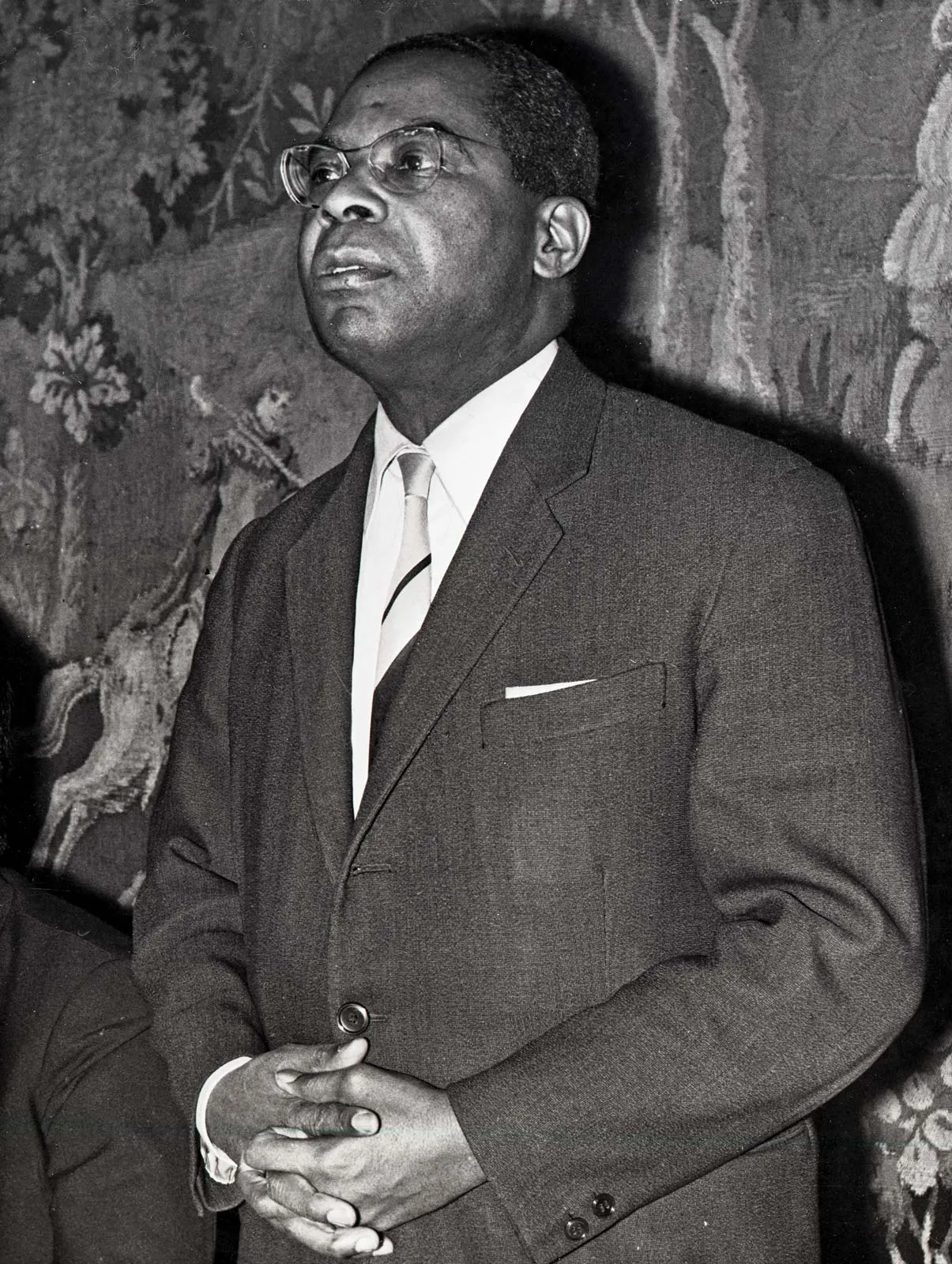
The initiative for departmentalization emerged from several proposed laws, each carried by emblematic figures from the territories concerned, foremost among them Aimé Césaire1. Léopold Bissol2 for Martinique, Gaston Monnerville3 for French Guiana, Raymond Vergès4 for Réunion, and Eugénie Éboué-Tell5 for Guadeloupe, all contributed to shaping the bill. Each of these personalities, in their own way, helped shape the political and social landscape of the French overseas departments, leaving their mark on the history of the French Republic in the 20th century.
The text of the law of March 19, 1946: foundations and applications
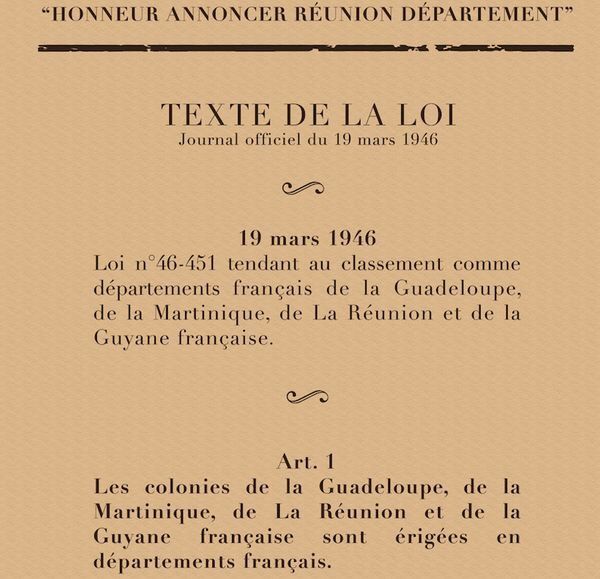
The “Law no. 46-451 of March 19, 1946 tending to classify Guadeloupe, Martinique, Réunion, and French Guiana as French departments” elevates the “four old colonies6” to French departments, promising the application of metropolitan laws and opening the way to full integration into the Republic. The implementing decrees, planned before January 1, 1947, were to ensure a smooth transition to the new status. This legislative development represents a decisive step toward the full recognition of the rights of overseas citizens.
OFFICIAL JOURNAL OF THE FRENCH REPUBLIC
LAW no. 46-451 of March 19, 1946 tending to classify Guadeloupe, Martinique, Réunion, and French Guiana as French departments.
The Constituent National Assembly adopted, the President of the Provisional Government of the Republic promulgates the law, the content of which follows:
Art. 1. – The colonies of Guadeloupe, Martinique, Réunion, and French Guiana are established as French departments.
Art. 2. – The laws and decrees currently in force in metropolitan France and which are not yet applied to these colonies will, before January 1, 1947, be the subject of implementing decrees in these new departments.
Art. 3. – From the promulgation of the present law, new laws applicable to the metropolis shall be applied in these departments, upon express mention inserted in the texts. The present law, deliberated and adopted by the Constituent National Assembly, shall be executed as law of the State.
Done in Paris, March 19, 1946
Felix Gouin.
By the President of the Provisional Government of the Republic: The Minister of Overseas France, Marius Moutet. The Minister of the Interior, André Le Troquer.
Towards a true emancipation
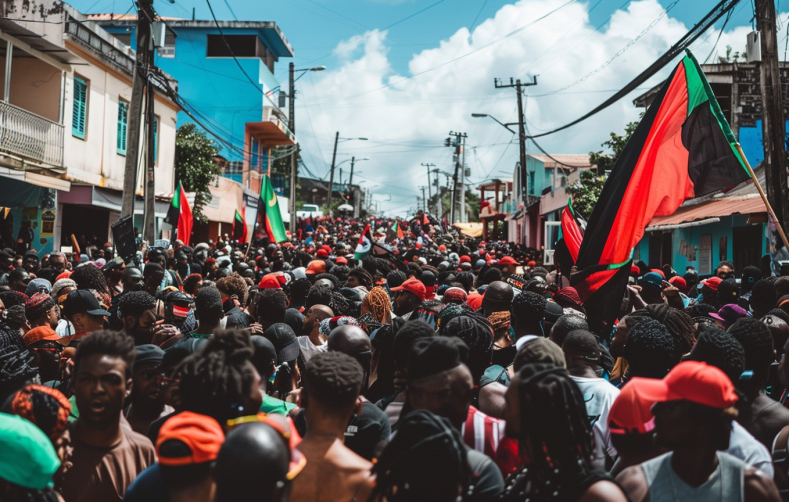
It is time to rethink the relationship between France and its overseas departments, by recognizing the failures of departmentalization and opening dialogue on alternatives that respect the right of peoples to self-determination. Independence, far from being a threat, could be considered an opportunity to build more just societies, where cultural identities are preserved and valued in a globalized world.
A call for reflection and action

The departmentalization of 1946, far from being a panacea, must be questioned and criticized for what it is: a stage in the long history of colonial domination. As descendants of colonized peoples, we have the responsibility to question this legacy and to fight for true emancipation, which involves the recognition of our rights, our history, and our ability to choose our own destiny.
To continue exploring the paths toward independence and to celebrate overseas cultures, join us on nofi.media, your platform for engagement and reflection on the contemporary issues of Black peoples and the diaspora.
Notes and references
Aimé Césaire (1913-2008), poet, playwright, and Martinican politician, is one of the emblematic figures of the Negritude movement. A deputy for Martinique, he played a decisive role in the adoption of the 1946 departmentalization law, aimed at fully integrating the “four old colonies” as French overseas departments. ↩︎
Léopold Bissol (1903-1998) was a Martinican trade unionist and politician. A founding member of the Martinican Communist Party, he was one of the first to propose the departmentalization of Martinique, emphasizing the need for deeper integration into the French Republic. ↩︎
Gaston Monnerville (1897-1991), a lawyer and French politician from French Guiana, served as President of the French Senate from 1958 to 1968. He also contributed to the drafting of the departmentalization law, particularly regarding French Guiana. ↩︎
Raymond Vergès (1882-1957) was a politician from Réunion and the father of Paul Vergès. He introduced the bill concerning the departmentalization of Réunion, advocating for better integration of the island within the French republican framework. ↩︎
Eugénie Éboué-Tell (1913-1972), a French politician and wife of Félix Éboué, Governor-General of French Equatorial Africa. She played an active role in the political life of Guadeloupe and contributed to promoting the island’s departmentalization. ↩︎
The “four old colonies” refer to Guadeloupe, Martinique, French Guiana, and Réunion. These territories are so named because they are remnants of the first French colonial empire established before the French Revolution. Historically, these colonies played a crucial role in the French colonial economy, particularly through the production of sugar and other plantation crops. ↩︎


