

A man between two worlds, two colors, two shattered dreams. Jean-Pierre Boyer, the mixed-race son of a French tailor and a formerly enslaved Congolese woman, embodies in himself the drama and aspirations of post-independence Haiti. His life is a fresco of betrayed revolutions, frustrated alliances, and struggles for a sovereignty so dearly won that it cost the nation its soul.
The Price of Black Independence
There are men History prefers to forget, not because they were insignificant, but because they were too complex for the comfort of simplified narratives. Jean-Pierre Boyer was one of them. Neither a flamboyant hero like Jean-Jacques Dessalines, nor the caricatured traitor some have claimed of others, Boyer was a fragile architect of a Black dream turned burden: that of a free nation, standing upright, yet strangled to its knees by debt and the contradictions of its own sovereignty.
In the streets of Port-au-Prince, his name awakens only vague memories: an avenue, a school, perhaps a history textbook. Yet without him, Haiti would not be the state it became: a unified country, freed from slavery across the entire island, but also prisoner to an authoritarian model, an abyssal debt, and an internal mistrust that never truly subsided.
Boyer was the mirage of stability in a postcolonial world without bearings. A man born between two worlds (the French blood of his father and the African heritage of his mother), projected to the summit of a Black state he tried to govern as a republic, but ultimately shaped like a bureaucratic empire. He believed he could purchase recognition of Haitian freedom. He believed laws would suffice to organize a wounded people. He was wrong. And in that error perhaps lies the most painful truth of the post-slavery Black world: freedom cannot be bought; it must be lived—or it is lost again.
This is not a simple biography. It is a return to one of the most fascinating (and most neglected) chapters in the history of Black people in the modern Atlantic world. A story of power, compromise, memory. It is also an invitation to think differently about the role of Black leaders before History: not as saviors or traitors, but as men caught in the cruel vise of the impossible.
Birth of a mulatto revolutionary
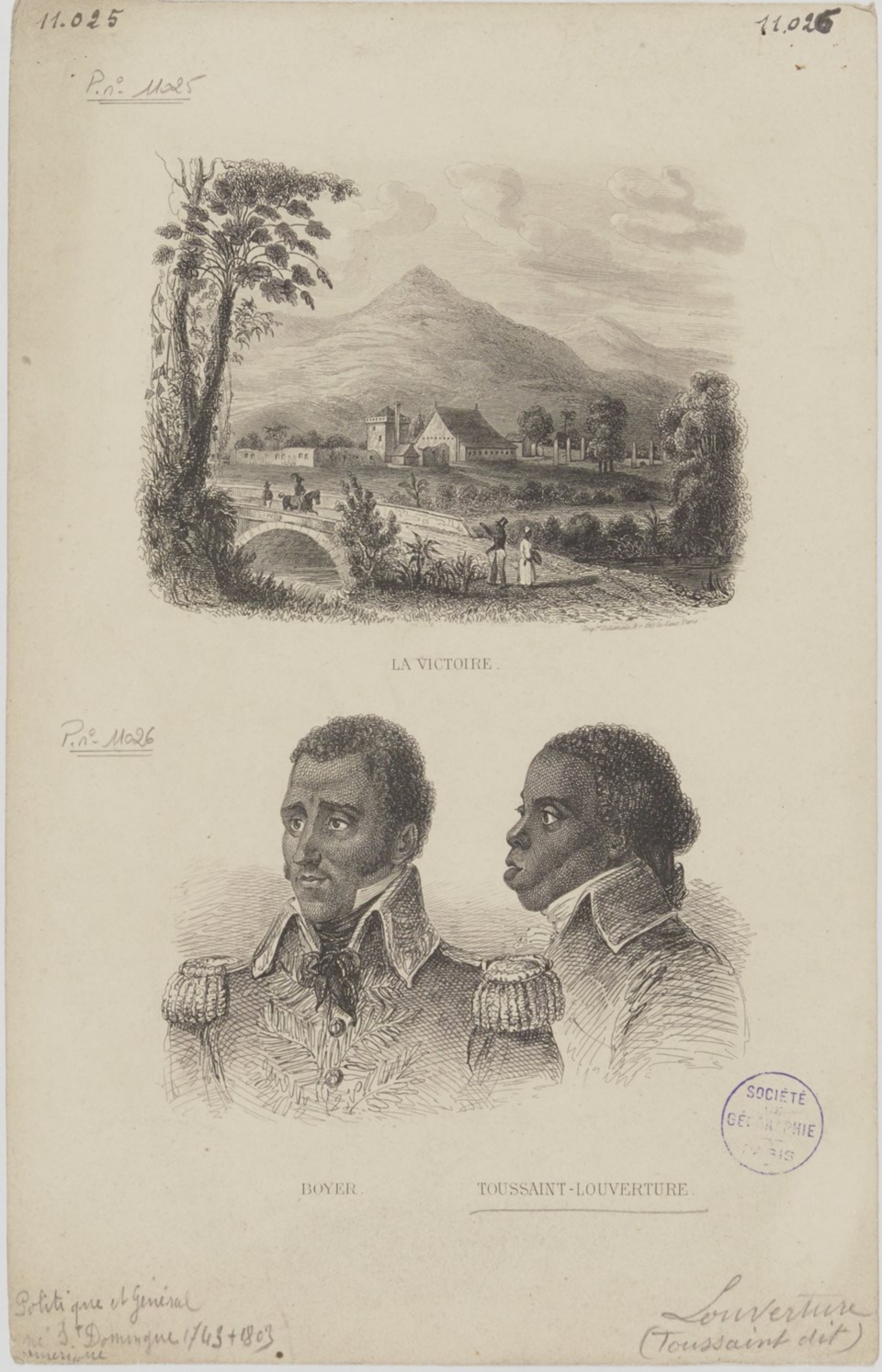
Port-au-Prince, 1776. While the British colonies of North America loudly dream of freedom, another silent rot ferments beneath the coconut trees of Saint-Domingue. In this most prosperous colony of the French empire, where indigo flows like wine and sugar is worth more than gold, freedom is a word extinguished in the throats of the enslaved. Chains ring louder than church bells, and the tides carry more blood than foam. In this sugared hell, a child is born: Jean-Pierre Boyer, son of a French tailor and a Black freedwoman, born somewhere along the banks of the Congo.
From the outset, his existence is a living contradiction: free, yet confined by his color; educated, yet within a system built for his erasure. He grows up in the shadow of a plantation, between two worlds that refuse to recognize one another. Then one day, the Republic calls him.
Sent to France, Boyer arrives in Paris amid revolutionary convulsion. The Bastille has fallen, heads are rolling, and the mad idea of equality (a near-heretical word for a colony like Saint-Domingue) slips into salons and barracks alike. There, in the metropole, he learns the Art of war and that of ideals: liberty, equality, fraternity. This triptych becomes his compass—even if he will later bend it, fold it, and sometimes ignore it entirely.
But upon returning to Saint-Domingue, reality strikes him full force. The Revolution has not yet crossed the Atlantic. Or rather, it has arrived disfigured. The enslaved demand their due, the colonists their empire, and men like Boyer—between shades of skin—are suspected by all. At his side stands another mulatto, André Rigaud, opposing Toussaint Louverture, the Black general who carved himself a kingdom from the ashes of the old world.
The War of the Knives erupts in 1799. It is not merely a struggle for power: it is an ideological duel, a settling of accounts between yesterday’s hells and tomorrow’s broken promises. Loyal to Rigaud, Boyer takes up arms against Louverture. He fights a man who paradoxically embodies what he always dreamed of being: a free Black man, powerful, master of his destiny.
Behind the front lines, another war unfolds: that of loyalty. Though a child of the Revolution, Boyer chooses France. Not metropolitan France, but the France of values he learned within damp military academies. Rightly or wrongly, he believes only republican order can save Saint-Domingue from its own chaos. This choice—fidelity to an empire that never fully recognized him—will haunt him until his last breath.
Thus is born the mulatto revolutionary: forged in the flames of European idealism, yet compelled to walk upon the hot ashes of an island that wanted no master, whether white, Black, or in between.
The War of the Knives (First Disillusion of a Black Republic)
In 1799, Haiti (still called Saint-Domingue) is a volcano. Colonists tremble, the formerly enslaved look toward the summit, free people of color clench their teeth. In the middle, Boyer chooses his camp: that of Rigaud, that of the mulattoes, that of a new order—but not too new; an order freed from white subjugation, yet not ready to embrace Black sovereignty in its entirety.
Two generals, two visions, two skins. Louverture wants a Black state, authoritarian perhaps, but solid. Rigaud, Alexandre Pétion, and Boyer dream of a liberal state, influenced by French ideals, where power remains in the hands of free, educated men of color, often French-speaking, often property owners.
When Jacmel falls to Louverture in March 1800, the war is lost. Rigaud sails for France. Pétion and Boyer have no choice but to follow. This first exile is more than a strategic retreat: it is the burial of illusions.
When Napoleon Bonaparte, now First Consul, decides to reconquer Saint-Domingue, Boyer returns in the wake of the Leclerc expedition. They still believe they can restore an order they never truly had time to establish.
It will be their second mistake.
The President despite himself (pétion’s legacy, the beginning of autocracy)
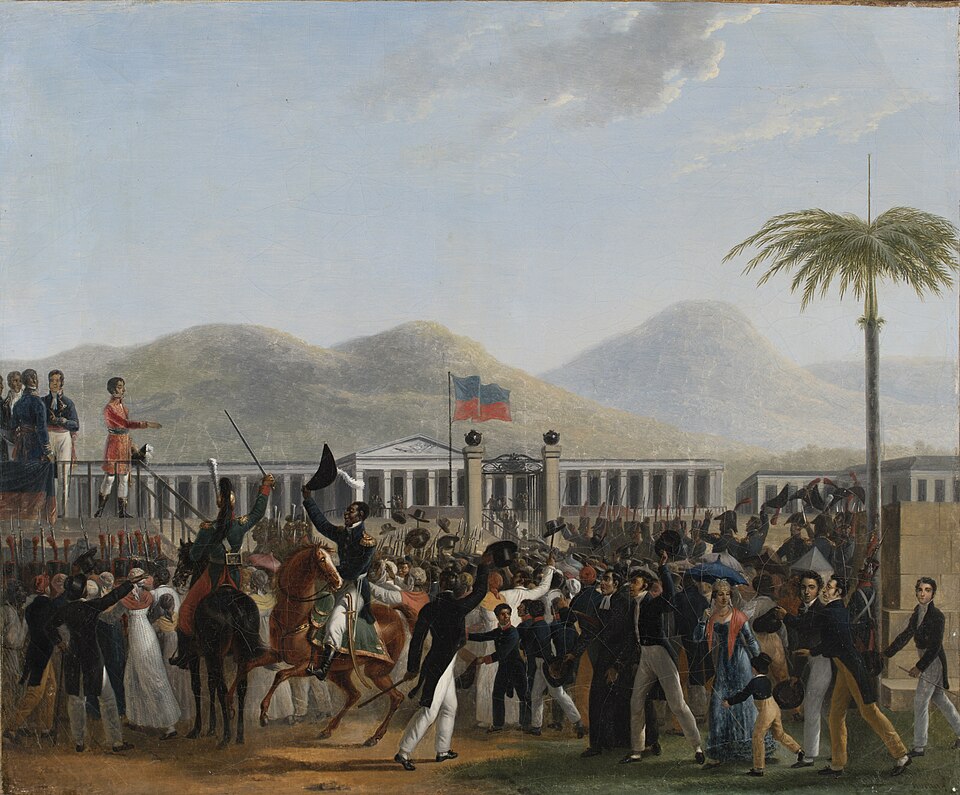
Jean-Pierre Boyer was never elected by the people. He was designated, shaped, almost inherited—like a political will delivered in the silence of a sickroom. In 1818, when Alexandre Pétion dies, eaten away by tuberculosis and by the fatigue of having believed too much in a republic without solid institutions, he entrusts his power to Boyer. Not to a party, not to a Senate; to a man. And this man was someone who had always known how to be useful yet discreet, loyal without zeal, a soldier of republican ideas, but capable of brutal pragmatism. In other words: the ideal successor for a republic that no longer wanted debates.
From the moment he seized power, Boyer did not hide his intentions. He did not seek to reform; he sought to endure. The Constitution of 1816, written under Pétion but perfected by him, named him president for life. He did not contest it. On the contrary, he wrapped himself in it like armor. Power was no longer a mandate: it was a priesthood; and he proclaimed himself its sole interpreter.
This turning point was that of a man who had seen the Republic fail too many times, be betrayed by its own children, and who believed he could prolong its spirit by suffocating its letter. Boyer was then convinced that disorder was Haiti’s main enemy, not injustice. So he centralized. He standardized. He spoke little, but legislated much. He kept the press under a stranglehold, controlled the army, and made the capital the single brain of an embryonic state.
And then there was Marie-Madeleine Lachenais.
Again, history does not quite know what to make of her. Widow of Pétion, unofficial adviser turned Boyer’s official companion, she was one of those women whom textbooks silence but whose influence whispers through the archives. Together, they embodied continuity. A power that did not change its face, only its voice.
But Boyer did not govern a stable country. He inherited a weakened South, a monarchist North led by Henri Christophe, and a population of farmers more attached to their land than to the state. His reign therefore began with one ambition: to reunify the island. This would be his first major power move—and his first great illusion.
For while he dreamed of uniting the Haitians, Boyer forgot that the Haitians themselves had never truly been a single people. Divisions were not only geographical. They were social, racial, historical. Yet he pressed forward, with that almost military faith in order through law, in unity through discipline. And for a time, he succeeded.
At this point in his reign, Boyer was a sphinx. Neither a brutal dictator nor a democratic president. A man of transition. A man who believed that, faced with the chaos of the past, a strong state was a virtue, even if it cost freedom.
But what Boyer had not yet understood was that a people who did not choose their leader, even if they tolerated him, always eventually grow weary. And that chains, even gilded, eventually weigh heavy.
The whole island or nothing (the expansionist utopia)
History is full of men who have sought to unify fragmented territories in the name of a higher ideal. What Rome called order, Napoleon called greatness, Boyer would call coherence. For him, Haiti could not survive divided in two: in the North, a fallen black monarchy; in the East, a Spanish colony nostalgic for a crumbling empire. If the revolution had any meaning, it had to embrace the entire island. Otherwise, it was a lie.
In 1820, Christophe died; his monarchy collapsed in the silence of suicide. Boyer, more strategist than conqueror, shed no blood to annex the North. He advanced slowly, like a shadow. He demanded promises of order, continuity, peace. And amidst the muted ruin of Christophe’s legacy, he established himself: president of a unified Haiti, from Cap to Cayes, from the Artibonite River to the abandoned plantations of Grand’Anse.
But Boyer did not stop there. In the East, the Spanish part of the island (today’s Dominican Republic) was searching for a path. In November 1821, it declared independence from Spain. But it was an orphaned independence—no army, no institutions, no clear vision. Some dreamed of joining Bolívar’s Gran Colombia; others advocated isolation; and a few (more than has long been admitted) saw in Haiti not an occupier, but a bulwark. A free, black, stable state, ready to guarantee the abolition of slavery and the end of imperial rule.
Boyer saw an opportunity: to consolidate the Revolution, sanctify abolition across the island, and keep European powers at bay. In February 1822, he entered Saint-Domingue with 10,000 men. Not as a conqueror; as a liberator. Or at least, that is how he told it. For very quickly, the language of the savior became the language of administration. Haitian laws applied. Land was redistributed. Church property was confiscated. Spanish gradually yielded to Creole. And the Haitian flag flew everywhere.
But this pan-island dream came at a cost. It rested on an illusion: that abolition alone could build allegiance. That shared freedom could erase divergent memories. That the scars of colonial history, by touching each other, could close.
Yet in the East, the Church still had power. White elites still had their lands. Resentment was latent. And what Boyer did not foresee was that in a post-slavery world, identity becomes as political a resource as land or coffee. Dominicans no longer wanted the Spanish crown. But that did not mean they wanted a black scepter.
For twenty-two years, Boyer would attempt to keep the island united. Twenty-two years of tension, quiet resistance, suppressed revolts, fragile alliances. But already, the utopia was cracking. For even in black empires, occupation is a heavy word. And Boyer, despite all his caution, became in turn what he had always sworn to fight: a distant, imposed power, perceived as foreign.
Debt or death (the price of black freedom)
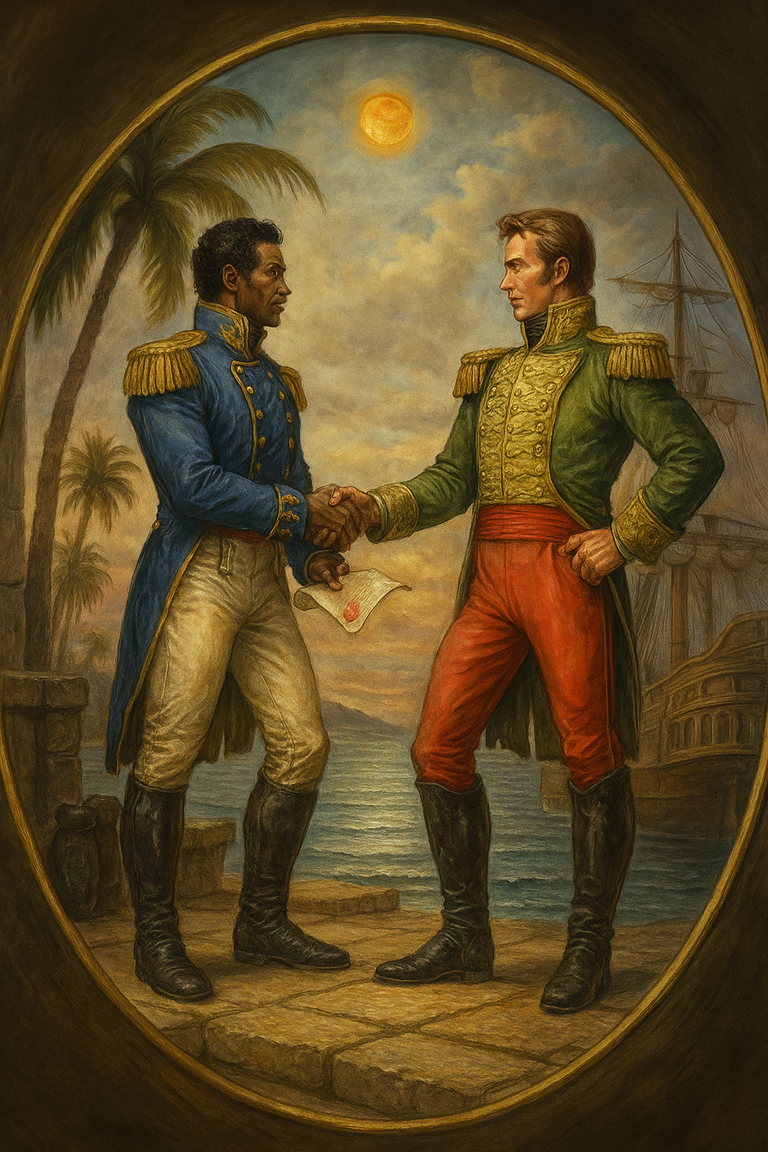
There are victories that feel like betrayals. On April 17, 1825, after twenty-one years of independence, Haiti finally receives what every free state desires: official recognition from a world power. But it is recognition extorted, delivered under the guns of fourteen French ships stationed in the harbor of Port-au-Prince.
King Charles X did not send a diplomatic delegation; he sent Baron de Mackau with a decree, a bill, and a threat: France would recognize Haiti as a sovereign nation on only one condition—the payment of an indemnity of 150 million gold francs, supposedly to “compensate” the former colonists for the loss of their plantations, their lands… and their slaves.
Boyer knew what that sum represented: a mortgage on the future of an entire people. But he also knew what refusal might mean: another war. The island was exhausted, the treasury empty, and Europe needed only a pretext to rewrite the colonial chapter. He accepted. He bent, but did not break. He negotiated, reducing the indemnity to 90 million. It was a statesman’s gesture—or a sacrifice for which he was never truly forgiven.
To pay this ransom for freedom, Boyer imposed unbearable taxes, revived forced labor, and tightened his grip on the farmers. The people, who had seen him as a silent liberator, began to see him as a merciless tax collector. For, at heart, that is what he had become: the cashier of colonial debt, the manager of suffering transformed into a financial obligation.
And this debt was not merely financial. It was moral, existential. It was the humiliation of having to pay for one’s own freedom. The absurdity of compensating those who had owned bodies, lives, centuries of trampled humanity. Haiti became the first black state to pay for having no more slaves. This is not a metaphor: it is a documented, quantified, brutal reality.
Boyer would never recover from it. He continued to govern, but something had broken. Popular trust. Moral legitimacy. His image in the diasporic black imagination. He wanted order, and he got resentment. He wanted recognition, and he got grievance.
Meanwhile, the debt accumulated, interest strangled exports, and the Haitian dream became a field of thorns for its children. It was not that Haiti had failed. It was that the world had never allowed it to succeed.
Coffee and chains (an agrarian reform in illusion)
When Boyer looked inland, he did not see a people of farmers, but an economy in suspension. Land—the symbol of hard-won freedom—was still not a source of prosperity. There was coffee, cocoa, fertile hectares; but too many idle hands, too much disorganization. Or at least, that is how he saw it.
So he decided to codify agriculture as one codifies a peace treaty. In 1826, he enacted a Rural Code, modeled on Napoleonic texts, aiming to force farmers to remain on their lands, to work the plantations, to maintain the roads. The state now dictated the rhythm of the seasons, the order of the harvests, the movement of men.
But the Haitian peasant had not forgotten. He remembered that chains were not always worn around the neck, but often around the wrists, the belly, the memory. He did not want a new slavery, even disguised in the garments of the Republic. What Boyer called “organization,” the masses experienced as betrayal.
And yet, the numbers spoke of growth. Haitian coffee flooded the ports of Liverpool, Marseille, Philadelphia. In 1824, nearly half of the coffee consumed in France came from Haiti. Agriculture boomed. But it did not enrich the people. Farmers remained trapped in a system of labor obligations and levies, without true property, without access to credit. Wealth was exported; suffering remained.
In this context, Boyer attempted another bold maneuver: he invited thousands of African Americans to settle in Haiti. The idea was noble—a return to the roots, a promised land for those whom the United States refused to integrate. In 1824, around 6,000 African Americans, mostly free, crossed the Atlantic to Haiti. Some came with hope, others with resignation.
But Haiti was not ready. Neither economically nor socially. Boyer had neither the means nor the infrastructure to receive them. Disillusion soon set in. Many returned home. The few who stayed adapted, built families, brought their language, culture, and farming methods—but never fully integrated.
Thus, coffee—the cultivated fruit of freedom—also became a fruit of tension. For behind the intoxicating scent of roasted beans lay the silence of peasant frustrations, rural conspiracies, simmering revolts. Boyer, who sought to give the country an economic backbone, had inadvertently created a system that constrained the peasantry rather than liberated it.
Once again, his power collided with a burning truth: freedom cannot be governed from a palace. It grows, sometimes in disorder, like weeds along the roads he wanted too straight.
A solitary man (twilight of an isolated sovereign)
Power, as a Haitian writer once said, is cruel in that it isolates even amid a crowd. As the years passed, Jean-Pierre Boyer no longer ruled—he clung. What had been authority became inertia; what had been stability became lockdown. The country stirred. It demanded, murmured, then shouted.
In 1842, an earthquake destroyed part of the Republic. But it was not only the walls that fell. It was the façade of a regime. Boyer saw enemies everywhere: in the countryside, in salons, sometimes even among his own ranks. He sent spies, multiplied prohibitions, closed the university. The Republic he had dreamed of folded in on itself, exhausted, suspicious, crusted in its own laws.
Meanwhile, in the east, Dominican resentment was organizing. The secret society La Trinitaria, founded by Juan Pablo Duarte and his companions, wove the first threads of a new nationalism, distinct, post-Haitian. There, they no longer spoke of unification, but of liberation. Boyer did not hear this rumble—or he underestimated it. He still believed the Dominicans were tired, divided, disorganized. He was wrong.
And within the very heart of the Haitian state, another revolution was brewing. In March 1843, an uprising from the south, led by General Charles Rivière Hérard, ended up surrounding Port-au-Prince. Boyer understood that this time there would be neither compromise nor second wind. Yesterday’s supporters had become tomorrow’s conspirators. Even his generals, once loyal, rallied behind the insurgents.
Then, in a final flash of lucidity, he abdicated. Not amid turmoil, but in a dry, almost dignified letter:
“By submitting to voluntary exile, I hope to remove all pretext for a civil war caused by my actions.”
No grand speeches, no theatrical exit. Just a departure. A farewell born of fatigue more than panic. Boyer left Port-au-Prince as he had governed: in silence, his gaze elsewhere.
He went to Jamaica, with his lifelong companion, Marie-Madeleine Lachenais. She died shortly after. And he, the president-for-life turned ghost, settled in Paris—the city of revolutions he had never managed to import without distorting them.
In the French capital, Boyer was an exile among others. He followed the Haitian newspapers, wrote to Faustin Soulouque, hoped for a return. Perhaps a title. A post. A rehabilitation. But there would be nothing. Only a discreet death, in 1850, at 11 rue de Castiglione. He was buried in Père-Lachaise, far from the plantations, far from the mountains, far from the island he had so wished to shape and which, in the end, never fully embraced him.
Boyer may have been the most Haitian of presidents, and yet he died a stranger.
Boyer in the postcolonial imagination
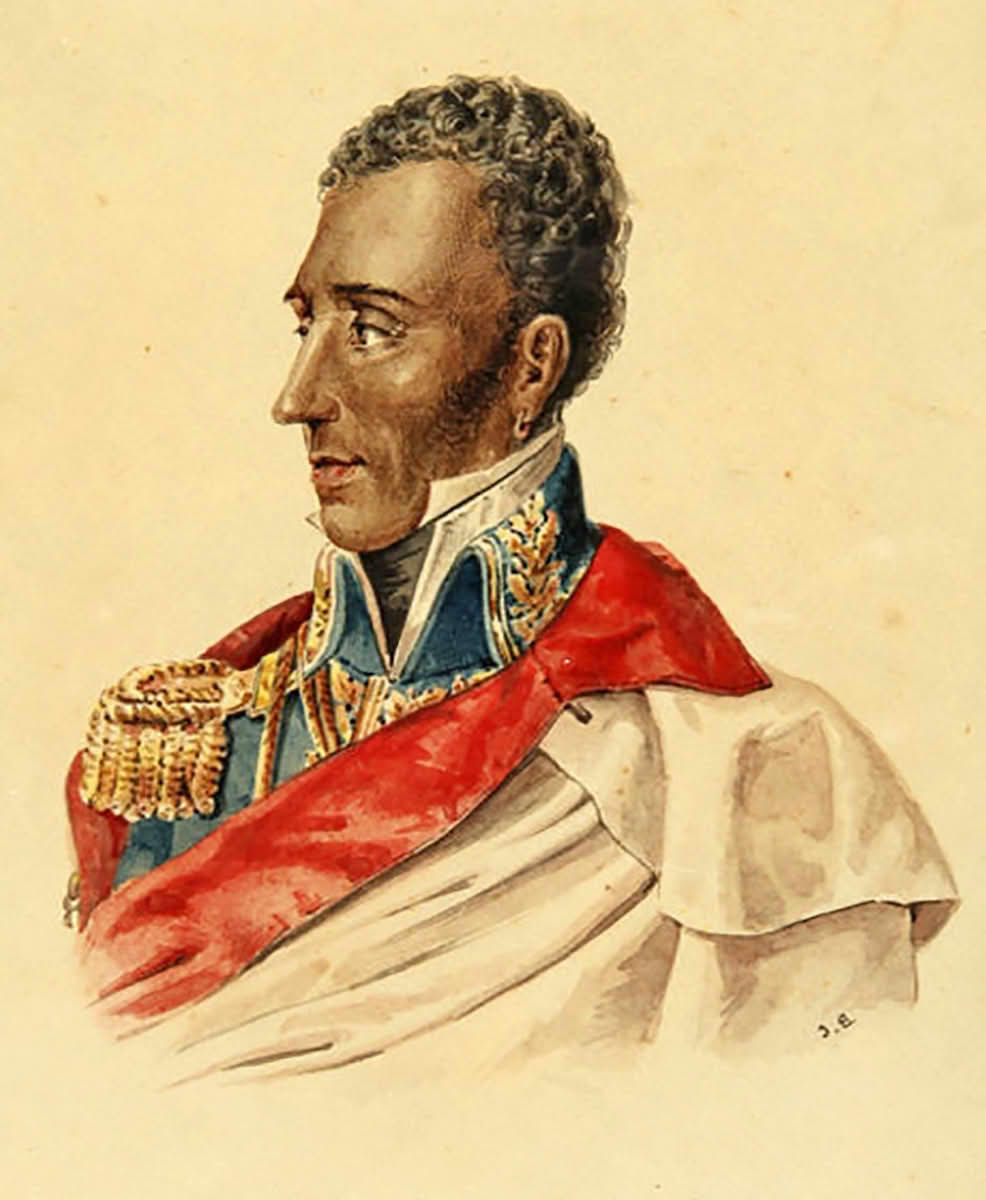
There is something unfair, almost cruel, in the way History has filed Jean-Pierre Boyer away in its back rooms. Neither a major statue, nor a popular myth, nor even a figure of total rejection. Simply forgotten. A twenty-five-year parenthesis (the longest reign in Haitian history) reduced to an administrative line in textbooks, a discreet embarrassment in official ceremonies.
And yet, he is everywhere.
In the Rural Code, still debated.
In Haiti’s borders, still contested.
In the debt the country ended up repaying well into the twentieth century; as a tribute to the world’s guilt.
In Dominican memory too, where his name more often rhymes with occupation than with liberation.
Jean-Pierre Boyer did not fail because he was weak. He failed because the task was impossible. He was asked to govern a country born from ashes, without allies, with a divided population, wary elites, a destroyed economy, and a threatening Europe at its doors. He tried to hold it together. He believed that codifying order would stabilize freedom. He believed that paying France would buy peace. He believed that imposing unity would cement history. But none of this truly held.
And perhaps that is where his tragedy lies: he was a man of compromise in an era that offered only extremes. He had neither the grandeur of Dessalines, nor the mystical charisma of Louverture, nor the tactical finesse of Simón Bolívar. But he had one obsession: to make the Republic endure. A narrow, authoritarian, but black Republic. And for that, he sacrificed everything—including the support of those he governed.
Today, as Haiti still struggles to escape its structural deadlocks, as the shadow of colonial debt continues to weigh like a curse, the silence around Boyer says something. Not that he contributed nothing; but that what he tried to build is too uncomfortable for national myths. Neither martyr nor savior. Just a man, a black president, confronted with a world that did not want to believe that a black state could be free without being punished.
Perhaps that, in the end, is Boyer’s legacy: a veiled warning, a complex chapter, a broken mirror in which one can still glimpse, between the shards, the faces of a future never fully realized.
Sources
“Jean‑Pierre Boyer,” Encyclopædia Britannica, consulted July 5, 2025.
Haiti: copy of the Code Rural of That Island, May 6, 1826
Rural Code (1826)
Samuel Hazard, Santo Domingo: Past and Present, with a Glance at Hayti, Harper & Brothers, 1873 — page 164, on the conflict of the mulattoes and the Leclerc expedition.
Table of contents
- The price of black independence
- Birth of a mulatto revolutionary
- The war of knives (first disillusionment of a black Republic)
- The president in spite of himself (Pétion’s legacy, beginning of autocracy)
- The whole island or nothing (the expansionist utopia)
- Debt or death (the cost of black freedom)
- Coffee and chains (an agrarian reform in illusion)
- A solitary man (twilight of an isolated sovereign)
- Boyer in the postcolonial imagination
- Sources


