

Known for its wealth, culture, and military innovations, this Yoruba civilization profoundly shaped West Africa.
When?
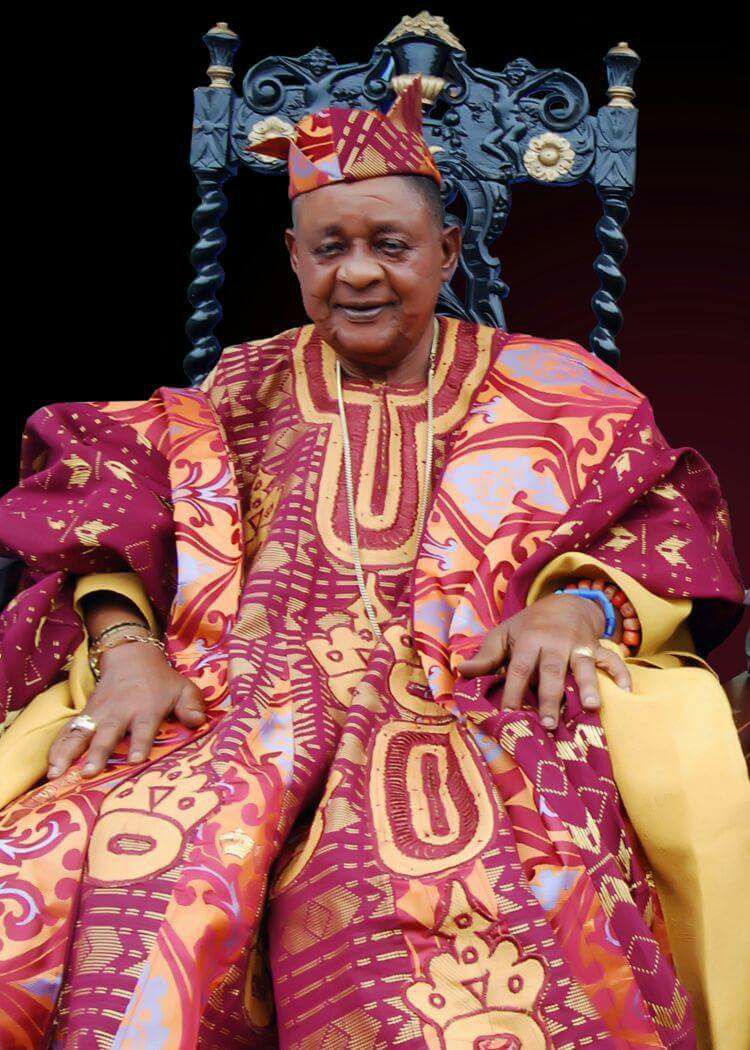
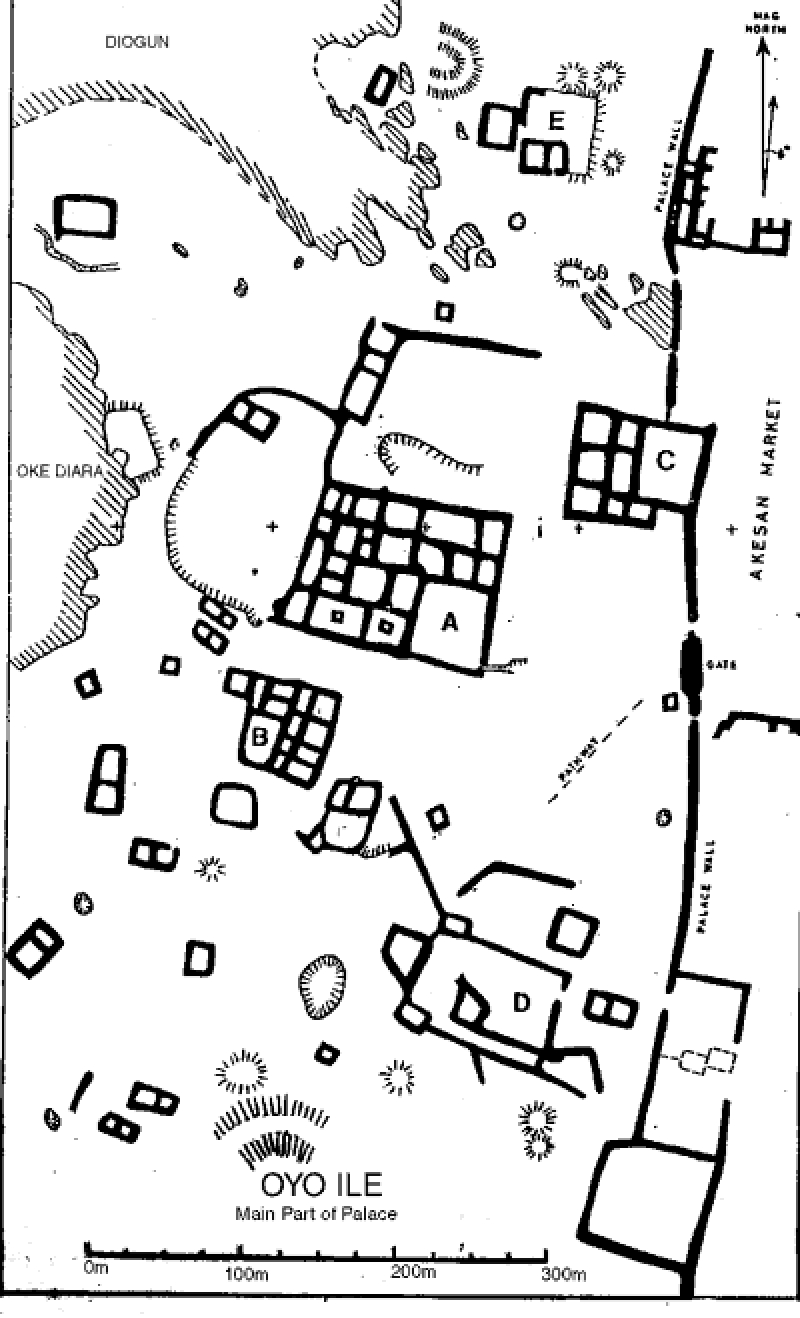
The city of Oyo-Ile, also known as Old Oyo or Katunga, was founded in the 10th century in the north-central region of present-day Nigeria. This historic city became the cradle of one of the most powerful and influential kingdoms in West Africa: the kingdom of Oyo.
The founding of Oyo-Ile by the Yorubas marked the beginning of an era of prosperity and power. Initially a small kingdom, Oyo-Ile rapidly expanded into an empire thanks to a combination of military strategy, diplomacy, and trade. This rapid growth was made possible by the city’s advantageous geographical position, located at the crossroads of major trade routes connecting various regions of West Africa.
At the height of its power, the Oyo Empire controlled a vast territory extending far beyond the borders of present-day Nigeria, encompassing parts of Benin, Togo, and Ghana. The empire was distinguished by a well-organized and hierarchical social structure. At the top stood the Alaafin, the king of Oyo, regarded as both a sacred and political figure of immense importance.
The Alaafin was assisted by the Oyomesi, a council of seven nobles who played a key role in governing the empire. This council also functioned as a counterbalance to royal authority, holding the power to depose the king if he violated traditions or laws. This political structure helped preserve stability and cohesion across the empire despite its vast size.
However, the decline of the Oyo Empire began in the early 19th century, fueled by internal conflicts, dynastic rivalries, and increasing pressure from external invasions, particularly those of the Fulani. In 1835, after a series of battles and pillaging, Oyo-Ile was destroyed and abandoned. The empire’s collapse led to the dispersal of its population and the loss of its regional dominance.
Who?
The population of the Oyo Empire was primarily Yoruba, one of the largest ethnic groups in West Africa. The Yoruba language belongs to the Niger-Congo language family. Yoruba culture is rich and complex, deeply rooted in art, religion, and governance.
One of the most fascinating aspects of Yoruba culture is its mythology, particularly the story of Oduduwa, the mythical founder of the Ife dynasty. According to legend, Oduduwa descended from the sky to create the earth, and his descendants went on to establish several Yoruba kingdoms, including Oyo. As a result, Yoruba kings—especially the Alaafins of Oyo—claimed direct descent from Oduduwa, giving their rule a divine dimension and reinforcing their legitimacy.
Yoruba society in the Oyo Empire was composed of various social classes, including farmers, artisans, traders, and warriors. Trade was especially prosperous, with Oyo acting as a central hub for the exchange of salt, textiles, and gold between the interior regions of West Africa and the Atlantic coast.
The Yorubas of Oyo practiced complex religious traditions centered on the veneration of Orishas—gods and spirits governing all aspects of nature and human life. Priests and priestesses held significant spiritual authority and were respected for their ability to communicate with the divine.
Oyo was located at the edge of the savanna, placing it in close contact with northern populations such as the Bariba, Nupe, and Hausa. Many of these groups were Muslim and exerted considerable influence on Oyo. It is known, for example, that some Oyo ambassadors spoke and wrote Arabic.
Legendary historical figures
The Oyo Empire, one of the most influential kingdoms in West Africa, was shaped by legendary and powerful historical figures who determined its destiny. Here are some emblematic figures of that era:
Ọ̀rànmíyàn of Ife
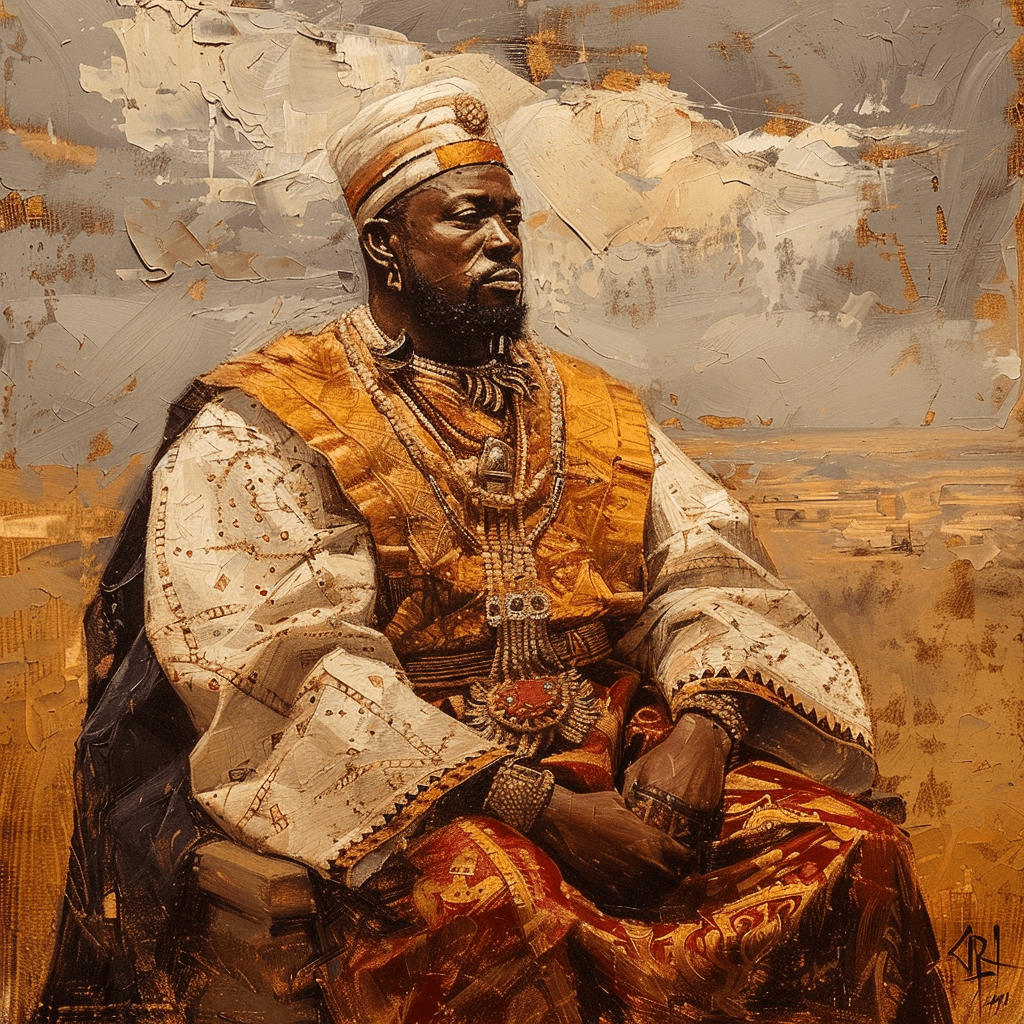
Ọ̀rànmíyàn is a legendary figure in Yoruba history. According to tradition, he was one of the sons of Oduduwa, the mythical founder of the Yorubas. Oranmiyan is said to have been sent to found the kingdom of Oyo and is often credited as the first Alaafin of Oyo, thus laying the foundations of the dynasty. Before founding Oyo, Ọ̀rànmíyàn is also believed to have been king of the ancient city of Ife and of another kingdom, Benin. His legend is surrounded by myths and heroic tales, and he is venerated as a cultural hero among the Yorubas.
Shango
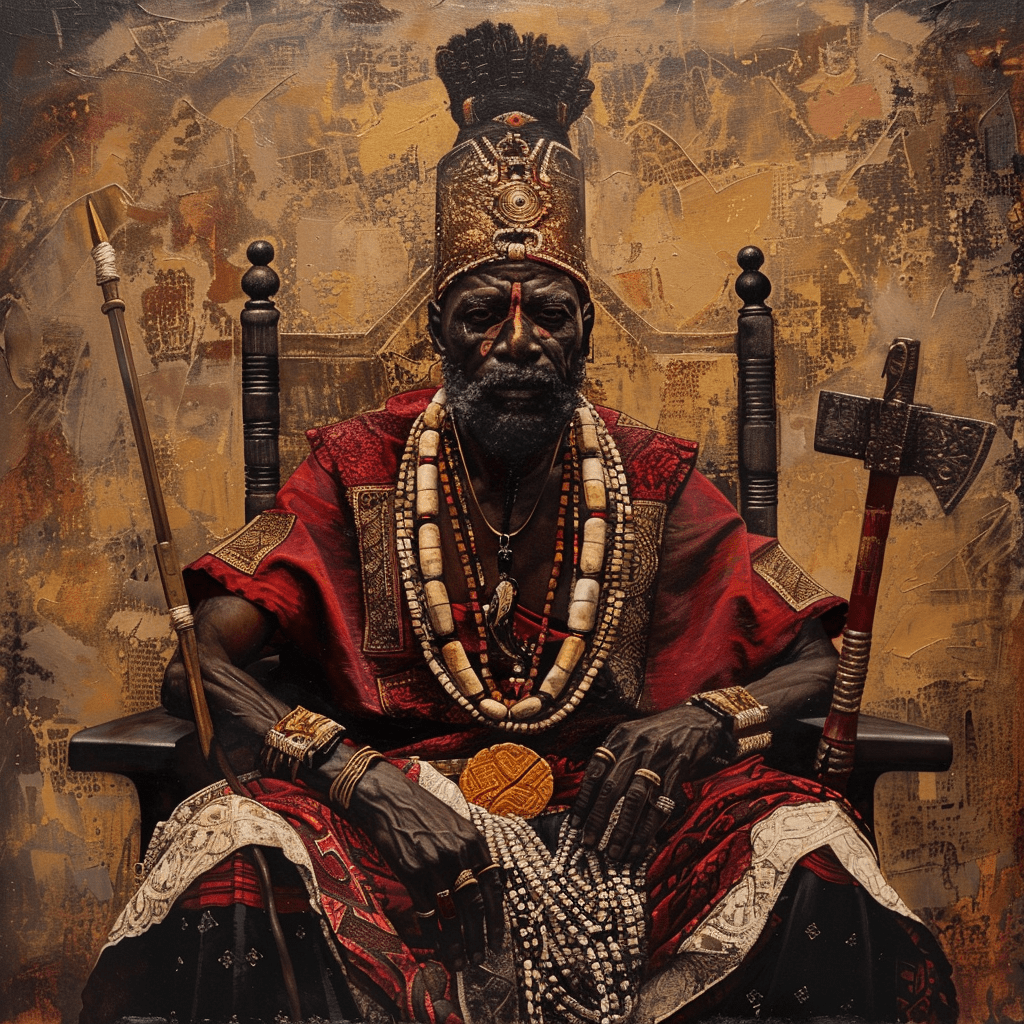
Shango, also known as Alaafin Shango, is another key figure of the Oyo Empire. He was the son of Oranmiyan and one of the most famous kings of the empire. After his death, Shango was deified and became one of the most important deities in the Yoruba pantheon, associated with thunder, lightning, and war. As the imperial deity of Oyo, Shango symbolizes power and justice, and his cult occupies a central place in Yoruba religion. His spiritual and cultural influence endures to this day, with rituals and festivals celebrated in his honor.
Bashorun Gaha
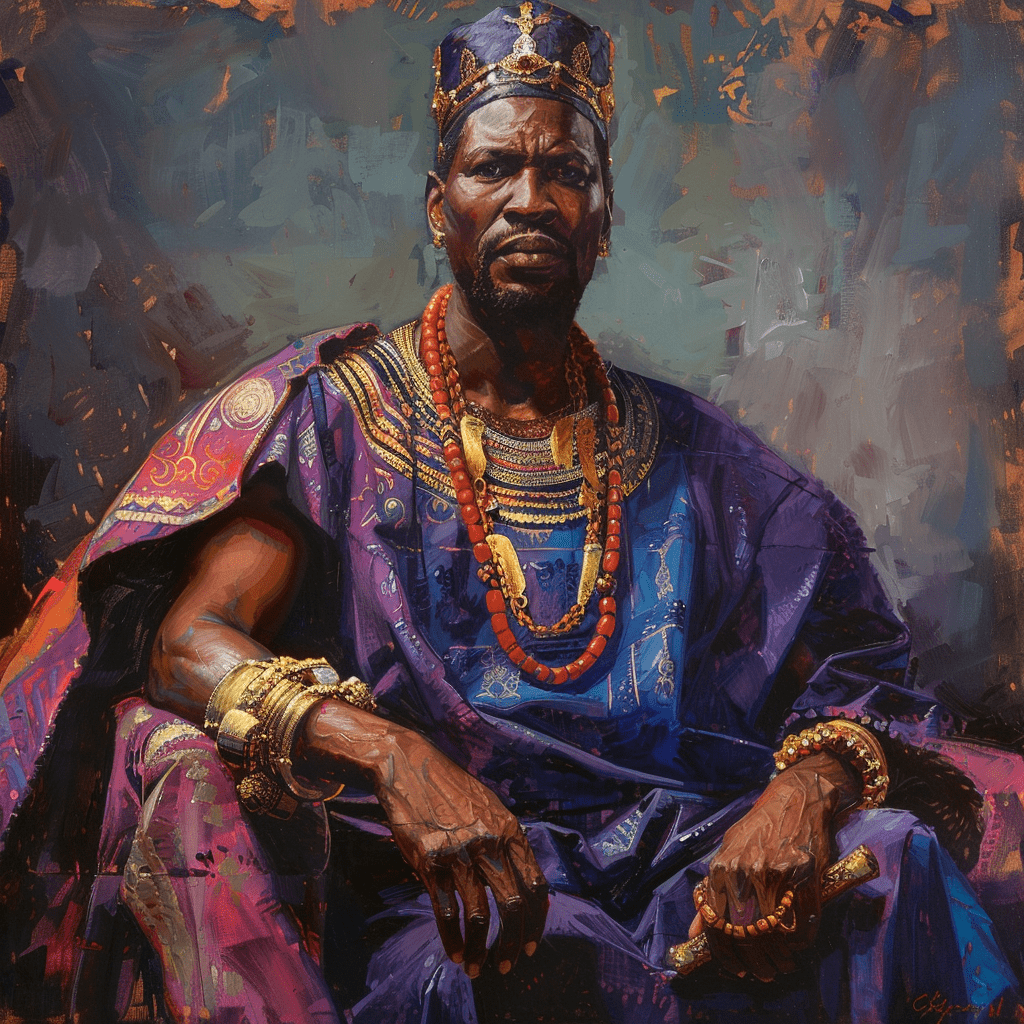
In the 18th century, the Oyo Empire was marked by the actions of Gaha, a powerful minister who exercised considerable influence over the throne. Gaha usurped the power of several successive Alaafins, acting virtually as the de facto ruler. His tyrannical domination lasted several years, during which he consolidated his power through political intrigue and brute force. However, his reign eventually came to an end when he was overthrown by Alaafin Abiodun.
Abiodun

Abiodun is one of the most notable Alaafins of the Oyo Empire, famous for having ended the tyranny of Gaha. His reign was marked by efforts to restore royal authority and stabilize the empire after the turmoil caused by Gaha. Abiodun worked to strengthen administration and trade, and his reign is often seen as a period of renewal for the Oyo Empire. Under his leadership, Oyo regained part of its lost prosperity and influence.
How?
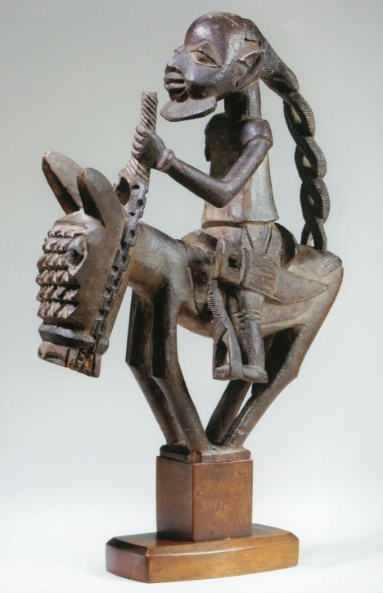
The Oyo Empire thrived due to a powerful combination of geography, economy, and military organization.
Oyo was ideally situated at the southern terminus of trans-Saharan trade routes, making it a crucial hub between North Africa and the southern regions. This strategic location gave Oyo access to valuable goods such as red beads, symbols of royal power, allowing the empire to amass great wealth.
Oyo also benefited from proximity to natural resources unavailable to southern populations. Red beads served both as currency and status symbols. The empire imported horses—rare in southern regions due to the presence of tsetse flies—giving Oyo a decisive military advantage.
Horses enabled Oyo to develop a formidable cavalry, allowing it to dominate neighboring infantry-based armies. The mobility and striking power of Oyo’s horsemen made the empire a feared military force and facilitated territorial expansion.
Oyo also profited from its proximity to the ports of the Gulf of Benin. Control over these ports brought wealth through the transatlantic slave trade, which enabled the empire to acquire weapons and valuable goods in exchange for captives taken during wars and raids.
Why?
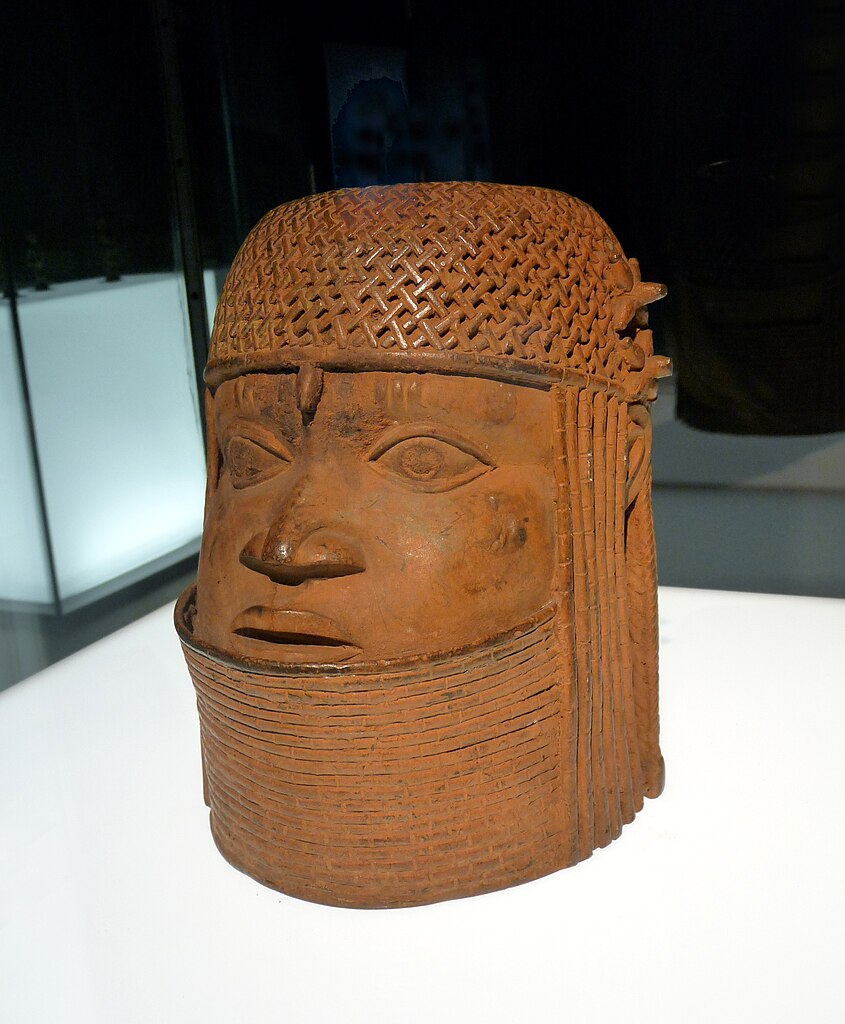
The Oyo Empire imposed its authority over vast territories and numerous peoples, including Gbe-speaking populations. Its influence extended over Allada, Ouidah, Tado, and Dahomey, all of which became vassal states.
These vassals were required to pay annual tribute in agricultural products, luxury goods, or labor. This system reinforced Oyo’s dominance and ensured a steady flow of wealth to the imperial center.
Oyo also drew from the spoils of war of its vassals. Military victories yielded slaves and valuable goods, strengthening the empire while weakening its rivals. Oyo could also mobilize the armies of its vassals to intervene in regional conflicts.
A notable example occurred in 1764, when an army from Dahomey—including the famed Amazons—defeated the Ashanti Confederation on Oyo’s orders. This demonstrated Oyo’s ability to project power far beyond its core territory.
At its peak in the late 18th century, the empire covered approximately 46,000 square kilometers and likely had over 750,000 inhabitants, according to historian Robin Law. This population included both Yorubas and conquered peoples, reflecting Oyo’s administrative capacity over a vast and diverse territory.
The wealth generated through tribute, warfare, and trade made Oyo a major cultural and economic center. Yoruba language, religion, and artistic traditions spread widely, shaping neighboring societies.
Where?
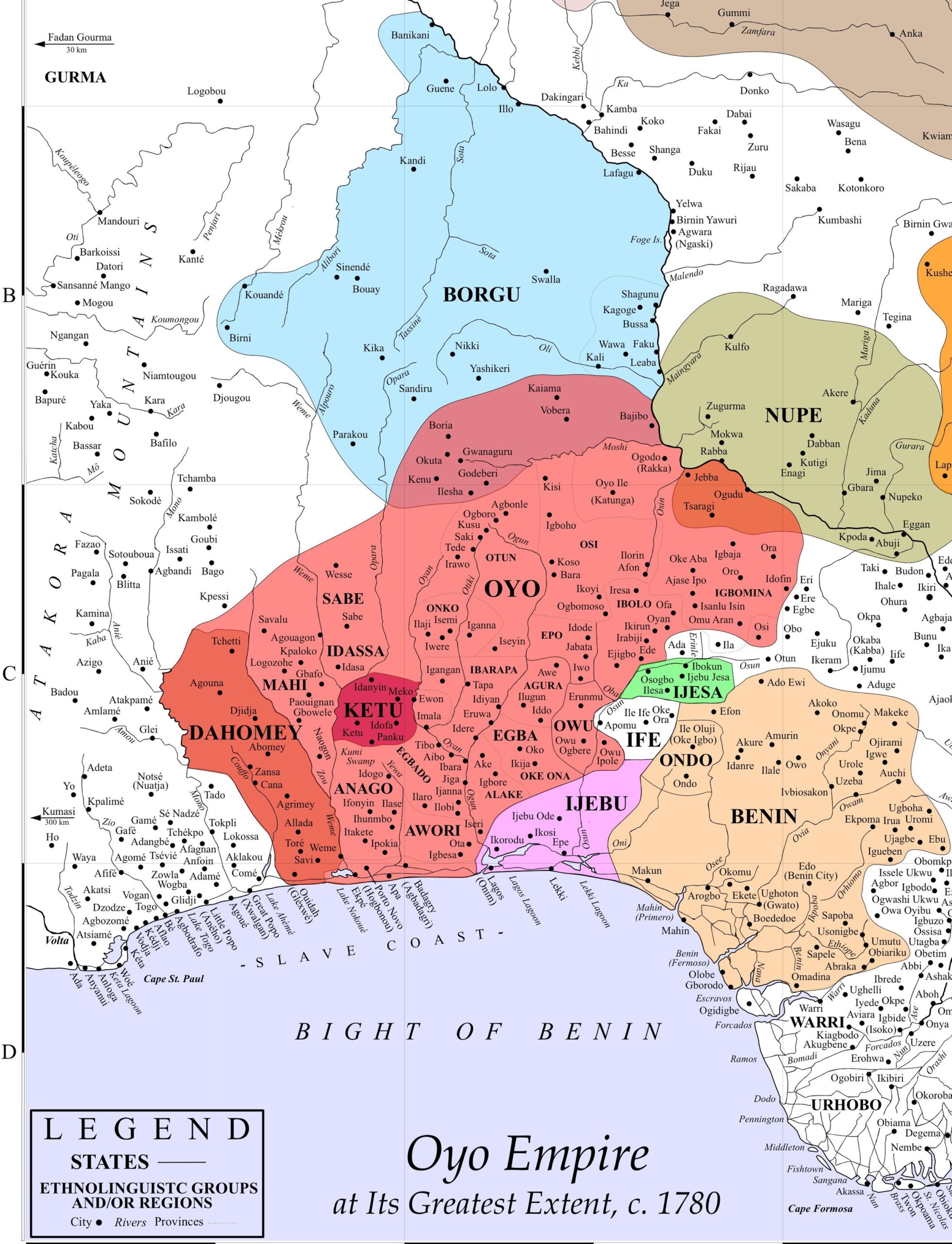
The Oyo Empire developed around its capital, Oyo-Ile, located in north-central present-day Nigeria.
This central and strategic position enabled Oyo to expand and dominate a vast region of West Africa. Below is a detailed description of the different zones that made up the Oyo Empire and its geographical boundaries at its height:
Oyo-Ile was the heart of the Oyo Empire. This city was not only the political and administrative capital of the empire but also a cultural and economic center. Its central location in what is now northern Nigeria facilitated commercial exchanges and military mobility, which were crucial to maintaining the empire’s power and influence.
To the north, the Oyo Empire was bordered by the Nupe and Bariba kingdoms. These kingdoms were often in conflict with Oyo, but they were also important trading partners. Interactions with these northern kingdoms were essential to trans-Saharan trade, which brought valuable goods such as salt, gold, and horses to Oyo.
To the west, Oyo shared its borders with several Yoruba kingdoms, including Ketu, Savè, Porto-Novo, and the Egba country. These kingdoms were either allies or vassals of Oyo and played an important role in the empire’s military and economic support. Control of these regions allowed Oyo to secure its western borders and facilitate trade with coastal areas.
To the east, the Oyo Empire was bordered by Yoruba city-states such as Ekiti, Igbomina, Ijesha, Ife, Ondo, and Ijebu. These city-states were culturally and linguistically close to Oyo, and some of them were also vassals. Relations with these city-states ranged from alliance to direct domination, depending on the political and military dynamics of the time.
Oyo regarded this central territory, composed primarily of Yoruba lands, as the core of its empire. This region was densely populated and economically prosperous, with well-established towns and villages. Control of this area was essential to maintaining cohesion and stability within the empire.
The periphery of the Oyo Empire consisted of vassal states and subjected territories. This included regions such as the Egba-Yoruba country and other Gbe-speaking territories extending into present-day Benin. These vassal states were required to pay tribute to Oyo and to provide military support in times of war. Control over these peripheral regions enabled Oyo to extend its influence and exercise indirect domination over a vast territory.
The commercial network of the Oyo Empire extended far beyond its immediate borders. The trans-Saharan trade routes that passed through Oyo connected the empire to regions of North Africa and the Atlantic coast. This trade brought valuable goods to Oyo and reinforced its economic and political standing. In addition, Oyo’s cultural influence spread throughout the region through the diffusion of the Yoruba language, religious practices, and artistic traditions.
What?
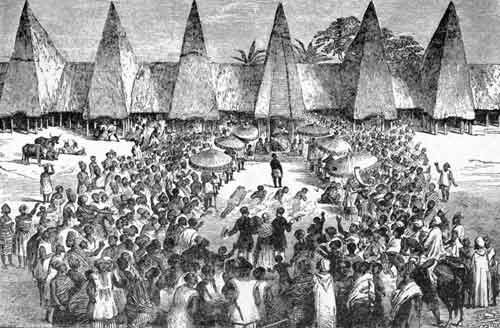
The Oyo Empire was a complex and well-structured society, ruled by an emperor known as the Alaafin, literally “owner of the palace.”
This system of governance included a group of powerful ministers known as the Oyo Mesi, who played a crucial role in the administration and stability of the empire.
The Alaafin was the central figure of power in Oyo, exercising supreme authority over the empire. However, this authority was tempered by the Oyo Mesi, a council of seven influential nobles. The Oyo Mesi were responsible for advising the Alaafin and ensuring that he ruled in a just and effective manner. Their power was such that they could force the Alaafin to abdicate and even to commit suicide if they judged him unfit to rule. This extreme measure functioned as a mechanism of control, designed to prevent tyranny and preserve order within the empire.
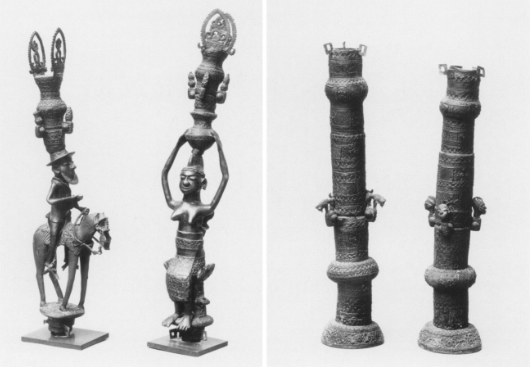
The imperial cult was dedicated to Shango, the god of thunder and lightning. The Alaafin was the chief priest of this cult, and all provincial governors were initiated into it. This religious authority reinforced political control, as governors could invoke divine punishment to suppress rebellion.
19th-century travelers such as Hugh Clapperton and Richard Lander described the magnificence of Oyo-Ile, noting the richly carved palace pillars and temples adorned with bas-relief sculptures. These artworks symbolized both political power and cultural sophistication.
“The posts supporting the veranda and the doors of the royal palace and of the houses of dignitaries are generally carved in bas-relief with figures. The people [of Oyo-Ile] like to adorn their doors and the posts that support their verandas with carvings; they also have statues or carved figures on their posts and doors.”
These bas-relief sculptures were not only artistic decorations but also symbols of power and culture.
Richard Lander described the main temple of the capital as “the most extravagantly decorated of all of its kind in the interior of Africa,” although there were fifty other, less important and less adorned temples throughout the rest of the city. This temple, along with the numerous other places of worship in the city, illustrates the importance of religion in the daily life of the inhabitants of Oyo-Ile and the central role of the cult of Shango in the social and political structure of the empire.
The administration of the Oyo Empire was highly structured. Provincial governors, often members of the royal family or nobles, were responsible for governing the regions under their control on behalf of the Alaafin. They collected tributes, enforced the laws of the empire, and ensured the security and stability of their provinces. Their authority was reinforced by their initiation into the cult of Shango, which allowed them to govern with a combination of political power and religious legitimacy.
The end of the Oyo Empire
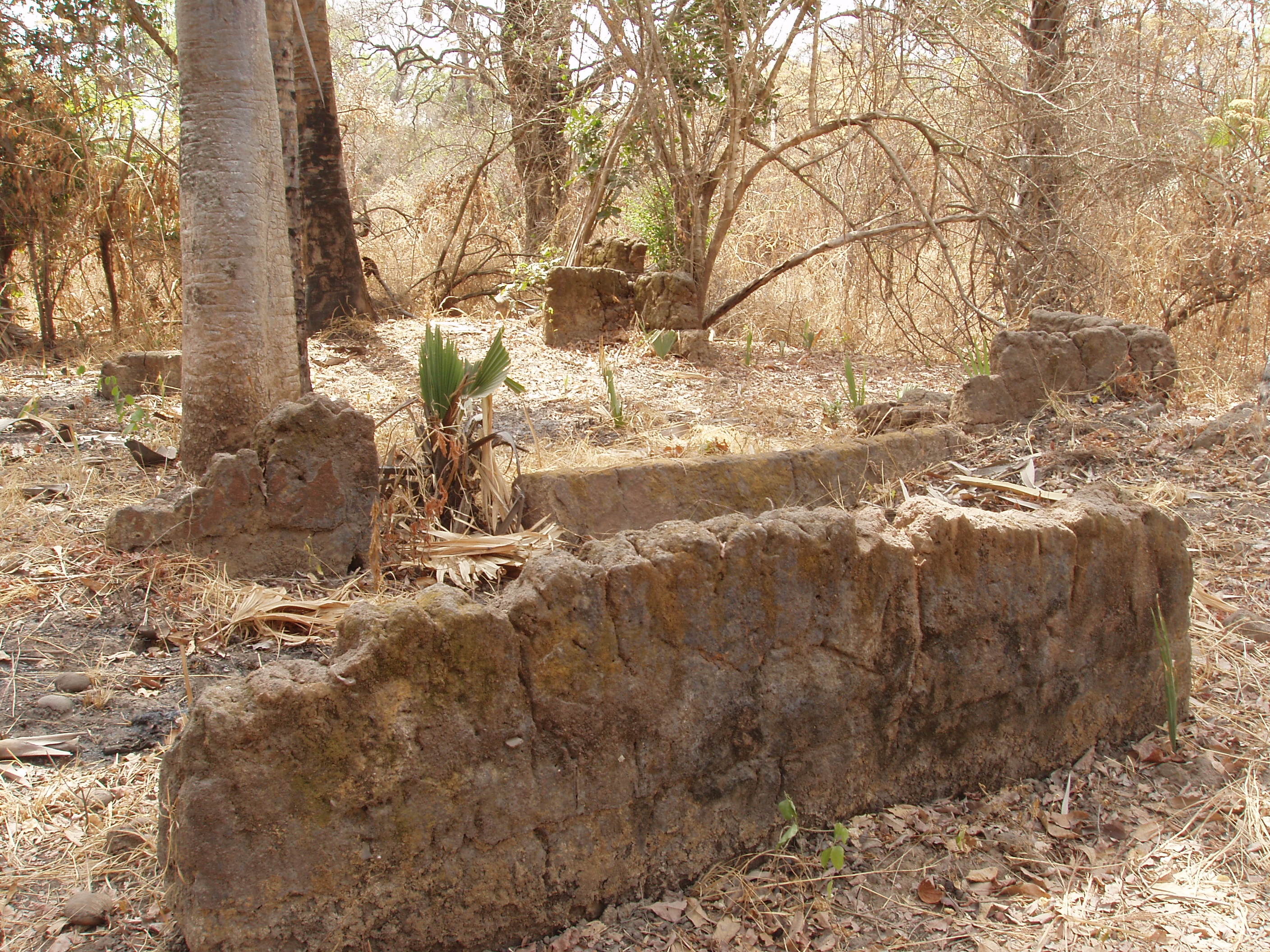
The Oyo Empire, which had dominated much of West Africa for centuries, experienced a dramatic decline at the beginning of the 19th century. Several internal and external factors contributed to its fall, but one of the most significant events was the intrigues of Afonja, the governor of Ilorin.
Afonja, governor of the Ilorin province, played a decisive role in the collapse of the Oyo Empire. Initially loyal to the Alaafin, Afonja eventually rebelled against the central authority. In pursuit of autonomy, he sought the help of the Fulani, a powerful Muslim ethnic group, to strengthen his position. This strategic alliance with the Fulani led to a series of internal conflicts that significantly weakened the empire.
In the 1820s, several dependencies of the Oyo Empire took advantage of this period of weakness to gain their independence. The kingdom of Dahomey, for example, freed itself from Oyo’s suzerainty, consolidating its own regional power. Similarly, the Egbado territory succeeded in liberating itself from the empire’s control, reducing Oyo’s influence over its peripheral lands.
Afonja’s betrayal and his collaboration with the Fulani ultimately led to the destruction of Oyo-Ile. The Fulani, now integrated into the Sokoto Caliphate, razed the capital in 1835, marking the definitive end of the Oyo Empire. This devastating attack sealed the fate of the empire, which would never recover from this fatal blow.
After the fall of Oyo-Ile, attempts were made to restore the empire around more southern cities such as New Oyo and Ibadan. However, these efforts never regained the glory and power of the former empire. The new political entities that emerged were fragmented and lacked the unity and stability that had characterized the Oyo Empire at its height.
Despite its disintegration, the legacy of the Oyo Empire continues to live on in significant ways. The term “Yoruba” itself, used by the Hausa to refer to the inhabitants of the Oyo Empire, has become a common designation for the entire Yoruba ethnic group. Standard Yoruba is primarily based on the language spoken in the Oyo region, thus ensuring the continuity of the empire’s linguistic influence.
The Egungun, famous ancestral spirits in Yoruba culture, are said to originate from Oyo. These masked figures play a central role in Yoruba rituals and festivals, symbolizing the spirits of ancestors returning to bless and protect their descendants. The cult of Shango, the deity of thunder and lightning, remains one of the most popular African-origin cults, both among continental Yorubas and Afro-descendants in the Americas. This cult is particularly revered in Afro-Brazilian religions such as Candomblé and in Cuban Santería, where Shango is often called Xangô or Chango.


