

In 1951, at the height of the Cold War, a group of African American activists brought a petition before the United Nations accusing the United States of genocide. Through We Charge Genocide, they denounced not only racial violence, but an entire structured system of domination built upon lynchings, discrimination, and institutional inequalities. By invoking international law, the document transformed a national struggle into a global issue and continues, even today, to raise questions about how systemic violence can be named, recognized, and judged.
We Charge Genocide: When African Americans Filed a Complaint Against Their Own Country
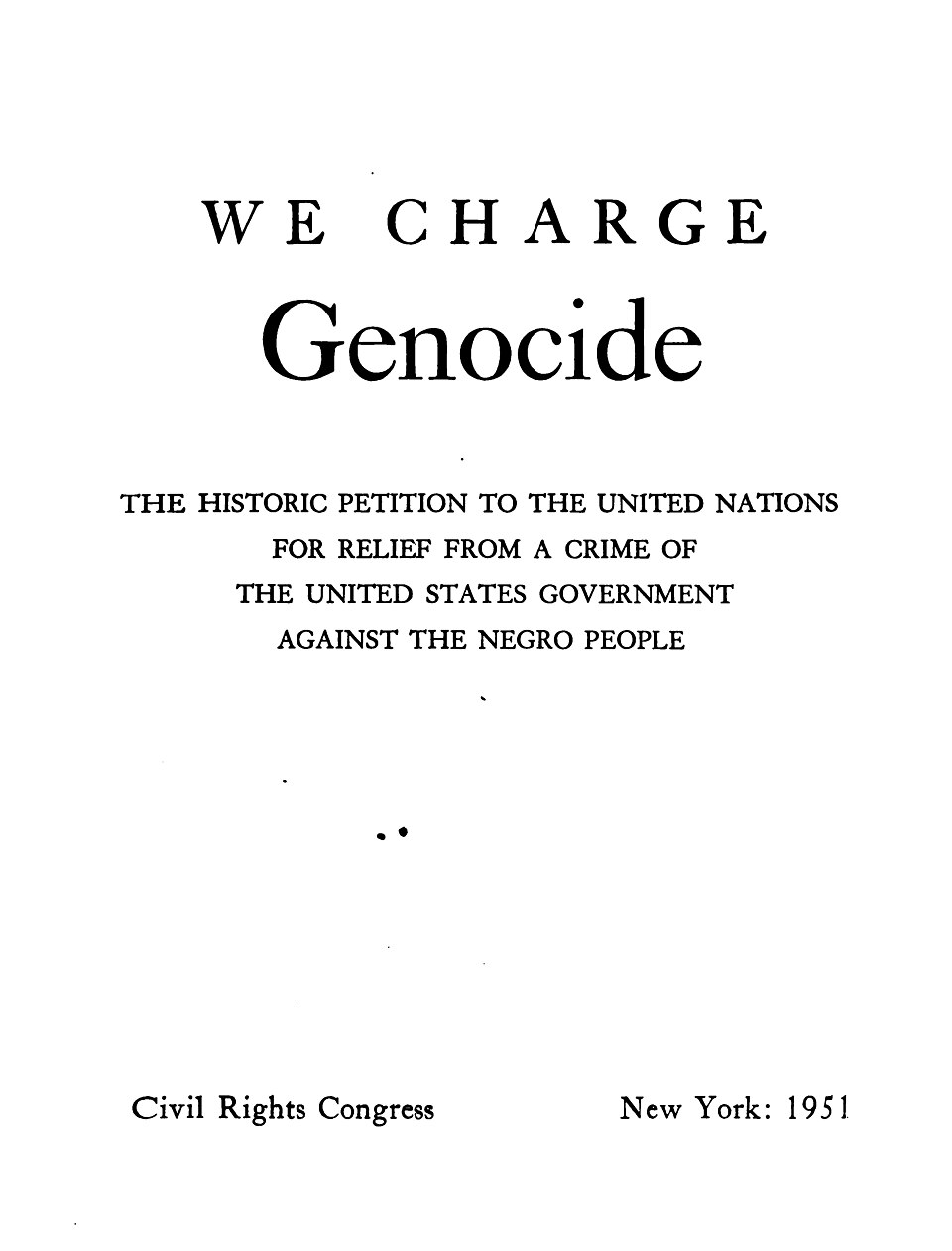
In December 1951, in an international climate deeply shaped by Cold War tensions, an unprecedented document was presented before the United Nations. Entitled We Charge Genocide, the text explicitly accused the United States of committing practices amounting to genocide against its African American population. Through this initiative, its authors sought not merely to denounce domestic injustices, but to shift the debate onto the international stage by confronting the world’s leading Western power with the very legal principles it claimed to uphold. The act was bold, almost unimaginable in the context of the time: it meant judging a liberal democracy according to the gravest crimes recognized by international law.
Written by the Civil Rights Congress under the leadership of William L. Patterson, with the support of major figures such as Paul Robeson and W. E. B. Du Bois, the document formed part of a rigorously constructed legal and political strategy. It was not a pamphlet or a conventional activist manifesto, but a carefully argued dossier structured as a formal indictment. Its authors explicitly relied upon the United Nations Convention on the Prevention and Punishment of the Crime of Genocide adopted in 1948, drawing upon its definition to demonstrate that the violence endured by African Americans could legally be classified as genocide.
According to this convention, genocide includes any act committed with the intent to destroy, in whole or in part, a national, ethnic, racial, or religious group. This definition, broader than is often assumed, makes it possible to conceive destruction not only as immediate physical extermination, but also as a gradual process embedded within imposed living conditions.
The originality of the document lies precisely in this reclassification. Whereas racial violence was usually presented as a series of isolated excesses or local deviations, We Charge Genocide proposed a systemic reading. The aim was to demonstrate that lynchings, police brutality, economic discrimination, health inequalities, and the deprivation of civil rights were not separate phenomena, but parts of a coherent whole. This shift in perspective was fundamental because it transformed the very nature of the debate. The issue was no longer whether injustices existed — something widely acknowledged — but whether those injustices belonged to an organized system producing destructive effects upon a defined group.
To support this argument, the document relied on a methodical accumulation of evidence. It catalogued hundreds of lynching cases, emphasized their extrajudicial nature, and highlighted the near-systematic impunity enjoyed by their perpetrators. It also referred to thousands of unrecorded cases, revealing the scale of a violence that was vastly underestimated.
Yet beyond these spectacular acts, the text focused on more diffuse forms of violence that were nonetheless equally structuring. Police brutality, degraded housing conditions, unequal access to healthcare and education, as well as systematic obstacles to voting rights, were all presented as mechanisms contributing to the gradual destruction of a group. This cumulative approach allowed the authors to construct a solid argument founded not upon emotion, but upon demonstration.
The use of the term genocide nevertheless represented an especially risky strategic choice. Barely a few years after the Second World War, the concept remained closely associated with Nazi crimes and the extermination of Europe’s Jews. To apply it to the condition of African Americans meant drawing an implicit parallel with one of the most extreme forms of mass violence of the twentieth century.
The authors were fully aware of this, and it was precisely this symbolic weight that they sought to mobilize. Their objective was not to produce a simplistic analogy, but to demonstrate that the destruction of a group can take many forms, ranging from direct extermination to the establishment of living conditions incompatible with its long-term survival.
This strategy emerged within a particularly tense geopolitical context. In the midst of the Cold War, the United States sought to present itself as the model of freedom in opposition to the Soviet bloc. The racial question therefore became a major point of vulnerability. By bringing the accusation of genocide before the United Nations, the authors of We Charge Genocide exploited this contradiction. They transformed a domestic issue into an international matter, forcing the United States to answer not only before its own population, but before the entire global community. This internationalization of the debate constituted one of the document’s most innovative dimensions and foreshadowed strategies later adopted by civil rights movements.
The reaction of the American authorities reflected the stakes involved. Rather than addressing the substance of the accusations, the government attempted to discredit the document by attacking its authors. The Civil Rights Congress was portrayed as an organization close to communist circles and therefore suspicious within the Cold War climate. This strategy aimed to shift the debate away from facts and toward questions of political legitimacy. By associating the genocide accusation with propaganda, the authorities hoped to reduce its reach and limit its impact.
This attempt at discrediting the petition did not remain confined to rhetoric. It also translated into concrete measures designed to prevent the document’s circulation. William Patterson was forced to surrender his passport after presenting the petition, while Paul Robeson and W. E. B. Du Bois were prevented from traveling. These restrictions illustrate the state’s determination to contain the internationalization of the racial question. They also reveal the sensitive nature of the accusation, which extended far beyond the framework of a simple domestic debate.
Within the African American movement itself, the document provoked mixed reactions. Some organizations, such as the NAACP, shared part of its conclusions but rejected the use of the term “genocide,” considering it excessive and counterproductive. This disagreement revealed a profound strategic tension. Should activists adopt radical language at the risk of provoking rejection, or favor a more moderate approach likely to produce gradual progress? The Civil Rights Congress chose the first option, believing that only a rupture in language could make the reality of the system visible.
Despite attempts to marginalize it, We Charge Genocide achieved significant international circulation. In Europe, Africa, and Asia, the document was widely discussed and debated. It resonated particularly strongly in countries undergoing decolonization, where it was seen as confirmation of the contradictions of Western powers. By denouncing American practices, the text contributed to a broader reflection on relations of domination and on the unequal application of human rights depending on context.
Although the document did not produce immediate consequences within the United Nations, its influence became apparent over the longer term. It inaugurated a new way of thinking about the struggle for civil rights by linking it to international issues. This approach would later be taken up and expanded by figures such as Malcolm X, who insisted on the necessity of bringing the racial question before international bodies. It also echoed in the discourse of the Black Panthers, who employed similar language to denounce police violence and living conditions in the ghettos.
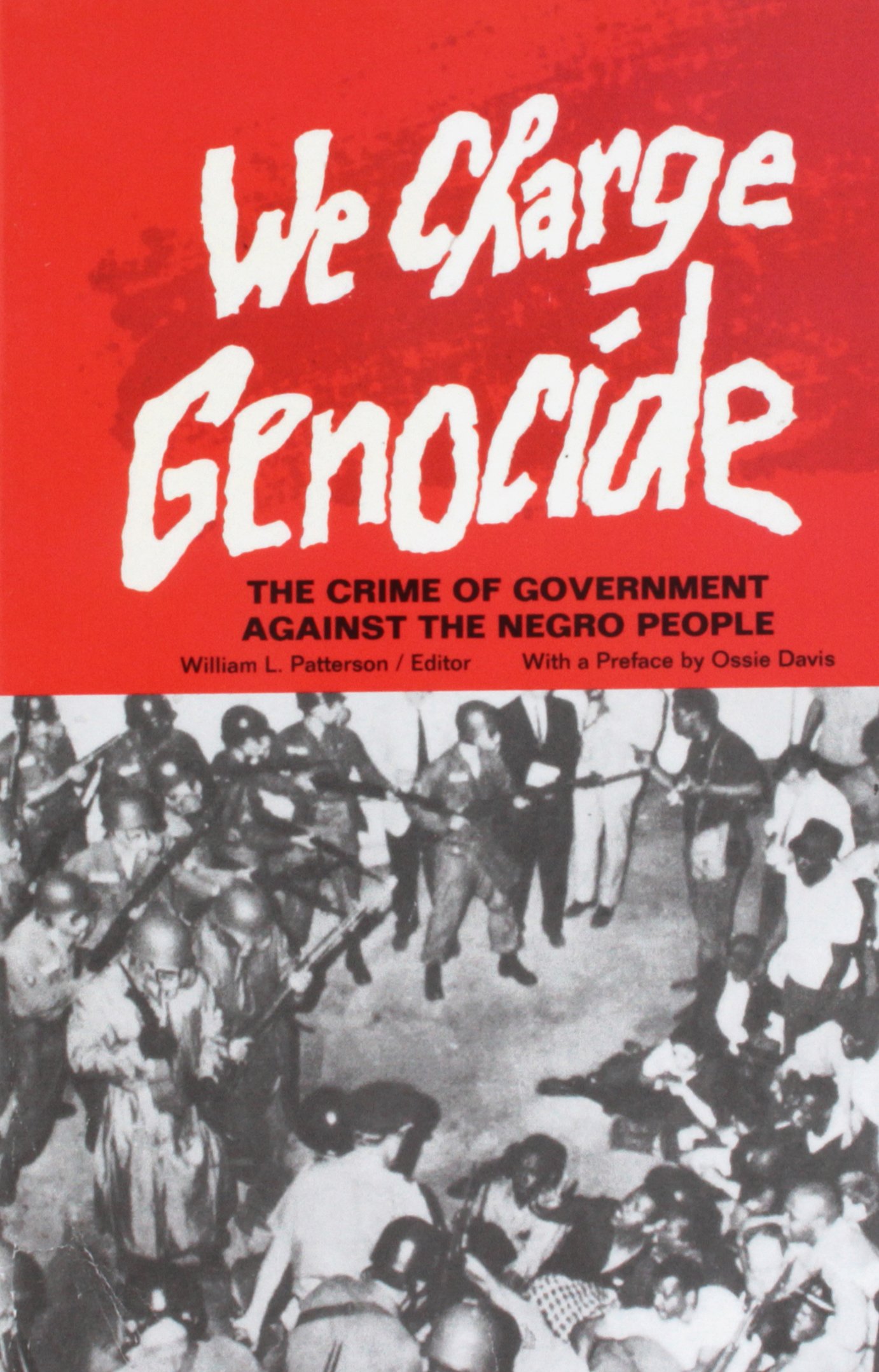
Even today, We Charge Genocide continues to fuel debates about the nature of racial violence and the legal categories available to define it. The question raised by the document remains strikingly relevant: can a set of repeated and structural discriminatory practices constitute a form of group destruction? In other words, should genocide be reserved solely for the most visible forms of mass violence, or can it also include more diffuse processes that are nevertheless equally destructive in the long term?
By raising this question, the document does more than denounce a historical situation. It invites us to rethink the conceptual tools through which violence is analyzed. It compels us to move beyond established categories, to question what appears self-evident, and to recognize that certain forms of domination may be both less spectacular and profoundly destructive.
Thus, We Charge Genocide cannot be reduced to a marginal episode in the history of civil rights. It represents a moment of rupture in which the American racial question was projected onto the global stage and the United States was forced to confront its own contradictions. In this sense, it remains an essential text for understanding not only the past, but also contemporary issues related to systemic violence and its recognition.
Notes and References
- Civil Rights Congress. We Charge Genocide: The Historic Petition to the United Nations for Relief from a Crime of the United States Government Against the Negro People, 1951.
- Carol Anderson. Eyes Off the Prize: The United Nations and the African American Struggle for Human Rights, 1944–1955. Cambridge University Press, 2003.
- Charles H. Martin. “Internationalizing ‘The American Dilemma’: The Civil Rights Congress and the 1951 Genocide Petition to the United Nations.” Journal of American Ethnic History, 1997.
- João H. Costa Vargas. “Genocide in the African Diaspora.” Cultural Dynamics, 2005.
- United Nations. Convention on the Prevention and Punishment of the Crime of Genocide, 1948.
- United Nations. Archives of petitions submitted to the United Nations on civil rights, 1946–1952.
- William L. Patterson. Presentation of the petition to the United Nations, Paris, December 1951.
- Paul Robeson. Address before the United Nations in New York, 1951.
- People’s World. “We Charge Genocide: The cry rings true”, 2003.

