

On November 23, 1958, Accra became the stage for a rare political gesture. Kwame Nkrumah’s Ghana, independent since March 1957, welcomed Ahmed Sékou Touré’s Guinea, which had become independent on October 2, 1958 after voting “No” in the French constitutional referendum of September 28. In West Africa, the colonial order was beginning to crack. Most French-speaking territories still remained within the French Community. Independence was coming, but the economic, military, and diplomatic structures of colonialism remained powerful.
Joint Declaration of Kwame Nkrumah and Sekou Toure
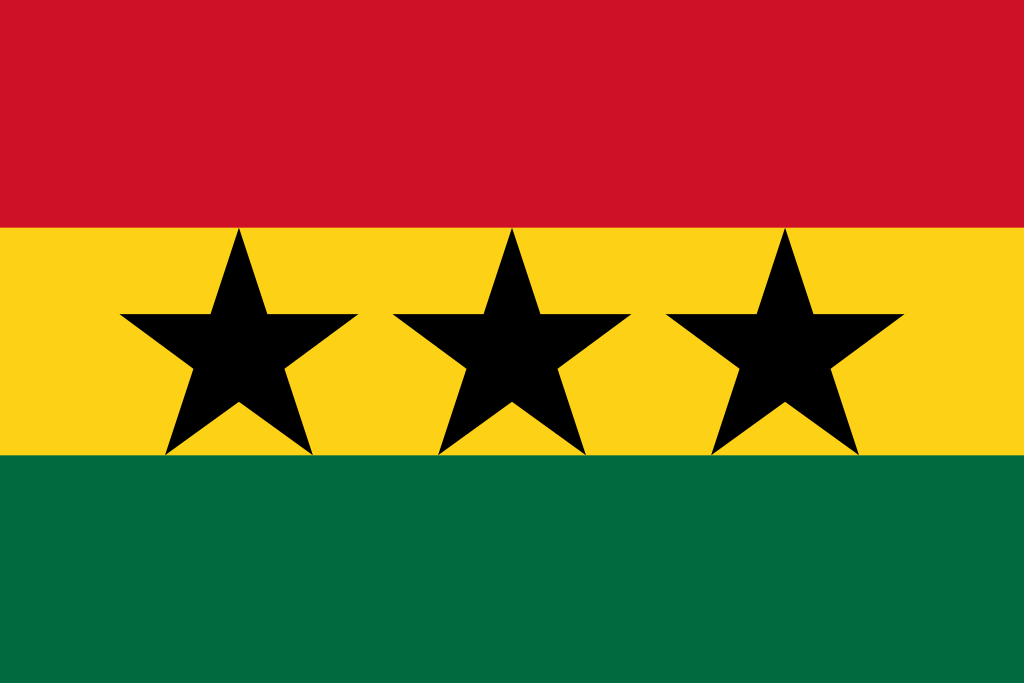
On November 23, 1958, Accra became the stage for a rare political act. The Ghana of Kwame Nkrumah, independent since March 6, 1957, welcomed the Guinea of Ahmed Sékou Touré, independent since October 2, 1958 after rejecting the French Community proposed by General de Gaulle. In West Africa, the colonial order was beginning to fracture. Most French-speaking territories still remained within the French orbit. Ghana and Guinea wanted to outrun history.
The joint declaration signed in Accra affirmed the desire to establish between the two countries “the nucleus of the United States of West Africa,” according to the wording published at the time. The text invoked the thirteen American colonies, the political organizational dynamics observed in Europe, Asia, and the Middle East, as well as the “African Personality” affirmed during the Accra Conference. It called on independent African states, leaders, and populations still living under colonial domination to join this movement.
This document belongs to one of the most intense moments of political Pan-Africanism. In April 1958, Accra hosted the Conference of Independent African States, which affirmed an “African Personality” aligned with peace, the United Nations Charter, the Universal Declaration of Human Rights, and the spirit of Bandung. In December 1958, the city hosted the All-African People’s Conference, where Nkrumah addressed the “African Freedom Fighters” and turned Accra into a militant capital of African independence movements.
Between these two conferences, Nkrumah and Sékou Touré posed a question that remains relevant today: what is African independence worth without collective power? Their answer rested on a political intuition: colonial borders had created vulnerable states; unity could create a historical force.
Full Text of the Joint Declaration
Joint Declaration of Kwame Nkrumah and Ahmed Sékou Touré
Accra, November 23, 1958
“Inspired by the thirteen American colonies, which, in their accession to independence, formed a confederation that resulted in the United States of America;
Inspired also by the tendency of the peoples of Europe, Asia, and the Middle East to organize themselves rationally;
Inspired further by the declaration of the Accra Conference concerning the African Personality;
We, the undersigned, in the name of our respective governments and subject to ratification by our respective National Assemblies, agree to unite our two states into a single nucleus, that of the United States of West Africa.
Conscious of the fact that the spirit of unity is shared by all the peoples of the continent, we appeal both to the governments of the independent states of Africa and to the leaders and peoples of territories still under foreign domination to join our action. In this same spirit, we shall welcome into this union other African states.
We decide, as a first step, to adopt a Union flag and to encourage the closest possible relations between our two governments in order to harmonize the policies of our two countries, particularly in matters of defense, foreign policy, and economics.
Secondly, we shall draft a Constitution giving substance to the establishment of the Union.
Finally, we affirm that this position in favor of achieving the United States of West Africa is in no way intended to challenge the present or future relations between Ghana and the Commonwealth on the one hand, and the Republic of Guinea and the French Community on the other.”
Done in Accra, November 23, 1958
KWAME NKRUMAH, SEKOU TOURE
President of Ghana, President of Guinea
The Nucleus of an Unfinished Dream
On November 23, 1958, Kwame Nkrumah and Ahmed Sékou Touré proposed a different trajectory for independent Africa. They sought to make Ghana and Guinea the nucleus of a West African federation, and later of a broader African union.
Their project was born from a clear conviction: African peoples would share only a fragile freedom as long as their states remained scattered, dependent, and vulnerable. Decolonization required collective power.
The Ghana-Guinea Union did not fulfill its institutional promises. The Union of African States dissolved. Colonial borders survived. National logics prevailed. Yet the Accra Declaration remains one of the major texts of the African political imagination.
It reminds us of a simple idea: Africa envisioned its unity at the very moment it entered independence. That vision was a political program.
Even today, the dream of the United States of West Africa remains a question posed to every generation: how can Pan-African memory be transformed into institutions capable of shaping history?
Notes and References
- Ghana-Guinea Joint Declaration, Accra, November 23, 1958. Version published in the archives of Le Monde, “Les deux déclarations communes”, November 25, 1958.
- Conference of Independent African States, Accra, April 1958, Declaration and Resolutions.
- Kwame Nkrumah, opening speech at the All-African People’s Conference, Accra, December 8, 1958.
- Ghana-Guinea-Mali Union, International Organization, 1962.
- All-African People’s Conference, Accra, December 1958.
- Flags of the World, “Union of African States”.

