

The history of African peoples is so vast and so spectacular that one hardly knows where to begin. And it is not only the history of nations, kingdoms, and communities, but also that of exceptional individuals, great men and great women. One of the most extraordinary of these individuals comes to us from 18th-century Europe, and he draws our attention like a powerful magnet. This is Joseph Bologne, known in history as the Chevalier de Saint-Georges.
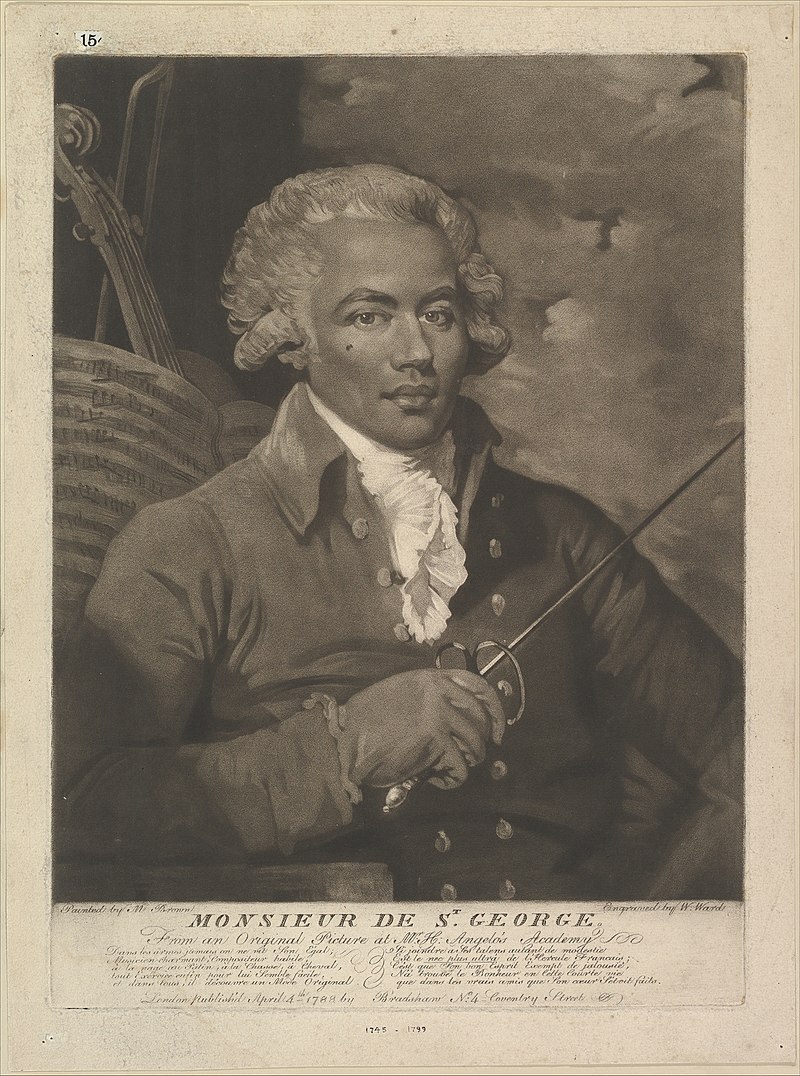
In an essay entitled “The Chevalier de Saint-Georges,” Edward Scobie documented the life of this French composer, conductor, violinist, fencer, horseman, and soldier, one of the most remarkable figures of the 18th century. This son of an African enslaved woman, Nanon, widely considered the most beautiful woman on the island of Guadeloupe, and of a father belonging to a wealthy family from the French colony of Guadeloupe in the Caribbean, managed to rise to the top of French society.
He rose to the top of French society thanks to his mastery of fencing and his genius for European classical music. His diverse career is immortalized in the famous portrait painted in 1787 by the American artist Mather Brown in London. In this portrait, Saint-Georges is dressed for a concert but holds a sword instead of a conductor’s baton.
Born on Christmas Day
Joseph Bologne, who would become the Chevalier de Saint-Georges, was born on Christmas Day 1745 and settled in France in 1755. Despite his father’s status, Saint-Georges’ African heritage made him ineligible for nobility and its titles under French law. He eventually took the titles, legally or not. This was the Age of Enlightenment in France, and yet philosophers like Voltaire were among those who argued that Africans were genetically inferior to Europeans.
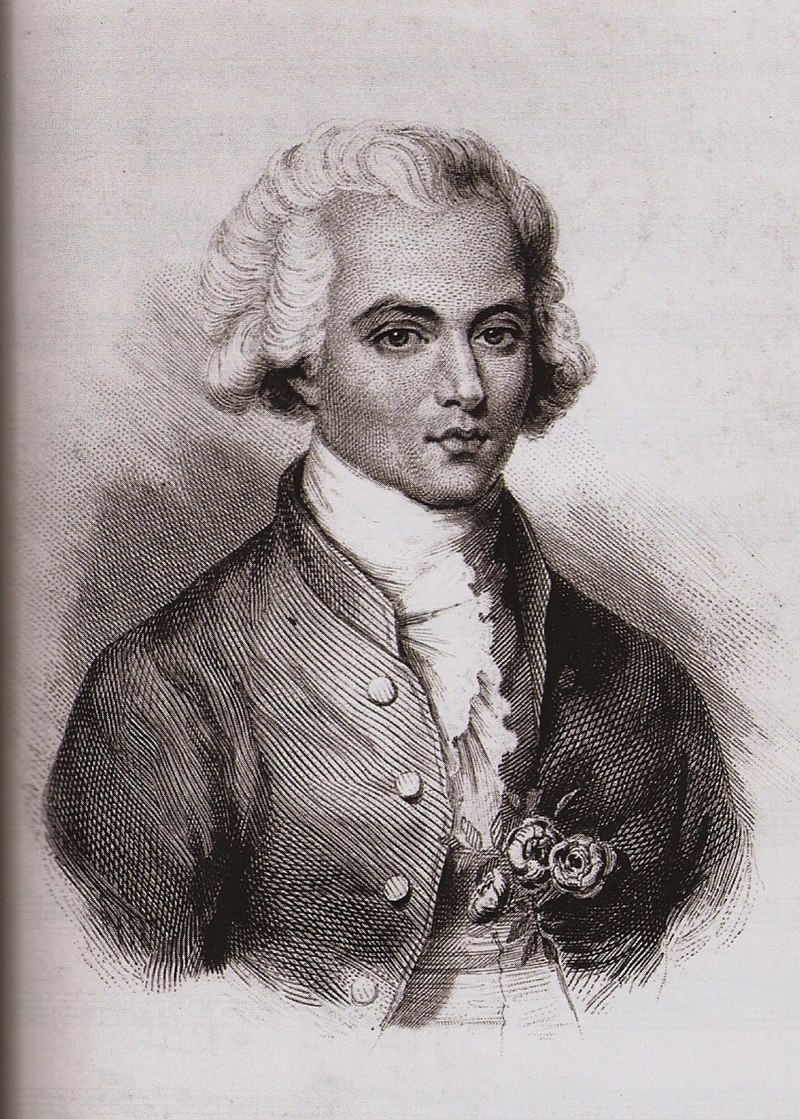
A Code Noir restricting and regulating the lives of Africans had existed in France since the 17th century. There is no doubt that he was gifted, but his innate talents were magnified by relentless effort, allowing him not only to be better, but above all to overcome the racial barrier that placed him in the despised social class of “Mulattoes” because his father was White and his mother Black. Interracial marriages were officially prohibited, but some married despite the ban.
Because of his father’s wealth and status, Saint-Georges benefited from a superior education. At the age of 13, he entered a fencing academy and an elite boarding school. Mornings at the academy were devoted to classes in mathematics, history, foreign languages, music, drawing, and dance. Afternoons were devoted to fencing. One of his classmates wrote that Saint-Georges was the most extraordinary man-at-arms ever seen. He would later be called “the god of arms.”
He seemed to excel in everything athletic. He was often seen crossing the Seine by swimming with one arm, and in skating, his skill surpassed that of all others. As for pistols, he rarely missed his target. In running, he had the reputation of being one of the best runners in all of Europe.
In addition to his athletic talents, Saint-Georges was also an excellent dancer. In music, despite racial barriers, Saint-Georges quickly mastered the harpsichord and the violin, and composed a sonata for flute and harp. He became one of the first French composers of string quartets. Much was made of Saint-Georges’ reputation as a Black Don Juan. He had at least one serious romantic relationship, but racial attitudes prevented him from marrying someone of his social standing.
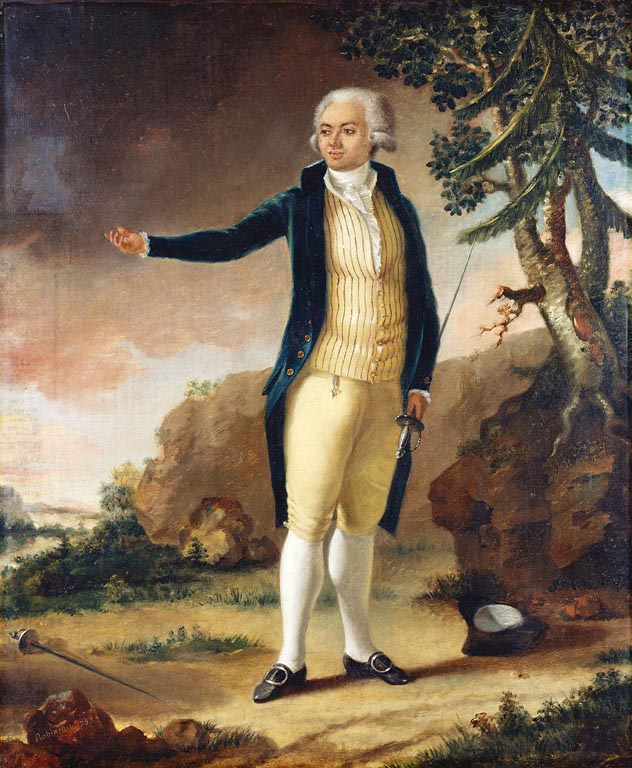
In 1778, Saint-Georges had reached the peak of his professional career as a composer. He published two symphonies concertantes in 1776 and two more in 1778. In 1777, he wrote three violin concertos and six string quartets. Some call Saint-Georges the Black Mozart. At the beginning of 1779, Saint-Georges began playing music with Queen Marie Antoinette at Versailles, at her request. He was also one of the first Black Freemasons in France.
Saint-Georges’ travels to England exposed him to the anti-slavery movement. He eventually helped found a French group called the Société des amis des noirs (Society of the Friends of the Blacks). His support for the liberation of enslaved Africans was well known in England, and was likely irritating enough to justify assassination attempts by the British slave cartel.
In September 1791, a delegation of Black men asked the French National Assembly for permission to fight in defense of the Revolution and its egalitarian ideals. The Assembly approved the creation of a corps composed mainly of Black soldiers, with 800 infantrymen and 200 cavalrymen. Saint-Georges was appointed colonel. Its official name was the “free cavalry legion of the Americans,” but it soon became known to all as the Saint-Georges Legion.
The colonel chose his friend and protégé, Alexandre Dumas, as lieutenant-colonel. Like his colonel, he was the son of a French aristocrat and an enslaved African woman. He later had a son, also named Alexandre Dumas, who became famous as the author of The Three Musketeers, The Count of Monte Cristo, and The Man in the Iron Mask.
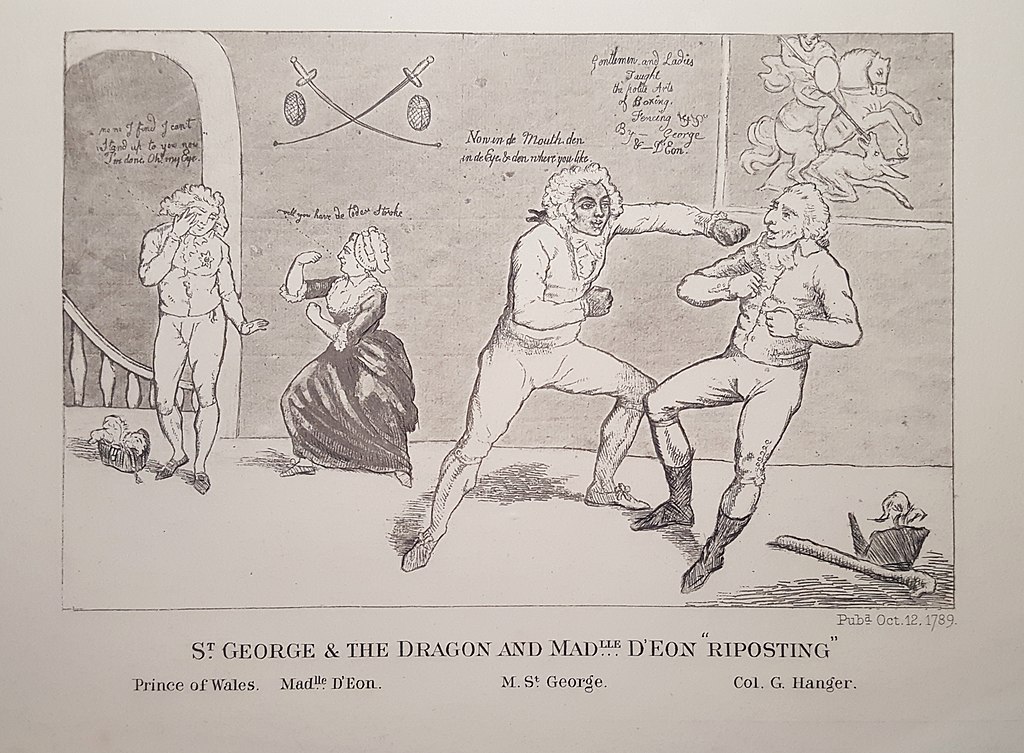
Saint-Georges lived alone in a small apartment in Paris during the last two years of his life. In late spring 1799, an untreated bladder infection left him weak and feverish. He died on June 10, 1799 (the year of the birth of Alexander Pushkin). Newspapers celebrated his memory with respect and emotion. Since 1912, a street in Guadeloupe has borne his name. In December 2001, the Paris City Council voted to rename a Parisian street from Rue Richepance to Rue du Chevalier de Saint-Georges.
Notes and references
Runoko Rashidi is a renowned historian, globe-trotter, and the author or editor of several books. Among his most recent works are Black Star: The African Presence in Early Europe (2012) and African Star over Asia (2013).


