

Discover the diversity of African religions in the “New World,” from the age-old traditions of Haitian Vodou, Cuban Santería, to Brazilian Candomblé, and beyond. This article delves into the African spiritual heritage in the Americas, revealing how these beliefs intertwined with Amerindian and European influences to form a rich tapestry of spirituality in the African diaspora.
The African roots of New world religions: a transatlantic spiritual journey
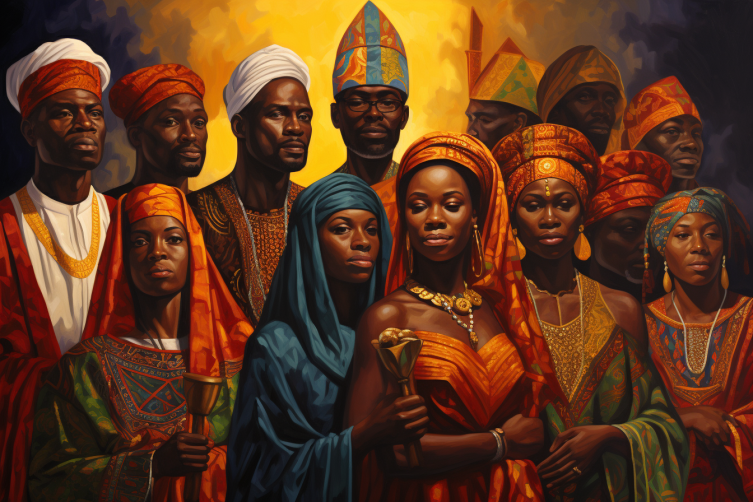
From the 17th century onward, the forced arrival of deported Africans in the Americas marked the beginning of a profound cultural and spiritual enrichment of the New World. Originating mainly from West Africa – from the territories of the former Kingdom of Dahomey and from Yoruba¹, Ewe², Fon³, Akan⁴ peoples, among others – these men and women sowed the seeds of religious traditions that took root and flourished across Cuba, Haiti, Brazil, and the United States, particularly in Louisiana.
These Afro-American religions, born of an ancestral African heritage, share fundamental beliefs that transcend geographical boundaries. The veneration of ancestors, the presence of a supreme deity accompanied by a pantheon of divine spirits such as the Orishas⁵, the Loas⁶, the Nkisis⁷, and the Alusis⁸, lie at the heart of these spiritual practices. The religious syncretism characteristic of these traditions reflects a remarkable integration of elements from Amerindian spiritualities and Christianity, demonstrating an extraordinary capacity to adapt and preserve African identity in often hostile contexts.
Here is an overview of some of these vibrant religions, living testimonies to the perseverance of the African spirit in the New World.
Abakuá: the afro-cuban secret brotherhood
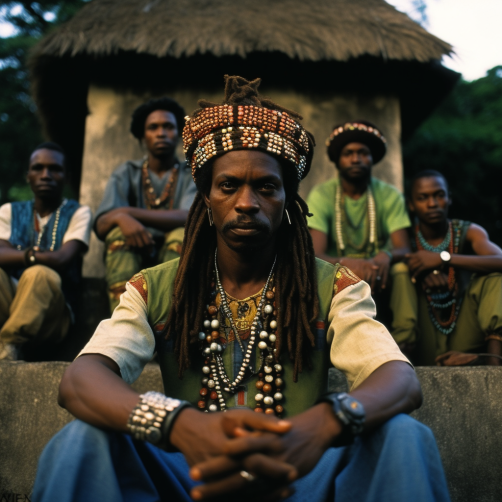
Abakuá, an emblematic initiatory fraternity, has remained a pillar of Afro-Cuban culture since its founding in Havana in 1836. Reserved exclusively for men, this secret society originates from the Abakpa region in Nigeria, where it once flourished under various names such as Ekpe, Egbo, Ngbe, and Ugbe⁹.
Faithful to its African roots, Abakuá perpetuates a spiritual heritage infused with the beliefs and practices of the Igbo¹⁰, Efik¹¹, Efut¹², and Ibibio¹³ peoples. Its members, known as Ñáñigos, are reputed for their ability to transform into leopards, symbolizing their power and agility. During the era of slavery, Ñáñigos are said to have used this transformation to defend their community by turning African captives against their oppressors.
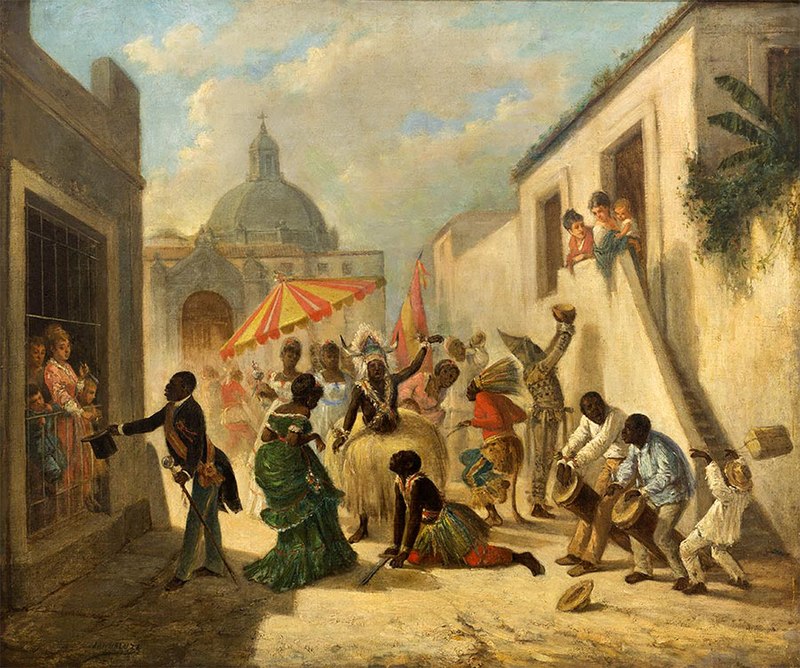
Often compared to Cuban Freemasonry due to its esoteric nature and commitment to secrecy, Abakuá remains a stronghold of solidarity and mutual support. Duties toward fellow Ñáñigos are sacred, and this brotherhood transcends ordinary bonds of friendship. As it is said in Cuba:
“Friendship is one thing, Abakuá is another.”
Thus, Abakuá remains a living testimony to the resilience and strength of Afro-Cuban culture, rooted in tradition and imbued with mystery.
Cuban Vodou: a spiritual crossroads between Africa, the Americas, and Europe
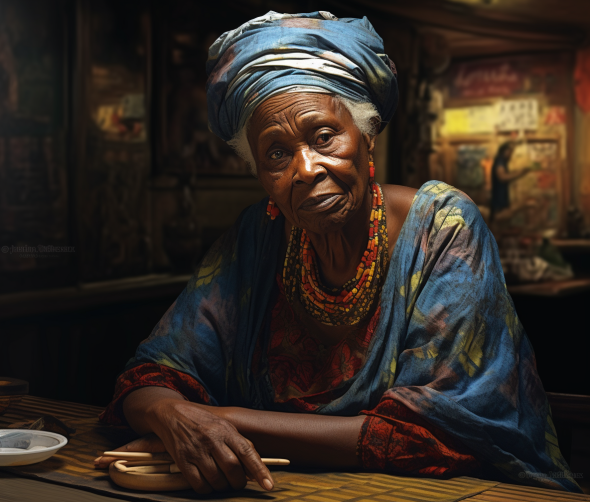
Cuban Vodou, also known as Regla de Arará, represents a remarkable fusion of beliefs and spiritual practices. Originating in the Spanish Empire, this syncretic religion embraces traditions from three continents, offering a living example of the cultural and spiritual blending that characterizes the Americas.
Spiritual branches of Cuban Vodou
African branch: At the heart of this tradition are spirits or deities of African origin, mainly drawn from the spirituality of the Fon and Ewe peoples. These spirits embody a direct continuity with the ancestors and religious practices of the Kingdom of Dahomey, demonstrating the depth of African roots in Cuban Vodou.
Indigenous branch: Amerindian spirits, especially those from the Taíno¹⁴ tradition, enrich Cuban Vodou, recalling the spiritual heritage of the first inhabitants of the Caribbean. This component highlights the respect for and coexistence of indigenous beliefs within Vodou practice.
European branch: European influences, particularly Spanish spirituality, complete the spiritual landscape of Cuban Vodou. This integration of Christian elements reflects the interactions and cultural exchanges between colonizers and local populations.
Practice and diffusion
Cuban Vodou stands out for its theological proximity to its African origins and its connections with Haitian Vodou, sharing with it a common base of beliefs and rituals. Its practice extends far beyond Cuba, resonating in the Dominican Republic, Puerto Rico, and the United States, where communities of followers continue these ancestral traditions.
This spiritual panorama of Cuban Vodou reveals the incredible richness of a tradition that, over the centuries, has harmoniously integrated diverse influences to create a unique system of beliefs. It embodies the ongoing dialogue between Africa, the Americas, and Europe, offering a vibrant testimony to humanity’s ability to weave spiritual connections beyond geographical and cultural boundaries.
Kumina: the afro-jamaican religion of the parish of St. Thomas
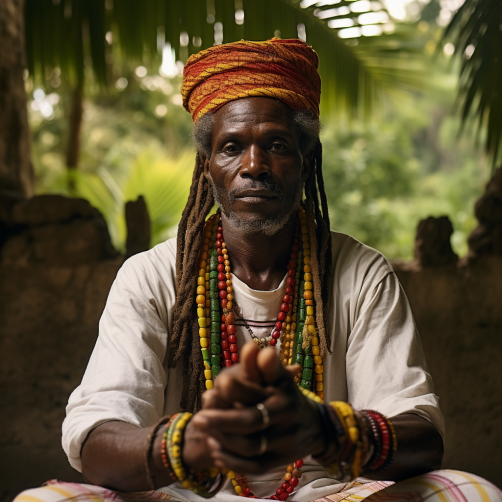
Kumina, a vibrant Afro-Jamaican religion, emerged among Kongo¹⁵ immigrants who came to work on plantations after the abolition of slavery. Its cradle lies in the picturesque parish of St. Thomas, in southeastern Jamaica, where these immigrants found refuge and rooted their spiritual traditions.
The deities of Kumina
In Kumina cosmology, deities are divided into two categories: those linked to the earth and those linked to the heavens. At the top stands Oto King Zombi, the Supreme Creator. Obei and Shang hold high positions among celestial deities. Earthly figures include biblical characters such as David, Ezekiel, Moses, Cain, and Shadrak, reflecting the incorporation of the Old Testament into Kumina spirituality. Ancestral spirits also play a central role, demonstrating deep respect for ancestors and their ongoing influence on daily life.
The mystery of the zombis
At the heart of Kumina cosmogony lies the concept of Zombis, ancestral deities both venerated and feared. The term “Zombi,” derived from the Kikongo¹⁶ word “Nzambe” (God, the Creator), refers to these powerful entities that preside over ceremonies and possess dancers during sacred rituals. According to belief, only individuals possessed by a Zombi during their lifetime can become Zombis after death, ensuring continuity of their presence and influence on Earth.
Kumina, rooted in earth and sky, tradition and mysticism, continues to enchant and inspire those seeking spiritual connection and the presence of ancestors.
Louisiana Vodou: between african tradition and francophone catholic culture
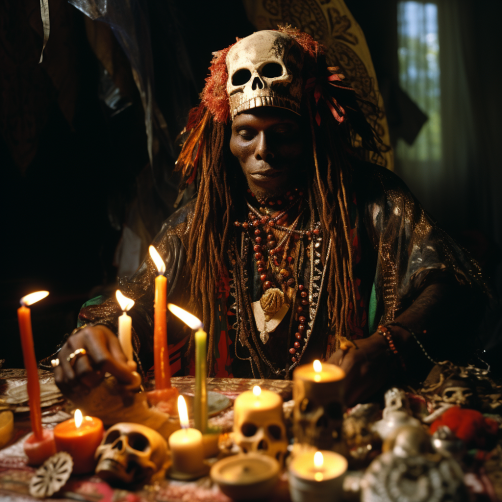
Louisiana Vodou, also known as New Orleans Vodou, embodies a remarkable blend of spiritual elements drawn from various African religious traditions. This Afro-American religion emerged from the heritage of West Africans deported by European colonial powers such as France, Spain, and the United States. Deeply rooted in the Vodun of the Kingdom of Dahomey¹⁷, it finds expression in Louisiana Creole, its liturgical language.
Cultural synthesis
Louisiana Vodou is the result of a unique cultural blending between African traditions and the francophone Catholic culture of southern Louisiana, shaped by the Atlantic slave trade. Distinct from its Haitian and South American counterparts, it is characterized by the use of gris-gris, voodoo dolls, the veneration of Li Grand Zombi, the supreme deity, and the presence of a queen at its head.
The power of Vodou queens
Vodou queens held a central place in Louisiana society, wielding considerable power. Organizing ceremonies with captivating ritual dances, they attracted crowds of thousands. Their activities included making and selling amulets, charms, potions, and offering magical services. Among them, the two Marie Laveau figures, mother and daughter¹⁸, stand out:
“In 1874, up to twelve thousand white and Black spectators rushed to the shores of Lake Pontchartrain to catch a glimpse of Marie Laveau II performing her legendary rites on Saint John’s Eve.”
Obeah: an african religious tradition in the Americas
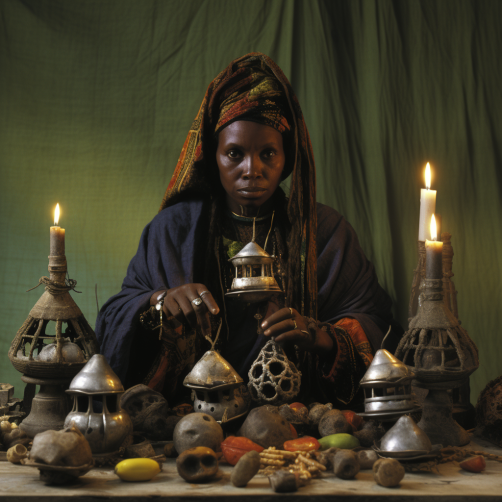
Obeah refers to religious practices developed by West Africans, particularly of Igbo origin, deported to the Americas. Closely linked to other African-derived religions such as Palo, Vodou, Santería¹⁹, and Hoodoo, Obeah is widespread across the Caribbean and beyond.
Origins and cultural influence
According to the W.E.B. Dubois Institute, Obeah originates from traditions known as dibia or obia, meaning “medicine” in Igbo.
Cultural blending and spiritual resilience
Over time, aspects of Obeah survived by incorporating Christian symbols introduced by European enslavers, often to conceal African practices.
Palo: an Afro-Cuban religion rooted in Kongo traditions
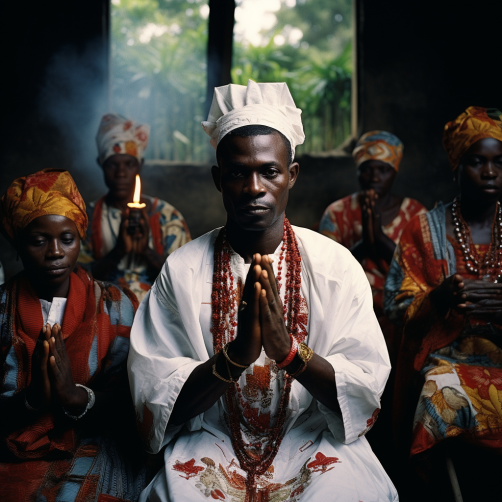
Palo, also known as “Las Reglas de Congo,” is a religion practiced in Cuba by Africans who were deported to the Americas from the Kongo region. This religious tradition includes several distinct branches, notably Mayombe, Monte, Briyumba, and Kimbisa, each with its own practices and rituals.
Symbolism and Ritual Practices
The term “palo,” meaning “stick” in Spanish, is attributed to this religion due to the use of wooden sticks in the preparation of altars, called “la Nganga,” “el caldero,” “nkisi,” or “la prenda.”
Palo priests, known as “Paleros,” “Tatas” (men and fathers in Kikongo), “Yayas” (women), or “Nganguleros,” play a central role in the practice of this religion. Initiates, called “ngueyos” or “pino nuevo,” are integrated into the spiritual community of Palo through initiation rituals and specific teachings.
Pantheon and Deities
At the heart of the Palo pantheon is Nzambi, the supreme being revered by practitioners. The Kimpungulu (Mpungu in singular) are nature deities enclosed in sacred vessels called Nkisi. These deities play an essential role in Palo rituals, offering guidance, protection, and spiritual power to followers.
In summary, Palo represents a living and dynamic expression of African spirituality in the Americas, demonstrating the persistence and adaptability of African cultural traditions in the diaspora. Its rich symbolism and complex ritual practices reflect the depth and diversity of the spiritual heritage of the Kongo people and their descendants in the Cuban context and beyond.
Umbanda: A Brazilian Spiritual Synthesis Between African Traditions and Catholic Influence
Umbanda is an Afro-Brazilian religion characterized by a unique blend of African traditions, Catholicism, Spiritism, and Indigenous beliefs. Originating in Rio de Janeiro and surrounding regions, this spirituality emerged mainly among descendants of Afro-Brazilian slaves, particularly among the most disadvantaged populations.
Branches and Core Beliefs
Umbanda has several branches, each with its own distinct beliefs and practices. However, some shared beliefs unite these traditions:
- Olodumare: The supreme creator, central to Umbanda cosmology, symbolizing the source of all life and creation.
- Orixás: These deities, often associated with Catholic saints, represent forces of nature and aspects of human life. They are venerated and invoked to guide and protect followers.
- Ancestral spirits: The spirits of the deceased play an important role in Umbanda practice, acting as advisors and spiritual guides for believers in the material world.
- Mediums: Individuals with special psychic abilities who serve as channels of communication between the Orixás, spirits, and followers, transmitting messages and spiritual guidance.
- Reincarnation and spiritual evolution: Umbanda teaches belief in reincarnation and spiritual growth, encouraging practitioners to pursue development across multiple lifetimes.
- Charity and social fraternity: Charity and social solidarity are essential aspects of Umbanda, emphasizing helping others and community unity.
The Dark Side: Quimbanda
However, Umbanda also includes a darker aspect known as Quimbanda, which represents black magic and is used by those seeking to harm others. This duality between Umbanda and Quimbanda illustrates the complexity and diversity of religious practices within the Umbanda tradition.
In summary, Umbanda embodies a rich and complex spiritual synthesis, merging elements from different traditions to form a unique and dynamic religious practice deeply rooted in Brazil’s history and multicultural society.
Hoodoo: An Afro-American Spirituality Rooted in West African Traditions
Hoodoo represents a traditional Afro-American spirituality, emerging from the fusion of various West African spiritual traditions and beliefs. The term Hoodoo derives from “Hudu,” from the Ewe language and people of Togo and Ghana.
Origins and Evolution
Hoodoo results from the interweaving of religious practices from regions such as Kongo, Benin/Togo, Nigeria, and others. Enslaved people in the southeastern United States—particularly the Gullah of South Carolina and Georgia, as well as those in Louisiana—benefited from relative isolation that allowed them to preserve their ancestral West African traditions.
In contrast, in the Mississippi Delta, where the concentration of enslaved people was high, Hoodoo was practiced secretly to avoid slave owners’ surveillance. Later, during the Great Migration after slavery, Hoodoo spread across the United States as African Americans left the Delta in search of new opportunities.
Transmission and Spread
Hoodoo has been passed down through generations within African American communities, transmitted orally and through ritual practices. Over time, it has evolved and adapted to different cultural and geographical contexts while preserving its deep roots in West African traditions.
In short, Hoodoo represents a valuable Afro-American cultural heritage, reflecting the resilience and creativity of communities that preserved and transmitted their spiritual traditions despite historical challenges and social change.
Winti: Afro-Surinamese Spiritual Richness
Winti, a traditional religion deeply rooted in Afro-Surinamese culture, represents a remarkable example of spiritual syncretism. Born in the Dutch colonial empire, it harmoniously blends the religious beliefs and practices of Akan peoples, Christianity, and Indigenous traditions.
Fundamental Principles of Winti
Winti is structured around four fundamental pillars:
- Belief in Anana Kedyaman Kedyanpon: The supreme creator, cornerstone of the Winti universe, governing cosmic order and divine justice.
- The Winti pantheon: A rich and diverse set of deities reflecting the many facets of life and nature.
- Ancestor veneration: A vital principle affirming that ancestral spirits continue to guide and protect their descendants.
- Ampuku: Anthropomorphic forest spirits embodying elemental forces and the mysteries of nature.
According to C. Wooding, a prominent Winti practitioner, this spirituality is distinguished by its unique approach to personified supernatural beings, capable of possessing individuals to reveal hidden knowledge, influence events, or even heal illnesses:
“(…) an Afro-American religion in which belief in personified supernatural beings occupies a central position: these beings can possess a human, suspend their consciousness, and reveal information about the past, present, and future, as well as cause and/or heal supernatural illnesses.”
Beyond Winti: A Mosaic of Afro-American Spiritualities
Although Winti is specific to Suriname, it is part of a broader network of Afro-American religions sharing common roots in West Africa. Among them, Sanse in Puerto Rico and Comfa in Guyana illustrate the diversity and richness of Afro-American spiritual expressions, blending influences from Kongo, Akan, Yoruba, and many others.
Celebrating the Heritage of African Religions: A Journey Through Traditions
The diversity and richness of African spiritual traditions in the Americas demonstrate the resilience and strength of Afro-descendant communities in the face of historical adversity. From Abakuá in Cuba to Umbanda in Brazil, Hoodoo in the United States, and Winti in Suriname, these religions reflect both a deeply rooted cultural heritage and constant adaptation in new environments.
These spiritual traditions—unique blends of African, European, and Indigenous beliefs—offer a window into the collective soul of the African diaspora. They reveal practices of worship, healing, protection, and connection with the divine that have endured through centuries.
They represent an inexhaustible source of wisdom, inspiration, and strength for practitioners, while also offering scholars, believers, and curious minds worldwide fascinating insights into how cultures meet, merge, and transform.
The invitation is therefore extended to anyone wishing to explore these African spiritual traditions of the Americas—through reading, participation in ceremonies, or simply openness to these cultural riches.
By connecting with these spiritual roots, one can enrich their own life while contributing to the preservation and revitalization of these precious traditions for future generations.
Share your experience: connect with African spiritual heritage.

We warmly invite you to delve deeper into the richness and diversity of African spiritual traditions and their manifestation in the Americas. Your journey through these ancestral beliefs is only just beginning. Share your discoveries, your personal experiences, or even your questions in the comments below. Your voice enriches our community and helps illuminate the many facets of this vibrant heritage.
Feel free to share this article on social media to invite your friends and family to explore alongside you. Together, let us deepen our understanding and appreciation of African spirituality and its lasting impact across the world.
Join the conversation and let us bring this heritage to life together!
To further deepen your understanding of these spiritual traditions, here are some recommended resources:
Abakuá:
Velez, Teresa Maria. “Drumming for the Gods: The Life and Times of Felipe Garcia Villamil, Santero, Palero, and Abakua.” This book offers a fascinating look into the life and religious practices of Felipe Garcia Villamil, a Santero, Palero, and member of the Abakuá.
Kumina:
Murrell, Nathaniel Samuel. “Afro-Caribbean Religions: An Introduction to Their Historical, Cultural, and Sacred Traditions.” This work provides a comprehensive introduction to Afro-Caribbean religions, including Kumina, by exploring their history, culture, and sacred traditions.
Louisiana Vodou:
“Haitian Immigration: 18th & 19th Centuries,” In Motion: African American Migration Experience. This online resource offers valuable information on Haitian immigration to the United States in the 18th and 19th centuries, providing crucial historical context for understanding the origins and evolution of Louisiana Vodou.
Obeah:
Williams J. “Voodoos and Obeahs: Phases of West Indian Witchcraft.” This book explores in depth the various phases and aspects of witchcraft in the Caribbean, including Obeah, offering essential historical and cultural insights into this mystical tradition.
These resources offer a diversity of perspectives and in-depth analyses of the spiritual traditions discussed, thereby providing a solid foundation for further exploration of these fascinating subjects.


