

Discover how Funsu Nzinga Mbemba, also known as Afonso I of Kongo, fought against the slave trade by writing to the King of Portugal in 1526. A historic act against human trafficking.
Following the colonial exploitation and the plundering of Brazil, Portugal sought to diversify its economic activities and embarked on the transatlantic slave trade, which was extremely profitable. This trade had a devastating impact on the Kingdom of Kongo, significantly weakening its central authority: Portuguese merchants bypassed the power of the Manikongo by dealing directly with his vassals. Faced with this situation, in 1526, Funsu Nzinga Mbemba, better known as Afonso I of Kongo, took up the pen to write to King João III of Portugal, imploring him to abolish this harmful practice.
Afonso I of Kongo: the apostle of modernization and resistance
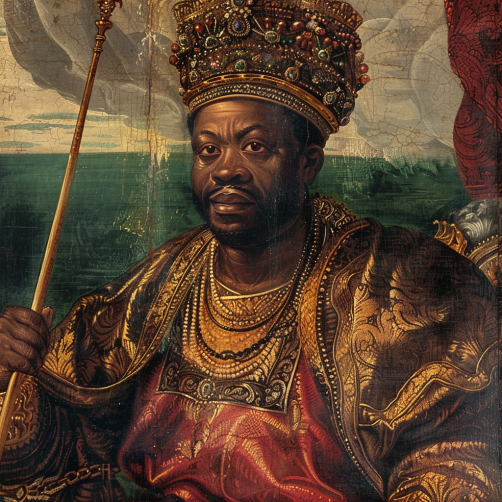
Funsu Nzinga Mbemba, nicknamed “the apostle of Kongo” and known in French as Alfonse I, was born in 1456 and became the second Christian Manikongo of Kongo dia Ntotila. A determined warrior, he expanded Kongo’s borders southward and modernized the kingdom, earning him a reputation as one of the most eminent monarchs in Kongo history.
Faced with the establishment of the transatlantic slave trade by the Portuguese, which undermined central authority by dealing directly with the vassals of the Manikongo, Afonso I took a firm stance. In 1526, he sent several letters to King João III of Portugal, denouncing the reprehensible actions of the Portuguese and their illegal trade in human beings. He threatened to sever all trade with Portugal but ultimately established a commission responsible for verifying the legality of the enslavement of individuals put up for sale.
In his correspondence, he eloquently described the desolation of his kingdom, ravaged by the abduction of its inhabitants, including members of his own family, to be sold as slaves. He expressed the desire that his kingdom should not serve as a slave market, emphasizing the need to focus on spiritual and educational needs rather than on the slave trade.
Despite his initial opposition to slavery, Afonso I had to contend with Portuguese military power and the economic demands of his kingdom. Initially, only prisoners of war and criminals were sold as slaves. However, faced with the growing demand for “Ebony Wood,” he was forced to extend the trade to populations from neighboring regions.
Resigned, Afonso I sought to regulate the slave trade according to the laws of Kongo to prevent the sale of free men. When he suspected that the Portuguese persisted in their illegal practices, he sent a final letter to King João III, imploring him to put an end to it. This approach illustrates the complexity of relations between Kongo and Portugal, marked by often divergent economic and political interests, but also by Afonso I’s determination to protect his people and preserve the integrity of his kingdom.
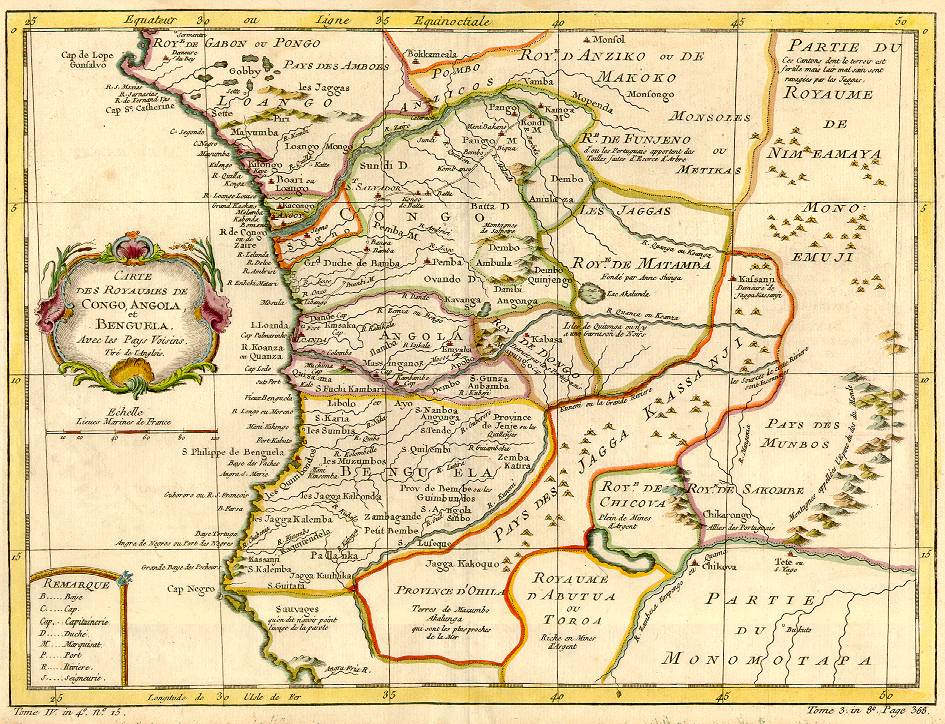
The historical correspondence of Afonso I of Kongo to João III of Portugal
Lord,
Your Highness has written to us asking that we request in our letters whatever we need. You would provide us with everything. The peace and health of our kingdoms depend, after God, on our life, but we are already old, and we have often been afflicted by various illnesses that weaken us to the utmost. These same illnesses also strike our sons, our relatives, and the people of the land. Yet in this kingdom we have neither physicians nor surgeons who know how to provide appropriate remedies for such ailments.
We also have no pharmacies nor the most effective medicines. Thus, for lack of everything, many people already instructed in the truths of the holy faith of Our Lord Jesus Christ die! Most inhabitants treat themselves with herbs and various woods or resort to traditional rites. If they survive, they place faith in these herbs and rites, and if they die, they believe they are saved, which does not favor the service of God.
To avoid such a harmful error, since, after God, it is from Your Highness that all remedies for health come into our kingdoms, we ask Your Highness as a favor to send us two physicians, two pharmacists, and one surgeon. Let them come and settle in our kingdoms with all their medicines and instruments, because we are in great need of each of them.
We will grant them many favors, because they will be sent by Your Highness, if you consent to let them come to work here. We earnestly ask Your Highness to agree to send them to us, because this concerns not only a particular benefit, but also the service of God, for the reasons we have set forth.
Moreover, Lord, there is in our kingdoms a great obstacle to the service of God. Many of our subjects eagerly covet the goods of Portugal, which your people bring into our kingdoms. To satisfy this disordered appetite, they seize many of our free or freed black subjects, and even nobles, sons of nobles, even people of our own family. They sell them to the white men who are in our kingdoms, after secretly transporting their captives or doing so at night so as not to be recognized. As soon as the captives are in the hands of the white men, they are immediately branded with a hot iron.
At the time of their embarkation, they are found in this condition by our guards. The white men then claim that they bought them but that they cannot say from whom. It is for us to administer justice and restore freedom to these prisoners, as they demand. To avoid such damage, we have decreed that all white men in our kingdoms who buy slaves in any manner whatsoever must first inform three nobles and officers of our court, to whom we have entrusted this control. These are Dom Pedro Manipunzo and Dom Manuel Manisaba, our chief judicial officer, as well as Gonçalo Pires, our chief shipowner.
They must verify whether these slaves are free men or not. If they are recognized as slaves, nothing will prevent them from being taken and embarked. But otherwise, these captives will be confiscated from the white men. We grant this favor and these facilities because of Your Highness’s participation in this trade. For we know that it is for your service that slaves are taken from our kingdoms. Otherwise, we would not consent to it, for the reasons already stated.
We inform Your Highness of all this so that your subjects do not tell you the contrary. For they tell many lies to Your Highness, to remove from your mind the memory of the obligations you have toward us and toward our kingdom for the service of God. It would seem to us a very great favor if you would let us know by one of your letters what you think of these measures. We kiss, Lord, many times the hands of Your Highness.
Written in our city of Congo, on October 18, 1526 by João Teixeira.
[signed] King Dom A.
Recipient: Most high and powerful prince, King of Portugal, our brother.
Sender: The King of Manicongo.
The legacy of Funsu Nzinga Mbemba and the call to conscience
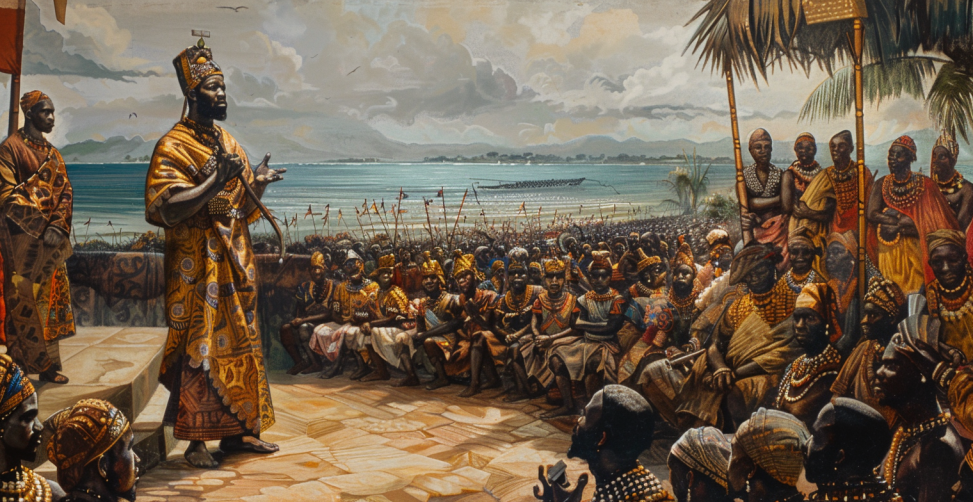
The history of Afonso I of Kongo, better known as Funsu Nzinga Mbemba, is a poignant testimony to the complexity of relations between Africa and Europe at the dawn of the colonial period. His relentless struggle against the transatlantic slave trade, illustrated by his correspondence with King João III of Portugal, reveals a ruler deeply committed to protecting his people and the sovereignty of his kingdom. Despite overwhelming challenges and painful compromises, the story of Afonso I calls attention to the lasting consequences of the slave trade and the importance of historical memory in understanding present-day dynamics.
Continue the deiscovery on nofi.media

The inspiring history of Afonso I of Kongo is a powerful reminder of the richness of our cultural and historical heritage. We invite you to delve deeper into captivating narratives and valuable lessons from the past by exploring Nofi.media. Discover a multitude of similar content that enlightens, inspires, and celebrates our shared history.
Join us in our quest to honor memory, promote justice, and deepen our understanding of the world. On Nofi.media, every article, every story, and every voice contributes to weaving the rich tapestry of our heritage. Together, let us draw inspiration from the past to build a future radiant with equity and dignity for all. Explore, learn, and engage today.
Notes and references:
Louis Jadin and Mireille Dicorato, Correspondence of Dom Afonso, King of Congo 1506–1543
This bibliographic reference concerns a work published by the Royal Academy of Overseas Sciences in 1974, which compiles and analyzes the correspondence between Dom Afonso, King of Congo, and various European interlocutors, mainly the King of Portugal, between 1506 and 1543. The work by Louis Jadin and Mireille Dicorato provides valuable insight into the political, economic, and social dynamics of the Kingdom of Kongo during the era of the transatlantic slave trade, as well as Afonso I’s efforts to navigate between preserving the autonomy of his kingdom and European colonial pressures.
This work is essential for understanding the complexity of relations between Africa and Europe at the beginning of the modern era and highlights Afonso I as an African leader who attempted to resist the devastating impacts of the slave trade on his people.
Manikongo: the title of Manikongo refers to the sovereign of the Kingdom of Kongo, a major political entity in Central Africa before European colonization. The term derives from “Mwene Kongo,” meaning “lord of Kongo” in Kikongo, the language of the kingdom. The Manikongo exercised political, judicial, and religious authority over his subjects, and his power was often reinforced by marital alliances, conquests, and control of trade, particularly that of precious cowrie shells used as currency.
Kongo dia Ntotila: Kongo dia Ntotila, translated as “unified Kongo” or “the Kongo Empire,” refers to the maximum extent of the Kingdom of Kongo under the reign of certain Manikongos who succeeded in unifying various chiefdoms and kingdoms under their authority. This period was marked by territorial expansion, centralization of power, and economic growth, notably through extensive trade networks with other African regions and with Europeans. Kongo dia Ntotila is often invoked to emphasize the grandeur and political, social, and economic sophistication of Kongo before the disruptions caused by the transatlantic slave trade.
João III of Portugal: João III, born in 1502 and died in 1557, was the 15th King of Portugal and the Algarves, from 1521 until his death. His reign was marked by the expansion of the Portuguese Empire in Asia, Africa, and South America, as well as the beginning of the institutionalization of slavery in Portuguese colonies. João III is also known for his role in promoting the Catholic Counter-Reformation, notably through the introduction of the Inquisition in Portugal. His correspondence with Afonso I of Kongo reveals the complexity of relations between Portugal and Kongo at that time, oscillating between cooperation and conflict, particularly regarding the slave trade and evangelization efforts.


