

Dive into the history of the Malê Revolt of 1835 in Bahia, a crucial moment in the struggle against slavery in Brazil. Discover the causes, the course of events, and the lasting impact of this insurrection, and how it continues to influence the quest for justice and equality in modern society.
At the heart of the 19th century, the state of Bahia in Brazil was the scene of a significant event that profoundly influenced Brazilian history and society. In 1835, a slave revolt, known as the Malê Revolt1, broke out, highlighting the racial, social, and religious tensions simmering beneath the surface of the Brazilian Empire. This insurrection, led by African slaves, primarily of Muslim faith, not only challenged the established order but also left an indelible mark on the struggle for freedom and equality. In this article, we will delve into the details of this historic revolt, exploring its causes, its unfolding, and its lasting impact on Brazilian society.
Socio-economic and racial context in Bahia before the 1835 revolt
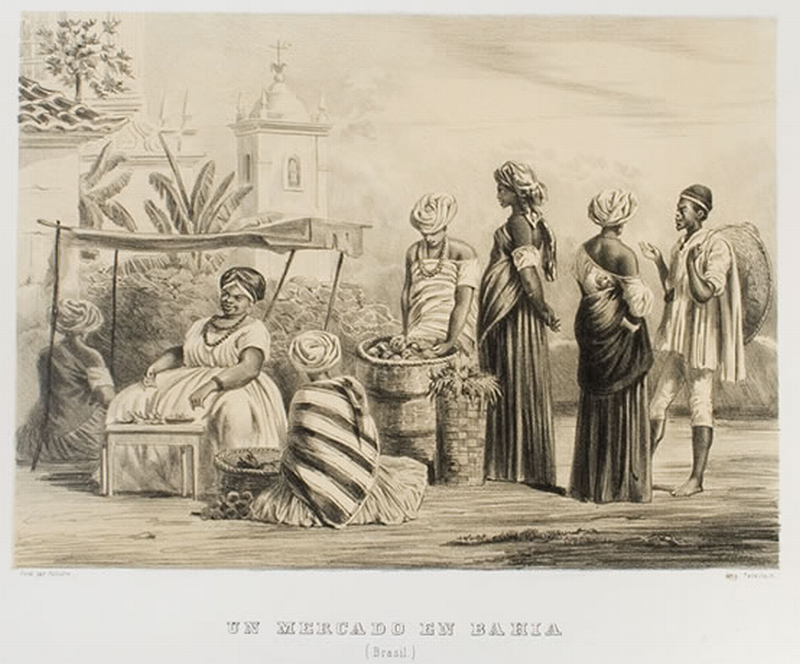
During the 1830s, a decade after gaining independence from Portugal, the Brazilian Empire was facing a severe economic crisis, exacerbated by marked social and racial disparities. In Bahia2, and more particularly in its capital Salvador, society was rigidly hierarchical. The top of this hierarchy was occupied by merchants, wealthy planters, as well as high-ranking officials of the State and the Church, positions exclusively reserved for Whites. At the other end of the social scale were vagrants, beggars, and above all slaves, a category composed entirely of Black and mixed-race individuals, the latter sometimes having access to a slightly higher social status.
Within the Black population, distinctions were made. On one hand, there were Brazilians or crioulos3, born on Brazilian soil, and on the other, Africans, born on the African continent. The former were differentiated by their complexion, while the latter were distinguished by their ethnic affiliation. Among these groups were the Haoussas4, the ‘Angolas5’ (from the region of present-day Angola), the Jeje6 (Aja-Ewe-Fon), and the Nagos7 (Yorubas), the latter being the most numerous. Previous attempts at slave revolts in 1830 and 1831 had already highlighted the importance of these groups in insurgent movements, as noted by the French consul of the time.
The influence and resilience of Muslims in Salvador da Bahia
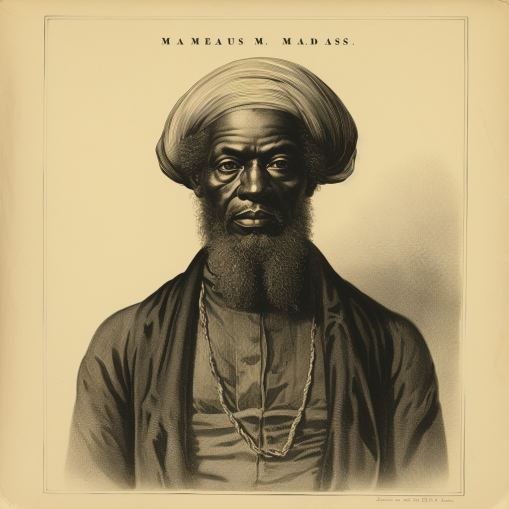
At the dawn of the 19th century, the population of Muslim slaves in Bahia, mainly of Manding origin, was reinforced by new arrivals, mostly from regions of present-day Nigeria, including ethnic groups such as the Hausa, the Kanuri8, and the Yoruba9. Following Brazil’s independence in 1822, Catholicism was officially established as the state religion, relegating the beliefs of slaves—whether Muslim or so-called “pagan”—to illegality. However, this marginalization did not prevent the Muslims of Salvador da Bahia from gathering and practicing their faith in secret.
The Muslim community, largely composed of Nago, Hausa, Tapa (Nupe)10, and Bornu, experienced a significant wave of Islamization among slaves during the 1830s. Their reputation as “magicians,” partly due to their use of amulets and their unique writing system, contributed to this expansion. As early as November 1834, signs of mobilization were noticeable, as the Muslims of Salvador sought to rally slaves from the Recôncavo11 region, around the capital of the state of Bahia, to their cause.
The motivations behind the revolt
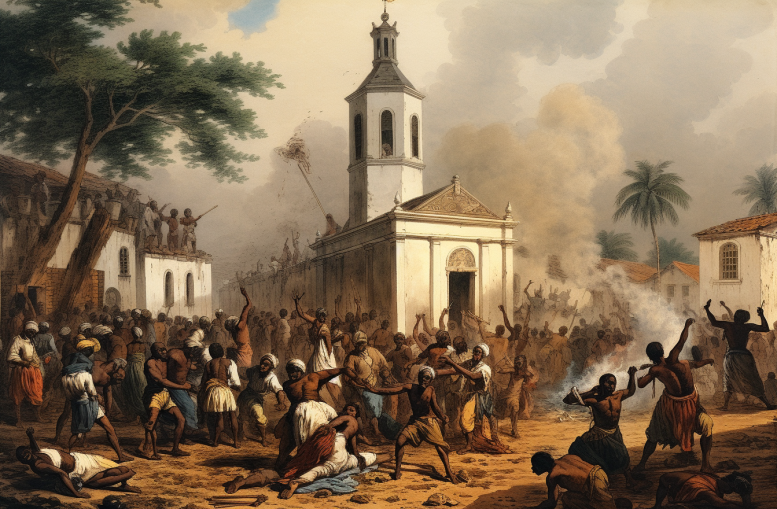
The date of January 25, 1835, was strategically chosen by the insurgents to launch their revolt. This date carried a dual religious significance, coinciding with the festival of Ramadan, a sacred time for Muslims, and with the Catholic feast of Nossa Senhora da Guia12. The insurgents may have hoped that Ramadan would help ward off evil spirits. Moreover, the celebration of Our Lady of Guidance, particularly festive that Sunday, seemed to offer an opportunity to catch Salvador by surprise, taking advantage of the festivities organized by the city’s White population.
Although accounts vary, it is generally accepted that the revolt primarily targeted Whites, without specifically targeting mixed-race individuals or Brazilian-born Blacks. The revolt was largely led by Muslims, but it also attracted non-Muslim slaves, often out of ethnic solidarity. Many of these were Nagos who practiced the traditional worship of the Orishas.
As for the intentions of the slaves after the capture of Salvador, they remain subject to interpretation. However, according to the indirect testimony of a woman involved in the revolt, it appears that their ultimate ambition was to overthrow the status quo and become the “masters of the country,” thus marking a radical break with the system of oppression and domination in place.
The course of the revolt
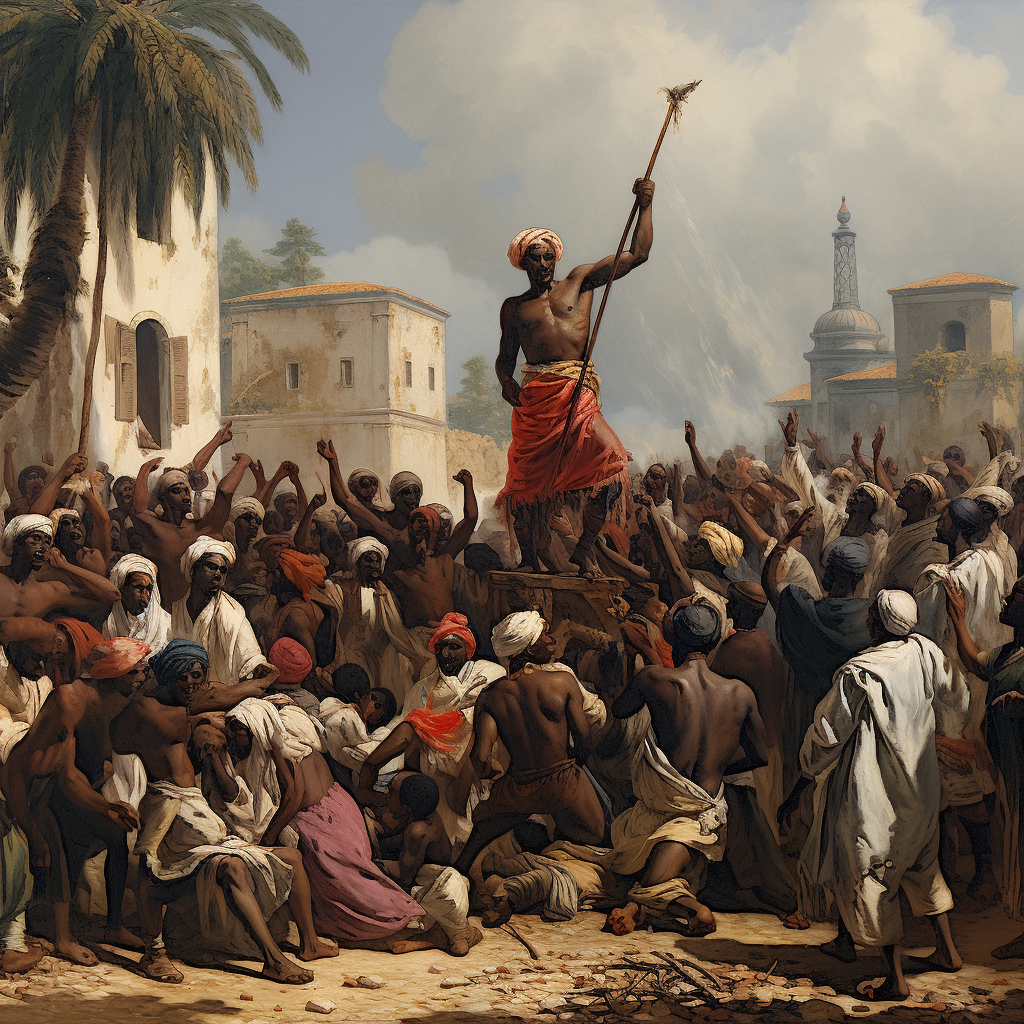
The 1835 revolt in Bahia was orchestrated under the leadership of Aluna (or Ahuna), a Nago slave working as a water seller. After a punishment and temporary exile to the Recôncavo region due to his popularity among other slaves, Ahuna returned to Salvador shortly before January 25. As the festivities of Our Lady of Guidance were in full swing from January 24, rumors of an imminent insurrection began to circulate. The first warnings reached the authorities through a freed Black slave and his wife, as well as another informant, the companion of a Nago insurgent named Vitorio Sule, who lost his life in the first clashes.
The revolt broke out at the home of Manoel Calafate, a freed slave, and the insurgents, dressed in traditional Muslim attire and equipped with amulets, spread out in several directions. Despite some initial successes in two confrontations, the insurrection was ultimately suppressed by loyalist forces, better armed and mounted. The insurgents, mainly equipped with bladed weapons and outnumbered in terms of firearms, were either killed, captured, or managed to escape. The revolt failed to spread beyond Salvador. More than 70 insurgents lost their lives that night, some choosing suicide over capture. On the side of the loyalist forces, 9 soldiers were killed.
In the aftermath of the revolt, brutal repression fell upon the African community of Bahia. The authorities sought to “de-Africanize” the region and integrate it into a more European national identity. Some participants in the revolt were executed, others sentenced to prison, forced labor, or corporal punishment. Many Blacks involved or suspected were deported to Nigeria, Benin, Togo, and Ghana by Brazilian authorities, becoming the ancestors of the modern Agudas.
Lessons from the Malê Revolt: toward a future of justice and equality
In conclusion, the Malê Revolt of 1835 in Bahia represents far more than a simple episode in Brazilian history. It symbolizes the relentless struggle for freedom, equality, and the recognition of fundamental rights. The echoes of this insurrection still resonate today, reminding us of the importance of understanding our past in order to build a more just future. The lessons drawn from the Bahia revolt encourage us to reflect on current social and racial dynamics, and on how we can, together, work toward a society where dignity and respect for all are at the heart of our values. May the history of the Malê Revolt continue to inspire and guide future generations in their quest for a more equitable and harmonious world.
Join the movement for emancipation and justice

History is rich with lessons on the struggle for equality and justice. “The revolt of the males” is just one chapter among many that inspire us to act and reflect on our own role in contemporary society. On Nofi.media, we explore stories of resistance, emancipation, and courage that have shaped our world.
Commit alongside us to discover more stories that challenge the established order, question prejudice, and celebrate the victories—big and small—of those who fought for a better future. Click here to dive deeper into the stories of revolt and resilience that continue to inspire generations.
Notes and references
Bibliography
João José Reis — Slave rebellion in Brazil: the Muslim uprising of 1835 in Bahia
Pierre Verger — Flux and reflux of the slave trade between the Gulf of Benin and Bahia de Todos os Santos from the 17th to the 19th century


