

Explore the impact and significance of Grounation Day, a key date for the Rastafari community that commemorates the historic visit of Haile Selassie to Jamaica in 1966.
Grounation Day, celebrated every year on April 21, holds a central place in the Rastafari calendar. This special date marks the anniversary of the historic visit of Emperor Haile Selassie to Jamaica in 1966, a major event that solidified the legitimacy and enriched the practices of the Rastafari religion. Beyond its religious implications, the Emperor’s visit had considerable repercussions on Jamaican culture and society, influencing various aspects of daily life, politics, and artistic expression.
The impact of this event extends far beyond the borders of Jamaica, resonating across the world and offering a fresh perspective on post-colonialism, African identity, and the diaspora. Selassie’s arrival in Kingston was not simply a state visit; it was perceived by many as the fulfillment of a prophecy and a sign of change and hope for oppressed peoples. This day marked a major transformation for the Rastafari, affirming their faith and their place in a society that had until then marginalized them.
This article explores the historical and cultural dimensions of this memorable visit, seeking to understand how a single day could so profoundly influence a community and continue to inspire generations.
Historical context
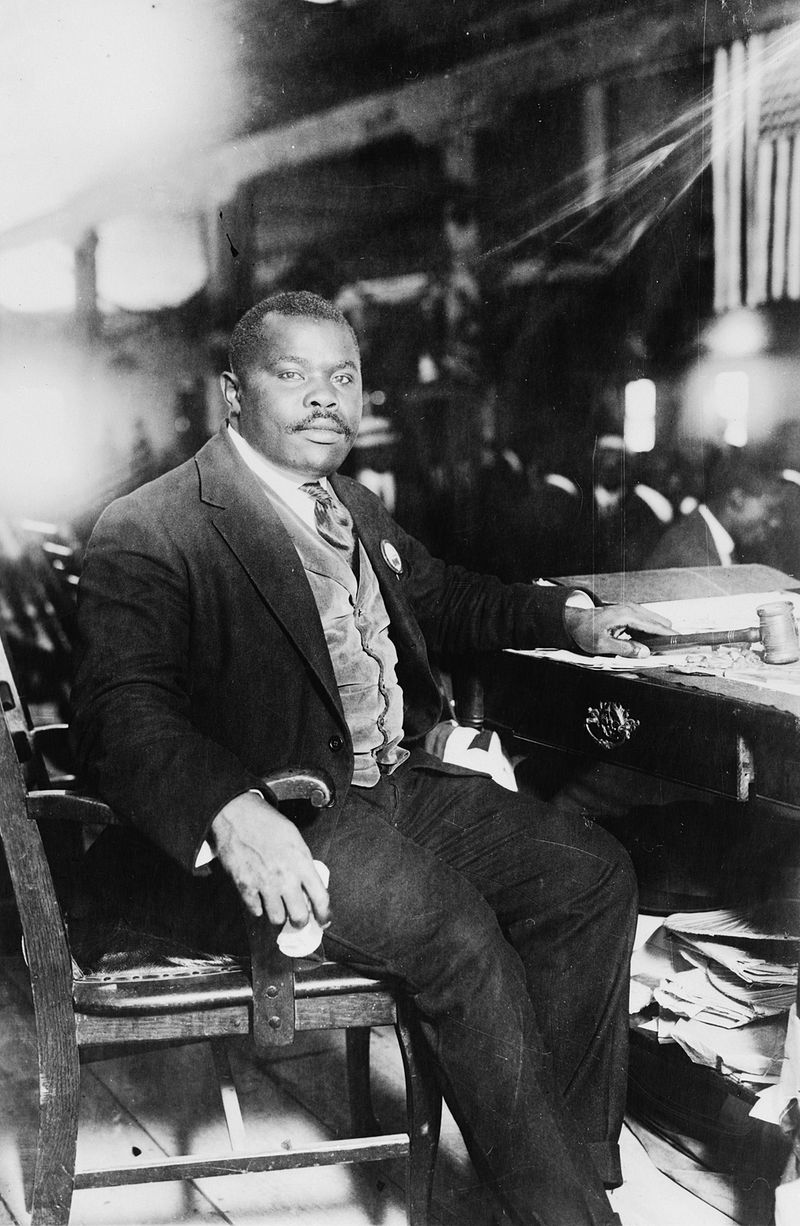
In the 1960s, Jamaica found itself at a critical turning point in its history. After gaining independence from the United Kingdom on August 6, 1962, the island embarked on a process of redefining its national identity and rebuilding its social and political structure. It was a period marked by cultural dynamism and political fervor, but also by significant economic challenges and internal tensions.
At the heart of this transformation was the Rastafari movement, a faith and social movement that took root in the 1930s but, by the 1960s, was beginning to gain visibility and influence. The Rastafari advocated a return to Africa, the ancestral land, as a solution to the oppression and diaspora experienced by Africans and their descendants. This vision was strongly inspired by the teachings of Marcus Garvey, a Jamaican political leader and fervent defender of Black rights, who encouraged people of African descent to take control of their destiny and to “look to the East for the crowning of the Black King.”
Haile Selassie I, born Tafari Makonnen and crowned Negusse Negest (“King of Kings”) of Ethiopia in 1930, was venerated by the Rastafari not only as a political leader but also as a divine incarnation. This veneration was based on an interpretation of various biblical prophecies and on Ethiopia’s status as a long-standing Christian nation that resisted European colonization. The Emperor himself held ambivalent positions regarding this worship, never openly endorsing the messianic role attributed to him by the Rastafari, while supporting Africans and the African diaspora in their struggle for justice and autonomy.
The announcement of Haile Selassie’s visit to Jamaica in 1966 was therefore received with immense emotion. For the Rastafari and many other Jamaicans, this visit was not simply that of a foreign head of state; it was seen as the tangible realization of a divine prophecy and a moment of legitimization and celebration of their faith. This visit took place within a broader context of searching for identity, cultural sovereignty, and reclaiming African heritage, deeply resonating with the aspirations and struggles of the Jamaican people at this crucial stage of their post-colonial history.
The 1966 visit
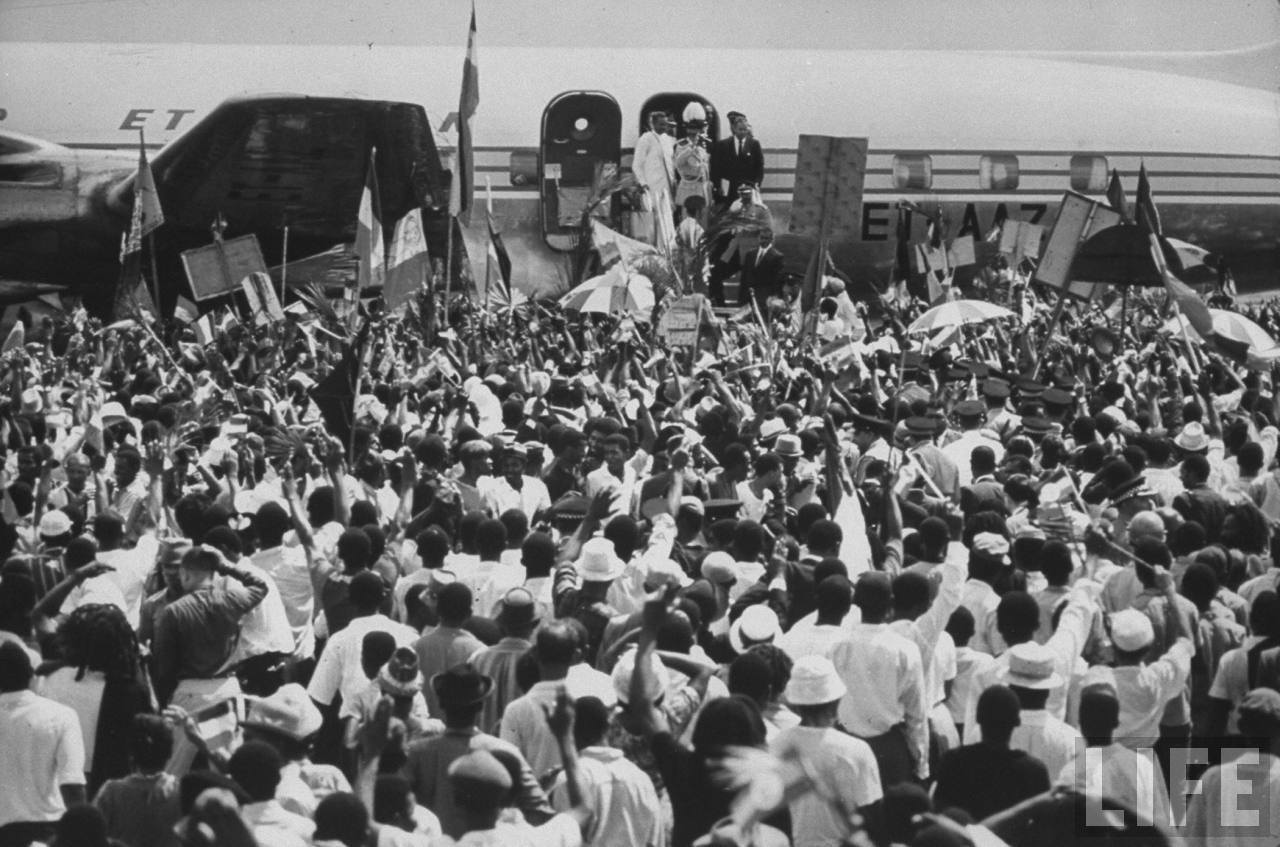
April 21, 1966 remains etched in Jamaican collective memory as a day outside of time, when Emperor Haile Selassie of Ethiopia set foot on the island, marking a decisive moment for the Rastafari community. His arrival at Kingston’s Norman Manley International Airport turned into a true national event, with more than 100,000 people converging on the site, braving stormy weather to welcome the one they regarded as a divine figure.
The airport was overwhelmed by a dense crowd composed of Rastafari, ordinary citizens, and onlookers, all gathered to take part in this historic moment. Chants, drums, and prayers filled the air, creating an atmosphere of spiritual celebration and collective reverence. Ras Mortimer Planno¹, an emblematic figure of the Rastafari movement, played a central role that day. Known for his leadership and influence within the community, Planno acted as an intermediary between the crowd and the Emperor, helping to calm the palpable excitement and maintain order.
When the Ethiopian Airlines plane landed and the door opened, there was an almost sacred moment of silence, quickly followed by a thunder of cheers as the Emperor appeared at the top of the gangway. His presence seemed to transcend the difficult weather conditions, bringing a momentary peace and a sense of solemnity to the gathered crowd. The Emperor, with his characteristic dignity and calm, greeted the crowd, his wave prompting cries of joy and adoration.
The way Selassie managed his presence among Jamaicans that day was also remarkable. Instead of heading immediately to the official vehicles, he took the time to absorb the energy of the crowd, walking slowly across the tarmac. He avoided the traditional red carpet, choosing to walk directly on the ground, an act that many interpreted as a sign of humility and connection with the land and the people he had come to meet.
This visit was not only significant for the Rastafari but also for Jamaica as a whole, symbolizing international recognition and respect for their culture and emerging identity as an independent nation. The day was filled with events, from the airport reception to official visits and meetings with various political and community leaders, each reflecting the importance and complexity of this historic encounter.
In short, the 1966 visit marked a turning point, not only for the Rastafari community, which saw its faith publicly and spectacularly validated, but also for Jamaica, which measured its global significance on that day. This moment profoundly influenced cultural and diplomatic relations between Jamaica and Ethiopia and left a lasting imprint on Jamaican national identity.
Reactions and interactions
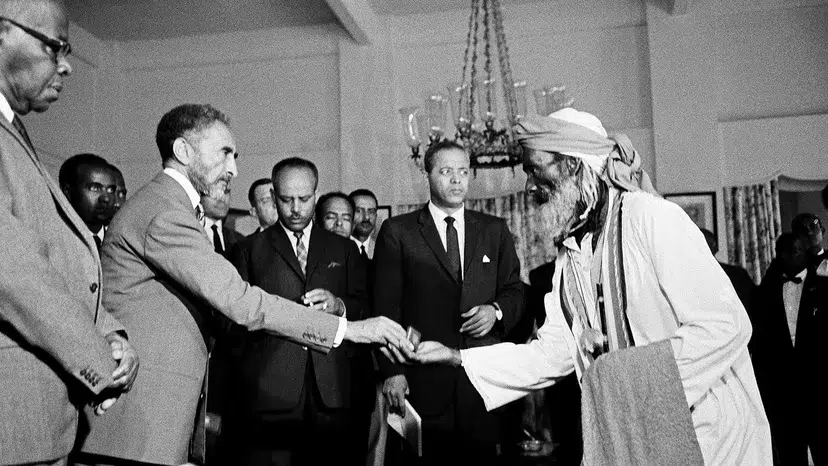
Haile Selassie’s visit to Jamaica generated deeply meaningful interactions that left a lasting impression and shaped the future of relations between Ethiopia and Jamaica, as well as the development of the Rastafari movement. When the Emperor chose to step directly onto the ground rather than onto the red carpet prepared for him, this act was widely interpreted by Jamaicans, particularly Rastafari, as a gesture of humility and solidarity with the people of the island. It reinforced belief in his quasi-messianic nature and symbolized his acceptance of their veneration.
Rastafari leaders, including Leonard Howell², often cited as the founder of the movement, were present to witness and participate in this historic event. Howell, along with figures such as Joseph Hibbert and Mortimer Planno, had the opportunity to engage directly with Selassie, exchanging on both spiritual and temporal matters concerning the Rastafari community as well as the broader political implications of the visit. These discussions helped build bridges between Rastafari teachings and concrete actions in terms of community development and social reform.
On the political level, the presence of figures such as Sir Alexander Bustamante³, the prime minister at the time, highlighted the importance of this event for the Jamaican state. Bustamante and other members of the government saw the visit as an opportunity to strengthen diplomatic ties with Ethiopia, but also to officially recognize and address the aspirations and concerns of the Rastafari community, which had often been marginalized. This recognition paved the way for better social and political integration of the Rastafari in the years that followed.
Beyond political and religious circles, the reaction of the general public was also remarkable. Selassie’s visit was extensively covered by local and international media, drawing attention to Jamaica and the Rastafari movement. This coverage helped demystify certain misconceptions about the Rastafari faith and present its doctrines and practices in a more respectful and understandable framework for the general public.
Cultural implications of Grounation Day
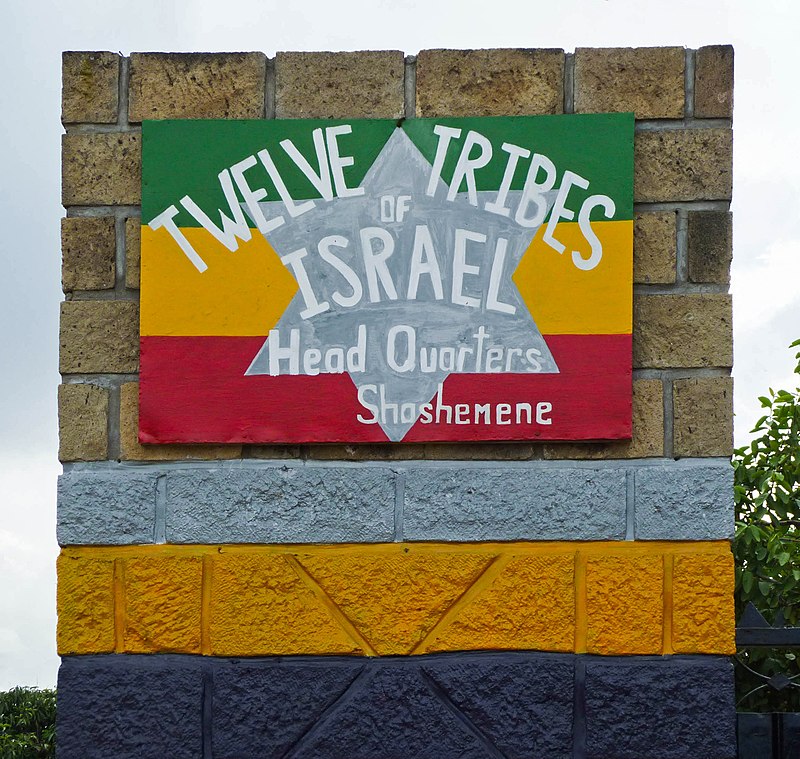
Haile Selassie’s visit to Jamaica in 1966 had a monumental impact on Jamaican culture, particularly in the field of music, where it served as a catalyst for the rise of reggae. This musical genre, already emerging, found in the Rastafari movement and the Emperor’s visit powerful themes of unity, spirituality, and political resistance, which resonated deeply around the world.
Artists such as Bob Marley, Peter Tosh, and Bunny Wailer, influenced by Rastafari teachings and Selassie’s presence, began to use their music as a tool to spread messages about Black identity, resistance against oppression, and liberation. Bob Marley, in particular, was deeply influenced by Rastafari philosophy, and his songs often incorporated references to Selassie and the ideals of the movement. Tracks such as “Selassie is the Chapel,” adapted from the melody of “He Touched Me” by Elvis Presley, and “400 Years” by the Wailers, openly criticize oppressive systems and call for liberation and spiritual awakening.
Reggae music, with its distinctive rhythm and message-laden lyrics, transcended Jamaica’s borders to reach a global audience. Themes of resistance and emancipation, amplified by Selassie’s aura and his identification as a messianic figure, found particular resonance in civil rights and anti-colonial movements around the world. Reggae became not only a musical genre appreciated for its artistic quality but also a means of political and spiritual expression.
Beyond music, Selassie’s visit influenced other forms of artistic expression in Jamaica, including literature, cinema, and visual arts. Artists explored themes of returning to African roots, social critique, and spirituality, often with direct references to Rastafarianism and the icon of Selassie.
On a religious level, the visit reinforced Rastafari belief in Haile Selassie as a messianic figure. It also encouraged a sense of legitimacy and respectability for the movement in the eyes of the public and Jamaican authorities. Grounation Day is now celebrated as a festival of spiritual emancipation and cultural resistance, with ceremonies that include Bible readings, nyabinghi chants, and speeches on the importance of African liberation.
More than a simple commemoration, Grounation Day is an annual reaffirmation of the identity and resilience of the Rastafari people. It serves as a reminder that Haile Selassie’s visit was a turning point, not only for the Rastafari but also for Jamaica as a whole, by durably influencing the island’s politics, religion, and music. This day continues to inspire generations of Jamaicans and followers around the world, symbolizing an ongoing struggle for justice and self-determination.
Notes and references
Here is a list of bibliographic references and other resources that may be useful for those interested in the Rastafari movement, Haile Selassie, and the cultural history of Jamaica:
“The Rastafarians” by Leonard E. Barrett
This book offers a comprehensive overview of the Rastafari movement, from its origins to its beliefs and practices. Barrett explores in detail the significance of Haile Selassie for the Rastafari and the movement’s impact on Jamaican society.
“Catch a Fire: The Life of Bob Marley” by Timothy White
A detailed biography of Bob Marley, incorporating the influence of Rastafarianism on his music and philosophy. The book provides insight into how Marley used reggae as a means to spread the Rastafari message around the world.
“Haile Selassie and the Concept of Enlightenment: The Supreme Overstanding” by Haile Selassie I
This work explores the teachings and philosophy of Haile Selassie himself, offering insight into his views on leadership, spirituality, and African challenges.
“Rastafari: Roots and Ideology” by Barry Chevannes
An in-depth study of the ideological and theological development of the Rastafari movement. Chevannes analyzes how Rastafari beliefs were formed and evolved in Jamaica.
“Rasta and Resistance: From Marcus Garvey to Walter Rodney” by Horace Campbell
This book connects the Rastafari movement to broader resistance movements in Africa and the African diaspora. It examines the impact of figures like Marcus Garvey on Rastafarianism and other social movements.
“The First Rasta: Leonard Howell and the Rise of Rastafarianism” by Hélène Lee
A portrait of Leonard Howell, considered the founder of Rastafarianism. Lee describes how Howell developed and spread his ideas in Jamaica, and how he was influenced by global events.
“Selassie’s Visit to Jamaica” – Documentary available on various streaming platforms
This documentary retraces Haile Selassie’s historic visit to Jamaica, with interviews from witnesses and analyses of its long-term impact.
These references offer a variety of perspectives and depths on the subjects covered in the article and can be used for a more detailed exploration of Grounation Day, the Rastafari movement, and their historical and cultural context.
¹ Ras Mortimer Planno (1929–2006): An important figure in the Rastafari movement in Jamaica, Ras Mortimer Planno was a spiritual leader and educator within the community. Known for his role during the historic visit of Haile Selassie to Jamaica in 1966, Planno helped organize and calm the crowd at Kingston airport, facilitating the Emperor’s reception. He was also an influential mentor to several reggae figures, including Bob Marley, to whom he transmitted Rastafari teachings. Planno played a key role in promoting global understanding of the movement. ↩︎
² Leonard Howell (1898–1981): Considered the founder of the Rastafari movement, Howell was one of the first to advocate the veneration of Haile Selassie as a divine figure. He also established the first Rastafari community, known as Pinnacle, in Jamaica. ↩︎
³ Sir Alexander Bustamante (1884–1977): The first Prime Minister of Jamaica after its independence in 1962. He played a key role in Jamaica’s transition to an independent nation and was an important figure in Jamaican politics. ↩︎


