

Born around 1703 in what is now Ghana, Anton Wilhelm Amo was taken from his homeland and brought to Europe by the Dutch West India Company. Adopted by the Dukes of Brunswick-Wolfenbüttel family in Germany, Amo was given the rare opportunity for an African of that time to access a high-level Western education.
Born around 1700 and deceased in 1758, Anton Wilhelm Amo, originally from present-day Ghana, stands as an exceptional example of resilience and intelligence. His life, transitioning from a young African captured and uprooted from his homeland to a renowned scholar and philosopher in 18th-century Europe, represents a journey that is both inspiring and revealing for contemporary readers of African descent. His contribution to European thought and his lasting impact highlight the importance of recognizing African contributions to world history.
Childhood of Anton Wilhelm Amo
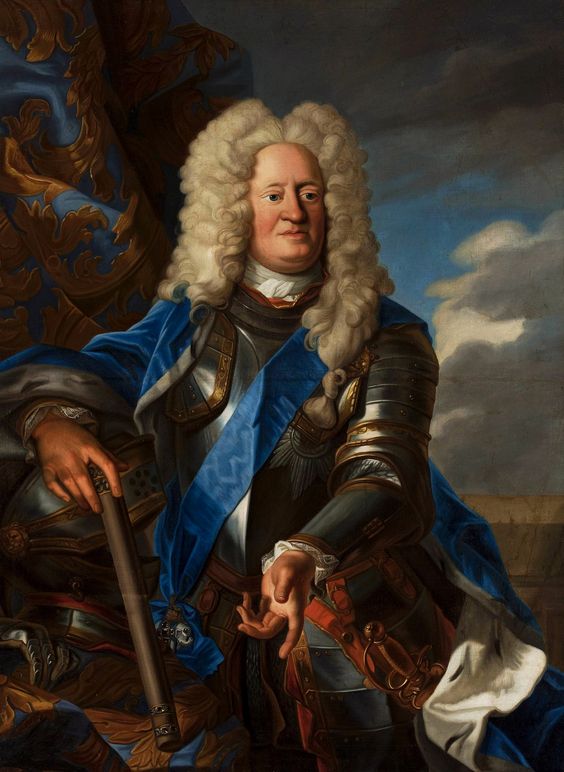
Anton Wilhelm Amo, an emblematic figure of 18th-century philosophy, was born around 1700, possibly in 1703, in Axim, a locality of the Nzima territory, belonging to the Akan ethnic group in the southwest of present-day Ghana.
At the age of three, Amo was transported to the Netherlands under circumstances that remain debated among historians. Some argue that he was kidnapped, while others suggest that his parents, likely Christians, consented to his departure to Europe so that he could receive a Christian education. Shortly after his arrival in Europe, the Dutch West India Company presented Amo as a “gift” to the Dukes of Wolfenbüttel in Germany, marking the beginning of his European life. His twin brother, Atta, experienced a radically different fate, being sent to Suriname as a slave.
In 1708, the young Amo was baptized and adopted the names Wilhelm Anton, in honor of his protectors, the counts of Wolfenbüttel, thus marking the beginning of his integration into European culture.
Academic training and intellectual contributions of Anton Wilhelm Amo
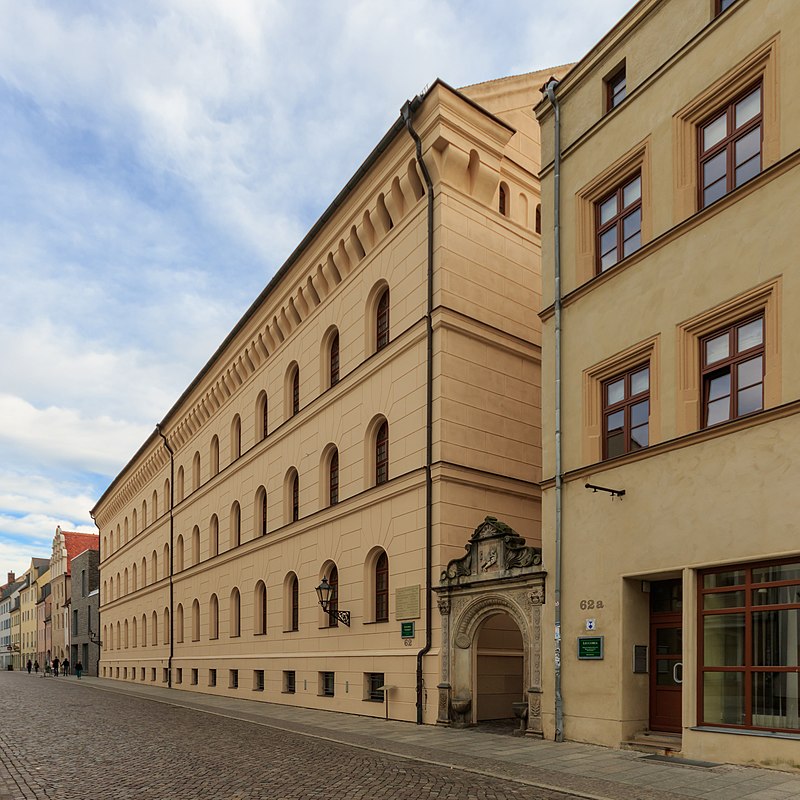
Although Anton Wilhelm Amo’s social status remains uncertain, it is clear that he was not treated as a slave by his protectors in Europe. In 1727, Amo began higher education at the University of Halle, where he quickly distinguished himself through his advocacy for the rights of Black people. He obtained a master’s degree in law with a thesis exploring the rights of Black people in Europe, taking firmly anti-slavery positions. This thesis, in particular, reflects his plea for the liberation of his brother Atta, enslaved in Suriname, demonstrating his early commitment to social justice. His signature, Antonius Guilielmus Amo, Guinea Afer, emphasizes his African identity and intellectual engagement.
In 1730, Amo continued his studies at the University of Wittenberg. There, in 1734, he successfully defended his doctoral thesis entitled “On the Apathy of the Human Mind: On the Absence of Sensation in the Human Mind and Its Presence in Our Living and Organic Body.” This major philosophical work enabled him to become the first person of African origin to obtain a doctorate in philosophy in Europe, marking a significant turning point in academic history.
Academic career of Anton Wilhelm Amo
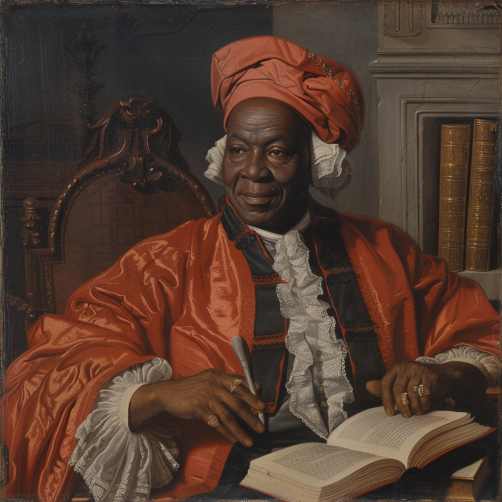
Following the completion of his doctorate, Anton Wilhelm Amo continued to enrich the academic world through his teaching and research. From 1734 to 1736, he taught at the University of Wittenberg, where he had earned his doctorate. He then returned to the University of Halle, where he had begun his higher education, and taught there from 1736 to 1739. During this period, he published an influential work entitled “Treatise on the Art of Philosophizing Soberly and Correctly,” reflecting his rigorous and ethical approach to philosophy.
In 1739, Amo joined the University of Jena, marking another significant phase of his academic career that would last until 1746. There, he distinguished himself not only as a scholar but also as a respected member of the academic community, receiving the title of State Counselor from the Berlin court. This recognition testifies to his influence and status within the intellectual circles of the time.
Throughout his academic career in Germany, Amo explored various fields of study, including philosophy, law, theology, logic, astronomy, astrology, political science, and physiology. He mastered several languages, such as Latin, Greek, Hebrew, German, and Dutch, which allowed him to access a vast body of academic literature and contribute significantly to European scholarly research.
Final years and legacy of Anton Wilhelm Amo

In 1747, Anton Wilhelm Amo returned to Axim, his hometown in present-day Ghana, thus bringing his academic period in Germany to a close. This decision, shrouded in mystery, is often attributed to the loss of his influential protectors, notably the Prince of Brunswick, and to increasing isolation due to rising societal racism. These factors are believed to have contributed to a deep depression.
Amo reunited with his father and sister in Axim, where he was respected and regarded as a local sage. However, his stay was marked by significant challenges. In 1753, David-Henri Gallandat, a European scholar, visited Amo and documented their meeting, providing insight into the life he led in Africa. Local legend suggests that his return was not entirely voluntary, and that he may have been forced, under pressure from local and European authorities, to settle in the slave fort at Chama—possibly as a punitive measure against a free and critical mind.
Anton Wilhelm Amo died in 1758 in Chama. His journey, from Africa to Europe and back again, as well as his philosophical writings and his commitment against slavery, continue to inspire. His life and work are often cited alongside illustrious figures such as W.E.B. Du Bois and Kwame Nkrumah, both influenced by his intellectual legacy. Amo is celebrated not only for his academic contributions but also as a symbol of the struggle against racial prejudice and the relentless pursuit of justice.
References
Academic sources on Anton Wilhelm Amo:
McClendon, John H. (2008). “Anton Wilhelm Amo: African Philosopher in Europe.” In Africans and Their Descendants in Europe Before the 20th Century: Proceedings of the International Conference, edited by Dieudonné Gnammankou & Yao Modzinou, 149–163. Toulouse: MAT Éditions. This work explores in detail Amo’s philosophical contributions and his impact on European thought.
Somet, Yoporeka. (2007). “Anthony William Amo: His Life and Work.” ANKH, issue 16, pp. 128–151. Gif-sur-Yvette: Khepera Publishing. This article provides a comprehensive analysis of Amo’s life and work, highlighting his unique journey and legacy.


