

The Beach Rebellion of 1741 is a significant event in the history of Barbuda, marking the first recorded slave uprising on the island. Triggered by the cruel and inhumane treatment inflicted by the island’s manager, Thomas Beach, this rebellion exemplifies the resistance of enslaved people against colonial oppression and brutality.
In the 18th century, Barbuda was under British control, primarily used for livestock farming and agricultural production. The island’s economy relied heavily on African slave labor, who endured extremely harsh living conditions. Slaves worked long hours under a tropical climate, received minimal food and medical care, and were frequently subjected to corporal punishment.
Thomas Beach, the manager of the island at the time, was notorious for his cruelty toward the slaves. The mistreatment he inflicted generated growing resentment among the enslaved population, ultimately leading to a revolt.
In 1741, as living conditions became increasingly unbearable, the slaves of Barbuda decided to rise against Thomas Beach and the other colonists. The rebellion was sparked by a series of particularly severe acts of brutality by Beach, which pushed the slaves to take action.
The enslaved people organized in secret, carefully planning their uprising. They attacked Beach and other authority figures, seeking to free themselves from bondage and draw attention to their suffering. Armed with simple farming tools and fierce determination, the slaves courageously confronted their oppressors.
The colonial authorities reacted swiftly and brutally. British colonists, supported by the local militia, mobilized forces to crush the rebellion. Despite their bravery, the slaves were poorly armed and outnumbered compared to the colonial forces.
After violent confrontations, the rebellion was suppressed. Many slaves were captured and subjected to severe punishment. The leaders of the revolt, considered the main instigators, were executed as an example to deter other enslaved people from uprising.
The suppression of the Beach Rebellion had lasting consequences for Barbuda’s slave society. Colonial authorities strengthened control measures over slaves, introducing stricter laws to prevent future revolts. Slaves were subjected to increased surveillance and harsh restrictions on their movements and activities.
Despite the brutal repression, the Beach Rebellion left an indelible mark on Barbuda’s history. It highlighted the cruelty of the slave system and the determination of enslaved people to fight for their freedom and dignity. The events of 1741 also demonstrated that, even under extreme oppression, slaves could organize and challenge their oppressors.
The Beach Rebellion stands as a powerful symbol of resistance and courage in the face of oppression. It commemorates the struggles of African slaves for freedom and justice and underscores the importance of their contributions to the history of resistance against slavery. The stories of this revolt continue to inspire social justice and civil rights movements today.
Tacky’s Rebellion (May 1760 – July 1760)
Tacky’s Rebellion, which occurred in Jamaica between May and July 1760, is one of the most significant and well-organized slave uprisings in Caribbean history. Led by an enslaved man named Tacky, this insurrection was quickly suppressed by the British colonial government, but it left a lasting impact on the struggle against slavery in the region.
In the mid-18th century, Jamaica was a prosperous British colony, primarily due to its vast sugar plantations. The island’s economy relied heavily on African slave labor, who lived under extremely harsh conditions. Slaves endured exhausting workdays, severe corporal punishment, and a life of deprivation.
Social tensions were high due to the brutality of the slave system and the stark disparity between slaves and colonists. African slaves, particularly those newly arrived, often had prior military experience and were determined to resist colonial oppression.
The revolt began in May 1760 in the parish of Saint Mary, a region of Jamaica known for its sugar plantations. Tacky, a former African chief enslaved in Jamaica, played a central role in organizing the uprising. He and his followers carefully planned the rebellion, taking advantage of the cover of night to attack plantations.
The rebellion started with the attack on an armory at Fort Haldane, where the rebels seized guns and ammunition. Armed and resolute, Tacky and his men attacked multiple plantations, killing colonists and freeing other slaves who joined their cause. Their objective was to establish a zone of freedom in Jamaica, similar to those created by the Maroons in the mountains.
News of the rebellion spread quickly, and colonial authorities responded violently. Local militias and regular troops were mobilized to hunt and suppress the rebels. The Maroons, communities of escaped slaves who had signed peace treaties with the British, were also called upon to assist in suppressing the revolt in exchange for rewards.
Despite their determination and organization, the rebel slaves were outnumbered and outgunned compared to colonial forces. After several weeks of fierce fighting, the rebels were ultimately overwhelmed. Tacky himself was killed by a Maroon, and many other rebels were captured or killed.
The suppression of Tacky’s Rebellion was brutal. Captured slaves were harshly punished: some were executed, while others faced cruel corporal punishment to serve as an example. Colonial authorities reinforced measures of control over slaves, imposing stricter restrictions to prevent future revolts.
However, Tacky’s Rebellion had significant repercussions on Jamaican slave society. It demonstrated the ability of enslaved people to organize and conduct effective uprisings despite enormous risks. It also instilled fear among the colonists, who became increasingly aware of the constant threat of rebellion.
Tacky remains commemorated in Jamaica as a hero of resistance against slavery. His name and legacy continue to be celebrated in Jamaican culture, symbolizing the importance of the struggle for freedom and justice.
Berbice Rebellion (1763)
The Berbice Rebellion of 1763 is one of the most significant slave uprisings in the colonial history of the Americas. Led by an enslaved man named Cuffy (or Kofi), this revolt took place in the Dutch colony of Berbice, located in present-day Guyana. The rebellion lasted approximately one year and highlighted the determination of slaves to resist colonial oppression.
In the mid-18th century, Berbice was a Dutch colony whose economy relied mainly on sugar, coffee, and cotton plantations worked by African slaves. Living conditions for slaves were extremely harsh: exhausting labor, frequent physical abuse, insufficient food, and a lack of basic rights.
Slaves were often subjected to cruel treatment by plantation owners and managers, resulting in deep resentment and a growing desire for freedom. This climate of oppression and despair set the stage for a major revolt.
The Berbice Rebellion began on February 23, 1763, when slaves on the Magdalenenburg plantation along the Canje River rose up against their masters. The revolt quickly spread to neighboring plantations. Armed with knives, axes, and stolen firearms, the rebels attacked colonists, burned buildings, and destroyed plantations.
Cuffy, a slave from the Lelienburg plantation, emerged as a charismatic leader of the revolt. He gathered several hundred enslaved followers and organized coordinated attacks along the Berbice River. The rebels took control of large areas of the colony, forcing many colonists to flee to the capital, Fort Nassau.
Under Cuffy’s leadership, the rebellious slaves established governance structures in the territories they controlled. Cuffy proclaimed himself “governor” and sought to institute order among the rebels. He attempted to negotiate with colonial authorities for a peace that would guarantee slave freedom, but these efforts failed due to the intransigence of the colonists and mistrust among the rebels.
The rebels employed guerrilla tactics to resist Dutch colonial forces, retreating to hard-to-reach forest areas after attacks and using their knowledge of the terrain to evade punitive expeditions.
In response, Dutch authorities mobilized military reinforcements. Dutch troops and local militias were deployed to suppress the rebellion. By May 1763, colonial forces, reinforced by troops from the nearby Dutch colony of Suriname, launched a series of offensives against the rebels.
The fighting was fierce, with heavy losses on both sides. By September 1763, after months of determined resistance, the rebellion began to weaken. Colonial forces regained control over most of the rebel-held territories.
Realizing defeat was imminent, Cuffy is said to have committed suicide to avoid capture. Sporadic resistance continued into 1764, but the capture and execution of many rebel leaders marked the effective end of the uprising.
The Berbice Rebellion had profound consequences for the colony and for perceptions of slavery in the Americas. Although the revolt was suppressed, it revealed the depth of slave dissatisfaction and their determination to fight for freedom.
Dutch authorities strengthened measures of control over slaves, imposing even harsher restrictions to prevent future revolts. However, the Berbice Rebellion also inspired other resistance movements in neighboring colonies and contributed to the rise of abolitionist consciousness in Europe.
Today, Cuffy is recognized as a national hero in Guyana. February 23, the date the rebellion began, is celebrated as “Republic Day” in Guyana, honoring the struggle for freedom led by Cuffy and his companions.
The Berbice Rebellion remains a powerful symbol of African slave resistance to colonial oppression. It demonstrates that even under extreme adversity, slaves actively sought to achieve freedom and overturn an oppressive order. The courage and determination of Cuffy and the other rebels continue to inspire social justice and civil rights movements today.
Adventure Rebellion (October 5, 1764)
Throughout history, slave rebellions have marked numerous regions of the world, manifesting courageous struggles for freedom and justice. This article explores various significant uprisings, from the Zanj Rebellion in Iraq in 869 to the Morant Bay Rebellion in Jamaica in 1865. Each revolt, characterized by its own history and regional specifics, reflects a common refusal of oppression and an unrelenting quest for autonomy and human dignity.
The history of the emancipation of Black slaves is told not through the narratives of slaveholders turned abolitionists, but through the powerful voices of the Maroon Negroes and the relentless rumble of revolts. These struggles for freedom were not content with a mere change of masters or a belated recognition by oppressors; they highlight the determination and courage of the slaves themselves. Indeed, each uprising is a manifestation of active resistance, an unyielding quest for autonomy and human dignity.
Alejo Carpentier, in his literary works, often illustrated the importance and frequency of slave revolts. He declared with poetic force that:
“If one were to mark every slave uprising on a map, a red light would shine continuously from the 16th century.”
In the impenetrable depths of forests and remote mountains, a glimmer of hope shone for those who had known the chains of slavery. These indomitable souls, known as Maroon Negroes, fled the oppression of plantations to build bastions of freedom. They were not merely fugitives but architects of their own destinies, erecting autonomous villages called palenques or quilombos in Latin America. These communities were not temporary refuges but enduring symbols of resistance and resilience.
Far from limiting themselves to their own emancipation, the Maroon Negroes organized daring raids against plantations. They freed other slaves, striking at the heart of the slave system and spreading fear among their oppressors. Their attacks were not outbursts of despair but meticulously planned operations, where military strategy was combined with a deep knowledge of the hostile terrains that sheltered them.
Each slave revolt bore a unique signature, shaped by its context and the leaders who directed it. These uprisings were manifestations of collective courage, where slaves transformed their suffering into an irresistible force. They developed sophisticated communication networks, connecting dispersed slaves across plantations and informing them of opportune moments for rebellion. These insurrections shook the foundations of slave societies, forcing reforms or accelerating abolitionist movements.
The history of the emancipation of Black slaves is woven with tales of resistance, bravery, and unwavering determination. The echoes of the Maroon Negroes and the revolts they inspired traverse the centuries, illuminating our understanding of the universal quest for freedom and justice. The bright spots on Carpentier’s map, symbolizing centers of rebellion, are far more than mere marks of revolt; they are the shining beacons of humanity in pursuit of dignity.
Through these stories, we discover that slaves were not passive victims but active agents of their own liberation, tireless warriors against injustice. Their legacy reminds us that, even in the darkest depths, the light of freedom never ceases to shine.
Timeline of slave rebellions: mapping the struggle for freedom across the ages

Zanj Rebellion (869 – 883)
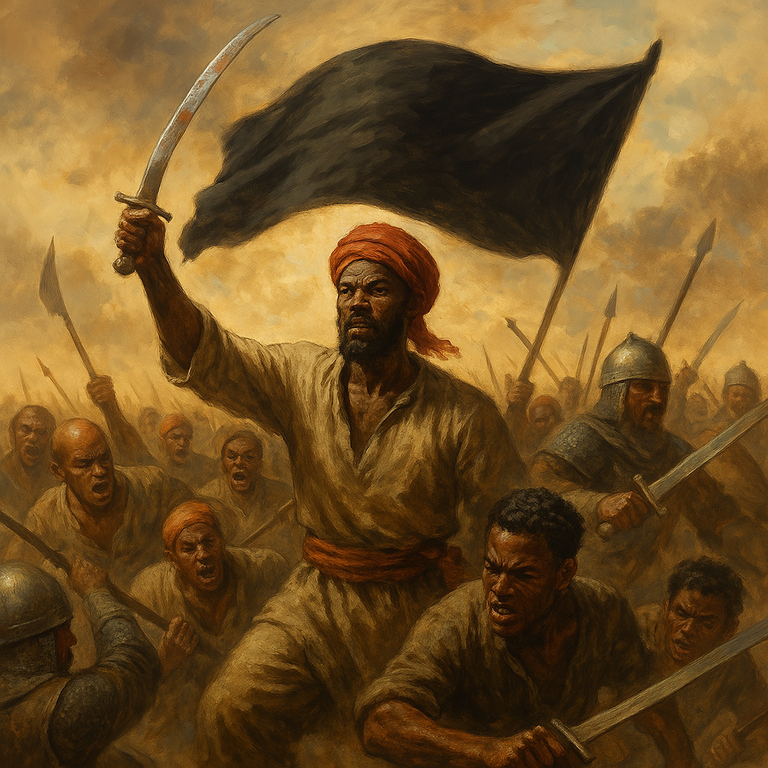
In the historical labyrinth of the Abbasid Empire, a monumental insurrection shook the very foundations of the caliphate. The Zanj Rebellion, spanning from 869 to 883, remains one of the longest and most significant slave uprisings in history. Located in the Basra region of Iraq, it involved over 500,000 African slaves, primarily from the Swahili coasts of East Africa, in what is today Kenya and Tanzania.
These slaves, known as the Zanj, were torn from their homelands to work in the salt marshes around Basra under unimaginably harsh conditions. The salt extraction work was not only exhausting but also dangerous, with slaves constantly subjected to brutal and inhumane treatment. A life of labor, suffering, and despair fueled in them a deep resentment and a burning desire for freedom and justice.
This desire found its catalyst in Ali ibn Muhammad, a charismatic leader who presented himself as a messiah, promising liberty and equity. His ability to mobilize and unify the slaves around a common cause was remarkable. On September 11, 869, under his leadership, the Zanj launched their first assault against the Abbasid authorities, triggering a series of battles that would last nearly fourteen years.
Under the banner of freedom, the Zanj inflicted several defeats on the Abbasid armies. They established a fortified base and took control of a vast region, including the salt marshes and surrounding lands. Not content with merely defending their positions, they conducted daring raids on towns and villages, severely disrupting commerce and the local economy. Their initial success attracted other slaves and oppressed people, swelling their ranks and giving them formidable strength.
However, the Abbasid Caliphate, aware of the threat posed by this rebellion, mobilized considerable resources to suppress it. Under the command of Al-Muwaffaq, brother of Caliph Al-Mu’tamid, the Abbasid army launched an unrelenting campaign against the insurgents. For years, battles ensued, marked by unprecedented violence and heavy losses on both sides.
Finally, on January 31, 883, the Abbasid forces, after a prolonged and fierce siege, stormed the Zanj’s main fortress and captured Ali ibn Muhammad, marking the end of the rebellion. Although crushed, the uprising left indelible marks on the Abbasid Empire. It revealed the fragility of Abbasid control over its distant provinces and highlighted the deep social injustices that plagued the empire.
The Zanj Rebellion was not merely a simple insurrection; it was a poignant testimony to the oppressed’s capacity to rise against their oppressors, even under the most desperate conditions. Their struggle, carried out with unwavering bravery, serves as a reminder that the pursuit of freedom and human dignity transcends time and circumstance.
Slave revolt of Santo Domingo (1521)
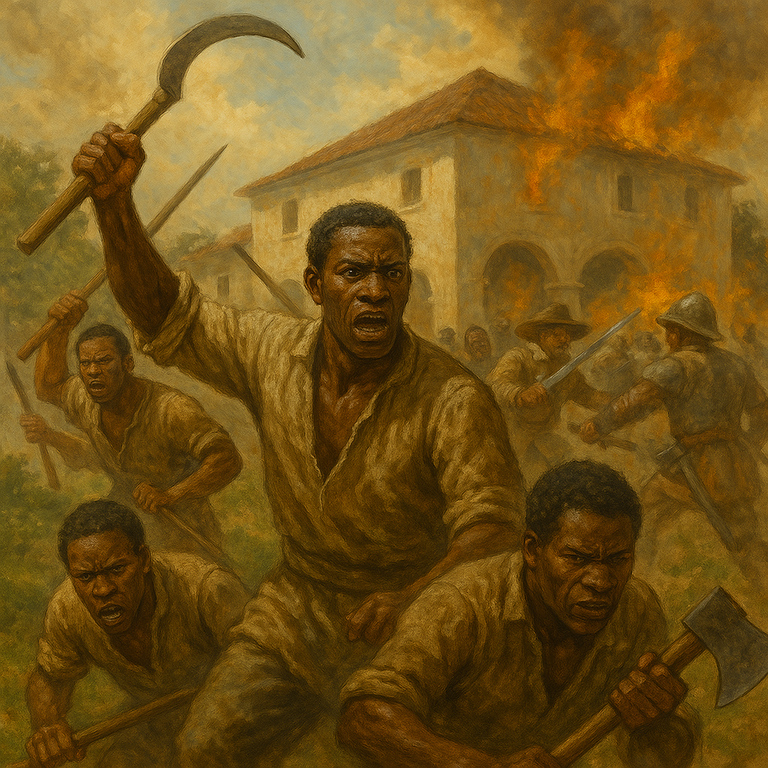
At the heart of the island of Hispaniola, on land that is today shared between the Dominican Republic and Haiti, a spark of resistance ignited in 1521. The Santo Domingo slave revolt marks the first known insurrection in the Americas and represents a historical milestone in the struggle against slavery.
At the beginning of the 16th century, the colony of Saint-Domingue, one of the earliest strongholds of Spanish colonization in the New World, was flourishing. The Spanish colonists, having virtually annihilated the indigenous Taíno population through disease, warfare, and forced labor, turned to importing African slaves to supply the labor needed for sugar plantations and gold mines. These slaves, uprooted from their lands and families, were subjected to exhausting working conditions and inhumane treatment. Their lives, marked by brutality and exploitation, fostered in them a growing resentment.
It was in this context of oppression and despair that a flame of hope was born. On Christmas Day 1521, while the colonists were engrossed in festivities, the African slaves, united by a burning desire for freedom, launched their offensive. Taking advantage of the Spaniards’ slightest lapse in vigilance, the slaves, armed with agricultural tools converted into improvised weapons, rose up. Their meticulous planning and coordination demonstrated impressive organization, defying the strict restrictions imposed by their masters.
The precise details of the revolt remain shrouded in the mists of history, but it is undeniable that the slaves inflicted significant damage. Plantations were attacked, the Spanish colonists taken by surprise, and a wave of panic swept through the colony. Though poorly equipped, the slaves fought with fierce determination, refusing to submit to tyranny.
However, the military superiority of the Spaniards soon became evident. The colonial authorities quickly mobilized their forces and, with ruthless brutality, suppressed the uprising. The revolt was crushed, and a bloody repression followed. Captured slaves were executed in barbaric fashion, and the revolt’s leaders were tortured and publicly killed, their bodies displayed to deter any future rebellion.
Despite its tragic end, the Santo Domingo slave revolt of 1521 left an indelible mark. It revealed the fragility of colonial control and the profound determination of slaves to break their chains. This insurrection laid the first stones of a long tradition of resistance that would span centuries. By exposing the blatant injustices of slavery, it influenced colonial policies and planted the seeds of future revolts.
This first revolt was a prelude to larger and more successful uprisings, culminating with the Haitian Revolution in 1791, which would shake the entire world. The flame ignited by the slaves of Santo Domingo would never be extinguished, illuminating the path toward freedom and equality for generations to come.
San Miguel de Gualdape Rebellion (1526)
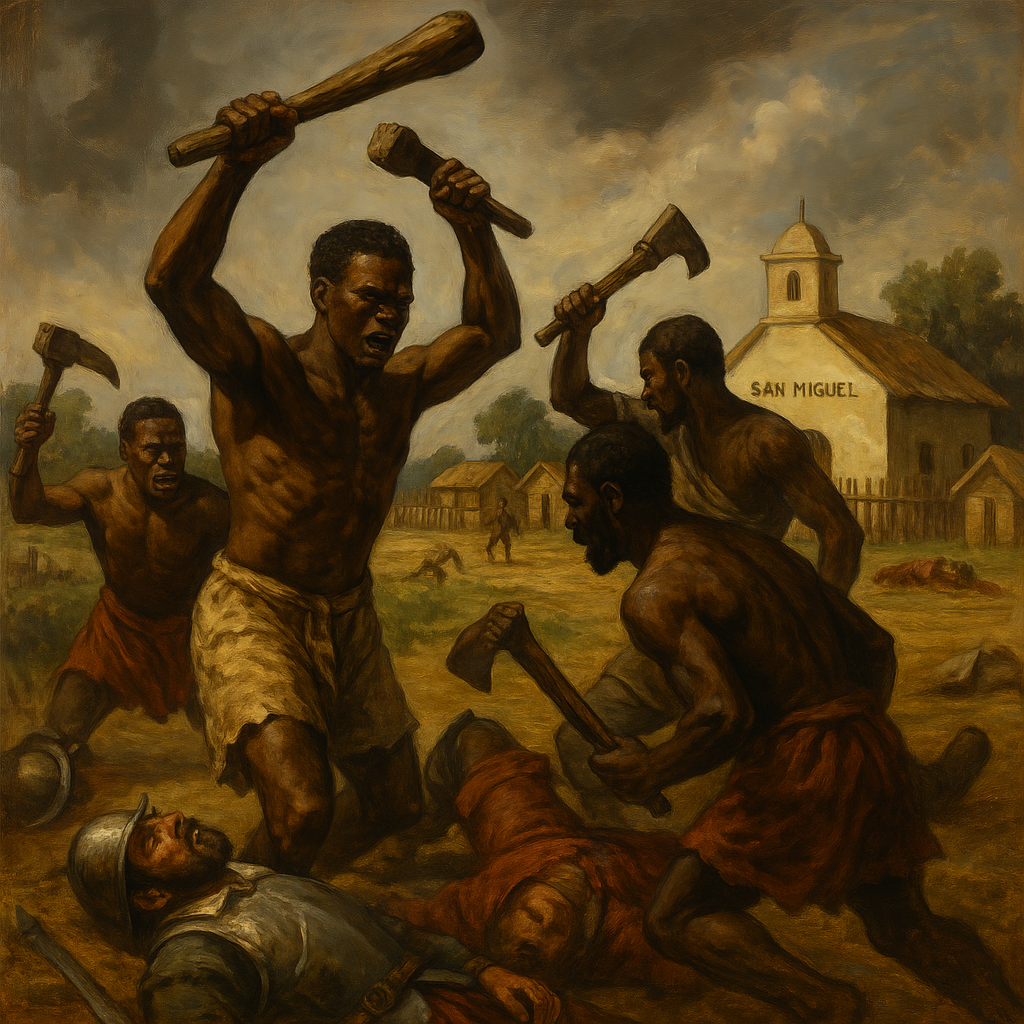
In 1526, on the wild coasts of what is now Georgia or South Carolina, a revolt erupted, laying the foundations for the long struggle for the freedom of enslaved people in North America. This insurrection, known as the San Miguel de Gualdape rebellion, is considered the first slave revolt on the soil of what would become the United States. Although short-lived, this event left an indelible mark on the history of slave resistance.
The Spanish explorer Lucas Vázquez de Ayllón had undertaken to establish a new colony, named San Miguel de Gualdape, in this still-unexplored region. The expedition consisted of around 600 settlers, including African slaves intended to work for the establishment and maintenance of the colony. But from the outset, the colony was beset by a series of misfortunes: disease, food shortages, and conflicts with local indigenous populations made life for the settlers extremely precarious.
Tensions within the colony rose, exacerbated by unbearable living conditions and the brutal treatment of the African slaves. These individuals, subjected to exhausting forced labor and relentless abuse, had little hope for a better future. But their despair turned into determination, and shortly after the colony’s establishment, in October 1526, they seized the opportunity to revolt.
The rebellion broke out when the slaves, taking advantage of a moment of confusion, attacked their masters. In an explosion of rage and courage, they killed some of the Spanish settlers and fled into the surrounding forests. They joined the local indigenous populations, who were themselves in conflict with the Spanish. This daring and successful escape quickly threatened the already fragile stability of the colony.
The impact of this rebellion was immediate and devastating for the San Miguel de Gualdape colony. Plagued by disease, internal conflicts, and hostility from the indigenous people, the Spanish settlers saw their dream of a new land collapse. By November 1526, barely a few months after their arrival, the survivors abandoned the colony, leaving the region to nature and its original inhabitants.
Although brief, the San Miguel de Gualdape rebellion left a lasting legacy. As the first documented slave revolt on North American soil, it demonstrated the resilience and courage of enslaved people in the face of oppression. This revolt embodied the indomitable will of these men and women to escape servitude and pursue freedom, no matter the cost.
The symbolic importance of this revolt cannot be underestimated. From the very first days of European colonization, it illustrated the struggle of enslaved Africans for their liberty. The San Miguel de Gualdape rebellion, though quickly suppressed, foreshadowed the many uprisings and acts of resistance that would shape the history of the United States and other American colonies. It reminded the world that the spirit of freedom could not be extinguished, even by the heaviest chains.
Juliana’s revolt (1538 – 1542)
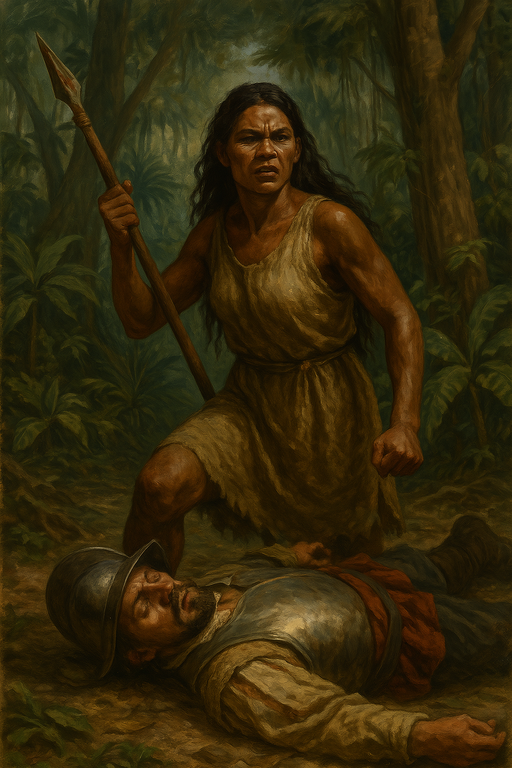
In the heart of the 16th century, as the Spanish Empire expanded relentlessly across the lands of South America, a spark of resistance began to shine in the jungles of Paraguay. Between 1538 and 1542, the continent’s history was marked by an act of bravery that would resonate through the ages: Juliana’s Revolt, led by a Guaraní slave whose courage and determination would inspire future generations.
The Guaraní, a proud and resilient indigenous people, endured the brutal impact of Spanish colonization. Enslaved, they were forced to work under inhuman conditions, subject to the ruthless rule of the colonists. Among these slaves, Juliana, a Guaraní woman, saw her daily life reduced to an unceasing struggle for survival, crushed under the chains of oppression.
In 1538, Juliana made a decision that would shake the established colonial order. In an act of desperate yet deeply courageous defiance, she killed her Spanish master. This bold act of rebellion was not merely a personal attempt at liberation, but a powerful cry against systemic injustice. News of her deed spread quickly, sowing panic among the Spanish colonists, who feared that this individual uprising might ignite other slaves and indigenous people to rise against their oppressors.
After killing her master, Juliana sought to flee to escape the relentless vengeance of the colonial authorities. However, the oppressive structure and the considerable resources deployed by the Spanish to suppress any form of resistance made her escape nearly impossible. She was swiftly captured and tried with exemplary severity by the Spanish authorities.
Her trial and execution were overseen by Álvar Núñez Cabeza de Vaca, a Spanish explorer and administrator renowned for his travel accounts in the Americas. As governor of the Río de la Plata province, Cabeza de Vaca’s mission was to maintain colonial order and punish any rebellion harshly to deter other slaves and indigenous people from following Juliana’s example. Her death sentence was swift and brutal, yet her sacrifice echoed as a powerful testament to resistance against oppression.
Although Juliana was executed, her act of defiance was not in vain. She became an immortal symbol of courage and resistance, her story illuminating the dark pages of Paraguay’s and South America’s history. Juliana demonstrated that even the most oppressed individuals possessed the strength to rise against injustice. Her story highlighted the brutality of the colonial slave system and inspired other forms of resistance across the continent.
Juliana’s revolt is significant in many respects. It represents one of the earliest documented cases of armed resistance by an indigenous female slave in South America, proving that the struggle for freedom was not confined to a single region or era. Moreover, it underscores the crucial role of women in resistance movements, often overlooked in traditional historical narratives. Juliana embodies the spirit of rebellion and the pursuit of justice that transcends time and culture, reminding all that freedom and human dignity are universal aspirations.
Her legacy endures, not only as a symbol of resistance but as a call to action against all forms of oppression. Juliana’s story reminds us that every act of courage matters and that the quest for justice and freedom is an eternal struggle, carried forward by bold voices and indomitable spirits.
Bayano wars (1548)
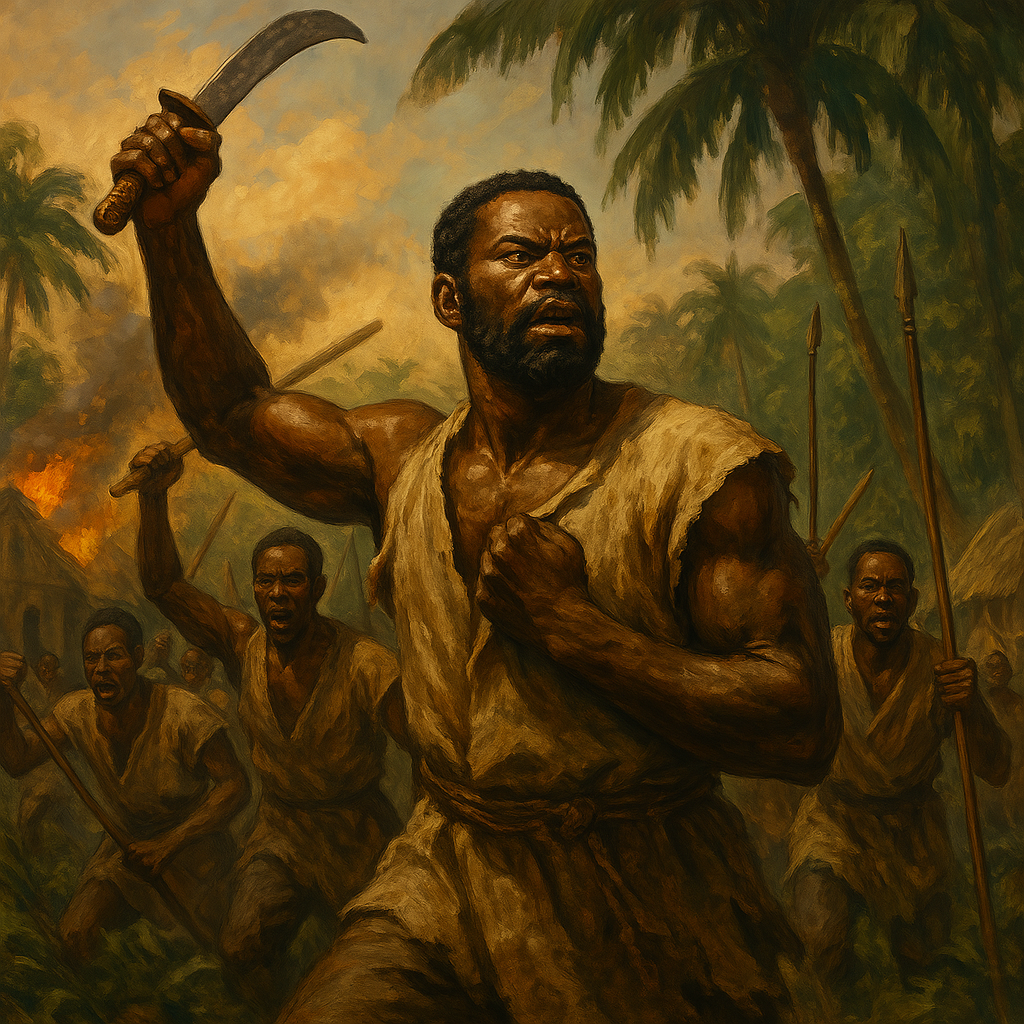
In 1548, on the turbulent lands of Panama, a hero rose whose name would echo through the ages: Bayano. This African slave, torn from his homeland and thrown into the hell of colonial slavery, became the spearhead of an epic revolt against the Spanish colonists. The Bayano Wars were among the earliest and most powerful slave uprisings in the history of the Americas, embodying the indomitable struggle for freedom and resistance against oppression.
In the mid-16th century, Spanish colonization in Central America was expanding rapidly. The Spaniards imported African slaves to work in mines, plantations, and various colonial enterprises. Life for the enslaved was atrocious: constant physical abuse, insufficient food, and deadly diseases were part of their daily reality. Yet, amid this misery, a spark of hope and rebellion was born.
Bayano, an African slave of extraordinary courage, refused to submit to the Spaniards’ yoke. Driven by a fierce will for freedom, he began to orchestrate an uprising. In 1548, exploiting the weaknesses of their masters and the spirit of solidarity among the slaves, Bayano launched a daring revolt. He and his companions escaped their oppressors and took refuge in the mountains and dense forests of Panama, founding a free community known as a palenque.
The Bayano Wars consisted of a series of battles and raids carried out by Bayano and his forces. Using ingenious guerrilla tactics, they struck the Spanish colonists unpredictably, sowing confusion and fear. These attacks not only severely disrupted Spanish operations but also inspired other slaves and indigenous people to rise up. Bayano quickly established himself as a charismatic leader and formidable military strategist.
For months, Bayano’s rebels resisted with remarkable tenacity. Their ability to retreat into inaccessible areas and strike with precision made the Spaniards’ task particularly difficult. Alarmed by this growing threat, the colonial authorities intensified their efforts to crush the rebellion. Yet Bayano and his troops proved elusive and resilient.
Eventually, the Spaniards resorted to cunning to capture Bayano. Offering peace talks, they managed to deceive him and take him prisoner. Bayano was sent to Lima, Peru, and then to Seville, Spain. There, he was presented to the king, who, impressed by his courage and leadership, accorded him a certain respect. Nevertheless, Bayano spent the rest of his life in captivity, far from the land for which he had fought.
The Bayano Wars had a profound impact on the region and changed perceptions of slave resistance. The revolt demonstrated that slaves could not only organize and resist effectively but also seriously challenge colonial authority. Although Bayano was captured, his spirit of resistance and courage left an indelible legacy.
His story became a legend of resistance against oppression, inspiring other slaves to fight for their freedom. The palenques, these maroon communities, continued to exist and resist, playing a crucial role in the struggle against slavery in Latin America.
The Bayano Wars symbolize the determination of enslaved people to fight tyranny and seek freedom at all costs. Through his heroic actions, Bayano became a symbol of courage and resistance, his name forever associated with the quest for slave emancipation. His legacy reminds us that the struggle for freedom and justice is an eternal one, carried forward by those who refuse to bow before injustice.
Felipillo rebellion (1549 – 1551)
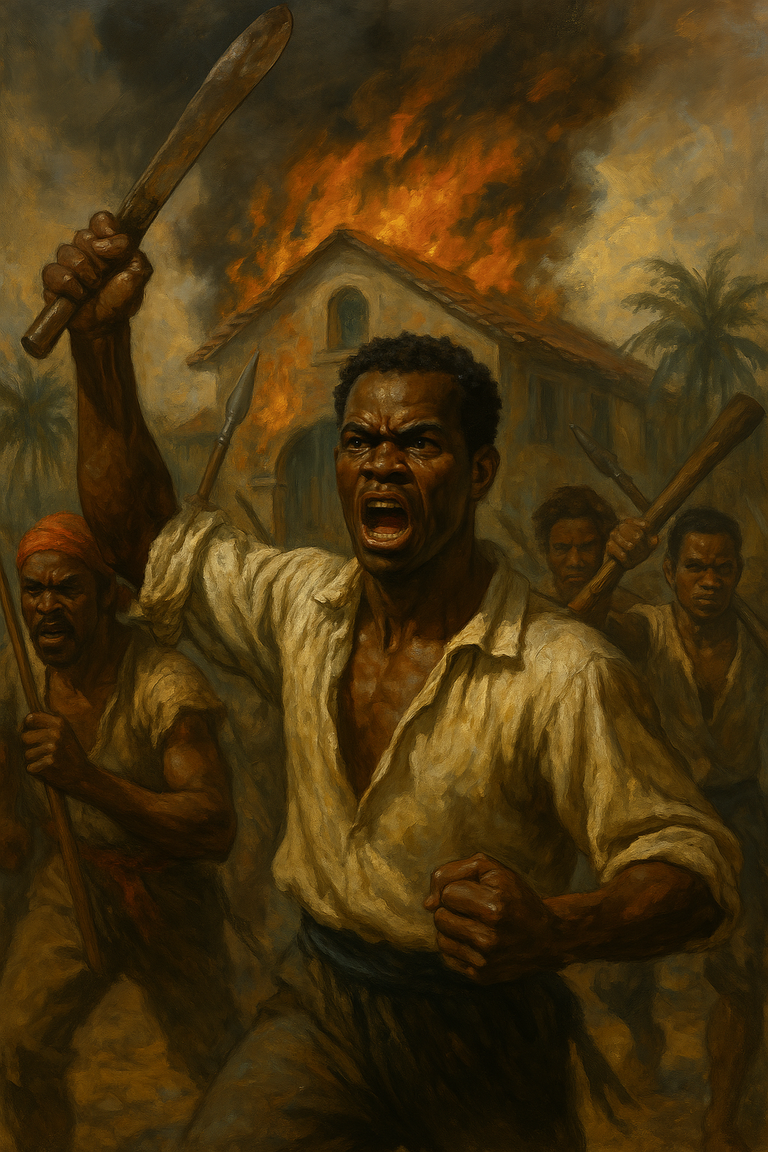
In the heart of Panama, between 1549 and 1551, an African slave named Felipillo embodied courage and determination in the face of colonial oppression. Felipillo’s Rebellion is a significant chapter in the history of the Americas, symbolizing the fierce struggle for freedom and resistance against Spanish domination.
At that time, Panama was a strategic region under Spanish control, a crucial passage for the wealth extracted from the Americas and destined for Spain. African slaves were ruthlessly exploited for grueling labor in plantations, mines, and colonial infrastructure. Their living conditions were intolerable: physical abuse, exhausting work, and a complete absence of rights made their existence unbearable.
Felipillo, like so many others, endured these inhumane conditions but refused to submit. Driven by a burning desire for freedom, he gathered a group of slaves and sympathetic indigenous allies, launching a daring rebellion against the Spanish colonists in 1549. Felipillo proved to be a charismatic and resourceful leader, organizing lightning raids on Spanish ranches. He used his deep knowledge of the terrain and the element of surprise to strike where the colonists were most vulnerable, seizing provisions, weapons, and horses.
Felipillo’s guerrilla tactics were exceptionally effective. He and his followers struck quickly and then retreated into the mountains or dense forests, evading Spanish pursuit. Their attacks also targeted Spanish travelers along trade routes, severely disrupting the colonists’ economic and logistical operations. This war of attrition spread terror among the Spaniards, forcing them to commit significant resources to capture Felipillo and his men.
For two years, Felipillo’s relentless raids created an atmosphere of insecurity and instability. Despite their military superiority, the Spanish struggled to counter the rebels’ guerrilla strategies effectively. Felipillo became a symbol of resistance, his name whispered with respect and hope among the slaves and indigenous people.
However, in 1551, the Spanish forces, led by Captain Francisco Carreño, intensified their efforts to eliminate the threat. Through intense tracking and strategies aimed at dislodging the rebels from their hideouts, the Spaniards eventually captured Felipillo. His capture was the result of months of relentless pursuit and the inevitable betrayals that come with a war of this nature. Felipillo and his key lieutenants were trapped and arrested.
The capture of Felipillo marked the end of this particular rebellion. The captured rebels were severely punished, often publicly executed to deter any future uprisings. Nevertheless, the brutal end of the rebellion could not erase the profound impact it had on history.
Felipillo’s Rebellion once again demonstrated the resilience and courage of African slaves, as well as their determination to fight for freedom against seemingly insurmountable obstacles. Felipillo became a legend, his story inspiring other slaves and indigenous communities to continue resisting colonial domination. His brave actions and guerrilla tactics became symbols of the quest for justice and autonomy.
This revolt is significant in many ways. It illustrates the ability of slaves to organize and carry out effective military actions against their oppressors, highlighting the weaknesses and vulnerabilities of the colonial system. Furthermore, it shows how African slaves and indigenous peoples could unite their forces to resist oppression, transcending cultural and linguistic differences for a common cause. Felipillo’s Rebellion remains a vivid testament to the struggle for freedom and the indomitable spirit of the oppressed.
Kingdom of Miguel de Buría (1552 – 1554)
In the mid-16th century, the Spanish Empire eagerly exploited the natural resources of its American colonies, notably the precious gold mines of Buría, located in what is now the Yaracuy region of Venezuela. Working conditions in these mines were terrifying: African and indigenous slaves labored to exhaustion, enduring inhuman treatment to satisfy the Spanish colonists’ insatiable thirst for wealth.
Among these slaves was Miguel, an African reduced to servitude but driven by an indomitable desire for freedom and justice. Weary of incessant abuse and inspired by a burning aspiration for autonomy, Miguel made a bold decision that would shake the Spanish colonial order: he decided to emancipate himself and take his destiny into his own hands.
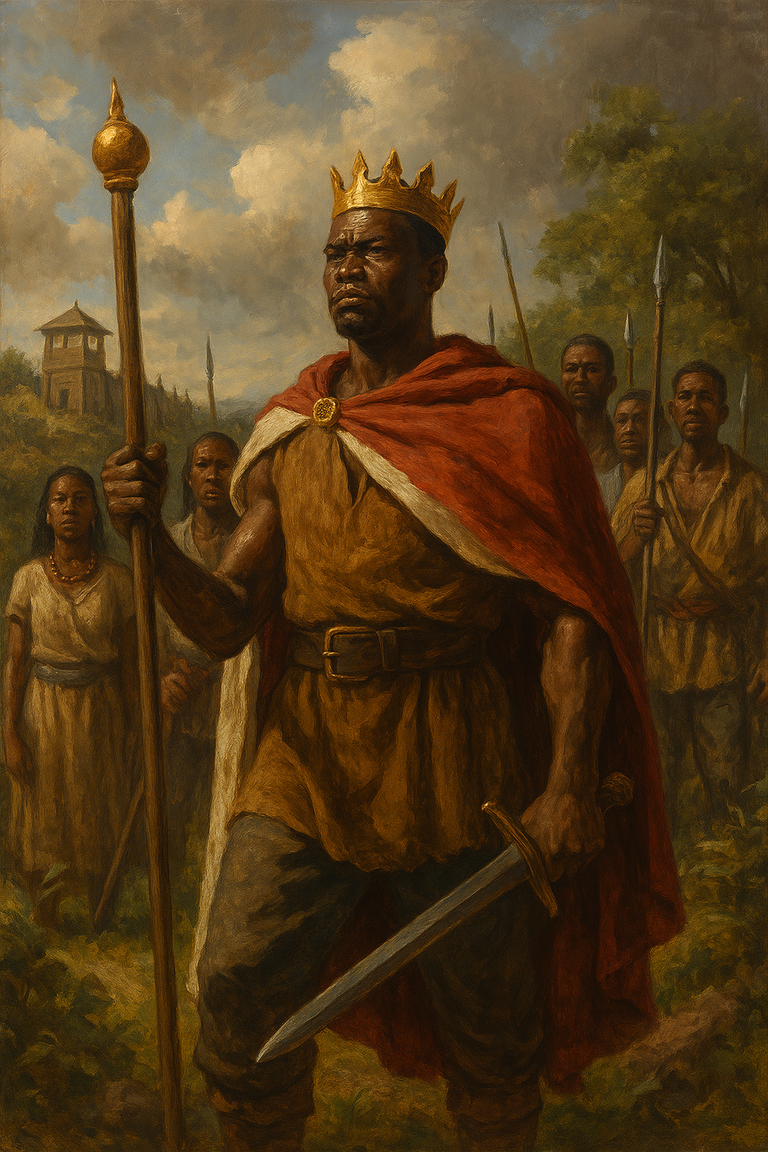
In 1552, Miguel led a daring revolt against the Spaniards, managing to escape from the grasp of his oppressors. Gathering around him a group of supporters, he retreated into the mountains, far from Spanish control. With other fugitive slaves and local indigenous people, united in their quest for freedom, Miguel established an independent community. Proclaiming himself king, he created the Kingdom of Buría, a living symbol of resistance and autonomy.
Alongside his queen, Guiomar, also a slave who had joined the rebellion, Miguel ruled over this new kingdom. Under his leadership, the inhabitants of Buría carried out bold raids against the Spanish colonists, disrupting the Spaniards’ mining and economic operations. This kingdom, though nascent, embodied a serious threat to the established colonial order, and the Spaniards reacted swiftly by sending military expeditions to crush the rebellion.
Miguel’s forces resisted with unmatched ferocity, using guerrilla tactics to defend their territory. The fighting was intense and bloody, each battle strengthening the rebels’ determination to preserve their newly acquired freedom. Miguel, as a charismatic leader and strategist, led his troops with remarkable audacity, but the disparity of forces was glaring.
The Spaniards, well-equipped and trained, intensified their efforts to capture or kill Miguel and dissolve his kingdom. In 1554, after about two years of fierce resistance, Miguel de Buría was captured in a decisive battle. His capture and death marked the end of this specific rebellion, but the spirit of his struggle was not extinguished.
The kingdom of Miguel de Buría, though short-lived, left a lasting legacy. It became a powerful symbol of the fight against colonial oppression and of the slaves’ quest for freedom. Miguel de Buría entered history as an iconic figure of resistance, his story inspiring other movements of revolt in the Spanish colonies and beyond.
Miguel’s example showed that even in the most extreme conditions, slaves could organize, establish autonomous communities, and challenge colonial authority. His courage and leadership illustrated that the struggle for freedom was a noble cause worth risking one’s life for. His legacy continues to inspire subsequent generations, reminding us that the quest for justice and liberty transcends time and borders.
The kingdom of Miguel de Buría remains one of the earliest examples of a slave emancipating himself and creating an autonomous territory in Latin America, a vibrant testament to the power of resistance and hope.
Revolt of Gaspar Yanga (circa 1570 – 1618)
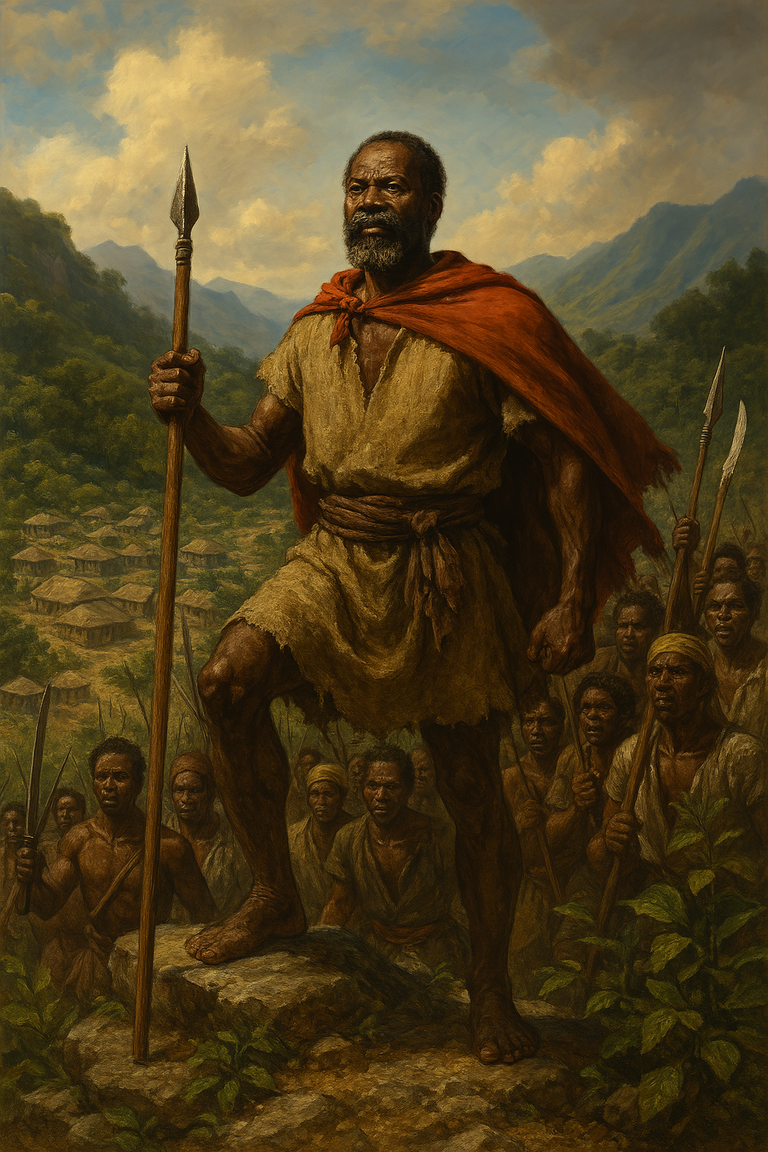
At the heart of the 16th century, in New Spain (today’s Mexico), sugarcane plantations, mines, and various other industries thrived on the backs of African slaves. These individuals, torn from their native lands, endured horrific living and working conditions, marked by relentless physical abuse and interminable days of labor. It was in this brutal context that Gaspar Yanga emerged, an emblematic figure of resistance and the quest for freedom.
Yanga, according to some sources, was of African royal origin. Around 1570, no longer able to endure the atrocities of slavery, he made a bold decision. With a group of fellow enslaved companions, he escaped the grasp of his oppressors and took refuge in the highlands of Veracruz. These remote and hard-to-reach mountains became the cradle of their freedom.
Yanga and his supporters founded a free settlement, San Lorenzo de los Negros, which quickly became a symbol of resistance and hope for fleeing slaves. This community, initially composed of a few dozen people, grew over time as other fugitive slaves joined their cause. Living conditions were harsh, but the thirst for freedom instilled an indomitable strength in these men and women.
Under Yanga’s wise leadership, the community prospered through subsistence agriculture and sporadic raids against Spanish convoys, which allowed them to obtain additional resources. The Spaniards, seeing Yanga and his colony as a growing threat to their authority and economy, launched several military expeditions to annihilate this enclave of freedom.
However, Yanga and his companions were well prepared. Using their intimate knowledge of the terrain and ingenious guerrilla tactics, they bravely resisted Spanish attacks for decades. Each attempt to capture them ended in crushing failure for the colonial forces, reinforcing Yanga’s legendary status among his followers.
The conflict culminated in 1609, when colonial authorities decided to launch a major offensive under the command of Captain Pedro González de Herrera. The battle was fierce, and Yanga’s rebels inflicted heavy losses on the Spaniards, proving once again their unwavering determination to defend their freedom. However, after years of hard-fought combat and losses on both sides, the two parties reached an impasse.
In 1618, weary from the war and aware of the mutual exhaustion, Yanga proposed a peace agreement to the colonial authorities. The Spaniards, eager to stabilize the region, agreed to negotiate. The peace agreement officially recognized Yanga’s community as free, and San Lorenzo de los Negros became an autonomous colony under the condition of some colonial oversight and the cessation of raids against the Spaniards.
The official recognition of San Lorenzo de los Negros marked a monumental victory for Yanga and his companions. It was one of the first free slave communities in the Americas, a powerful symbol of autonomy and resistance. Today, the town of Yanga, named in honor of its founder, still exists in the state of Veracruz, Mexico, and celebrates the legacy of its courageous leader every year.
The revolt of Gaspar Yanga and the establishment of San Lorenzo de los Negros are crucial testimonies to the ability of enslaved people to organize effective uprisings and negotiate their freedom in the face of colonial oppression. Yanga’s example inspired many other rebellions and resistance movements throughout the Americas. His story reminds us that, even in the darkest moments, the spirit of freedom and justice can shine with an intensity that transcends centuries.
Rebellion of Rei Amador (July 9, 1595 – January 4, 1596)
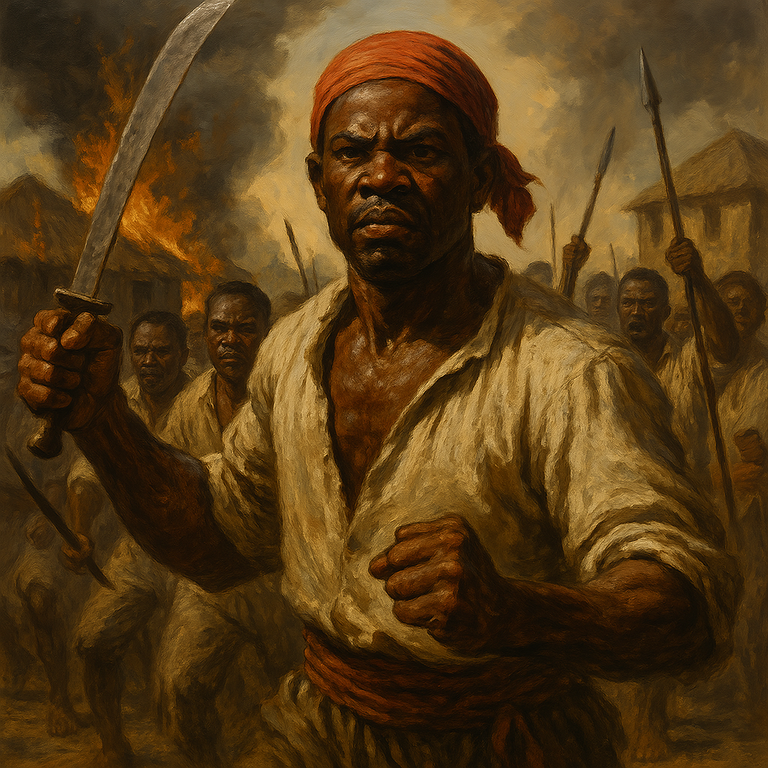
In the warm waters of the Gulf of Guinea, the islands of São Tomé and Príncipe had been under the yoke of Portuguese colonizers since the 15th century. These small islands, with their thriving sugar plantations, were relentlessly exploited by the colonists, who used African slaves for arduous and exhausting labor. The slaves endured extremely harsh living conditions, marked by incessant abuse, disease, and severe oppression.
Among these slaves, the Angolars, originally from Angola, stood out for their indomitable resistance. Those who had managed to escape and form maroon communities in the remote regions of the island were a constant thorn in the side of the Portuguese colonists. These communities offered refuge to fleeing slaves, far from the direct control of their oppressors.
On July 9, 1595, a charismatic leader emerged among the Angolars: Rei Amador. With fierce determination and a clear vision, he launched a daring rebellion against the Portuguese. Amador succeeded in uniting the maroon slaves and those still in captivity, orchestrating a series of coordinated attacks against the plantations and Portuguese settlements. The revolts ignited the colonial lands, burning plantations, freeing slaves, and spreading panic among the colonists.
Proclaiming himself king, Rei Amador established a governance structure in the territories he controlled, creating a free kingdom, even if temporary, with immense symbolic power. Under his leadership, the rebels adopted guerrilla tactics, striking quickly and retreating into the difficult-to-access forested areas. These incessant attacks severely disrupted Portuguese operations, forcing the colonists to devote considerable resources to defense and repression.
Rei Amador and his forces exploited their superior knowledge of the terrain, making every Portuguese attempt to capture them extremely difficult. They also established strategic alliances with certain indigenous communities and other groups of slaves, thereby expanding their support base and capacity for resistance. This rebellion demonstrated a surprising level of organization and coordination, defying colonial expectations regarding the ability of slaves to carry out sustained uprisings.
However, the military superiority and resources of the Portuguese eventually made the difference. After several months of intense fighting, the colonial forces finally managed to capture Rei Amador and several of his lieutenants on January 4, 1596. Rei Amador was executed, and the remaining rebels faced severe punishments, intended to discourage any future rebellion.
Although brief, Rei Amador’s rebellion left an indelible mark on the history of São Tomé and Príncipe. It revealed the depth of the slaves’ resentment toward colonial oppression and inspired other resistance movements in the Portuguese colonies and beyond. Rei Amador became an emblematic figure in the struggle for freedom and justice. His courage and leadership are celebrated in the culture and history of São Tomé and Príncipe, and January 4, the day of his capture, is commemorated as a day of reflection and celebration of resistance against oppression.
Cimarrones revolt (16th century)
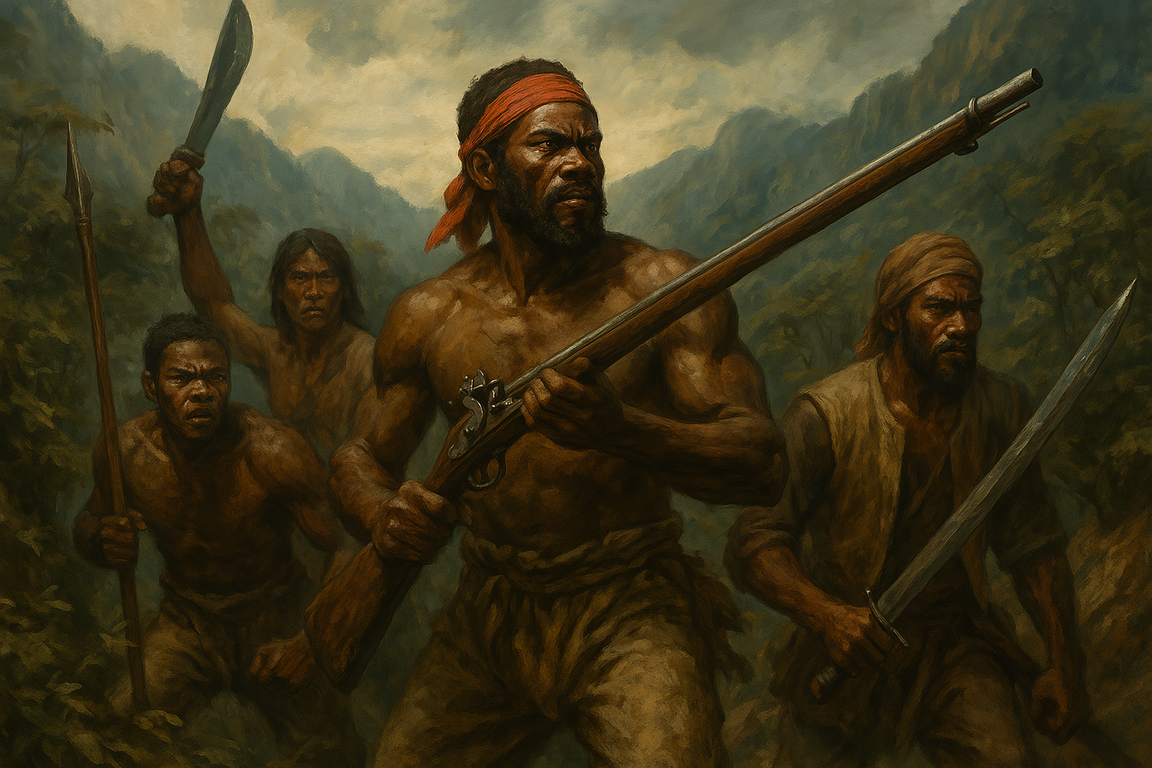
In the deep forests and rugged mountains of 16th-century Panama, a glimmer of hope and resistance shone against Spanish colonial domination. The revolt of the Cimarrones, or Maroons, remains one of the most remarkable examples of African slaves’ struggle for freedom in Latin America. These escaped slaves, led by charismatic leaders such as Bayano, waged relentless guerrilla warfare, seeking to establish autonomous communities far from oppression.
At that time, Panama was a crucial region of the Spanish Empire, serving as a key passage for gold and silver extracted from Peru en route to Spain. To support their colonial enterprises, the Spaniards enslaved Africans, subjecting them to exhausting and inhumane working conditions. These abuses and the life of servitude drove many slaves to flee into the mountains and forests, where they formed autonomous communities called palenques.
The Cimarrones, led by emblematic figures such as Bayano, began organizing raids against plantations, mines, and Spanish convoys. These daring and devastating guerrilla actions aimed to weaken Spanish control while providing vital resources to the maroon communities. Each raid was a declaration of war against oppression and a cry for freedom.
Using effective guerrilla tactics, the Cimarrones exploited their deep knowledge of the terrain and their mobility. They struck quickly and then retreated into inaccessible areas, making Spanish pursuits virtually impossible. Panama’s mountainous terrain and dense forests offered them natural refuges and strategic positions from which to launch ambushes against colonial forces.
The Cimarrones did not fight alone. They formed alliances with certain local indigenous communities, further strengthening their capacity to resist. These alliances allowed for the sharing of information, resources, and safe havens, complicating the Spaniards’ efforts. The solidarity between fleeing slaves and indigenous people created a robust and resilient resistance network.
Bayano, one of the most revered leaders of the Cimarrones, embodied the indomitable spirit of the revolt. Captured and enslaved, he managed to escape and lead a major rebellion. Under his leadership, a powerful maroon community was established, and the resistance endured for several years. Bayano was not only a skilled military leader but also a symbol of courage and determination for all those seeking freedom.
The Spaniards, faced with tenacious and costly resistance, attempted various strategies to crush the Cimarrones. Beyond military expeditions, they tried diplomacy and deception to divide the maroon forces and capture their leaders. In 1570, after years of struggle, Bayano was captured during rigged peace negotiations. Sent to Seville, Spain, he lived there in captivity until his death. However, even after Bayano’s capture, the Cimarrones’ resistance continued under other leaders, demonstrating their resilience and unwavering determination.
The revolt of the Cimarrones had a profound impact on colonial society in Panama. It demonstrated the capacity of slaves to organize and conduct sustained resistance against oppression. The actions of the Cimarrones inspired other slave revolts throughout the Americas, serving as a symbol of courage and the struggle for freedom.
The maroon communities, though often in conflict with colonial authorities, managed to survive and preserve a degree of autonomy. Their existence helped forge a culture of resistance and solidarity among slaves and oppressed peoples. The revolt of the Cimarrones in Panama is a crucial chapter in the history of resistance to slavery in Latin America, illustrating the ability of slaves to use guerrilla tactics to challenge a powerful and well-equipped oppressor, while highlighting the importance of intercommunity alliances in the struggle for freedom.
San Basilio de Palenque (16th century – Present)
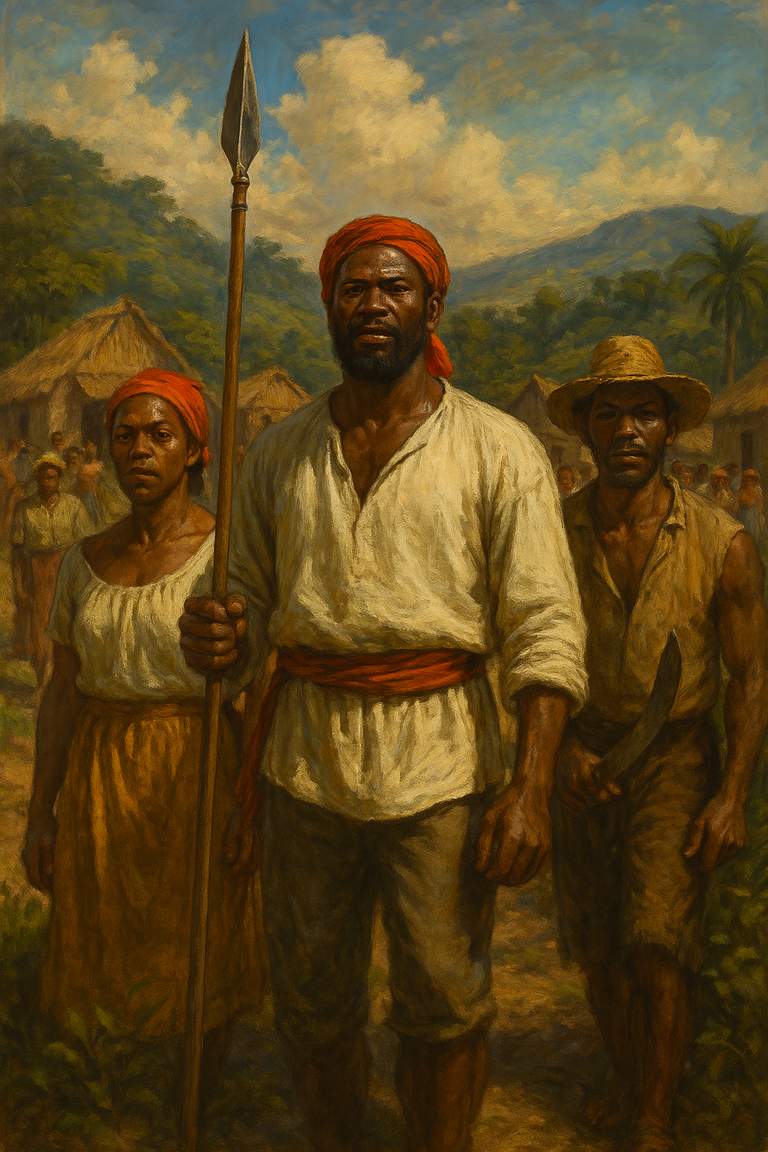
In the vast green expanses of the mountains in the Cartagena region of Colombia lies San Basilio de Palenque, a community whose roots reach deep into the turbulent history of the 16th century. Founded by Benkos Biohó, an African slave who became an emblematic leader, San Basilio de Palenque is one of the first free communities of enslaved people in the Americas and remains a powerful symbol of resistance and autonomy.
In the 16th century, the African slave trade was commonplace in the Spanish colonies of South America. Enslaved people, subjected to inhumane living conditions in mines, sugar plantations, and other industries, endured an existence marked by brutality and despair. Yet the spirit of freedom and rebellion still burned among these oppressed people, pushing them to flee to inaccessible territories in order to escape their oppressors.
Benkos Biohó, captured in Africa and transported to Colombia, was one of these enslaved people. Managing to escape Spanish tyranny at the beginning of the 17th century, he used his intelligence, determination, and leadership skills to organize a maroon community in the mountains of the Cartagena region. Biohó was not only a military leader but also a shrewd political strategist, forming alliances with other groups of maroons and using guerrilla tactics to protect his community and carry out raids against the colonists.
San Basilio de Palenque, founded by Benkos Biohó and his followers, became a refuge for runaway slaves. Located in a difficult-to-reach region, the community benefited from natural protections that made it nearly impregnable to the Spaniards. The inhabitants, known as Palenqueros, lived according to their own laws and traditions, preserving their African heritage while developing a unique culture.
Under Biohó’s leadership, the community was well organized, with strong social and political structures. The Palenqueros developed agricultural, artisanal, and commercial methods to ensure their subsistence and autonomy. Thanks to constant vigilance and effective defensive strategies, they managed to maintain their freedom despite the constant threats from the Spanish.
The resistance of San Basilio de Palenque was so effective that the Spaniards eventually recognized the impossibility of destroying the community by force. In 1605, a peace agreement was concluded between Benkos Biohó and the Spaniards, officially recognizing the Palenqueros as a free community and putting an end to Spanish attacks against them. This agreement marked a significant victory in the history of struggles for the freedom of enslaved people.
However, betrayal soon struck. In 1619, Benkos Biohó was captured by the Spaniards during peace negotiations, betrayed and executed. Despite this tragedy, the community of San Basilio de Palenque managed to maintain its autonomy and prosper, continuing the vision of freedom and independence of its founder.
Today, San Basilio de Palenque remains a distinct and autonomous community. It is celebrated for its rich culture, which blends African and Colombian traditions. The Palenquero language, a unique creole, is still spoken by its inhabitants, and many cultural practices, including music, dance, and rituals, have been preserved. In 2005, San Basilio de Palenque was inscribed on the intangible cultural heritage list of UNESCO, in recognition of its historical and cultural importance.
The revolt led by Benkos Biohó and the founding of San Basilio de Palenque are striking examples of the ability of enslaved people to organize, resist, and create autonomous communities despite oppressive conditions. The official recognition of this community by the Spaniards represents a crucial step in the history of the struggle against slavery. San Basilio de Palenque continues to celebrate its heritage of resistance and resilience, offering a lasting source of inspiration for future generations.
Slave Rebellions in São Tomé and Príncipe (Early – Mid-17th Century)
A Flame of Resistance in the Sugar Islands
In the tropical waters of the Gulf of Guinea, the islands of São Tomé and Príncipe, discovered by the Portuguese in the 15th century, quickly became key centers of sugar production. But behind the prosperity of the sugar plantations lay a dark reality: thousands of African slaves were subjected to conditions of life and labor of extreme brutality. Between the early and mid-17th century, these enslaved people revolted repeatedly, leaving their mark on history through their courage and determination to fight oppression.
Sugarcane plantations formed the economic foundation of the islands. Enslaved people, torn from their homelands and forced to work under a scorching sun, endured exhausting labor, mistreatment, and a cruel lack of food and medical care. The despair and anger that resulted fueled a deep desire for freedom and justice.
Slave rebellions, which erupted several times between the early and mid-17th century, were often violent and well organized. Driven by an intense desire for freedom, enslaved people banded together to attack plantations, set sugarcane fields on fire, and kill their oppressors. These revolts were more than acts of desperation; they were manifestations of a collective will to create spaces of freedom, far from colonial control.
These uprisings were generally led by charismatic and tactically astute leaders. Among them were escaped slaves from plantations who, thanks to their knowledge of the terrain and their courage, managed to organize coordinated attacks against Portuguese colonists. These inspiring leaders were not only fighters but also symbols of hope for all those who aspired to freedom.
The rebellions had a considerable impact on the sugar economy of São Tomé and Príncipe. The destruction of sugarcane fields and production facilities caused significant financial losses for the colonists. Frequent interruptions of agricultural activities and the need to mobilize resources to suppress revolts greatly weakened the islands’ sugar production. The colonists, unable to maintain effective control, saw the profitability of their plantations decline.
Faced with this stubborn resistance, the Portuguese colonial authorities responded with brutal repression. Military expeditions were organized to hunt down and capture the rebels, often with the help of mercenaries and other loyalist slaves. Captured rebels were severely punished, often publicly executed to deter any future uprising. However, these repressive measures failed to completely extinguish the flame of rebellion.
Despite the repression, the revolts continued, illustrating the resilience and determination of enslaved people to fight for their freedom. The Portuguese, although better armed and organized, were never able to fully pacify the islands. The deep causes of injustice and exploitation remained, continually fueling the desire for revolt among the enslaved.
The slave rebellions in São Tomé and Príncipe in the early and mid-17th century left a lasting legacy in the history of resistance to colonial oppression. They demonstrated that even under extreme conditions, enslaved people could organize and carry out effective actions against their oppressors. These revolts highlighted the importance of the struggle for dignity and human freedom, themes that still resonate today.
Quilombo dos Palmares (1605 – 1694)
The Quilombo dos Palmares, located in the region of present-day Alagoas in Brazil, is one of the most emblematic examples of resistance against slavery in Latin America. Founded in the early 17th century, this maroon community prospered for nearly a century, waging an incessant struggle against Portuguese colonists. Zumbi dos Palmares, one of its most famous leaders, became a symbol of resistance and the fight for freedom.
At the beginning of the 17th century, colonial Brazil was a society founded on slavery, with millions of Africans enslaved to work in sugar plantations and other industries. The living conditions of enslaved people were extremely harsh, marked by physical abuse, long working hours, and a life of deprivation.
Maroons—runaway slaves—sought refuge in remote and difficult-to-reach areas. The Quilombo dos Palmares was one of the largest and most famous of these maroon communities. Founded around 1605, it developed in the mountainous region of Serra da Barriga, offering natural defense against attacks by colonists.
Palmares consisted of several interconnected villages, each with its own governance structure but united under a common organization for defense and survival. The community was highly organized, with systems of agricultural production, resource distribution, and military defense. The inhabitants of Palmares cultivated the land, raised animals, and practiced crafts, ensuring their self-sufficiency.
The population of Palmares included not only runaway African slaves but also Indigenous people and white settlers fleeing Portuguese authorities. This cultural diversity enriched the community and strengthened its spirit of resistance.
Zumbi, born in 1655, became one of the most famous leaders of Palmares. Captured and enslaved as a child, he managed to escape and returned to Palmares, where he became a respected military leader and a symbol of the struggle for freedom. Zumbi was known for his bravery and tactical skill, leading numerous battles against colonial forces.
Under Zumbi’s leadership, Palmares resisted several major Portuguese military expeditions. He advocated active resistance and refused any compromise with the colonists, insisting on the inalienable right of his people to freedom.
The Portuguese colonists considered Palmares a major threat to the colonial and economic order. Between 1605 and 1694, they launched numerous military expeditions to destroy the maroon community. These expeditions were often composed of professional soldiers, mercenaries, and other loyalist slaves.
The forces of Palmares, though less well equipped, used effective guerrilla tactics, taking advantage of their knowledge of the terrain and community solidarity. They set ambushes, attacked Portuguese convoys, and quickly retreated into the mountains.
Despite their fierce resistance, the forces of Palmares were eventually overwhelmed by a major military expedition in 1694. The Portuguese, under the command of Domingos Jorge Velho, succeeded in invading Serra da Barriga and destroying the villages of Palmares. Zumbi dos Palmares was captured and executed on November 20, 1695. His head was displayed in Recife to discourage any future revolt.
The fall of Palmares and the death of Zumbi marked the end of this great maroon community, but their legacy endured. Zumbi dos Palmares became a national symbol of resistance and the struggle for freedom in Brazil. November 20, the day of his death, is now celebrated as Black Consciousness Day in Brazil, in tribute to the resistance of Afro-Brazilians against oppression.
Palmares left a lasting legacy as a symbol of the struggle against slavery and colonial oppression. The community showed that enslaved people could organize, resist, and live free despite the most difficult conditions. Stories of their resistance inspired other liberation movements in Latin America and beyond.
The Quilombo dos Palmares represents one of the most successful and enduring examples of maroon communities in Latin America. Palmares’ resistance against the Portuguese for nearly a century demonstrates the determination of enslaved people to fight for their freedom and autonomy.
Gloucester county conspiracy (1663)
The Gloucester County Conspiracy, which took place in 1663 in Virginia, is one of the earliest documented attempts at a slave rebellion in the English colonies of North America. Although the rebellion was discovered before it could be carried out, the event highlights the growing tensions between enslaved people and colonists, as well as the determination of enslaved people to fight for their freedom from the earliest days of slavery in America.
In the mid-17th century, Virginia was a prosperous English colony founded primarily on agriculture, particularly tobacco cultivation. This economy relied heavily on the labor of African slaves and indentured servants, who worked under extremely harsh conditions. African slaves in particular suffered physical abuse, exhausting workdays, and a complete lack of rights.
The harsh living conditions and the brutality of the slave system generated deep resentment and a desire for freedom among the enslaved. These feelings of rebellion often manifested in acts of passive resistance, escapes, and sometimes conspiracies for armed uprisings.
In 1663, a group of enslaved people in Gloucester County devised a plan to rise up against their masters and seize the colony. The conspirators, who included African slaves and possibly discontented indentured servants, planned to kill their oppressors and flee toward a possible freedom.
The exact details of the conspiracy remain poorly known due to the lack of contemporary documentation. However, it is clear that the conspirators had devised an organized plan and had secretly prepared for the insurrection. They intended to rise up in a coordinated manner to maximize their impact and catch the colonists by surprise.
The conspiracy was revealed before it could be carried out, probably because of the betrayal of a slave or loyalist servant who had knowledge of the plot. The colonial authorities, alerted to the threat, reacted quickly to prevent the uprising. The leaders of the conspiracy were arrested and subjected to brutal interrogations to obtain confessions and identify other participants.
The colonists, determined to crush any potential rebellion and deter future conspiracies, severely punished the conspirators. Several of them were executed for treason, often publicly, to serve as an example and discourage other enslaved people from attempting to revolt.
Although the Gloucester County Conspiracy failed before it could be realized, it had important repercussions for colonial society in Virginia. The colonists became aware of the constant threat posed by dissatisfied slaves and strengthened measures of control and surveillance. Laws and regulations were tightened to prevent gatherings of enslaved people and limit their ability to organize revolts.
This attempted rebellion, although unsuccessful, is testimony to the determination of enslaved people to fight for their freedom from the earliest days of slavery in America. It also highlights the growing tensions between enslaved people and colonists and the pervasive fear of revolts in slaveholding colonies.
The Gloucester County Conspiracy of 1663 represents one of the earliest documented attempts at a slave rebellion in North America. This event foreshadowed the many slave revolts that would mark the history of the colonies and the United States in the centuries that followed. It also illustrates the determination of enslaved people to resist oppression and seek freedom despite enormous risks.
New York Slave Revolt of 1712
The New York slave revolt of 1712 is a significant event in the history of the United States, illustrating the resistance of African slaves to colonial oppression. This violent uprising resulted in several deaths and had important repercussions for laws and policies regarding slavery in the colony of New York City.
At the beginning of the 18th century, New York was a British colony where slavery played a crucial role in the economy. African slaves were used for various forms of labor, including plantation work, artisanal trades, and domestic service. New York City had a growing population of African slaves, living under extremely difficult conditions and subjected to constant mistreatment.
Discontent grew among enslaved people because of oppressive living conditions, physical abuse, and the absence of any prospect of freedom. These social and racial tensions created an environment conducive to rebellion.
On April 6, 1712, a group of about twenty-three African slaves gathered at midnight in a house on Maiden Lane, in the northern part of New York City. Armed with guns, swords, and axes, they intended to strike a decisive blow against their masters and spread terror among the white colonists.
The rebels’ plan was simple but bold: they set fire to a building, thereby attracting the attention of the colonists. When the colonists rushed to extinguish the fire, the enslaved rebels launched their attack, killing nine people and wounding six others.
The reaction of the colonial authorities was swift and brutal. The local militia was called in to suppress the revolt. After a brief but violent confrontation, the enslaved rebels were subdued. Several managed to escape, but the majority were quickly captured.
The colonial authorities decided to make an example of the rebels in order to deter future revolts. A special tribunal was quickly assembled to try the captured slaves. Of the twenty-three slaves involved in the revolt, twenty-one were sentenced to death. They were executed publicly and spectacularly: some were hanged, others burned alive, and others broken on the wheel—a particularly cruel method intended to inspire terror among enslaved people and prevent any new attempt at uprising.
The revolt of 1712 had significant repercussions on colonial society in New York. The colonial authorities, alarmed by the violence of the revolt and the determination of the enslaved, adopted a series of even more restrictive laws to control the enslaved population. These new laws limited the movement of slaves, prohibited unsupervised gatherings of enslaved people, and strengthened punishments for any form of rebellion or disobedience.
White colonists, frightened by the revolt, increased security measures, including the creation of night patrols and the establishment of strict curfews for enslaved people. The fear of new revolts contributed to an atmosphere of suspicion and increased control over the lives of the enslaved.
The New York slave revolt of 1712 remains a significant event in the history of slave resistance in North America. It demonstrates the determination of enslaved people to fight for their freedom despite enormous risks and brutal consequences. The revolt also highlighted the growing racial and social tensions in the colonies—tensions that would continue to intensify in the decades that followed.
This event is often cited as one of the earliest examples of an organized slave revolt in North America. It inspired other movements of resistance and contributed to shaping legislation and policies regarding slavery in the British colonies.
First Maroon War (1728 – 1740)
The First Maroon War in Jamaica, which took place from 1728 to 1740, is one of the most significant conflicts in the history of slave resistance in the Americas. This conflict opposed the Maroons—self-liberated Africans established in the mountains—to the British colonial authorities of Jamaica. The war ended with the official recognition of Maroon communities and the signing of peace treaties that granted them a degree of autonomy.
At the beginning of the 18th century, Jamaica was a prosperous British colony whose economy depended primarily on sugar plantations using enslaved labor. However, Jamaica was also characterized by a strong presence of Maroons—runaway slaves who had escaped servitude and established themselves in the mountainous and forested regions of the island. These Maroons formed autonomous and resilient communities, living from agriculture and raids on plantations.
The Jamaican Maroons were well organized and led by charismatic and capable leaders such as Cudjoe and Queen Nanny. These leaders used guerrilla tactics to defend their communities against punitive expeditions by British colonists.
Tension between the Maroons and British colonists was constant, but the situation intensified in 1728 when the British decided to launch a major offensive to crush the Maroon communities and restore their authority. The Maroons, refusing to submit, prepared to resist with determination.
The Maroon War was characterized by effective guerrilla tactics. The Maroons used their intimate knowledge of the mountainous terrain to conduct ambushes and rapid raids against British troops. They attacked plantations, freed enslaved people, and constantly harassed colonial forces.
The British, although better equipped and numerically superior, experienced great difficulty countering Maroon guerrilla tactics. The difficult terrain of Jamaica and the mobility of the Maroons made British military operations extremely costly and ineffective.
Among the Maroon leaders, Cudjoe stood out as a skilled military strategist. He led the Maroons of the region of Trelawny Town and orchestrated numerous attacks against the British. Queen Nanny, another emblematic figure, led the Maroons of the Blue Mountains region and was renowned for her courage and inspiring leadership. Under their direction, the Maroons maintained sustained resistance for more than a decade.
After more than ten years of fierce fighting, the British realized they could not defeat the Maroons by force. In 1739, they decided to negotiate peace. The British governor of Jamaica, Edward Trelawny, signed a peace treaty with Cudjoe, officially recognizing the autonomy of the Maroon communities of Trelawny Town. A second treaty was signed in 1740 with the Maroons of the Blue Mountains led by Queen Nanny.
These treaties guaranteed the Maroons land and a certain degree of autonomy in exchange for their commitment to cease attacks on British plantations and assist in capturing other runaway slaves. The Maroons accepted these terms, and hostilities officially ceased.
The First Maroon War had lasting consequences for Jamaica. The peace treaties set an important precedent by recognizing Maroon autonomy and granting them territorial rights. These agreements allowed the Maroons to maintain their culture and traditions while living in peace with British colonists.
The legacy of the First Maroon War is celebrated in Jamaica as a symbol of resistance and the struggle for freedom. The Jamaican Maroons are still recognized today for their crucial role in the fight against colonial oppression. Descendants of the Maroons continue to live in autonomous communities, preserving their cultural and historical heritage.
The First Maroon War is significant because it demonstrates the ability of self-liberated enslaved people to organize effective resistance against a powerful oppressor. It also illustrates the importance of guerrilla tactics and knowledge of the terrain in the struggle against colonial forces. The peace treaties of 1739 and 1740 represent an official recognition of Maroon autonomy—an event that remains rare and significant in the history of slave revolts.
Chesapeake rebellion (October 1730)
The Chesapeake Rebellion in October 1730 is considered one of the largest slave revolts of the colonial period in North America. This significant event took place in the Chesapeake region of Virginia and involved a substantial number of African slaves who rose up against their masters in a bold attempt to gain their freedom.
At the beginning of the 18th century, the Chesapeake region was a major center of the British colonial economy, founded on the cultivation of tobacco. This economy relied heavily on the labor of African slaves, who endured extremely harsh living and working conditions. Physical abuse, exhausting labor, the separation of families, and the absence of rights were commonplace, generating deep resentment and a strong desire for freedom among the enslaved population.
The Chesapeake Rebellion occurred in a context of growing tensions and passive resistance, which manifested through acts of sabotage, escapes, and, in some cases, plots of revolt.
In October 1730, a group of African slaves organized a revolt in the Chesapeake region. The plan was to rise up simultaneously, kill their masters, and flee to remote areas where they hoped to escape capture and establish autonomous communities. The rebellion involved slaves from several plantations, demonstrating a high degree of coordination and planning.
Although the exact details of the plot and its organization are poorly documented, it is clear that the conspiratorial slaves intended to use surprise and force to break the control of their masters and win their freedom.
Unfortunately for the rebels, the conspiracy was discovered before it could be fully carried out. Colonial authorities, alerted to the plot, reacted quickly and decisively to suppress the revolt. Militias were mobilized to track down and capture the slaves involved in the uprising.
The colonists, alarmed by the threat of a general revolt, intensified security measures and strengthened patrols to prevent any escape or suspicious gathering of slaves. Several slaves involved in the rebellion were arrested, tried, and publicly and brutally executed to deter future conspiracies.
Although suppressed, the Chesapeake Rebellion had significant repercussions on colonial society in Virginia and beyond. The colonists became aware of the depth of resentment among the enslaved population and of the constant threat of revolts. In response, colonial authorities adopted even stricter laws to control slaves, limiting their movements, prohibiting unsupervised gatherings, and imposing severe punishments for any form of disobedience.
This rebellion also reinforced the determination of colonists to maintain strict control over the enslaved population and to prevent any future attempts at uprising. Plantation owners increased security measures and monitored more closely the interactions and activities of enslaved people.
The Chesapeake Rebellion is a poignant example of the relentless struggle of enslaved people for freedom and justice. It demonstrates the capacity of slaves to organize and resist despite enormous risks and oppressive conditions. This event left a lasting legacy of courage and determination in the history of slave revolts in North America.
Although the rebellion was crushed, it contributed to fueling fear among colonists and inspired other enslaved people to resist oppression. The Chesapeake Rebellion reminds us that enslaved people were not merely passive victims, but active actors in the struggle for their freedom and dignity.
The Chesapeake Rebellion represents one of the largest and most audacious attempts at a slave revolt during the colonial period in North America. It illustrates the deep social and racial tensions within the colonies and highlights the willingness of enslaved people to risk their lives to escape oppression.
Chesapeake Rebellion (October 1730)
The Chesapeake Rebellion, which took place in October 1730 in Virginia, is considered the largest slave rebellion of the colonial period in North America. This event highlights the determination of enslaved people to fight for their freedom despite the oppressive conditions under which they lived.
At the beginning of the 18th century, Virginia was one of the British colonies where slavery was deeply embedded in the economic and social system. Tobacco plantations, the region’s principal crop, relied heavily on the forced labor of African slaves. These enslaved people lived under extremely difficult conditions, suffering physical abuse, deprivation, and severe restrictions on their freedoms.
The harshness of these conditions and the desire for freedom fueled rebellious sentiments among the enslaved population. Communication and solidarity among slaves, often coming from different plantations, played a crucial role in organizing rebellions and conspiracies.
In October 1730, a large group of slaves in the Chesapeake region of Virginia planned a bold revolt. Although the specific details of the rebellion are poorly documented, it is known that hundreds of slaves participated in this attempted uprising.
The rebel slaves planned to rise up simultaneously, seize weapons, and attack plantations in order to free other enslaved people and overthrow their oppressors. The rebellion was a coordinated effort and involved a significant level of planning and organization.
Unfortunately for the enslaved rebels, colonial authorities were informed of the revolt before it could fully materialize. Colonial militias were quickly mobilized to suppress the uprising. Colonial forces, benefiting from superior weapons and coordination, succeeded in crushing the Chesapeake Rebellion.
The repercussions for the enslaved people involved were severe. Many rebels were captured, tried, and executed. The leaders of the revolt were often hanged or subjected to public torture intended to deter other slaves from attempting similar uprisings. Colonial authorities used this rebellion to strengthen slavery laws, imposing even stricter measures to control the enslaved population and prevent future revolts.
The Chesapeake Rebellion had a profound impact on the colonial society of Virginia and beyond. Although the revolt was crushed, it revealed the depth of discontent among enslaved people and the constant threat represented by their potential for rebellion. This event pushed plantation owners and colonial authorities to adopt reinforced security measures and to further restrict the freedoms of enslaved people.
Despite its apparent failure, the Chesapeake Rebellion remains a powerful testimony to the resistance and determination of enslaved people to fight for their freedom. It also highlights the enormous risks that enslaved people were willing to take to escape servitude and assert their humanity.
The Chesapeake Rebellion of 1730 represents one of the largest attempts at a slave revolt during the colonial period in North America. It illustrates the ability of enslaved people to organize and plan uprisings even under conditions of strict control and severe repression. This event also highlights the growing tensions between enslaved people and colonists and the omnipresent fear of revolts among slaveholders.
Samba Rebellion (1731)
The Samba Rebellion in 1731 is a significant event in the history of slave revolts in North America, particularly in the French Louisiana region. Samba, an African slave, led a daring uprising against his masters and the colonial authorities, illustrating the courageous resistance of enslaved people to oppression.
At the beginning of the 18th century, Louisiana was a French colony characterized by an agricultural economy heavily dependent on the labor of African slaves. Slaves worked on tobacco, rice, and sugar plantations, as well as in other agricultural labor. Their living conditions were extremely harsh, marked by exhausting work, physical abuse, and a total deprivation of freedom.
Tensions between slaves and colonists were exacerbated by these harsh conditions and mistreatment, often leading to acts of passive resistance and, in some cases, armed revolts.
In 1731, Samba organized a revolt against his masters and the French colonial authorities. Known for his courage and leadership, he successfully rallied a group of slaves to rise up against oppression. The rebellion was planned in secrecy, with the goal of striking a decisive blow against the colonists.
The uprising erupted when Samba and his companions attacked plantations, killing several colonists and setting buildings on fire. The rebels hoped to sow confusion and fear among the colonists while inspiring other enslaved people to join their cause.
The French colonial authorities responded swiftly and brutally. Alarmed by the violence of the revolt, colonists mobilized their forces to suppress it. Local militias and colonial troops were deployed to track down and capture the rebellious slaves.
Despite their courage and determination, the enslaved people led by Samba were poorly equipped and outnumbered by colonial forces. After a series of violent confrontations, the revolt was crushed. Samba and several of his companions were captured.
The colonial authorities severely punished the captured slaves to deter future rebellions. Samba and other leaders were publicly executed as a warning. Plantation owners reinforced control over the enslaved population, introducing even stricter laws to limit movement and prevent organization.
The Samba Rebellion left a lasting impact on the Louisiana colony. It highlighted the growing tensions between slaves and their oppressors and the constant fear among colonists of losing control over the social order.
Although quickly suppressed, the Samba Rebellion remains a powerful symbol of resistance and the struggle for freedom. Samba became an emblem of African slaves’ bravery in the face of colonial oppression. His revolt inspired other acts of resistance and contributed to the collective memory of struggles against slavery in North America.
Saint John Rebellion (1733)
The Saint John Rebellion in 1733 was one of the earliest and longest slave uprisings in the Americas. This insurrection, which took place in the Danish Virgin Islands (today the U.S. Virgin Islands), lasted nearly nine months and had a significant impact on the history of resistance against slavery in the region.
At the beginning of the 18th century, the Danish Virgin Islands were a colony under Danish control, with an economy primarily based on sugar plantations. These plantations relied heavily on African slaves, who worked under extremely harsh conditions, performing grueling labor, suffering severe corporal punishment, and living a life of constant deprivation.
Tensions were high due to oppressive living conditions and mistreatment by colonists. Seeking to escape this brutality, enslaved people began planning a revolt to overthrow their oppressors and gain their freedom.
The Saint John Rebellion began on November 23, 1733, when slaves on the Coral Bay sugar plantation rose up. Armed with knives, axes, and a few stolen firearms, they attacked their masters, killing several colonists and taking control of the plantation. They sent signals to other plantations, encouraging additional slaves to join the revolt.
The rebels quickly gained control over much of the island, destroying plantations and killing numerous colonists. They established camps in the mountains, from which they could launch raids and defend against colonial forces. The rebels were well-organized and used guerrilla tactics to resist attempts at suppression by the Danish authorities.
The Danish authorities, taken aback by the scale and violence of the revolt, sent military reinforcements to suppress the rebellious slaves. However, the Danish troops faced fierce resistance, as the rebels were familiar with the terrain and employed effective guerrilla tactics.
Fighting continued for nearly nine months, with the rebels persistently harassing Danish forces and attacking plantations. Eventually, the Danish authorities requested assistance from neighboring French colonies, including Martinique and Guadeloupe. French troops were sent to support the Danes, providing additional force that ultimately brought the rebellion to an end.
In August 1734, after months of intense combat and heavy losses on both sides, Danish and French forces captured the main leaders of the revolt and regained control of the island. Captured rebels were harshly punished, with many executed publicly to deter future uprisings.
The Saint John Rebellion had profound repercussions on the colonial society of the Danish Virgin Islands. It highlighted the determination of enslaved people to fight for freedom and revealed the vulnerabilities of the slavery system. Danish authorities reinforced control and surveillance, introducing stricter laws to prevent further rebellions.
The rebellion also inspired other resistance movements in the Caribbean and beyond, demonstrating that enslaved people under extreme oppression could organize and challenge their oppressors.
The Saint John Rebellion remains a powerful symbol of African slaves’ resistance against colonial oppression. It serves as a reminder that the pursuit of freedom and human dignity transcends time and place. The rebels of Saint John displayed remarkable courage and determination, and their struggle continues to inspire social justice movements today.
Quarino Rebellion (1734)
The Quarino Rebellion in 1734 is a significant event in the history of slave uprisings in the Bahamas. Quarino, an African-born slave, orchestrated a revolt by fleeing his plantation and recruiting other enslaved people to join his cause. Although the rebellion was quickly suppressed, it illustrates the determination of enslaved people to fight for their freedom and dignity.
At the beginning of the 18th century, the Bahamas were a British colony, and New Providence Island was an important center for trade and agriculture, particularly cotton and tobacco plantations. African slaves were used as labor for these plantations, working under extremely harsh conditions and constantly subjected to mistreatment.
Oppressive living conditions generated deep resentment among the enslaved population, and acts of passive resistance were common. However, some slaves took bolder measures to challenge their oppressors and seek freedom.
In 1734, Quarino escaped from his plantation on New Providence Island. Refusing to live in servitude, he traveled across the island to recruit other slaves to launch a revolt. His goal was to assemble a force large enough to overthrow the colonists and establish a free community.
Quarino went from plantation to plantation, encouraging slaves to join him. He promised freedom and a better life, free from colonial oppression. His cause resonated with many enslaved people, and he successfully recruited a significant number of followers ready to fight for their freedom.
Under Quarino’s leadership, the rebel slaves planned a series of coordinated attacks on plantations in New Providence. Their strategy was to strike quickly, free other slaves, and destroy colonists’ property to sow terror and confusion.
The rebellion began with attacks on multiple plantations. The rebel slaves used agricultural tools and improvised weapons to fight their oppressors. They set buildings on fire, destroyed crops, and killed several colonists in the process. The violence and determination of the rebels quickly drew the attention of colonial authorities.
Alarmed by the uprising, the British colonists responded swiftly and brutally. Authorities mobilized the local militia to track down and capture the rebel slaves. Better armed and organized, colonial forces succeeded in suppressing the rebellion after a series of violent confrontations.
Quarino and several of his key lieutenants were captured. Colonial authorities executed Quarino and other leaders publicly to deter further uprisings. Captured slaves were harshly punished, and strict measures were implemented to strengthen control over the enslaved population.
Although short-lived, the Quarino Rebellion had a significant impact on Bahamian colonial society. It revealed the vulnerability of the colonists to the determination of enslaved people to fight for freedom. The rebellion led colonial authorities to reinforce laws and security measures to prevent further uprisings.
Colonists increased surveillance of slaves, imposing even stricter restrictions on movement and the ability to gather. These measures aimed to prevent any future organization of revolts and maintain strict control over the enslaved population.
The Quarino Rebellion of 1734 is a poignant testimony to the resistance of African slaves against colonial oppression. Although brutally suppressed, the spirit of struggle and courage of Quarino and his companions remains a symbol of the unrelenting pursuit of freedom and justice.
Stono Rebellion (September 9, 1739)
The Stono Rebellion, which occurred on September 9, 1739, in South Carolina, is one of the largest and most significant slave uprisings in the British North American colonies. This insurrection, led by a slave named Jemmy, marked a pivotal moment in the history of enslaved people’s resistance to colonial oppression.
At the beginning of the 18th century, South Carolina was a British colony with an economy heavily dependent on rice, tobacco, and indigo plantations. These plantations relied extensively on African slave labor. Slaves endured extremely harsh conditions: long hours of work in a hot and humid climate, physical abuse, and a complete lack of rights and freedoms.
Tensions between enslaved people and colonists were heightened by these inhumane conditions. Slaves sought ways to resist and escape their bondage. The Spanish in Florida, eager to destabilize British colonies, had proclaimed that any slave reaching Spanish Florida would be granted freedom and protection.
On September 9, 1739, a group of about 20 African slaves, led by a man named Jemmy (also known as Cato), gathered near the Stono River, southwest of Charleston. Taking advantage of the absence of colonist supervision during religious activities, the slaves attacked a store, seizing weapons and ammunition.
Armed with guns, axes, and other weapons, the slaves began marching south toward Spanish Florida, hoping to find freedom. Along the way, they carried banners and shouted “Liberty!” The group attacked several plantations, killing roughly 20 to 25 colonists and freeing other slaves who joined their cause.
News of the rebellion spread quickly, and colonial authorities responded with great brutality. South Carolina’s governor, William Bull, swiftly mobilized the colonial militia to track down and suppress the rebel slaves. Better armed and organized, colonial forces quickly caught up with the rebels.
After a series of violent confrontations, the colonial forces dispersed the rebels and ended the uprising. Jemmy and several of his followers were captured and executed, while others were killed in the clashes. Survivors were harshly punished to deter future revolts.
The Stono Rebellion had profound repercussions for colonial society in South Carolina and across the British colonies. Authorities enacted even stricter measures to control the enslaved population and prevent further uprisings. In 1740, the South Carolina Assembly passed the “Negro Act of 1740,” which imposed severe restrictions on the movement, gatherings, and activities of slaves. This law also prohibited slaves from learning to read, cultivating their own land, or earning money.
The Stono Rebellion also highlighted the ever-present fear among colonists of having their slave-based society overturned by insurrections. It reinforced the determination of colonists to maintain strict and brutal control over the enslaved population to preserve their social and economic order.
Although brutally suppressed, the Stono Rebellion remains a powerful symbol of slave resistance to oppression. The courage and desperate actions of the rebels inspired other enslaved people to resist, contributing to the long history of the struggle for freedom and justice in America.
The Stono Rebellion is commemorated as a key event in United States history, reminding us of the sacrifices and determination of African slaves to fight for their human dignity, even in the face of seemingly insurmountable obstacles.
New York Conspiracy (1741)
The alleged New York Conspiracy of 1741, also known as the Slave Plot of 1741, is one of the most dramatic and controversial episodes in American colonial history. This event involved a series of trials and executions based on accusations that slaves and poor whites had planned to burn the city of New York. While evidence for this plot remains disputed, the colonial authorities’ reaction had significant consequences for the enslaved population and the city’s lower classes.
At the beginning of the 18th century, New York was a British colony with a thriving economy partly reliant on African slave labor. Social tensions were growing due to the economic disparity between wealthy white colonists and the lower classes, including poor whites and enslaved people. Fear of slave revolts was widespread among colonists, fueled by events such as the Stono Rebellion of 1739 in South Carolina.
The winter of 1740–1741 was particularly harsh, worsening already difficult living conditions for the poor and enslaved. Rising social tensions created an atmosphere of suspicion and fear among colonists, setting the stage for a violent reaction to any perceived threat.
The alleged conspiracy was triggered by a series of suspicious fires that destroyed several buildings in New York during March and April 1741. The most notable fire damaged Fort New York, where ammunition warehouses were located. These fires caused panic among colonists, who feared a massive revolt by slaves and poor whites.
Colonial authorities, seeking to identify the source of the fires, arrested several slaves and a few poor whites. Under pressure and sometimes torture, some suspects confessed to participating in a plot to burn the city and overthrow the colonial order. These confessions, often obtained through force or promises of leniency, fueled widespread hysteria.
The authorities quickly organized a series of trials to prosecute those accused of plotting. Attorney General Richard Bradley and Chief Justice James DeLancey presided over the proceedings. Testimonies from arrested slaves, poor whites, and informants such as Mary Burton, a young white servant, were used to incriminate the accused.
The trials resulted in mass convictions. Thirty-four people were executed: 17 slaves were hanged, 13 slaves were burned alive, and 4 whites were hanged. Additionally, over 70 people were deported from the British colonies. These public executions were intended to deter future revolts and reaffirm colonial authority.
The alleged New York Conspiracy of 1741 had profound and lasting consequences. It heightened white colonists’ fear of slaves and the lower classes, leading to increased repression. Slave laws were tightened to prevent any form of resistance or organization among enslaved people.
The events of 1741 also reveal the fragility of racial and social relations in the British colonies. The authorities’ disproportionate response illustrates the depth of fear and mistrust between social and racial groups.
The New York Conspiracy remains a subject of debate among historians. Some view the accusations as largely exaggerated or fabricated, highlighting the lack of concrete evidence. Others see the event as a reflection of social tensions and deeply rooted inequalities in colonial society.
Regardless, the alleged New York Conspiracy of 1741 is a crucial episode in American colonial history, demonstrating how fear and suspicion can lead to extreme actions and grave injustices. It underscores the importance of fairness and justice in legal and social systems and the dangers of overreacting to perceived threats.
Beach Rebellion (1741)
The Beach Rebellion of 1741 is a significant event in the history of Barbuda, marking the first slave revolt on the island. Triggered by the cruel and inhumane treatment inflicted by the island’s manager, Thomas Beach, this rebellion illustrates the resistance of enslaved people in the face of oppression and colonial brutality.
In the 18th century, Barbuda was an island under British control, primarily used for cattle breeding and the production of agricultural goods. The island’s economy relied on the labor of African slaves, who were subjected to extremely harsh living conditions. Enslaved people worked long hours in a tropical climate, received little food and medical care, and were frequently subjected to corporal punishment.
Thomas Beach, the island’s manager at the time, was known for his cruelty and brutality toward the enslaved. The mistreatment he inflicted generated growing resentment among them, leading to a revolt.
In 1741, as living conditions became increasingly unbearable, the enslaved people of Barbuda decided to rise up against Thomas Beach and the other colonists. The rebellion was triggered by a series of particularly severe acts of brutality by Beach, which pushed the enslaved to act.
The enslaved organized themselves in secret, carefully planning their uprising. They attacked Beach and other authority figures, seeking to free themselves from their yoke and draw attention to their suffering. Armed with simple agricultural tools and fierce determination, they fought their oppressors with courage.
The reaction of the colonial authorities was swift and brutal. British colonists, supported by the local militia, mobilized their forces to crush the revolt. The enslaved, despite their bravery, were poorly equipped and outnumbered by the armed colonial forces.
After violent confrontations, the rebellion was suppressed. Many enslaved people were captured and subjected to severe punishment. The leaders of the revolt, considered the main instigators, were executed to serve as an example and deter others from rising up.
The suppression of the Beach Rebellion had lasting consequences on Barbuda’s slave society. Colonial authorities strengthened control measures over the enslaved, introducing stricter laws to prevent any future uprising. Enslaved people were subjected to increased surveillance and severe restrictions on their movements and activities.
Despite the brutal repression, the Beach Rebellion left an indelible mark on Barbuda’s history. It highlighted the brutality of the slave system and the determination of the enslaved to fight for their freedom and dignity. The events of 1741 also showed that, even under extreme oppression, enslaved people could organize and challenge their oppressors.
The Beach Rebellion is a powerful symbol of resistance and courage in the face of oppression. It recalls the struggles of African slaves for freedom and justice, and underscores the importance of their contribution to the history of resistance against slavery. The accounts of this revolt continue to inspire movements for social justice and civil rights today.
Tacky’s Revolt (May 1760 – July 1760)
Tacky’s Revolt, which took place in Jamaica between May and July 1760, is one of the most significant and best-organized slave revolts in the history of the Caribbean. Led by an enslaved man named Tacky, this uprising was quickly suppressed by the British colonial government, but it left a lasting impact on the struggle against slavery in the region.
In the mid-18th century, Jamaica was a prosperous British colony, largely due to its vast sugar plantations. The island’s economy relied heavily on the labor of African slaves, who lived under extremely harsh conditions. Enslaved people were subjected to exhausting workdays, severe corporal punishment, and a life of deprivation.
Social tensions were high due to the brutality of the slave system and the stark disparity between the enslaved and the colonists. African slaves, particularly those recently arrived, often had prior military experience and were determined to resist colonial oppression.
The revolt began in May 1760 in the parish of Saint Mary, a region of Jamaica known for its sugar plantations. Tacky, a formerly enslaved African chief, played a central role in organizing the uprising. Tacky and his followers carefully planned the revolt, using the cover of night to attack plantations.
The revolt began with the attack on an arms store at Fort Haldane, where the rebels seized guns and ammunition. Armed and determined, Tacky and his men attacked several plantations, killing colonists and freeing other enslaved people who joined their cause. Their goal was to create a free zone in Jamaica, similar to those established by the Maroons in the mountains.
News of the revolt spread quickly, and the colonial authorities responded with great violence. Local militias and regular troops were mobilized to hunt down and suppress the rebels. The Maroons, communities of escaped slaves who had signed peace treaties with the British, were also called upon to help suppress the revolt in exchange for rewards.
Despite their determination and organization, the rebel slaves were outnumbered and outgunned by colonial forces. After several weeks of violent fighting, the rebels were eventually overwhelmed. Tacky himself was killed by a Maroon, and many other rebels were captured or killed.
The repression of Tacky’s Revolt was brutal. Captured enslaved people were severely punished: some were executed, while others were subjected to cruel corporal punishment to serve as an example. Colonial authorities strengthened control measures over the enslaved, imposing stricter restrictions to prevent future revolts.
However, Tacky’s Revolt had significant repercussions on Jamaica’s slave society. It highlighted the ability of enslaved people to organize and carry out effective insurrections, despite enormous risks. It also instilled fear among the colonists, who became increasingly aware of the constant threat of revolt among the enslaved.
Tacky’s Revolt is a powerful symbol of the resistance of African slaves against colonial oppression. Tacky and his followers demonstrated remarkable courage and determination in their struggle for freedom. Their revolt, although suppressed, inspired other resistance movements and contributed to the emergence of abolitionist consciousness.
In Jamaica, Tacky is commemorated as a hero of resistance against slavery. His name and legacy continue to be celebrated in Jamaican culture, reminding us of the importance of the struggle for freedom and justice.
Berbice Rebellion (1763)
The Berbice Rebellion of 1763 is one of the most significant slave uprisings in the colonial history of the Americas. Led by an enslaved man named Cuffy (or Kofi), this revolt took place in the Dutch colony of Berbice, located in present-day Guyana. The rebellion lasted about a year and highlighted the determination of enslaved people to resist colonial oppression.
In the mid-18th century, Berbice was a Dutch colony whose economy relied primarily on sugar, coffee, and cotton plantations worked by African slaves. Living conditions for the enslaved were extremely harsh: exhausting labor, frequent physical abuse, insufficient food, and a total lack of basic rights.
The enslaved were often subjected to cruel treatment by plantation owners and managers, which fostered deep resentment and a growing desire for freedom. This climate of oppression and despair laid the groundwork for a major revolt.
The Berbice Rebellion began on February 23, 1763, when enslaved people from the Magdalenenburg plantation, located on the Canje River, rose up against their masters. The revolt quickly spread to neighboring plantations. Armed with knives, axes, and stolen firearms, the enslaved attacked colonists, set fire to buildings, and destroyed plantations.
Cuffy, an enslaved man from the Lelienburg plantation, emerged as a charismatic leader of the revolt. He gathered a group of several hundred enslaved people and organized coordinated attacks on plantations along the Berbice River. The rebels seized control of large areas of the colony, forcing many colonists to flee to the capital, Fort Nassau.
Under Cuffy’s leadership, the rebelling enslaved established systems of governance in the territories they controlled. Cuffy proclaimed himself “governor” and sought to establish order among the rebels. He attempted to negotiate with colonial authorities for a peace that would guarantee the freedom of the enslaved, but these efforts failed due to the intransigence of the colonists and mistrust among the rebels.
The rebels used guerrilla tactics to resist Dutch colonial forces attempting to regain control of the colony. They retreated into hard-to-access forested areas after carrying out attacks, using their knowledge of the terrain to evade punitive expeditions.
In response to the revolt, Dutch authorities mobilized military reinforcements. Dutch troops, along with local militias, were deployed to suppress the rebellion. In May 1763, colonial forces, reinforced by troops from the neighboring Dutch colony of Suriname, launched a series of offensives against the rebels.
The fighting was intense, with heavy losses on both sides. By September 1763, after months of fierce resistance, the rebellion began to weaken. Colonial forces gradually regained control of most of the territories occupied by the rebels.
Realizing that defeat was imminent, Cuffy is believed to have committed suicide to avoid capture. The revolt continued sporadically until 1764, but the capture and execution of many rebel leaders marked the effective end of the uprising.
The Berbice Rebellion had profound consequences for the colony and for perceptions of slavery in the Americas. Although the revolt was suppressed, it revealed the depth of enslaved people’s discontent and their determination to fight for freedom.
Dutch authorities strengthened control measures over the enslaved, imposing even harsher restrictions to prevent future revolts. However, the Berbice Rebellion also inspired other resistance movements in neighboring colonies and contributed to the rise of abolitionist consciousness in Europe.
Cuffy is now recognized as a national hero in Guyana. February 23, the date the revolt began, is celebrated as “Republic Day” in Guyana in honor of the struggle for freedom led by Cuffy and his companions.
The Berbice Rebellion is a powerful symbol of resistance by African slaves against colonial oppression. It reminds us that even under conditions of extreme adversity, enslaved people actively sought to gain their freedom and overthrow oppressive systems. The courage and determination of Cuffy and the other rebels continue to inspire movements for social justice and civil rights today.
Adventure Revolt (October 5, 1764)
The Adventure Revolt, which occurred on October 5, 1764, is a striking example of slave resistance during the transatlantic slave trade. This successful revolt, in which enslaved people seized control of the ship after disease had weakened the crew, illustrates their determination to fight for freedom even under desperate conditions.
In the 18th century, the transatlantic slave trade was at its peak. Millions of Africans were captured, transported across the Atlantic Ocean under horrific conditions, and sold as slaves in the Americas. Slave ships were often places of extreme suffering, with enslaved people chained in confined spaces, suffering from disease, malnutrition, and abuse.
The ship Adventure was one such slave vessel, transporting Africans captured on the continent to European colonies. The voyage was long and perilous, and mortality rates among both the enslaved and the crew were high due to unsanitary conditions and frequent epidemics.
On October 5, 1764, the enslaved people aboard the Adventure seized an opportunity to revolt. Disease had ravaged the crew, significantly weakening their captors. Taking advantage of this situation, the enslaved planned and carried out a bold uprising.
The precise details of the revolt are not fully known, but it is clear that the enslaved managed to free themselves from their chains and overwhelm the weakened crew. Armed with improvised tools and fierce determination, they took control of the ship, killing or subduing the remaining crew members.
Once in control of the vessel, the rebelling enslaved faced considerable challenges. Although they had freed themselves, they lacked navigational knowledge and the resources needed to return to Africa or reach a safe destination. Nevertheless, their action marked a powerful act of defiance against the brutal system of the slave trade.
The immediate consequences of the Adventure Revolt are difficult to document in detail, as historical accounts of such events are often fragmented and biased. However, the revolt had significant symbolic impact and inspired other enslaved people.
Revolts aboard slave ships were relatively rare due to extreme conditions and strict surveillance by crews. However, each successful uprising strengthened the resolve of the enslaved and instilled fear among slave traders. Revolts like that of the Adventure demonstrated that, even in the most desperate circumstances, enslaved people were capable of rising up against their oppressors and asserting their freedom.
The Adventure Revolt stands as a powerful example of resistance during the transatlantic slave trade. It highlights the ability of enslaved people to organize and challenge established systems, even when faced with seemingly insurmountable obstacles. The act of rebellion aboard the Adventure reminds us that the quest for freedom and human dignity transcends time and place.
This event, though less well known than other revolts, holds an important place in the history of resistance to slavery. It stands as a testament to the courage and resilience of African slaves, and to their determination to fight for freedom despite enormous risks.
Aluku Rebellion (1765 – 1793)
The Aluku Rebellion in Suriname, led by the Maroon leader Boni, is one of the most significant episodes of slave resistance in South America. From 1765 to 1793, the Aluku waged a persistent guerrilla war against Dutch colonists, seeking to establish and defend free communities in the remote regions of the tropical forest.
Suriname, a Dutch colony in the 18th century, relied heavily on a plantation economy, particularly the cultivation of sugar, coffee, and cotton. These plantations depended extensively on African slave labor, with enslaved people subjected to extremely harsh living conditions, including long working hours, severe corporal punishment, and a complete lack of freedom.
These inhumane conditions led many enslaved people to escape from plantations and seek refuge in Suriname’s dense forests. These fugitives, known as Maroons, formed autonomous communities, living beyond colonial control and actively resisting attempts by colonists to suppress them.
Boni, a runaway slave, became one of the most influential Maroon leaders in Suriname. Under his leadership, the Aluku—also known as the Boni—organized armed resistance against Dutch colonists. Boni was a charismatic leader and a skilled military strategist, able to rally the Maroons to his cause and carry out effective attacks on plantations and colonial outposts.
The Aluku Rebellion was characterized by guerrilla tactics. The Maroons used their superior knowledge of the terrain to carry out ambushes, raids, and surprise attacks against colonists. They attacked plantations, freed enslaved people, and seized supplies and weapons before quickly retreating into the rainforest.
These guerrilla tactics made the Aluku difficult for colonial forces to capture. The Maroons used secret paths, hiding places, and natural fortifications to evade pursuit and maintain their freedom. The guerrilla war led by Boni and the Aluku was a constant source of disruption for Dutch colonists, undermining their authority and control over the region.
Clashes between the Aluku and colonial forces were frequent and often violent. The Maroons attacked plantations and military outposts, inflicting significant losses on the colonists. In response, the Dutch launched several punitive expeditions to track down and capture the rebels.
One of the most notable battles occurred in 1772, when colonial forces, under the command of Dutch officer Lt. Jochem Pieterij, launched an attack on Boni’s Maroon village. Despite their numerical and military superiority, the Dutch suffered heavy losses and failed to capture Boni, who continued to resist.
Dutch colonists intensified their efforts to suppress the Aluku Rebellion in the 1780s. In 1789, they signed treaties with other Maroon groups, such as the Ndyuka and the Saramaka, to help fight the Aluku in exchange for peace and recognition of their autonomy. This strategy weakened the Aluku, isolating them and reducing their resources.
In 1793, after nearly three decades of resistance, Boni was finally captured and killed. His death marked a turning point in the Aluku Rebellion, which continued for a few more years but ultimately forced the Aluku to disperse into more remote areas or submit to colonial authorities.
The Aluku Rebellion had profound repercussions on Suriname’s colonial society. It demonstrated the determination and capability of the Maroons to resist colonial oppression and defend their freedom. The long duration of the rebellion weakened colonial control in certain regions and inspired other enslaved people to fight for their freedom.
The efforts of the Aluku also led colonial authorities to recognize the importance of negotiating with Maroons. Treaties signed with other Maroon groups granted a degree of autonomy to these communities in exchange for peace, establishing a precedent for coexistence between colonists and Maroons.
Boni and the Aluku are now recognized as heroes of resistance against colonial oppression in Suriname. Their courageous struggle is commemorated in the country’s culture and history, symbolizing the quest for freedom and justice. The descendants of the Aluku and other Maroons continue to live in Suriname, preserving their heritage and cultural identity.
Meermin Mutiny (February 18, 1766)
The mutiny aboard the Meermin, which occurred on February 18, 1766 near Madagascar, is a significant example of resistance by African slaves against the transatlantic slave trade. Orchestrated by Malagasy slaves, this uprising took place aboard the Dutch slave ship Meermin, and although it did not result in lasting freedom, it demonstrates the determination and courage of the enslaved in the face of oppression.
The Meermin was a slave ship belonging to the Dutch East India Company (VOC), used to transport enslaved people from Madagascar to the Cape in South Africa, then a Dutch colony. The slave trade was common practice in the 18th century, and living conditions aboard slave ships were extremely brutal. Enslaved people were packed into narrow holds, suffered from malnutrition, and were often victims of disease and abuse.
The Malagasy slaves aboard the Meermin, captured and torn from their homeland, were destined for a life of servitude in Cape plantations. Faced with unbearable conditions, they decided to revolt in an attempt to regain their freedom.
On February 18, 1766, while the Meermin was at sea near Madagascar, the Malagasy slaves seized an opportunity to revolt. Dutch sailors had imprudently allowed the enslaved to come on deck to clean and maintain weapons used for their own protection. Taking advantage of this opportunity, the enslaved seized the weapons and attacked the crew.
They succeeded in killing several crew members and taking control of the ship. They then ordered the surviving sailors to turn back toward Madagascar, hoping to regain their freedom on their native land.
However, the Dutch sailors, although outnumbered and in shock, managed to deceive the Malagasy slaves. Instead of steering toward Madagascar, they maintained a southern course, aiming to reach the South African coast where they could obtain help to suppress the revolt.
For several days, the situation aboard the Meermin remained tense and dangerous. Although armed, the Malagasy slaves lacked navigational knowledge and depended on the sailors to steer the ship. The sailors exploited this dependence, pretending to head toward Madagascar while gradually approaching the South African coast.
Eventually, the Meermin reached the coast of Struisbaai Bay, near Cape Agulhas in South Africa. When the enslaved realized they had been deceived, they attempted a final resistance, but Dutch sailors, reinforced by local colonists, quickly suppressed the mutiny.
The Malagasy slaves who survived the revolt were severely punished. Some were executed, while others were captured and sold as slaves at the Cape. The Dutch sailors involved in suppressing the revolt were rewarded for their role in recovering the ship.
The Meermin mutiny had important repercussions on the slave trade and on shipboard security policies. Alarmed by the rebellion, Dutch authorities strengthened security measures aboard slave ships to prevent further mutinies. Sailors were instructed never to arm enslaved people and to maintain strict surveillance.
Although suppressed, the Meermin revolt highlighted the resistance of Malagasy slaves and their fierce determination to fight for freedom. The event also served as an example for other enslaved people, demonstrating that even under desperate conditions, the quest for freedom and human dignity could not be extinguished.
The Meermin mutiny stands as a powerful symbol of resistance by African slaves against oppression and the slave trade. It recalls the many revolts and acts of resistance that marked the history of the transatlantic slave trade. Although the revolt did not result in lasting freedom for the Malagasy slaves, it remains a poignant testament to their courage and determination.
Today, the Meermin mutiny is commemorated as an important episode in South African and Malagasy colonial history. It underscores the importance of historical memory in the fight against injustice and the preservation of human dignity.
Montserrat Slave Revolt (1768)
The Montserrat Slave Revolt of 1768 is a significant event in the history of slave uprisings in the Caribbean. Planned by a group of African slaves, this revolt aimed to overthrow the slave system on the island of Montserrat, a British colony. Although the revolt was quickly suppressed, it illustrates the determination of enslaved people to fight for their freedom and challenge colonial oppression.
In the mid-18th century, Montserrat was a prosperous British colony with an economy based on sugar plantations. African slaves formed the essential labor force of these plantations, working under extremely harsh conditions characterized by long hours in a tropical climate, severe corporal punishment, and a complete lack of rights and freedoms.
Social tensions were high due to oppressive living conditions and the mistreatment inflicted on enslaved people. These tensions were further exacerbated by the fact that Montserrat had a large population of Irish Catholics, many of whom were themselves former indentured servants or poor settlers, adding an additional layer of social and economic complexity to the island.
In 1768, a group of African slaves in Montserrat began planning an uprising to overthrow the slave system. The leaders of the revolt, driven by a deep desire for freedom, secretly organized their companions to prepare an attack against British colonists. They hoped to spark a general uprising that would end slavery on the island.
The plan was to attack British colonists during a public celebration, taking advantage of the gathering to strike a decisive blow. However, the precise details of the revolt are poorly documented, and it is possible that colonists learned of the plans through informants.
The revolt was discovered before it could fully unfold. Colonial authorities, alerted to the threat of an uprising, reacted quickly and brutally. The local militia was mobilized to suppress the revolt before it could gain momentum.
The enslaved involved in the plot were captured and subjected to severe interrogations. Several leaders of the revolt were publicly executed as an example to deter any future attempts at rebellion. The punishments inflicted on captured rebels were intended to reaffirm colonial authority and maintain order on the island.
The Montserrat Slave Revolt of 1768, although quickly suppressed, had important repercussions on the island’s slave society. It revealed the depth of enslaved people’s discontent and their determination to fight for their freedom despite enormous risks. The colonists, aware of the constant threat of revolt, reinforced security and control measures over the enslaved population.
Colonial authorities introduced stricter laws to monitor and regulate enslaved people, limiting their movements and prohibiting gatherings. These measures were intended to prevent any future revolt and maintain the slave system.
Legacy and Significance
The Montserrat Slave Revolt stands as a powerful symbol of the resistance of African slaves against colonial oppression. It recalls the many struggles and sacrifices made by enslaved people in their quest for freedom and justice. Although this revolt did not succeed in overthrowing the slave system, it illustrates the courage and determination of the enslaved to challenge injustice and aspire to a life of freedom.
First Carib War (1769 – 1773)
The First Carib War, which took place between 1769 and 1773 in Saint Vincent, is a significant military conflict in Caribbean history. This conflict pitted the Garifuna (or Black Caribs) against British military forces seeking to colonize the island of Saint Vincent. The war represents a determined struggle by the Garifuna to defend their territory and preserve their independence in the face of colonial expansion.
Saint Vincent, an island in the Lesser Antilles, was inhabited by the Garifuna, a people of mixed ancestry between Indigenous Caribs and Africans who had escaped slavery. In the 18th century, European colonial powers, particularly France and Great Britain, sought to expand their influence in the Caribbean to control land and agricultural resources, especially sugar production.
In 1763, the Treaty of Paris ended the Seven Years’ War and granted possession of Saint Vincent to Great Britain. However, the Garifuna, who had lived on the island for centuries, refused to recognize British sovereignty or relinquish their ancestral lands. Tensions between the Garifuna and British settlers gradually escalated, leading to armed conflict.
The First Carib War broke out in 1769 when the British began establishing settlements and plantations on lands claimed by the Garifuna. In response to these incursions, the Garifuna, under the leadership of their chiefs, organized armed resistance to defend their territory.
The Garifuna used their deep knowledge of Saint Vincent’s mountainous and forested terrain to wage guerrilla warfare against British forces. They carried out ambushes, attacked British settlements, and destroyed colonial infrastructure.
The conflict was marked by violent confrontations and prolonged guerrilla warfare. Despite their military superiority and greater resources, the British struggled to fight the Garifuna in rugged and wooded terrain. The Garifuna, though less well equipped, used their mobility and knowledge of the land to inflict losses on British forces.
Seeking to break Garifuna resistance, the British sent reinforcements and intensified their military efforts. They built forts and outposts to secure their positions and launched several campaigns to pacify the island. However, the resilience of the Garifuna and their guerrilla tactics complicated British operations.
The First Carib War ended in 1773 with a peace treaty between the Garifuna and the British. The terms of the treaty granted the Garifuna a degree of autonomy over part of the island, recognizing their right to live on their ancestral lands. In return, the Garifuna agreed to cease hostilities and allow the British to colonize other parts of the island.
Although the treaty temporarily ended hostilities, it did not fully resolve tensions between the Garifuna and British settlers. Conflicts over land continued sporadically, eventually culminating in a Second Carib War at the end of the 18th century.
The First Carib War had lasting consequences for Saint Vincent and for colonial dynamics in the Caribbean. It demonstrated the determination of the Garifuna to defend their freedom and their land against European colonial expansion. The conflict also revealed the challenges faced by colonial powers in imposing control over resistant Indigenous populations.
The 1773 peace treaty granted temporary recognition of Garifuna autonomy but also highlighted its fragility in the face of ongoing colonial pressure. The war inspired other Indigenous peoples and runaway slaves to resist colonial domination and fight for their freedom.
The First Carib War is an important chapter in the history of Indigenous resistance in the Caribbean. It symbolizes the struggle of the Garifuna to preserve their culture, territory, and independence against colonial aggression. The war and its leaders are commemorated in Garifuna culture and history, reflecting their courage and determination.
Jean Saint Malo Rebellion (1780 – June 19, 1784)
The rebellion of Jean Saint Malo, also known as Juan San Malo, is a significant episode in the resistance of enslaved people in colonial Louisiana. Between 1780 and 1784, Saint Malo led a group of runaway slaves in a rebellion against Spanish colonial authorities. Their struggle for freedom illustrates the determination and courage of enslaved people in the face of oppression.
In the late 18th century, Louisiana was a Spanish colony after being transferred from France to Spain in 1763. The region’s economy relied heavily on agriculture, particularly sugar and tobacco plantations, which depended on slave labor. Living conditions for enslaved people were extremely harsh: exhausting work, abuse, corporal punishment, and deprivation of freedom.
Runaway slaves, often called Maroons, sought refuge in the swamps and forests surrounding the colony, where they formed autonomous communities. These Maroon groups carried out raids against plantations, freeing other enslaved people and seizing supplies and weapons.
Jean Saint Malo, a runaway slave, emerged as a charismatic and influential leader among the Maroons in the region. Known for his courage and leadership skills, he gathered a large group of runaway slaves and established an autonomous community in the swamps near New Orleans. Under his leadership, the Maroons actively resisted Spanish colonial authorities.
Saint Malo’s Maroons conducted bold raids against plantations and Spanish outposts, freeing enslaved people and spreading fear among colonists. They used the swamps and forests as natural refuges, taking advantage of their knowledge of the terrain to avoid capture and launch surprise attacks.
Between 1780 and 1784, the Maroon community led by Saint Malo intensified its activities, becoming a significant threat to Spanish colonial authorities. Their raids disrupted the local economy and created insecurity among colonists. Determined to crush the rebellion, Spanish authorities launched several military expeditions to hunt down and capture the Maroons.
Despite being outnumbered and outgunned, the Maroons resisted tenaciously. Spanish colonial forces faced a complex guerrilla war fought in difficult and hostile terrain. The Maroons used hit-and-run tactics, striking quickly and retreating into the swamps to avoid retaliation.
On June 19, 1784, after several years of resistance, Jean Saint Malo was captured by Spanish colonial forces. His arrest marked the end of the rebellion. Saint Malo was tried and executed for his role in the uprising. His public execution was intended to deter other enslaved people from attempting to rebel.
The rebellion of Jean Saint Malo had significant repercussions on Louisiana’s slave society. It highlighted the ability of enslaved people to organize and carry out effective resistance against colonial authorities. The revolt also exposed the vulnerabilities of the slave system and the determination of enslaved people to fight for their freedom.
Spanish authorities, aware of the constant threat of revolt, strengthened security and control measures over enslaved people. They also intensified efforts to track down and suppress Maroons, seeking to prevent any future insurrection.
Jean Saint Malo is now recognized as a hero of resistance against slavery. His courageous struggle, along with that of his fellow Maroons, symbolizes the quest for freedom and justice among enslaved people in the Americas. Their resistance inspired other movements of rebellion and the broader fight for emancipation.
The Maroon community of Saint Malo stands as a powerful testament to the ability of enslaved people to create spaces of freedom even under the most oppressive conditions. Their determination to defend their autonomy and human dignity remains a source of inspiration for movements for social justice and civil rights today.
Abaco Slave Revolt (1787 – 1788)
The Abaco Slave Revolt, which occurred between 1787 and 1788, is a significant event in the history of the Bahamas. This uprising, the first of its kind in the Bahamas, took place on the island of Abaco and illustrates the resistance of enslaved people against oppression and the brutal living conditions imposed by their masters.
By the late 18th century, the Bahamas were a British colony heavily dependent on a plantation economy. African slaves formed the primary labor force on cotton, tobacco, and indigo plantations, as well as in other economic sectors. Living conditions for the enslaved were extremely harsh: exhausting labor, severe corporal punishment, malnutrition, and a complete lack of rights.
Social tensions were heightened by the presence of American Loyalists, who had migrated to the Bahamas after the American War of Independence, bringing with them a large number of enslaved people. This rapid increase in the enslaved population, combined with oppressive living conditions, created a climate ripe for revolt.
Between 1787 and 1788, a group of enslaved people on the island of Abaco planned and carried out a revolt against their masters. Although the specific details of the uprising are poorly documented, it is clear that the enslaved sought to overthrow the established order, escape their oppressive conditions, and gain their freedom.
They organized coordinated attacks on plantations, targeting colonists and their property. Using agricultural tools and improvised weapons, the rebels launched their assaults, relying on the element of surprise to spread confusion and fear among the colonists.
The response of British colonial authorities was swift and brutal. The local militia was mobilized to suppress the revolt, tracking down and capturing the rebel slaves. Due to their superiority in numbers and weaponry, colonial forces managed to crush the revolt after several weeks of fighting.
Captured enslaved people were subjected to severe punishments to deter future uprisings. Several leaders were publicly executed, while others endured extreme corporal punishment. Authorities also strengthened control measures over the enslaved population, imposing even stricter restrictions on their movements and activities.
The Abaco Revolt had significant repercussions on Bahamian slave society. Although quickly suppressed, it revealed the depth of enslaved people’s discontent and their determination to fight for freedom. Colonists, aware of the constant threat of revolt, intensified their security and control measures.
Colonial authorities introduced new laws to regulate the lives of the enslaved, including restrictions on gatherings, increased patrols, and severe punishments for any form of resistance.
The Abaco Revolt stands as a powerful symbol of resistance by African slaves against colonial oppression. It recalls the many struggles and sacrifices of enslaved people in their quest for freedom and justice. Although the revolt did not result in lasting liberation, it illustrates the courage and determination of the enslaved to challenge injustice.
This event is commemorated as an important episode in Bahamian history, highlighting the importance of historical memory in the fight against injustice. The Abaco Revolt continues to inspire movements for social justice and civil rights today, reminding us that the quest for freedom and human dignity transcends time and place.
Minor Revolts in the British Virgin Islands (1790, 1823, 1830)
The minor revolts in the British Virgin Islands (BVI) in 1790, 1823, and 1830 illustrate the persistence of resistance by African slaves against colonial oppression. These uprisings, although often quickly suppressed, testify to the determination of the enslaved to fight for their freedom and challenge the inhumane conditions imposed by the slave system.
In the 18th and early 19th centuries, the British Virgin Islands were a British colony whose economy relied primarily on sugar, cotton, and tobacco plantations. African slaves formed the essential labor force on these plantations and lived under extremely harsh conditions. Exhausting labor, corporal punishment, malnutrition, and a total lack of rights were commonplace.
Social and racial tensions were exacerbated by these oppressive living conditions. Enslaved people constantly sought ways to resist, whether through acts of disobedience, escape attempts, or armed revolts.
In 1790, a first slave revolt broke out in the British Virgin Islands. Although specific details are poorly documented, it is clear that enslaved people sought to overturn the established order and escape servitude. The revolt was quickly suppressed by colonial authorities, who used military force to capture and punish those involved. The leaders were severely punished to deter further uprisings.
The revolt of 1823 was another significant uprising in the British Virgin Islands. This revolt was marked by greater organization and coordination across several plantations. Enslaved people rose up against their masters, setting fire to buildings and attacking colonists. However, as in 1790, colonial authorities responded quickly and brutally. The revolt was suppressed, and captured enslaved people were subjected to severe punishment, including public executions to serve as an example.
In 1830, another revolt broke out in the British Virgin Islands. This uprising occurred in a context of political and social change, as abolitionist movements in Great Britain were gaining influence and reforms were being considered to improve the conditions of enslaved people. Hoping to take advantage of this situation, enslaved people rose up to demand their freedom.
The revolt of 1830 was also quickly suppressed by colonial authorities. However, it highlighted the determination of the enslaved to fight for their freedom and their hope for meaningful change.
The revolts of 1790, 1823, and 1830 had significant consequences for slave society in the British Virgin Islands. Although suppressed, they revealed the depth of enslaved people’s discontent and their determination to resist oppression. Colonial authorities, aware of the constant threat of revolt, intensified their security and control measures.
These revolts also contributed to fueling debates on the abolition of slavery in Great Britain. Abolitionist movements used these events to demonstrate the brutality and inefficiency of the slave system, advocating for reforms and emancipation.
The minor revolts in the British Virgin Islands stand as a powerful testament to the resistance of African slaves against colonial oppression. They recall the many struggles and sacrifices of enslaved people in their quest for freedom and justice. Although these revolts did not always lead to immediate change, they contributed to the long struggle for the abolition of slavery.
Pointe Coupée Slave Conspiracy (1791 – 1795)
The Pointe Coupée slave conspiracy, which took place between 1791 and 1795, is a significant episode of slave resistance in Louisiana, then a Spanish colony. This conspiracy involved several incidents of rebellion in the same region, revealing sustained and organized resistance by enslaved people against colonial oppression.
In the late 18th century, Louisiana was under Spanish rule after being ceded by France in 1763. The Pointe Coupée region, located along the Mississippi River, was an important agricultural center with numerous sugar and tobacco plantations. These plantations depended heavily on African slave labor, with enslaved people subjected to extremely harsh living conditions: long working hours, severe corporal punishment, malnutrition, and deprivation of freedom.
Tensions between enslaved people and colonists were heightened by these oppressive conditions. The influence of revolutionary ideas from the Haitian Revolution (1791–1804) and abolitionist movements in Europe and the Americas also inspired enslaved people to actively resist.
The Pointe Coupée conspiracy began in 1791, when enslaved people from several plantations in the region started organizing a revolt. Inspired by news of the uprising in Haiti and encouraged by rumors of potential support from French authorities, they devised a plan to overthrow their masters and gain their freedom.
Those involved met secretly to discuss their plans, exchange information, and recruit others. They intended to launch coordinated attacks on plantations, free other enslaved people, and take control of the region. However, the conspiracy was discovered by colonial authorities before it could be carried out.
In 1791, Spanish colonial authorities arrested several enslaved people suspected of involvement. They were subjected to interrogations and torture to extract information about accomplices. Several leaders of the conspiracy were executed, while others were severely punished.
Despite this repression, resistance did not cease. In 1795, another rebellion broke out in Pointe Coupée. Once again, enslaved people gathered to plan an insurrection. Colonial authorities, alarmed by the persistence of these uprisings, strengthened surveillance and control measures.
The repression of the Pointe Coupée conspiracy between 1791 and 1795 was brutal. Many enslaved people were executed or subjected to extreme corporal punishment to deter future revolts. Spanish authorities adopted even stricter measures to monitor and control the enslaved, reinforcing patrols and restricting movement.
However, these successive rebellions revealed the depth of enslaved people’s discontent and their determination to fight for freedom. They exposed the vulnerabilities of the slave system and the constant fear among colonists of having their social order overthrown by insurrection.
The Pointe Coupée slave conspiracy stands as a powerful symbol of resistance in Louisiana. It illustrates the ability of enslaved people to organize and challenge colonial oppression, even in the face of overwhelming obstacles. The rebellions from 1791 to 1795 underscore the relentless pursuit of freedom and justice by African slaves in the Americas.
Haitian Revolution (1791 – 1804)
The Haitian Revolution, which took place from 1791 to 1804, is one of the most significant events in modern history. Led by emblematic figures such as Toussaint L’Ouverture, this revolution resulted in the abolition of slavery and the creation of the first independent Black republic in the world, Haiti. It had a profound impact on the fight against slavery and colonial oppression across the globe.
At the end of the 18th century, Saint-Domingue (present-day Haiti) was a prosperous French colony, known as the “Pearl of the Antilles” due to its lucrative production of sugar, coffee, cotton, and indigo. The colony’s economy relied almost entirely on the labor of African slaves, who made up about 90% of the population. Living conditions for the enslaved were extremely brutal, marked by exhausting labor, severe corporal punishment, and a total deprivation of rights.
Social tensions were intensified by a society deeply divided along racial and social lines: white colonists, free people of color (mulattoes and free Black people), and African slaves. The ideals of the French Revolution of 1789—liberty, equality, fraternity—also inspired aspirations for freedom and equality among both the enslaved and the free people of Saint-Domingue.
The revolution began on August 22, 1791, with a massive slave uprising in the Northern Plain. Enslaved leaders, influenced by Vodou priests such as Boukman Dutty, organized a coordinated insurrection that sparked a series of revolts across the colony. Plantations were burned, colonists killed, and many enslaved people joined the rebellion.
Toussaint L’Ouverture, a formerly enslaved man who had gained his freedom, emerged as one of the principal leaders of the revolution. A man of great intelligence and remarkable charisma, he quickly took control of the revolutionary movement. He skillfully negotiated with foreign powers, managed internal rivalries, and organized a disciplined army capable of challenging French colonial forces.
In 1794, revolutionary France, under pressure from events in Saint-Domingue and its own revolutionary ideals, abolished slavery in all its colonies. Aligning himself with the French Republic, Toussaint L’Ouverture used this opportunity to consolidate his power and establish relative peace and prosperity in the colony.
This stability was short-lived. Napoleon Bonaparte, seeking to restore French authority and reinstate slavery, sent a military expedition to Saint-Domingue in 1802. L’Ouverture was captured and deported to France, where he died in captivity in 1803. However, the struggle for independence continued under leaders such as Jean-Jacques Dessalines and Henri Christophe.
Despite difficult conditions, Haitian forces continued to resist French troops with determination. Their fierce resistance, combined with effective military strategy and tropical diseases that decimated French forces, led to the defeat of the French.
On January 1, 1804, Jean-Jacques Dessalines proclaimed the independence of Saint-Domingue, renaming it Haiti, meaning “land of mountains” in the Taíno language. Haiti thus became the first independent Black republic in the world and the first state in the Americas to permanently abolish slavery.
Dessalines declared himself emperor under the name Jacques I and began consolidating the independence of the new nation. Former slaves, now free citizens, began rebuilding their society from the ruins of the colonial system.
The Haitian Revolution had profound and lasting repercussions. It inspired abolitionist movements throughout the Americas and Europe, demonstrating that enslaved people could successfully revolt and achieve freedom. It also had a significant impact on neighboring colonies and slave societies, fueling fears of similar uprisings and prompting reforms in some regions.
However, Haiti was ostracized by the colonial and economic powers of the time, who feared the spread of revolutionary ideas. The young United States and European nations imposed economic embargoes, and France only recognized Haiti’s independence in 1825 in exchange for a massive indemnity, plunging the country into crippling debt.
The Haitian Revolution is a powerful symbol of the struggle for freedom, justice, and equality. It represents the capacity of the oppressed to overthrow their oppressors and build a free society despite seemingly insurmountable obstacles.
Toussaint L’Ouverture, Jean-Jacques Dessalines, and other leaders of the revolution are celebrated as national heroes in Haiti and as emblematic figures of resistance against oppression. Their legacy continues to inspire movements for social justice and civil rights around the world.
Mina Slave Revolt at Pointe Coupée (June 25, 1791)
The Mina Slave Revolt at Pointe Coupée, which took place on June 25, 1791, is a significant episode of slave resistance in Louisiana. Led by Jean-Louis, this uprising on the estate of the widow Robillard in New Roads illustrates the determination of African slaves to fight for their freedom and challenge colonial oppression.
In the late 18th century, the Pointe Coupée region of Louisiana was under Spanish control after being ceded by France in 1763. The region’s economy relied primarily on agriculture, with plantations producing sugar, tobacco, and cotton, heavily dependent on enslaved African labor.
African slaves, including many Mina (an ethnic group originating from the Gulf of Guinea region), lived under extremely harsh conditions. They were subjected to exhausting labor, severe corporal punishment, and complete deprivation of rights and freedoms. Social tensions were heightened by news of revolutions and slave uprisings in the Caribbean, particularly the Haitian Revolution, which inspired ideas of freedom among enslaved people in Louisiana.
On June 25, 1791, a group of Mina slaves, led by Jean-Louis, organized a revolt on the estate of the widow Robillard in New Roads, a small community in Pointe Coupée. Despite oppression and mistreatment, the Mina had managed to preserve elements of their culture and identity, allowing them to organize collectively and resist.
The revolt was secretly planned and involved a coordinated attack on the plantation’s masters and overseers. The enslaved took advantage of the night to launch their assault, hoping to free other slaves and spark a broader uprising in the region.
Unfortunately, the revolt led by Jean-Louis and his fellow Mina was quickly suppressed by Spanish colonial authorities and local militias. Although driven by a desire for freedom, the rebels were poorly armed and outnumbered by colonial forces.
Jean-Louis and several of his companions were captured and subjected to severe interrogations. Colonial authorities sought to make an example of them to deter future revolts. Jean-Louis and other leaders were publicly executed, while other enslaved participants were severely punished.
The brutal repression of the Mina Slave Revolt at Pointe Coupée had significant repercussions on the region’s slave society. It revealed the depth of enslaved people’s discontent and their determination to fight for freedom. Colonial authorities, aware of the constant threat of revolt, strengthened security and surveillance measures.
Colonists adopted new laws to more tightly control enslaved people, restricting their movements and prohibiting gatherings. These measures were intended to prevent future insurrections and maintain the slave system.
The Mina Slave Revolt at Pointe Coupée stands as a powerful symbol of resistance by African slaves against colonial oppression. It recalls the many struggles and sacrifices of enslaved people in their pursuit of freedom and justice. Although the revolt was quickly suppressed, it demonstrates the courage and determination of the enslaved to challenge injustice.
This event is commemorated as an important episode in the history of resistance to slavery in Louisiana. The revolt of Jean-Louis and his fellow Mina continues to inspire movements for social justice and civil rights today, underscoring the importance of fighting injustice and preserving historical memory.
Pointe Coupée Slave Conspiracy (1795)
The Pointe Coupée Slave Conspiracy of 1795 is a significant event in the history of slave resistance in Louisiana. Following the 1791 plot, this conspiracy attracted considerable attention and has become a subject of extensive historical study due to its scale and implications.
In 1795, Louisiana was still a Spanish colony, although it had historically been French before being ceded to Spain in 1763. The Pointe Coupée region, located along the Mississippi River, was a prosperous agricultural area with numerous sugar, tobacco, and cotton plantations. These plantations depended heavily on enslaved African labor, who lived under extremely harsh conditions.
Social tensions were intensified by news of revolutions and slave uprisings in the Caribbean, particularly the Haitian Revolution (1791–1804). These events inspired ideas of freedom among enslaved people in Louisiana, increasing their desire to escape oppression.
In 1795, a group of enslaved people in Pointe Coupée began organizing a conspiracy aimed at overthrowing the slave system. The plot was heavily influenced by revolutionary events in Haiti and by the ideals of liberty and equality from the French Revolution. The conspirators hoped to spark a widespread uprising that would bring freedom to all enslaved people in the region.
The conspiracy was well organized, involving enslaved people from multiple plantations. Its leaders, including both African-born and Creole slaves, planned coordinated attacks against plantation owners and overseers. They intended to seize weapons, kill their oppressors, and ignite a large-scale revolt.
The conspiracy was discovered before it could be carried out, partly due to informants and the vigilance of colonial authorities. Spanish authorities responded swiftly, arresting the main conspirators and conducting harsh interrogations to uncover the extent of the plot.
In June 1795, a mass trial was held in New Orleans. Colonial authorities tried more than 50 enslaved people for their involvement in the conspiracy. The trial was a major event, drawing attention from the local community and highlighting the seriousness of the perceived threat.
The leaders of the conspiracy were sentenced to death and publicly executed, often by hanging, to serve as an example and deter others. Other participants were severely punished, including corporal punishment and deportation.
The brutal repression of the Pointe Coupée conspiracy in 1795 had profound repercussions on Louisiana’s slave society. It revealed the depth of enslaved people’s discontent and their determination to fight for freedom. Colonial authorities, aware of the constant threat of revolt, strengthened security and surveillance measures.
Colonists introduced new laws to more tightly control enslaved people, restricting their movements and banning gatherings. Punishments for suspected rebellion were intensified, and regular patrols were established to monitor plantations and prevent future conspiracies.
The Pointe Coupée Slave Conspiracy of 1795 stands as a powerful symbol of resistance by African slaves against colonial oppression. It illustrates the courage and determination of the enslaved to challenge injustice and fight for their freedom despite enormous risks.
This event has become an important subject of historical study due to its scale and implications. It is commemorated as a key episode in the history of resistance to slavery in Louisiana. The 1795 revolt and its leaders continue to inspire movements for social justice and civil rights today, highlighting the importance of the struggle against injustice and the preservation of historical memory.
Slave Revolts in Cuba (1795 – 1844)
Between 1795 and 1844, Cuba witnessed several slave revolts, reflecting a long history of resistance against colonial oppression and slavery. Among these uprisings, the La Escalera conspiracy (1843–1844) is particularly notable for its scale and consequences. These revolts marked important moments in the struggle of enslaved people for freedom and justice.
In the late 18th and early 19th centuries, Cuba was a Spanish colony whose economy relied heavily on sugar, coffee, and tobacco production. Plantations, essential to this economy, depended extensively on enslaved African labor. Living conditions for the enslaved were extremely brutal, marked by long working hours, severe corporal punishment, and a total lack of rights.
News of the Haitian Revolution (1791–1804), along with slave uprisings in other parts of the Caribbean and the Americas, inspired ideas of freedom among enslaved people in Cuba. Resistance took many forms, from escape (maroonage) to armed rebellion.
The first notable revolt of this period occurred in 1795, when enslaved people on plantations in western Cuba planned and carried out an uprising. Although details are limited, it marked the beginning of a series of rebellions against the slave system on the island. Colonial authorities responded with great brutality, suppressing the revolt and severely punishing those involved.
In 1812, another major revolt broke out in eastern Cuba, involving hundreds of enslaved people. This uprising was led by an enslaved man named José Antonio Aponte, who sought to liberate the island’s slaves. Aponte and his followers hoped to overthrow the slave system and establish a more just society.
Unfortunately, the revolt was discovered before it could fully unfold. Aponte and his main supporters were captured, tried, and executed. Colonial authorities intensified security and control measures to prevent future uprisings.
Over the following decades, Cuba witnessed several additional revolts, though less well documented. These uprisings were often driven by unbearable living conditions and the spread of abolitionist ideas. Enslaved people continued to resist through guerrilla tactics and acts of sabotage that disrupted the plantation economy.
The La Escalera conspiracy stands as one of the most significant events of this period. It takes its name from the ladders (“escalera” in Spanish) used to whip enslaved people during interrogations. The conspiracy was a large-scale uprising involving thousands of enslaved people and free people of color in the western region of Matanzas.
Inspired by ideals of freedom and equality, enslaved people and free people of color planned coordinated insurrections to overthrow the slave system. However, before the revolt could fully erupt, Spanish colonial authorities uncovered the plot. What followed was one of the most brutal crackdowns in Cuban colonial history.
Authorities launched a campaign of terror to crush opposition. Thousands of enslaved people and free people of color were arrested, tortured, and executed. Forced confessions under torture led to mass executions and exemplary punishments. The repression was so severe that the enslaved population of Matanzas was decimated.
The slave revolts in Cuba, culminating in the La Escalera conspiracy, had profound repercussions on Cuban colonial society. They revealed the depth of enslaved people’s discontent and their determination to fight for freedom. Colonial authorities, aware of the constant threat of revolt, reinforced security and surveillance measures.
These revolts also contributed to the rise of abolitionist movements in Cuba and beyond. The atrocities committed during the repression of La Escalera attracted international attention and strengthened calls for the abolition of slavery.
The slave revolts in Cuba between 1795 and 1844 stand as powerful testimonies to the resistance of African slaves against oppression. They recall the struggles and sacrifices of enslaved people in their quest for freedom and justice. The La Escalera conspiracy, in particular, is commemorated as a symbol of resistance against injustice and resilience in the face of brutal repression.
Curaçao Revolt (1795)
The 1795 revolt in Curaçao, led by Tula, is one of the most important episodes of resistance to slavery in the Caribbean. Although suppressed, this uprising left an indelible mark on the history of the struggle for freedom and justice.
By the late 18th century, Curaçao was a prosperous Dutch colony whose economy relied primarily on agriculture and trade. The island’s plantations, particularly those producing sugar and maize, depended heavily on African slave labor. Living conditions for the enslaved were extremely harsh: long hours of work in a tropical climate, severe corporal punishment, and total deprivation of freedom.
The ideas of liberty and equality from the French Revolution of 1789, along with news of the Haitian Revolution (1791–1804), inspired the enslaved population of Curaçao. These events strengthened their desire to free themselves from oppression.
The revolt began on August 17, 1795, when Tula, an enslaved man on the Knip plantation, organized an uprising. Tula was an intelligent and charismatic leader, respected by his peers. He had learned of the ideals of freedom and of revolts in Haiti and Guadeloupe, and he was determined to fight for the freedom of his fellow enslaved people.
Tula gathered around 40 enslaved people and began the revolt by refusing to work. They marched to a neighboring plantation to rally others to their cause. Within a short time, the number of rebels grew significantly, reaching several hundred. The rebels demanded freedom and the abolition of slavery, invoking the principles of the French Revolution.
The rebels moved across the island, freeing other enslaved people and attacking plantations. They attempted to negotiate with Dutch authorities, demanding freedom and better living conditions. However, negotiations failed, and tensions escalated into violence.
Dutch authorities, surprised by the scale of the revolt, quickly mobilized their forces to suppress it. Regular troops and local militias were deployed to confront the rebels. Despite their courage and determination, the enslaved were poorly armed and outnumbered.
The fighting was intense and violent. The rebels used guerrilla tactics, striking quickly and retreating into difficult terrain. However, after several weeks of combat, colonial forces regained control of the island. Tula and several of his lieutenants were captured.
Tula was summarily tried by Dutch authorities and sentenced to death. On October 3, 1795, he was publicly executed as an example to deter other enslaved people from rebelling. His death was brutal: he was tortured before being executed by hanging. Several other leaders were also executed, and many enslaved people were subjected to severe corporal punishment.
The brutal repression of the 1795 revolt had profound repercussions on Curaçao’s slave society. Dutch authorities strengthened security and surveillance measures to prevent future rebellions. They introduced new laws to more tightly control the enslaved, restricting movement and banning gatherings.
Despite the repression, Tula’s revolt left a lasting legacy. It demonstrated the determination of enslaved people to fight for their freedom and dignity and inspired other resistance movements in the Caribbean and beyond. The memory of Tula and his companions became a symbol of courage and resistance.
Tula is now recognized as a national hero in Curaçao. Each year, August 17—the day the revolt began—is celebrated as “Dia di lucha pa libertat” (Day of the Struggle for Freedom). Tula is commemorated for his courage and determination in the fight against injustice.
The 1795 revolt stands as a powerful symbol of resistance against colonial oppression. It recalls the struggles and sacrifices of enslaved people in their pursuit of freedom and justice. Tula’s legacy continues to inspire movements for social justice and civil rights today, highlighting the importance of the fight against injustice and the preservation of human dignity.
Second Maroon War (1795 – 1796)
The Second Maroon War in Jamaica, which took place from 1795 to 1796, is an important conflict in the history of resistance by enslaved people and Maroon communities against colonial oppression. The Maroons, descendants of Africans who had escaped slavery and established free communities in the mountains, fought to preserve their autonomy and freedom against British attempts to subjugate them.
Jamaica, a British colony in the 18th century, had an economy based on sugar plantations that relied heavily on slave labor. The harsh conditions of slavery led many enslaved people to escape and form autonomous communities in the mountains. These communities, known as Maroons, developed distinct societies with their own social structures and systems of defense.
The First Maroon War had ended in 1739 with a peace treaty that recognized Maroon autonomy in exchange for their agreement not to attack plantations and to help capture runaway slaves. However, relations between the Maroons and British authorities remained tense, and many colonists viewed the Maroons as a persistent threat.
The Second Maroon War was partly triggered by violations of the 1739 treaty by British authorities and growing tensions between the Maroons and colonists. In 1795, a minor incident—the arrest and punishment of two Maroons by colonial authorities—served as a catalyst for the conflict. The Maroons of Trelawny Town, one of the main Maroon communities, rebelled against colonial authorities to defend their autonomy and rights.
Under their leaders, the Maroons used guerrilla tactics to confront British forces. Their knowledge of the mountainous and forested terrain enabled them to carry out effective ambushes and retreat quickly into inaccessible areas. This mobility and familiarity with the land made British military operations extremely difficult.
Determined to crush the rebellion, the British mobilized regular troops and local militias. They also used hunting dogs imported from Cuba to track the Maroons. Despite their superiority in numbers and weaponry, colonial forces struggled to defeat the Maroons, who demonstrated great resilience and determination.
After several months of fighting, the British proposed negotiations. In March 1796, a peace agreement was reached. The Maroons agreed to surrender under promises of clemency, but many were betrayed by British authorities. Around 600 Maroons from Trelawny Town were deported to Nova Scotia, Canada, where they faced harsh conditions. Later, they were relocated to Sierra Leone in West Africa.
The Second Maroon War had profound consequences for Jamaican society. The brutal suppression of the rebellion and the deportation of the Maroons dealt a severe blow to Maroon communities, which lost much of their population and autonomy. Colonial authorities strengthened control over remaining Maroon groups to prevent further uprisings.
The Second Maroon War is a powerful symbol of resistance against oppression and the struggle for freedom. In defending their autonomy against colonial forces, the Maroons demonstrated remarkable courage and determination. Their struggle and legacy continue to be commemorated in Jamaica and beyond, symbolizing the pursuit of dignity and justice.
Today, descendants of the Trelawny Town Maroons and other Maroon communities preserve their culture and history, honoring the sacrifices and struggles of their ancestors. Their contributions to the history of resistance against slavery and oppression are recognized and celebrated, continuing to inspire movements for social justice and civil rights worldwide.
Colihault Uprising (1795)
The Colihault Uprising, which took place in 1795 in Dominica, is a significant event in the history of slave resistance against colonial oppression in the Caribbean. Inspired by the ideals of freedom and equality from the Haitian Revolution, this uprising represents a local response to the revolutionary influence of Saint-Domingue (Haiti).
By the late 18th century, Dominica was a British colony, having been ceded by France in 1763. The island’s economy relied primarily on sugar, coffee, and cotton plantations, which depended heavily on African slave labor. Living conditions for the enslaved were extremely brutal, marked by long working hours, severe corporal punishment, and a total deprivation of rights.
News of the Haitian Revolution, which began in 1791 with the slave uprising in Saint-Domingue, spread quickly throughout the Caribbean. The ideals of freedom and equality inspired enslaved people in Dominica, encouraging them to resist colonial oppression.
The Colihault Uprising broke out in 1795 in the village of Colihault, located on the west coast of Dominica. Enslaved people in the region, inspired by the Haitian Revolution, organized a revolt to demand their freedom and end their servitude. The leader of the uprising, whose name is less well known, managed to rally a significant number of enslaved people to join the rebellion.
The uprising was marked by attacks on plantations and British colonists. The rebels burned property, freed other enslaved people, and attempted to seize weapons to continue their struggle. Their goal was to create a movement strong enough to challenge British colonial authority and secure their freedom.
British authorities responded quickly to suppress the uprising. The local militia was mobilized to confront the rebels and restore order. Better armed and organized, colonial forces succeeded in crushing the revolt after several days of fighting.
The leaders of the uprising were captured, tried, and publicly executed as an example to deter others. Many other enslaved participants were severely punished, including corporal punishment and executions.
The brutal repression of the Colihault Uprising had profound consequences for Dominica’s slave society. It revealed the depth of enslaved people’s discontent and their determination to fight for freedom. Colonial authorities, aware of the constant threat of revolt, strengthened security and surveillance measures.
Colonists introduced new laws to more tightly control enslaved people, restricting their movements and banning gatherings. Punishments for suspected rebellion were intensified, and regular patrols were established to monitor plantations and prevent future uprisings.
The Colihault Uprising stands as a powerful symbol of resistance by African slaves against colonial oppression. It recalls the many struggles and sacrifices of enslaved people in their pursuit of freedom and justice. Although quickly suppressed, it demonstrates the courage and determination of the enslaved to challenge injustice.
This event, though less well known than other major revolts, remains essential for understanding the history of resistance to slavery in the Caribbean. The Colihault Uprising and its leaders continue to inspire movements for social justice and civil rights today, emphasizing the importance of the fight against injustice and the preservation of historical memory.
Brigands’ War in Saint Lucia (1795)
The Brigands’ War of 1795 in Saint Lucia is a significant conflict reflecting the impact of the Haitian Revolution and the struggles of enslaved people for freedom in the Caribbean. Although suppressed, this uprising demonstrates the determination of enslaved people and free people of color to resist colonial oppression.
By the late 18th century, Saint Lucia was a French colony, though contested by the British. The island’s economy relied on sugar plantations, which depended heavily on African slave labor. Living conditions for the enslaved were extremely harsh, marked by exhausting labor, severe corporal punishment, and a complete lack of rights.
The ideals of the French Revolution—liberty, equality, fraternity—and the Haitian Revolution (1791–1804) had a profound impact on enslaved people and free people of color in Saint Lucia. These events inspired aspirations for freedom and equality, increasing the desire to break free from colonial oppression.
The Brigands’ War broke out in 1795 when enslaved people and free people of color in Saint Lucia, inspired by revolutionary movements in France and Haiti, organized a rebellion against colonial rule. The insurgents were led by influential figures, including Jean-Baptiste Bideau and Victor Hugues, a French revolutionary commissioner sent to enforce revolutionary policies in the Caribbean.
The rebels adopted guerrilla tactics, using the island’s dense forests and rugged terrain to launch surprise attacks against colonists and plantations. Their knowledge of the land allowed them to strike quickly and retreat before colonial forces could respond effectively.
The rebels attacked plantations, freed enslaved people, and seized supplies and weapons. They burned colonists’ homes and destroyed plantation infrastructure. Their aim was to create a powerful movement capable of challenging colonial authority and securing their freedom.
French and British authorities, despite competing for control of the island, temporarily united to suppress the rebellion. Better equipped and numerically superior, colonial forces engaged in fierce battles against the insurgents.
After several months of intense fighting, colonial forces regained control of the island. The repression was brutal: leaders of the rebellion, including Bideau, were captured and executed. Captured enslaved people were severely punished to deter future revolts.
However, the war did not end in a clear victory for the colonists. Guerrilla tactics and difficult terrain prolonged the conflict, draining colonial resources and spreading lasting fear among the colonists. Sporadic fighting continued into 1796.
The Brigands’ War had profound repercussions on Saint Lucia’s slave society. It revealed the depth of discontent among enslaved people and free people of color, as well as their determination to fight for freedom. Colonial authorities, aware of the constant threat of revolt, strengthened security and surveillance measures.
Colonists introduced stricter laws to control enslaved people, limiting their movements and banning gatherings. Punishments for suspected rebellion were intensified, and regular patrols were established to monitor plantations and prevent future insurrections.
The Brigands’ War stands as a powerful symbol of resistance by African slaves and free people of color against colonial oppression. It recalls the many struggles and sacrifices in their quest for freedom and justice. Although suppressed, it demonstrates the courage and determination of the rebels to challenge injustice.
This event is commemorated as an important episode in the history of resistance to slavery in the Caribbean. The rebellion and its leaders continue to inspire movements for social justice and civil rights today, highlighting the importance of the fight against injustice and the preservation of historical memory.
Second Carib War (1795 – 1797)
The Second Carib War, which took place between 1795 and 1797 on the island of Saint Vincent, is a significant conflict highlighting the resistance of Indigenous populations—the Garifuna (or Black Caribs)—and African slaves against British colonial forces. This war was marked by determined efforts to preserve land and freedom in the face of colonization and oppression.
Saint Vincent, in the Caribbean, was inhabited by the Garifuna, a people of mixed ancestry between Indigenous Caribs and Africans who had escaped slavery. The Garifuna had established autonomous communities and had long resisted European attempts to subjugate and colonize them.
Following the Treaty of Paris in 1763, which ended the Seven Years’ War, Saint Vincent was ceded to Great Britain. However, the Garifuna refused to recognize British sovereignty or relinquish their ancestral lands. Tensions between the Garifuna and British settlers continued to grow over the following decades.
The Second Carib War was triggered in 1795 by a series of British incursions into Garifuna lands, aimed at expanding plantations and imposing colonial authority. The Garifuna, led by chiefs such as Joseph Chatoyer, rose up against British colonists to defend their autonomy and territory.
African slaves, inspired by the ideals of freedom from the Haitian Revolution and seeking to escape oppression, joined the Garifuna in their struggle. Together, they formed a powerful alliance against colonial forces.
The war was characterized by guerrilla tactics, with the Garifuna and enslaved fighters using their knowledge of mountainous and forested terrain to launch ambushes against British troops. They attacked plantations, freed enslaved people, and destroyed colonial infrastructure.
The British, surprised by the scale and organization of the resistance, sent reinforcements to crush the uprising. The fighting was intense and violent, with significant losses on both sides. Although less well armed, the Garifuna demonstrated fierce determination in defending their land and freedom.
Joseph Chatoyer, the emblematic Garifuna leader, played a crucial role in the resistance. A skilled military strategist and charismatic leader, he became a central figure in the struggle. However, in March 1795, Chatoyer was killed during a skirmish with British forces. His death was a severe blow to the resistance, though the Garifuna continued to fight with determination.
After two years of fierce conflict, the British ultimately succeeded in suppressing the rebellion in 1797. The Garifuna and allied rebels were defeated, and colonial authorities took drastic measures to eliminate future resistance.
In 1797, approximately 5,000 Garifuna were captured and deported to the island of Roatán, off the coast of Honduras. This mass deportation was intended to break their resistance and prevent further insurrection. The deported Garifuna established new communities along the Caribbean coast of Central America, where their descendants still live today.
The Second Carib War had profound consequences for Saint Vincent’s colonial society and for the Garifuna people. The deportation marked the end of their dominant presence on the island and solidified British control. Colonial authorities intensified surveillance and security measures to prevent further uprisings.
However, the resistance of the Garifuna and African slaves left a lasting legacy of courage and determination. Their struggle inspired other resistance movements throughout the Caribbean and beyond, and their history is commemorated as a symbol of the quest for freedom and justice.
The Second Carib War stands as a powerful symbol of resistance by Indigenous peoples and enslaved Africans against colonial oppression. It highlights the courage and determination of the Garifuna and their allies in defending their land and freedom. Their struggle and sacrifice continue to inspire movements for social justice and civil rights today.
Fedon Rebellion (1795 – 1796)
The Fedon Rebellion, which took place between 1795 and 1796 in Grenada, is one of the most important and influential uprisings of the late 18th century in the Caribbean. Led by Julien Fedon, this revolt was inspired by the revolutionary ideals of liberty, equality, and fraternity promoted by the French Revolution.
By the late 18th century, Grenada was a British colony after being ceded by France in 1763. The island’s economy relied mainly on sugar and cocoa plantations, which depended heavily on African slave labor. Living conditions for the enslaved were extremely harsh, marked by exhausting labor, severe corporal punishment, and a complete lack of rights.
The ideals of the French Revolution had a profound impact on enslaved people and free people of color in Grenada. These ideas, combined with news of the Haitian Revolution (1791–1804), inspired movements of resistance against colonial oppression.
The Fedon Rebellion began on March 2, 1795. Julien Fedon, a free man of French descent and landowner, was the main instigator. Deeply influenced by revolutionary ideals, he sought to overthrow British colonial rule and establish a more just and egalitarian society.
Fedon and his followers, composed of mixed-race individuals, enslaved people, and French republicans, launched a surprise attack against British authorities. The rebellion began with an assault on the town of Gouyave, where rebels killed several British colonists and freed enslaved people.
The revolt quickly spread across the island. Rebels attacked plantations, liberated enslaved people, seized supplies and weapons, burned colonists’ homes, and destroyed colonial infrastructure, spreading fear among British settlers.
Fedon established his headquarters in the mountainous interior of Grenada, using the rugged terrain to his advantage in a guerrilla war against British forces. The rebels employed hit-and-run tactics, striking quickly and retreating before British forces could effectively respond.
British authorities reacted swiftly, mobilizing regular troops and local militias. The fighting was intense and violent, with significant losses on both sides.
Despite the rebels’ fierce resistance, the better-armed and more numerous British forces gradually regained control of the island. In June 1796, after months of combat, the rebellion was finally suppressed. Julien Fedon and some of his followers escaped, but many were captured or killed.
The repression of the Fedon Rebellion had profound consequences for Grenadian society. British authorities implemented strict measures to prevent future uprisings, increasing patrols, restricting the movement of enslaved people, and intensifying punishments.
However, the rebellion left a lasting legacy. It revealed the depth of discontent among enslaved people and free people of color and their determination to fight for freedom. The uprising inspired other resistance movements in the Caribbean and beyond, demonstrating that even the oppressed could rise against their oppressors.
Julien Fedon is now recognized as a national hero in Grenada. His struggle for freedom and justice is commemorated each year on March 2, the anniversary of the rebellion’s beginning. He is celebrated for his courage and determination in resisting colonial injustice.
The Fedon Rebellion stands as a powerful symbol of resistance against oppression and the quest for freedom. It recalls the many struggles and sacrifices of enslaved people and free people of color in their pursuit of justice and dignity. Fedon’s legacy continues to inspire movements for social justice and civil rights today.
José Leonardo Chirino Insurrection (1795)
The insurrection led by José Leonardo Chirino in 1795 is a significant event in the resistance against the Spanish colonial and slave system in Venezuela. Although suppressed, this revolt illustrates the determination of enslaved people and free people of color to fight for freedom and justice.
By the late 18th century, Venezuela was a Spanish colony whose economy relied on agriculture and mining. Sugar, cocoa, and coffee plantations depended heavily on African slave labor, while free people of color occupied an intermediate social position, often subject to discrimination and restrictions.
The ideals of the French Revolution and news of the Haitian Revolution had a profound influence on enslaved people and free people of color in Venezuela. These ideas, combined with injustice and harsh living conditions, inspired resistance movements.
José Leonardo Chirino, a free man of African descent, was deeply influenced by revolutionary ideals and sought to challenge the colonial and slave system. Having traveled to Haiti and been exposed to ideas of freedom and equality, he decided to launch a revolt to apply these principles in Venezuela.
On May 10, 1795, Chirino and his followers initiated an uprising in Macanillas, near Coro. They attacked plantations and colonial properties, freed enslaved people, and proclaimed the abolition of slavery. Their goal was to overthrow Spanish colonial rule and establish a more just and egalitarian society.
The insurrection quickly spread, attracting many enslaved people and free people of color. The rebels attacked plantations, burned colonists’ homes, freed enslaved people, and seized supplies and weapons to sustain their struggle.
Chirino and his followers used guerrilla tactics, leveraging their knowledge of the terrain to carry out surprise attacks against Spanish colonial forces. Their aim was to build a revolutionary movement strong enough to challenge colonial authority and secure freedom.
Spanish authorities responded quickly, mobilizing regular troops and local militias. After several weeks of fighting, colonial forces succeeded in suppressing the revolt. Chirino and several of his lieutenants were captured.
José Leonardo Chirino was summarily tried and sentenced to death. He was publicly executed in Coro on December 10, 1796. His death marked the end of the insurrection, but his legacy continued to inspire resistance movements.
The brutal repression of Chirino’s insurrection had profound consequences for Venezuelan colonial society. Spanish authorities intensified security and surveillance measures to prevent future rebellions. They introduced stricter laws to control enslaved people and free people of color, restricting movement and banning gatherings.
However, the insurrection revealed the depth of discontent among enslaved people and free people of color and their determination to fight for freedom. It inspired other resistance movements and contributed to the emergence of anti-colonial sentiment that would later culminate in the Latin American wars of independence in the early 19th century.
José Leonardo Chirino is now recognized as a national hero in Venezuela. His struggle for freedom and justice is commemorated annually, honoring his courage and determination in challenging colonial oppression. The Chirino insurrection stands as a powerful symbol of resistance and the pursuit of human dignity.
Demerara Rebellion (1795)
The Demerara Rebellion of 1795 is a significant event in the history of slave resistance against colonial oppression in what is now Guyana. This uprising was a direct response to the extremely harsh living and working conditions imposed by European colonists. Although quickly suppressed, it illustrates the determination of enslaved people to fight for their freedom and rights.
By the late 18th century, the region of Demerara, located on the northern coast of South America, was a prosperous Dutch colony, although it was briefly under British control at the time. The colony’s economy relied mainly on sugar and coffee plantations, which depended heavily on African slave labor.
Living conditions for the enslaved in Demerara were extremely brutal: long hours of labor in a tropical climate, severe corporal punishment, malnutrition, and a complete lack of rights. Enslaved people lived in unsanitary huts and were subjected to harsh overseers. The ideals of the French Revolution and the Haitian Revolution began to influence their thinking, inspiring aspirations for freedom and justice.
The Demerara Rebellion broke out in 1795, when enslaved people, driven by unbearable living conditions and inspired by ideas of freedom, organized an uprising against their masters. The revolt was fueled by rumors that King George III of Britain had freed all enslaved people, but that colonists in Demerara had concealed this information.
Enslaved people from several plantations, coordinated by local leaders, rose up simultaneously. They attacked planters’ homes, freed other enslaved people, and seized weapons and supplies. Their goal was to force colonial authorities to abolish slavery and improve their living conditions.
The rebels used guerrilla tactics, striking quickly and retreating into forests to avoid retaliation. They burned plantations, destroyed infrastructure, and freed many enslaved people. The uprising spread rapidly across the region, causing panic among colonists.
Despite their courage and determination, the rebels were poorly armed and outnumbered by colonial forces. Authorities responded swiftly by mobilizing regular troops and local militias to suppress the rebellion.
The repression was brutal and rapid. Colonial forces, better equipped and numerically superior, attacked the rebels with overwhelming force. After several weeks of intense fighting, they regained control of the region.
Many enslaved people were captured, and the leaders of the rebellion were publicly executed to serve as a warning. Those involved were subjected to severe corporal punishment, and survivors were forced back to work under even harsher conditions.
The Demerara Rebellion of 1795 had profound repercussions on the colony’s slave society. Colonial authorities, aware of the constant threat of revolt, strengthened security and surveillance measures. They introduced new laws to more tightly control enslaved people, restricting movement and banning gatherings.
However, the rebellion also revealed the depth of enslaved people’s discontent and their determination to fight for freedom. It inspired other resistance movements in neighboring colonies and contributed to the growing anti-slavery sentiment that would eventually lead to abolition.
The Demerara Rebellion stands as a powerful symbol of resistance against colonial oppression. It recalls the many struggles and sacrifices of enslaved people in their pursuit of freedom and justice. Although suppressed, it demonstrates their courage and determination to challenge injustice.
This event, though less well known than other major slave revolts, remains essential for understanding the history of resistance to slavery in the Caribbean and South America. The Demerara Rebellion and its leaders continue to inspire movements for social justice and civil rights today, emphasizing the importance of the fight against injustice and the preservation of historical memory.
Bahian Conspiracy (1798 – 1799)
The Bahian Conspiracy, also known as the Tailors’ Revolt or the Revolt of the Alfaiates, was a significant revolutionary movement that took place between 1798 and 1799 in the captaincy of Bahia, Brazil. Unlike the Inconfidência Mineira of 1789, which was largely led by elites, the Bahian Conspiracy was a popular separatist movement with broad participation from Black people and mixed-race populations.
By the late 18th century, Brazil was a Portuguese colony whose economy relied on agriculture—especially sugar and tobacco production—as well as mining. Bahia was an important economic and cultural center, with a large population of enslaved Africans and free people of color. Living conditions for the enslaved were extremely harsh, and free people of color also faced discrimination and social and economic restrictions.
The ideals of the French Revolution and the Haitian Revolution had a profound impact on the oppressed populations of Bahia. These ideas, combined with everyday injustices experienced by Black people, mixed-race individuals, enslaved people, and poor free citizens, inspired resistance movements against colonial oppression.
The Bahian Conspiracy began in 1798 when a group of tailors, artisans, soldiers, enslaved people, and free people of color, influenced by revolutionary ideas, planned an uprising to overthrow Portuguese colonial rule and establish an independent republic. The leaders—including Lucas Dantas, Manoel Faustino dos Santos Lira, Luís Gonzaga das Virgens, and João de Deus do Nascimento—were primarily Black and mixed-race, reflecting the movement’s popular base.
The conspirators distributed pamphlets calling for freedom, equality, and the abolition of slavery. They held secret meetings to organize the revolt and recruit supporters among oppressed populations. Their goal was to spark a массов uprising to expel colonial authorities and establish a republican government based on revolutionary principles.
Although they gained significant support, the plot was discovered before it could be carried out. In August 1798, colonial authorities, alerted by informants, arrested several leaders and launched a brutal repression to crush the conspiracy.
Despite the crackdown, revolutionary ideas continued to spread. Sporadic revolts and acts of resistance persisted, although colonial authorities maintained control through harsh measures.
The arrested leaders were tried and subjected to severe interrogations. Lucas Dantas, Manoel Faustino dos Santos Lira, Luís Gonzaga das Virgens, and João de Deus do Nascimento were publicly executed in November 1799 to deter future uprisings. Others were imprisoned or exiled.
The repression revealed the depth of discontent among enslaved people, free people of color, and the poor. Colonial authorities strengthened surveillance and discriminatory laws to maintain control.
The Bahian Conspiracy stands as a powerful symbol of the struggle for freedom, equality, and social justice. Unlike elite-led movements, it reflected the aspirations of the oppressed masses.
Its leaders are now recognized as heroes of resistance against colonial oppression. Their courage and determination continue to inspire movements for social justice and civil rights in Brazil and beyond.
Gabriel Prosser’s Rebellion (Summer 1800)
Gabriel Prosser’s Rebellion, which took place in the summer of 1800 in Richmond, Virginia, is a significant event in the history of slave resistance in the United States. Although the revolt was thwarted before it could be carried out, it illustrates the determination of enslaved people to fight for their freedom and justice. Gabriel and twenty-five of his followers were executed, but their courage continues to inspire civil rights movements.
By the late 18th century, Virginia was a former British colony that had become a U.S. state after the American Revolution. Its economy relied heavily on agriculture, particularly tobacco plantations that depended on enslaved African labor. Living conditions for the enslaved were extremely harsh, marked by long working hours, severe punishment, and a total lack of rights.
The ideals of liberty and equality from the American Revolution, along with news of the Haitian Revolution, influenced enslaved people and free Black individuals in Virginia, encouraging resistance. Gabriel Prosser, an enslaved blacksmith respected among his peers, was deeply influenced by these ideas and resolved to lead a revolt.
Born enslaved in 1776 on the plantation of Thomas Prosser, Gabriel began planning a large-scale rebellion in early 1800. His plan was ambitious and well organized: to gather thousands of enslaved people and free Black individuals, attack Richmond, seize weapons, capture Governor James Monroe, and negotiate the freedom of enslaved people in exchange for hostages.
Gabriel recruited supporters among enslaved and free Black populations, using the forge where he worked to produce weapons. The revolt was scheduled for August 30, 1800, with participants from multiple plantations converging on Richmond to launch a coordinated attack.
However, informants revealed the plot to authorities before it could be executed. On the planned day, a violent storm flooded roads and delayed the movement of rebels, giving authorities time to prepare.
Virginia authorities responded swiftly, mobilizing the militia to prevent the uprising. Gabriel and many conspirators were captured. After a summary trial, Gabriel and twenty-five of his followers were executed by hanging in October 1800.
The brutal repression had significant consequences for slave society in Virginia and across the American South. Authorities strengthened surveillance and imposed stricter laws controlling enslaved people, limiting movement and banning gatherings.
Despite its failure, Gabriel’s planned revolt revealed the depth of resistance among enslaved people and their determination to fight for freedom. It inspired future uprisings and contributed to the growth of abolitionist sentiment in the North.
Gabriel Prosser is now recognized as a symbol of resistance against slavery. His struggle for freedom and justice remains a powerful example of courage and determination in the face of oppression. Historians view his rebellion as a precursor to later uprisings, including Nat Turner’s revolt in 1831. His legacy continues to inspire movements for social justice and civil rights today.
Igbo Landing (1803)
Igbo Landing is a historic site on St. Simons Island in Georgia, where in 1803, Igbo captives, after taking control of their slave ship, committed mass suicide rather than submit to slavery in the United States. This tragic event has become a powerful symbol of resistance against oppression and the pursuit of freedom.
In the early 19th century, the transatlantic slave trade was at its peak. Slave ships transported millions of forcibly captured Africans to the Americas to endure brutal conditions of servitude. The Igbo captives, an ethnic group from southeastern Nigeria, were known for their strong sense of independence and resistance to oppression.
In 1803, a group of about 75 Igbo were captured and placed aboard a slave ship bound for the plantations of the American South. Their journey ultimately brought them to St. Simons Island, Georgia, where their fate would take a tragic turn.
Upon arrival at Dunbar Creek on St. Simons Island, the Igbo captives, led by a figure often referred to as “Oba,” revolted against their captors. Despite being chained, starved, and exhausted from the transatlantic voyage, they found the strength to seize control of the vessel, overpowering the crew and captain.
After taking control of the ship, the Igbo guided it toward the marshy shores of the island. Determined not to live in bondage, they made a desperate decision.
According to historical accounts and oral traditions passed down through descendants, the Igbo captives, once on land, chose to walk into the waters of Dunbar Creek, where they drowned themselves en masse. Rather than submit to a life of slavery, they chose death, possibly invoking spiritual beliefs that viewed death as a return to their ancestral homeland.
While details vary, the act of walking into the water in chains until drowning has become a powerful symbol of ultimate resistance against oppression and dehumanization.
The tragedy of Igbo Landing is a poignant event that highlights both the inhumanity of slavery and the unbreakable desire for freedom among African captives. Although largely omitted from contemporary historical records, the memory of this desperate act has survived through oral traditions and African American cultural memory.
Igbo Landing is commemorated as a site of resistance and sacrifice. It represents the refusal of oppression and the pursuit of human dignity in the face of unbearable conditions. The story has been passed down through generations, becoming a powerful symbol of the struggle for freedom and cultural resistance.
The event has also inspired literary and artistic works, including the novel Daughters of the Dust by Julie Dash and other narratives exploring themes of resistance and collective memory. The story of Igbo Landing continues to inspire movements for social justice and civil rights today.
Saint-Leu Slave Revolt (November 19–20, 1811)
The Saint-Leu Slave Revolt, which took place on November 19–20, 1811, on Réunion Island, is an important episode in the history of resistance against colonial oppression. Although quickly suppressed by French authorities, it demonstrates the determination of enslaved people to fight for their freedom and dignity.
At the time, Réunion (then called Île Bourbon) was a prosperous French colony whose economy relied on agriculture, particularly sugar, coffee, and spice production. These plantations depended heavily on African slave labor, and enslaved people lived under extremely harsh conditions: long working hours, severe punishment, and no rights.
Social tensions were intensified by injustice and mistreatment. Inspired by circulating ideas of freedom, enslaved people began organizing resistance.
On November 19, 1811, a group of enslaved people in Saint-Leu, on the island’s west coast, rose up against their masters. Led by figures such as Figaro and Sans-Souci, they attacked plantations, aiming to free others and overthrow the existing order.
The revolt began with an attack on the plantation of Madame Desbassyns. The rebels set buildings on fire and seized weapons. Encouraged by their initial success, they continued attacking other plantations, freeing enslaved people and spreading panic among colonists.
However, French colonial authorities responded quickly and brutally. Soldiers and local militias were mobilized, and due to their superior numbers and weaponry, they crushed the rebellion within two days.
By November 20, the revolt had been suppressed. Leaders such as Figaro and Sans-Souci were captured, tried, and executed. Many others were severely punished, including through corporal punishment and public executions.
The repression had lasting consequences, leading to increased surveillance and stricter laws controlling enslaved people’s movements and gatherings.
Despite its failure, the Saint-Leu revolt revealed deep discontent and a strong desire for freedom. It inspired further resistance and contributed to growing anti-slavery sentiment.
Today, the revolt is commemorated as a significant event in Réunion’s history, symbolizing resistance, courage, and the enduring struggle for justice and dignity.
German Coast Uprising (1811)
The German Coast Uprising, which took place in January 1811 in Louisiana, is the largest slave revolt in U.S. history before the Civil War. Though brutally suppressed, it demonstrates the determination of enslaved people to fight for freedom and had a lasting impact on resistance to slavery in America.
In the early 19th century, the German Coast region of Louisiana, along the Mississippi River about 70 kilometers north of New Orleans, was a prosperous agricultural area known for sugar and cotton plantations. These plantations relied heavily on enslaved African labor under extremely harsh conditions.
Inspired by the Haitian Revolution, Charles Deslondes, a Creole slave, organized the rebellion. The plan was to march on New Orleans, seize the city, overthrow colonial authority, and establish a free society.
On the night of January 8, 1811, the uprising began on the plantation of Manuel Andry. Rebels attacked the main house, seized weapons and supplies, and began marching toward New Orleans, freeing enslaved people and burning plantations along the way.
The revolt quickly grew, with several hundred participants forming a column armed with tools, weapons, and farm implements. They spread fear among planters and caused widespread destruction.
Despite their determination, the rebels were poorly equipped compared to colonial forces. Authorities quickly mobilized militias, federal troops, and volunteers under General Wade Hampton and Governor William C.C. Claiborne.
After several days of fighting, the uprising was suppressed on January 11, 1811. Around 95 rebels were killed in battle, and 45 were executed after trials. Their bodies were displayed along the Mississippi River as a warning.
The repression led to stricter laws and increased surveillance, but the uprising revealed deep resistance and inspired future movements.
The German Coast Uprising remains a powerful symbol of resistance, courage, and the enduring fight for freedom.
Aponte Conspiracy (1812)
The Aponte Conspiracy of 1812 in Cuba is one of the most significant slave revolts in the island’s history. Led by José Antonio Aponte, it aimed to abolish slavery and overthrow Spanish colonial rule. Although suppressed, it had a lasting impact on resistance movements.
In the early 19th century, Cuba was a prosperous Spanish colony reliant on sugar and coffee plantations worked by enslaved Africans under brutal conditions.
Inspired by the French and Haitian Revolutions, Aponte—a free man of color, carpenter, and artist—organized a rebellion. He used his knowledge, library, and artwork to inspire others and coordinate resistance.
The conspiracy involved enslaved people, free Black individuals, and mixed-race participants across multiple regions. Plans included coordinated uprisings, alliances with foreign sailors, and the capture of Havana.
However, authorities discovered the plot before it could be fully executed. In March 1812, repression began, and although some actions occurred, the rebellion was quickly crushed.
Aponte was captured in April 1812, refused to betray his companions, and was executed publicly on April 9. His head was displayed as a warning, and many others were punished.
The repression led to stricter control measures, but the conspiracy revealed deep resistance and inspired future movements.
Today, José Antonio Aponte is remembered as a symbol of resistance and the fight for freedom. His courage continues to inspire movements for social justice and civil rights.
George Boxley Rebellion (1815)
The rebellion of George Boxley in 1815 is a notable event in the history of uprisings against slavery in the United States. This attempted insurrection, led by a white abolitionist preacher, illustrates the collaboration between enslaved people and certain members of the white population in the fight against oppression. Although the rebellion was suppressed, it highlights the importance of unity in the pursuit of freedom and justice.
At the beginning of the 19th century, Virginia was a southern U.S. state whose economy relied primarily on agriculture, particularly plantations of tobacco, cotton, and grains, which heavily depended on enslaved African labor. The living conditions of enslaved people were extremely harsh, marked by exhausting labor, frequent corporal punishment, and a total absence of rights.
Tensions between enslaved people and masters were increasing, fueled by ideals of freedom circulating in the American colonies and by news of revolutions and slave uprisings in the Caribbean. George Boxley, a former slave owner turned abolitionist preacher, was deeply influenced by these ideas and decided to act to end slavery.
George Boxley was a farmer and miller living in Spotsylvania County, Virginia. Initially a slave owner, he developed abolitionist convictions and began preaching against slavery. Boxley firmly believed in equality and freedom for all, regardless of skin color. His farm became a refuge for runaway slaves and a center for planning an insurrection.
In 1815, Boxley began organizing an uprising with the help of local enslaved people and free people of color. Their plan was to gather a large number of enslaved individuals, seize weapons, and march on Richmond, the capital of Virginia, to overthrow the government and abolish slavery. Boxley hoped to inspire other revolts in neighboring states and trigger a national movement for the abolition of slavery.
Secret meetings were held to coordinate actions and recruit supporters. Boxley used his charisma and preaching skills to motivate and mobilize enslaved people and freed individuals, promising them freedom and justice.
Unfortunately, Boxley’s plans were discovered before the rebellion could be carried out. An informant among the enslaved revealed the plot to local authorities, who quickly acted to prevent the uprising. Local militias and troops were mobilized to hunt down the conspirators and suppress any attempt at revolt.
Boxley managed to escape and hid for several months, but several of his accomplices were captured and severely punished. Authorities intensified security and surveillance measures to prevent any future rebellion.
George Boxley was eventually captured and imprisoned, but he managed to escape in 1816. He fled to Indiana, where he continued to preach abolition and assist runaway slaves. Boxley lived the rest of his life as a free man and advocate for enslaved people’s rights, although his dream of abolition would only be realized decades later.
The suppression of the Boxley rebellion had significant consequences for slave society in Virginia. Authorities strengthened laws to more tightly control enslaved people, restricting their movements and banning gatherings. Local militias increased patrols to monitor plantations and prevent future insurrections.
However, Boxley’s attempt also revealed the depth of discontent among enslaved and freed people, as well as their desire for freedom. It showed that even individuals from the white population could join the struggle for abolition, highlighting the importance of unity in the fight for justice.
George Boxley is now recognized as a symbol of abolitionist resistance and interracial cooperation in the fight against oppression. His attempted rebellion, although suppressed, stands as a powerful testament to the courage and determination of those who fought for freedom. Boxley continues to inspire movements for social justice and civil rights, reminding us of the importance of solidarity in the struggle against injustice.
Bussa’s Rebellion (April 14–16, 1816)
Bussa’s rebellion, which took place between April 14 and 16, 1816, in Barbados, is the largest slave revolt in the island’s history. Led by Bussa, an enslaved man of African origin, this uprising was a significant expression of the enslaved population’s quest for freedom and justice. Although quickly suppressed, it had a lasting impact on the struggle against slavery in the Caribbean.
At the beginning of the 19th century, Barbados was a prosperous British colony whose economy relied primarily on sugar plantations. These plantations depended heavily on enslaved African labor. The living conditions of enslaved people were extremely harsh: long working hours, severe corporal punishment, malnutrition, and a total lack of rights. Enslaved people lived in unsanitary huts and were subjected to ruthless overseers.
Social tensions were intensified by news of slave revolts and abolitionist movements in the Caribbean and South America. The ideals of freedom and equality from the Haitian Revolution (1791–1804) and the American Revolution had a profound impact on enslaved people in Barbados, inspiring them to envision a future free from oppression.
Bussa was an enslaved man of African origin, likely from a West African kingdom. He worked as a cart driver on the Bayleys plantation in Saint Philip, where he was respected and influential among other enslaved people. Deeply inspired by ideals of freedom and justice, Bussa decided to lead a rebellion to liberate the enslaved population of Barbados.
The rebellion was carefully planned with the help of leaders from various plantations. The conspiracy included Nanny Grigg, an educated enslaved woman who worked as a domestic servant and was well informed about global events and abolitionist movements. Secret meetings were held to coordinate actions and recruit supporters.
The plan was to launch the revolt during Easter, taking advantage of the fact that many colonists would be occupied with religious festivities. Enslaved people planned to storm plantations, seize weapons, and free others to create a widespread insurrection.
On April 14, 1816, the revolt began on the Bayleys plantation and quickly spread to neighboring estates. Armed with sugar cane stalks, knives, and other improvised weapons, the rebels attacked planters’ homes, set buildings on fire, and destroyed sugar crops. Within hours, several plantations were in flames, and hundreds of enslaved people joined the uprising.
Colonial authorities responded swiftly. Governor Lord Combermere mobilized regular troops, local militias, and volunteers to suppress the rebellion. Better armed and organized, colonial forces engaged in fierce battles with the rebels.
After three days of violent clashes, the rebellion was crushed on April 16, 1816. Bussa was killed during the fighting, along with many other rebels. Survivors were captured and subjected to severe punishment. Around 70 enslaved people were executed, and many others were whipped or deported to other colonies.
The brutal repression had profound consequences for Barbadian slave society. Authorities reinforced security and surveillance measures to prevent future uprisings, adopting stricter laws to control enslaved people and restrict their movements and gatherings.
However, the rebellion also revealed the depth of discontent among the enslaved and their determination to fight for freedom. It inspired further resistance movements and contributed to the growth of abolitionist sentiment both in Barbados and across the Caribbean and Britain.
Bussa is now recognized as a national hero in Barbados. April 14 is commemorated each year in his honor as a day of remembrance. He is celebrated for his courage and determination to fight injustice and oppression.
Bussa’s rebellion stands as a powerful symbol of resistance against colonial oppression. It reflects the many struggles and sacrifices made in the pursuit of freedom and justice. His legacy continues to inspire movements for social justice and civil rights, emphasizing the importance of preserving historical memory and continuing the fight against injustice.
Marcos Xiorro Conspiracy (1821)
The conspiracy of Marcos Xiorro, which took place in 1821 in Puerto Rico, is an attempted revolt against slavery that marked the history of the island. Although the rebellion was thwarted before it could be carried out, the story of Marcos Xiorro has become a local legend and a symbol of the struggle for freedom and justice.
At the beginning of the 19th century, Puerto Rico was a Spanish colony whose economy relied heavily on agriculture, particularly sugar, coffee, and tobacco plantations. These plantations made extensive use of enslaved African labor. The living conditions of enslaved people were extremely harsh: they worked long hours under a tropical climate, endured severe corporal punishment, and were deprived of all freedom.
The ideals of liberty and equality from the French Revolution and slave revolts in the Caribbean, such as the Haitian Revolution, began to influence enslaved people in Puerto Rico. These ideals inspired movements of resistance against colonial oppression and slavery.
Marcos Xiorro was an enslaved man of African origin, likely born in Africa and transported to Puerto Rico to be sold into slavery. He worked on a sugar plantation in Bayamón, where he stood out for his charisma and his ability to unite his fellow enslaved people. Deeply affected by the injustices of slavery, Xiorro decided to plan a revolt to overthrow the Spanish colonial system and obtain freedom for the enslaved.
Xiorro’s conspiracy was carefully planned with the help of other enslaved and freed individuals in the Bayamón region. Their plan was to launch a rebellion during the Feast of Santiago, taking advantage of the fact that colonists would be occupied with celebrations and religious festivities.
The enslaved planned to attack plantations, free other enslaved people, and seize weapons in order to march on San Juan, the island’s capital. Their ultimate goal was to overthrow the Spanish colonial government and establish a free and egalitarian society.
The planned date for the uprising was July 26, 1821. However, before the revolt could begin, colonial authorities were informed of the plot by enslaved individuals loyal to the colonists. Authorities quickly acted to suppress the rebellion before it could materialize.
Marcos Xiorro and several of his accomplices were arrested before they could launch the insurrection. The enslaved people involved in the conspiracy were tried and severely punished. Xiorro himself was captured and sentenced to death. Spanish authorities used this event to intensify control and repression measures against enslaved people in order to prevent any future rebellion.
The suppression of Xiorro’s conspiracy had profound consequences for slave society in Puerto Rico. Authorities strengthened laws and security measures to more tightly control enslaved people, restricting their movements and banning gatherings. Colonists adopted harsher punishments to deter any future attempts at revolt.
However, Xiorro’s attempt revealed the depth of discontent among the enslaved and their desire for freedom. Although the revolt did not succeed, it inspired other resistance movements and contributed to the emergence of a stronger abolitionist sentiment in Puerto Rico.
Marcos Xiorro is now recognized as a symbol of resistance against oppression and of the enslaved people’s quest for freedom in Puerto Rico. His story has become a local legend, celebrated for his courage and determination to defy injustice. Xiorro is commemorated as a hero of the struggle for freedom and justice.
The conspiracy of Marcos Xiorro is a powerful symbol of the resistance of enslaved people against colonial oppression. It recalls the many struggles and sacrifices of enslaved people in their quest for freedom and justice. Xiorro’s story continues to inspire movements for social justice and civil rights, emphasizing the importance of the fight against injustice and the preservation of historical memory.


