

On February 25, 2000, in London, eight-year-old Victoria Climbié died after months of abuse at the hands of her great-aunt and her partner. Known to social services, the police, and hospitals, her ordeal revealed a series of ignored warnings and major institutional failures. The 2001 trial and the 2003 Laming Report exposed profound administrative fragmentation and led to structural reforms, including the Children Act 2004 and the Every Child Matters program. An investigation into a crime that transformed child protection in the United Kingdom and the vulnerabilities that persist.
Night of february 24–25, 2000 — Tottenham, London
February 24, 2000. Tottenham, a district in north London. An eight-year-old girl is rushed to the hospital, unconscious. She suffers from severe hypothermia, multi-organ failure, and advanced malnutrition. Her condition is critical.
According to evidence presented at the trial and recalled by the public inquiry, the child was first taken to the Universal Church of the Kingdom of God. A minicab was called. Alarmed by her condition, the driver eventually took her to the Tottenham ambulance station, from where she was transferred to the emergency department at North Middlesex Hospital and then to the intensive care unit at St Mary’s Hospital in Paddington.
At 3:15 p.m. on february 25, 2000, doctors pronounced her dead.
The autopsy would later reveal 128 distinct injuries: old scars, burns, bruises, and deep lesions. The pathologist would later describe it as “the worst case of child abuse” she had ever seen.
The girl’s name was Victoria Adjo Climbié. Born on November 2, 1991, in Abobo, Ivory Coast, she lived in the UK under the name “Anna,” the identity on a French passport used to enter Britain.
In the hours that followed, her great-aunt, Marie-Thérèse Kouao, told the police:
“It is terrible, I have just lost my child.”
Her partner, Carl Manning, was arrested the next day.
What initially appeared as an isolated family tragedy quickly became one of the greatest institutional scandals in contemporary British history. Victoria was not invisible. She was known to social services in four local authorities, two hospitals, the police, a national charity, and several religious leaders.
At least twelve opportunities to save her were identified by the public inquiry led by Lord Laming. Before becoming a symbol of systemic failures in child protection in the UK, Victoria was a child.
Who was Victoria Climbié?
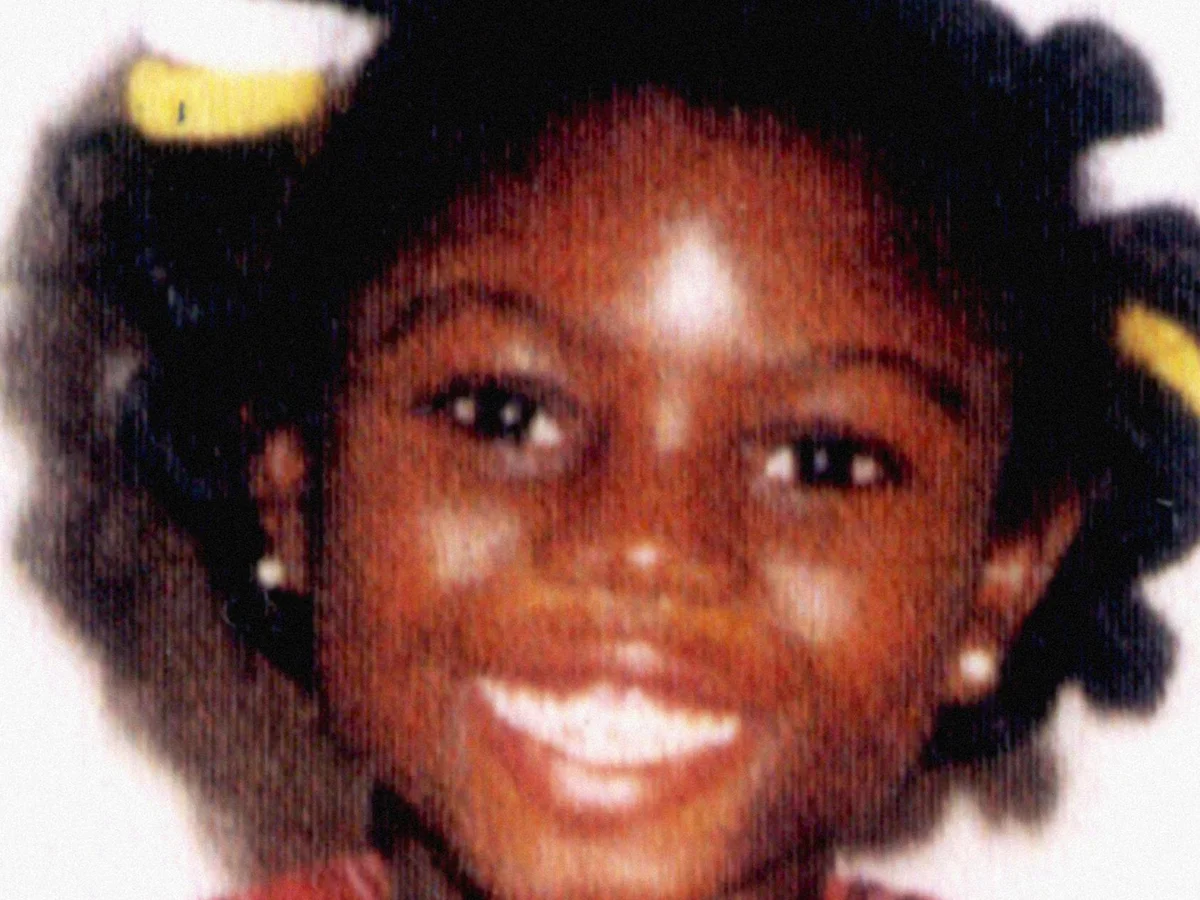
Victoria Adjo Climbié was born on November 2, 1991, in Abobo, a working-class suburb of Abidjan, Ivory Coast. She was the fifth of seven children. Her parents, Francis Climbié and Berthe Amoissi, lived in modest but stable conditions.
In October 1998, her great-aunt, Marie-Thérèse Kouao, residing in France, attended a family funeral in Ivory Coast. She offered to take a child to Europe to provide a better education. In many West African societies, this type of informal “fostering”—care of a child by an extended family member—is a socially accepted practice, often linked to educational and economic strategies. The inquiry noted that Victoria reportedly felt happy to be chosen.
Victoria likely left Ivory Coast in November 1998. She traveled with a French passport under the name Anna Kouao—originally belonging to another child Kouao intended to take, whose parents had later refused permission. From then on, in the UK, Victoria would be known as “Anna.”
They initially settled in the Paris region, where Victoria attended school. But by December 1998, the school reported repeated absences. In February 1999, a “child at risk” referral was made. A social worker intervened. School officials noticed that the child would fall asleep in class. During a visit on March 25, 1999, Victoria had a shaved head and wore a wig.
French authorities demanded repayment of undue social benefits. Shortly afterward, Kouao left France. On April 24, 1999, they arrived in London, briefly staying in a bed and breakfast in Acton before settling in Harlesden, in the borough of Brent.
In the following weeks, Victoria accompanied her great-aunt to multiple administrative appointments with Ealing social services, mainly for housing and financial assistance requests. Several officers noted her neglected appearance and physical fragility, but no protective measures were initiated. At this stage, a central question remained: when did the abuse begin?
The inquiry indicates it is impossible to determine precisely when the abuse started. However, evidence suggests a significant escalation after July 1999, when Kouao began a relationship with a London bus driver, Carl Manning.
Victoria was no longer just a migrant child with fragile administrative status. She gradually became a prisoner of a violent household.
The Perpetrators: Marie-Thérèse Kouao and Carl Manning
Born on July 17, 1956, in Bonoua, Ivory Coast, Marie-Thérèse Kouao lived in France before moving to the UK. She had traveled to Ivory Coast in October 1998, convincing the Climbié family to entrust Victoria to her for better schooling in Europe.
Upon settling in France, then London, she presented Victoria as her own daughter. The public inquiry would establish that she had used another child’s passport for travel.
Over the months, Kouao offered various explanations for visible injuries: dermatological illness, accidental falls, self-harm, or scabies infestation. Several times, she claimed Victoria had injured herself.
When doctors at Central Middlesex Hospital suspected non-accidental injuries in July 1999, Kouao maintained her version. Despite doubts expressed by some professionals, the inconsistencies did not trigger sustained protection.
At trial, she denied the facts. She was convicted of murder and cruelty to a child and sentenced to life imprisonment on January 12, 2001. She was incarcerated at HM Prison Durham.
Carl Manning, born October 31, 1972, a London bus driver, met Kouao on June 14, 1999. Their relationship progressed quickly. On July 6, 1999, Kouao and Victoria moved into his one-bedroom apartment at Somerset Gardens, Tottenham. From this point, the documented abuse intensified.
Manning later admitted to hitting Victoria over her incontinence, first with slaps, then with fists. The autopsy would confirm 128 distinct injuries on her body: burns, blows, old scars, and multiple lesions.
The inquiry found that Victoria was regularly beaten with various objects (bike chains, belts, utensils), burned with hot water and cigarettes, deprived of food, tied up for long periods, forced to sleep in a garbage bag placed in a bathtub, sometimes in her own excrement, in an unheated home.
In his personal journal, Manning described Victoria as “Satan” and claimed she did not cry when he hit her. On January 12, 2001, he was also convicted of murder and sentenced to life imprisonment. He was incarcerated at HM Prison Wakefield.
The evidence shows a gradual escalation of violence between July 1999 and February 2000. Several witnesses (neighbors, friends, religious leaders) observed that Victoria appeared frightened, emaciated, and injured. Some alerted authorities. Yet despite reports, hospitalizations, and repeated contact with social services, no lasting protective measures were enforced. The judge would later describe the cumulative institutional failures as “blinding incompetence.”
The crime was extremely brutal. But the case is not limited to the violence of two adults. It exposes a succession of administrative, medical, and police errors.
Ignored Warnings — Chronicle of a Systemic Failure
Between April 1999 and February 2000, Victoria Climbié came into direct or indirect contact with four local authorities, two hospitals, the Metropolitan Police, the NSPCC (National Society for the Prevention of Cruelty to Children), and several religious leaders.
The public inquiry led by Lord Laming identified at least twelve occasions where her death could have been prevented. This was not a succession of isolated errors but a chain. Upon their arrival in London, Kouao made multiple visits to Ealing social services for housing and financial aid requests. Victoria accompanied her at least ten times. Several officers noted her neglected appearance and physical fragility. No thorough assessment was conducted.
On June 18, 1999, Kouao’s acquaintance, Esther Ackah, anonymously called Brent social services to express concern about the child’s visible injuries. The referral was faxed but not officially recorded until three weeks later, on July 6, 1999. Lord Laming would later describe this delay as a significant “missed opportunity.”
On July 14, 1999, Victoria was taken to Central Middlesex Hospital by an acquaintance. The emergency doctor assessed that the injuries were likely non-accidental and alerted pediatrics. The on-call pediatrician strongly suspected abuse and decided to admit Victoria. A 72-hour police protection order was issued.
However, a turning point occurred: consultant pediatrician Ruby Schwartz diagnosed scabies without speaking to the child alone. She later admitted this was an error. A junior doctor then wrote a note stating there was “no child protection issue.” As a result, police protection was lifted, and Victoria returned home on July 15, 1999.
On July 24, 1999, Victoria was admitted to North Middlesex Hospital with severe head burns. A consultant noted signs of neglect and abuse but wrote in the record that she was “able to discharge.” She later explained she expected social services to take over.
Social services in Enfield, then Haringey, briefly handled the case. On August 5, 1999, Victoria was referred to an NSPCC center. Follow-up was not maintained. Administrative confusion, incomplete handovers, and diluted records prevailed.
Social worker Lisa Arthurworrey was assigned to the case. She visited Victoria four times, totaling less than thirty minutes of contact. She did not conduct in-depth one-on-one interviews. In December 1999 and January 2000, several home visits went unanswered. Her supervisor noted in the file that the family had supposedly left the area—without proof. On February 25, 2000, the file was officially closed. Victoria died that same day.
The inquiry highlighted a recurring phenomenon: each service thought the other was acting. Doctors assumed social services were investigating. Social services assumed the police were monitoring. The police assumed the medical diagnosis ruled out abuse. The NSPCC had contradictory files.
This administrative fragmentation lies at the heart of the Laming Report. The inquiry also revealed understaffed and poorly coordinated social services, underutilized child budgets, paralyzing internal restructuring, and delays in document transmission.
In Haringey, over 100 children were temporarily without an assigned social worker in 1999.
At trial, the judge described the overall management of the case as “blinding incompetence.” It was not a total lack of contact but an accumulation of errors, assumptions, and abdications. Victoria was not invisible. She was seen. But she was not protected.
The Public Inquiry — The Laming Report and Institutional Accountability
On April 20, 2000, a few weeks after Victoria Climbié’s death, the Secretary of State for Health and the Home Secretary appointed Lord Laming to conduct a statutory public inquiry. This was not merely an administrative audit. The inquiry was based on several legal frameworks and involved social services, the police, and the health system. It became the first tripartite inquiry of its kind in child protection in the UK.
Hearings began in September 2001 and lasted several months. Two hundred seventy witnesses were heard. The proceedings revealed an accumulation of dysfunctions: delays in recording referrals, incomplete files, poor communication between local authorities, contradictory medical decisions, and superficial social visits. On multiple occasions, documents were submitted late to the commission, sometimes after repeated prompting. Lord Laming spoke of a “blatant and flagrant disregard” in handling certain matters.
The inquiry also highlighted overstretched social services, affected by internal restructuring, vacancies, and excessive workloads. In Haringey, shortly before Victoria’s death, dozens of children were temporarily without an assigned social worker. Meanwhile, budgets for children were not fully utilized.
The final report was published on January 28, 2003. It spans approximately 400 pages and contains 108 recommendations. Lord Laming concluded that the agencies involved failed to protect Victoria despite several opportunities for intervention. He emphasized the need for better inter-agency coordination, structured information sharing, and clear accountability for senior management.
Legislative consequences were significant. The case directly contributed to the government’s Every Child Matters program, the adoption of the Children Act 2004, and the creation of the post of Children’s Commissioner for England. A national system for centralizing information on children monitored by public services was also established, though later abandoned.
The inquiry did not merely identify individual errors. It exposed a fragmented administrative culture where each institution assumed the other would act. The tragedy did not result from a total lack of intervention but from a succession of partial decisions, contradictory diagnoses, and lack of coherent follow-up.
Victoria Climbié thus became more than a victim. Her name became associated with structural reform of the UK child protection system.
Racial and Institutional Issues
From the start of the public inquiry hearings, a delicate question arose: did race play a role in institutional inaction?
Victoria Climbié was a Black Ivorian child. Her great-aunt and her partner were Black. The social worker and police officer primarily responsible for the case were also from Afro-Caribbean minorities. This configuration sparked a complex public debate in early 2000s Britain, in a context shaped by recognition of institutional racism following the Macpherson Report on the Stephen Lawrence case.
During hearings, the inquiry counsel explicitly raised the hypothesis that fear of being accused of racism may have slowed some interventions. Could the concern of misinterpreting cultural practices or being perceived as stigmatizing a Black family have contributed to excessive caution?
The lead social worker acknowledged that some of her assumptions about Afro-Caribbean families influenced her judgment. She explained that she interpreted Victoria’s reserve and compliance as cultural respect toward adults, rather than a sign of fear.
Experts highlighted a specific risk: misunderstood “cultural sensitivity,” where excessive caution toward cultural differences can lead to under-protection of children. The final report dedicated a chapter to this issue.
However, Lord Laming did not conclude that race was a single or decisive cause. He emphasized that no culture tolerates child abuse and that child protection must take precedence over other considerations. The problem identified was less discriminatory intent than professional confusion between cultural respect and failure to critically assess risk.
Public debate offered two interpretations. Some argued the case illustrated the perverse effects of poorly calibrated institutional sensitivity. Others argued the core issue was structural disorganization, understaffing, and diluted responsibility. The inquiry found that similar errors occurred in cases involving White families. Race was therefore a contextual factor among others, not an exclusive explanation.
The key question remains: how can equal vigilance for all children be ensured without falling into stigmatization or administrative paralysis? The Victoria Climbié case shows that a system can fail not through open hostility but through hesitation, fragmentation, and misinterpretation of warning signs. Its legacy remains to be measured.
What the UK Changed and What Remains Fragile
Victoria Climbié’s death did not close with the Old Bailey verdict. It triggered a lasting political and administrative shockwave. The Laming Report, published on January 28, 2003, issued 108 recommendations aimed at transforming child protection in England. It emphasized inter-institutional coordination, clarification of hierarchical responsibilities, and the obligation to share information between services.
A major consequence was the launch of the government’s Every Child Matters program, designed to rethink the entire child protection and monitoring system. In its wake, the Children Act 2004 was adopted, providing a legislative basis for structural reforms. The Act introduced, among other measures, the obligation for cooperation between local authorities, health services, police, and schools.
The post of Children’s Commissioner for England was created to provide an independent body to defend children’s rights. A national system to centralize information on children monitored by public services was also established, though later abandoned.
Institutionally, the case led to disciplinary sanctions, dismissals, and internal proceedings against some professionals involved. Haringey, the local authority most directly implicated, was placed under enhanced oversight. Victoria’s parents founded the Victoria Climbié Foundation UK to promote improvements in child protection policies. Their daughter’s name became synonymous with reform. Yet a question remains: were these changes sufficient?
Recent British history shows that other cases of fatal child abuse occurred in the following years. Each tragedy revives the memory of Victoria Climbié and questions the system’s real capacity to prevent irreparable harm.
The Laming Report itself acknowledged that legislation alone is not enough. Child protection depends on factors harder to standardize: training, workload, effective supervision, professional culture, and decisional courage.
The paradox is this: Victoria Climbié has become one of the most studied cases in the training of British social workers. Her case is analyzed as a classic example of institutional fragmentation and communication failure. Yet child protection remains structurally fragile, subject to budget constraints, administrative restructuring, and social pressures.
What the UK changed legislatively is substantial. What remains fragile is daily implementation: a professional’s ability to interrupt a chain of hesitation, question a reassuring diagnosis, or recognize that a silent child may be in danger.
Victoria Climbié was not invisible. She was known, registered, visited, hospitalized. Her name appears in dozens of administrative files. Her legacy reminds us of a more uncomfortable truth: a system’s failure is not always due to lack of information, but to collective inability to act on it.
Notes and References
- Lord Laming, The Victoria Climbié Inquiry Report, Cm 5730, January 28, 2003, London, The Stationery Office, 400 pp.
- BBC News, “Victoria Climbie: Chain of neglect”, January 28, 2003
- John Carvel, “Day that could have saved Victoria”, The Guardian, October 13, 2001
- UK Parliament, Children Act 2004, adopted following recommendations from the Laming Report
- Department for Education and Skills, government program Every Child Matters, 2003
- Creation of the post of Children’s Commissioner for England following reforms from the Laming Report
Table of Contents:
- Night of February 24–25, 2000 — Tottenham, London
- Who Was Victoria Climbié?
- The Perpetrators: Marie-Thérèse Kouao and Carl Manning
- Ignored Warnings — Chronicle of a Systemic Failure
- The Public Inquiry — The Laming Report and Institutional Accountability
- Racial and Institutional Issues
- What the UK Changed and What Remains Fragile
- Notes and References

