

Moune de Rivel, born Cécile Jean-Louis, was one of the first voices to bring créolité to the stage with rigor and elegance. From New York to Paris, from biguine to storytelling, she composed a singular body of work blending memory, language, and music. She passed away in 2014 in relative indifference, yet she deserves to be rediscovered for what she truly was: a cultural builder of the French Antilles, far beyond folkloric clichés.
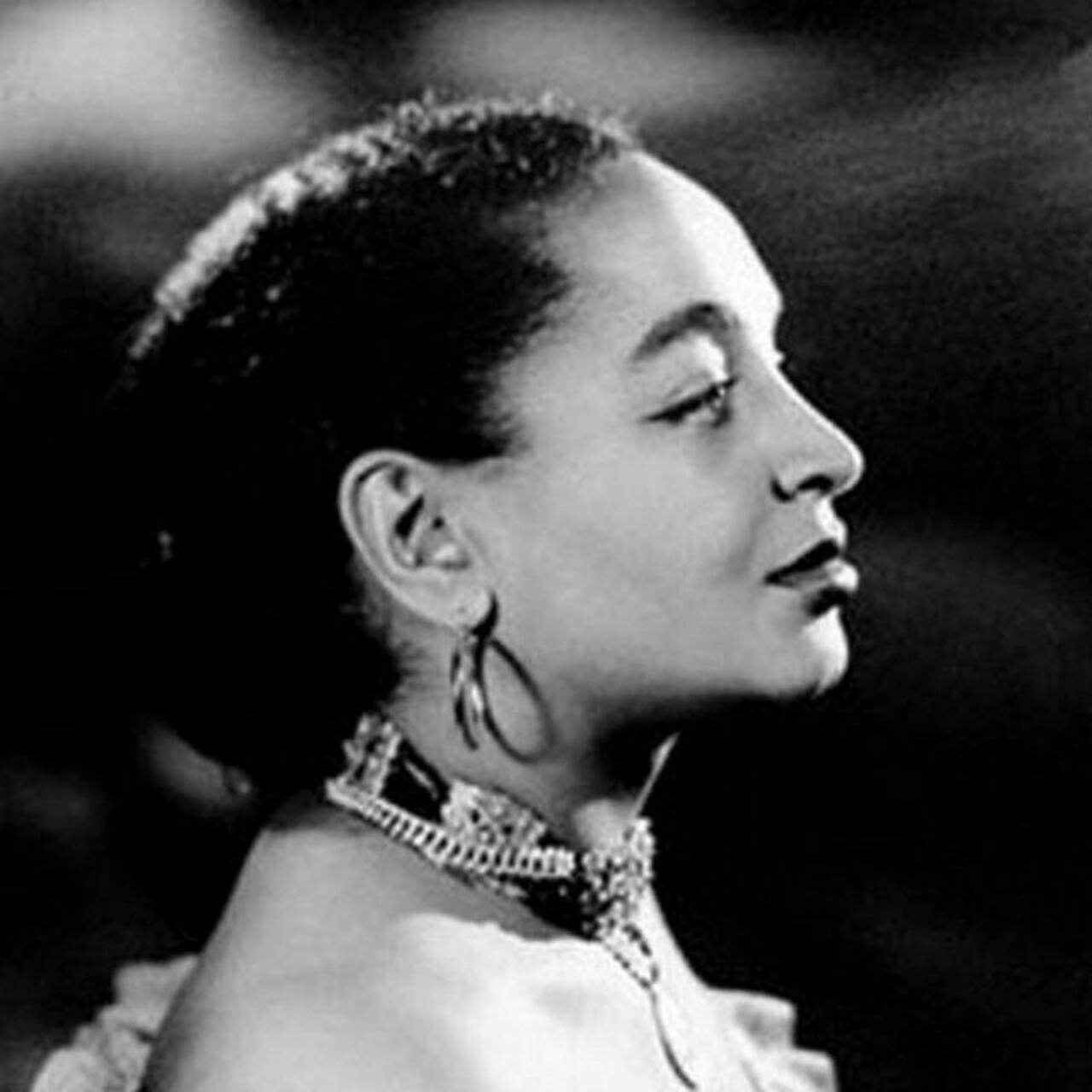
Born in Bordeaux in 1918, Cécile Jean-Louis, known as Moune de Rivel, came from an exceptional lineage. Her father, Henri Jean-Louis Baghio’o, was a leading intellectual figure of Antillean nationalism and anticolonial thought. A jurist, writer, and orator, he embodied that generation of learned men born in the colonies who nevertheless aspired to genuine equality with the metropole. Her mother, Fernande de Virel, was a pianist and composer trained at the Paris Conservatory, descended from Breton notables. It is precisely at this intersection—between learned music, political struggle, and Creole rootedness—that their daughter’s artistic destiny took shape.
Moune de Rivel grew up in an environment that valued academic excellence, mastery of languages, attentiveness to the world, and the duty of transmission. From childhood, she practiced singing, piano, and literature, absorbing two cultural spheres that appeared distant from one another: European classical music, passed down by her mother, and Creole stories, songs, proverbs, and oral tales, preserved and cultivated within her father’s family sphere. She grew up in a chiaroscuro familiar to many children of Black Antillean elites in the interwar period: French by civil status, yet always perceived as “Creole” by the mainland institutional and cultural apparatus.


Very early on, she established herself on stage as a singer. In a context where Antillean artists were often confined to folklorized or caricatured roles, she sought to impose a different image. The choice of her stage name, Moune de Virel, was not incidental: it paid homage to her mother while embodying a sober elegance. But when Breton nobility attacked her, accusing her of usurping a “legitimate” surname, she decided to reverse the letters and give birth to “Rivel”: the pseudonym thus became an act of resistance. The Creole artist did not beg for her place; she created it.
Her career took on an international dimension in 1946. She was invited to perform in New York at the legendary Café Society Uptown. This mythical venue, a pioneer in the fight against artistic segregation, then welcomed the greatest figures of jazz and militant cabaret—Billie Holiday, Sarah Vaughan, Paul Robeson. Moune de Rivel became the first postwar French singer to perform there. Life magazine devoted an illustrated profile to her on April 1, 1946. Filmed for the series The March of Time in a report entitled “Night Club Boom,” she embodied a certain idea of Francophone elegance, Black femininity, and Creole sophistication.
This American period, though brief, was intense. She married pianist Ellis Larkins, one of Ella Fitzgerald’s most refined accompanists. The wedding took place in Baltimore but ended a few years later in Paris. This biographical crossing between two Black worlds—Harlem and Pointe-à-Pitre—inscribed Moune de Rivel within an affective and artistic archipelago that extended far beyond French borders. She lived, embodied, and articulated a créolité in action.


Returning to Paris at the end of the 1940s, she continued her career as a singer. But far from limiting herself to the cabaret stage, she devoted herself to the active promotion of Antillean musical heritage. She sang biguines, mazurkas, calypsos, and Creole laments. She recorded rare albums, often self-produced, in which music intertwined with texts by Saint-John Perse, Léon-Gontran Damas, Jean-François Chabrol, and Mac Orlan. In the album Îles et Rivages (1969), she fused literature and music in a rare synthesis: the song became a form of sonic poetic recitation. Her interpretation never sought gratuitous vocal performance, but rather the precise articulation of word and rhythm.
At the same time, in 1960 she published a tale entitled Kiroa with Présence Africaine, illustrated by the artist Moustapha Dimé. This short narrative in the French language, infused with Creole imagery, is a fable about otherness, transmission, and identity. It marked a clear intention: to pass on to children non-Eurocentric stories, in which Africa and its diasporas finally speak in their own voices.


The work of Moune de Rivel extends beyond recordings and stages alone. She appeared on screen in discreet yet symbolic films: Aux yeux du souvenir by Jean Delannoy (1948), where she played a cabaret singer; Popsy Pop (1971), in which she portrayed Sister Mary Galán; and L’Argent des autres (1978), in a supporting role. She also took part in television and theatrical productions in the 1960s, including Fête aux Antilles. Through these appearances, she asserted a presence that was at once dignified, distant, and stylized. She embodied a Black image that did not submit to the exotic codes of the era.
Over time, stage appearances became rarer. She nevertheless continued to perform—sometimes in salons, sometimes in concerts abroad, often at Francophone festivals. She recorded new albums in the 1980s, then in self-production. She continued to publish, teach, and transmit. In 1994, she was awarded the Order of Merit; in 1997, she became a Knight of the Order of Arts and Letters. She also received the medal of the City of Paris and that of the municipality of Sainte-Anne. Yet these distinctions were not enough to secure her memory a place in the public sphere.
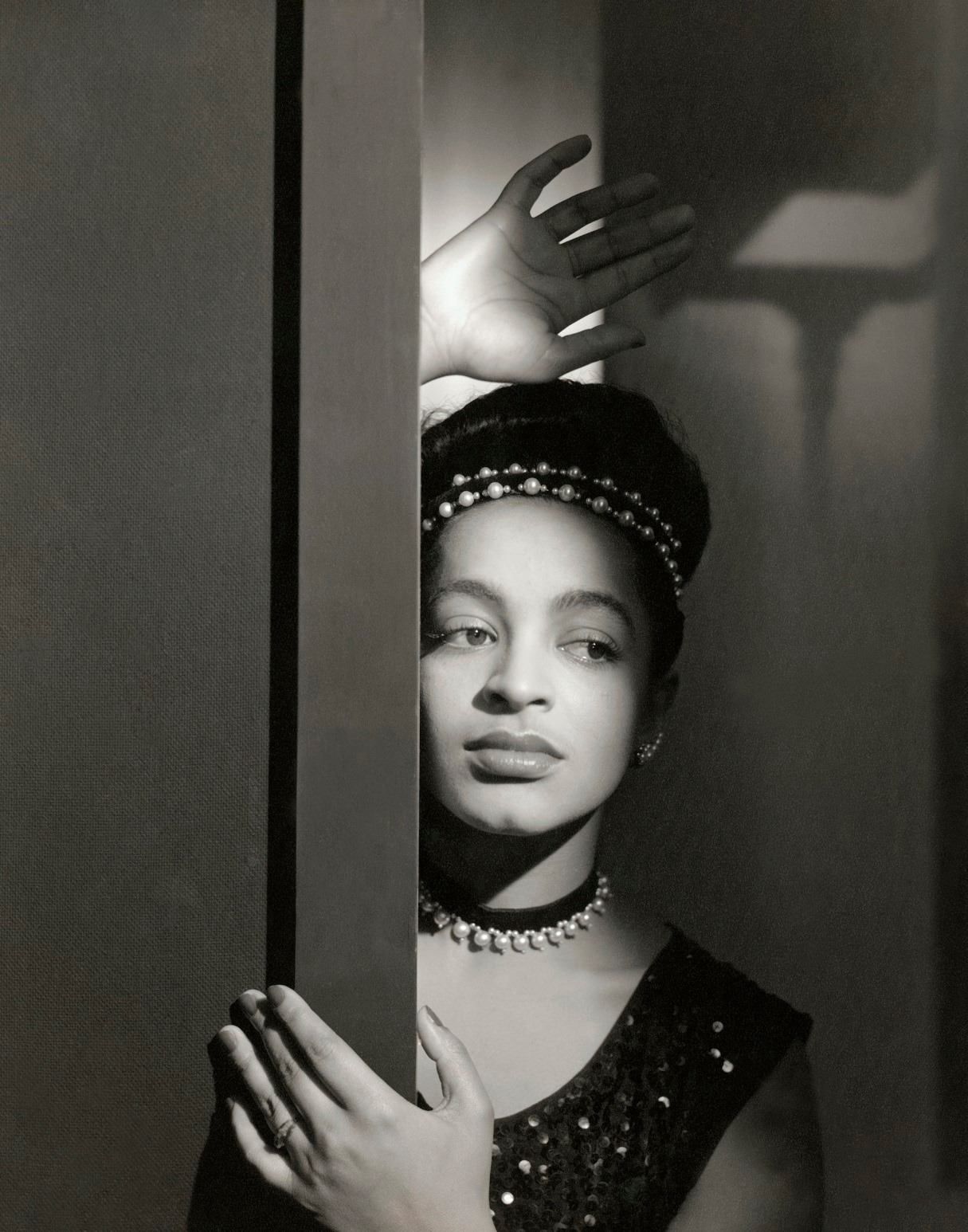
Moune de Rivel passed away on March 27, 2014, in Paris, amid relative media silence. She was buried at Montparnasse Cemetery, beside her mother. A few articles paid tribute to her, scholars praised her rigor, but her work remains largely absent from anthologies, textbooks, and institutional commemorations. Yet her legacy is immense. She sang in Creole in the most prestigious halls of New York, set the greatest poets to music, contributed to the recognition of Antillean musical heritage, trained generations of artists, and embodied an uncompromising aesthetic standard.
Reintegrating Moune de Rivel into our collective memory is not a matter of poetic justice; it is a cultural necessity. She belongs to that generation which carried, quietly but steadily, the idea of a strong, rooted, complex Antillean culture that refused to be reduced to mere ornament. Her work shows that créolité is not only sung; it is written, composed, and organized. She knew how to unite formal rigor, fidelity to identity, and international openness.
Today, as questions of memory, cultural heritage, and transmission lie at the heart of artistic and political debates, the name of Moune de Rivel deserves to be spoken aloud. Not as a forgotten legend, but as a marker in the long history of Afro-diasporic cultural struggles. She was, and remains, a voice—not that of folklore, but that of a Creole musical and literary intelligence in the service of dignity.


