

The Instructions for Merikare is an Egyptian text nearly 4,000 years old that strikingly anticipates the writings of European authors in history such as The Prince by Machiavelli. It thus foreshadows the philosophical doctrine known as political realism.
The instructions for merikare
The Instructions for Merikare is an Egyptian text nearly 4,000 years old. It presents advice given by a king at the end of his life to his son and successor. This king is Khety, a ruler of the First Intermediate Period, more precisely of the Heracleopolitan period, corresponding to the Ninth and Tenth Egyptian dynasties (around 2081–1987 BCE). He addresses his son Merikare Khety, hence the title given to the text, “Instructions for Merikare.” However, the text was most likely written later, during the Middle Kingdom.
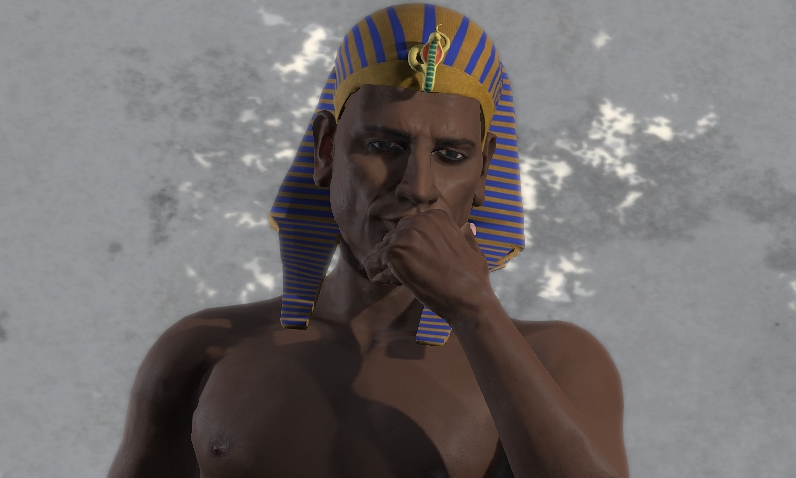
This period lasted between the 20th and 18th centuries BCE. The First Intermediate Period was a time of political instability in ancient Egypt that bridged the more stable periods of the Old and Middle Kingdoms. During the Heracleopolitan period, Khety and Merikare ruled a small kingdom centered around the city of Heracleopolis in southern Egypt. This text is a kind of manual on how to rule effectively and maintain power.
Political Realism in the West
Political realism is a school of philosophical thought. Its proponents argue that politics, both foreign and domestic, must take into account human reality as it is, not as one would wish it to be. Self-interest is an integral part of humanity, and human beings—like states by extension—must take this into account. The absence of an international government forces states to pursue their own interests and survival, independently of, or at least prior to, any moral or ethical considerations.
Political Realism: An Invention of the Ancient Greeks?
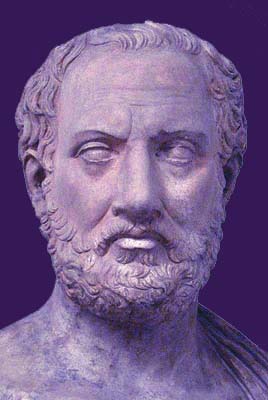
Thucydides was a Greek general and philosopher of the 5th century BCE. He participated in the Peloponnesian War, which opposed his city of Athens to Sparta. Thucydides wrote a history of this conflict, History of the Peloponnesian War. In this work, he presents the conflict without the filter of religion. A passage that particularly illustrates political realism is the “Melian Dialogue.” In it, the Athenians, being more powerful than the Melians, demand that they submit or face invasion and destruction.
The Melians refuse, invoking their right as a city to remain neutral and free. They declare themselves ready to fight and believe they will be aided by their gods and their sense of justice, despite their military inferiority. They also assert that the Spartans, related to them, will come to their aid.
The Athenians respond cynically, stating that they have no reason not to invade. Justice does not apply between unequal powers. They then carry out their threats, besieging the city of Melos, killing the men capable of fighting, and enslaving the women and children.
In the text, the Athenians can be seen as the archetype of those who abuse power, and the Melians as idealists. The realist position lies between the two.
The Athenians abuse their power by attacking an enemy that posed no threat. This same misuse of force, coupled with their pride, later led to their disastrous invasion of Sicily, a turning point in their eventual defeat by Sparta.
A parallel situation can be found in the Kingdom of Dahomey, located in the south of present-day Benin between the 17th and 19th centuries. Its economy was based on raids against neighboring populations. This use of force against sometimes defenseless groups eventually caused serious problems for the kingdom’s survival, despite initially ensuring its prosperity. Hostility from neighboring populations grew, eventually leading many to welcome French colonial conquest.
Machiavelli’s Political Realism
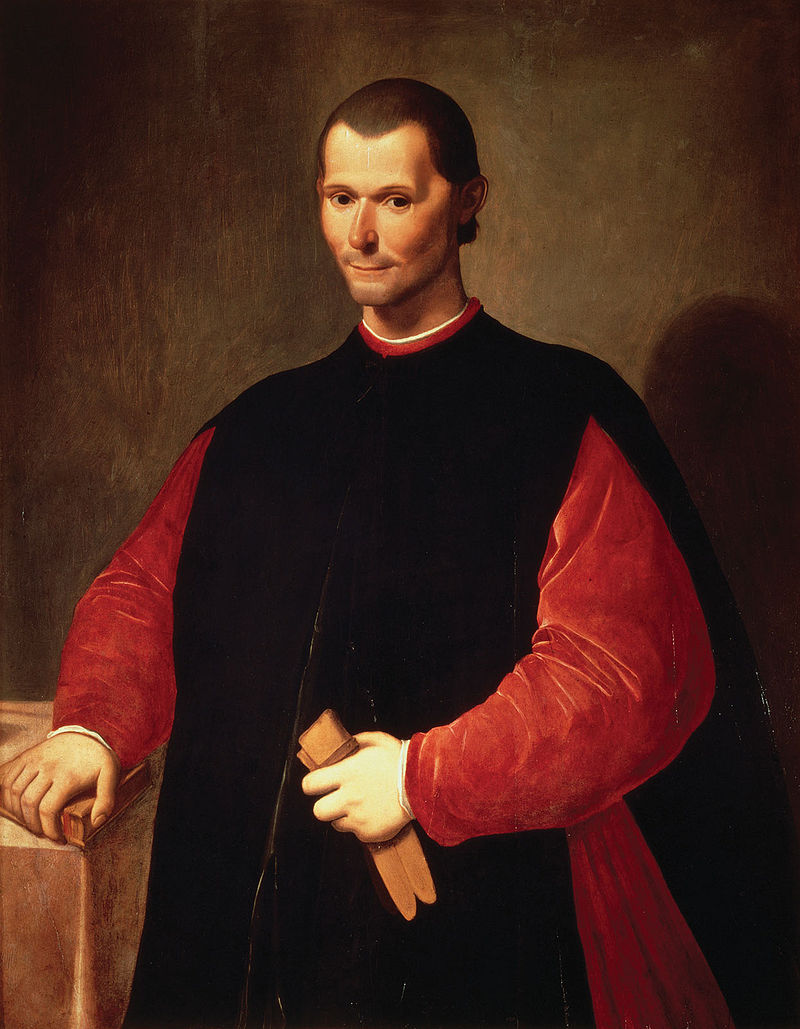
Niccolò Machiavelli was an Italian political thinker and writer of the 15th and 16th centuries. He is best known for his work The Prince, a manual explaining how to gain and maintain power. He dedicated it to Lorenzo de’ Medici, hoping he would rule Florence effectively and retain power.
Breaking with the writings of his contemporaries and predecessors, which were imbued with Christian and Greco-Latin morality and ethics, Machiavelli relegates any recourse to morality and ethics to a secondary position, in favor of what is good and necessary for the well-being and preservation of the State. To achieve these objectives, Machiavelli justifies the use of acts he considers to be “bad.” Even though he did not use it in The Prince, the phrase “the end justifies the means” is often used to symbolize “Machiavellian” thought.
Despite the negative connotation associated with his name in the collective unconscious, Machiavelli was in reality a Florentine patriot concerned with seeing a prince unify Italy within the framework of a strong state. His wish at the time is not very different from what many Africans and Afro-descendants expect today, weary of seeing the Black continent torn apart by conflicts and unable to defend itself against exploitation by external powers.
Hobbes’ Political Realism
According to Thomas Hobbes, a 17th-century English philosopher, nature is essentially anarchic. In his work Leviathan, he explains that man can at any moment become a victim of violence from his fellow man, in order to gain access to resources, glory, and power. He must be able to defend himself against these natural aggressions and may resort to violent actions to avoid becoming a victim of such aggressions.
Only the submission of individuals to a sufficiently strong sovereign can put an end to this state of anarchy and guarantee their security.
In African history, this situation is perfectly illustrated by the insecurity prevailing in the south of present-day Republic of Benin in the 18th century and before, in the context of the slave trade. As Patrick Claffey explains, citing Robin Law:
“The transatlantic slave trade exerted enormous pressure on the societies of the Guinea Coast. European traders competed among themselves and sought monopolies with local powers, and at the beginning of the 17th century, the evidence suggests a Hobbesian scenario of ‘war of all against all’ in an attempt to meet the demand of the slave factories on the coast.
[Dahomey], like the [Asante] Empire, emerged early in the 18th century in response to growing chaos, having succeeded in defeating the small kingdoms of Ouidah and Allada. Allada, the dominant power at the time, was a weak state, lacking the structure and coercive power necessary to control the situation. Between 1690 and 1724, Ouidah was in conflict both internally and with Allada, to which it was subject.
In this situation, it is hardly surprising that what emerged was an excessively strong state, which in the 18th century displayed ‘a coherent image […] characterized by three main elements: militarism, brutality (notably the practice of human sacrifice), and despotism in governance.’”
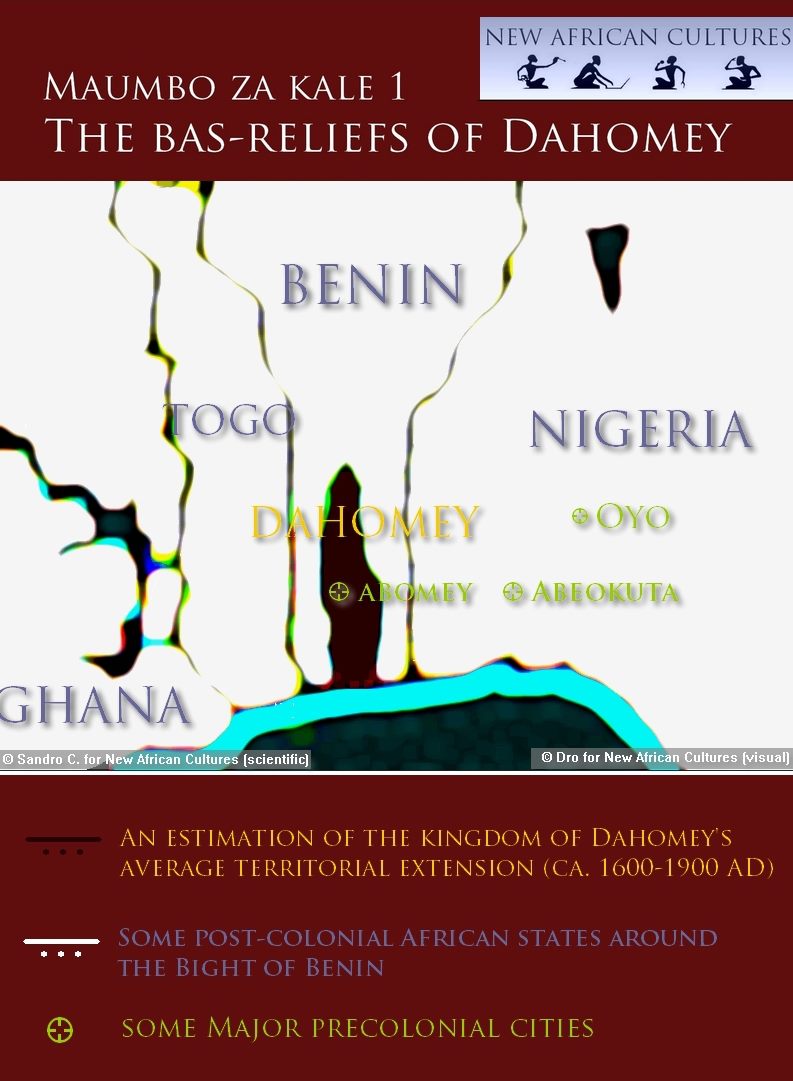
However, the simple fact was that “Dahomey [had] ultimately succeeded in restoring order in the region, because it was organized on radically different principles; its political structure was highly centralized, its kings deriving their authority from military conquest rather than dynastic right, and enjoying effectively unlimited autocratic power.” It was a Hobbesian solution to a Hobbesian problem.
Moreover, as Edna Bay wrote, “although slaves sold within the kingdom and prisoners of war could be condemned in the name of the state religion, the state elite paradoxically showed, in principle, great respect for human life and carefully controlled the taking of life (of others),” this, of course, applied to the subjects of the Kingdom of Dahomey and not to their neighbors who were victims of their exactions.
The epic of Sundiata, founder of the Mali Empire in the 13th century, presents him as restoring social order, particularly in response to the raids to which the populations of Manden—the region forming the heart of the Empire—were subjected.
In the societies of Mali and Dahomey, as shown by the observations of foreign travelers, respectively Maghrebi and European, similar patterns can be observed. Thus, Ibn Battuta, a visitor to the Mali Empire in the 14th century, wrote:
“Among their qualities is the small degree of injustice among them, for there is no people more distant from it. Their sultan does not pardon anyone in matters of injustice. Among these qualities is also the prevalence of peace in their country; the traveler has nothing to fear there, and neither does the resident fear a thief or a robber.
They do not interfere with the property of a white man who dies in their country, even if it consists of great wealth, but rather entrust it to a trustworthy person among the whites who keeps it until the rightful claimant recovers it.”
Likewise, in 1728, an anonymous French traveler reported of King Agadja that “he cuts off the head of anyone who steals even a cowrie; one travels in his country with greater security than in Europe; those who find something on the road do not dare touch it—it remains there until the person who lost it retrieves it.”
The situation was, according to foreign travelers, different in Ouidah, where insecurity prevailed. William Baillie, for example, noted in 1718 that “no one can say that his affairs are safe in this country.”
Political Realism and Its Application to Everyday Life by Robert Greene
Robert Greene is an American writer. He is the author of numerous works on social dynamics such as The 48 Laws of Power, The Art of Seduction, The 33 Strategies of War, and The 50th Law (with the rapper 50 Cent). Nicknamed the Machiavelli of the 20th century, he uses examples from world history to illustrate laws governing human nature and behavior.

One of the most famous laws set out by Robert Greene comes from his first book, The 48 Laws of Power: “Never outshine the master.” Through this advice, Greene explains how the desire to perform remarkable actions to impress one’s superiors can sometimes backfire. Rather than satisfying them, it weakens their ego, and they usually do not hesitate to get rid of those responsible.
In Africa, a particularly illustrative example of this situation can be found in the epic of Sundiata Keita, founder of the Mali Empire in the 13th century. One passage of this epic features Tiramagan Traoré, one of his most loyal generals. Sundiata entrusts him with the conquest of the Kingdom of Djolof, in present-day Senegambia. The ruler of Djolof had disrespected Sundiata by refusing to sell him horses. As John William Johnson recalls:
“Sundiata therefore gives [Tiramagan] command of the campaign, and the ancestor of the Traoré conquers Gambia, beheading its king, avenging the insult, and unquestionably becoming a hero in his own right. Before setting out on the road back to Mali, [Tiramagan] witnesses a strange scene in which a huge eagle swoops down on a powerful falcon flying at a lower level in the sky.
The warrior Traoré interprets this vision as a sign of his imminent death, with himself in the role of the falcon and Sundiata in the role of the eagle. Indeed, a band of assassins arrives unexpectedly from Mali and kills [Tiramagan], who had become such a great hero that he now threatened the power of his master.”
Political realism: similarities between the instructions for merikare and Machiavelli’s The Prince
Several scholars have compared the Instructions for Merikare and Machiavelli’s The Prince. The most recent and most detailed of these is the work of the German scholar Christian Langer.
One of the most famous passages in The Prince is probably the one explaining how, to securely possess territories, “it is enough to have exterminated the lineage of the prince who ruled them.” Adding to this another passage from the same work—“it must be noted that men must either be caressed or crushed: they avenge slight injuries, but cannot do so when they are very great; therefore, when one offends a man, it must be done in such a way that his vengeance need not be feared”—we find a perfect parallel with a passage from the Instructions for Merikare, which states:
If you find someone who originally had few supporters and was unknown among his fellow citizens, but whose followers are now numerous, who is respected for his possessions and intelligence, who has gained people’s trust, who has entered into the good graces of his dependents, and who persists in stirring trouble and drawing attention to himself, get rid of him and kill his children, erase his name, destroy his supporters, and banish his memory from those who respect him.
Another parallel drawn by Langer concerns the following passage from Merikare:
Promote your dignitaries in such a way that they obey your demands, because the one who is rich will not betray you, and the one who lacks nothing is a wealthy man. A man who says to himself, “If only I had…” cannot be trusted. He will be partial toward the one who is generous to him and biased toward the one who pays him. Great is the ruler whose dignitaries are great (…) It is the façade of a house that allows what is behind it to be respected.
Parallels with the contemporary world
Some authors have suggested that the harshness of the Egyptian text’s commentary is probably due to a particular context. Egypt was then experiencing the troubled period of the First Intermediate Period. The Egyptian territory was fragmented and characterized by anarchy and the absence of a strong power capable of guaranteeing the security of the population across the entire territory.
One might say that it was also this necessity of maintaining order, after a period of insecurity in medieval Mali, that led Sundiata Keita, founder of the Mali Empire, to have the old rulers of the region assassinated when they refused to submit to his authority as Mansa (king of kings).
By comparison, one of Sundiata’s successors, Mansa Suleiman, did not shed the blood of his principal wife and co-ruler, who nevertheless attempted to depose him and replace him with one of her brothers. He merely removed her from power and replaced her with one of his wives after a brief exile, sincere apologies from her and her family.
Later in history, the Egyptian pharaoh Thutmose III, after his capture of Qadesh, did not apply the instruction from Merikare. On the contrary, he placed Egyptian overseers there, spared the Syrian leaders, but deported their children to Egypt. These children were subjected to forced labor.
However, this activity appears to have been carried out in a less coercive manner than that imposed on Syrian deportees of lower social classes. This hostage-taking forced local rulers to remain compliant and not rebel against Egypt.
When they returned to rule in their countries of origin, these young princes—working under better conditions than their compatriots—would be raised in gratitude toward Egypt, in a sense of nobility, and would become allies of the Egyptians, unlikely to rebel.
However, other examples show that Egyptian kings were not as scrupulous as Thutmose III. Amenhotep II, for example, personally executed seven Syrian princes and hung their bodies upside down on the prow of his boat. One of them was displayed in Napata, in present-day Sudan, to discourage any desire for rebellion in that region.
Egyptologists who have compared these passages from the Instructions for Merikare and The Prince have noted a difference between the two. While Machiavelli completely disregards the question of Christian morality, the Instructions for Merikare are described as being in accordance with Ma’at, the divine order.
The social realism of ancient Egyptians is also reflected in their treatment of subordinates. For the authors of the Instructions for Merikare, loyalty is the privilege of the highest bidder. Not everyone is satisfied with a life of love and bare necessities. Beyond what is required to live and provide for their families, people’s egos lead them to envy their neighbors and to demand equal or even superior compensation or status.
Political realism: how should africans reclaim it?
As we have seen, political realism, according to the current state of our knowledge, is an invention of ancient Egyptians—therefore of Africa. Africa and Africans today can take pride in it and claim it.
Without drifting into violations of human rights, it offers a way to position oneself, as it should, in a world that is not populated, as Robert Greene would say, by descendants of angels, but by descendants of chimpanzees often driven by their egos and personal interests.


