

Psychiatrist, philosopher and revolutionary, Frantz Fanon left a lasting mark on history through his relentless critique of colonialism and his commitment to the struggle for freedom. From Martinique to Algeria, his meteoric path influenced liberation movements across the world. At the crossroads of political thought and revolution, he remains an essential figure of postcolonial struggles.
In the history of committed thinkers, few voices have crossed time with as much force and relevance as that of Frantz Fanon. Psychiatrist, philosopher, revolutionary, he was one of the sharpest consciences of the twentieth century, denouncing with surgical precision the mechanisms of colonialism and its dehumanizing effects. His work, at the intersection of political thought, psychology and revolution, laid the foundations of postcolonial studies and inspired struggles for self-determination throughout the world.
Discovering Frantz Fanon means exploring the trajectory of a man who turned his intelligence and commitment into a bulwark against injustice, an inextinguishable voice for the “wretched of the earth”.
The roots of an engaged consciousness
Born on July 20, 1925 in Fort-de-France, in Martinique, Fanon grew up in an Afro-Caribbean family within a society marked by racial hierarchy and the legacy of slavery. His academic path led him to the Lycée Victor-Schœlcher, where he was taught by Aimé Césaire, poet and emblematic figure of negritude. This encounter proved decisive: Césaire instilled in him a sharp awareness of the Black condition and a spirit of revolt against oppression.
In 1943, at the age of 18, Fanon enlisted in the French army to fight Nazism. He quickly became disillusioned: he was confronted with racial segregation within the Allied forces and with discrimination upon his return to Martinique. This episode would leave a lasting mark on him and lead him to question the structures of domination that permeate every aspect of society.
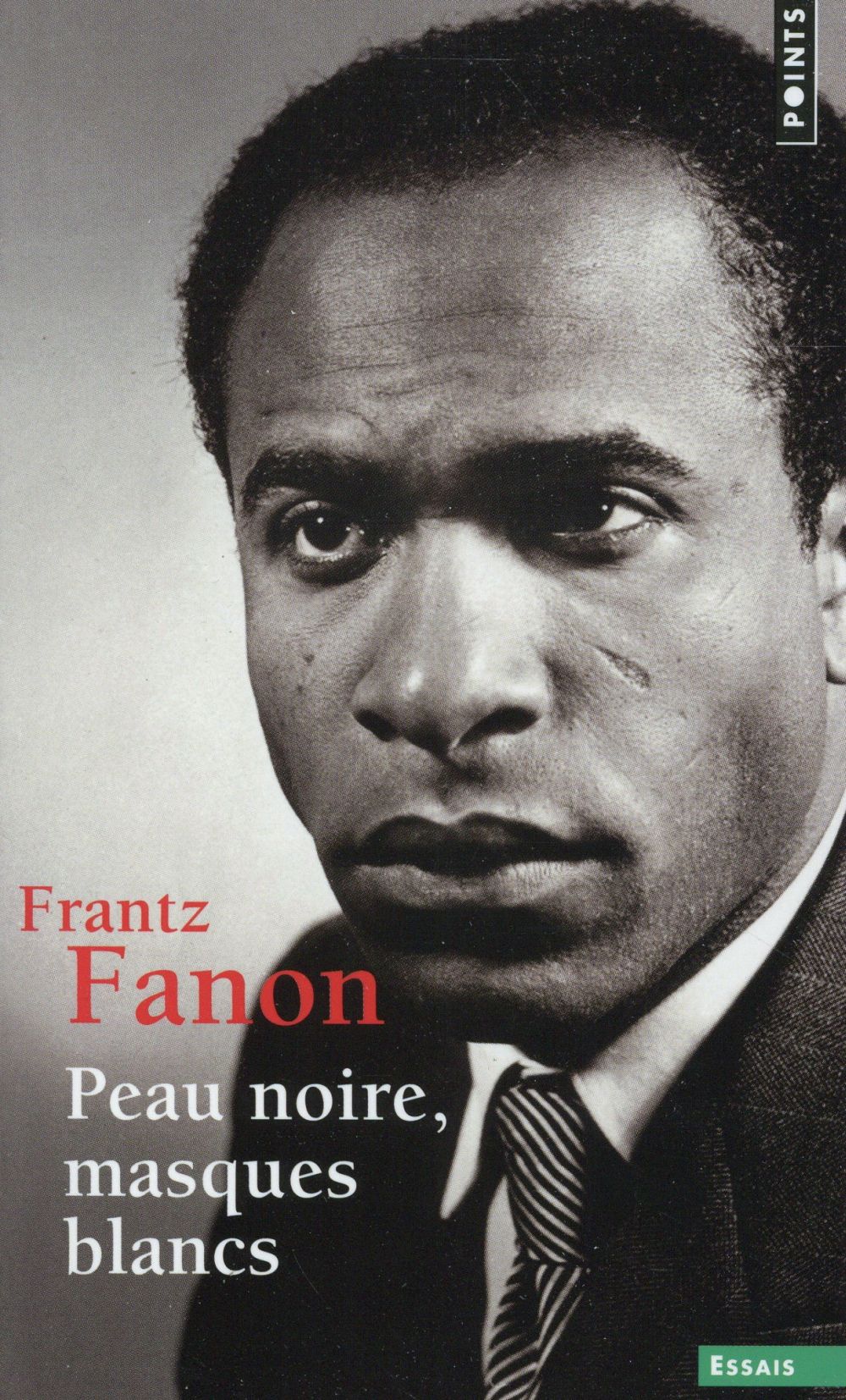
After the war, he moved to France to pursue studies in medicine and psychiatry in Lyon. At the same time, he attended courses in philosophy and anthropology. In 1952 he published Black Skin, White Masks, a striking essay that analyzes racism and the alienation of Black people in colonial and postcolonial societies. In it, he dissects the psychological mechanisms of oppression and lays the foundations of his thinking: colonization is not only a military or economic enterprise, it is above all a machine of depersonalization.
Algeria, the laboratory of decolonization
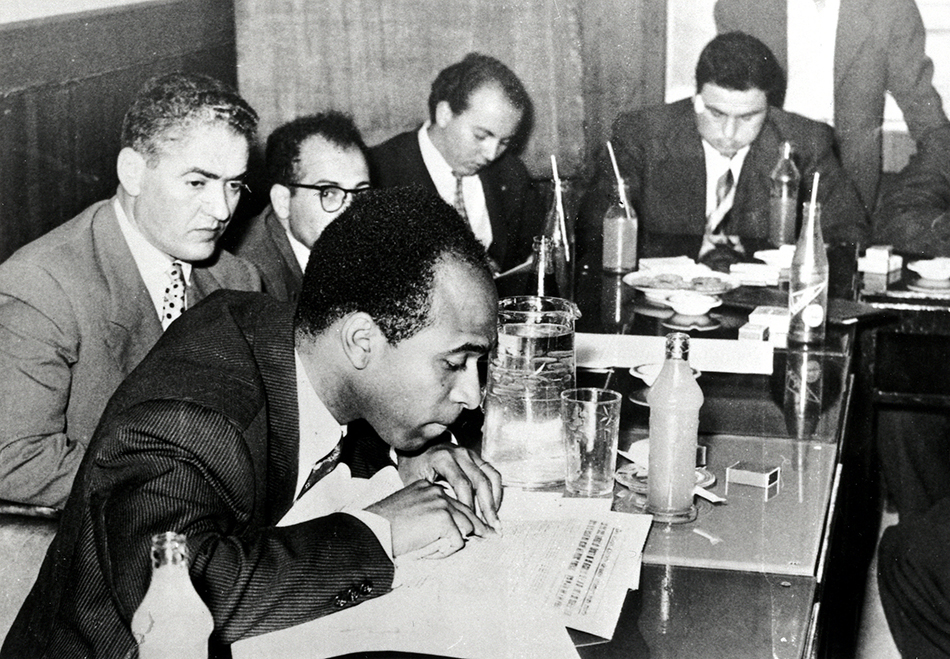
In 1953, Fanon was appointed head of department at the Blida-Joinville psychiatric hospital in Algeria. He was struck by the brutality of the French colonial system and by the psychological scars it inflicted on the indigenous population. He revolutionized treatment methods by adapting psychiatry to local cultural realities. But very quickly, he realized that practicing care under colonial rule meant trying to heal a patient while simultaneously exposing him to the disease.
In 1956, he submitted a powerful letter of resignation to the French governor, denouncing the impossibility of practicing humanist medicine within a system that denied the humanity of its patients. He then joined the Algerian National Liberation Front (FLN) and became one of its most influential theorists. Exiled in Tunis, he worked as a journalist for El Moudjahid and traveled across Africa to forge anti-imperialist alliances.

His total commitment culminated in his book The Wretched of the Earth (1961), a radical decolonial manifesto. Prefaced by Jean-Paul Sartre, it exalts the necessity of violence as a means of liberation. In it, he portrays colonization as a collective neurosis, in which the colonized can only recover their humanity by overthrowing their oppressor.
A thought that transcends time
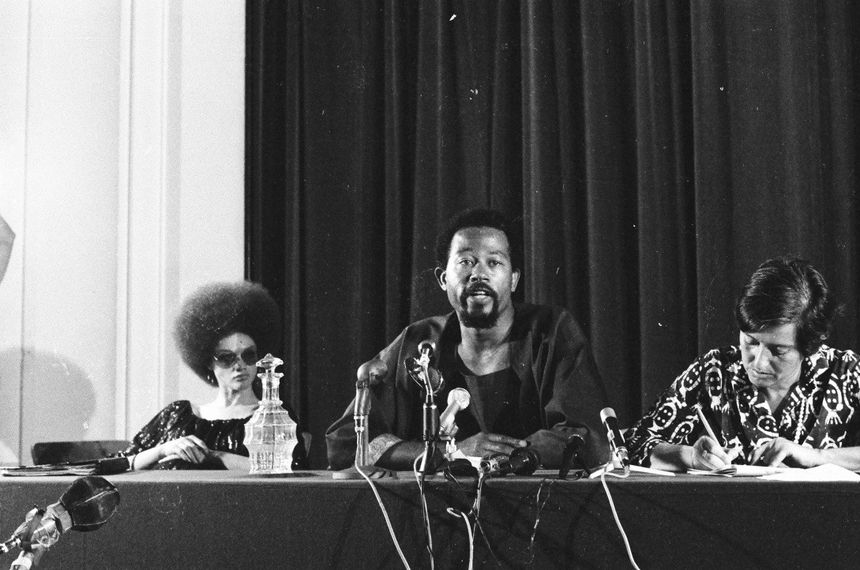
Fanon died of leukemia at the age of 36, in December 1961. His body was buried in Algeria, the land for which he sacrificed everything. But his ideas survived and continue to influence liberation movements, from the Black Panthers to South African activists, as well as intellectuals in Latin America and the Arab world.
Today, at a time when the consequences of colonialism are still felt in power relations and identity struggles, Fanonian thought remains an essential analytical tool. His ideas on violence, alienation and the necessity of a radical transformation of postcolonial societies continue to fuel debate.
Reading Fanon means plunging into a cry of anger and hope, an invitation never to yield in the face of injustice. It means understanding that the “wretched of the earth” have always had a voice, and that this voice still resonates today.
FANON Trailer (2025) Frantz Fanon, Biopic © 2025 – Eurozoom
Summary
The roots of an engaged consciousness
Algeria, the laboratory of decolonization
A thought that transcends time


