

What if, instead of using the word “slaves,” we used the words “enslaved people”?
Today, most historians speak of enslaved people instead of “slaves.”
By moving from the use of the word “slave” to “enslaved person,” we restore the idea of humanity, of the way this person is a human being and not property—as they were once considered.
Moreover, using the term “enslaved person” makes it possible to describe that slavery was a condition one was in (from which one could escape) and not an identity or a natural state.
To better explain this concept, I am going to tell you this story, which really happened.
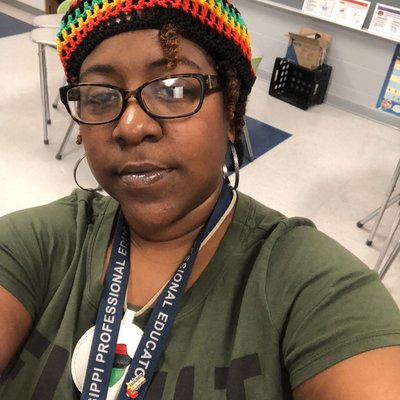
During Black History Month 2019, Jovan Bradshaw, a sixth-grade teacher in Mississippi, in order to deliver an important lesson to her students, posted on her classroom door:
“Dear students, they did not steal slaves. They stole scientists, doctors, architects, teachers, entrepreneurs, astronomers, fathers, mothers, sons, daughters, etc., and enslaved them. Honestly, your ancestors.”
When she was asked how the idea came about, she replied:
“It all started when one of my students said, ‘Slaves never did anything because they couldn’t read or write.’”
And she added:
“Many of our African-American students do not know where they come from. All they are taught is that slavery was servitude, in the cotton fields.
They need to know that they were great long before slavery. That they built a country with our blood, our sweat and our tears, and with the strength of their ancestors, which is why they can be great today.
Today, we see the White House and we say, ‘Wow!’ but we do not know that it was our ancestors who built it, or Harvard University, and we do not know that it was built in 1817 by Isaac Royall Jr., a slave owner whose fortune came from the labor of Africans on sugar cane plantations.
We know that many of the monuments we see today in the United States were built by enslaved Africans and thanks to the profits of slavery.”
The teacher continues:
“I teach mathematics, but I get up every morning and I want to awaken every student who walks through the hallways. They need to know about their ancestors’ inventions, about scientific discoveries. They need to know that it is not true that they are descendants of ‘slaves,’ and it is not true that their ancestors did nothing.”
“Slave” is a word that lacks humanity; no one is naturally born a slave, but a people, a human being, can be enslaved.
Slavery is a condition into which people were forced.
Using the words “enslaved people” instead of “slaves” means recognizing the humanity of our ancestors, who, before being slaves, were above all people. In short, from now on, instead of saying “They were slaves,” let us try to say “They were Africans who were enslaved.”
So what do you think, Nofi People?
Notes and references
This article was written by Sarah Kamsu, founder of the Afro platform We Africans United.
“Teacher’s Powerful Black History Month Lesson About Slavery Goes Viral: ‘They Didn’t Steal Slaves’,” people.com, published February 13, 2019.
“Column: Language matters: The shift from ‘slave’ to ‘enslaved person’ may be difficult, but it’s important,” chicagotribune.com, published September 6, 2019.
“The White House Was, in Fact, Built by Enslaved Labor,” smithsonianmag.com, published July 26, 2016.
“15 American landmarks that were built by slaves,” businessinsider.com, published September 6, 2019.
“Isaac Royall Jr.,” wikipedia.org.


