

Today, every GPS quietly guides you. But behind this technological feat stands an invisible yet brilliant Black woman: Gladys West. The daughter of sharecroppers, a self-taught mathematician, and a pioneer of satellite geodesy, she reshaped the world without ever seeking fame. This is the portrait of a scientist whose legacy is encoded into every digital map we use.
In the Soul of a Geolocated World
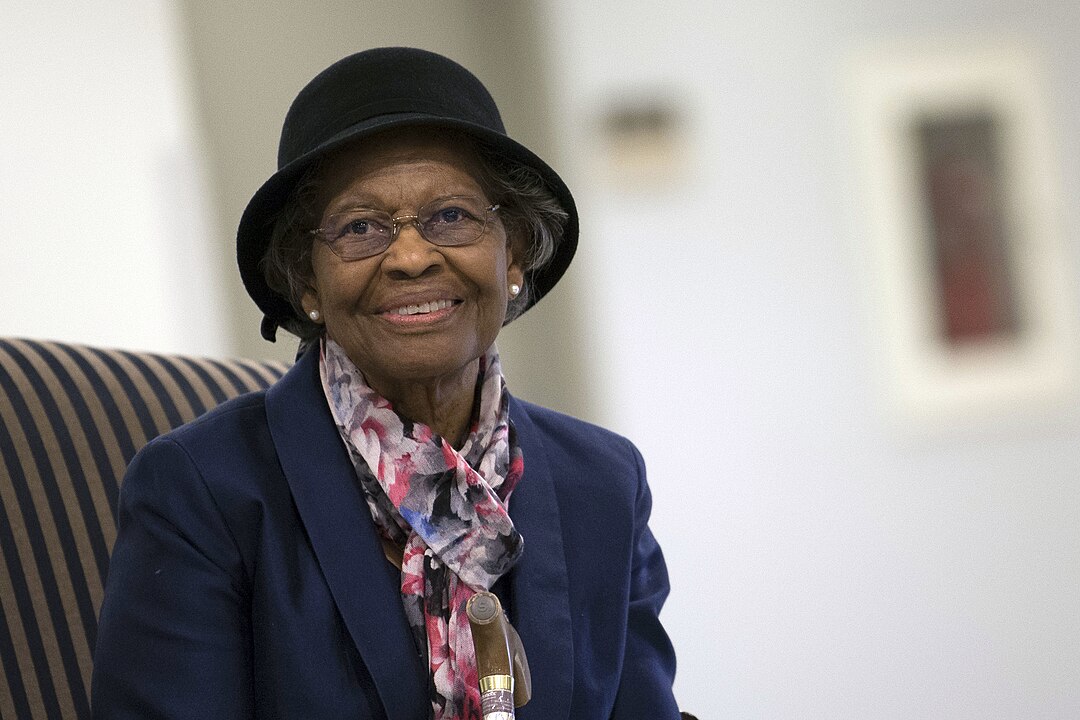
In her countryside home in Virginia, an elderly woman still consults paper maps. She folds them carefully, annotates them, compares them. She knows the satellites proved her right. She modeled the Earth, calculated its true shape, and developed the foundational algorithm behind GPS. Yet few people know her name: Gladys West.
The paradox is striking: while the entire world now lives by geolocation, the woman who made this scientific and technological revolution possible remained in the shadows for decades. But her story is one of steady ascent and unwavering rigor, through the labyrinths of racial segregation, military secrecy, and the systematic invisibility imposed on Black women in science.
Gladys Mae Brown was born in 1930 in the small farming community of Sutherland, Virginia. Her parents were sharecroppers, negotiating each season for access to land owned by white landowners. She grew up among tobacco rows, cornfields, and rain-delayed workdays. This world taught her hardship, but also discipline.
The first crucial decision of her life came early: refusing repetition. She did not want to spend her life bent beneath the sun like so many others. So she excelled in school. She earned a scholarship to Virginia State University, one of the historically Black institutions founded during segregated America. There, she studied mathematics, a field still dominated by white men. She graduated at the top of her class.
She first became a teacher in a rural Black school, but quickly realized that the classroom would not be enough. She wanted to model, program, and break the world down into functions and variables. In 1956, she secured a position at the Naval Proving Ground in Dahlgren. She became one of the first Black women to enter this stronghold of American military science.
Dahlgren was a paradoxical place: a sanctuary of technological innovation, yet a fortress of white male America. Gladys West arrived as an analyst assigned to ballistics. Very quickly, she surpassed her initial role. She mastered early high-powered computers such as the IBM 7030 Stretch and became an expert in complex systems.
But her revolution would come from space.
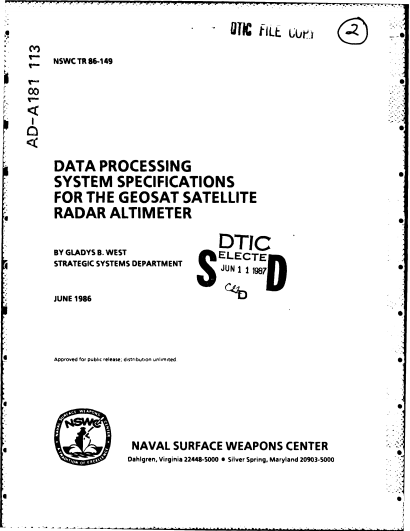
In the early 1970s, she was tasked with processing data from the GEOSAT satellite, which measured subtle variations in the Earth’s surface through radar waves. She combined these measurements with oceanographic and gravitational data to model the geoid—the Earth’s true mathematical shape, far more precise than a simple spheroid.
Her work became the basis for the GPS algorithm, first used for military purposes and later adapted for civilian use. Modern geolocation, interactive maps, and navigation applications still rely on her calculations today.
Unlike many scientific figures, Gladys West never sought prestige or media attention. She distrusted shortcuts, simplifications, and media sensationalism. She remained committed to humility and rigor. At Dahlgren, she held her position without public conflict, at least publicly. She preferred writing programs to speaking with journalists.
The glass ceiling was ever-present. She was not assigned to field missions. She was the “quiet Black woman” admired in whispers yet kept in her place. She joined a small circle of Black women on the base who organized discussions, reading groups, and the beginnings of a political consciousness within the margins of the military institution.
Today, every smartphone, every aircraft, every home delivery, and every emergency call relies on a GPS system. What began as a Cold War military experiment has become the backbone of global mobility. And at the heart of this infrastructure lie Gladys West’s models.
Her algorithm does not bear her name in databases. But scientists know. Geodesists, cartographers, and climate analysts recognize the immense scale of her contribution.
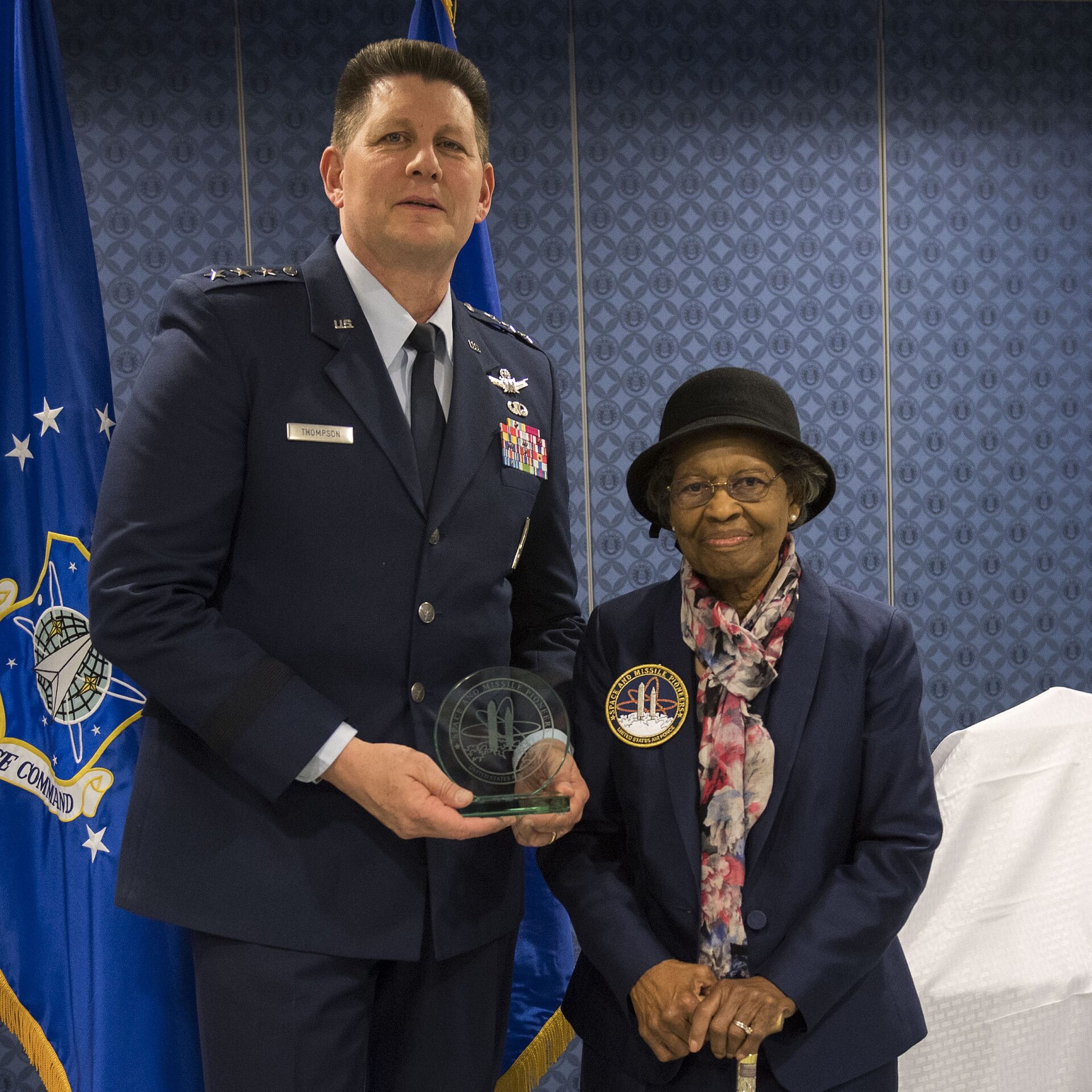
It was only later in life that institutions began to correct this omission. In 2018, she was inducted into the U.S. Air Force Hall of Fame. She received the Commonwealth’s Prince Philip Award, universities invited her to speak, and the media finally discovered her. Without seeking it, she also joined the constellation of “hidden figures” of African American scientific achievement.
But for her, what mattered most was elsewhere:
“I simply wanted my work to be accurate. Not famous. Accurate.”
In 2000, Gladys West earned a doctorate. Not for glory, but to complete an intellectual journey. She continued correcting maps, reading data, and consulting atlases. She reportedly avoided using GPS herself, perhaps out of habit, but also as an ethical choice: understanding before consuming.
Gladys West’s life is not an American-style success story. It is a lesson in rigor, patience, and discipline. An almost monastic method: faith, numbers, and silence. She reminds us that science is not merely spectacle. It is a form of truth, serving everyone, without the need for microphones or statues.
The Geometry of Merit
Gladys West never demanded recognition. She proved her worth. She never shouted. She calculated. What we now call GPS, she called “rigorous modeling.” What the world consumes without thinking, she thought through without ever consuming it.
In a world obsessed with visibility, she embodies another path: that of quiet merit, knowledge without ego, and science as a duty.
And even today, though her name may be absent from logos, every route traced on a digital map bears the imprint of her rigor.
Notes and References
- West, Gladys. Interview with The Guardian, 2018.
- Smith, Yvette. “Hidden No More: Dr. Gladys West Inducted into Air Force Space and Missile Pioneers Hall of Fame,” NASA, 2018.
- Shetterly, Margot Lee. Hidden Figures, HarperCollins, 2016.
- Evans, Stephanie Y. Black Women in the Ivory Tower, 1850–1954, University Press of Florida, 2007.
- “Gladys West, the woman who helped invent GPS,” BBC World Service, 2021.

