

The recent African origin of modern humans, often nicknamed the “Out of Africa” theory, is the most widely accepted model describing the geographical origin and early migrations of humanity. This theory states that humans first evolved in Africa and that most of the time humans have spent on Earth took place on this continent.
Here are six reasons why scientists believe that humans originated in Africa and why they abandoned the idea that we evolved separately and independently in different parts of the world.
Nature does not strike twice
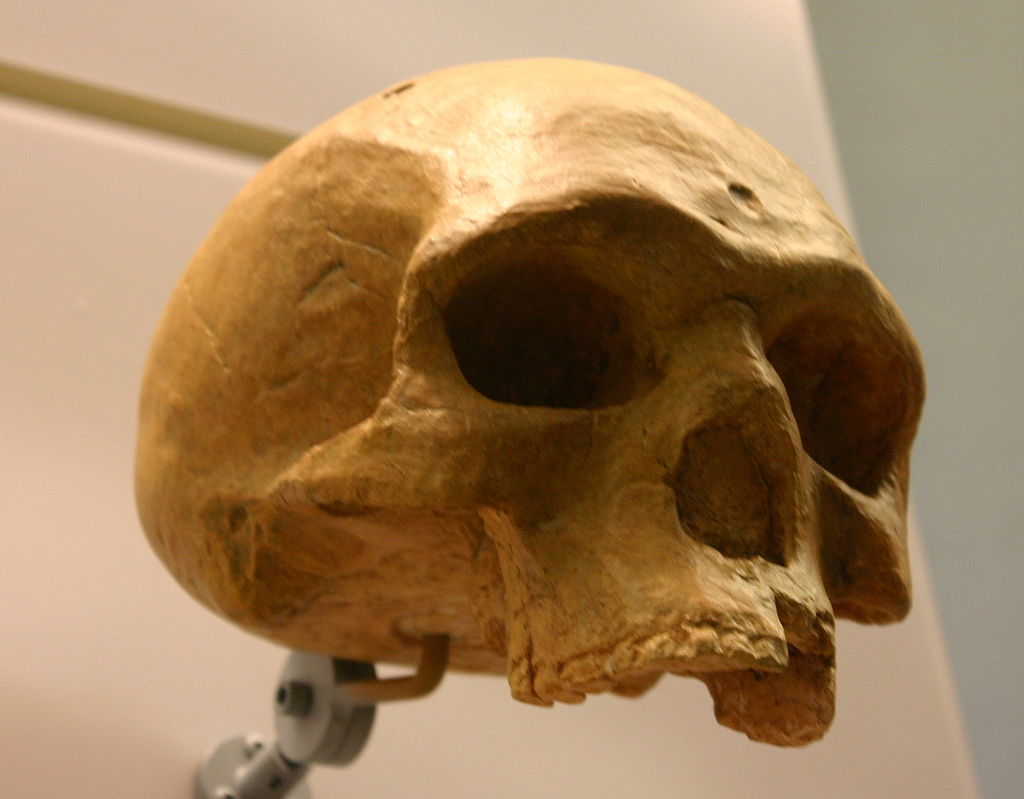
There are two theories of human origins: monogenesis and polygenesis. The monogenic theory, now called the “African origin theory of modern humans,” holds that there is only one source of humanity; humans were born in one place but evolved differently due to the climatic conditions they were exposed to.
The polygenic theory, or multiregional origin of modern humans, claims that humans have several places of origin, which would explain the physiological differences between races. Supporters of this theory believe that humans were born in Africa, Europe, and Asia, and that there was no evolutionary or climatic development.
Dr. Cheikh Anta Diop, a world-renowned historian, anthropologist, and physicist, stated that one of the key reasons the polygenic theory is wrong is that Mother Nature never strikes twice; she never creates the same being twice.
The oldest human fossils are found in Africa
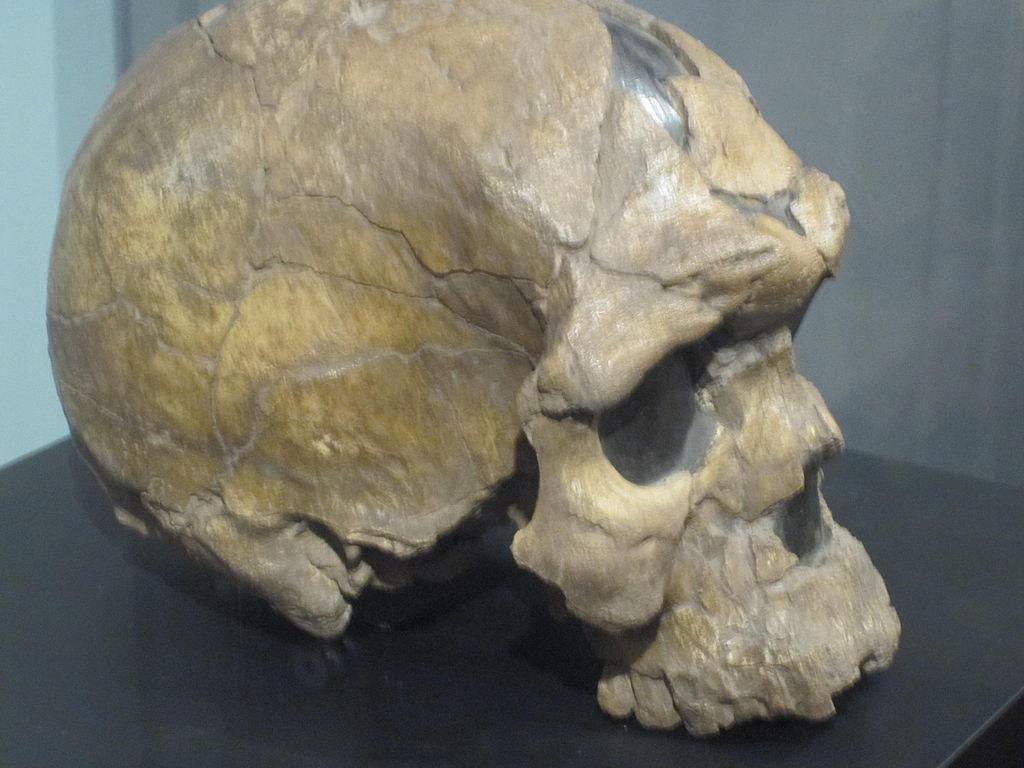
According to Diop, the fossils of the earliest humans who lived between 6 million and 2 million years ago all come from Africa, and no fossils of this type have been found anywhere else in the world. Moreover, fossils found outside Africa are much more recent.
The February 2008 issue of National Geographic News reported that genetic studies and fossil evidence show that modern humans were born in Africa about 250,000 years ago. Remains of Homo sapiens idaltu found at the Awash site in Ethiopia lived about 160,000 years ago. This is the oldest known modern human and is classified as an extinct subspecies.
Africans have the oldest DNA
Two parts of the human genome have proven useful for deciphering the history of humanity: mitochondrial DNA and the Y chromosome. These are the two parts of the human genome that have been identified as the oldest. They are also the only parts of the genome that are not reshuffled by the mechanisms of evolution that generate diversity with each generation. Instead, these elements are passed down intact.
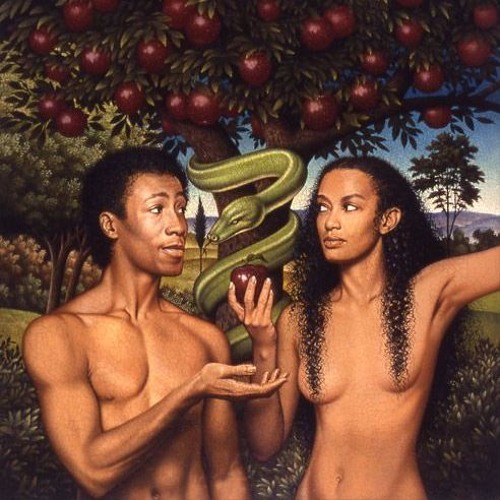
According to the African origin of modern humans hypothesis, all people alive today inherited their mitochondria from a woman who lived in Africa about 160,000 years ago. She is called Mitochondrial Eve. All men alive today inherited their Y chromosomes from a man who lived between 140,000 and 500,000 years ago, probably in Africa. This man is known as Y-chromosomal Adam.
Africans have the most diverse DNA

A study conducted in May 2002 by researchers from the Department of Ecology and Evolution at the University of Chicago examined three groups of people: Africans, Europeans, and Asians. The researchers found greater genetic diversity among Africans than among Eurasians, and that the genetic diversity of Eurasians is largely a subset of that of Africans. Since no other similar center of genetic diversity exists outside Africa, the genetic evidence supports the model of the African origin of modern humans.
Another study conducted in July 200 by the University of Cambridge in England found that the lowest genetic variation was found in the ancient populations of South America and Australia, the two major inhabited regions farthest from Africa.
Andrea Manica, the team leader, concluded:
“The further you get from the center of diversity where you started, the less diversity you have.”
The study places the original roots of modern humans in south-central Africa. In the middle of this region lies the Great Rift Valley, often called the “cradle of humanity.”
Migration patterns
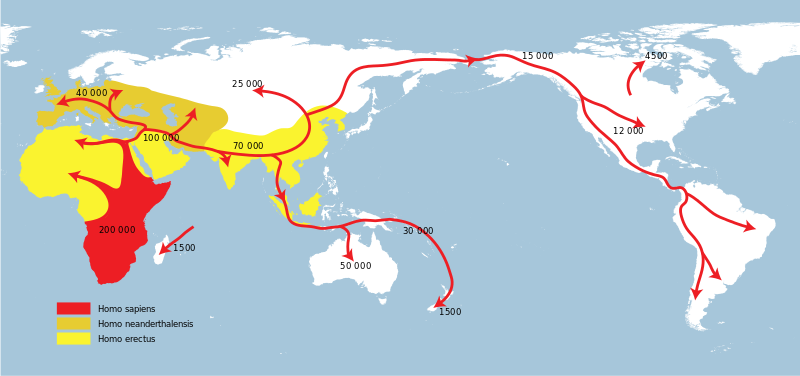
The Genographic Project presented on the National Geographic website shows that when humans first ventured out of Africa about 60,000 years ago, they left genetic footprints that are still visible today.
By mapping the appearance and frequency of genetic markers in modern people, researchers can get an idea of when and where ancient humans moved around the world. These great migrations eventually led the descendants of a small group of Africans to occupy the most remote regions of the Earth.
The first people to colonize the Eurasian landmass probably did so by crossing the Bab-al-Mandab Strait, which separates present-day Yemen from Djibouti. These early beach-dwelling people rapidly expanded along the coast to India and reached Southeast Asia and Australia about 50,000 years ago.
Humanity’s first great journey beyond Africa carried Africans to the farthest ends of the world.
A chinese scientist proves that the first chinese were africans
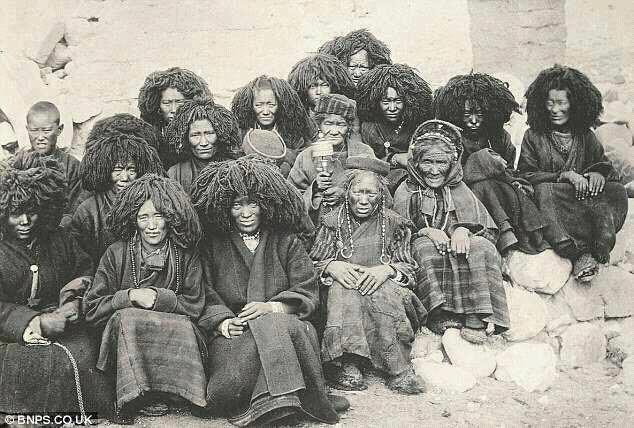
In 2005, a Chinese DNA specialist, Jin Li, leading a team of Chinese and other scientists at the University of Texas in Houston, proved through DNA testing that the first inhabitants of China were in fact Black Africans, who migrated through Asia toward the southeast before moving north into what is now China.
This discovery challenges the long-held view of Chinese paleontologists, based on fossil evidence, that an East Asian branch of Homo erectus evolved independently into Homo sapiens.
“It is now possible to conclude that modern humans of African origin make up the majority of the current gene pool in East Asia,” Jin stated.
NOTES AND REFERENCES
Article translated and originally published by the website atlantablackstar.com.
Read the original article.


