

This article aims to explore the little-known history of the Senegalese tirailleurs. We will examine their significant contributions on the battlefields, the challenges they faced, and the lasting legacy they left behind. By retracing their journey, we pay tribute to these forgotten heroes of history.
Struggle and resistance of the senegalese tirailleurs
The Senegalese tirailleurs, officially formed in 1857 under Louis Faidherbe¹, played a complex role in French colonial history. Initially volunteers, their recruitment gradually became more coercive, culminating in the decree of February 7, 1912, which instituted recruitment by requisition². This evolution exacerbated tensions and resistance within African communities, confronted with the loss of their young men sent to distant and often unknown conflicts.
A key figure in this history is Blaise Diagne³, the first African deputy elected to the French National Assembly in 1914. Diagne played a crucial role during the First World War by negotiating with African traditional leaders to facilitate the recruitment of tirailleurs. In return, he obtained significant concessions regarding the rights of African soldiers and their families, notably in terms of citizenship and fair treatment.
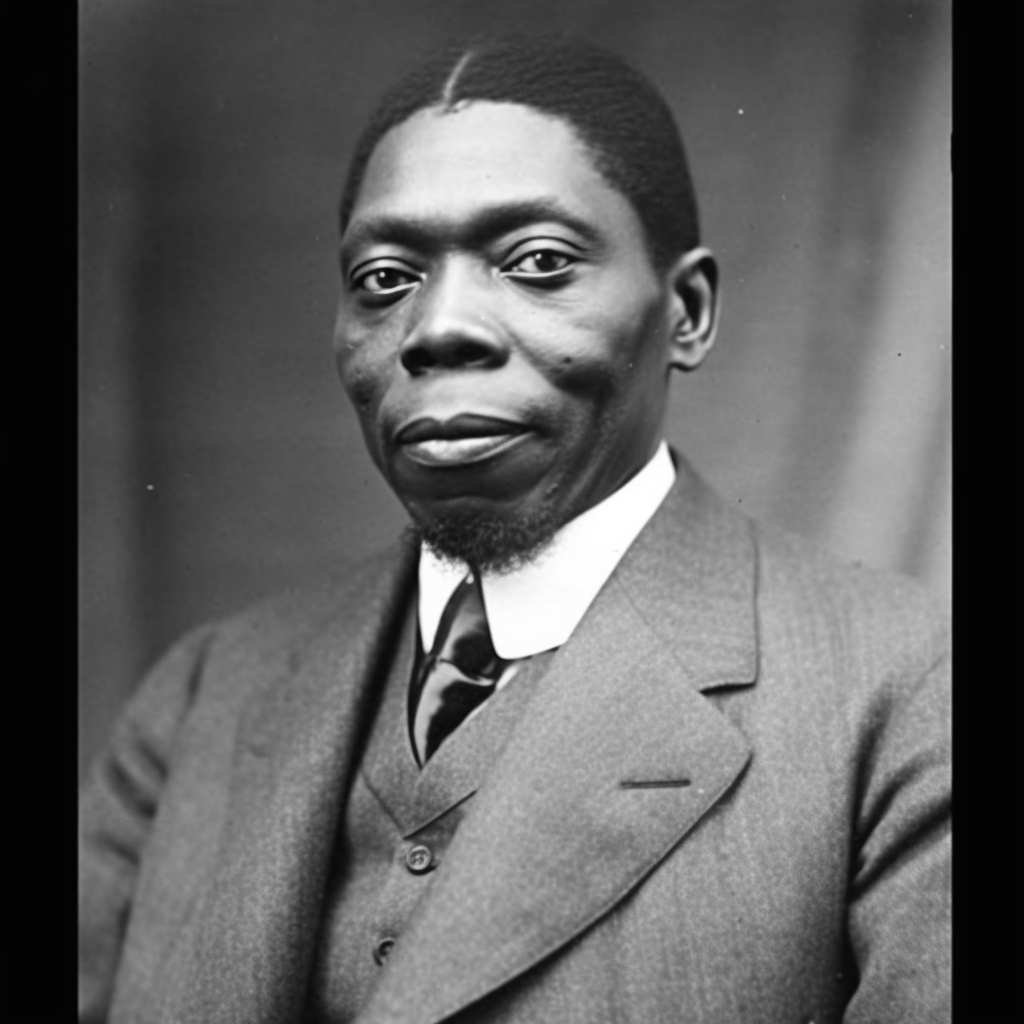
Colonel Charles Mangin⁴, nicknamed the “father of the tirailleurs,” also left a strong mark on the history of these soldiers. He was a fervent advocate of the use of colonial troops in the French army, considering them exceptional fighters⁵. Under his command, the tirailleurs were deployed in various conflicts, including the Bani-Volta War (1915–1916)⁶, where their bravery and combat effectiveness were widely recognized.
At the heart of the Battles: the senegalese tirailleurs in the trenches of history
First world war
The Senegalese tirailleurs, integrated into the Colonial Troops of the French Army, formed a colonial army corps of vital importance. Their role during the First World War, a conflict that saw their numbers rise to more than 135,000 men, was decisive. Engaged in bloody battles such as the Battle of the Somme and that of Verdun in 1916, they fought with remarkable courage and determination. Nicknamed the “Black Bulldogs,” these African warriors demonstrated exceptional bravery far from their homeland, fighting for France and, symbolically, for the recognition of their humanity. Their high mortality rate during the war bears witness to the scale of their commitment and sacrifice.
Interwar period and the second world war
Despite the end of the First World War, the Senegalese tirailleurs continued to serve in the Colonial Troops, facing new challenges. During the Second World War, their contribution was crucial, particularly during the 1940 Campaign of France. These soldiers, still under the French flag, proved their invaluable worth on the battlefield. However, their sacrifice was often obscured in dominant historical narratives. Approximately 25,000 Senegalese tirailleurs were killed or captured during the Battle of France, once again highlighting their commitment and bravery in the face of formidable adversaries.
In the shadow of empires: the senegalese tirailleurs and the conflicts of decolonization
Indochina and Madagascar
After the Second World War, the Senegalese tirailleurs continued to serve in distant theaters of conflict, notably in Indochina (1946–1954) and Madagascar (1947). In these wars of decolonization, they found themselves caught in a poignant paradox: fighting for the French colonial empire while themselves coming from a context of colonial domination. In Indochina, the Senegalese tirailleurs faced brutal war conditions, fighting in an environment and for a cause far removed from their own reality. In Madagascar, their involvement in the repression of the Malagasy uprising represented a dark chapter, reflecting the contradictions of their role within the colonial empire.
Algerian war
The Algerian War (1954–1962) marked a decisive turning point for the Senegalese tirailleurs. Engaged in a conflict symbolizing the struggle for independence and the end of the colonial era, their role was deeply painful. Many tirailleurs found themselves torn between their duty to France and an implicit solidarity with national liberation movements. The consequences of their service in Algeria were profound, both personally and collectively. After the war, many faced identity dilemmas and difficulties integrating, both in France and in their now-independent countries of origin.
Thiaroye 1944: the silent cry of forgotten heroes
On December 1, 1944, in Thiaroye⁷, Senegal, a tragic and often obscured event in French colonial history occurred, forever marking the collective memory of the Senegalese tirailleurs and their descendants. On that day, repatriated Senegalese tirailleurs, former prisoners of war in Germany, were victims of a brutal massacre carried out by the French army. The death toll varies according to sources, ranging from 35 to several hundred dead.
These men, who had served France during the Second World War, had mutinied to protest injustices and delays in the payment of their wages and pensions. Their revolt was a cry of despair in the face of the indifference and contempt with which they were treated after risking their lives for the French homeland. Their mutiny, and the bloody response that followed, reveal the deep tensions and contradictions of the colonial relationship.
Posthumous recognition of their sacrifice and their contribution to French history was long and difficult. It was only decades later that efforts at commemoration and recognition began to emerge, often driven by activist voices and community initiatives. These efforts seek to restore historical truth and to honor the memory of these soldiers, whose sacrifice was long ignored or minimized in official narratives.
The senegalese tirailleurs: memory and legacy of an unfinished struggle
In conclusion, the history of the Senegalese tirailleurs is both a heroic and tragic chapter of French colonial history. These men, often forcibly recruited and torn from their lands, served with bravery and determination in conflicts that were not their own, under the flag of a nation that did not always recognize them as equals. Their journey, from their formation in the mid-nineteenth century to their role in the world wars and post-colonial conflicts, reveals the complexities and contradictions of the colonial relationship.
Their history is marked by moments of extraordinary courage and immense sacrifice, but also by profound tragedies, such as the Thiaroye massacre in 1944. These events underscore the tirailleurs’ ongoing struggle for recognition, justice, and equality, even after having served loyally.
The memory of the Senegalese tirailleurs is essential in contemporary history. It reminds us of the indelible ties between Africa and Europe, forged through centuries of contact, conflict, and collaboration. Recognizing and honoring their history also means acknowledging the complexity of colonial histories and the necessity of reexamining them with a critical and empathetic perspective.
Notes and references
- Louis Faidherbe: Colonial governor of Senegal, architect of French expansion in West Africa. His policy of recruiting Senegalese tirailleurs is emblematic of the colonial exploitation of African peoples to serve European imperialist interests.
- Decree of February 7, 1912: This decree instituted recruitment by requisition of Senegalese tirailleurs, marking a step in the forced militarization of African populations by colonial France.
- Blaise Diagne: First African deputy elected to the French Chamber of Deputies in 1914. He played a controversial role in recruiting Senegalese tirailleurs for the First World War, promising civic rights in exchange for their service.
- Colonel Charles Mangin: French military officer known for his theory of the “Black Force,” using Senegalese tirailleurs as cannon fodder in European conflicts, illustrating colonial contempt for African life.
- Theory of the “Black Force”: Concept developed by Colonel Charles Mangin advocating the use of African soldiers as a primary fighting force for France. This theory reveals the exploitation and objectification of African bodies in the colonial framework.
- Bani-Volta War (1915–1916): Conflict in which Senegalese tirailleurs were used to repress anti-colonial revolts, highlighting the tragic irony of their role in suppressing African resistance.
- Thiaroye Massacre (December 1, 1944): Massacre of Senegalese tirailleurs by the French army after their mutiny to demand fair wages and demobilization conditions. This tragic event symbolizes the betrayal and exploitation of African soldiers by the colonial power they served.


